• About
  • The Photo that Started it All

Uncovering Jewish Heritage

Uncovering Jewish Heritage

Author Archives: Marysia Galbraith

Lapidarium in Wronki

14 Tuesday Apr 2015

Posted by Marysia Galbraith in Cemeteries, Heritage work, Polish-Jewish Heritage, Wronki

≈ 2 Comments

Tags

Lapidarium

I didn’t know what a lapidarium is until I went to the opening ceremony for one in Wronki, a town about an hour north of Poznan. The opening was on December 14, 2014. Here are some photos:

Lapidarium in Wronki

Lapidarium in Wronki

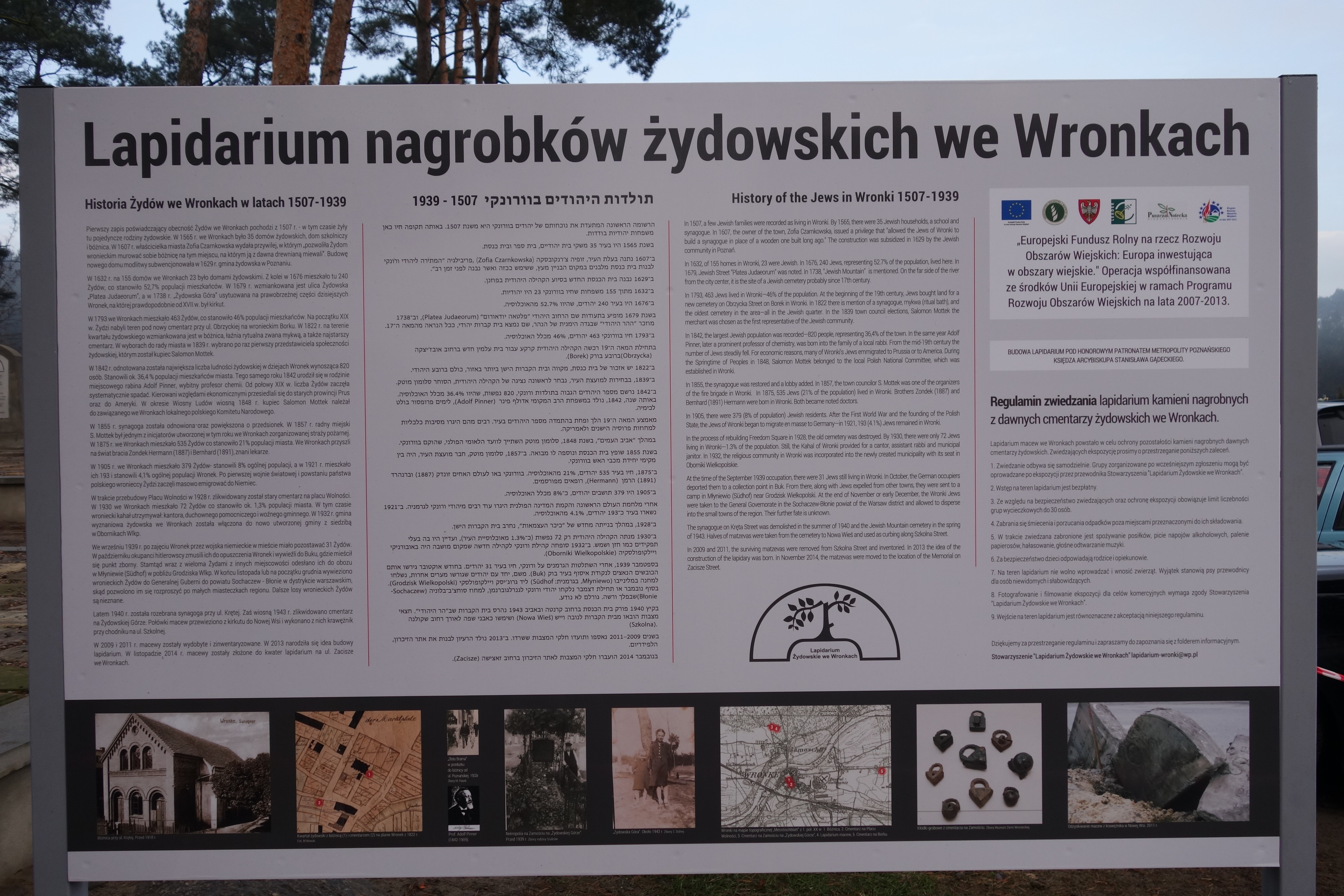
Sign outlining the history of Jews in Wronki

Sign outlining the history of Jews in Wronki

Piotr Pojasek speaking at the opening of the Lapidarium in Wronki

Piotr Pojasek speaking at the opening of the Lapidarium in Wronki

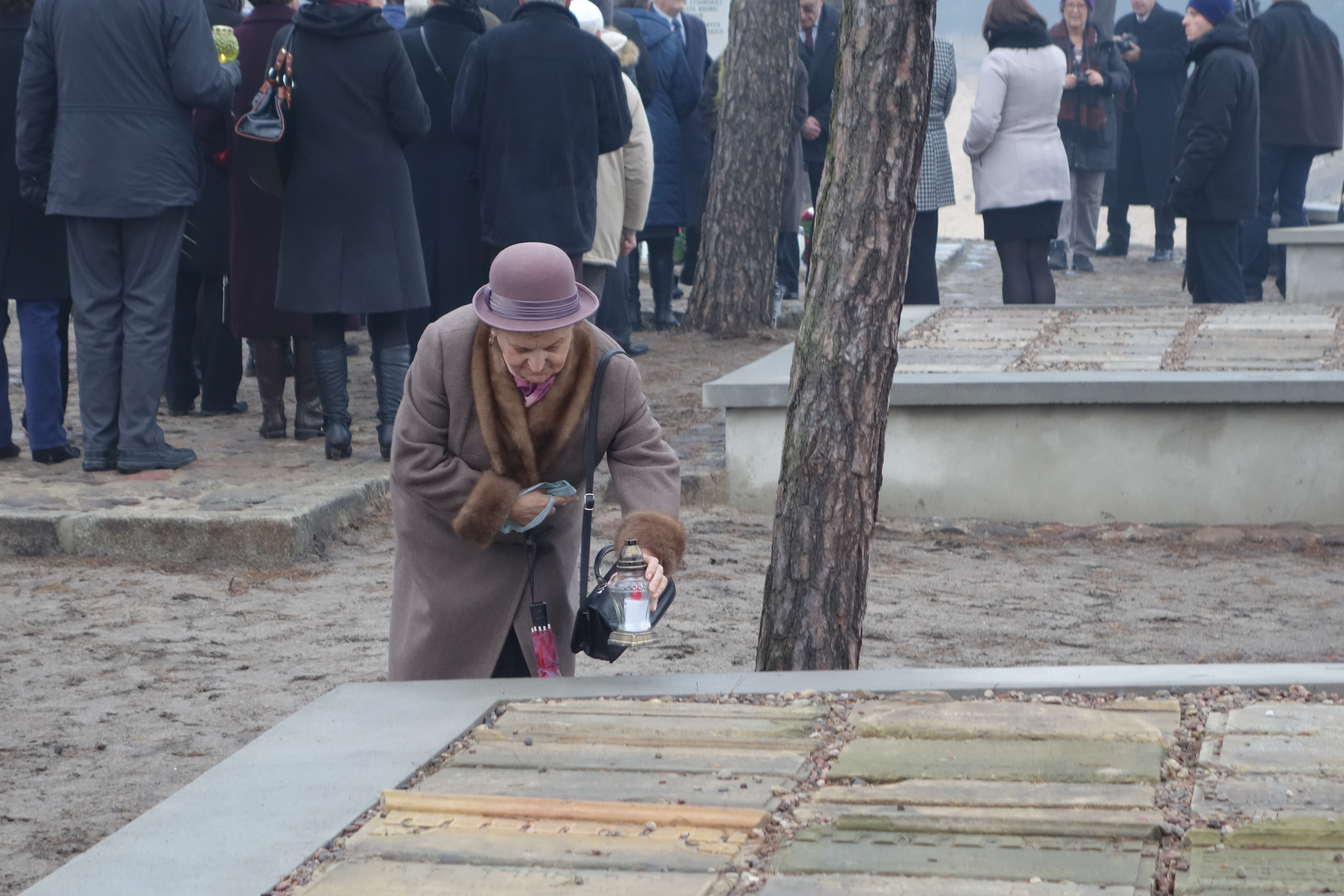
Placing a lantern at the opening of the Lapidarium in Wronki

Placing a lantern at the opening of the Lapidarium in Wronki

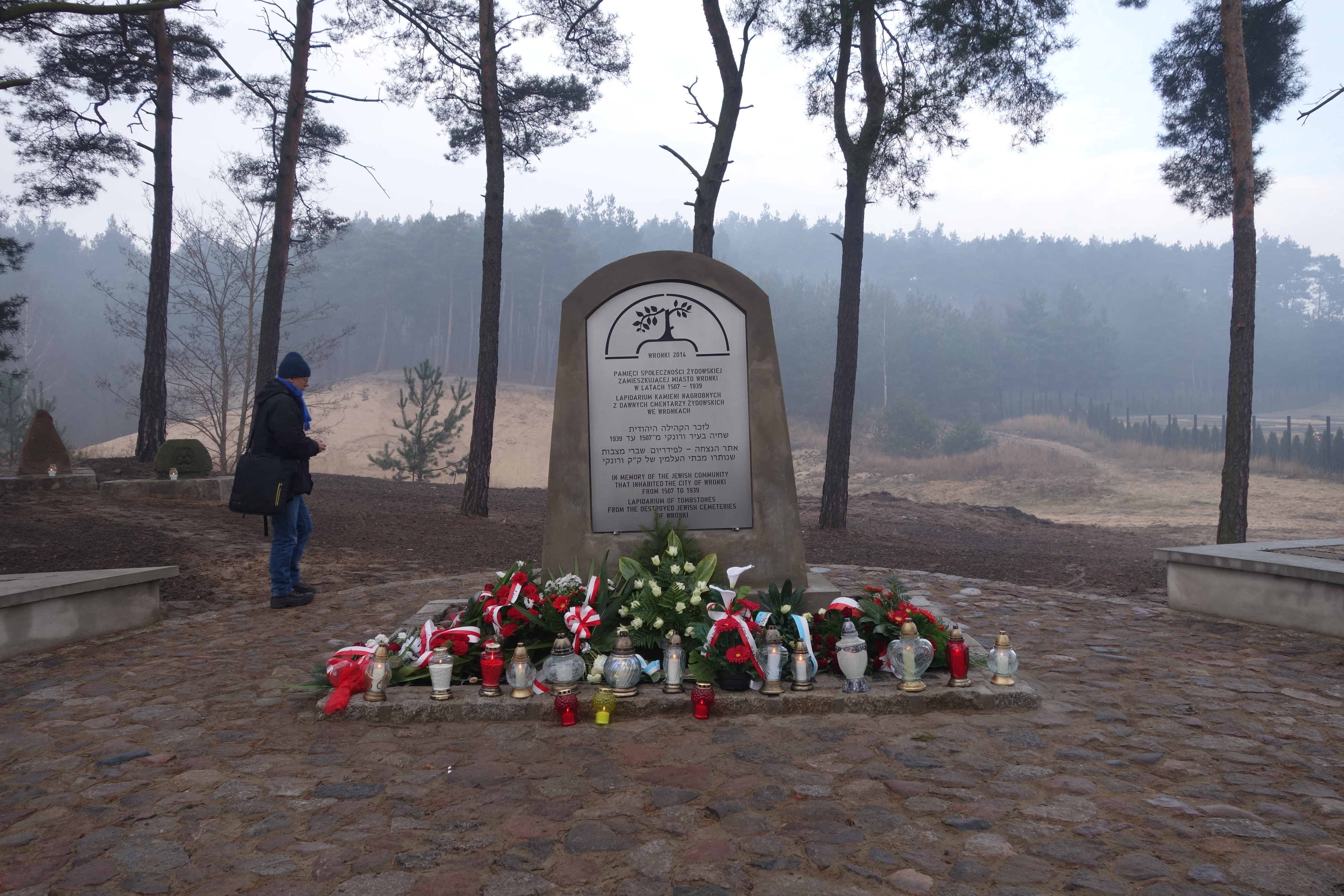
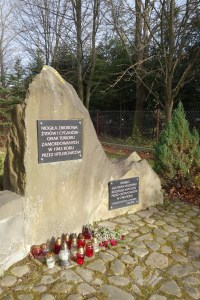
Flowers and candle lanterns placed at the monument at the heart of the Lapidarium in Wronki

Flowers and candle lanterns placed at the monument at the heart of the Lapidarium in Wronki

A stone with a tree with a broken branch, which became the logo for the lapidarium in Wronki

A stone with a tree with a broken branch, which became the logo for the lapidarium in Wronki

A lapidarium is essentially a place where stones are displayed. In this case, the fragments of the tombstones from the Jewish cemetery were recovered and placed in raised beds. The space around them is filled with small stones about the size of those that customarily would be placed on Jewish graves. Written in Polish, Hebrew, and English on a monument in the shape of a large tombstone are the words:

In memory of the Jewish community that inhabited Wronki from 1507-1939. Lapidarium of tombstones from the destroyed Jewish cemeteries of Wronki

This project represents for me the best of what can be done with the fragments of Jewish culture in Poland. It required the engagement of many different organizations and individuals, most of whom are not Jewish but who felt a moral obligation to recover these stones which were removed from the cemetery during World War II and later used to make a curb on a street in a neighboring village. For some, the lapidarium was a project of reclaiming the town’s heritage. For others it was much more bound up with faith and spirituality.

I’ve been back to Wronki a few times and talked with a number of people involved in the project. I’ll fill out this story in future posts.

Nunia on a camel

10 Friday Apr 2015

Posted by Marysia Galbraith in Family, Memory

≈ 1 Comment

Tags

Israel, Maria Weglinska

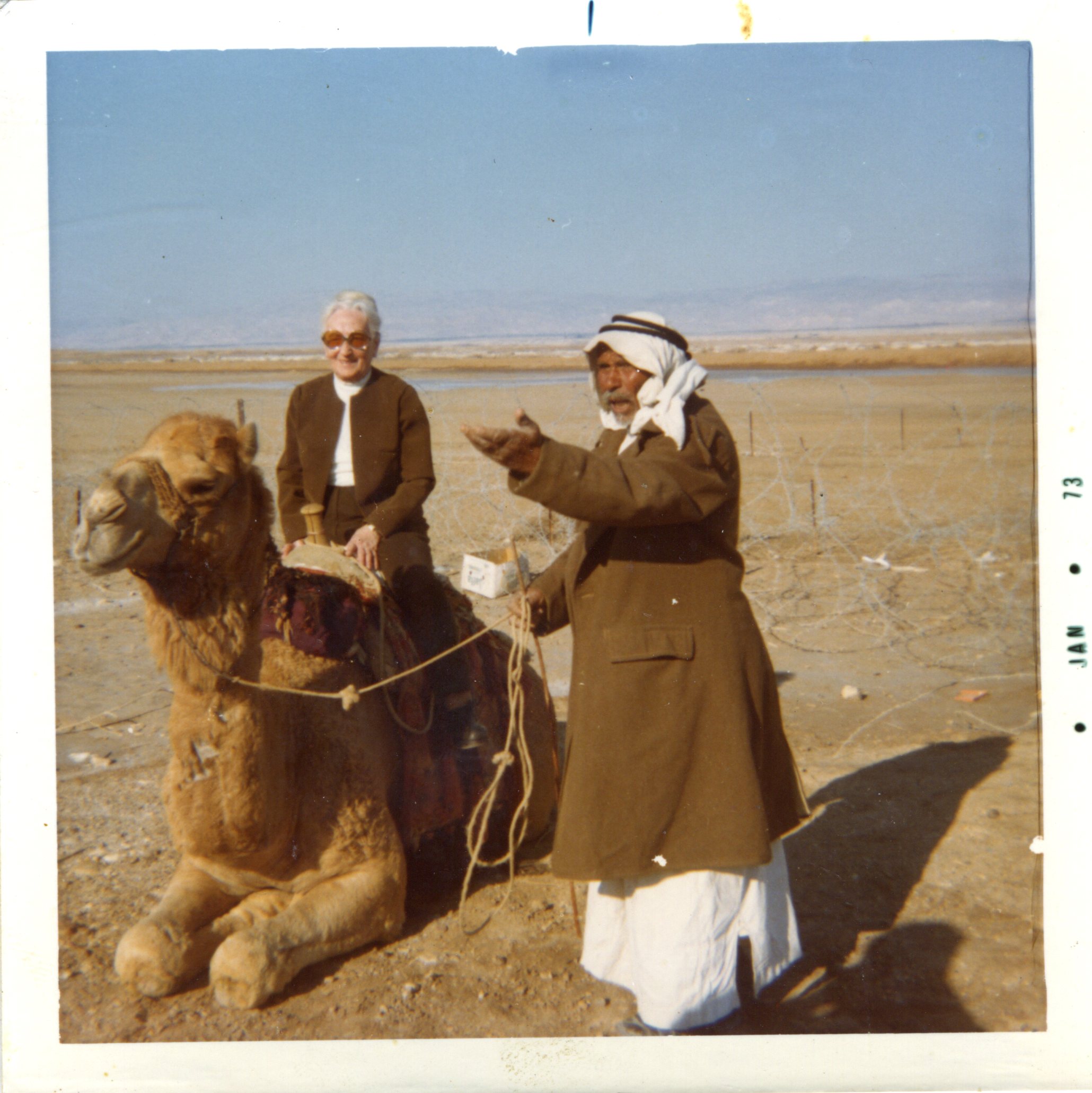
Nunia on a camel in 1972 at about age 86

Nunia on a camel in 1972 at about age 86

When Nunia was in her mid-80s, she went to Israel. I remember my mom’s wonderment as she described Nunia’s continued vitality. The image that proved it is a photo of Nunia perched upon a camel. The photo is stamped 1973, but cousin Yvonne in Israel remembers showing Nunia around Jerusalem in 1972. Back then, the date in the white edge of photos specified when the prints were made, so maybe Nunia didn’t develop the film right away.

Another camel photo.

Another camel photo, printed in January 1973. Yvonne says these photos were taken near the Dead Sea.

Nunia made an impression on the Israeli cousins, too. She kept a very busy schedule during her visit. When asked about it, she responded, “I can rest when I die.”

I don’t remember any mention of Israel when anyone talked about the trip. Rather, I remember being told Nunia went to Egypt. I was only nine at the time, so maybe I misremember, but my brother Chris remembers this, too. He says even then it seemed odd to him that she went to Egypt and yet there were no photos of the pyramids. Could this have been another instance of hiding the family Jewish connection? If so, it was a bizarre way to do so. Why not just say she went to “the Holy Land,” a common way Christians refer to Israel? I can’t help questioning my memory here—could I have been told she went to the Holy Land, but Egypt stuck in my nine-year-old head because it is the place I associated with camels and desert (and pyramids, which as Chris said were not in the photo)?

One thing I know for sure. I was never told Nunia went to visit family. I feel a deep sense of loss about this, especially since meeting my Israeli family. I’m also deeply embarrassed.

Could this be the Tel Aviv airport?

Could this be the Tel Aviv airport?

Gallery

More photos of the Lutowiska Cemetery

04 Saturday Apr 2015

Posted by Marysia Galbraith in Cemeteries, Jewish Culture, Lutowiska

≈ 5 Comments

This gallery contains 1 photo.

Lutowiska’s Ecomuseum of Three Cultures

03 Friday Apr 2015

Posted by Marysia Galbraith in Cemeteries, Heritage work, Jewish Culture, Lutowiska, Memory, Polish-Jewish relations, Synagogues

≈ 4 Comments

Nestled at the Ukrainian border in the Bieszczady Mountains of southeast Poland, Lutowiska integrates the remnants of the village’s multiethnic past in a walking trail called the Ecomuseum of Three Cultures (here’s a brochure and map ekomuzeum_trzy_kultury-2).

When I moved to Bieszczady in 1992 to do my dissertation fieldwork, some residents of the region had only just started to exercise new postcommunist freedoms by talking openly about their Ukrainian heritage. For the first time, they felt free to speak Ukrainian in public. But neither then nor now, has anyone ever spoken to me in a similar way about their Jewish heritage. Either no one is left, or no one wants to admit it. In Bieszczady, silence persists with regard to the topic of Jews. This is all the more startling when you realize that the prewar towns—Lesko, Lutowiska, Ustrzyki Dolne, Baligród—were all sztetls. Jews outnumbered Christians. According to a guidebook from 1914 (M. Orłowicz Ilustrowany Przewodnik po Galicyi, republished in 1998), Lutowiska had 1700 Jews, 180 Poles, and 720 Rusyns (the name used for the Ukrainian speaking population).
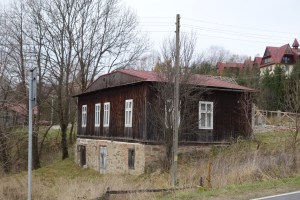
A former Jewish home across the street from the school in Lutowiska

A former Jewish home across the street from the school in Lutowiska. Characteristic for the time, it was made of wood with a stone foundation.

Today, Lutowiska is a large village on the road that runs south from Ustrzyki Dolne into the high mountains of Bieszczady National Park. Immediately after World War II, it fell on the Soviet side of the border, but it was annexed to Poland in 1951 as part of a land swap. Residents were forced to move, as well; those from the chunk of Poland that was ceded to the Soviet Union were moved to the region between Ustrzyki Dolne and Lutowiska that had been depopulated during and after the war. I did my original fieldwork with some of the children of these resettled farmers who never got used to the rocky, hilly soil and colder weather of the higher elevations and longed for the rich, flat farmlands they were forced to leave behind.

So one possible explanation for the silence about the Jewish residents who were brutally murdered during the war is that very few prewar residents, those who would have had personal memories of Jews, remained in Bieszczady. Of course, this isn’t a sufficient explanation. It seems that many forces converged to produce this absence of memory. The state socialist government evoked Marxist internationalism to deemphasize ethnic differences while at the same time trying to solidify Poland’s claim over the land by Polonizing the resident population. Church rhetoric, too, frequently demonized Jews. Certain stereotypes persist in everyday discourse—Poland was weakened by Jewish domination of commerce, and Jews running the contemporary press constantly criticize the Church and the government. Some repeated a phrase they said Jews used to tell Poles, “the streets are yours but the buildings are ours.” But mostly in my experience, not even disparaging stereotypes broke the silence surrounding the topic of Jews; they simply were not talked about.

This backdrop of silence makes it all the more remarkable that, when a group of young Lutowiska residents got together in the early 2000s to explore ways of promoting their village, they decided to view the region’s multiethnic history as an asset rather than a liability. They were not specifically interested in Jewish heritage. Rather, they had a more pragmatic goal: to create attractions that would encourage tourists passing through on their way to the high mountains to stop for a while in Lutowiska. To achieve this, they developed a project called the Ecomuseum of Three Cultures, a 13 kilometer walking trail with information tablets at various sites associated with the village’s cultural and natural history. The three cultures were distinguished most clearly by faith—Roman Catholic (generally understood to be Polish), Uniate (generally understood to be Ukrainian), or Jewish. The trail includes views of the high peaks of the Bieszczady Mountains and the site where the classic Pan Wołodyjowski (1968) was filmed. It winds past the 19th century Catholic church, the former site of the Uniate church, and the ruins of the Jewish synagogue.

One of the main designers of the museum, Agnieszka Magda-Pyzocha, teaches at the local school. She explained to me that nearly everyone forgot that the synagogue ruins still stood right at the heart of the village. For years, the old walls were used by the Polish Army’s Border Patrol as a trash dump. Agnieszka explained:

I remember when I was a child I walked there and saw that some stones stood, trees growing out of them, and nearly nobody knew. By looking in various sources, talking with people, and looking at photographs, we discovered that this was the synagogue that used to be here. Several truckloads of trash were carted away, the whole place was cleaned, and in this way it became an attraction that most residents had known nothing about for all these years.
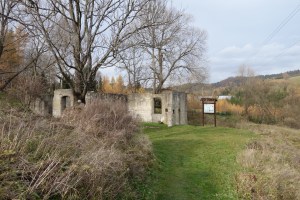
Synagogue ruins and information sign, Lutowiska

Synagogue ruins and information sign, Lutowiska

An information board next to the synagogue ruins outlines the history of Jews in Lutowiska. It points out that, contrary to popular belief, most Jews were poor. Most were petty traders and craftspeople, though a few were farmers. The wealthiest Jews in Lutowiska were the Rand family. Mendel Rand started out as a traveling trader of sewing supplies. He worked hard enough to buy a country inn (karczma), and eventually bought the home of the local nobleman. On June 22, 1942, Nazi soldiers instructed Ukrainian peasants to dig trenches near the Catholic Church. That evening Ukrainian police gathered 650 Jews remaining in Lutowiska and neighboring villages Two Nazi officers shot them all, and had them buried in the trenches. A teenage boy escaped and hid in the Jewish cemetery, but he was discovered and brought back. Only seventeen-year old Blima Meyer survived; she was pulled out of the mass grave still alive (A. Potocki, Żydzi na Podkarpaciu 2004).

Lutowiska synagogue ruins
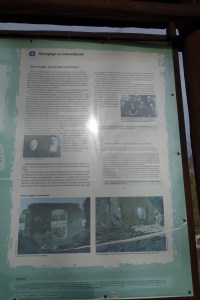
Lutowiska synagogue ruins

Information sign next to the synagogue, Lutowiska

Information sign next to the synagogue, Lutowiska

A boy connecting with his Jewish roots.

A boy connecting with his Jewish roots.

The Jewish cemetery is on a hill that is visible from the synagogue, but to reach it you have to go down to the school, back around the playing fields, and up a dirt road. It holds as many as 1000 headstones, some dating back to the 18th century. The cemetery was easier to get around in November than it was in August because the grass and weeds had died back. It is on a hill, with a steep slope to one side that is also covered with tombstones. Many stones are decorated with lions or deer (on males’ graves only), birds or candles (females only), crowns or torahs (for men with knowledge of the torah). In places, trees have grown into and around the grave markers. As Agnieszka noted, there is no graffiti or trash in the cemetery. She also told me a group of students from Dartmouth were there for about 3 days this summer. They built steps up to a gate they installed, cleaned some of the stones (they had an expert help them do this), and cut the grass. On the Internet, I saw Dartmouth Rabbi Edward Boraz organizes service trips to a different Jewish cemetery each summer. It’s called Project Preservation.
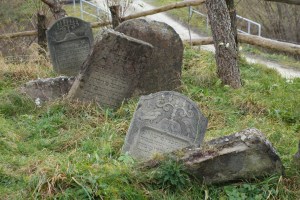
Tombstones in the Lutowiska Jewish Cemetery

Tombstones in the Lutowiska Jewish Cemetery

Agnieszka likes to visit the cemetery: “It’s peaceful there, and sometimes it’s so pretty when the sun is setting and the light is falling a certain way. I lie down in the grass between those tombstones, birds sing, I feel peaceful and some sort of connection.”

At first I couldn’t find the plaque marking the site where 650 Jews were murdered by Nazis. Between the Catholic church and cemetery, there was a monument to those killed at Katyn and another for victims of Ukrainian aggression. I asked someone walking by and she explained the place I was looking for was up the road on the other side of the church. Notably, she knew, and was very pleasant about sharing the information with me.
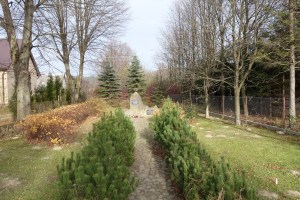
Monument at the mass grave, Lutowiska

Monument at the mass grave, Lutowiska

And there it was, a short way off the road down a shrub-lined pathway—a simple monument with two plaques. I almost cried when I saw it. The inscriptions read:

Mass grave for Jewish and Gypsy victims of terror murdered in 1943 [sic] by Nazis

In memory of 650 victims of fascism shot here by the Gestapo in 1943 [sic]—The people of Lutowiska 1969

It is disturbing to stand on a place where hundreds of people were brutally murdered.
DSC02016

I was deeply moved to see perhaps a dozen candle lanterns and a bouquet of red roses left at the site, probably earlier that week on the occasion of All Saint’s Day. Granted, it’s barely marked from the street. There is just a small sign on a tree saying “National Memorial, Places of Martyrdom.” But it is well maintained. It has not been forgotten as have so many other places I’ve visited associated with Jewish life.

Marker for "National Memorial, Places of Martyrdom"

Marker for “National Memorial, Places of Martyrdom”

Thanks to the Ecomuseum of Three Cultures, Lutowiska feels like a place that has embraced its history, even the tragic events. They have literally cleaned the trash out of the synagogue ruins and marked the site with a sign that hints at the life Jews had there, and how it ended.
Purim po Polsku

03 Friday Apr 2015

Posted by Marysia Galbraith in Jewish Culture, Poznan

≈ 1 Comment

Tags

Gmina Żydowska Poznan, Purim

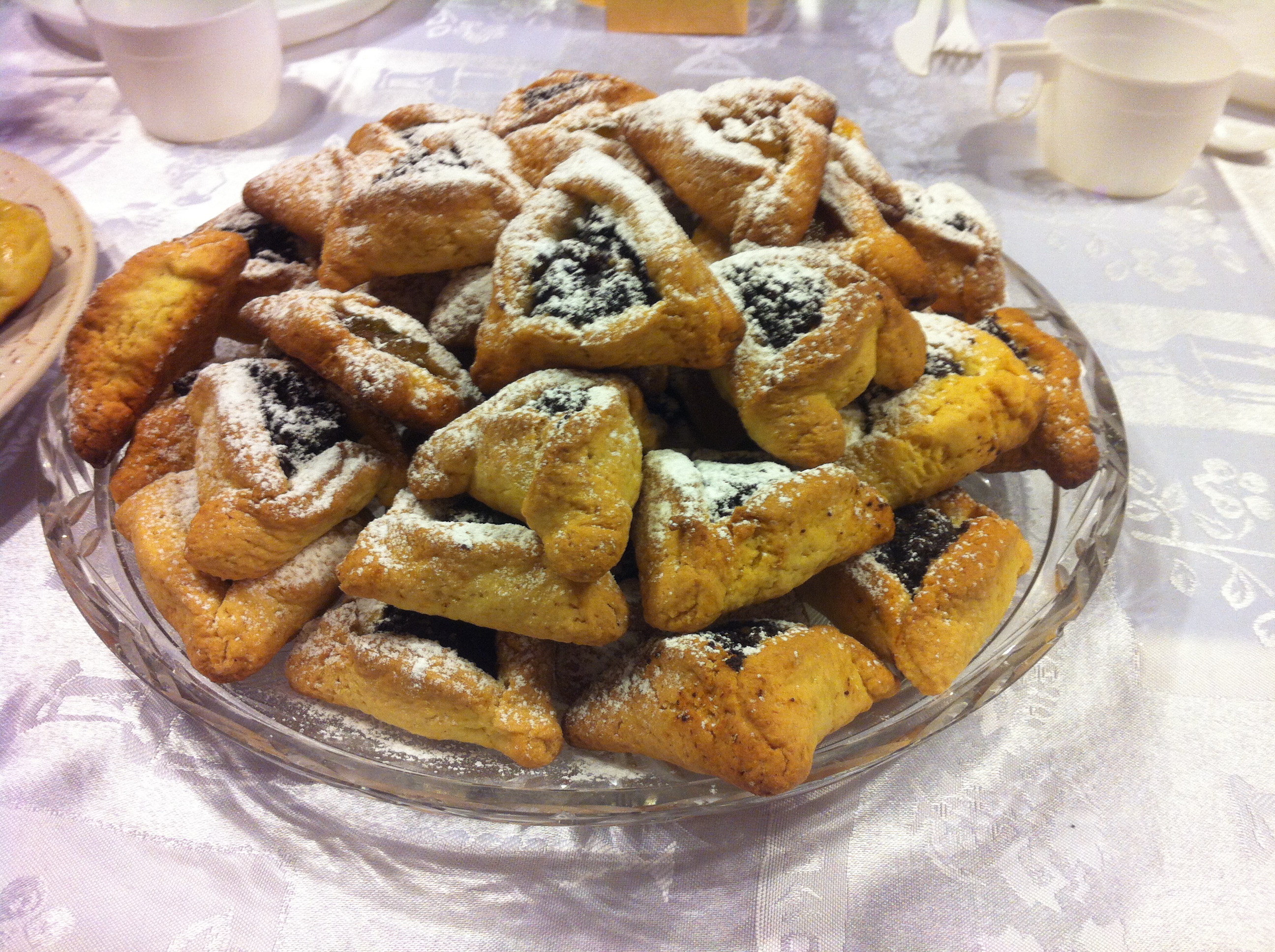
As I look forward to the Passover celebration at the Gmina Żydowska (Jewish Community) in Poznań, I’m remembering Purim which occurred last month. Purim is a fun holiday; people dress up, give gifts, and tell the story of Esther who outsmarts the evil Haman and saves the Jews. The celebration also involves feasting and drinking.

Hamentashen

Hamentashen

The evening started with a brief introduction to the holiday, conducted in the form of questions and answers. Purim is celebrated on 14 Adat (on the Hebrew calendar) in most places, on 15 Adat in walled cities. I learned that Purim is particularly associated with Jerusalem, which is why holiday preparations were already in full swing when I was there in February. The candy stores, basket sellers, and costume shops in the Mahane Jehuda Market were busy with customers.

Four things should be done on Purim; the story of Esther is told, donations are given to the poor, presents are given to family and friends, and you are supposed to have fun. Everyone was given a gift box that included a booklet in Hebrew, a noisemaker, toys, and snacks. Copies of the story of Esther were passed out, and participants took turns reading it out loud. Any time the name “Haman” was mentioned everyone stamped their feet and sounded their noisemakers. Haman was advisor to the Persian King Ahasuerus who conspired to kill the Jews, but he was outsmarted by Mordecai and Esther, Queen of the Persians. Celebration and feasting are supposed to commemorate these events.

Everyone received a gift box

Everyone received a gift box

Guests filled two long tables; some wore funny hats. There were visitors from Israel, Germany, and the US, and I sat beside Jose Maria Florencio, conductor for the Pomeranian Philharmonic in Bydgoszcz. A native of Brazil, he came to Poland 30 years ago to get a masters degree and never left. After discovering his crypto-Jewish heritage, he converted and is now a practicing Jew.

Głos Wielkopolski published an article with more photos.

Photo by Waldemar Wylegalski, Głos Wielkopolski 3-5-2015

Photo by Waldemar Wylegalski, Głos Wielkopolski 3-5-2015

My book in paperback: Being and Becoming European in Poland

26 Thursday Mar 2015

Posted by Marysia Galbraith in Anthropology, Polish Culture

≈ 1 Comment

I was very pleased to learn that my book, Being and Becoming European in Poland: European Integration and Self-Identity, is available in paperback as of March 15:

http://www.anthempress.com/being-and-becoming-european-in-poland-pb

BookCover

About This Book

“Galbraith’s innovative book is a must for anyone interested in postsocialist transformations. Through the author’s deep understanding of Poles’ cognitive categories, we see the EU as it is experienced in everyday life. Her insights will spark new debates in European studies.” —Jaro Stacul, University of Alberta

“A wise and interesting book based on a fresh field of evidence which highlights issues important to individuals as well as societies.” —Zofia Sokolewicz, Professor Emerita, Institute of Ethnology and Cultural Anthropology, University of Warsaw

Overthrowing communism in 1989 and joining the European Union in 2004, the Polish people hold loyalties to region, country and now continent – even as the definition of what it means to be ‘European’ remains unclear. This book uses the life-story narratives of rural and urban southern Poles to reveal how ‘being European’ is considered a fundamental component of ‘being Polish’ while participants are simultaneously ‘becoming European’.

Close attention to the individual lives of Poles allows the author to identify cultural patterns and grasp the impact of the EU on its member states, paying particular attention to how the EU has affected the life experiences of Poles who came of age in the earliest years of the neoliberal and democratic transformations. In exploring what it means to be Polish by tracking these parallel processes of change, the author traces Poland’s path from state socialism to European integration and Polish identities as they are reinscribed, revised and reinvented in the face of historic, political and economic processes.

Ultimately, this study demonstrates how the EU is regarded as both an idea and an instrument, and how ordinary citizens make choices that influence the shape of European identity and the legitimacy of its institutions.

The book is not directly related to my work on Jewish heritage, but it certainly reflects the foundation of my perspective on identity, nationalism, and processes of change in Poland.

Jews in Wielkopolska

14 Saturday Mar 2015

Posted by Marysia Galbraith in Heritage work, Polish-Jewish Heritage, Polish-Jewish relations, Poznan, Wielkopolska, Wronki

≈ 4 Comments

Tags

Partitions of Poland

Regions in Poland still reflect the different administrative regimes within the Russian, Prussian, and Austrian Empires that controlled Polish territory from the late 18th century until World War I. The experience of Jews in Poland varied across these boundaries, as well. It’s a bit like the continued influence of North-South differences in the US, particularly with regard to African Americans’ experiences. History can dig channels that influence the flow of events far into the future.

Map source and more information about the partitions of Poland: http://www.britannica.com/EBchecked/topic/466910/Partitions-of-Poland

Map source and more information about the partitions of Poland: http://www.britannica.com/EBchecked/topic/466910/Partitions-of-Poland

Wielkopolska Province, where I’m living, was under German/Prussian control during the period of partitions. Older residents in particular tell me this German influence has contributed to the region’s sense of order and relative economic success. Historically, regional residents were more interested in taking pragmatic steps to improve daily life (what has been called “organic work”) than in romantic battles for independence that were destined to be defeated. Some refer to this region as “Polska A” in contrast to the more backward and poor “Polska B” in eastern Poland. Some also complain that in recent years state and EU funding have tended to go to other regions of Poland, and that this is a residue of outdated perceptions that Wielkopolska is the least in need of development aid as well as distaste for the German influence that makes some consider the region “less Polish.” Channels can be redirected.

The highest percentage of Jews in Wielkopolska dates back to the first half of the 19th century. Jewish outmigration after then has been attributed to a number of factors. The first is economic; Jews saw more opportunities for themselves in larger German cities. They had often been educated in German schools, spoke German, and could move west without crossing political borders. Second, the German state offered rights of citizenship for ethnic and religious minorities. Many saw more opportunities to study at universities and build careers or businesses in what they perceived as the more developed west. Third, especially from the late 19th century and continuing when Poland regained independence after World War I, Jews were escaping growing Polish anti-Semitism. The National Democrats, with their platform defending the purity of the Polish state against ethnic and religious minorities, were particularly strong in Western Poland. Many Jews continued from Germany to the United States, chasing the promise of greater social equality as well as economic opportunities. In the interwar period, Palestine became the preferred destination.[1]

By the time World War II started, Jews constituted a tiny proportion of the population of cities like Poznan and towns like Wronki. In Poznan, there were maybe 2000 Jews, while in Wronki there were perhaps 30. This early emigration and the small numbers affect the kind of memory work that can be done in Wielkopolska. Many Jewish institutions (hospitals, schools, and even synagogues) had already closed their doors well before the war; Jews were less visible for the Poles who remember prewar life. There is another issue that has tended to limit Polish scholarship about the Jews of Wielkopolska. They often identified more closely with German culture than with Polish. This is visible even in the material fragments that have been recovered. I am thinking for instance of tombstones commonly inscribed in Hebrew on one side and in German on the other.

So overall, the fragments of Jewish life in Wielkopolska are older, the memories are more distant, and fewer residents have had direct experiences with Jews and Jewish culture. These factors pose a challenge to heritage work—it can be harder to find artifacts worthy of preservation, and more difficult to convince local residents and funding sources that these stories need to be told.

[1] I’ve read and talked to a lot of people about this, but thanks especially to Tomasz Kawski for explaining it so clearly.

The Piwko Saga, Vital Records Version

10 Tuesday Mar 2015

Posted by Marysia Galbraith in Archives, Brześć Kujawski, Family, Names, Piwko, Pre-World War II, Skierniewice, Sobota, Włocławek, Żychlin

≈ 1 Comment

Tags

Abram Janas Piwko, Efraim/Philip Piwko, Halina Bereda/Haja Piwko, Hil Majer Piwko, Hinda Walfisz Piwko, Jakub Piwko, Liba Piwko Winawer, Maria Weglinska/Hana Piwko, Małka/Maria Piwko, Pinkus Kolski, Rachel Piwko Kolski, Ryfka Piwko Kolski, Sarah Piwko Winawer

I’ve found records connecting my great grandparents’ lives to five different towns in central Poland.

Hiel Mayer Piwko's birth certificate, 1854

Hiel Mayer Piwko’s birth certificate, 1854

A birth certificate in the Łódź archive states that Josek Piwko, a thirty-year-old tanner appeared with two witnesses to report that his wife Cywia nee Raych, age 26, gave birth to a son Hil Majer on October 26/ November 7, 1854[1] at eight in the evening in the city of Skierniewice.

Żychlin book of residents, Walfisz family first half. Hinda, third from the top, was crossed out when she married and moved to Skierniewice.

Żychlin book of residents, Walfisz family first half. Hinda, third from the top, was crossed out when she married and moved to Skierniewice.

In the Kutno archive, the book of Żychlin residents includes Hinda Walfisz, born August 14, 1854 (making her two months older than her future husband). Others in the household include her parents and two younger sisters. Her father Nusen was born June 14, 1817 in Wyszogród. His profession is listed as belfer, (According to JewishGen this means an assistant melamed in cheder [religious teacher]). His parents were Jamoch and Hinda nee Pigel. Her mother Pesa was born February 5, 1831 in Żychlin to Dawid Losman and Tema nee Majerek. The two other girls were Tema, born March 28, 1858 and Łaja, born May 2, 1861.

Żychlin Book of Residents, Walfisz family second half.

Żychlin Book of Residents, Walfisz family second half.

Hinda’s name is crossed out and a note is added on June 22, 1873 that she moved to Skierniwice to live with her husband Hil Majer Piwko. Hinda’s sister Tema eventually married Hil Majer’s younger brother Jankel Wolf, from whom the Zurich Piwkos descended.

The next document, found in the Łowicz archive, is the marriage certificate of Hil and Hinda’s oldest daughter, Liba Cywja, and Jankel Winawer in 1891. She was 18 and he was 20. His family was from Warsaw, while her family was living in Sobota, a village outside of Łowicz and not far from Żychlin. So at some point, Hil and Hinda moved from Skierniewice to Sobota. I wonder why? I’m told it was common to move from smaller to larger settlements, so why move from a town to a village?

Liba Piwko and Jankel Winawer's marriage record, 1891

Liba Piwko and Jankel Winawer’s marriage record, 1891

DSC03689

By 1901, when a son, Abram Janas (born in 1877) married Blima Kolska, the Piwko family was listed as living in Brześć Kujawski. Abram and Blima were married in Blima’s hometown of Kłodawa. I found this marriage certificate online; the Poznań archive has digitized these records.

Abram Piwko and Blima Kolska married in Kłodawa in 1901

Abram Piwko and Blima Kolska married in Kłodawa in 1901

PiwkoAbramKolskaBlimaAktMalzenstwa1901_2

In the Włocławek archive, I found the Piwkos in the book of residents of Brześć Kujawski. This is my Holy Grail—the thing I’ve been looking for—a document that includes my grandmother. My guide for the day, Tomasz Kawski, a historian who has written about Jews of the area, said, “It’s a miracle [cuda]” I found it. I agree.

Piwkos in the Brześć Kujawski Book of Residents

Piwkos in the Brześć Kujawski Book of Residents

DSC03393

The document lists Hil Majer, son of Icek and Cywja nee Rajch, born October 26/ November 7, 1854 in Skierniewice, married, townsman, Jewish faith, trader (handlarz), and Hinda Piwko nee Wolfisz, daughter of Nusen and Pesa nee Losman, born August 2/14, 1854 in Żychlin, married, townswoman, Jewish faith, [supported] by her husband. In addition, five daughters are listed: Liba Cywja (b. January 27/February 2, 1874), Ryfka (b. December 20, 1884/ January1, 1885), Hana (b. October 11/23, 1886), Małka (b. December 10, 1895), and Haja (b. January 21/ February 2, 1894). Haja is Halina, my babcia. So I finally know her Jewish name.

The document confirms several details that have been passed down in the family; it also raises new questions:

  • All the sisters are listed as having been born in Żychlin. Perhaps Hinda returned to her native home to give birth? Or maybe it was just customary to list girls as being born in their mother’s hometown?
  • There is a note from July 16, 1906 that Ryfka (called Regina on Pat and Pini’s family trees) married Pinkus Kolski and moved to Piątek. The dates don’t correspond exactly to information from other sources which say Pinkus and Ryfka had a son Natan already in 1905. It might just be that the note was added a while after the wedding. Still, why then wasn’t it also noted that Ryfka died giving birth?
  • According to another note on the page, Małka died in Włocławek on June 7/20, 1912. This fits the story Mom told me about Babcia’s younger sister who committed suicide at age 17. No one knew why, but they suspected it was related to unhappiness in love. My mom was fascinated with her story. Maybe it is because she was named after her (the Christianized family tree lists Małka as Maria Renata). Maybe it is because of my mom’s interest in psychology. She wondered what would have compelled Małka to take her own life. Was her love unrequited? Did her father forbid it? Mom told me that Małka was beautiful, with dark hair and a dark complexion unlike the other girls in the family who were fair. In 2011, when I found Babcia’s family photos in the envelope labeled “Do Not Open,” and showed them to Mama, one of the few ones she recognized was Małka’s (though of course mom called her Maria).
  • Hana is my auntie Nunia. The document confirms her birth name and birth year, but the birthdate is different—her US records list her birthday as July 21. Similarly, my grandmother’s birthday is different on her US records—July 16. They also changed her birth years, claiming to be four years younger than they actually were, but this was a known secret in the family.

It is not clear from this document when the family moved to Brześć Kujawski. A note by the first three names states they were registered as residents of Skierniewice; it’s dated April 3, 1903. So where were they living at the end of the 19th and beginning of the 20th centuries? In Skierniewice, Sobota, or Brześć Kujawski? Or could they have been in Włocławek already? Hil Majer is on the Włocławek voters list in 1907, and his obituary says he died there in 1929. Aunt Pat lists Hinda’s place of death as Włocławek in 1933. All these places are within one hundred miles of each other, more or less in a line headed northwest from Warsaw.

And why aren’t some of the other siblings listed? Jakób, the oldest boy may well have been living on his own already. But what about Sarah who supposedly married Saul Winawer in Brześć Kujawski in 1899? Or Efraim (who changed his name to Philip in the US) who was two years younger than Sarah? Why is there no mention of Rachel? She was born around 1890, between Hana and Haja who are listed. Rachel married Pinchas Kolski after the death of her sister Ryfka, so she should still have been living at home when this record was made. Conversely, why is Liba listed as single and living with her parents? Wasn’t she with her husband, Jankel (Jakub) Winawer, whom she married in 1891 in Sobota?

Of course, I wonder about the records I can’t find. The vital records for Jews of Żychlin and Brześć Kujawski no longer exist. My new Holy Grail would be to find Babcia’s marriage certificates and the birth certificates of my mom and her brothers. Vital records are made public only after 100 years, so some of these might be available through the Civil Registration Office (Urząd Stanu Cywilnego). But do they even exist? Were they destroyed by war, or somehow expunged when Babcia broke ties with her old (Jewish) life and took on her new Christian identity?

[1] According to JewishGen, when two dates appear on vital records, the first refers to the Julian calendar used by the Russians while the second refers to the Gregorian calendar, used in most of Europe.

Survival through luck and pluck

12 Thursday Feb 2015

Posted by Marysia Galbraith in Polish-Jewish Heritage, Survival, World War II

≈ 2 Comments

Tags

Embodiment, Eugene Bergman, False Papers, Memoir, Robert Melson, Survival Artist

Survivial Artist by Eugene Bergman

Survivial Artist by Eugene Bergman

Today, I played mental hooky and finished Survival Artist: A Memoir of the Holocaust, written by Eugene Bergman (2009, McFarland). A Jew born in Poznan, he was nine years old when the war started in 1939. About surviving three ghettos—Łódź, Warsaw, and Częstochowa—and two years on the “Aryan side” he says, “I am not such a hotshot survival artist. If I have survived those sinister wartime years it was owing more to luck than to pluck” (p. 183). Still, to have survived at all, even after a German officer beat him with the butt of his rifle causing him to go deaf, required pluck as well as luck.

Every memoir helps reveal more facets of Jewish life (and death) in Poland. What stands out to me about this one is the way it shows the diversity of prewar Jewish culture, and the continued effects of those differences during the war. Poznan Jews generally had resources that helped them survive, particularly the fact that they were more integrated into Polish society; they were more secular, wore contemporary clothes and hairstyles, and spoke good Polish (or German). Bergman emphasizes his father’s business acumen, as well—a prewar fabric store owner, he supported the family by buying and selling whatever he could throughout the war. Further, he describes the family’s ability to “pass” through less tangible attitudes and behaviors. Instead of displaying fear in front of Germans (or Poles) they were bold, looking them in the eyes or ignoring them as the situation demanded.

This is interesting to me as a cultural anthropologist because they were able to embody the unmarked characteristics that tended to set non-Jews apart from Jews, and to shed the characteristics that made Jews targets. In many cases, these subtle cues were the only things that distinguished Jews and Catholic Poles. Bergman’s ability to embody that other identity is where I see his pluck. It reminds me of another fascinating memoir, Robert Melson’s False Papers: Deception and Survival in the Holocaust (2005, University of Illinois Press), also written by a child survivor on the Aryan side. Melson’s parents demonstrated “chutzpah and bravado” not only by taking on Catholic Polish identities, but also by claiming to belong to the noble Zamoyski family.

I was fortunate enough to meet Bob Melson when I was first embarking on this journey to uncover my own Jewish heritage. As a person, he stuck me as instantly familiar, as if he could have been my uncle. I think I was reading in him some of those same embodied ways of being I associate with my mom’s family–intellectual, refined, and Polish. But a particular kind of Polish. My family masked their Jewishness in a way that Melson hasn’t since the war ended, but I think what I recognized was a shared heritage, a particular version comprising both Jewish and Polish accents.

Family traces in the Business Directory, 1926 and 1930

03 Tuesday Feb 2015

Posted by Marysia Galbraith in Archives, Bereda, Family, Kolski, Piwko, Rotblit, Warsaw, Winawer, Włocławek

≈ 4 Comments

Tags

Hanna Cytryn, Jakub Rotblit, Lourse, Pinkus Kolski, Stanisław Cytryn

The Business Directory of Poland and Gdańsk (Danzig) from the years 1926 and 1930 are available online. My Mac can’t read the djvu format the documents are in, but fortunately I was able to view them at the university library.

I found some interesting listings—tiny fragments that support bits of information from other sources.

I found a store in Warsaw selling “składy apteczny i perfum,” pharmacy ingredients and perfume. The business is listed under “S. Cytryn,” which was my grandmother’s sister Nunia’s husband’s name. Further, this fits with my mom’s description of Nunia as “something like a pharmacist.” The business was listed again in the 1930 issue. If this is Nunia’s husband Stanisław Cytryn’s business, it supports the family story that she maintained the business on her own after her husband died in 1927. The address listed is Leszno 113.

And here I move deeper into the realm of speculation: According to Google Maps, several apartments blocks sit where this address used to be. This is at the intersection of ul. Młynarska, after which the street takes on a different name, both on historical and contemporary maps. In what is likely a coincidence, a pharmacy, Cefarm, is right across the street at Leszno 38. Could the address numbering have changed? Google Maps doesn’t seem to list street address numbers beyond the 50s. In a map I found at http://warszawa.fotopolska.eu, showing prewar photos, I don’t see any listing for 113, either—in fact, the highest I saw was for #54. Still, a photo taken outside Leszno 43 was inside the Jewish Ghetto, while Google Maps pinpoints #113 about three blocks outside of the ghetto. The photo seems to show a child curled up on the sidewalk (sleeping? Ill? Dead?) being ignored by pedestrians who walk by or grin into the camera; one woman is glancing over her shoulder, but she too might be looking at the photographer and not at the prone child.

Outside Leszno 43, May 1941 in the Warsaw Ghetto (photo from fotopolska.eu)

Outside Leszno 43, May 1941 in the Warsaw Ghetto (photo from fotopolska.eu)

Other Warsaw listings include the Lourse “fabr. czekolady i cukiernie” (chocolate factory and pastry shops). In 1926 the addresses are Krakowski Przedmieście 13 and Senatorska 23, Teatr Wielki. The comment (dawne Semadeni; formerly Semadeni’s) is in parentheses after the second address. Here are more clues that fit with family stories. As my mom described, one Lourse Café was located in the Europejski Hotel at the corner of Krakowski Przedmieście nearest the Old Town while the other was in the Teatr Wielki. She also described how Papa (her stepfather) was first in business with the “great Semadeni family,” known for their sweet confections since the beginning of the 19th century. Later, he bought them out. In the 1930 business listing, a third address is added, Leszno 64, the same street as Nunia’s pharmacy.

I also looked for listings for other family surnames—Winawer, Kolski, Piwko, Rotblit—and other towns—Brześć Kujawski, Gdańsk, Skierniewice, Włocławek, Żychlin. I found three entries worth exploring:

  • In Warsaw H. Winawer is listed in 1930 as “fabr. knotów do lamp,” factory of lamp wicks at ul. Chłodna 43 in Warsaw. Cousin Joan, whose maiden name was Winawer, sent me the following account in November: “My father told me that his parents had a millinery factory. His father “studied” and his mother ran the factory. He had a governess and went to gymnasium. One of his brothers worked in the factory. He never spoke of grandparents. He had very pleasant memories of his childhood. From all the conversations I always got the feeling that there was a great deal of money. If my father’s story was true (not just memories that got changed) there might even be a record of the factory.” This week, she added, “My father would say that he was from Warsaw, but cousin Herbert (Melodie’s father) said that they were really from Lodz. He might have been correct.” While I would like to think the owner of the lamp wick factory is a relative, by 1930 most of the Winawers in the family were in the US. Two of my grandmother’s sisters married Winawers. Liba married Jacob; their sons were Natan (Nusen), Sol (Saloman), Max, and Morris. Sarah married Saul; their sons were Nathan, Milton (Mordko), and Stanley (Samuel). No one had a name starting with “H.” It can’t be Max’s son Herbert because Herbert was born in New York in 1929. So I still need to search for “our” Winawers’ factory; it probably wasn’t this one.
  • In Włocławek in 1930, Natan Kolski is listed as a seller of “farby,” paint, at ul. 3 Maja 28. Pinkus Kolski is listed as a seller of “farby, szczotki, tapety, i chemiczne prod.,” paint, brushes, wallpaper, and chemical products at ul. Tumska 3. Pinkus is also listed in 1926, though Natan is not. Could this be the husband and son of another of Babcia’s sisters? Regina married Pinkus Kolski, but died giving birth to Natan in 1905. Another sister, Rachel, married Pinkus, adopted Natan, and had four more children including Naftali (Maniek). This branch of the family lived in Włocławek, but moved to Israel. I am visiting Maniek’s son Pini later this month. Pini has written to me that his grandparents lived on ul. Tumska. Pini just got back to me about this:

    Yes that is my grandfather; they had a store in Tumska 3 (I was there) but the store was handled by Rachel Piwko Kolski-she was the manager. He was a big business man who imported from Brazil and other places from all over.
    Natan Kolski left Poland in 192?? to Israel with his wife and 2 daughters (Sara & Judith ) to run Pinkus Kolski business and lands that he bought in Israel (1912-1938). He was the first son that came to Israel, then Abrash and my father came in 1932.
    The house in Tumska 3 in Worzlavek is still there (next to the big Church and the Vistula River).

  • In the 1930, but not the 1926 Gdańsk listings, under samochody, automobiles, is an ad for Jacob Rotblit’s Ford dealership in Zoppot—the Baltic Coast resort town of Sopot. Sopot is between Gdańsk, which was the free city of Danzig between the world wars, and Gdynia, the industrial city that grew up across the Polish border. I’ve also found ads for this dealership in Gazeta Gdańska from 1935. My mom remembers visiting Rotblit, her biological father, at the Baltic Coast when she was about 13 (so around 1935). Aunt Pat has in her notes that Rotblit sold jewelry, and then automobiles. The business directory listing could well be another sign of my elusive grandfather—the one my mother and her brothers tried to forget.

    Rotblit Ford Ad, Gazeta Gdańska 1935

    Rotblit Ford Ad, Gazeta Gdańska 1935

Business Directory of Poland and Danzig 1930: Jacob Rotblit's Ford Dealership in Sopot

Business Directory of Poland and Danzig 1930: Jacob Rotblit’s Ford Dealership in Sopot

← Older posts
Newer posts →

Categories

  • Anthropology (38)
    • Archives (14)
    • Fieldwork (7)
    • Ground Penetrating Radar (GPR (5)
    • Research Methodology (8)
  • antisemitism (14)
  • Association of Descendants of Jewish Central Poland (34)
  • Catholicism (8)
  • Conference (1)
  • Discrimination (2)
  • Family (70)
    • Bereda (18)
    • Kolski (13)
    • Piwko (22)
    • Rotblit (3)
    • Walfisz (4)
    • Winawer (7)
  • Genealogy (11)
  • Heritage work (68)
    • Commemoration (23)
  • Identity (18)
  • Israel (6)
  • Jewish Culture (91)
    • Cemeteries (53)
    • Museum (8)
    • Synagogues (34)
    • Torah (1)
  • Jewish immigrants (8)
  • Jewish Religion (1)
  • Memory (73)
  • Names (14)
  • Photographs (6)
  • Pifko-Winawer Circle (5)
  • Poland (128)
    • Baligród (1)
    • Bolimów (1)
    • Brześć Kujawski (5)
    • Buk (1)
    • Chodecz (1)
    • Dukla (2)
    • Dąbrowice (1)
    • Gdynia (1)
    • Gostynin (2)
    • Gąbin (1)
    • Izbica Kujawska (1)
    • Kazimierz (4)
    • Kowal (1)
    • Koło (1)
    • Krakow (7)
    • Krośniewice (1)
    • Kutno (7)
    • Kłodawa (1)
    • Lesko (8)
    • Leszno (1)
    • Lubień Kujawski (1)
    • Lubraniec (1)
    • Lutowiska (3)
    • Piła (3)
    • Podgórze (2)
    • Poznan (11)
    • Przemyśl (2)
    • Pzedecz (1)
    • Radom (1)
    • Radymno (1)
    • Sanok (1)
    • Skierniewice (5)
    • Sobota (2)
    • Tarnów (2)
    • Warsaw (23)
    • Wielkopolska (1)
    • Wronki (7)
    • Włocławek (20)
    • Zasław (2)
    • Łódź (1)
    • Żychlin (32)
  • Polish Culture (10)
  • Polish-Jewish Heritage (60)
  • Polish-Jewish relations (61)
  • Post-World War II (24)
  • Pre-World War II (22)
  • Reclaimed Property (1)
  • stereotypes (3)
  • Survival (9)
  • Trauma (3)
  • Uncategorized (5)
  • Victims and perpetrators (4)
  • World War II (46)
    • Jewish Ghetto (12)
    • Nazi Camps (5)
    • Polish Underground Army (3)
  • Yiddish (5)

Enter your email address to follow this blog and receive notifications of new posts by email. Your email address will not be shared.

Archives

  • June 2026 (2)
  • May 2026 (1)
  • October 2025 (1)
  • July 2025 (8)
  • June 2025 (1)
  • April 2025 (1)
  • August 2024 (3)
  • July 2024 (3)
  • May 2024 (2)
  • April 2024 (1)
  • May 2023 (2)
  • January 2023 (2)
  • December 2022 (7)
  • November 2022 (2)
  • October 2022 (5)
  • September 2022 (1)
  • January 2022 (1)
  • August 2021 (1)
  • December 2020 (2)
  • July 2020 (1)
  • May 2020 (3)
  • April 2020 (1)
  • March 2020 (1)
  • January 2020 (2)
  • May 2019 (1)
  • February 2019 (1)
  • November 2018 (1)
  • September 2018 (1)
  • August 2018 (3)
  • July 2018 (1)
  • June 2018 (1)
  • May 2018 (1)
  • April 2018 (2)
  • March 2018 (2)
  • February 2018 (2)
  • January 2018 (2)
  • December 2017 (2)
  • November 2017 (2)
  • October 2017 (1)
  • September 2017 (3)
  • August 2017 (3)
  • June 2017 (2)
  • May 2017 (3)
  • April 2017 (1)
  • March 2017 (2)
  • February 2017 (1)
  • January 2017 (2)
  • December 2016 (2)
  • November 2016 (4)
  • October 2016 (1)
  • September 2016 (6)
  • August 2016 (2)
  • July 2016 (1)
  • May 2016 (4)
  • April 2016 (2)
  • March 2016 (3)
  • February 2016 (4)
  • January 2016 (3)
  • December 2015 (3)
  • November 2015 (5)
  • October 2015 (5)
  • September 2015 (3)
  • August 2015 (4)
  • July 2015 (3)
  • June 2015 (3)
  • May 2015 (4)
  • April 2015 (9)
  • March 2015 (3)
  • February 2015 (2)
  • January 2015 (5)
  • December 2014 (4)
  • November 2014 (9)
  • October 2014 (2)
  • September 2014 (1)

Copyright Notice

All original text and images are copyright © Marysia Galbraith. Please contact the author before quoting.

Blog at WordPress.com.

  • Subscribe Subscribed
    • Uncovering Jewish Heritage
    • Join 147 other subscribers
    • Already have a WordPress.com account? Log in now.
    • Uncovering Jewish Heritage
    • Subscribe Subscribed
    • Sign up
    • Log in
    • Report this content
    • View site in Reader
    • Manage subscriptions
    • Collapse this bar

Loading Comments...