We packed a lot into our trip from May 25-29. Fourteen international volunteers joined numerous local volunteers at the Żychlin cemetery, where we finished clearing and surveying the depression where we suspect victims of the March 1942 liquidation of the Jewish ghetto were buried. In addition, on May 25, there was the ceremonial transfer of a Torah fragment recovered in Żychlin to the Saski Palace Museum in Kutno. On May 26, two Żychlin descendants and two participating University of Alabama students visited the Żychlin school to talk about Żychlin’s Jewish history and our project. On May 27, most of the 8th grade students joined our clean-up activities in the Jewish cemetery. On May 28, we traveled to the Former German Death Camp Kulmhoff for the unveiling of a memorial marker on the Wall of Memory for the victims from ADJCP towns.
News coverage of the Żychlin Cemetery Project, 2026
Please keep an eye out for more posts about the Żychlin Cemetery Project and other ADJCP activities.
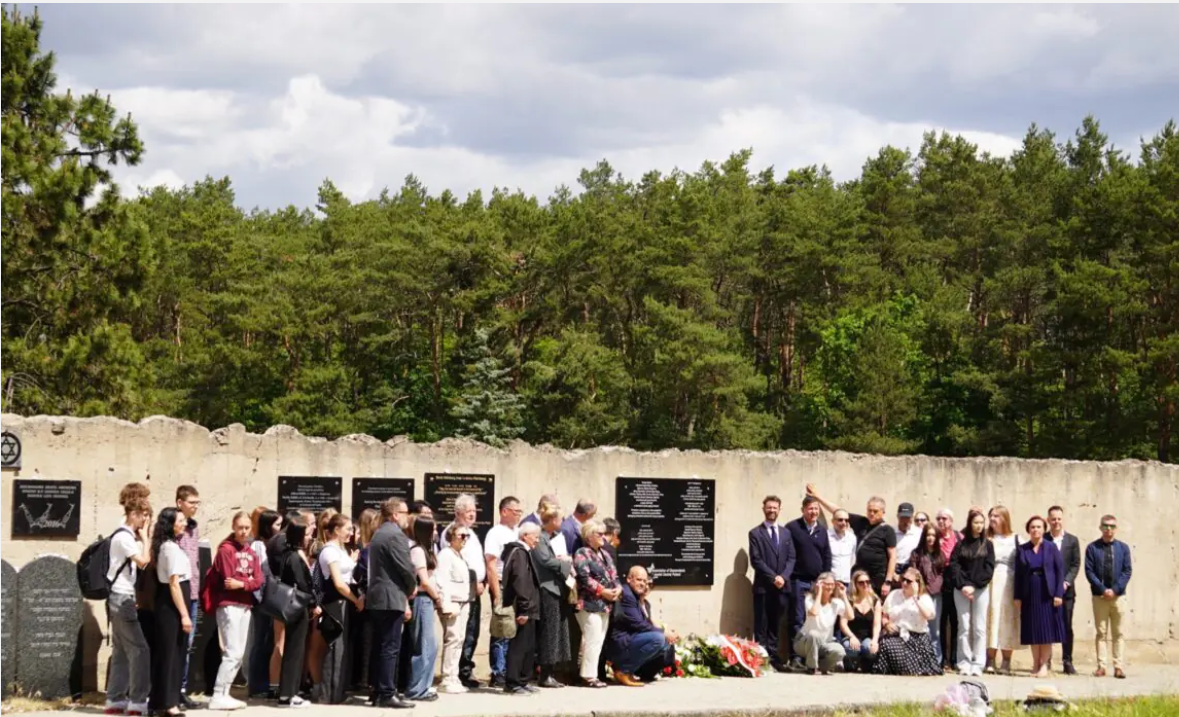
Ceremonial unveiling of the memorial plaque at the Wall of Memory in the Rzuchowski Forest. Source: Museum of the Former German Death Camp Kulmhoff website.
While we were staying in Kutno, both Tanja Cummings and I decided to visit the Kutno Jewish Cemetery, located on a large grassy hill surrounded by suburban streets, bloc apartments, and a school. Some remnants of the historic wall separate the space from the private yards of its neighbors.
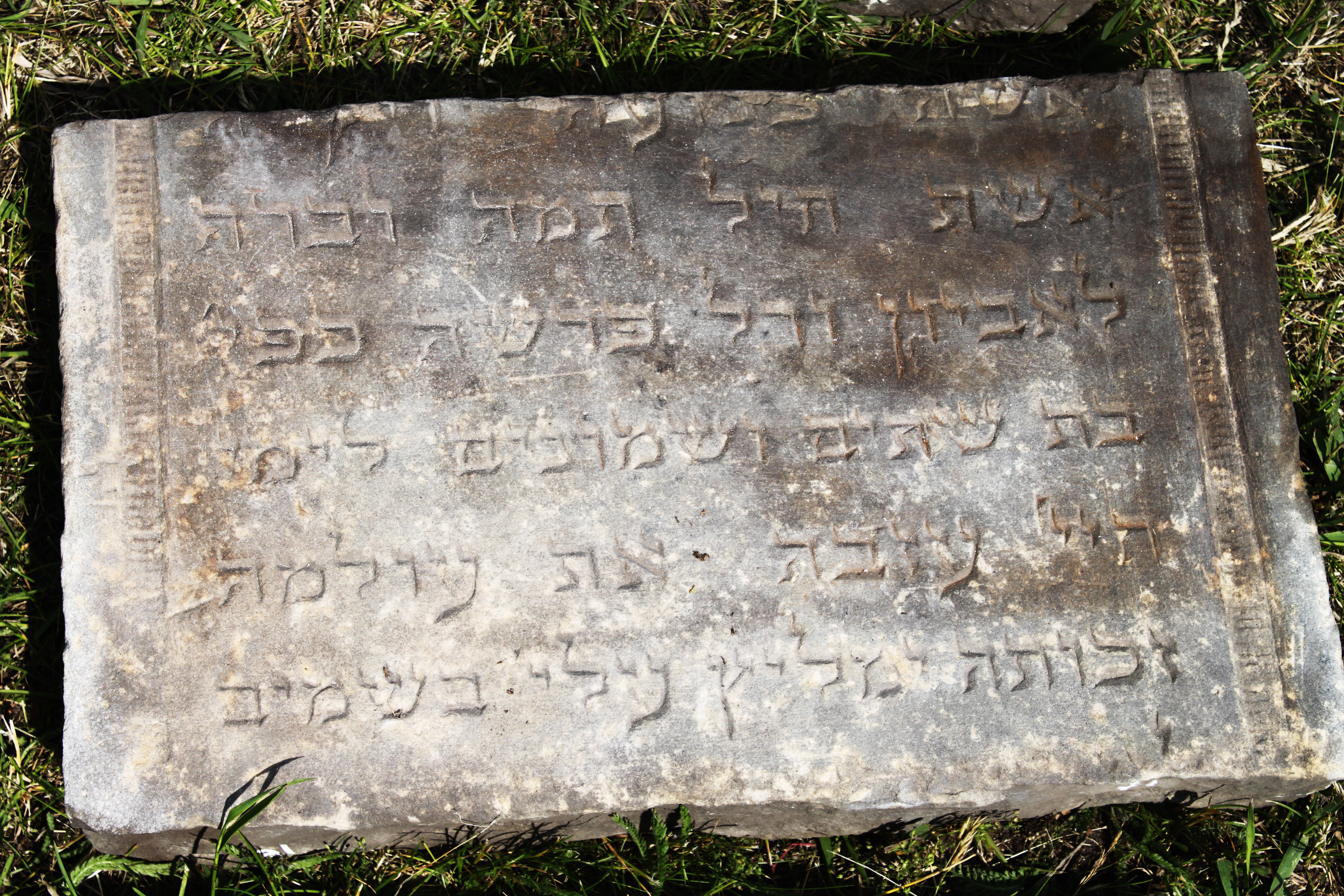
For years, descendant Yosef Kutner (see his website Jewish Kutno) has been working to rebuild a sturdy wall around the cemetery to make it safe for the return of hundreds of recovered tombstone fragments.
I also took a few photographs on a sunny afternoon a few days later.
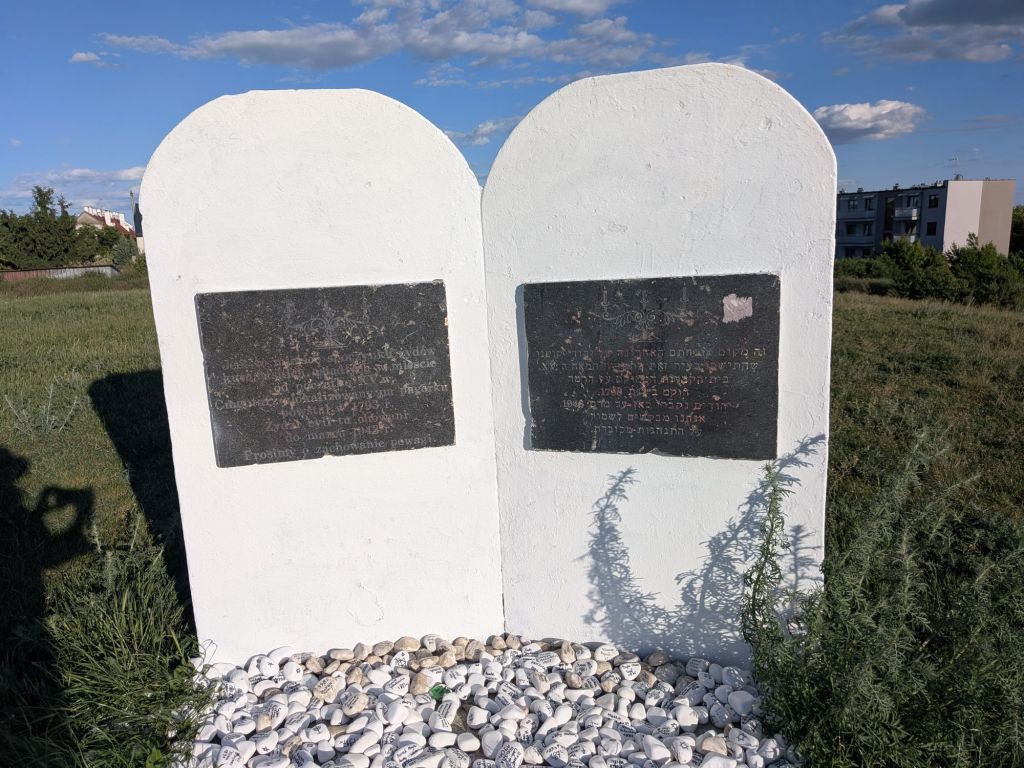
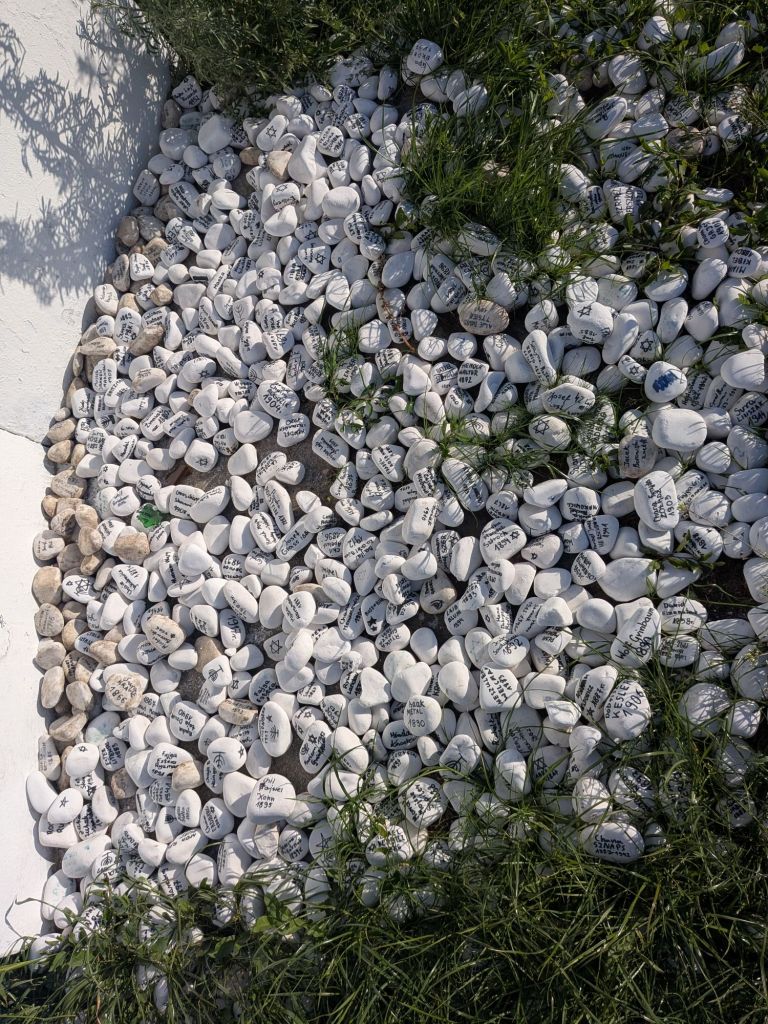
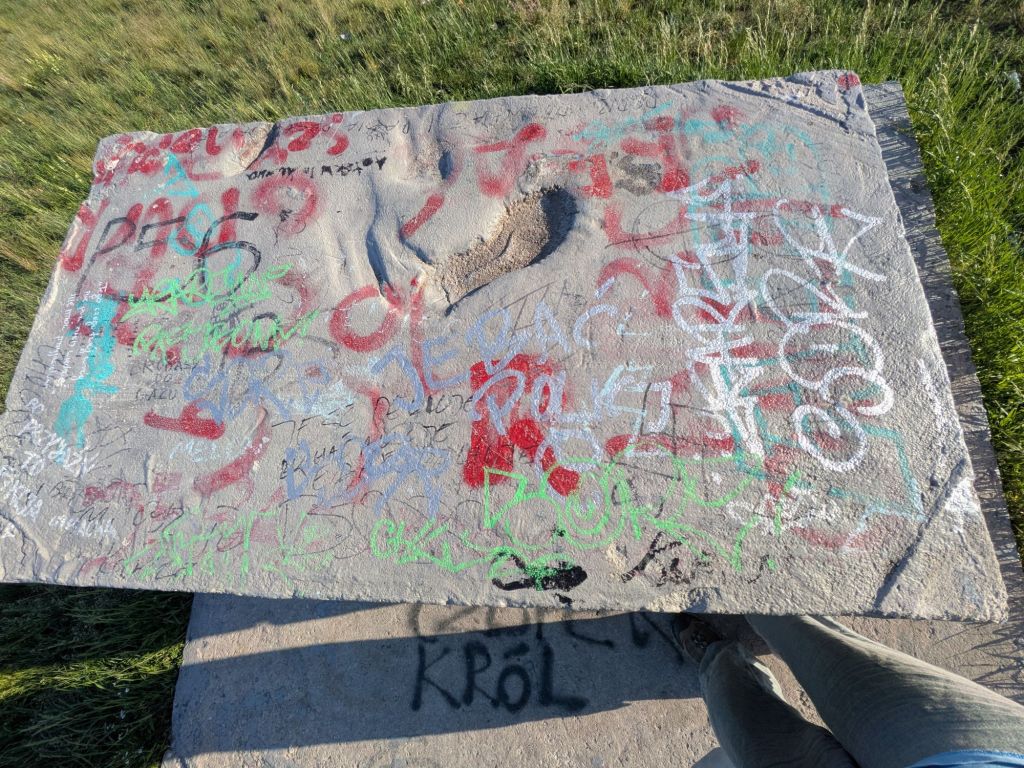
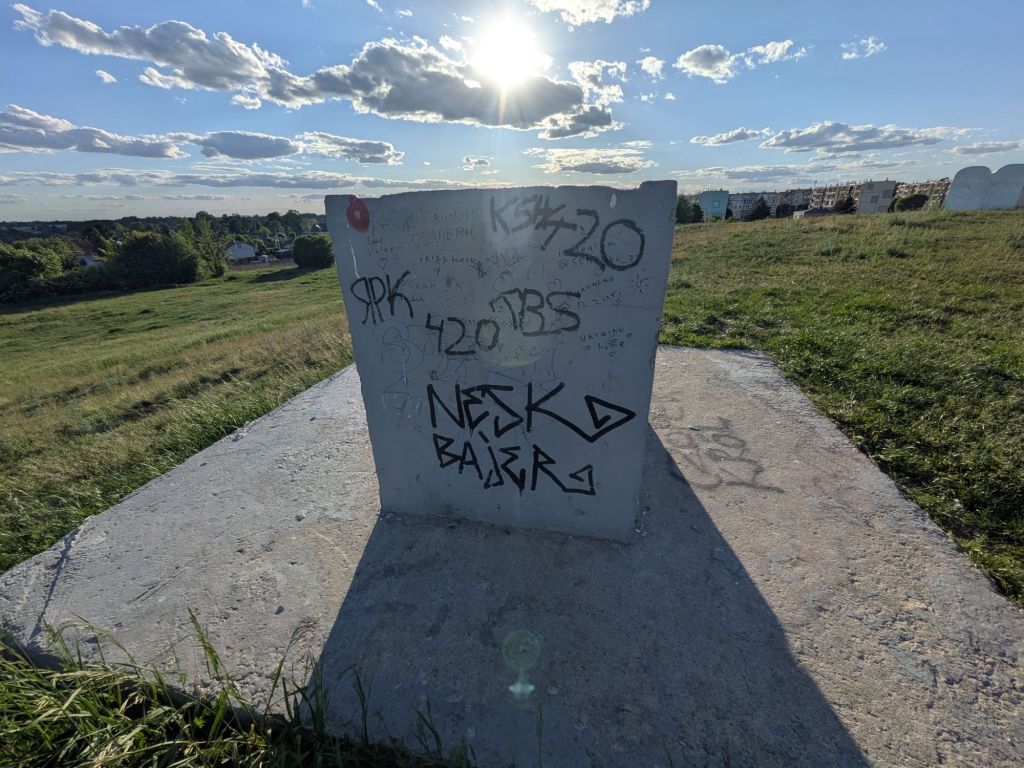
Memorial monument at the top of the hillStones left by school groups who visited the cemetery Graffiti taints a symbolic grave
Sun setting on the Hassidic monument
View of the Kutno Jewish Cemetery from the memorial at the top of the hill
I witnessed a dog walker, several groups of high school aged boys, and some solo young men drinking beer. Other signs of disturbance included trash, graffiti, and dug holes.
The condition of the cemetery raises the question about appropriate use of the space, given its historic and sacred value and the lack of a living Jewish community to watch over it. Should it be secured behind a locked wall? That might prevent both intentional and unintentional desecration, but there could be unintended consequences. It would cut the space off from the day to day lives of current residents, marking it as “other” and beyond their responsibility.
Might it be left available for respectful use by the people living in Kutno today? After all, they are the ones in a position to keep an eye on the place. What constitutes respectful? Would walking count? What about walking dogs? How about picnicking, playing ball, sunbathing? How do you stop people from leaving behind trash, dog droppings, and graffiti? Signs that identify the space as a Jewish cemetery and outline its history have not worked.
Although most of my recent news has been from Żychlin, much is happening in other towns in central Europe. In Gostynin, about 170 matzevah fragments have been recovered. Our hope is to construct a lapidarium wall at the Jewish cemetery that incorporates them.
“Żychlin’s Jewish past is not a footnote. It is a central chapter in the town’s history, and every step we take here helps restore dignity to those who lived, prayed, and were murdered here,” writes Michael Mooney. He joined the Żychlin Cemetery Project last year through our partner the Matzevah Foundation, and this year he returned with his daughter Ariel, a college student. Michael and Ariel brought energy and curiosity to our activities, as well as a willingness to do the hard physical labor of clearing our target site of the stubborn shrub blackthorn.
Michael wrote this Facebook post about our activities:
Ariel and I arrived yesterday afternoon in Kutno, Poland, where we are staying for the duration of our volunteer work in Żychlin. We immediately met the international volunteers who have gathered here this year — people joining us from across Poland, the United States, and several countries in Europe. It’s a remarkable group: committed, thoughtful, and united by a shared purpose.
This morning we took part in a moving ceremony in Kutno, where a fragment of a pre‑war Torah scroll from Żychlin was formally entrusted to the Museum Pałac Saski. The event brought together representatives of the Jewish community and the Catholic Church — including Chief Rabbi of Poland Michael Schudrich and Bishop Wojciech Osial — in a shared act of remembrance and responsibility for Jewish heritage in central Poland.
After the ceremony, our group continued our work at the Jewish cemetery in Żychlin, a place that holds both the memory of centuries of Jewish life and the trauma of its destruction.
Work at the Cemetery Today
• Clearing vegetation along the perimeter of a suspected mass‑grave area, where Jews from Żychlin were likely executed during the liquidation of the ghetto. This continues the work we began last year, slowly reclaiming the land from decades of overgrowth.
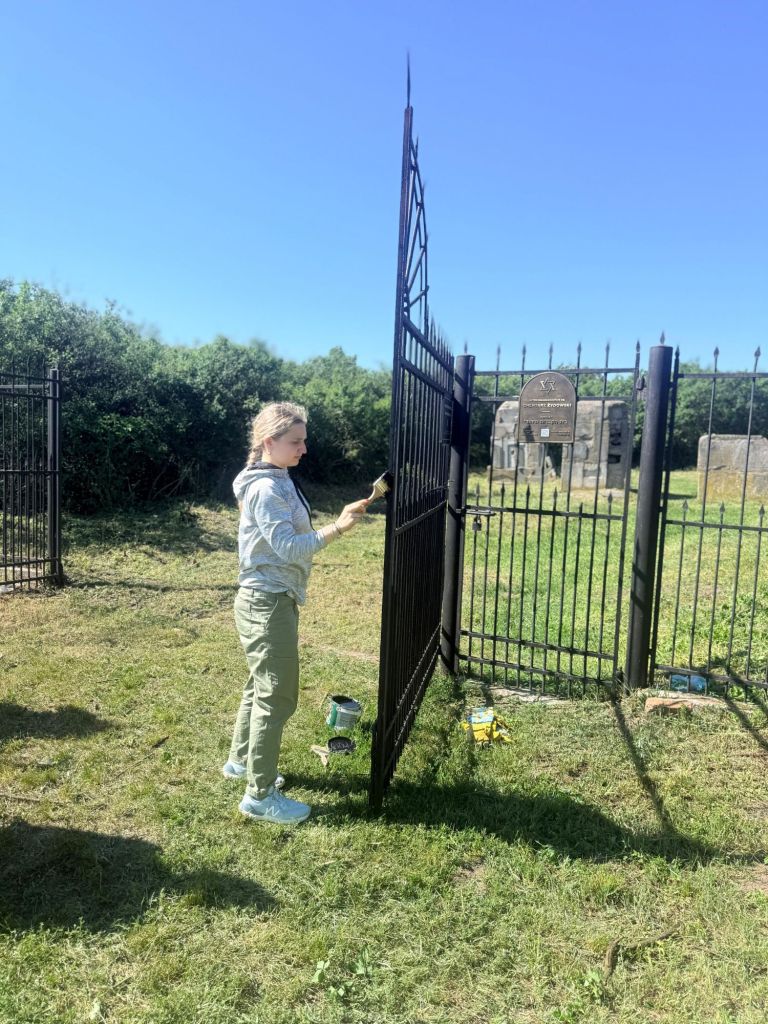
• Beginning the repainting of the cemetery gates, restoring dignity to the entrance of a sacred site that has been neglected for more than 80 years.
Every brushstroke and every branch removed is an act of remembrance — a way of returning visibility and respect to a place that was meant to be forgotten.
A Stop at the Żychlin Synagogue
Before heading to the cemetery, we stopped at the former synagogue of Żychlin — today only a shell of what it once was. The building is completely inaccessible: every doorway bricked shut, the interior long collapsed, the structure left to decay in silence.
One of our volunteers, Lawrence, whose father was a survivor from Żychlin, stood with us as we placed a memorial candle outside the sealed entrance. The candle remained unlit — a symbol of a light that once burned here but cannot yet return inside.
As we stood there, neighbors stepped out of the surrounding houses to watch. No one spoke.
The building was silent.
The street was silent.
Only the memory remained.
The Jewish Community of Żychlin
For more than 400 years, Żychlin was home to a vibrant and deeply rooted Jewish community. On the eve of World War II, Jews made up over half the town’s population, roughly 3,000–4,000 people. They built synagogues, schools, businesses, and a rich communal life that shaped the town’s identity.
All of it was destroyed between 1939 and 1942.
The Murder of Żychlin’s Jews
In 1942, the Jews of Żychlin were rounded up and deported to the Chelmno extermination camp, where they were murdered.
Local testimony and post‑war accounts also indicate that executions took place on the grounds of the Jewish cemetery itself. Two areas within the cemetery are believed to contain mass graves, where groups of Żychlin’s Jews were shot and buried during the liquidation of the ghetto. These sites were never formally marked or commemorated, and for decades nature concealed them.
Our work today — clearing brush, restoring the gates, and tending to the land — is part of the long process of bringing these places back into historical visibility and honoring those buried there.
Why This Matters
The Torah fragment entrusted to the museum this morning, the silent synagogue we visited, and the work at the cemetery this afternoon are all part of the same story:
A story of a community erased —
and of descendants, volunteers, and allies working to ensure it is never forgotten.
Żychlin’s Jewish past is not a footnote. It is a central chapter in the town’s history, and every step we take here helps restore dignity to those who lived, prayed, and were murdered here.
Thank you Marysia Galbraith and Bożena Gajewska
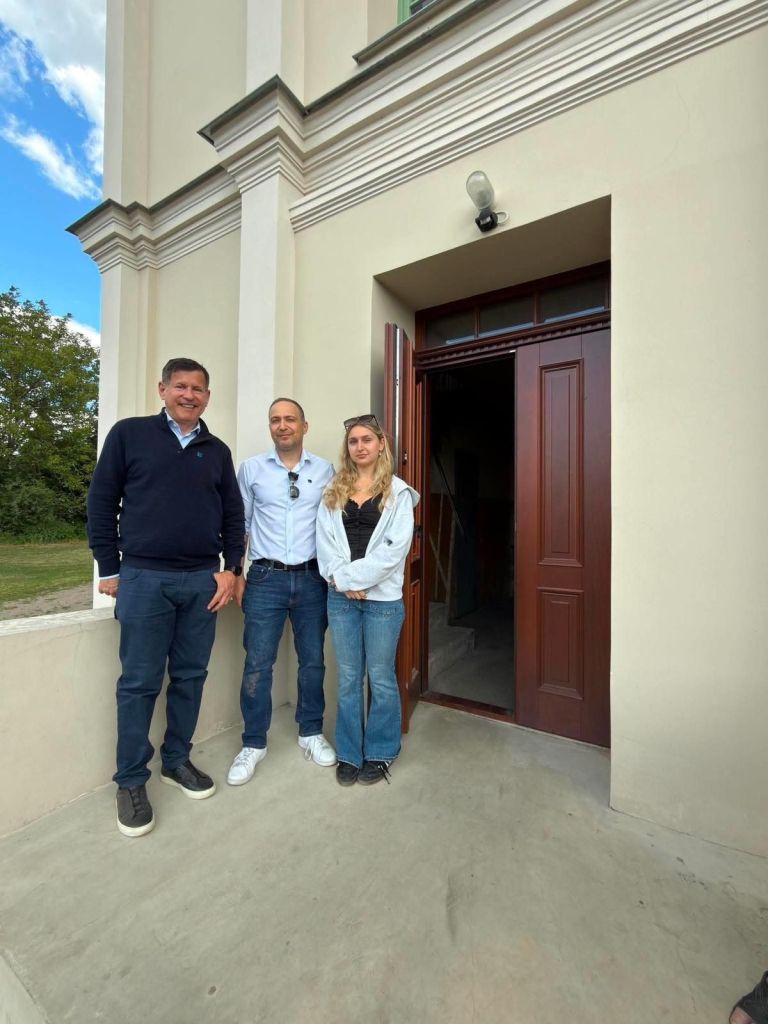
Michael (center) with his daughter Ariel and Żychlin descendant Lawrence Zlatkin
Only 1/3 of this area was cleared before we started on Monday.
It’s remarkable how much can be accomplished with many helpers. The Żychlin Cemetery Project exceeded its goals thanks to 14 volunteers through the Association of Descendants of Jewish Central Poland working together with local residents, including the tireless Bogdan whose boss at Active Energy also donated the necessary equipment, residents of the Correctional Facility in Garbalin, students from Adam Mickiewicz school in Żychlin, Tomasz from the city of Żychlin, den mother Bożena Gajewska, and others.
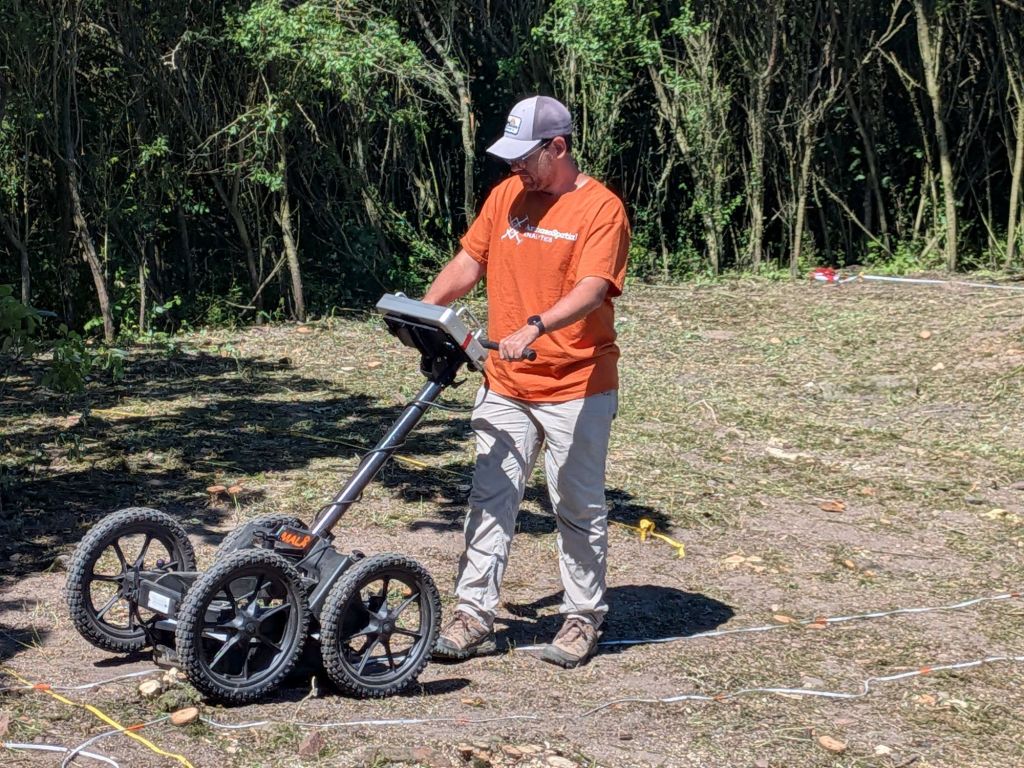
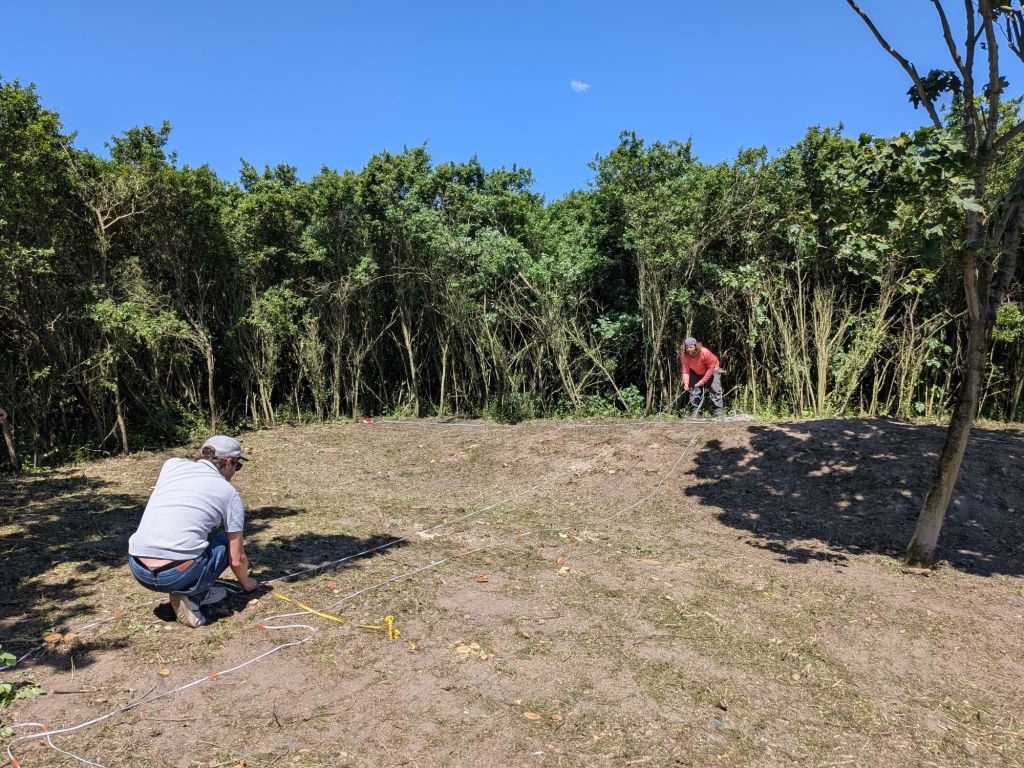
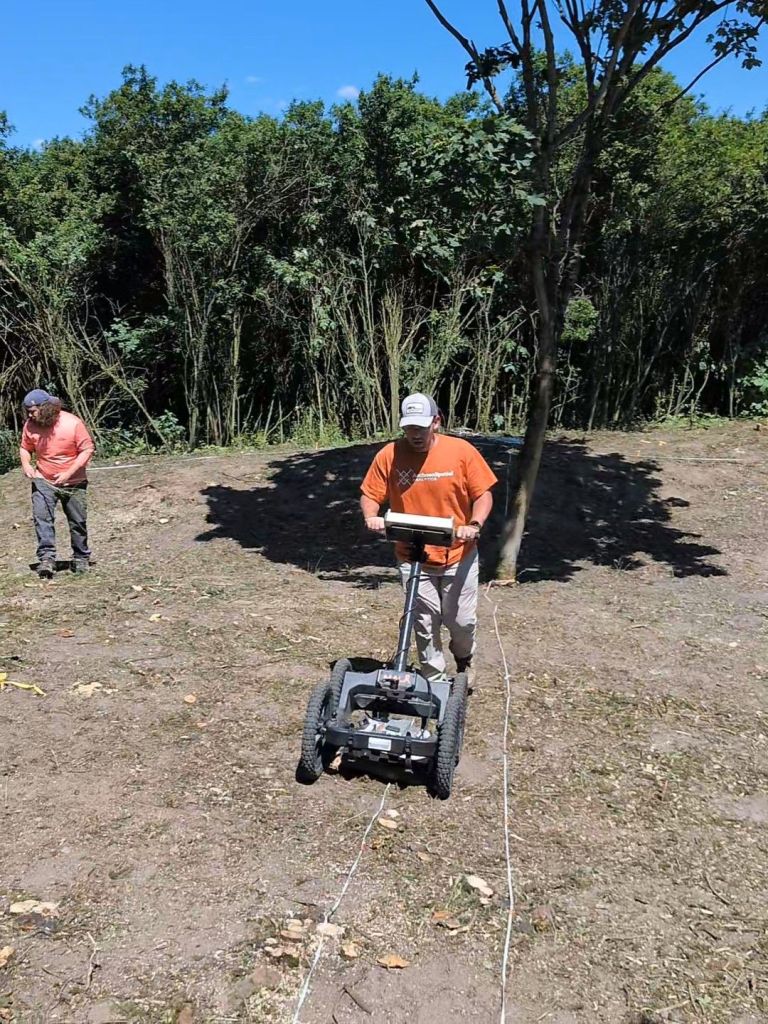
The gentlemen fired up their mechanical saws and trimmers, and within two days had cleared the remaining 2/3 of our target site. Those of us who started out with loppers quickly realized that we were more needed hauling cut branches and trunks to the entrance of the cemetery where they were piled up for the city of Żychlin to pick up. On day three, students from the local school arrived at the perfect time to help remove rocks and smaller twigs that would interrupt the course of the ground-penetrating radar (GPR) equipment. Thursday and Friday were dedicated to laying the grid and running the GPR across the site at 25 meter increments.
This results in a mass of data that our GPR expert Claiborne Sea will analyze. Already last year, the results indicated a mass burial, unlike traditional grave burials in a number of key ways. With the data collected this year, we will be able to map the extent of the burial area. We will submit our report to the Polish authorities so that the site can be marked, memorialized, and maintained.
May these victims of some of the worst horrors perpetrated against another group of human beings be remembered; May their final resting place be shown the respect they deserve.
Claiborne operating the GPRCaleb sets the grid
Luke picks up a few remaining sticks while Claiborne follows the grid lines with the GPR