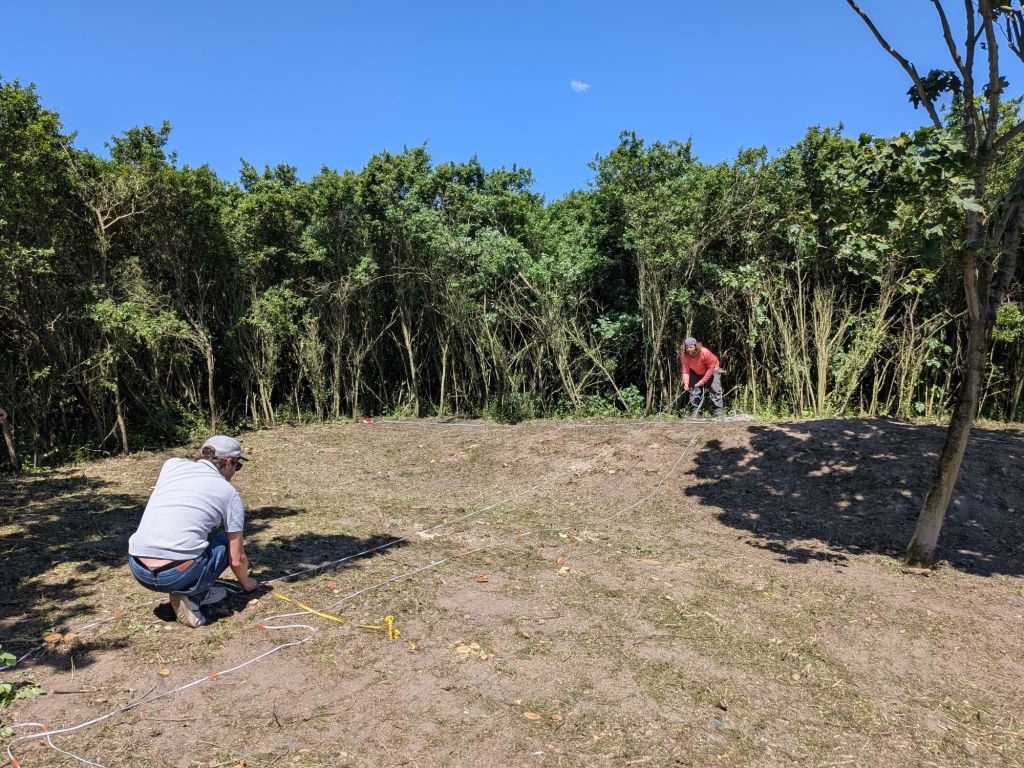
Only 1/3 of this area was cleared before we started on Monday.
It’s remarkable how much can be accomplished with many helpers. The Żychlin Cemetery Project exceeded its goals thanks to 14 volunteers through the Association of Descendants of Jewish Central Poland working together with local residents, including the tireless Bogdan whose boss at Active Energy also donated the necessary equipment, residents of the Correctional Facility in Garbalin, students from Adam Mickiewicz school in Żychlin, Tomasz from the city of Żychlin, den mother Bożena Gajewska, and others.
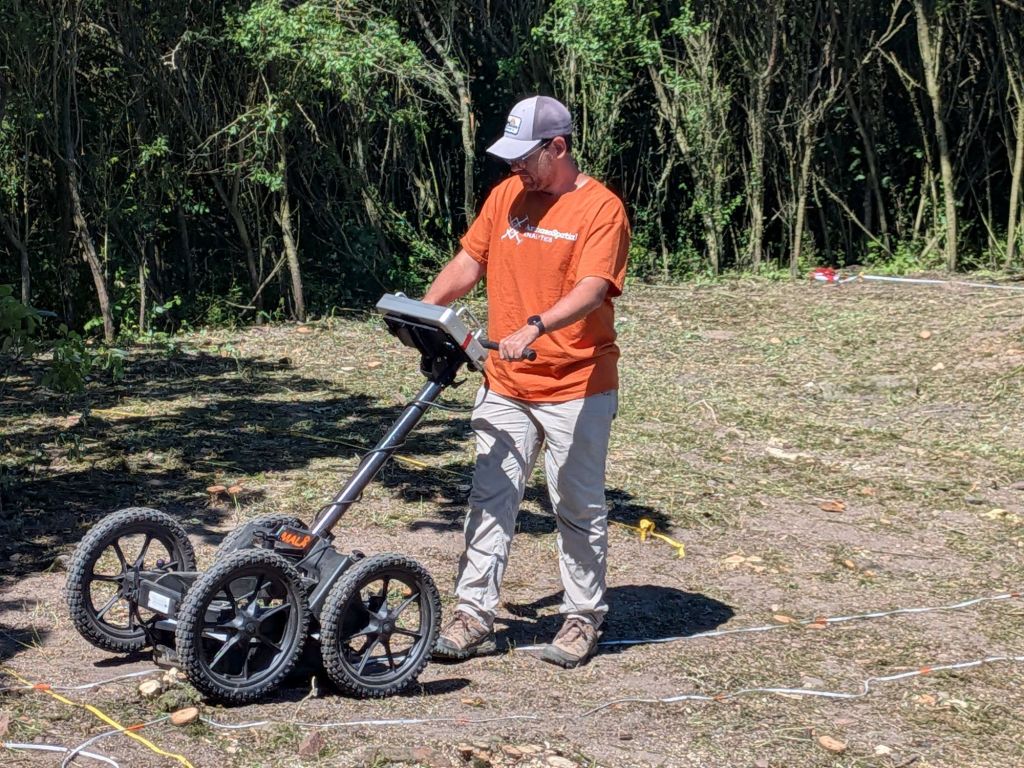
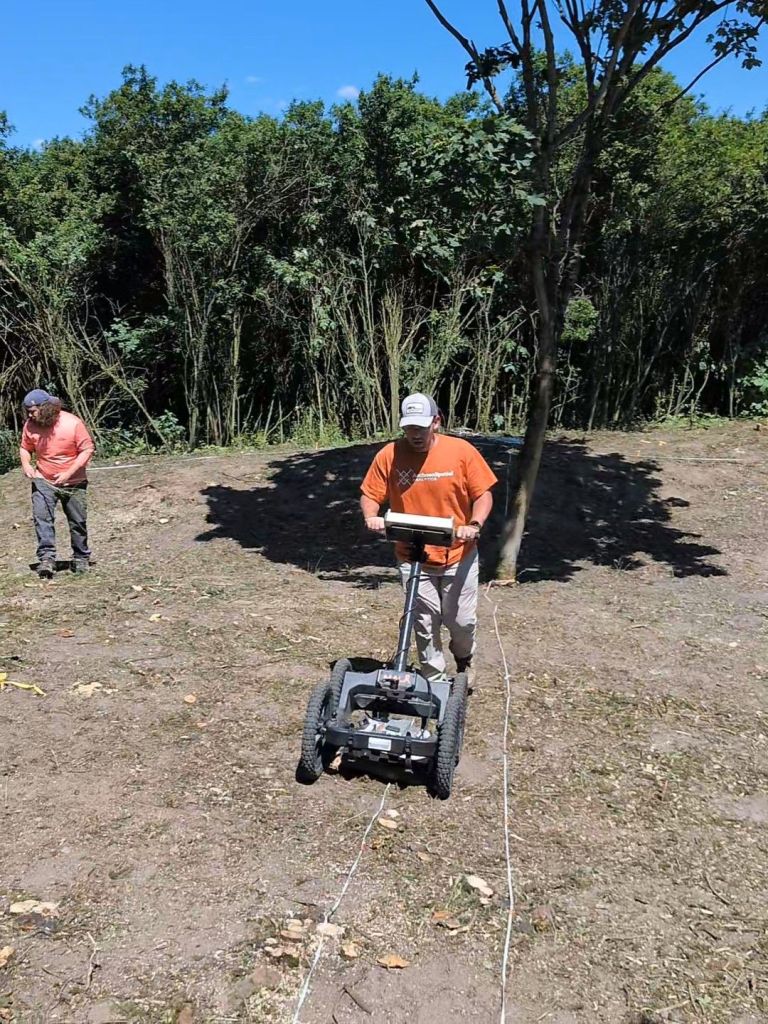
The gentlemen fired up their mechanical saws and trimmers, and within two days had cleared the remaining 2/3 of our target site. Those of us who started out with loppers quickly realized that we were more needed hauling cut branches and trunks to the entrance of the cemetery where they were piled up for the city of Żychlin to pick up. On day three, students from the local school arrived at the perfect time to help remove rocks and smaller twigs that would interrupt the course of the ground-penetrating radar (GPR) equipment. Thursday and Friday were dedicated to laying the grid and running the GPR across the site at 25 meter increments.
This results in a mass of data that our GPR expert Claiborne Sea will analyze. Already last year, the results indicated a mass burial, unlike traditional grave burials in a number of key ways. With the data collected this year, we will be able to map the extent of the burial area. We will submit our report to the Polish authorities so that the site can be marked, memorialized, and maintained.
May these victims of some of the worst horrors perpetrated against another group of human beings be remembered; May their final resting place be shown the respect they deserve.
Claiborne operating the GPRCaleb sets the grid
Luke picks up a few remaining sticks while Claiborne follows the grid lines with the GPR
Report #8 about Roberta Books and Marysia Galbraith’s trip to meet Polish partners in preparation for the ADJCP‘s memorial visit to central Poland.
Chełmno nad Nerem, September 11
On September 11, we started the day at the Chełmno Death Camp. Though the parking lot was full, the camp itself was empty. Most people were in the neighboring church. It was Sunday. The mass, emitted from speakers outside the church, wafted across the remains of the death camp.
No English-language guide was available, so the woman at the office/ticket desk showed us around herself.
The camp is on the site of a former pałac, or mansion. Prisoners would be told it was a health resort. They were given postcards and encouraged to write home that they were safe and taken care of. Then, they were told they needed to wash before entering, which made sense to many because diseases like typhus were common in the ghettos they came from. Prisoners were brought to the basement of the mansion to undress. They were instructed to fill out inventories of the valuables they had with them and then hand everything over for safe keeping while they showered. They were told they can present their inventory later to get their valuables back. Instead, they were murdered.
Map of the mansion at Chełmno. “E” marks the location of the trucks converted into gas chambers.
The Nazis destroyed the camp when they retreated. But the outline of the mansion’s basement walls remain. We walked along a raised walkway and looked down into the spaces where people undressed and then were led down a corridor and outside into a truck set up with what looked like shower heads inside. Sometimes, prisoners were even given slivers of soap as they entered. In actuality, these trucks were designed for mass murder, their backs converted into the Nazis’ first gas chambers. Up to 100 people were gassed at a time and then prison work units would remove the bodies, which were taken by truck to the forest about 7 km away. Initially the bodies were buried, but later they were burned and the ashes buried.
They knew that what they were doing was wrong. Why else would they destroy the evidence?
At the burial site in the forest, I needed space to be with my own thoughts. I walked alone under an imposing Communist-era concrete monument balanced on tapered concrete supports. On the side facing the road is a bas relief of people in various states of suffering, with the single word “We remember” (“Pamiętamy”). On the back side, in uneven block letters, is written, “We were taken, from the elderly to infants, between the cities of Koło and Dąbie. We were taken to the forest and there we were gassed, shot, and burned…Now we ask that our future brothers punish our murderers. The witnesses of our oppression, who live in this area we ask again for these murders to be publicized throughout the world.”
Communist-era monument at Chełmno Death Camp
At some point, the Communist leaders made a point of building commemorative monstrosities like this. There is another one at the Stutthoff Concentration Camp near the Baltic coast.
I caught up with Roberta and Yosef when we got to a big field of mass graves. “This is the most important place to see,” Roberta said. Otherwise, we didn’t talk about it.
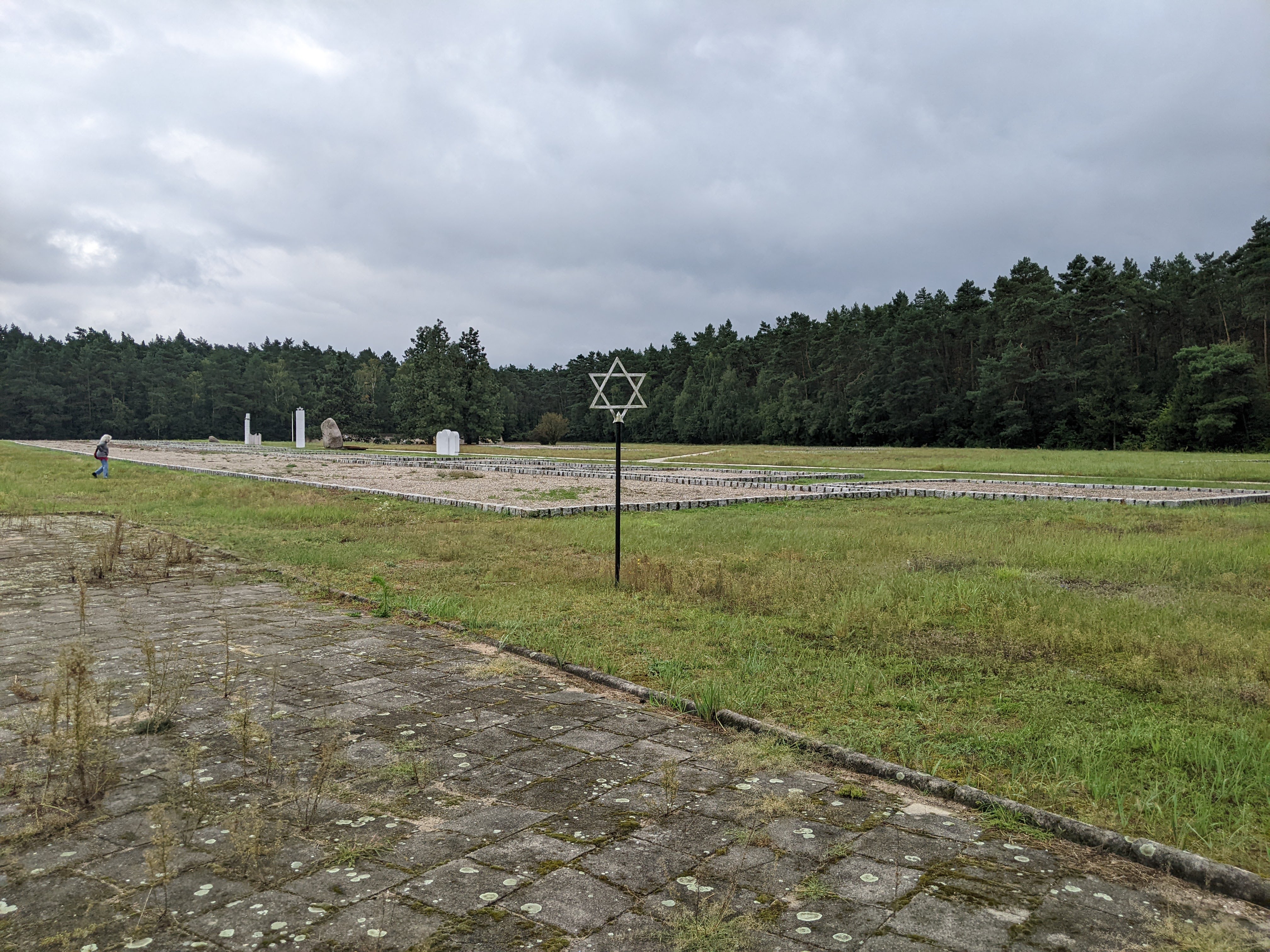
The graves are delineated by concrete borders filled with white gravel. This is to mark the burial sites, and also to prevent bone fragments from moving up out of the ground. People have been known to search for bones here and take them home as souvenirs.
Mass graves marked with stone borders and gravel, beyond the Star of David
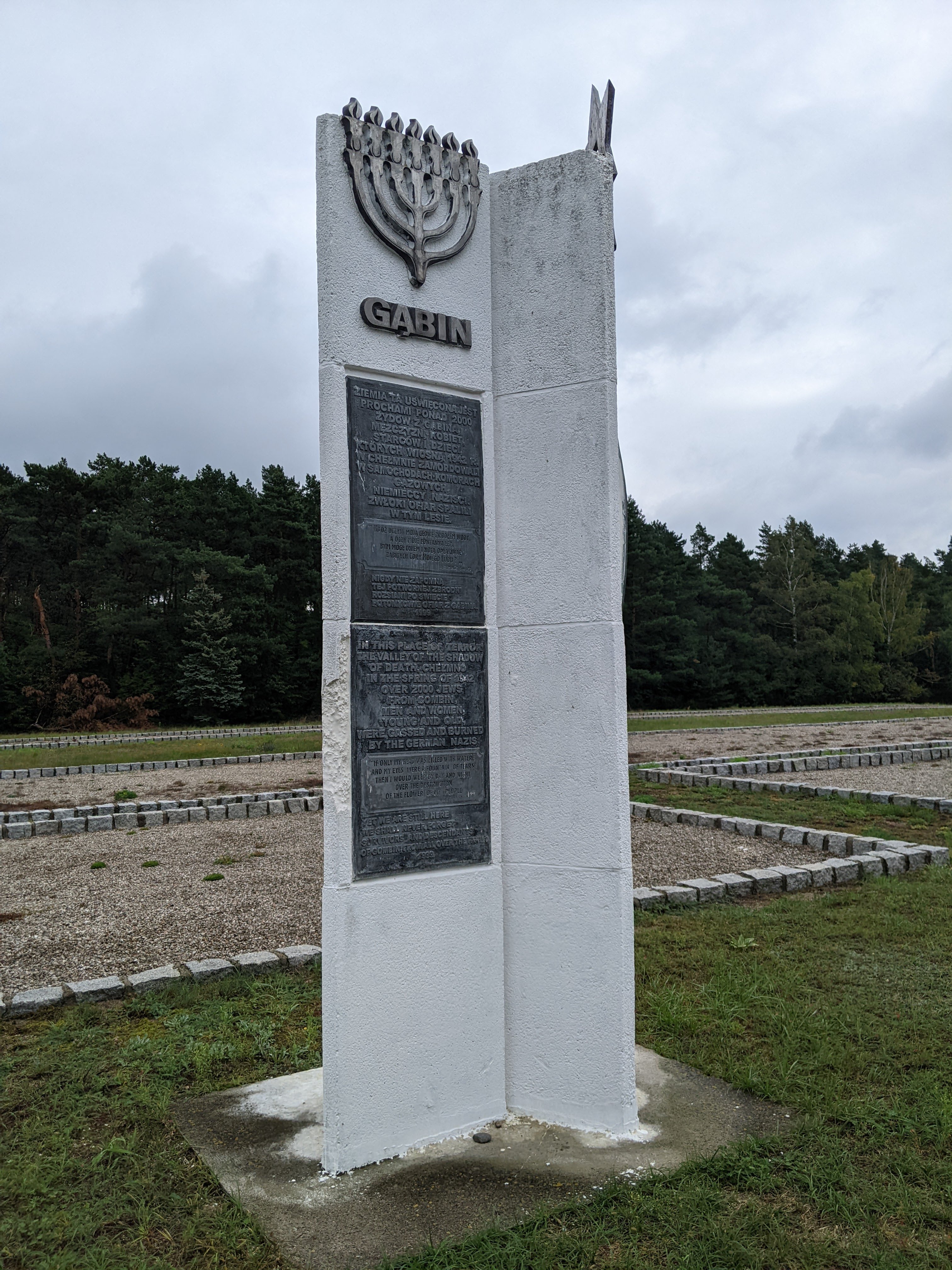
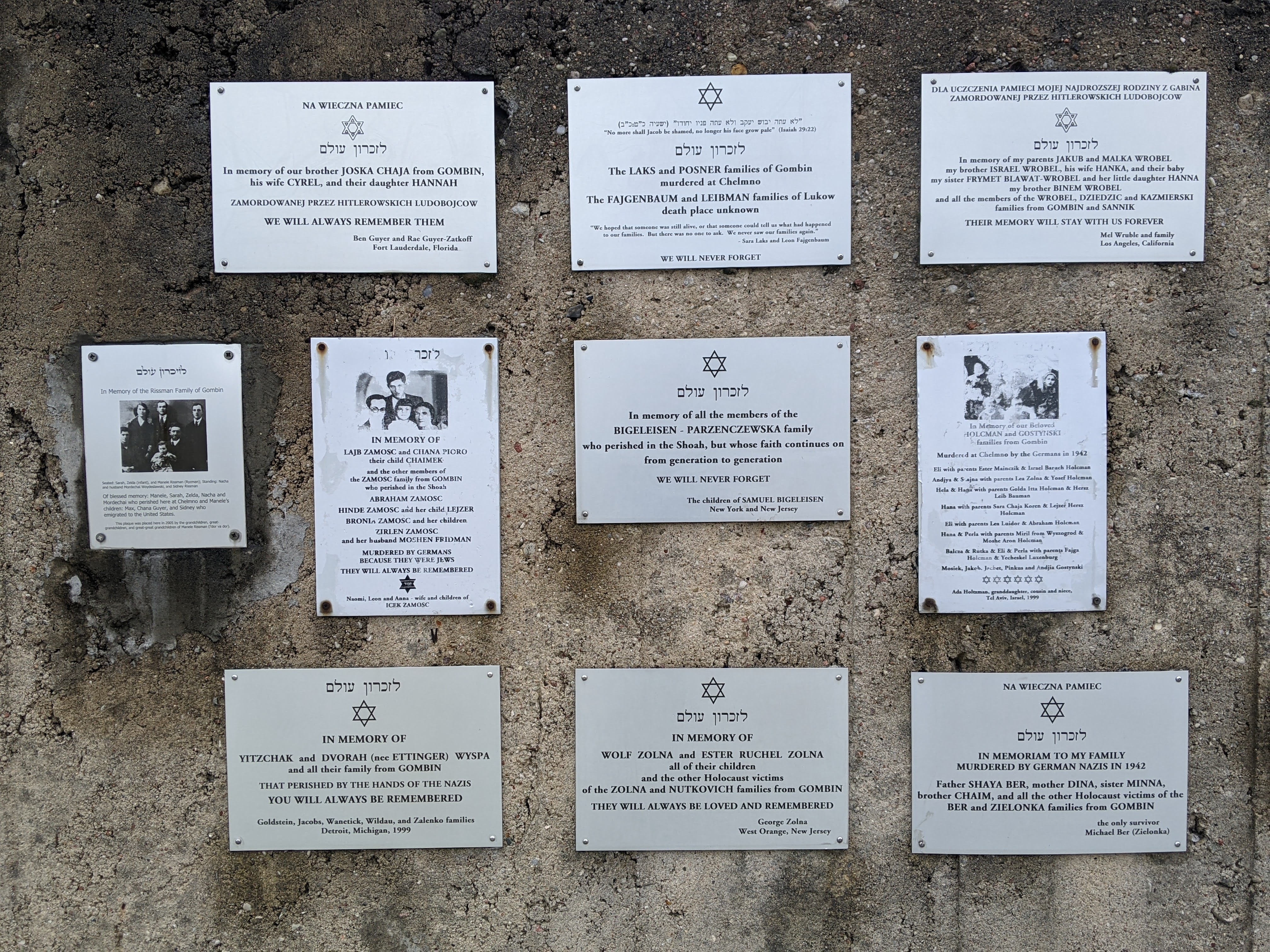
Survivors and their descendants have put up monuments alongside the massive expanses of burials. Some commemorate Jewish communities of particular towns, and some include long lists of the names of those murdered. Near the remains of a crematorium, now mounted in a low concrete wall, is a higher wall with an arched opening. On both sides, smaller plaques were put up by families to commemorate their murdered relatives.
Memorials at Chełmno
Several years ago, a friend told me that people would come here for picnics. As we left, Roberta said there used to be rock concerts near the Communist-era monument, too. What were they thinking? Or, rather, how is it that they weren’t thinking about this as a place of martyrdom and tragedy?
Roberta looks back at the mass graves
Over lunch in Koło, we didn’t talk about any of this. Maybe we just needed a break. Or maybe it was the result of a kind of protective amnesia. If you think about it too much it will just drive you crazy.



 Uncovering Jewish Heritage