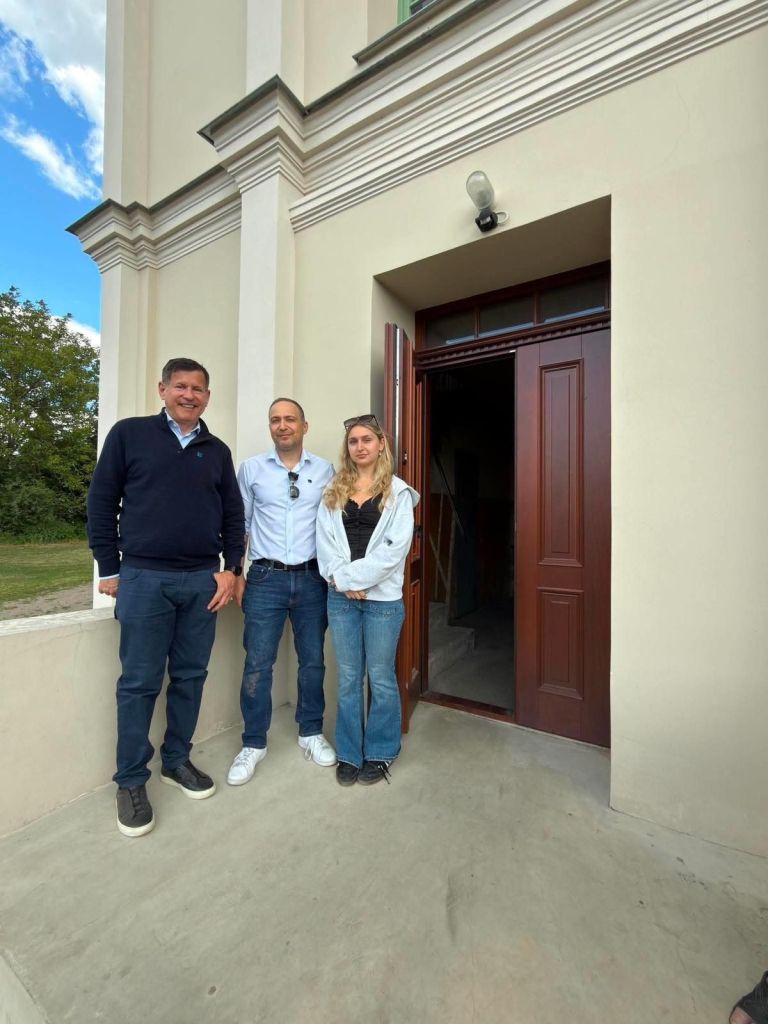
“Żychlin’s Jewish past is not a footnote. It is a central chapter in the town’s history, and every step we take here helps restore dignity to those who lived, prayed, and were murdered here,” writes Michael Mooney. He joined the Żychlin Cemetery Project last year through our partner the Matzevah Foundation, and this year he returned with his daughter Ariel, a college student. Michael and Ariel brought energy and curiosity to our activities, as well as a willingness to do the hard physical labor of clearing our target site of the stubborn shrub blackthorn.
Michael wrote this Facebook post about our activities:
Ariel and I arrived yesterday afternoon in Kutno, Poland, where we are staying for the duration of our volunteer work in Żychlin. We immediately met the international volunteers who have gathered here this year — people joining us from across Poland, the United States, and several countries in Europe. It’s a remarkable group: committed, thoughtful, and united by a shared purpose.
This morning we took part in a moving ceremony in Kutno, where a fragment of a pre‑war Torah scroll from Żychlin was formally entrusted to the Museum Pałac Saski. The event brought together representatives of the Jewish community and the Catholic Church — including Chief Rabbi of Poland Michael Schudrich and Bishop Wojciech Osial — in a shared act of remembrance and responsibility for Jewish heritage in central Poland.
After the ceremony, our group continued our work at the Jewish cemetery in Żychlin, a place that holds both the memory of centuries of Jewish life and the trauma of its destruction.
Work at the Cemetery Today
• Clearing vegetation along the perimeter of a suspected mass‑grave area, where Jews from Żychlin were likely executed during the liquidation of the ghetto. This continues the work we began last year, slowly reclaiming the land from decades of overgrowth.
• Beginning the repainting of the cemetery gates, restoring dignity to the entrance of a sacred site that has been neglected for more than 80 years.
Every brushstroke and every branch removed is an act of remembrance — a way of returning visibility and respect to a place that was meant to be forgotten.
A Stop at the Żychlin Synagogue
Before heading to the cemetery, we stopped at the former synagogue of Żychlin — today only a shell of what it once was. The building is completely inaccessible: every doorway bricked shut, the interior long collapsed, the structure left to decay in silence.
One of our volunteers, Lawrence, whose father was a survivor from Żychlin, stood with us as we placed a memorial candle outside the sealed entrance. The candle remained unlit — a symbol of a light that once burned here but cannot yet return inside.
As we stood there, neighbors stepped out of the surrounding houses to watch. No one spoke.
The building was silent.
The street was silent.
Only the memory remained.
The Jewish Community of Żychlin
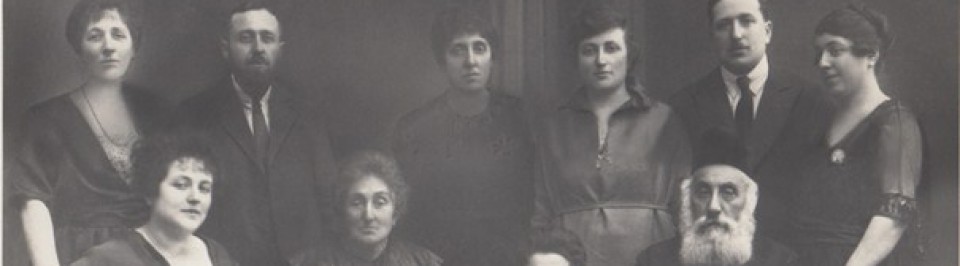
For more than 400 years, Żychlin was home to a vibrant and deeply rooted Jewish community. On the eve of World War II, Jews made up over half the town’s population, roughly 3,000–4,000 people. They built synagogues, schools, businesses, and a rich communal life that shaped the town’s identity.
All of it was destroyed between 1939 and 1942.
The Murder of Żychlin’s Jews
In 1942, the Jews of Żychlin were rounded up and deported to the Chelmno extermination camp, where they were murdered.
Local testimony and post‑war accounts also indicate that executions took place on the grounds of the Jewish cemetery itself. Two areas within the cemetery are believed to contain mass graves, where groups of Żychlin’s Jews were shot and buried during the liquidation of the ghetto. These sites were never formally marked or commemorated, and for decades nature concealed them.
Our work today — clearing brush, restoring the gates, and tending to the land — is part of the long process of bringing these places back into historical visibility and honoring those buried there.
Why This Matters
The Torah fragment entrusted to the museum this morning, the silent synagogue we visited, and the work at the cemetery this afternoon are all part of the same story:
A story of a community erased —
and of descendants, volunteers, and allies working to ensure it is never forgotten.
Żychlin’s Jewish past is not a footnote. It is a central chapter in the town’s history, and every step we take here helps restore dignity to those who lived, prayed, and were murdered here.
Thank you Marysia Galbraith and Bożena Gajewska
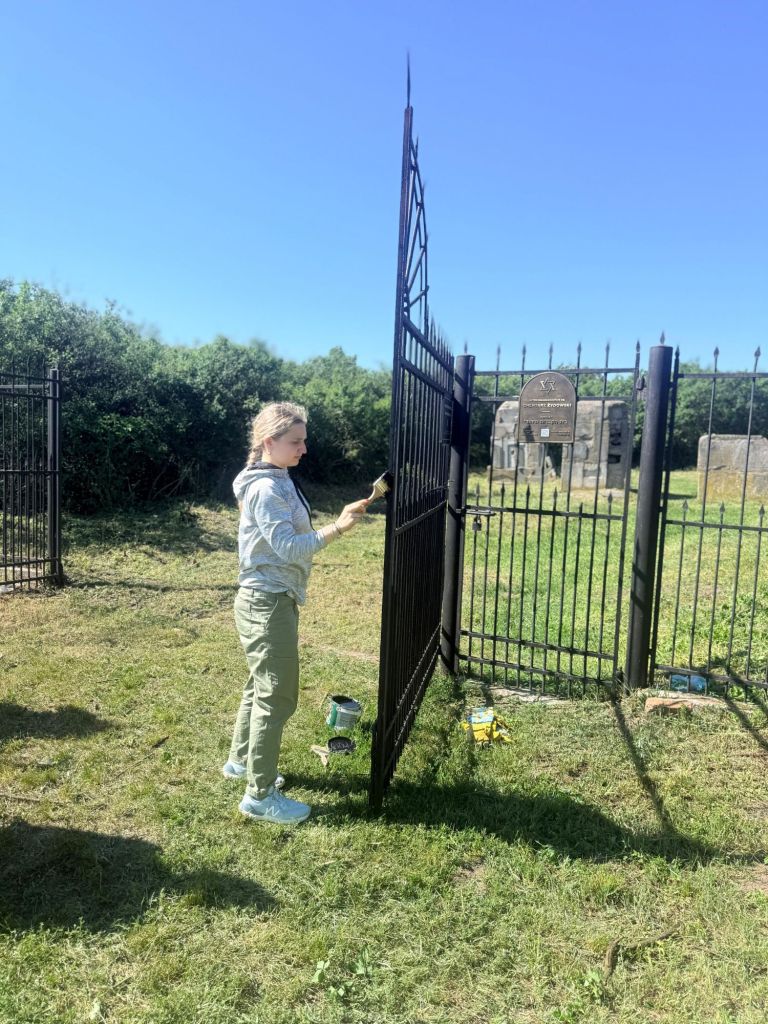
Ariel touching up the paint on the cemetery gate
 Uncovering Jewish Heritage