While we were staying in Kutno, both Tanja Cummings and I decided to visit the Kutno Jewish Cemetery, located on a large grassy hill surrounded by suburban streets, bloc apartments, and a school. Some remnants of the historic wall separate the space from the private yards of its neighbors.
For years, descendant Yosef Kutner (see his website Jewish Kutno) has been working to rebuild a sturdy wall around the cemetery to make it safe for the return of hundreds of recovered tombstone fragments.
Tanja made a video, which she posted on Vimeo: Link to the video of the Kutno Jewish Cemetery on May 24, 2026. Rain was falling and nobody else was there. She described the place as peaceful.
I also took a few photographs on a sunny afternoon a few days later.
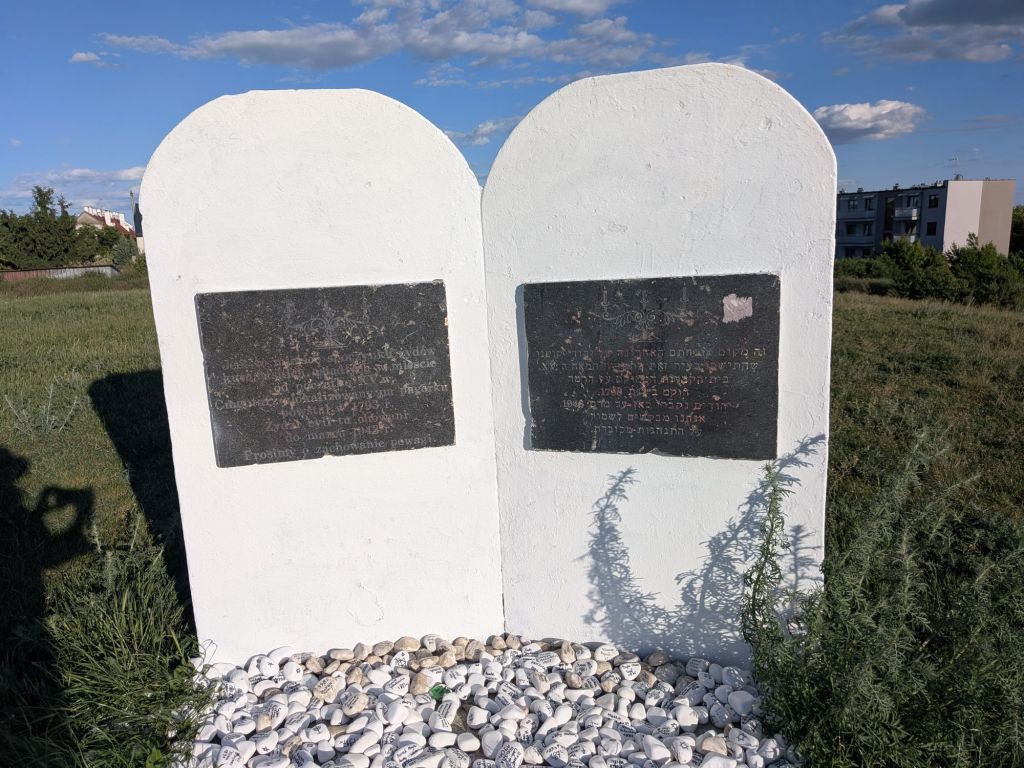
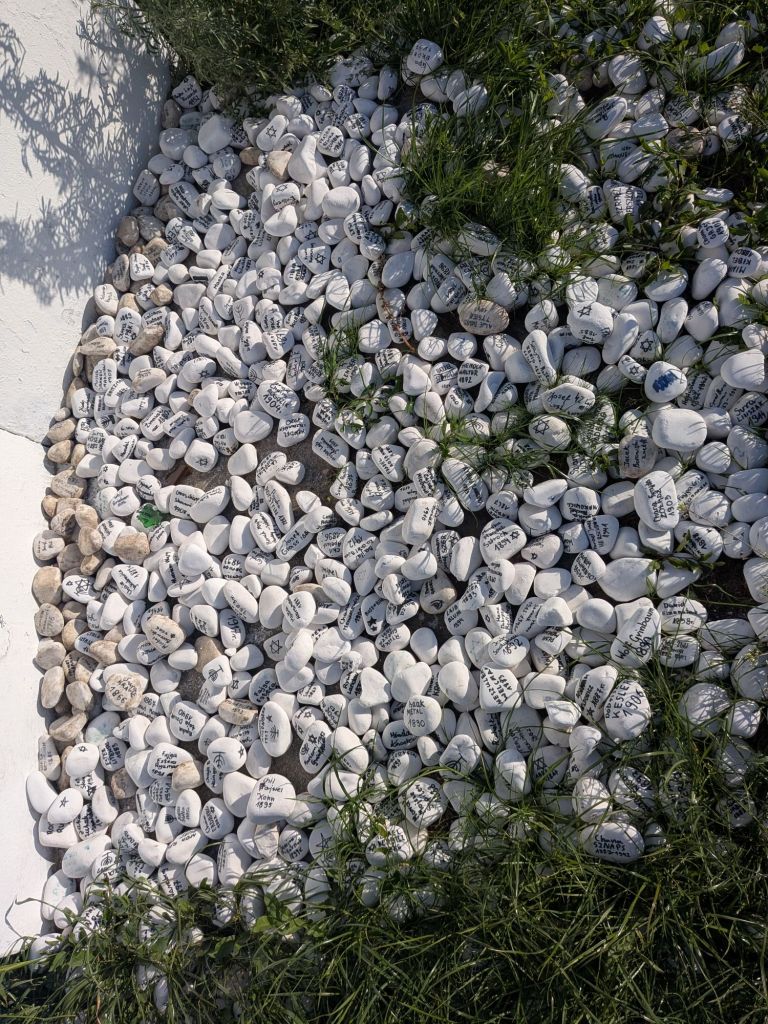
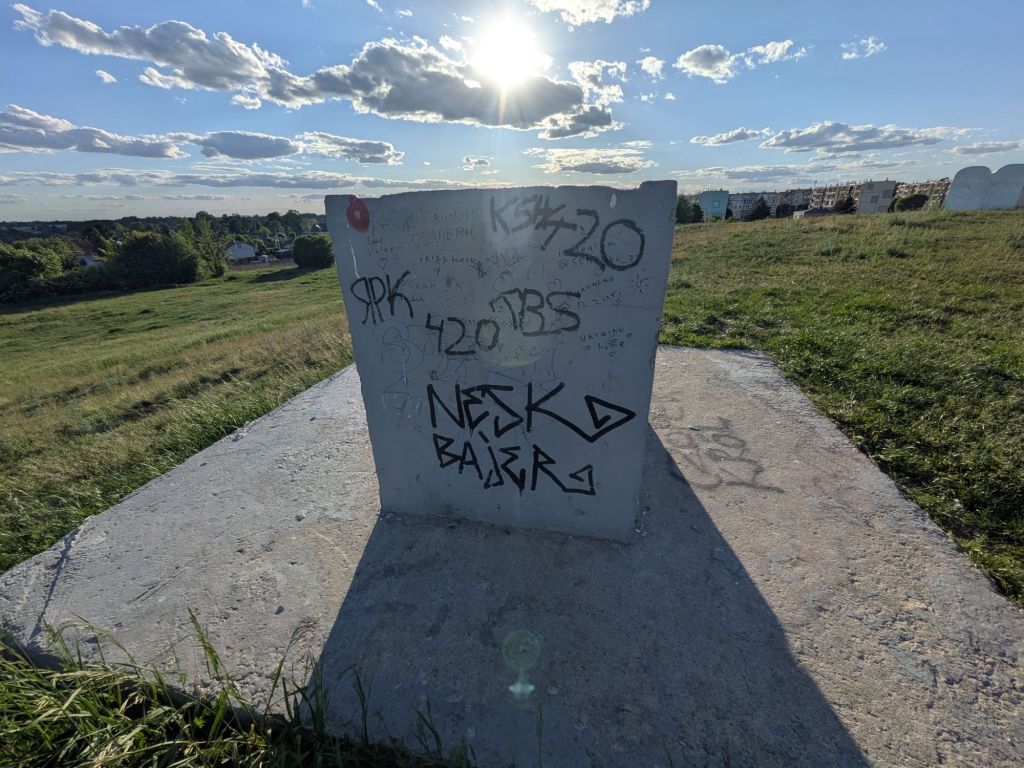
Sun setting on the Hassidic monument
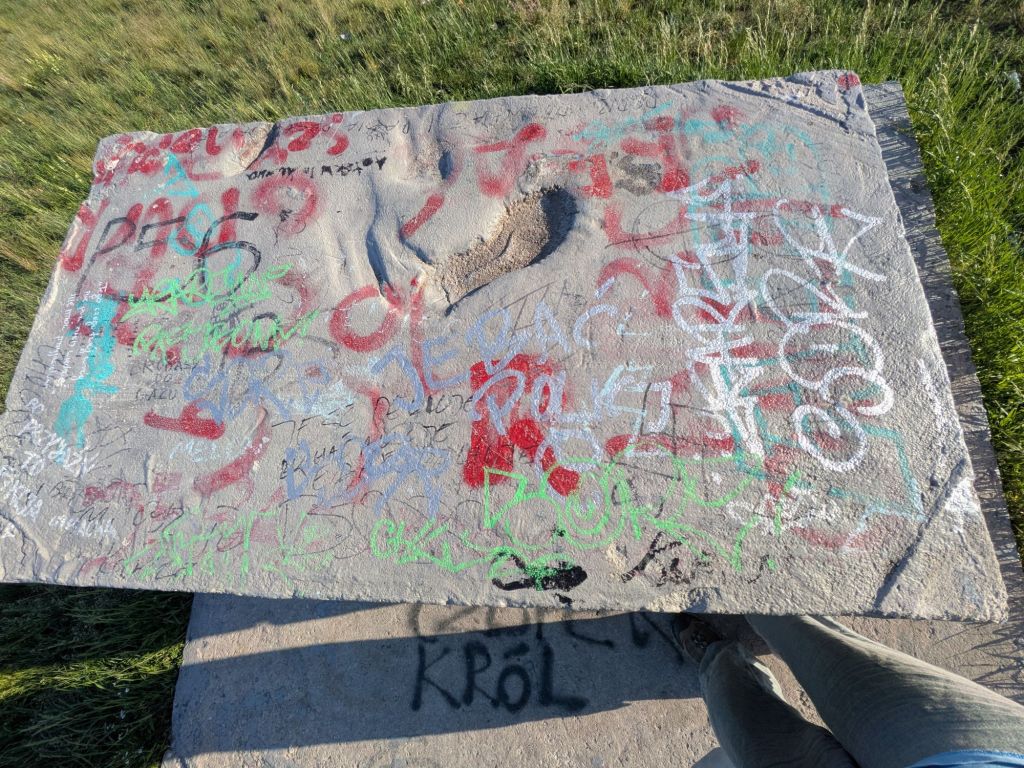
I witnessed a dog walker, several groups of high school aged boys, and some solo young men drinking beer. Other signs of disturbance included trash, graffiti, and dug holes.
The condition of the cemetery raises the question about appropriate use of the space, given its historic and sacred value and the lack of a living Jewish community to watch over it. Should it be secured behind a locked wall? That might prevent both intentional and unintentional desecration, but there could be unintended consequences. It would cut the space off from the day to day lives of current residents, marking it as “other” and beyond their responsibility.
Might it be left available for respectful use by the people living in Kutno today? After all, they are the ones in a position to keep an eye on the place. What constitutes respectful? Would walking count? What about walking dogs? How about picnicking, playing ball, sunbathing? How do you stop people from leaving behind trash, dog droppings, and graffiti? Signs that identify the space as a Jewish cemetery and outline its history have not worked.


Pingback: A Look at the Kutno Cemetery – ADJCP