• About
  • The Photo that Started it All

Uncovering Jewish Heritage

Uncovering Jewish Heritage

Category Archives: Polish-Jewish relations

Tracking Down Jewish Radymno

13 Sunday Dec 2015

Posted by Marysia Galbraith in Cemeteries, Jewish Culture, Memory, Polish-Jewish Heritage, Polish-Jewish relations, Post-World War II, Pre-World War II, Radymno, Synagogues, World War II

≈ 3 Comments

Although I knew the former synagogue still stands in Radymno, I had to look several times before I actually found it. I’ve visited for years, and yet my friends never even told me the town had a prewar Jewish population. But until June, I never thought to ask them about it, either.

When I finally did ask, my friend couldn’t tell me much. She repeated a common refrain, especially in southeastern Poland: Jews used to say “nasze kamienicy, wasze ulicy” [“our buildings, your streets”]. It’s not clear that any Jews ever actually said this, but nevertheless, this is often what is remembered about them—Poles may have been the majority but Jews were richer. It’s a telling way of marking the distinction between Poles and Jews. Rather than all residents being regarded as Poles of various religions, Jews remained separate. Moreover Jews are remembered as being complicit in asserting their difference, and indeed their superiority. My friend didn’t mean it this way, but I’ve commonly heard this expression deployed as a justification for why Poles didn’t like Jews. Not only were Jews the property owners, they rubbed it in.

Jewish property ownership poses different challenges today. Some current residents fear prewar owners will return to claim what was theirs. My friend told me about two men who came to Radymno a few years ago and looked at some buildings that had once belonged to Jews. She also described a building in the center of town that is falling apart, but nothing can be done about it. It can’t be torn down because it is a historic structure, but no one will invest in its renovation for fear they will lose possession of it if the owner comes back. She also mentioned another property, a plot of land surrounded by fields whose last owners were Jews. The town hasn’t pursued a clarification of ownership because it isn’t worth enough to hire a lawyer and try and collect the few zloties of tax owed on it each year. So it just stands fallow. I suggested the owner is probably dead. She said of course, it’s been so many years. I clarified there probably aren’t even any descendants, and she responded “of course, because of what happened to Jews.” She didn’t elaborate, nor did she use the words Holocaust, murder, or genocide.

My friend’s mother-in-law had heard her mother’s stories about Jews. She grew up right next door to where they live now. Still, when we asked her about it, she responded she doesn’t know much. She was too young, and her mother didn’t tell her much. She remembers her mother complaining about the sound of the calves at the slaughterhouse across the fields. Kosher law demanded that they be killed with a single knife stroke, and with an empty stomach. Her mother could hear the calves crying in hunger as they awaited slaughter. There still is a slaughterhouse in the same spot, but it has been rebuilt and expanded. At first, my friend’s mother said it used to be owned by Jews, but then she said she wasn’t sure. Jews definitely used it, even if they weren’t the owners.

Her father opened a grocery store in Jarosław, a nearby town. All his neighbors were Jewish shopkeepers. He had to give up the business after a year and a half because they lowered their prices to the point that he could not compete.

Her mother also told her how all the Jews were collected by the Germans and taken to the cemetery where they were shot. She mourned the loss of two young pretty Jewesses, whom she knew because they did seamstress work together.

My friend’s mother-in-law said some Jews and Poles się przyjaźnili [were friendly with each other]. They lived side by side.

She also recalled where the Jewish cemetery was, not far from the water treatment plant.

My friend drove me down a dirt road past the plant, but there was no cemetery. When the road narrowed to two wheel tracks in tall grass, we turned around. My friend pointed to a stand of trees in the distance, saying she thought the cemetery was there. She tried to find someone at the water treatment plant but no one responded. From there, she stopped at a store, but chanced on a man who lives in a nearby city.  The young men working at the car wash knew nothing about the cemetery, either. She finally found an older woman who pointed to a different, less traveled dirt road. We drove up it, but it didn’t get us to that stand of trees. My friend kept looking for a road leading in that direction. I can’t help wondering if maybe at some point in the past she had been told the cemetery was there.

We drove past the slaughterhouse her mother-in-law had mentioned. It’s a big operation, rebuilt and expanded since the war. The building closer to the road, essentially a box shape, is probably the oldest.

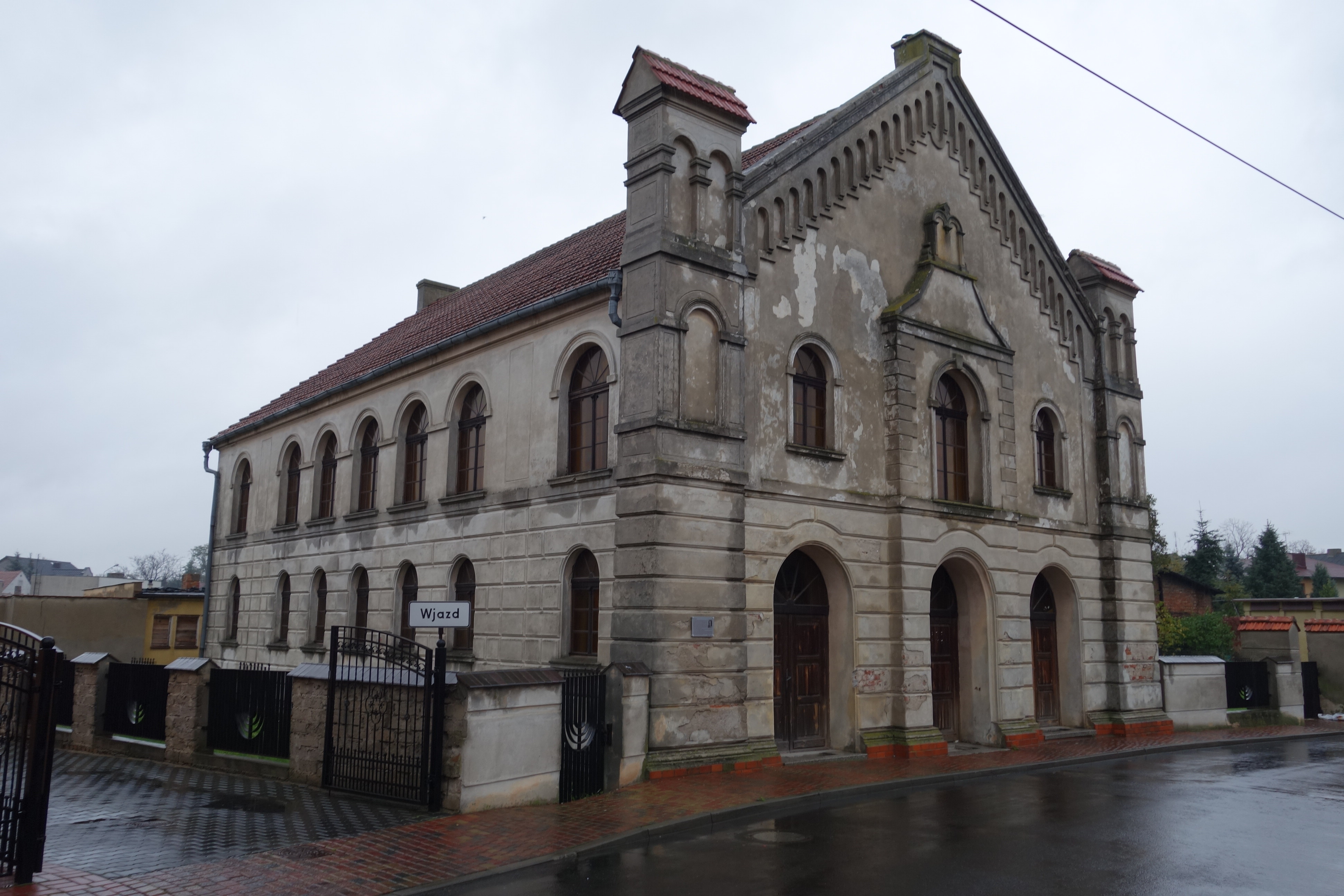
From there, we took a back road up the hill into town and I finally got to see the former synagogue. It is now a beverage wholesaler. My friend’s uncle lives next door. I took some photos while she went to ask him if he knew where the cemetery might be.

DSC06762

The Radymno synagogue now houses a beverage wholesaler.

The front of the synagogue is an imposing two-story square façade that has been renovated, leaving no clear elements of synagogue architecture. From the back, though, the bricked-in semicircular tops of the former synagogue windows are visible. Through windows, you can also see staircases on either side that used to go to the “babiniec,” the upstairs balcony for women. My friend’s uncle used this term when he described it to us, so clearly he knows a bit about the building’s former life as a synagogue. He said nothing has been added to the building. It still has the same footprint, and it stands at its original height. I asked him how he knows, and he simply responded, “after all, I live next door.”

The synagogue from the back
Brick arches used to be the tops of the synagogue windows.

My friend’s uncle also knew how to get to the cemetery. He said he last went there over 30 years ago. As a high school student and a young man, he and his friends used to go there sometimes to have fun (in other words to drink). He remembers some tombstones were still standing, though many others had been brought to the river where people would wash their clothes on them. The writing was still visible on them, but later, the stones fell apart. Today there is nothing left.

Looking back toward Radymno from the cornfield beside the Jewish cemetery
The overgrown site of the Radymno Jewish cemetery.

He took us past the slaughterhouse and up a different dirt road. It petered out in a cornfield, right beside the stand of overgrowth and trees that my friend had kept pointing toward. Still, we couldn’t reach it because of a deep gully that separated it from the cornfield. Besides, the overgrowth would not have been penetrable without proper footwear, pants, and probably a machete. I suggested returning in the winter might be best.

At least I know the site to return to.
Memory in Fragments: Reassembling Jewish Life in Poland

03 Thursday Sep 2015

Posted by Marysia Galbraith in Anthropology, Heritage work, Jewish Culture, Memory, Poland, Polish-Jewish Heritage, Polish-Jewish relations

≈ Leave a comment

A summary of Dr. Marysia Galbraith’s year as a Fulbright Scholar in Poznan, Poland

September 3, 2015

Lloyd Hall 319

6:00 p.m.

Dr. Galbraith will also answer questions about the Fulbright Program and fellowship opportunities.

Former synagogue in Buk, Poland

Former synagogue in Buk, Poland

My research on Jewish heritage asks what can be done with the fragments of Jewish culture that remain in Poland, sometimes hidden and sometimes in plain sight? And what value does such memory work have? I explore these questions on two levels: the social level where I focus on what is actually being done with physical traces of Jewish culture in the absence of living Jewish communities, and on the personal level via the archeology of my own hidden Jewish ancestry. These fragments can reveal something about the past, even if it is just in an incomplete and shattered form. And they can point toward the future—the possibilities that might emerge out of traces of memory.

Babcia and her sister Rachel

16 Sunday Aug 2015

Posted by Marysia Galbraith in Bereda, Family, Kolski, Polish-Jewish relations, Post-World War II, Warsaw

≈ 7 Comments

Tags

Halina Piwko Bereda, Nelly Kolska Mochorowska, Rachel Piwko Kolski

There was one silence that drowned out any mention of a relative very close to us– my grandmother’s sister Rachel.

I grew up knowing Babcia (the Polish term for grandmother) came from a large family, though on the rare occasions this was mentioned, it remained unclear how many siblings she had. The number of siblings was fluid, probably in part because even simple quantitative questions like this often have no absolute answer. It depends on temporal factors–who was living at a given time–and also on who was counted. As best I can tell, my great grandmother Hinda gave birth to twelve children; two died in infancy, leaving ten; one more committed suicide as a teenager and another died in her early twenties during childbirth, leaving eight; The older siblings died before I was born–one in the 1920s, two more in the 1940s, and another probably in the second half of the 1930s. This left four sisters, two who lived into the 1960s, one who died in the 1980s, and my grandmother who died in 1993. From oldest to youngest these four were Sarah, Hanna, Rachel, and my babcia Halina.

My mom told me about Sarah (though we called her Lusia), and I knew Hanna (whom we called Nunia) well, but I don’t recall any mention of Rachel. This is despite the fact that she was the sister closest in age to my grandmother. I’m sure that part of the reason for this silence was that it would have been difficult to talk about her without revealing she lived in Israel, and that would have further revealed she and the rest of Babcia’s family were Jewish. Another reason I never heard about her may well be because Rachel passed away when I was just five or six years old. Still, I was only a few months old when Sarah died and yet I did know about her.

I just don’t know; I can only guess why no one told me about Rachel.

When I first started to learn about Babcia’s family, I thought that maybe there wasn’t any contact between Halina and Rachel, but the more I find, the clearer it is that relations were not cut off between them. In fact, the secret of our Jewish heritage was hiding in plain sight. No one denied it. They just refrained from talking to my generation about it.

It’s likely Babcia never had much to do with her oldest siblings. Liba was 22 years older and married with two children of her own before Babcia was born; Jakob was 20 years older and Abraham/Jon was 17 years older. Abraham and Efraim/Philip (12 years her senior) moved to the United States when Babcia was just ten years old. Sarah, though two years older than Philip, stayed in Poland until the 1930s so Babcia probably knew her better. Still, Philip visited Poland regularly; he seems to have valued family and worked to maintain relationships. He sponsored a steady stream of relatives to the US, including eventually Babcia and my mother.

I have found some fragments—bits of information and partial vignettes—confirming Rachel and Halina were in regular contact, and even came to each other’s assistance during and after World War II. Some traces suggest, however, that these two sisters may not have always seen eye to eye.

I remember being told that “Papa” (what my mother and my grandmother called Zygmunt Bereda, my grandmother’s second husband) saved a number of Jews during the war. It seems possible Rachel was one of them. She spent some time in the Warsaw ghetto. After her husband Pinkas Kolski died in 1940, she escaped with her youngest child Mirka and spent the rest of the war on the Aryan side under false papers. Papa had both the connections and the money to arrange such things. Stanley, Sarah’s son, credits Bereda with saving Jews including family members. Aunt Pat (the wife of Bereda’s son and namesake) told me last month that when Mirka came to the US in the late 1960s, she went out of her way to find Uncle Sig to thank him because his father (namely Zygmunt Bereda) saved her and her mother. I wonder if anyone else in the family knows this story. Did Rachel and Mirka tell their descendants anything about this? That would have meant acknowledging they had Catholic relatives; was there a mirrored silence about that among my Jewish relatives?

Immediately after the war, fortunes reversed. Babcia and Papa’s properties were mostly destroyed and they lived for a time with Rachel and the Mochorowskis. The Mochorowskis’ connection to the family is interesting. Rachel’s son Samek was murdered by Nazis in 1942. His widow Kornelia (Nelly) remarried an engineer named Czesław Mochorowski. Babcia, Papa, and Maria (my mother) are listed as residing at two addresses in 1945 “u Mochorowskich” which means “at the Mochorowskis’ [home].” One was on Lwowska Street in the Mokotów district which was not bombed because it was where the occupying Germans had lived; the other was across the river in the Praga district that was not severely damaged, either.

What led me to discover that Babcia lived with Rachel after the war was the electronic database of Warsaw ghetto survivors. But why were the Beredas (Halina, Maria, and Zygmunt) in this database? As far as I know, they never lived in the ghetto, and Zygmunt was never a Jew. Further, I was under the impression that Babcia and Mama had hid their Jewish roots for years before the war, and especially vigilantly during the war. Why would they report themselves as Jews after the war ended?

It’s a good thing the Jewish Historical Institute (ŻIH) in Warsaw keeps the original records. Even though they don’t answer the basic question why my family was listed at all, the original documents contain additional information about them, information that was not recorded in the digitized database. The archivists at ŻIH also explained to me that immediately after the war ended, all surviving European Jews were asked to register, not just those who had been in the Warsaw ghetto. Over 58,000 names were collected in Poland.

Paper was hard to come by right after the war, so the registry cards from 1945 are written on the backs of old business records (accounting information and the like) cut into small rectangles. By 1946, printed “information cards” had spaces for specific data, including name, age, residence before and after the war, profession, and means of survival. I will say more about these cards in a future blog post. The key point here is that Halina, Maria, and Zygmunt Bereda were listed at the same addresses as Rachel Kolska and Nelly Kolska (later Mochorowska). In other words, although Babcia’s father declared her dead after she married a Catholic (Bereda), Babcia and her sister Rachel were on good enough terms in 1945 to share an apartment.

A photo from my grandmother's papers of Mirka (Rachel's daughter), Rachel (Babcia's sister), Czesław Mochorowski, and Nelly. The boy who is standing is Bogdan, Rachel's grandson, the son of Samek and Nelly. I don't know who the man on the right or the boy at the very bottom are.

A photo from my grandmother’s papers of Mirka (Rachel’s daughter), Rachel (Babcia’s sister), Czesław Mochorowski, and Nelly. The boy who is standing is Bogdan, Rachel’s grandson, the son of Samek and Nelly. I don’t know who the man on the right or the boy at the very bottom are. This was probably taken in Warsaw right after the war ended.

I recently came across another document linking Babcia and Czesław Mochorowski. In a letter to George (Halina’s son and my mother’s brother), my grandmother included Mochorowski in a list of people he should visit on his trip to Poland. I don’t know the year this was written but There is no mention of visiting Nelly, so it was probably after her death in 1957. I believe George visited Poland in the early 1960s. Significantly, in the letter Babcia explained who Mochorowski was: “Samek was my sister’s son, he was murdered by the Germans and his wife, Nelly, married Czesław Mochorowski…but during/after the war/ we lived in the same apartment and he called me auntie and Papa uncle [she uses the diminutive form of uncle, wujaszek].”

While I was visiting Israel in February, a few of Rachel’s descendants told me an anecdote that may well point to ongoing correspondence between Halina and Rachel even after Rachel moved to Israel, but also some tensions. As the story goes, a sister of Rachel’s fell out of touch for three years after Rachel sent her a letter in which she had written on both sides of the paper. This was somehow offensive to the sister. The cousins said they weren’t sure which sister this was, but it definitely sounds like something Babcia might have done. She was the one who took pride in her gentility. Nunia, as far as I recall, was far less concerned with formality, and Sarah has been described to me as very sweet. Neither sounds like they would have taken offense over a point of etiquette.

But who knows? I can only assemble these fragments, and occasionally draw tentative lines between them. If Rachel was anything like my grandmother (and her descendants have indicated to me she was), she was a formidable individual with definite ideas about the world. It’s not hard to imagine that she and her sister, my grandmother, would have locked horns sometimes.

Grassroots heritage work in Bieszczady

21 Sunday Jun 2015

Posted by Marysia Galbraith in Cemeteries, Dukla, Heritage work, Lesko, Nazi Camps, Polish-Jewish relations, Pre-World War II, Sanok, Synagogues, World War II, Zasław

≈ 6 Comments

Tags

Bieszczady, Jewish culture and history

There is a pattern in the frequency (or rareness) of my posts. When I’m focused on other writing projects, I also write more for the blog. When I’m traveling, interviewing, and attending events, I write less. This month I’ve been traveling.

It seemed important to bring my new research focus to my old fieldsite, and see what is happening in relation to Jewish culture and history in the Bieszczady Mountain region.

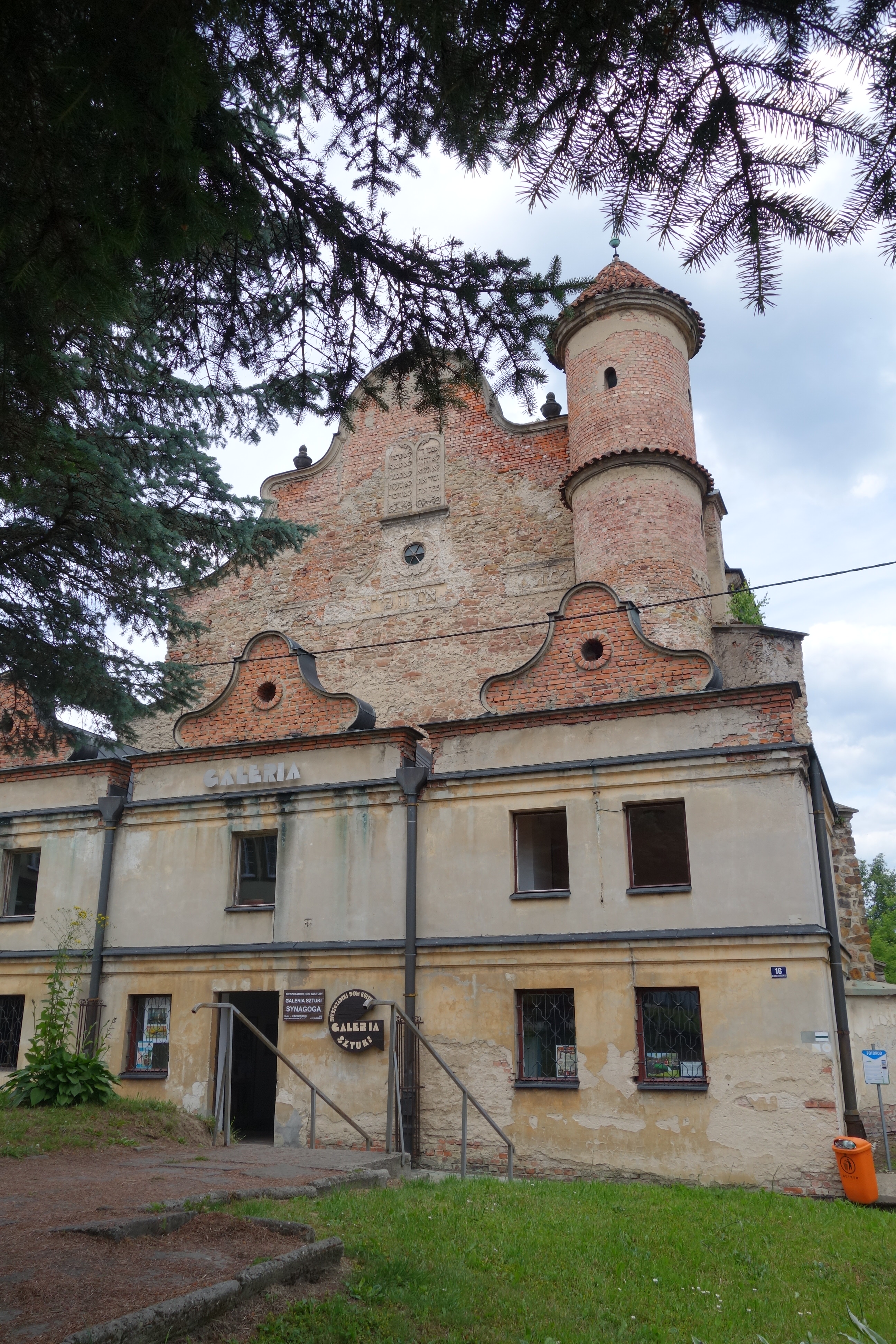
The Lesko synagogue. Destroyed in World War II, it was rebuilt in the 1960s.

The Lesko synagogue. Destroyed in World War II, it was rebuilt in the 1960s.

I’ve written elsewhere about how striking it is that, despite the fact that before World War II more Jews lived in Lesko than Poles, only very rarely have contemporary residents volunteered any information about the former Jewish residents. Even though I walked by the former synagogue (bigger than the Catholic Church) and the massive Jewish cemetery countless times, it really only sunk in to me last November that Lesko was a sztetl. One of my friends in Lesko described it really clearly. She said that somehow she always knew that the Jewish history of the town was something that you don’t talk about. It was a taboo topic. This has only recently started to change. Only in the past few years has she noticed that people talk about Jewish culture and history openly. She thinks this is a good thing. Realizing how little she knows about the subject, she has started to educate herself about prewar Jewish life and the Holocaust in Bieszczady.

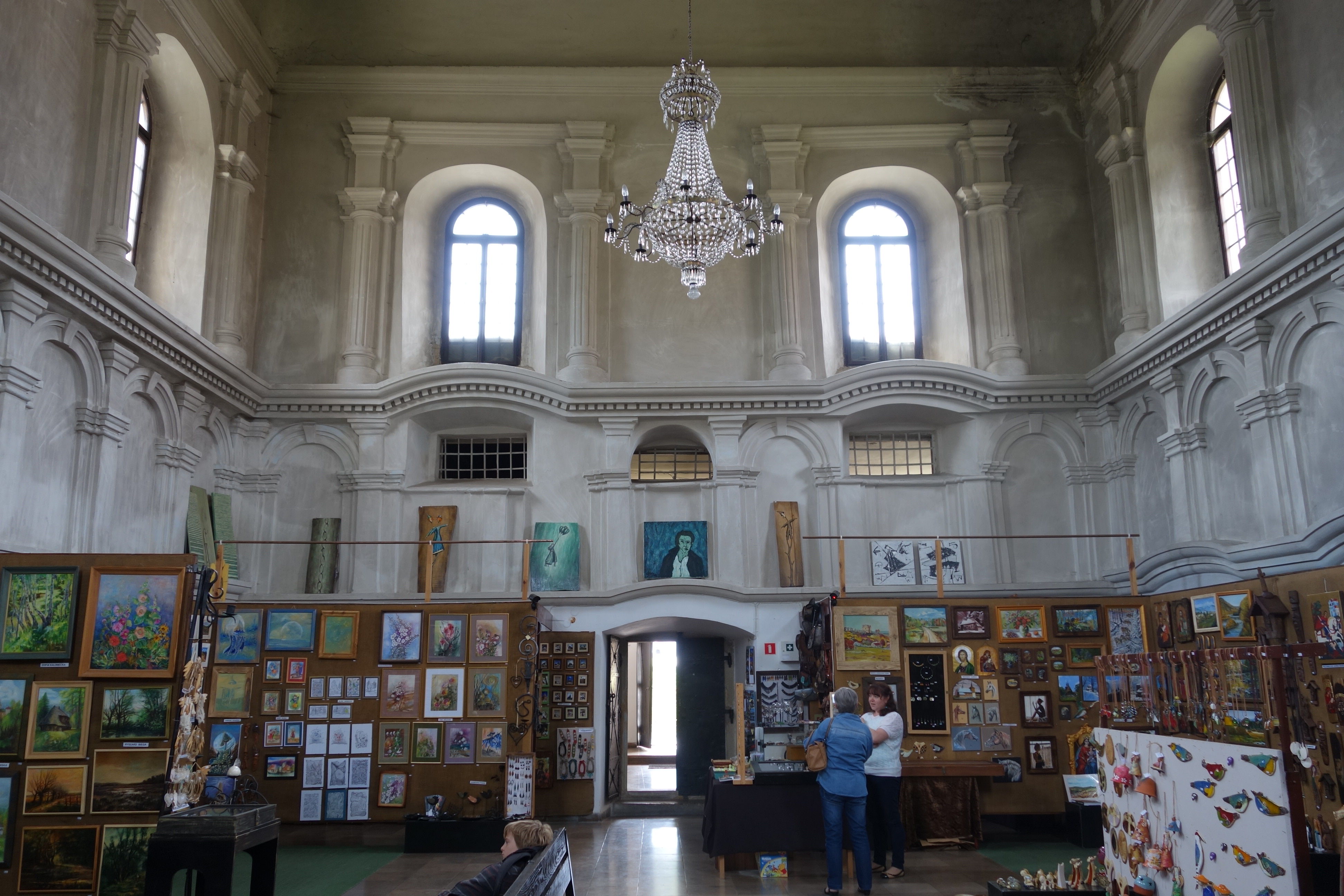
Interior of the Lesko Synagogue. Now owned by the town, it functions as a gallery of regional art.

Interior of the Lesko Synagogue. Now owned by the town, it functions as a gallery of regional art.

Generally, I have found that when I ask, most people have a story or two to tell about Jews in Bieszczady, either something they have read or a some fragmentary memory their grandmother told them. Though also when I told one friend about my interest in Jewish culture and history, she responded, “There were Jews in Bieszczady?” Even though she went to high school in Lesko, she only vaguely remembered the Jewish cemetery and had no recollection of the synagogue. Whether she really didn’t know or just continues to think this is a topic that polite people don’t talk about, I’m not sure.

Nevertheless, some important grass roots work is being done: by Arkadiusz (Arek) Komski in Sanok, Ewa Bryła and her brother Piotr in Zagórz, and Jacek Koszczan in Dukla. Arek is working on a dissertation about the Jews of Sanok. We met at the Słotki Domek Cafe in Lesko after he finished work, and then the next day he showed me the places associated with Jewish life in Sanok.

One of the former synagogues in Sanok

One of the former synagogues in Sanok

Commemorative marker, Sanok

Commemorative marker, Sanok

His interest in the topic originated with a curiosity about history, and particularly the history of his hometown. He has published articles about the Nazi work camp in neighboring Zasław and about the locks that were found at the Jewish cemetery. Last year, he realized a project to place a commemorative marker across the street from the former site of the great synagogue.

Arek also let me know that he was awaiting the arrival of a group of students from Dartmouth College, led by Rabbi Edward Boraz, who were going to clean up and inventory the tombstones in the Jewish cemetery in Lesko (see Project Preservation). He has helped them already, first when they came to the cemetery in Sanok, then to Ustrzyki Dolne, Korczyna, and last year to Lutowiska.

Through Arek, I met Ewa, who helped found the Stowarzyszenie Dziedzictwo Mniejszości Karpackich (Association for the Heritage of Carpathian Minorities). Arek joked that for Ewa, working on heritage preservation is a full time hobby. Her interest emerged out of her own Bojko/Ukrainian roots; her parents and grandparents spoke Ukrainian among themselves, though they only spoke Polish with her and her brother. To date, the association has helped clean up as many as thirty Uniate (Ukrainian) and Jewish cemeteries in the region.

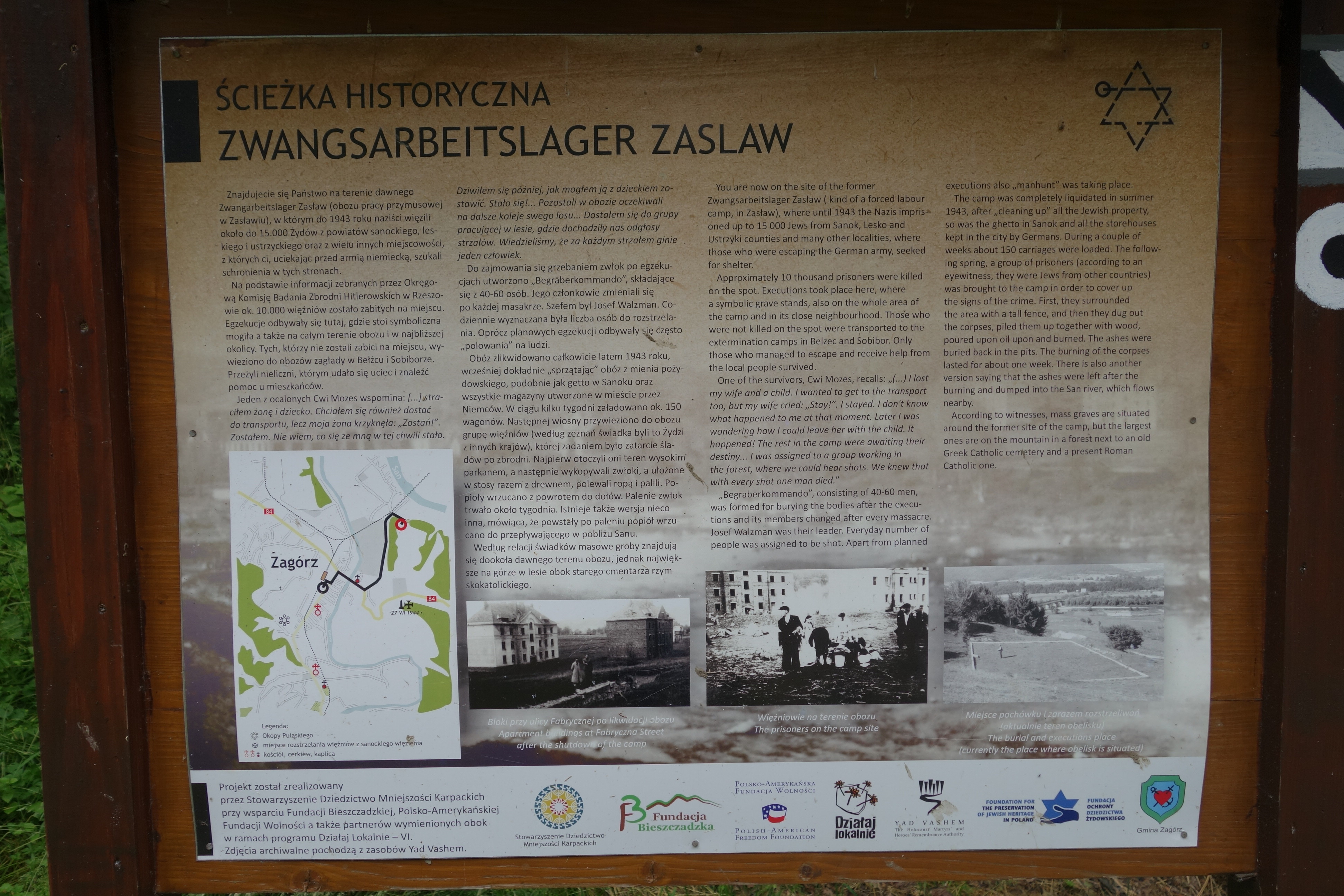
Information about the prison camp and murder of Bieszczady Jews in Zasław, near Zagórz

Information about the prison camp and murder of Bieszczady Jews in Zasław, near Zagórz

Another of the association’s projects is a heritage trail and information sign at the site of the Nazi work camp in Zasław. This is where most Jews from Lesko and neighboring communities were taken and forced to work at a neighboring factory. Approximately 10,000 prisoners were shot on the site, while perhaps 5,000 were sent to extermination camps at Belżec and Sobibor.

Monument at the site of mass murders in Zasław, near Zagórz

Monument at the site of mass murders in Zasław, near Zagórz

I stopped by Dukla on my way back to Krakow, and despite the rain Jacek and Ania, who works at the local tourist office, showed me around. Jacek had already started collecting Judaica around the time of his retirement from the border patrol. An infectiously upbeat and energetic man, he needed something to occupy himself and so decided to get to work protecting and publicizing the sites associated with Dukla’s prewar Jewish population. He told me that the town was as much as 80% Jewish. We walked by the former Jewish school, where boys learned various trades. It is across the street from the old government building; Jacek says that the associate mayor used to be selected from among the Jewish population. Similarly, most of the stone buildings around the market square (rynek) were owned by Jews. Jacek told me the fate of the last rabbi who hid under his rynek home, but then was caught and killed by the Nazis when he tried to escape to Krosno.

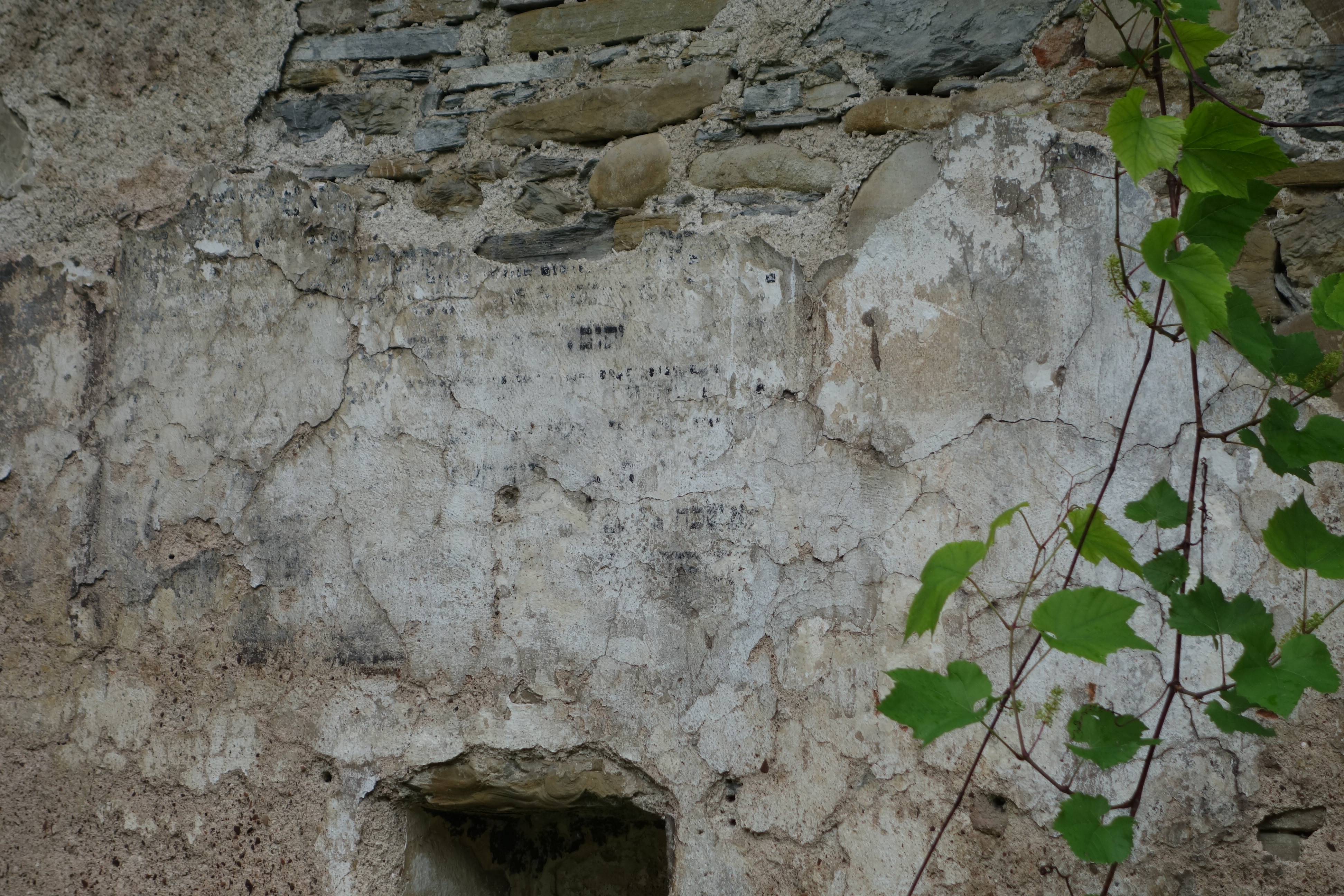
Writing still visible on the wall of the ruined synagogue in Dukla

Writing still visible on the wall of the ruined synagogue in Dukla

Ruin of the 18th century synagogue in Dukla

Ruin of the 18th century synagogue in Dukla


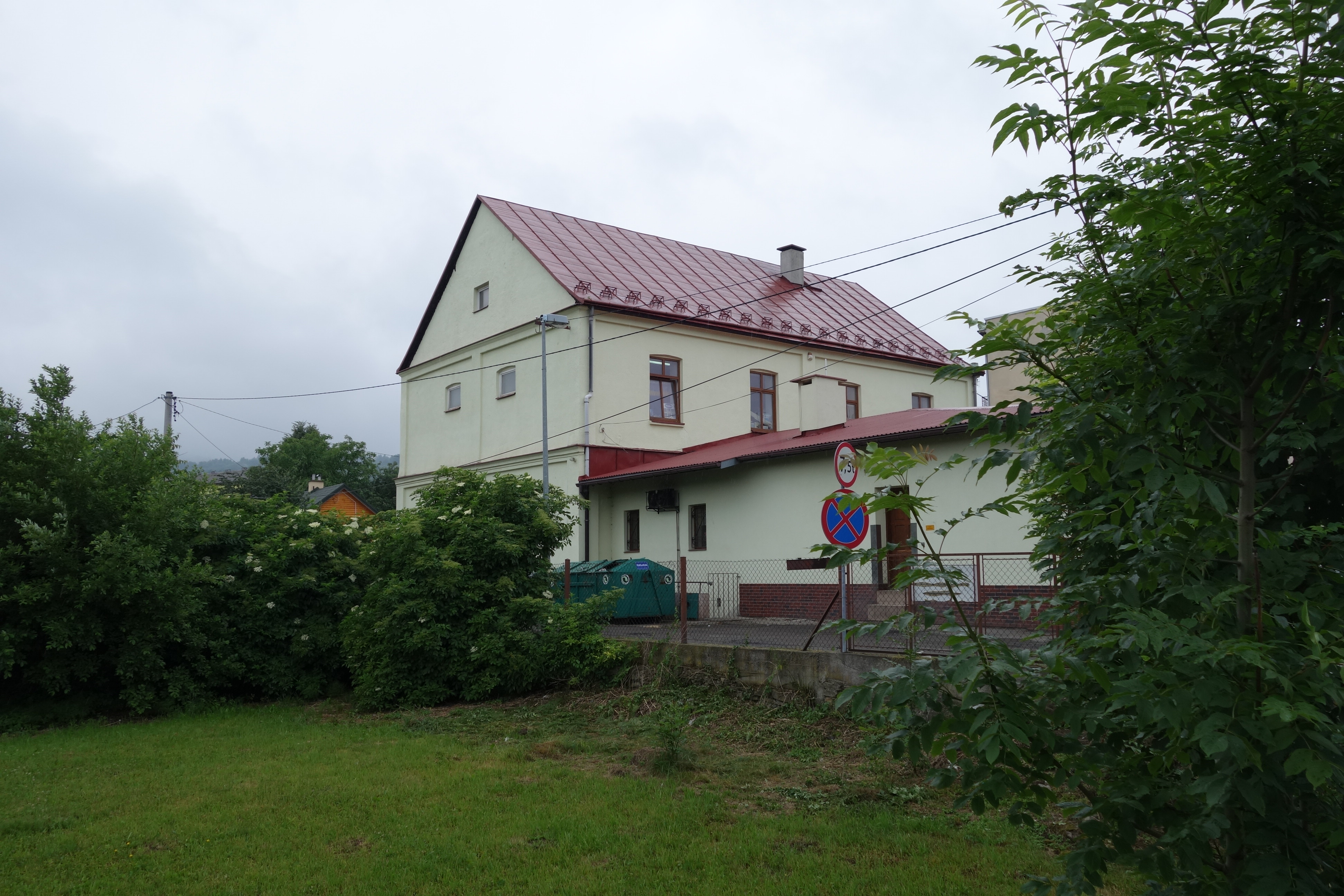
Former synagogue, now a grocery store in Dukla

Former synagogue, now a grocery store in Dukla

Two synagogues stood side by side. The one dating from the 18th century was burned by the Nazis with Jewish residents inside. The neighboring mykwa was also destroyed. Jacek would like to see the remains of this synagogue conserved. All it would take is reinforcing the window arches and putting in a platform on the inside for viewers to walk on; right now a chain link fence surrounds the site. The other synagogue, dating from the late 19th century, is now a grocery store. Dukla also has two Jewish cemeteries, the older one with burials up to World War I, and the newer one beside it used during the interwar period. Jacek mows them himself.

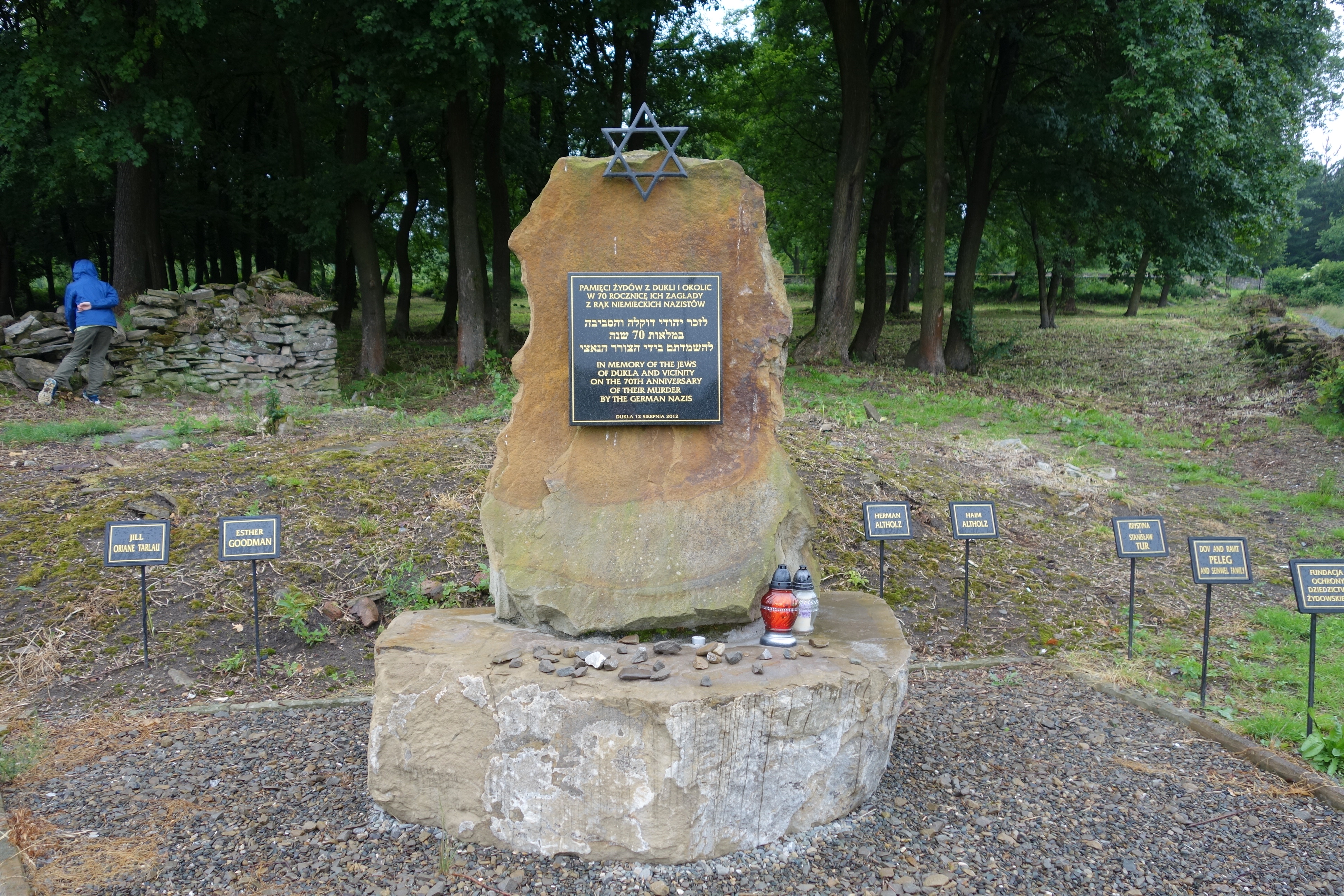
Jacek also coordinated the construction of a monument near the entrance of the old cemetery recognizing the 70th anniversary of the murder of Dukla’s Jewish population. Funders include the Foundation for the Preservation of Jewish Heritage (FODŻ) and descendants of former Jewish residents. While there have been many contributors to these various projects, Jacek is clearly the energy behind them, insuring that they are realized, and doing much of the physical labor himself.

Jacek reading a tombstone in the new Jewish cemetery, Dukla

Jacek reading a tombstone in the new Jewish cemetery, Dukla

Remembering the murder of Dukla's Jews

Remembering the murder of Dukla’s Jews

In each of these cases, someone (or several people) from the local community has taken the initiative to insure that Jewish culture and history is brought back into the public landscape. They are not Jewish themselves, but something compels them to remember, and to teach others about the former residents of their towns.

Chil Majer Piwko’s death notices in the Yiddish press

01 Monday Jun 2015

Posted by Marysia Galbraith in Archives, Family, Piwko, Polish-Jewish relations, Yiddish

≈ 2 Comments

Tags

Hil Majer Piwko

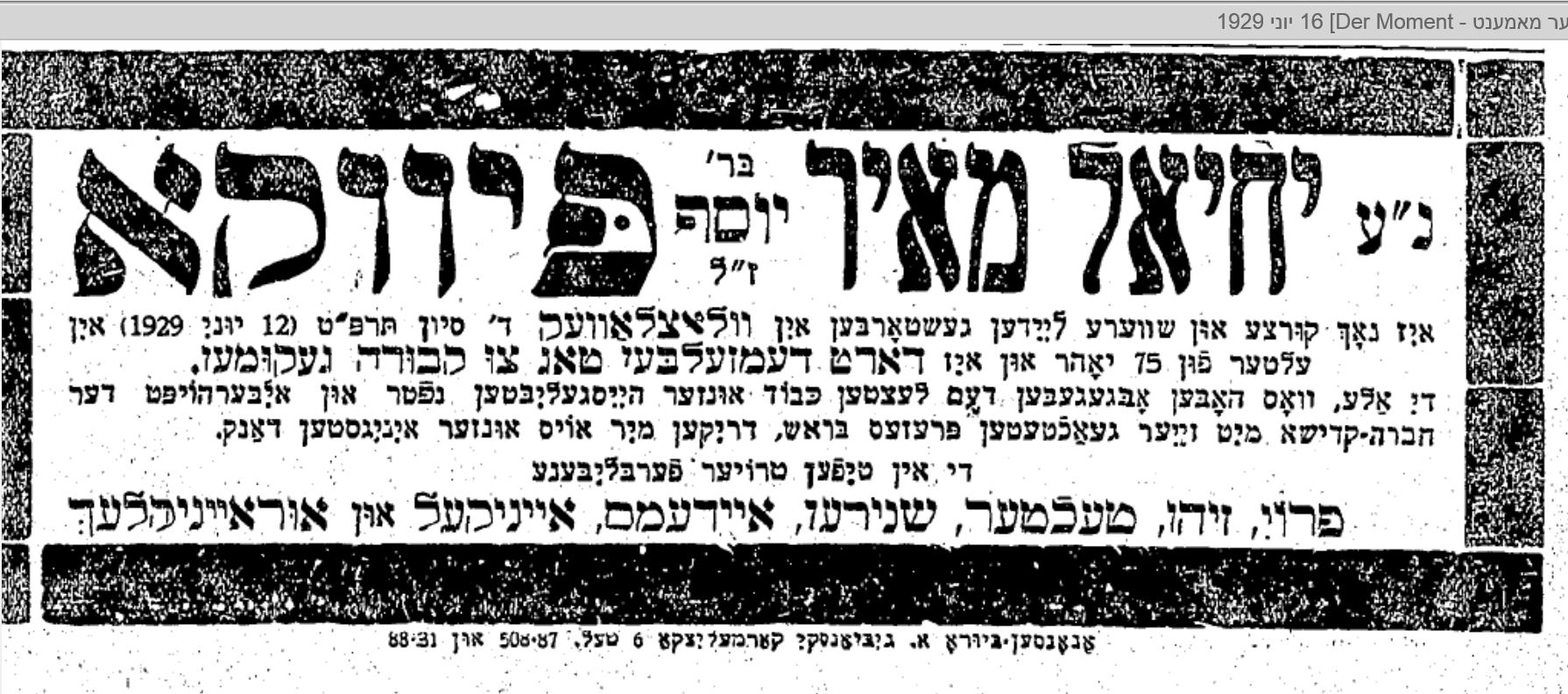
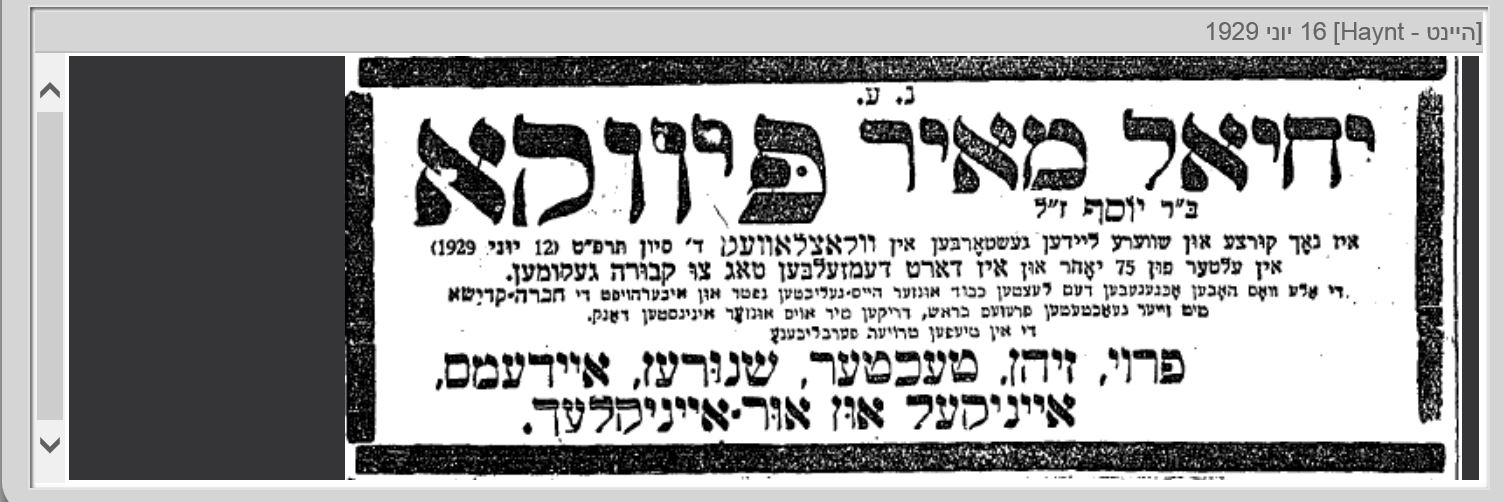
After reading my previous post about Chil Majer Piwko’s death notice, my cousin Raphael from Switzerland sent me a couple more that were published the same day (June 16 1929). These were in the Yiddish newspapers Hajnt and Der Moment.

Chil Majer Piwko's death notice from the Yiddish-language newspaper Der Moment

Chil Majer Piwko’s death notice from the Yiddish-language newspaper Der Moment

Chil Majer Piwko's death notice from the Yiddish-langugage newspaper Hajnt

Chil Majer Piwko’s death notice from the Yiddish-langugage newspaper Hajnt

Besides wanting to share them, this gives me the opportunity to revise what I said about Chil Majer. My conversations with a couple of readers helps me realize my hasty use of the term “assimilated” (even though it is widely used in the historic literature) probably does not communicate what I intended. What I meant to signal was that Chil Majer likely considered himself Polish as well as Jewish. But I have no doubt that he was also a very religious man. Nor did I mean to suggest he was on the road to adopting Polish culture in replacement of his Jewish faith. On the contrary, I’m interested in the places and spaces where Polish and Jewish affiliations intersected, complemented each other, or existed side by side.

The fact that his death notice appeared in three Jewish newspapers emphasizes even more strongly the important position Chil Majer filled in the community. The Polish-language Nasz Przegląd tended to take a more integrationist stance, in the sense that it catered to Jews who were comfortable operating in the Polish language, and who tended to invision a place for Jews within the broader Polish society. The Yiddish-language Haynt and Der Moment were competing papers that were Zionist in orientation. As such, they tended to highlight the interests of Jews as distinct from the Polish (Catholic) majority. The publication of the death notice in both languages shifts the emphasis, indicating an allegiance to both Jewish autonomy and to Polish-Jewish allegiances.

For more information about the Jewish press, see a brief summary by the Yivo Institute or Angela White’s dissertation on the Polish language Jewish press.

Warsaw archive weekend

31 Sunday May 2015

Posted by Marysia Galbraith in Archives, Family, Piwko, Polish-Jewish relations

≈ 4 Comments

Tags

Hil Majer Piwko

The first find of the weekend, at the National Library in Warsaw: my great grandfather Hil Majer Piwko’s death notice in Nasz Przegląd, one of the main Polish-language Jewish newspapers in interwar Poland.

DSC06314

Chil Majer Piwko’s death notice in Nasz Przegląd, June 16, 1929.

The text reads:

B. P. [Blessed in memory] Chil Majer Piwko died in Włocławek after brief but heavy suffering on the 12th of June 1929 (4 Siwon), at the age of 75, and was buried the same day.

To everyone who helped him on his final road, lamenting our husband and father, and especially the Funeral Brotherhood with its honorable president at its head. Wishing to express “God bless,” left in deep sadness,

Wife, sons, daughters, daughters-in-law, sons-in-law, grandchildren and great grandchildren.

The size and placement of the notice indicates my great grandfather held a position of relative prominence in the Jewish community. Also, appearing in Nasz Przegląd as opposed to any of the Yiddish or Hebrew language newspapers indicates that he identified as a Pole as well as a Jew. He was assimilated into the broader society, even though he maintained conservative modes of dress and religious practices.

I’m also struck by the mention of great grandchildren in the death notice. That’s also me, even though I wouldn’t be born for another 35 years

Lutowiska’s Ecomuseum of Three Cultures

03 Friday Apr 2015

Posted by Marysia Galbraith in Cemeteries, Heritage work, Jewish Culture, Lutowiska, Memory, Polish-Jewish relations, Synagogues

≈ 4 Comments

Nestled at the Ukrainian border in the Bieszczady Mountains of southeast Poland, Lutowiska integrates the remnants of the village’s multiethnic past in a walking trail called the Ecomuseum of Three Cultures (here’s a brochure and map ekomuzeum_trzy_kultury-2).

When I moved to Bieszczady in 1992 to do my dissertation fieldwork, some residents of the region had only just started to exercise new postcommunist freedoms by talking openly about their Ukrainian heritage. For the first time, they felt free to speak Ukrainian in public. But neither then nor now, has anyone ever spoken to me in a similar way about their Jewish heritage. Either no one is left, or no one wants to admit it. In Bieszczady, silence persists with regard to the topic of Jews. This is all the more startling when you realize that the prewar towns—Lesko, Lutowiska, Ustrzyki Dolne, Baligród—were all sztetls. Jews outnumbered Christians. According to a guidebook from 1914 (M. Orłowicz Ilustrowany Przewodnik po Galicyi, republished in 1998), Lutowiska had 1700 Jews, 180 Poles, and 720 Rusyns (the name used for the Ukrainian speaking population).

A former Jewish home across the street from the school in Lutowiska

A former Jewish home across the street from the school in Lutowiska. Characteristic for the time, it was made of wood with a stone foundation.

Today, Lutowiska is a large village on the road that runs south from Ustrzyki Dolne into the high mountains of Bieszczady National Park. Immediately after World War II, it fell on the Soviet side of the border, but it was annexed to Poland in 1951 as part of a land swap. Residents were forced to move, as well; those from the chunk of Poland that was ceded to the Soviet Union were moved to the region between Ustrzyki Dolne and Lutowiska that had been depopulated during and after the war. I did my original fieldwork with some of the children of these resettled farmers who never got used to the rocky, hilly soil and colder weather of the higher elevations and longed for the rich, flat farmlands they were forced to leave behind.

So one possible explanation for the silence about the Jewish residents who were brutally murdered during the war is that very few prewar residents, those who would have had personal memories of Jews, remained in Bieszczady. Of course, this isn’t a sufficient explanation. It seems that many forces converged to produce this absence of memory. The state socialist government evoked Marxist internationalism to deemphasize ethnic differences while at the same time trying to solidify Poland’s claim over the land by Polonizing the resident population. Church rhetoric, too, frequently demonized Jews. Certain stereotypes persist in everyday discourse—Poland was weakened by Jewish domination of commerce, and Jews running the contemporary press constantly criticize the Church and the government. Some repeated a phrase they said Jews used to tell Poles, “the streets are yours but the buildings are ours.” But mostly in my experience, not even disparaging stereotypes broke the silence surrounding the topic of Jews; they simply were not talked about.

This backdrop of silence makes it all the more remarkable that, when a group of young Lutowiska residents got together in the early 2000s to explore ways of promoting their village, they decided to view the region’s multiethnic history as an asset rather than a liability. They were not specifically interested in Jewish heritage. Rather, they had a more pragmatic goal: to create attractions that would encourage tourists passing through on their way to the high mountains to stop for a while in Lutowiska. To achieve this, they developed a project called the Ecomuseum of Three Cultures, a 13 kilometer walking trail with information tablets at various sites associated with the village’s cultural and natural history. The three cultures were distinguished most clearly by faith—Roman Catholic (generally understood to be Polish), Uniate (generally understood to be Ukrainian), or Jewish. The trail includes views of the high peaks of the Bieszczady Mountains and the site where the classic Pan Wołodyjowski (1968) was filmed. It winds past the 19th century Catholic church, the former site of the Uniate church, and the ruins of the Jewish synagogue.

One of the main designers of the museum, Agnieszka Magda-Pyzocha, teaches at the local school. She explained to me that nearly everyone forgot that the synagogue ruins still stood right at the heart of the village. For years, the old walls were used by the Polish Army’s Border Patrol as a trash dump. Agnieszka explained:

I remember when I was a child I walked there and saw that some stones stood, trees growing out of them, and nearly nobody knew. By looking in various sources, talking with people, and looking at photographs, we discovered that this was the synagogue that used to be here. Several truckloads of trash were carted away, the whole place was cleaned, and in this way it became an attraction that most residents had known nothing about for all these years.

Synagogue ruins and information sign, Lutowiska

Synagogue ruins and information sign, Lutowiska

An information board next to the synagogue ruins outlines the history of Jews in Lutowiska. It points out that, contrary to popular belief, most Jews were poor. Most were petty traders and craftspeople, though a few were farmers. The wealthiest Jews in Lutowiska were the Rand family. Mendel Rand started out as a traveling trader of sewing supplies. He worked hard enough to buy a country inn (karczma), and eventually bought the home of the local nobleman. On June 22, 1942, Nazi soldiers instructed Ukrainian peasants to dig trenches near the Catholic Church. That evening Ukrainian police gathered 650 Jews remaining in Lutowiska and neighboring villages Two Nazi officers shot them all, and had them buried in the trenches. A teenage boy escaped and hid in the Jewish cemetery, but he was discovered and brought back. Only seventeen-year old Blima Meyer survived; she was pulled out of the mass grave still alive (A. Potocki, Żydzi na Podkarpaciu 2004).

Lutowiska synagogue ruins

Lutowiska synagogue ruins

Information sign next to the synagogue, Lutowiska

Information sign next to the synagogue, Lutowiska

A boy connecting with his Jewish roots.

A boy connecting with his Jewish roots.

The Jewish cemetery is on a hill that is visible from the synagogue, but to reach it you have to go down to the school, back around the playing fields, and up a dirt road. It holds as many as 1000 headstones, some dating back to the 18th century. The cemetery was easier to get around in November than it was in August because the grass and weeds had died back. It is on a hill, with a steep slope to one side that is also covered with tombstones. Many stones are decorated with lions or deer (on males’ graves only), birds or candles (females only), crowns or torahs (for men with knowledge of the torah). In places, trees have grown into and around the grave markers. As Agnieszka noted, there is no graffiti or trash in the cemetery. She also told me a group of students from Dartmouth were there for about 3 days this summer. They built steps up to a gate they installed, cleaned some of the stones (they had an expert help them do this), and cut the grass. On the Internet, I saw Dartmouth Rabbi Edward Boraz organizes service trips to a different Jewish cemetery each summer. It’s called Project Preservation.

Tombstones in the Lutowiska Jewish Cemetery

Tombstones in the Lutowiska Jewish Cemetery

Agnieszka likes to visit the cemetery: “It’s peaceful there, and sometimes it’s so pretty when the sun is setting and the light is falling a certain way. I lie down in the grass between those tombstones, birds sing, I feel peaceful and some sort of connection.”

At first I couldn’t find the plaque marking the site where 650 Jews were murdered by Nazis. Between the Catholic church and cemetery, there was a monument to those killed at Katyn and another for victims of Ukrainian aggression. I asked someone walking by and she explained the place I was looking for was up the road on the other side of the church. Notably, she knew, and was very pleasant about sharing the information with me.

Monument at the mass grave, Lutowiska

Monument at the mass grave, Lutowiska

And there it was, a short way off the road down a shrub-lined pathway—a simple monument with two plaques. I almost cried when I saw it. The inscriptions read:

Mass grave for Jewish and Gypsy victims of terror murdered in 1943 [sic] by Nazis

In memory of 650 victims of fascism shot here by the Gestapo in 1943 [sic]—The people of Lutowiska 1969

It is disturbing to stand on a place where hundreds of people were brutally murdered.

DSC02016

I was deeply moved to see perhaps a dozen candle lanterns and a bouquet of red roses left at the site, probably earlier that week on the occasion of All Saint’s Day. Granted, it’s barely marked from the street. There is just a small sign on a tree saying “National Memorial, Places of Martyrdom.” But it is well maintained. It has not been forgotten as have so many other places I’ve visited associated with Jewish life.

Marker for "National Memorial, Places of Martyrdom"

Marker for “National Memorial, Places of Martyrdom”

Thanks to the Ecomuseum of Three Cultures, Lutowiska feels like a place that has embraced its history, even the tragic events. They have literally cleaned the trash out of the synagogue ruins and marked the site with a sign that hints at the life Jews had there, and how it ended.

Jews in Wielkopolska

14 Saturday Mar 2015

Posted by Marysia Galbraith in Heritage work, Polish-Jewish Heritage, Polish-Jewish relations, Poznan, Wielkopolska, Wronki

≈ 4 Comments

Tags

Partitions of Poland

Regions in Poland still reflect the different administrative regimes within the Russian, Prussian, and Austrian Empires that controlled Polish territory from the late 18th century until World War I. The experience of Jews in Poland varied across these boundaries, as well. It’s a bit like the continued influence of North-South differences in the US, particularly with regard to African Americans’ experiences. History can dig channels that influence the flow of events far into the future.

Map source and more information about the partitions of Poland: http://www.britannica.com/EBchecked/topic/466910/Partitions-of-Poland

Map source and more information about the partitions of Poland: http://www.britannica.com/EBchecked/topic/466910/Partitions-of-Poland

Wielkopolska Province, where I’m living, was under German/Prussian control during the period of partitions. Older residents in particular tell me this German influence has contributed to the region’s sense of order and relative economic success. Historically, regional residents were more interested in taking pragmatic steps to improve daily life (what has been called “organic work”) than in romantic battles for independence that were destined to be defeated. Some refer to this region as “Polska A” in contrast to the more backward and poor “Polska B” in eastern Poland. Some also complain that in recent years state and EU funding have tended to go to other regions of Poland, and that this is a residue of outdated perceptions that Wielkopolska is the least in need of development aid as well as distaste for the German influence that makes some consider the region “less Polish.” Channels can be redirected.

The highest percentage of Jews in Wielkopolska dates back to the first half of the 19th century. Jewish outmigration after then has been attributed to a number of factors. The first is economic; Jews saw more opportunities for themselves in larger German cities. They had often been educated in German schools, spoke German, and could move west without crossing political borders. Second, the German state offered rights of citizenship for ethnic and religious minorities. Many saw more opportunities to study at universities and build careers or businesses in what they perceived as the more developed west. Third, especially from the late 19th century and continuing when Poland regained independence after World War I, Jews were escaping growing Polish anti-Semitism. The National Democrats, with their platform defending the purity of the Polish state against ethnic and religious minorities, were particularly strong in Western Poland. Many Jews continued from Germany to the United States, chasing the promise of greater social equality as well as economic opportunities. In the interwar period, Palestine became the preferred destination.[1]

By the time World War II started, Jews constituted a tiny proportion of the population of cities like Poznan and towns like Wronki. In Poznan, there were maybe 2000 Jews, while in Wronki there were perhaps 30. This early emigration and the small numbers affect the kind of memory work that can be done in Wielkopolska. Many Jewish institutions (hospitals, schools, and even synagogues) had already closed their doors well before the war; Jews were less visible for the Poles who remember prewar life. There is another issue that has tended to limit Polish scholarship about the Jews of Wielkopolska. They often identified more closely with German culture than with Polish. This is visible even in the material fragments that have been recovered. I am thinking for instance of tombstones commonly inscribed in Hebrew on one side and in German on the other.

So overall, the fragments of Jewish life in Wielkopolska are older, the memories are more distant, and fewer residents have had direct experiences with Jews and Jewish culture. These factors pose a challenge to heritage work—it can be harder to find artifacts worthy of preservation, and more difficult to convince local residents and funding sources that these stories need to be told.

[1] I’ve read and talked to a lot of people about this, but thanks especially to Tomasz Kawski for explaining it so clearly.

Memory and forgetting in Poznan, part 2

29 Monday Dec 2014

Posted by Marysia Galbraith in Heritage work, Jewish Culture, Memory, Polish-Jewish relations, Poznan, Synagogues

≈ Leave a comment

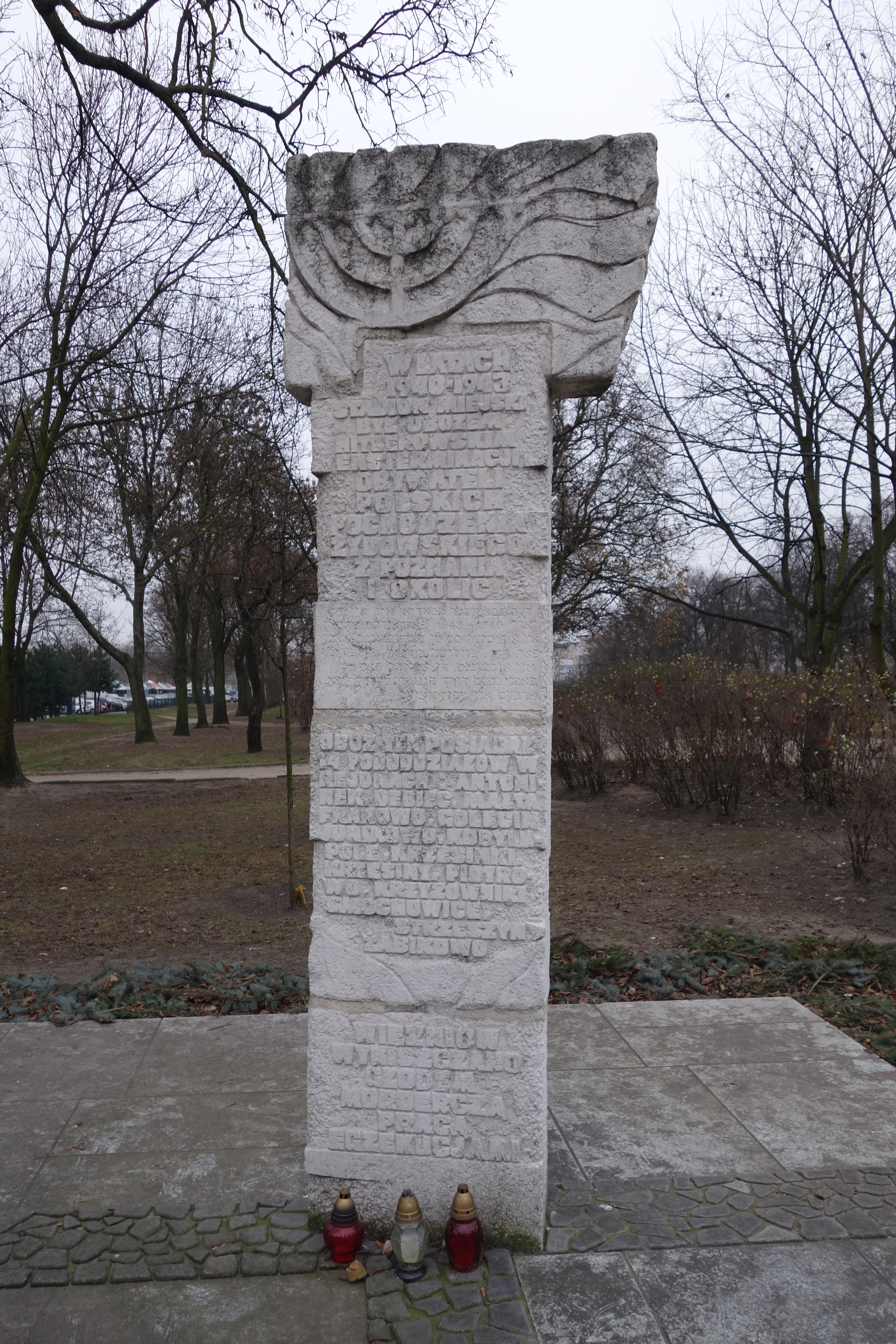
Monument to the victims of the Poznan labor camp

Monument to the victims of the Poznan labor camp

Despite the cold, Anka, Małgosia and I visited a few other sites associated with Jewish culture and history. The monument to the victims of the Poznan labor camp is on Królowa Jadwiga Street even though the actual detainment site was a block away in the old football stadium. The socialist-era monument is a tall concrete pillar with what looks like a menorah at the top. Anka pointed out the dedication on back of the monument stating it was erected on the 40th anniversary of the Warsaw Ghetto Uprising; even sites commemorating local events reproduce the idea that the Holocaust happened elsewhere—in cities such as Warsaw and Krakow.

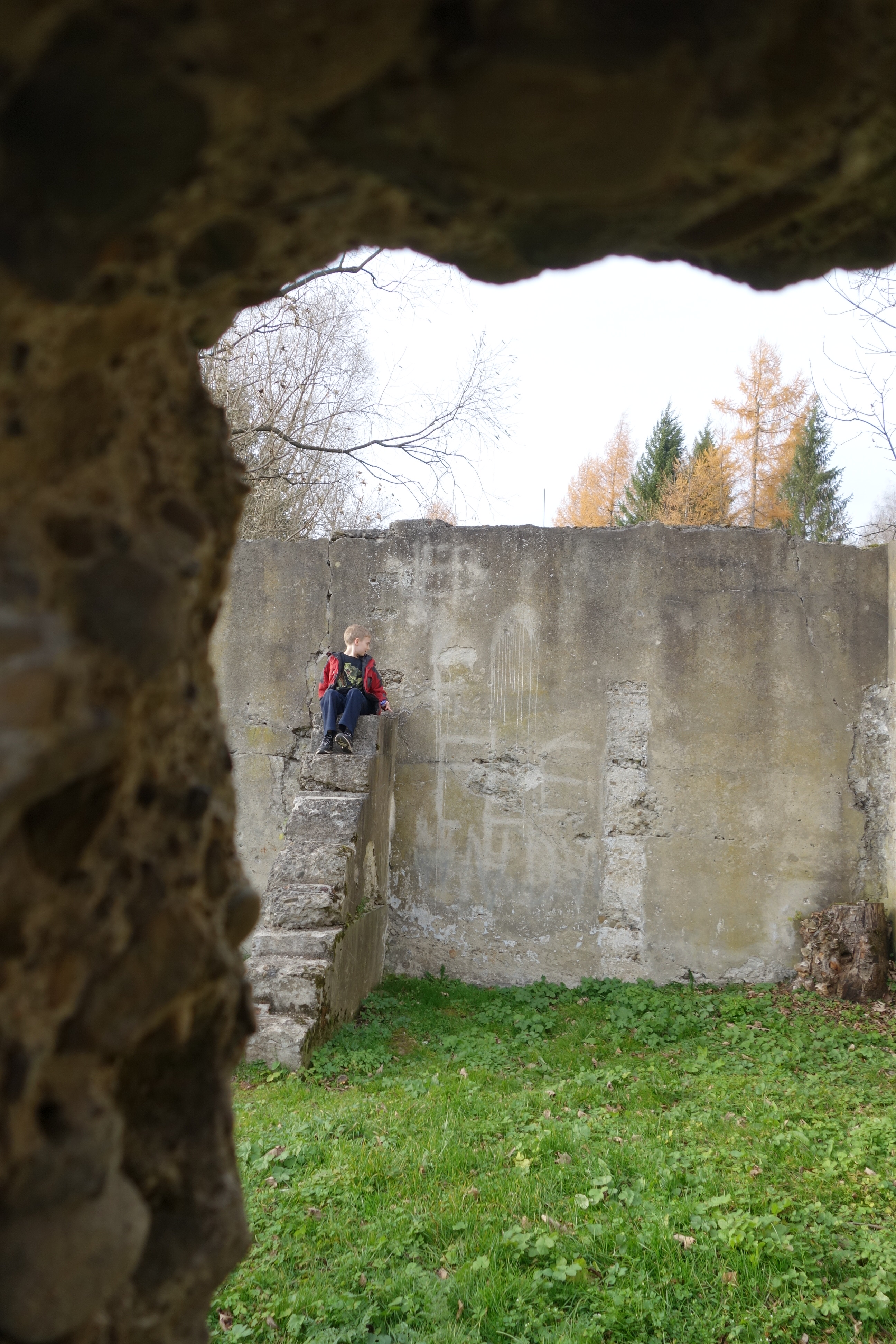
The actual stadium was abandoned in the 1990s when a new one was built for the Warta football team. Warta is Poznan’s smaller club, rival to Lech, who got a big new stadium for the European football championship Euro 2012. Małgosia conducted ethnographic research in which Warta fans turned out to be the only ones who know the function the stadium served during the war. Essentially, it was a work camp where Jews were briefly held before being shipped off to the death camps. Many detainees were shot right there on the spot. We walked through the broken down gateway, up a set of stairs to an earthen berm surrounding what used to be the playing field. Today, the site is covered with trash, and trees grow everywhere including where the bench seating used to be. Only the concrete supports of the benches are left. Goal posts stand on the field, left over from 2012 when local teams competed in a kind of lighthearted protest against the massive outlay of funds for Euro 2012.

DSC02577

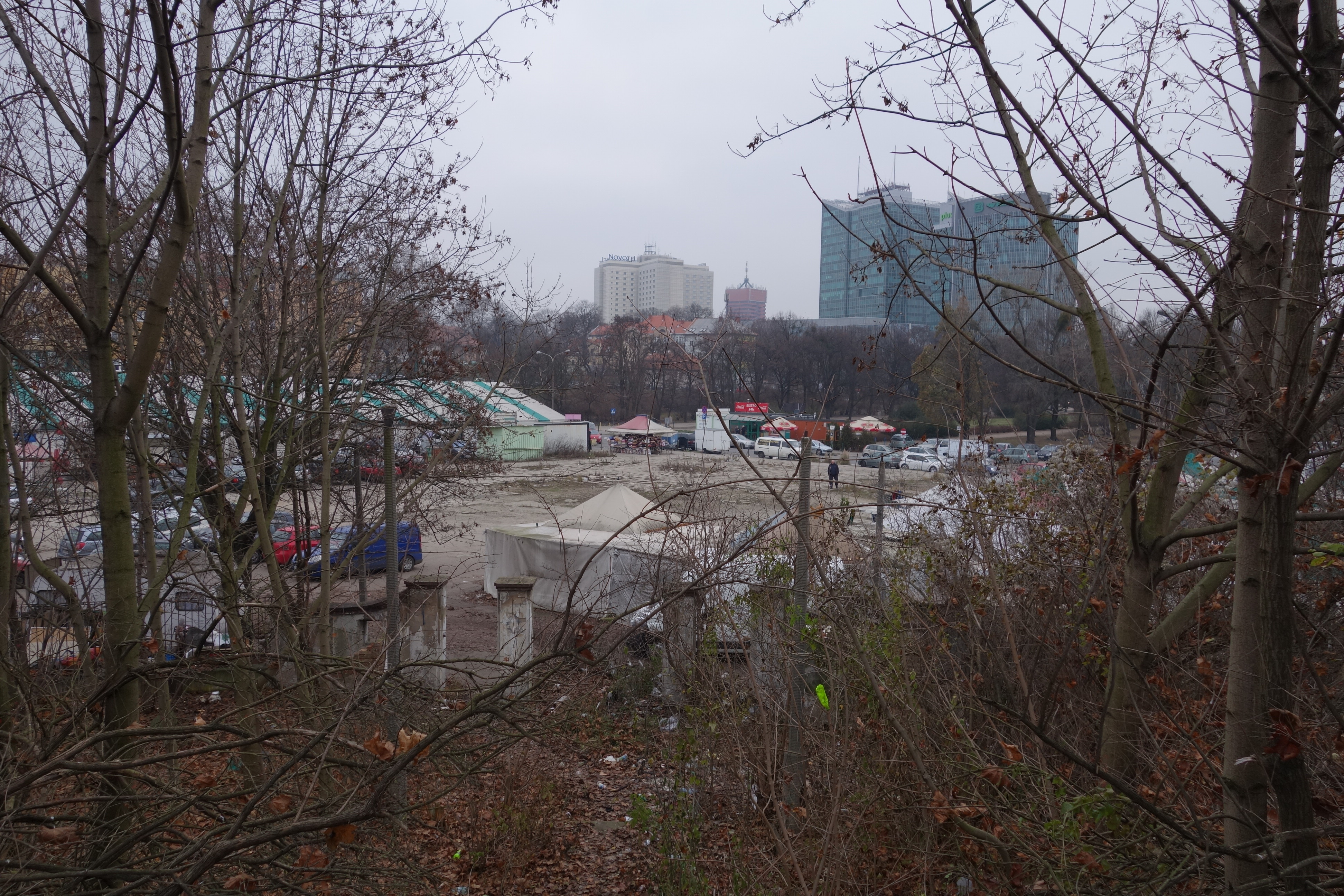
Looking out from the old football stadium toward the outdoor market and new high-rises.

Looking out from the old football stadium toward the outdoor market and new high-rises.

For the most part, this is forgotten space, despite its proximity to the center of the city. It is separated from Królowa Jadwiga Street by a dilapidated outdoor market. On this frigid day, there were no customers, just very cold sellers who urged us to their buy their wares. I was told the outdoor market used to be bigger. When they were in high school, it was the place to get real Adidas and blue jeans. With all the competition from new shopping centers, the market has shrunk. There is an ongoing debate about what to do with the old stadium—what primary purpose should the space fill? Should it be a place for sports activities? A nature preserve? A place of commemoration for those who suffered and died there? Or should it become another housing development or mall?

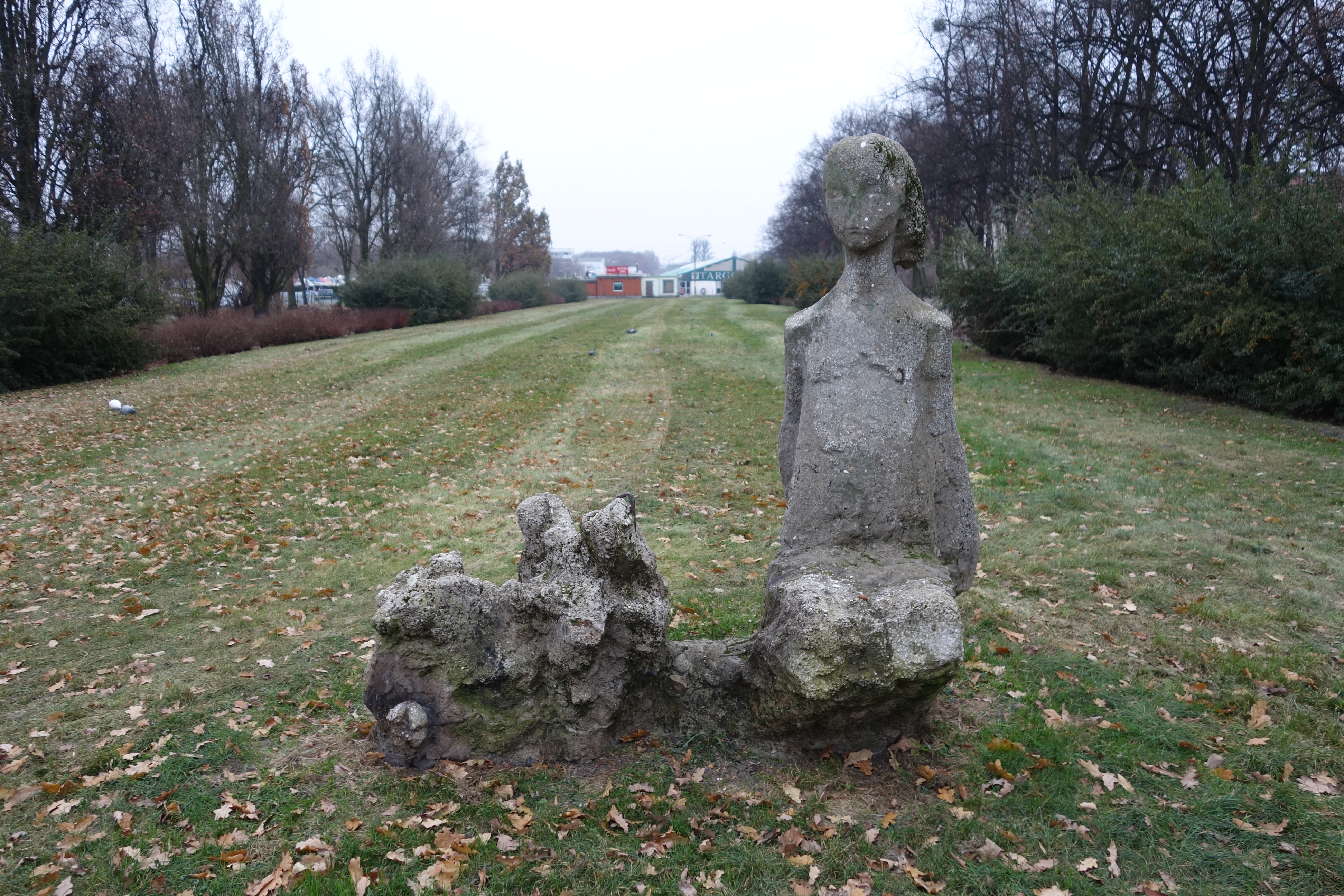
What is the origin and meaning of this sculpture? Why is it in the newly named Square of the Righteous among Nations of the World?

What is the origin and meaning of this sculpture? Why is it in the newly named Square of the Righteous among Nations of the World?

Heading back toward the center of the old city to thaw out at a café, we chanced upon an unmarked, decaying stone sculpture. I think it was Małgosia who said it suggests some sort of Holocaust memorial. Then we noticed the sign designating the area as “Square of the Righteous Among Nations of the World.” I’ve since learned that this is a new name, approved by the city just this year.

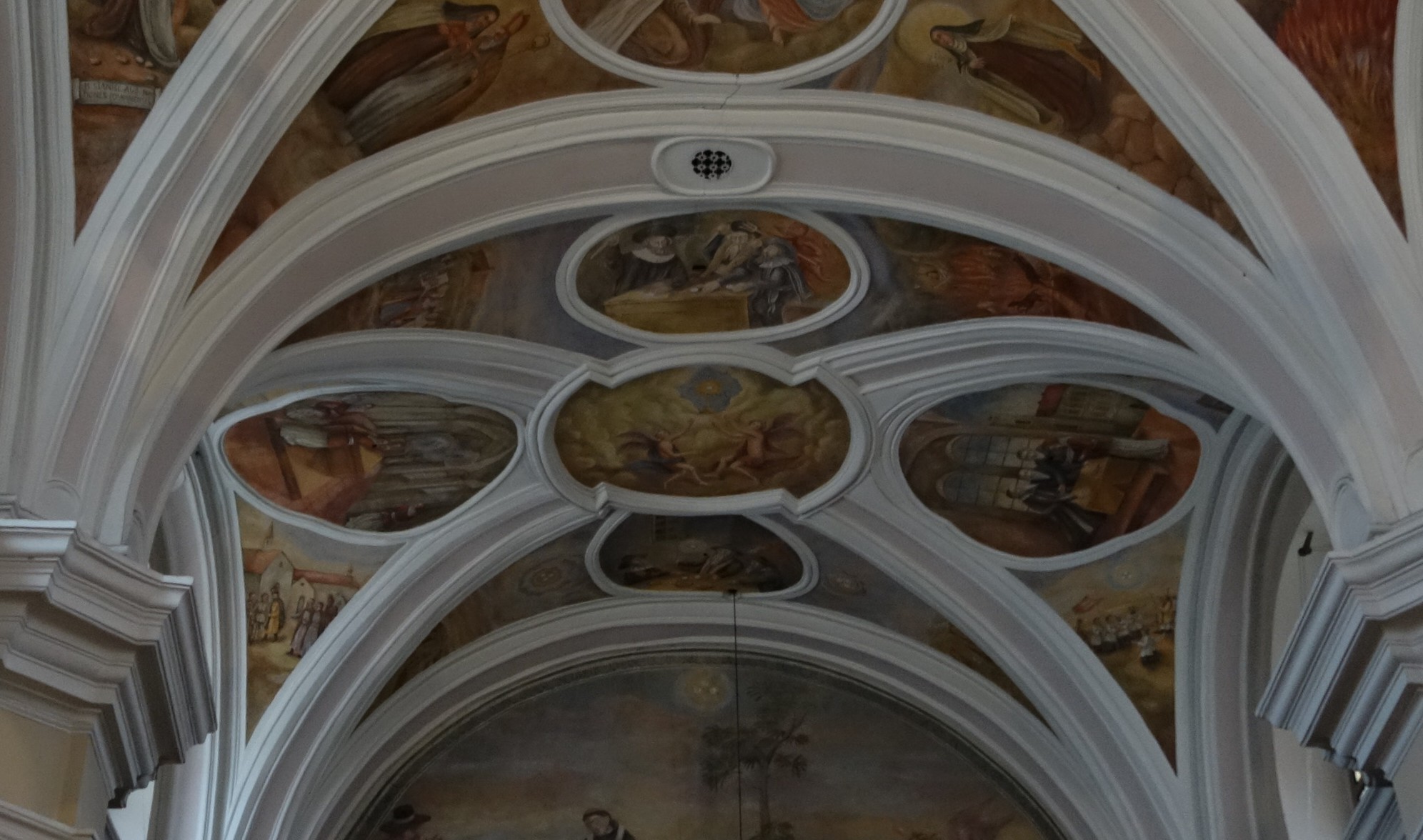
We made two more brief stops on our tour. We peaked into the Church of the Most Holy Blood of Christ (Najświętszej Krwi Pana Jezusa) on Żydowska (Jewish) Street, where I showed Anka and Małgosia the ceiling frescos depicting Jews profaning the host.

Frescos over the alter depicting the profaning of the host

Frescos over the alter depicting the profaning of the host

In Sinners on Trial, Magda Teter outlines the historical context in which this story was told:

On Fridays, as late as 1926, and perhaps even up to the eve of World War II, in a small Catholic church on what has been known as “the Jewish street,” a few meters off the main market square in the city of Poznań, the faithful did not sing the prayer Kyrie Eleison, “God Have Mercy, Christ Have Mercy.” Instead, the church followed a liturgy that diverged markedly from the approved official liturgy of the Catholic Mass. The song’s text that replaced the words of the Kyrie Eleison told of Jewish desecration of the host in Poznan:

O, Jesus, unsurpassed in your goodness,

Stabbed by Jews and soaked in blood again

Through your new wounds

And spilled springs of blood

            Have Mercy on Us, Have Mercy on Us, Have Mercy!

The hearts of stone from the Jewish street

In the house once known as the Świdwińskis’

Sank their knives in You

In the Three Hosts, the Eternal God

            Have Mercy on Us, Have Mercy on Us, Have Mercy!

The song recounted the story of three hosts stolen by a Christian woman from a Dominican church in Poznań in 1399. According to the story, she delivered the three hosts to Jews who desecrated them, “stabbing” them with knives. Unable to dispose of them, the Jews took them outside the city and buried them in swamps. The hosts miraculously emerged to reveal themselves to a shepherd boy. The Christian woman and the Jews were punished by the magistrate, and the Church of Corpus Christi was constructed on the site after the miracle (2011: 89-90).

Teter goes on to suggest that this story might have been used as a rationale for building a new church on Żydowska Street. Pani Alicja, the head of the Poznan Jewish Community, told me that she has been waging another battle to have an informational plaque installed in the entranceway of the church explaining that the story of the profaning of the host is a legend, not historical fact. To date, church representatives have only agreed to post an explanation in the basement where most people will never see it.

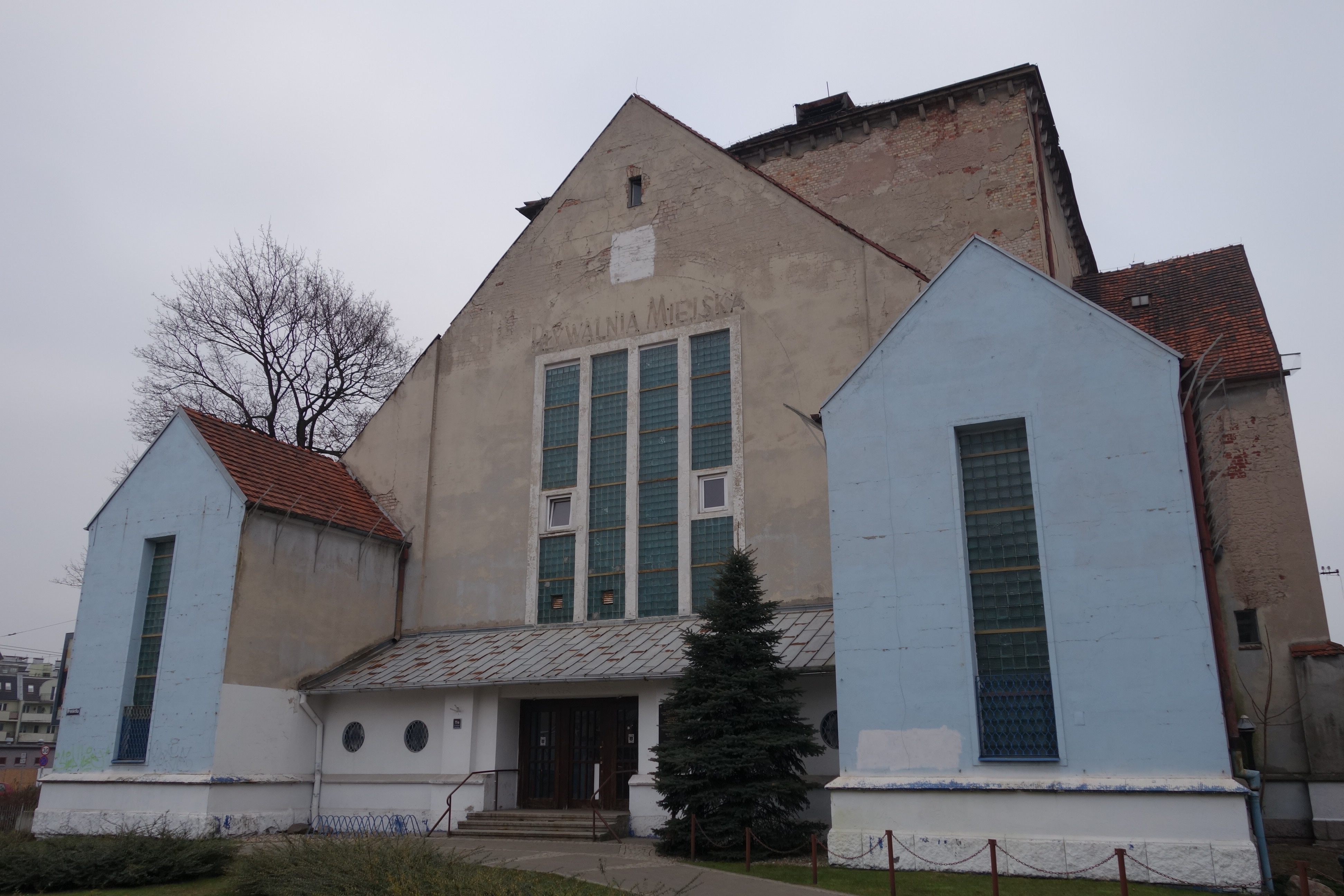
The exterior of the former "new" synagogue in Poznan. The words "Pływalnia Miejska" (City Pool) can be made out above the long windows. The pool was closed just three years ago in 2011.

The exterior of the former “new” synagogue in Poznan. The words “Pływalnia Miejska” (City Pool) can be made out above the long central windows. The pool was closed just three years ago in 2011.

Our final stop was the former synagogue near the end of Żydowska Street. When built in 1907, it was considered the “new” synagogue. It could hold 1200 worshipers, and was richly ornamented with a copper dome. During the war, the Nazis stripped off the dome and transformed the synagogue into a swimming pool. It continued to function as a pool even after the Jewish Community regained possession of the building in 2002. Małgosia has seen the interior. She described how the bottom of the sanctuary was tiled with the pool at the center, but the upper part remained just like a synagogue. She also said she has been in the attic above the wooden beams of the sanctuary which is still filled with old papers and books. The building is in bad shape and in need of major renovation. Efforts have so far failed to turn it into a Center for Dialog and Tolerance (see this essay by Janusz Marciniak, which includes photos of the exterior in 1907 and today. An essay by Teddy Weinberger describes his visit to the synagogue when it was still a pool; he includes photos of the interior as a place of worship and as a swimming pool).

Memory and forgetting in Poznan

29 Monday Dec 2014

Posted by Marysia Galbraith in Cemeteries, Heritage work, Jewish Culture, Polish-Jewish relations, Poznan

≈ 1 Comment

Małgosia and Anka at the Jewish cemetery. The building in the background holds trash bins for surrounding apartments. The resident we spoke with felt uncomfortable about having them in a cemetery.

Małgosia and Anka at the Jewish cemetery. The building in the background holds trash bins for surrounding apartments. The resident we spoke with felt uncomfortable about keeping the trash in a cemetery.

In early December, I visited the Poznan Jewish Cemetery for a second time with Anna Weronika Brzezińska, a professor at the Institute of Ethnology and Cultural Anthropology at Adam Mickiewicz University, and Małgosia Wosińska, a doctoral student at the same institute. We chose the coldest day of the season for our tour of sites associated with Jewish culture. Still, it was great to get the perspective of other ethnographers on some of the places where Jewish heritage is marked and unmarked in Poznan.

The gate into the courtyard was locked as usual, so Anka pushed the buttons on the intercom until a resident answered and buzzed us in. Anka shared her knowledge of the history of the cemetery (see some of this in my previous post). On a copy of a map from 1900, she pointed out how large the Jewish cemetery was, and how it abutted two large Catholic cemeteries. All were established in what at the time was the outskirts of the city to make room for development of the city center.

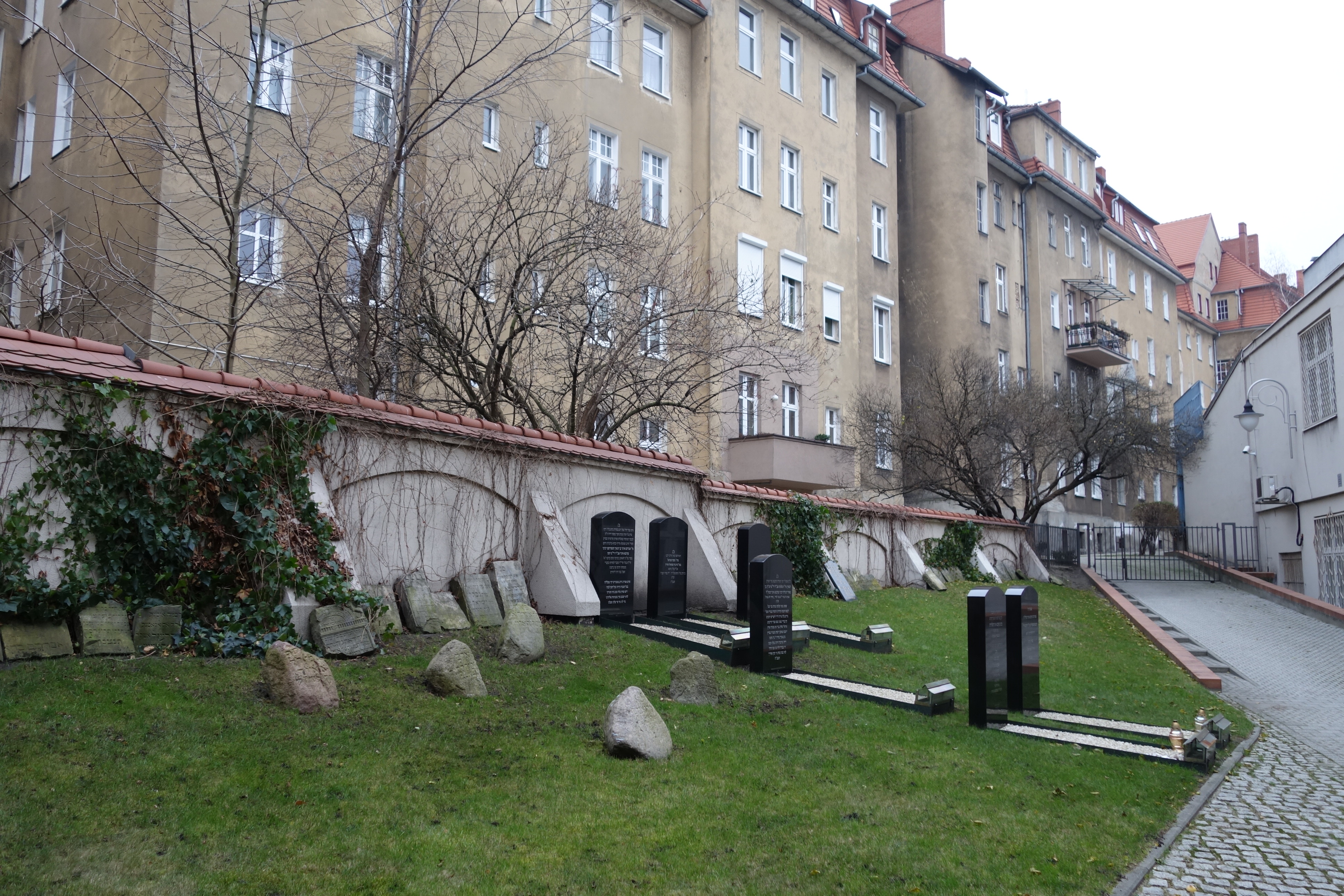
Commemorative graves and old tombstones recovered around the city. The apartments overlooking the site were built just outside the cemetery walls in the early 20th century.

Commemorative graves and old tombstones recovered around the city. The apartments overlooking the site were built just outside the cemetery walls in the early 20th century.

Poznan continued to expand so that by the early 20th century, there was another initiative to reclaim these cemeteries for other purposes. First, buildings were built along the roads, including the apartments on Śniadecki Street (visible on the other side of the wall behind the tombstones) and the Poznan Trade Center (Targi Poznańskie) on Głogowska and Grunwaldzka Streets. During World War II, the Jewish tombstones were removed and repurposed for roadways, sidewalks, and other building projects. The Catholic cemeteries (which already seem to have been at least partially missing in the 1927 photo) were also damaged, though they were not the object of systematic wartime destruction as was the Jewish cemetery. After World War II, in the 1950s, the socialist government liquidated what remained of all of the cemeteries in this area. This served a dual purpose for the secular socialist regime—so the land could be developed, but also because the cemeteries were affiliated with religions.

It changes things to realize it was not just the Jewish cemetery that was redeveloped, but also Catholic ones. Later, when we passed a park across from the train station, Anka said it used to be yet another Catholic cemetery. Taken together, they indicate a general attitude about the past—a willingness to forget, especially when specific ties to specific people are broken. State socialism also had its effects—the challenges of normal everyday life that made Poles reluctant to look to the past or the future, and the authoritarianism with which urban development was realized. This isn’t to say that Jewish memory wasn’t deliberately erased from the city landscape, but rather to put those practices into a broader context of erasure and rebuilding.

The commemoration project was controversial. Months earlier, Pani Alicja at the Gmina Żydowska explained to me that they can’t reclaim land that has been built on. This would have ruled out most of the former cemetery land because it is under the Poznan Trade Center. The only alternative was in the courtyard, but some residents protested against putting it there. I asked Anka if residents had known beforehand that their homes overlook a cemetery. She said maybe, but they would have had other things on their minds. Also, many families moved into the area after the war ended so they would not have ever seen the cemetery.

As we headed to a back gate to look at the other side of the cemetery wall, an elderly man approached on his way out from his apartment. He gladly unlocked the gate for us and paused to chat. He said he has only lived there since the 1970s, but his wife remembers playing in the empty field behind her apartment when she was a child (in what used to be the cemetery). She sometimes came across human bones sticking out of the sand.

He said some residents didn’t like the idea of the memorial, but he had no objection. On the contrary, it was a neglected space before, with broken-down garages and lots of trash. He tries to tell people about the history of the place when they visit. However, there aren’t many visitors. The few who come are usually from abroad. He hasn’t witnessed any ceremonies occurring in the courtyard. This seems odd to me. Surely some heard the prayers and chants during the Kaddish in September, but I didn’t see a single person look out their window. When asked Anka and Małgosia about this later, Anka defended the residents, saying only bathrooms and kitchens face the courtyard. Most people have no reason to look out those windows.

The resident also told us about a large wooden cabinet adorned with three carved roses that his wife’s family found in their apartment when they reclaimed it (during the war, all Polish residents were forced out and Nazi officers lived there). Once, they had a visitor who asked if they had Jews in the family, explaining that the cabinet probably came from a prosperous Jewish family around Lviv. Perhaps a German officer liked it, claimed it, and brought it back to Poznan. The number of roses (one, three, or five) represents increasing status within the Jewish community.

As we prepared to leave, Małgosia remarked that Jewish culture remains hidden in plain sight, even in places like this where the effort has been made to preserve it. Because of the locked gates, most people can’t come in.

← Older posts
Newer posts →

Categories

  • Anthropology (38)
    • Archives (14)
    • Fieldwork (7)
    • Ground Penetrating Radar (GPR (5)
    • Research Methodology (8)
  • antisemitism (14)
  • Association of Descendants of Jewish Central Poland (36)
  • Catholicism (8)
  • Conference (1)
  • Discrimination (2)
  • Family (71)
    • Bereda (19)
    • Kolski (13)
    • Piwko (22)
    • Rotblit (3)
    • Walfisz (4)
    • Winawer (7)
  • Genealogy (11)
  • Heritage work (70)
    • Commemoration (24)
  • Identity (18)
  • Israel (6)
  • Jewish Culture (93)
    • Cemeteries (55)
    • Museum (8)
    • Synagogues (34)
    • Torah (1)
  • Jewish immigrants (8)
  • Jewish Religion (1)
  • Memory (73)
  • Names (14)
  • Photographs (6)
  • Pifko-Winawer Circle (5)
  • Poland (131)
    • Baligród (1)
    • Bolimów (1)
    • Brześć Kujawski (5)
    • Buk (1)
    • Chodecz (1)
    • Dukla (2)
    • Dąbrowice (1)
    • Gdynia (1)
    • Gostynin (3)
    • Gąbin (1)
    • Izbica Kujawska (1)
    • Kazimierz (4)
    • Kowal (1)
    • Koło (1)
    • Krakow (7)
    • Krośniewice (1)
    • Kutno (9)
    • Kłodawa (1)
    • Lesko (8)
    • Leszno (1)
    • Lubień Kujawski (1)
    • Lubraniec (1)
    • Lutowiska (3)
    • Piła (3)
    • Podgórze (2)
    • Poznan (11)
    • Przemyśl (2)
    • Pzedecz (1)
    • Radom (1)
    • Radymno (1)
    • Sanok (1)
    • Skierniewice (5)
    • Sobota (2)
    • Tarnów (2)
    • Warsaw (23)
    • Wielkopolska (1)
    • Wronki (7)
    • Włocławek (20)
    • Zasław (2)
    • Łódź (1)
    • Żychlin (33)
  • Polish Culture (10)
  • Polish-Jewish Heritage (60)
  • Polish-Jewish relations (61)
  • Post-World War II (25)
  • Pre-World War II (22)
  • Reclaimed Property (1)
  • stereotypes (3)
  • Survival (9)
  • Trauma (3)
  • Uncategorized (5)
  • Victims and perpetrators (4)
  • World War II (47)
    • Jewish Ghetto (12)
    • Nazi Camps (6)
    • Polish Underground Army (3)
  • Yiddish (5)

Enter your email address to follow this blog and receive notifications of new posts by email. Your email address will not be shared.

Archives

  • July 2026 (1)
  • June 2026 (5)
  • May 2026 (1)
  • October 2025 (1)
  • July 2025 (8)
  • June 2025 (1)
  • April 2025 (1)
  • August 2024 (3)
  • July 2024 (3)
  • May 2024 (2)
  • April 2024 (1)
  • May 2023 (2)
  • January 2023 (2)
  • December 2022 (7)
  • November 2022 (2)
  • October 2022 (5)
  • September 2022 (1)
  • January 2022 (1)
  • August 2021 (1)
  • December 2020 (2)
  • July 2020 (1)
  • May 2020 (3)
  • April 2020 (1)
  • March 2020 (1)
  • January 2020 (2)
  • May 2019 (1)
  • February 2019 (1)
  • November 2018 (1)
  • September 2018 (1)
  • August 2018 (3)
  • July 2018 (1)
  • June 2018 (1)
  • May 2018 (1)
  • April 2018 (2)
  • March 2018 (2)
  • February 2018 (2)
  • January 2018 (2)
  • December 2017 (2)
  • November 2017 (2)
  • October 2017 (1)
  • September 2017 (3)
  • August 2017 (3)
  • June 2017 (2)
  • May 2017 (3)
  • April 2017 (1)
  • March 2017 (2)
  • February 2017 (1)
  • January 2017 (2)
  • December 2016 (2)
  • November 2016 (4)
  • October 2016 (1)
  • September 2016 (6)
  • August 2016 (2)
  • July 2016 (1)
  • May 2016 (4)
  • April 2016 (2)
  • March 2016 (3)
  • February 2016 (4)
  • January 2016 (3)
  • December 2015 (3)
  • November 2015 (5)
  • October 2015 (5)
  • September 2015 (3)
  • August 2015 (4)
  • July 2015 (3)
  • June 2015 (3)
  • May 2015 (4)
  • April 2015 (9)
  • March 2015 (3)
  • February 2015 (2)
  • January 2015 (5)
  • December 2014 (4)
  • November 2014 (9)
  • October 2014 (2)
  • September 2014 (1)

Copyright Notice

All original text and images are copyright © Marysia Galbraith. Please contact the author before quoting.

Blog at WordPress.com.

  • Subscribe Subscribed
    Uncovering Jewish Heritage
    Join 151 other subscribers

    Have a WordPress.com account? Log in now.

  • Uncovering Jewish Heritage
    View site in Reader
    Manage subscriptionsSign upLog in
    Report this content
    Collapse this bar
Loading Comments...