• About
  • The Photo that Started it All

Uncovering Jewish Heritage

Uncovering Jewish Heritage

Category Archives: Heritage work

Threading the Needle

27 Wednesday Jul 2016

Posted by Marysia Galbraith in antisemitism, Baligród, Commemoration, Fieldwork, Heritage work, Jewish Culture, Kazimierz, Krakow, Lesko, Memory, Poland, Polish Culture, Polish-Jewish Heritage, Polish-Jewish relations, Tarnów, Warsaw, Wronki, Włocławek, Zasław, Żychlin

≈ Leave a comment

Tags

Erica Lehrer, Jacek Nowak, Jewish Poland Revisited, Katka Reszke, Return of the Jew

I am back from six weeks in Poland. I envisioned regular posts from the field in this blog. But instead, doing fieldwork left little time for writing and reflecting about it. Nevertheless, a structure for my next book project has been emerging. The challenge will be threading the needle between celebrating the renewal of interest in Jewish life in Poland, captured so well in Erica Lehrer’s Jewish Poland Revisited and Katka Reszke’s Return of the Jew, and addressing the ongoing silences, distaste, even hatred expressed toward Jews, as revealed in Jacek Nowak’s interviews with ordinary Poles. Because both are happening at the same time, often in the same places, and sometimes even within the same people.

And I’ve seen evidence of both in my own research. People all over Poland are doing incredible work to preserve cemeteries, renovate synagogues, document first-person accounts, and celebrate Jewish music and culture, often in the absence of any involvement from living Jews. They work with passion to fill what they feel to be a void in their local communities. And they do so despite the resistance they sometimes face from fellow residents and local government representatives. Every place tells a different story, even though many of the same elements can be found in each of them. Over the next several posts, I’ll highlight the places and projects I visited. Watch for the place names to become links to more details.

Włocławek

DSC08792

Students and teachers from the Automotive High School in Włocławek receive the first place award for their Facebook “fan page” “Włocławska zapomniania ulica” (“Wloclawek’s forgotten street”) at the Polin Museum in Warsaw, June 22, 2016. The contest was “Places of Holocaust Memory Near Us” and the challenge was to highlight a place in the local community. The team from Włocławek chose Piwna Street, called “the street of death” during World War II.
Żychlin

DSC08396

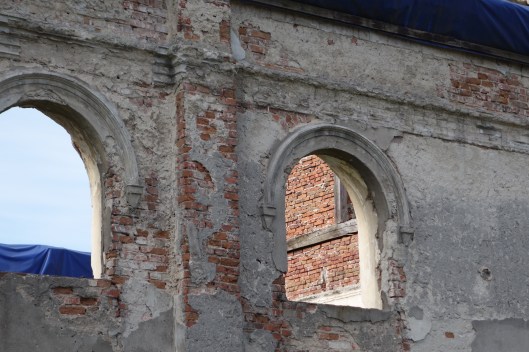
Detail of the synagogue in Żychlin, converted into a warehouse by the Nazis and used as such for many years after. The roof caved in several years ago. Traces of frescos are barely visible through the empty windows.

Kutno

KutnoCemetery

New signs at the Kutno Jewish cemetery provide historical information and urge residents to keep in mind this green hillside is a cemetery. Installed by Towarzystwo Przyjaciół Ziemi Kutnowski (Association of the Friends of the Kutno Region).

Wronki

An arial view of the Lapidarium in Wronki that shows the shape of the raised beds, meant to evoke an open book.

Warsaw
konferencja_zdk_polin-eng_1600_rgbIn Warsaw, the conference Jewish Cultural Heritage: Projects, Methods, Inspirations at the Polin Museum of the History of Polish Jews gave me a good idea of the scope of heritage work throughout Europe, as well as ongoing debates about Jewish heritage projects.

Krakow

IMG_0956

Glass House Orchestra performing at Shalom on Szeroka, the outdoor concert culminating the Krakow Jewish Culture Festival.

Tarnów
DSC09413

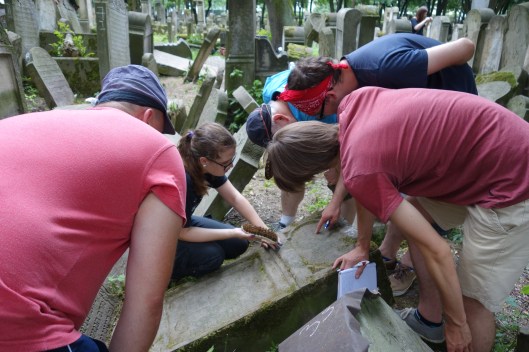
Professor Hońdo of the Jagiellonian University helps participants in the Tarnów Tombstone camp for volunteers (Tarnowskie macewy – obóz dla wolontariuszy) decipher the text on a tombstone.

Baligród

IMG_0998

The weeds grow tall in the Jewish cemetery in Baligród, despite indications of maintenance done not too long ago. It takes constant attention to keep these sites from slipping back into obscurity.

Zasław

ZaslawSignZagorz

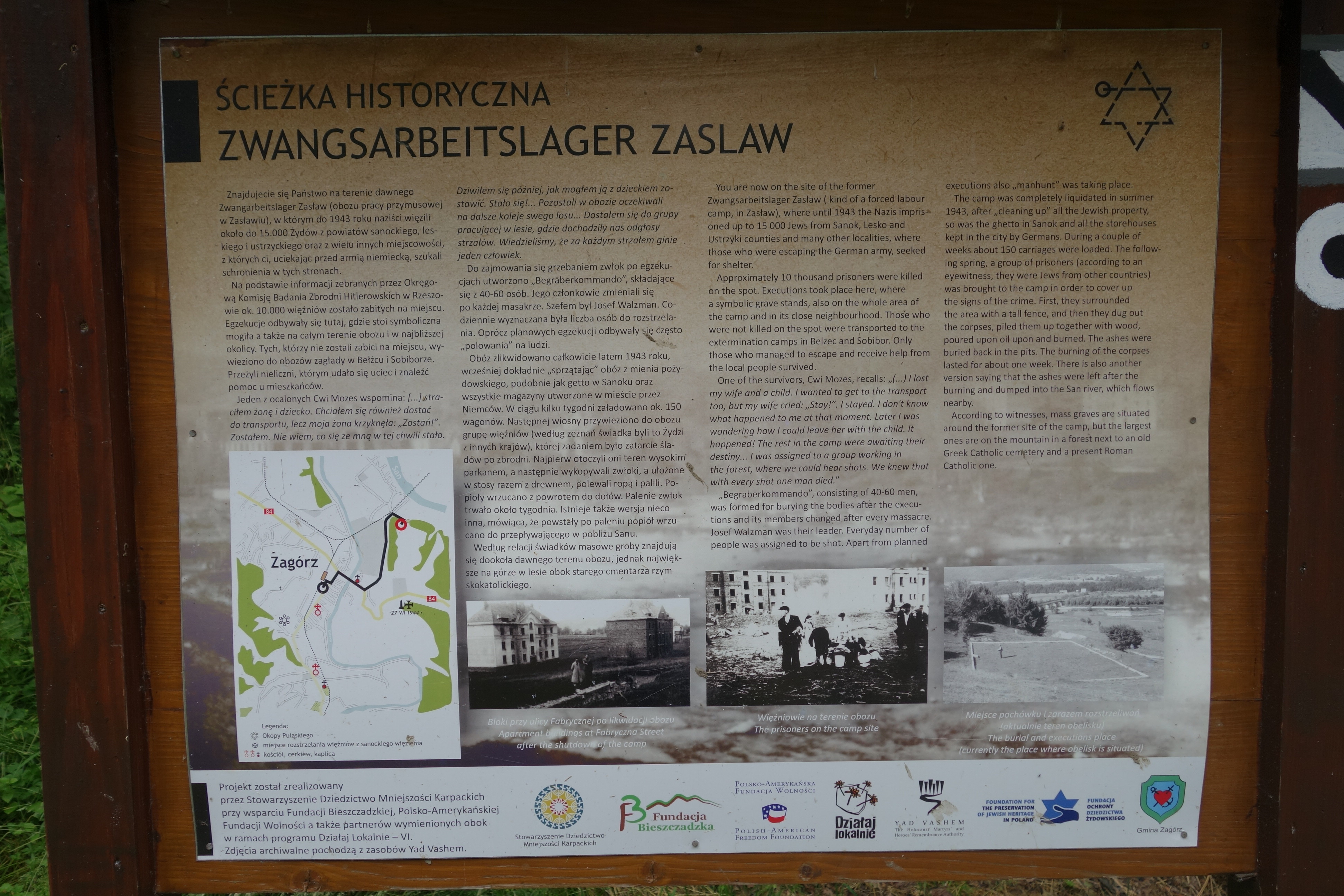
Historical information about the Nazi Work Camp in Zasław marking the beginning of the trail from the Zagórz train station to the monument on the mass grave at Zasław. A project of the Stowarzyszenie Dziedzictwo Mniejszości Karpackich (Association of the Heritage of Minorities of the Carpathians).

Lesko

DSC09276

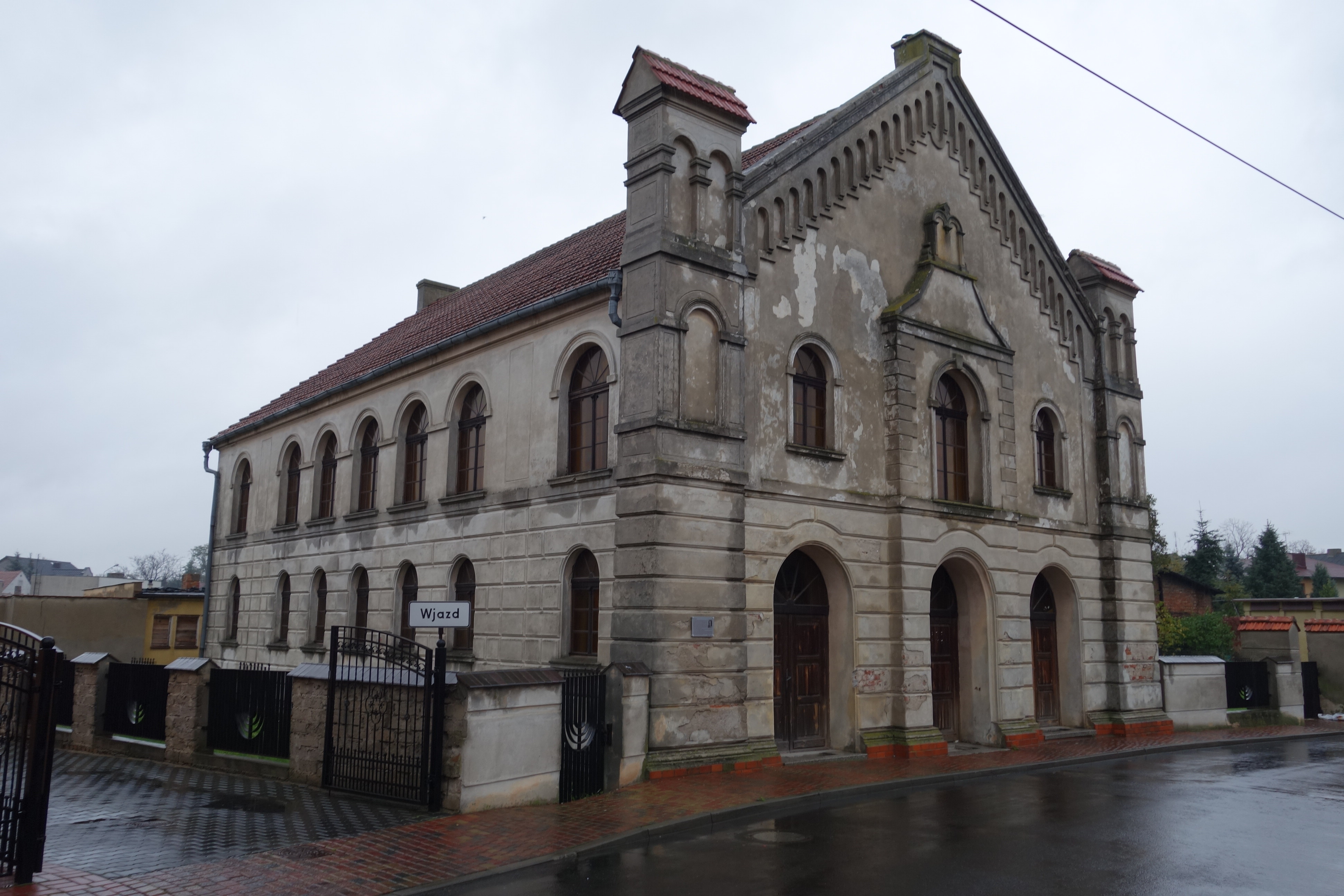
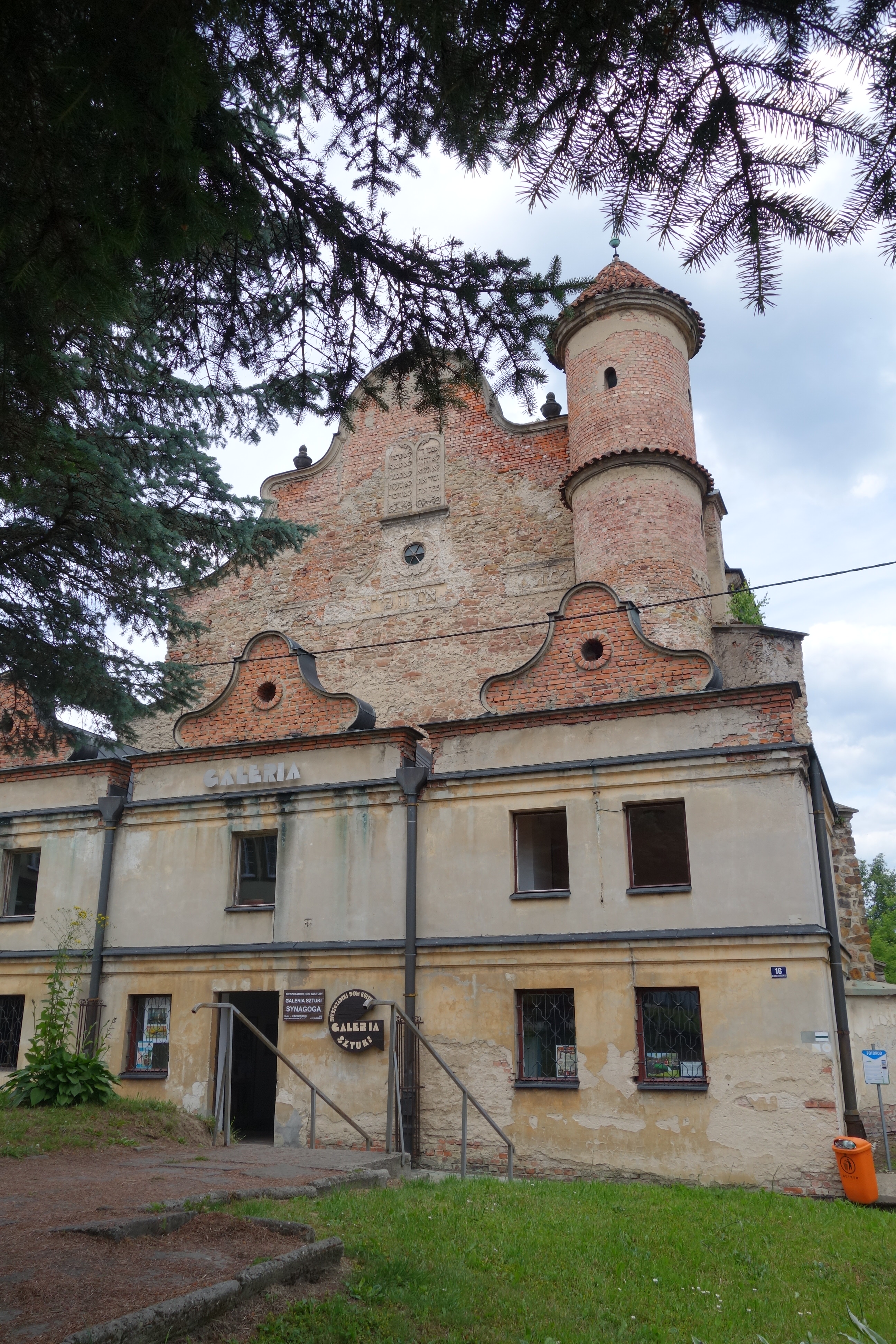
The synagogue in my beloved Lesko–much of the front facade was rebuilt and reinvented around 1960.


Council for European Studies Conference

15 Friday Apr 2016

Posted by Marysia Galbraith in antisemitism, Brześć Kujawski, Commemoration, Family, Fieldwork, Heritage work, Jewish Culture, Kolski, Memory, Piwko, Poland, Polish Culture, Polish-Jewish Heritage, Polish-Jewish relations, Research Methodology, Włocławek

≈ 5 Comments

Tags

Absence of Memory, Council for European Studies Conference, Postmemory, Reassembling Jewish Life in Poland, Włocławska Zapomniana Ulica

Yesterday, I presented a paper titled, “Reassembling Jewish Life in Poland.” It starts like this:

It is easy to get the impression that we have entered an era of retrenchment of exclusionary national, ethnic, and religious categories, making minorities of any kind suspect. Specific objects of fear, such as terrorists, raise suspicions about broader categories, such as Muslims; the economic threat attributed to immigrants extends to all Mexicans, Syrians, North Africans, or Eastern Europeans. And Jews have once again become the object of attacks in Western Europe, leading Atlantic journalist Jeffrey Goldberg (2015) to title his recent cover article, “Is it Time for the Jews to Leave Europe?” In the current climate of exclusionary politics, the quiet emergence in Poland of efforts to embrace the long history of Jewish residence is all the more striking. Recent studies have “revisited” Jewish Poland (Lehrer 2013) and documented the “return of the Jew” (Reszke 2013), challenging the common assumption that antisemitism rests at the heart of what it means to be Polish. I have been studying contemporary memory projects, including commemorative sites, museums, and cultural festivals that endeavor to reassemble the remaining fragments that provide a window into what Jewish life (and its destruction) was like in Poland. These fragments can reveal something about the past, even if it is just in an incomplete and shattered form. Perhaps of greater significance, they can point toward the future—the possibilities for reengaging with ethnic and religious categories in ways that acknowledge difference without encouraging exclusion. 

Placing a lantern at the opening of the Lapidarium in Wronki
The Atlantic, April 2015

The figure of the Jew remains a multivalent symbol in Poland, even after the destruction of Jewish culture during the Holocaust and further erasure of its traces during state socialism. My research on Jewish heritage asks what can be done with the fragments of Jewish culture that remain, sometimes hidden and sometimes in plain sight. And what value does such memory work have? It might appear that too little is left, or that any attempt to piece together fragments will just expose more horror, trauma, and death. Nevertheless, the steady growth of interest in Jewish culture in Poland can be seen in major projects like Warsaw’s Polin Museum of the History of Polish Jews, and in much quieter ways in smaller communities throughout the country. Even President Duda, whose Law and Justice Party tends to support nationalism and exclusionary practices, recently spoke against antisemitism at the opening of the Ulma Family Museum of Poles Saving Jews. To set the stage for my reflections about reassembled fragments of Jewish culture, I first situate Jews within the disrupted history of Poland, and discuss the consequences of postwar trauma under state socialism. This is also a first attempt at integrating an ethnographic approach to the topic, through exploration of commemorative sites and practices, and a more personal one, in the form of interwoven stories about my own Jewish-Polish heritage. Building on concepts of postmemory (Hirsch) and absence of memory (Irwin-Zarecka), I consider what reassembly projects promise for the reconciliation of Polish-Jewish relations on both social and personal levels.

I focused on Włocławek for my case material: Places embodying the “absence of memory” such as the swimming pool in the Jewish cemetery in Brześć Kujawski, the crumbling buildings formerly owned by Jews in the center of Włocławek, and the monument to the Jewish ghetto in the schoolyard that used to be the Jewish cemetery. I discussed what such places communicate about the history of Jewish life (and death) in Poland, as well as the personal, emotional resonances of such places.

DSC03544

Pre-World War II facade on Tumska Street, Włocławek

Then, I contrasted the impression left by the the Facebook page, “Włocławska Zapomniana Ulica (Forgotten Street of Włocławek),” in which students and teachers at the Automotive High School in Włocławek document “Places of the Holocaust close to us.” The site features historic photographs, brief histories, and excerpts from interviews with local historians and residents who remember the Nazi occupation of the city. This is heavy stuff, and yet the project reflects a different orientation toward the past than do the crumbling buildings on abandoned streets and the swimming pool in a burial ground. It is a public display of intangible heritage, a space for documenting the murder and destruction that occurred during the Holocaust in very personal, localized terms. The Facebook page announces, “These events happened here, on our streets.” It is all the more notable because the primary organizers and audience in this project are young people, probably in most cases the post-postmemory generation that was supposed to be too distant from events to feel any personal connection to them.

And the story doesn’t stop here. I am looking forward to visiting the high school students and their teachers in June. And now my cousins are also interested in the project and maybe even getting involved with it somehow. The ethnographic and personal strands of my work continue to become more strongly intertwined.


Włocławek Youth Document Jewish History

10 Sunday Apr 2016

Posted by Marysia Galbraith in Heritage work, Jewish Culture, Kolski, Memory, Piwko, Polish-Jewish Heritage, Post-World War II, Synagogues, World War II, Włocławek

≈ 5 Comments

When I visited Włocławek last February, I was disheartened by the crumbling historic buildings that were formerly owned by pre-World War II Jewish residents. Still, I met a few people actively involved in documenting and preserving the memory of the city’s Jewish population. They include: Mirosława Stojak, who writes about Włocławek’s Jews and manages the website zydzi.wloclawek.pl, Tomasz Wąsik, the historian and director of the Museum of History in Włocławek, and Tomasz Kawski, a historian and professor at Kazimierz the Great University in Bydgoszcz, and author of several books on the history of Polish Jews.

And now high school students in Włocławek have been collecting photographs, writing historical accounts, and doing interviews with people who remember the events of World War II. Their work can be seen on their Facebook page. Here are just a few of the photos they have posted. The synagogue on Królowiecka Street:

Synagogue on ul. Królowiecka, Włocławek

Synagogue on ul. Królowiecka, Włocławek

The synagogue on Zabia Street:

Synagogue ul. Żabia, Włocławek


And here the synagogue in flames:

The synagogue in flames. Source: http://www.4ict.pl/szlaki_pamieci/
Jews in front of the burned Włocławek synagogue. Source: http://www.4ict.pl/szlaki_pamieci/

The students write on their Facebook page:

“On September 24, 1939, Germans ordered Jews they selected to bring a barrel full of tar to the synagogue on Żabia Street. Then they forced them to ignite the fire.

In this way, one of the prettiest synagogues in Poland ceased to exist. The synagogue on Królowiecka Street met the same fate.”

“24 września 1939 roku Niemcy nakazali wyznaczonym przez siebie Żydom wprowadzenie do Synagogi na ulicy Żabiej beczek wypełnionych smołą. Następnie zmusili ich do wzniecenia pożaru.
“Tym samym przestała istnieć jedna z najpiękniejszych Synagog w Polsce.
Podobny los spotkał Synagogę przy ulicy Królewieckiej.”

So while horrible truths are communicated, this project and the Facebook page that documents it stand out to me as a marker of hope. A new generation of Włocławek residents are learning about this difficult history, and returning the story of what happened to the city’s Jews to the center of the narrative about their hometown.


Swimming in the Synagogue?

20 Sunday Mar 2016

Posted by Marysia Galbraith in Commemoration, Jewish Culture, Polish-Jewish Heritage, Post-World War II, Poznan, Pre-World War II, Synagogues, World War II

≈ 5 Comments

Tags

Janusz Marciniak, swimming pool in a synagogue

How, realistically, can Jewish heritage be preserved in Poland? Some projects are easy to get behind, like the lapidarium in Wronki. Others fall into more problematic ethical territory. The fact remains that there are many more sites in need of preservation than there are funds for such projects. And yet, I would argue that because of the magnitude of the destruction of Jewish life in Poland, every fragment has enhanced value.

The survival of a building as grand as the New Synagogue in Poznań is thus of particular worth. As with most remaining synagogues in Poland, the New Synagogue was not destroyed because it was repurposed. The Nazis converted the building into a swimming pool; after World War II, it remained a municipal pool until 2011. Although there has been ongoing public debate about more appropriate uses of the space, which at some point was passed back into the hands of the Jewish Community, the main reason the pool was finally closed was because of its deteriorating condition.

The New Synagogue was built in 1907 on Stawna Street between Wroniecka and Żydowska (Jewish) Street, just a few blocks from the central market square of the old city. Intended for Poznań’s wealthier Jewish citizens, the imposing structure had a seating capacity of 1200 and a large copper-covered cupola. Its size and grandeur is all the more striking, considering the Jewish population of the city was under 6000 when the synagogue was built, and further dwindled to perhaps 3000 right before World War II (statistics from Virtual Sztetl).

synagogue_1907-2011A

Poznań’s New Synagogue in 1907 when it was first opened and in 2011, around the time the swimming pool closed (photos from: http://www.januszmarciniak.pl/synagogue)

As these photos show, the German occupiers also removed the cupola and other ornate features, leaving a far less elaborate structure. For several years, starting in 2004, artists like Janusz Marciniak were involved in installations and commemorative events that used the pool as a focal point. Some of these include Marciniak’s  Atlantis (2004),  Alphabet (2005), and 9/09/1939 (2006).

4_ATLANTIS

Poznań’s New Synagogue in 1907 when it was first opened and in 2011, around the time the swimming pool closed (photos from: http://www.januszmarciniak.pl/synagogue)

The Jewish Community, together with others interested in preserving the New Synagogue, proposed restoring the building to its prewar shape and condition, and housing a Center for Dialog and Tolerance. Unfortunately, the plan failed to gain the institutional support and financial backing necessary for it to be realized.

But now there is a new plan in the works, to turn the synagogue into a hotel. In and of itself, that is not the worst outcome; investors will preserve and upgrade the structure, which will include a mini-museum with information about the building’s origins and the history of Poznań’s Jews. So while a museum, or memorial, or center for dialog and tolerance would be preferable, at least the synagogue won’t be torn down, as some city leaders suggested as recently as 2006.

Artist's rendering of the proposed hotel project. The prewar copper-clad dome is reimagined in glass. Photo from article in Gazeta Wyborcza
Artist’s rendering of the proposed hotel project. The prewar copper-clad dome is reimagined in glass. Photo from article in Gazeta Wyborcza
Elements of the pool being disassembled. Photo by Łukasz Cynalewski

But putting another pool in the synagogue is, as my husband put it, kind of tone deaf. It’s insensitive to the cruel history of the place.

A recent article in Gazeta Wyborcza about the planned hotel begins with the following fable:

(my translation) “Summer 2020. Early morning at the hotel on Wroniecki Street at the corner of Stawna Street. In a luxury room in the former Jewish synagogue Alessandro Gianini, a tourist from Rome, wakes up. He flew into Poznan the night before and stayed in the modern hotel with intriguing architecture. In the guidebook, he read that the glass copula of the building recreates the old outline of an imposing synagogue. Now he wants to look around the city.

“But before Alessandro sets out for the Old Market Square, he goes down to the second floor for a swim in the hotel pool. The swim helps to relax and awaken him. He changes, and full of life goes down to the ground floor to the restaurant. After a light breakfast and a cappuccino, he heads to the exit. In the hall, however, he sees an open door to a small space. A sign in English hangs on it: “Museum of the Jews of Wielkopolski.”

“Intrigued, Gianini looks inside. He sees large boards–reproductions of sepia-colored photographs. On the first of these–a long swimming pool under a high vaulted ceiling. On the wall of the pool–a fascist eagle.

“Surprised, the Italian looks at the caption below the photo: “In 1940 Nazi occupiers profaned the synagogue, removing the Star of David from it and building a pool inside of it.

“Alessandro suddenly feels ashamed. Because of his morning swim in the place where 80 years earlier Nazis showed complete contempt for the feelings and religion of Jews, and then sentenced them to a horrible death. He is ashamed and embarrassed. And more than anything surprised that history could be repeated in this cruelly perverse way…”

(the original Polish is in the article)

I don’t know anything more about these plans, except for rumors I heard while I was in Poznań last year, and the contents of this article. Perhaps if they do include a pool, it will be located in some new addition to the structure, in a less offensive place than the main sanctuary. I certainly hope so.

Southern Conference on Slavic Studies

18 Friday Mar 2016

Posted by Marysia Galbraith in Anthropology, Cemeteries, Heritage work, Identity, Jewish Culture, Memory, Polish-Jewish Heritage, Polish-Jewish relations, Wronki

≈ Leave a comment

The Southern Conference on Slavic Studies has its annual meeting right here in Tuscaloosa starting today until March 19. Tomorrow, I will present a paper about my heritage work in Poland. Here is the abstract:

From Curbstones to Commemoration: Reincorporating the Memory of Jewish Life in a Polish Town

The figure of the Jew remains a multivalent symbol in Poland, resilient even in the face of the destruction of Jewish culture during the Holocaust and erasure of its traces during state socialism. My research on Jewish heritage asks what can be done with the fragments of Jewish culture that remain in Poland, sometimes hidden and sometimes in plain sight. And what value does such memory work have? The growth of interest in Jewish culture in Poland can be seen not just in major cities, but also in smaller communities throughout the country. I focus on one commemorative project in one Polish town to illustrate changing, though still contested, orientations toward the history of Jewish residence in Poland. Specifically, I examine the rescue of fragments of Jewish tombstones from a street curb where they rested for sixty years, and the decade-long effort of multiple stakeholders to return the stones to a place of commemoration. I argue that an essential component of the project was to reincorporate the history of Jews into the wider history of the town—a kind of making what was regarded as “other” (“obcy”) into something that is one’s own (swój). The Lapidarium of tombstones from the old Jewish cemetery in Wronki has literally become a place on the map, and has returned the memory of Jewish lives to town residents and visitors. The fragments of tombstones, historical sign, and commemorative marker reveal something about the past, even if it is just in an incomplete and shattered form. And they point toward the future—the possibilities that might emerge out of reassembling Jewish life in Poland.

In memory of the Jewish community that inhabited Wronki from 1507-1939. Lapidarium of tombstones from the destroyed Jewish cemeteries of Wronki
Lapidarium of Jewish Tombstones, Wronki
Stone offering on the monument at the lapidarium in Wronki

This is my first effort to make sense of one of the most inspiring heritage projects I witnessed while in Poland last year–the lapidarium of Jewish tombstones in Wronki. I describe the project as a collective representation–symbolic of an inclusive concept of Wronki history (and by extension Polish history). Jewish residents, although they are no longer present, nevertheless comprise an essential element of that history. As such, this new resting place for Jewish tombstones represents the return of the memory of Jews back into the center of town and the center of residents’ consciousness.

But more tomorrow–my panel is from 10:15-12 PM at the Embassy Suites in downtown Tuscaloosa.

Memory in Fragments: the talk at UA

31 Thursday Dec 2015

Posted by Marysia Galbraith in Brześć Kujawski, Buk, Cemeteries, Family, Heritage work, Israel, Jewish Culture, Lutowiska, Memory, Poland, Polish Culture, Polish-Jewish Heritage, Polish-Jewish relations, Post-World War II, Poznan, Pre-World War II, Research Methodology, Skierniewice, Synagogues, World War II, Wronki, Włocławek

≈ 2 Comments

Tags

Fulbright Program, Postmemory, University of Alabama

The lecture I gave at UA September 3, 2015 about my research during my Fulbright Fellowship is now available on vimeo. I’ve never seen myself lecture before. It’s a little unsettling. Still, here it is, flaws and all (for instance I know that Poland entered the European Union in 2004, even though I misspoke here).

I talk a little about the Fulbright Program–the kinds of grants available and some tips for applying.

It’s also a good introduction to my ideas about reassembling Jewish life: the strands that I’m following, what has been lost, what can be recovered, and how memory projects at sites throughout Poland intertwine with my own search for my family history. I hear echoes of some of the scholars I’ve read–Iwona Irwin Zarecka and Marianne Hirsch, as well as my sometime collaborator Malgosia Wosińska. There is no way to bring back what has been lost, but fragments of the past can be reassembled to form a new kind of life that allows for connection with what used to be and what yet might be.

Memory in Fragments: Reassembling Jewish Life in Poland

03 Thursday Sep 2015

Posted by Marysia Galbraith in Anthropology, Heritage work, Jewish Culture, Memory, Poland, Polish-Jewish Heritage, Polish-Jewish relations

≈ Leave a comment

A summary of Dr. Marysia Galbraith’s year as a Fulbright Scholar in Poznan, Poland

September 3, 2015

Lloyd Hall 319

6:00 p.m.

Dr. Galbraith will also answer questions about the Fulbright Program and fellowship opportunities.

Former synagogue in Buk, Poland

Former synagogue in Buk, Poland

My research on Jewish heritage asks what can be done with the fragments of Jewish culture that remain in Poland, sometimes hidden and sometimes in plain sight? And what value does such memory work have? I explore these questions on two levels: the social level where I focus on what is actually being done with physical traces of Jewish culture in the absence of living Jewish communities, and on the personal level via the archeology of my own hidden Jewish ancestry. These fragments can reveal something about the past, even if it is just in an incomplete and shattered form. And they can point toward the future—the possibilities that might emerge out of traces of memory.

Island of remembrance: the Jewish cemetery in Piła

21 Tuesday Jul 2015

Posted by Marysia Galbraith in Cemeteries, Heritage work, Memory, Piła

≈ Leave a comment

A fragment of the lecture I gave at the unveiling of the monument at the 17th century Jewish cemetery in Piła on June 2, 2015, translated into English:

Monument commemorating the Jewish cemetery in Piła

Monument commemorating the Jewish cemetery in Piła

What can be communicated through objects, and often just fragments of objects? What value do the broken mementos of the past have? Material remains of history can seem more and more distant from us. Preoccupied with our daily concerns, we rarely think them. The fragment of the Jewish cemetery in Piła, destroyed during the war, reminds us of earlier times of prosperity and peaceful coexistence among the city’s residents; it simultaneously reminds us of events that even today inspire anguish and opposition. It is understandable why people might try to forget painful memories. It might seem easier to look toward the future instead of back at the past. But reality is not so simple. Something connects us to the past, especially to tragic memories. They function below the level of consciousness and influence us in spite of our desire to forget.

A monument like this one on the remaining fragment of the Jewish cemetery in Piła is an expression not only of respect for the people buried in this place, but also a tool for focusing attention on what used to be. That life will never return, but recognizing its passage can serve as a reminder and a warning. A monument can help us establish a connection with the past and also with the future. It is impossible to think of the future without also thinking about the past. A monument invites us to learn about the history of this city and its residents. It encourages us to reflect on what remains—a fragment of the cemetery wall and several preserved tombstones. We can also have a dialog with nature as we stand under the oldest trees that were witnesses of the history of this place. This island of remembrance helps us connect with our humanity; it makes Piła a more beautiful city and its contemporary citizens better people. Standing in the preserved fragment of the cemetery, we remember all of the former residents of Piła who, like us, had their worries and dreams. From these memories, hope for a better future can emerge.

DSC06457

It is worth getting to know and understand what came before us so that we can understand ourselves better. The way we treat the tangible and intangible fragments of the city’s past communicates to those we associate with everyday, and to those who watch us from afar, including those who seek their own identity and roots.

When we listen to what fragments of the past have to tell us, the past comes alive. Fragments speak to us regardless of whether we try to remember or forget them. Although memories can cause us pain, the absence of memory can also wound us. This can happen when we close ourselves from the past and we don’t want to understand it. That is why it is better to remember and to try to understand the past as well as its influence on us. That is the only way we can heal the trauma of the horrors that transformed this place and so many other places like it.

Marked by a monument, this space functions differently than it did without the monument. The monument fills, however incompletely, the void left behind by loss. Left empty, the void could be interpreted as indifference, disrespect, and even a sign of hatred. A monument inspires memory work and contemplation. The cemetery has been returned to the map of the city and to the consciousness of its residents. It is once again a place for focusing on the experience of loss, and simultaneously on respect for the phenomenon of life. We are not alone. We share common feelings. Memory brings us closer to each other, making us a community despite our differences.

This translation is a little different from the Polish text. Even translating my own writing, some things are easier to express in one language than the other.

Americans in Lesko: Project Preservation

04 Saturday Jul 2015

Posted by Marysia Galbraith in Cemeteries, Heritage work, Lesko

≈ 2 Comments

Tags

Dartmouth College, Project Preservation, Rabbi Edward Boraz

Sometimes things just fall into place better than could been planned. I got in touch with Arkadiusz Komski to discuss Jewish heritage work in Sanok. We met at the Słotki Domek Café in Lesko. In addition to being a wealth of knowledge about the history of Jews in the Sanok region, Arek told me that Rabbi Edward Boraz was scheduled to come with a group of Dartmouth students to clean up and inventory the Jewish cemetery in Lesko. I knew I needed to stay an extra day to meet them, and I’m glad I did.

Boraz has been at Dartmouth since 1998. As town rabbi, head of the campus Hillel, and professor in the medical school, he wears many hats. Also, for the past fifteen years, he has led a summer trip to a different town in Eastern Europe to clean up a Jewish cemetery (called Project Preservation). Students receive no academic credit for participating. Before the trip, they attend ten weekly seminars, and read and discuss a range of relevant literature. This year, they focused on the intellectual foundations for the Holocaust, and how science and medicine were used as tools to develop the techniques for mass murder.

The group spent about a week in Poland. They flew into Krakow, visited Auschwitz, the synagogue in Łańcut, and the death camp at Bełżec (where many Jews from the Lesko region were taken). Then they came to Lesko. They were scheduled to work about four days at the cemetery, with a day off for Shabbat. They also held a short Shabbat ceremony in the Lesko synagogue building.

When I met Boraz the night he arrived, I spoke more than I should have. He asks good questions, and is a good listener. He explained that he likes to hear peoples’ stories. Still, as an ethnographer, usually I’m the one who asks the questions and listens to peoples’ stories.

Ewa Bryła speaks with Marek Duszyński of MojeLesko.pl

Ewa Bryła, of the Carpathian Minority Heritage Association, speaks with Marek Duszyński of MojeLesko.pl

Rabbi Boraz says thanks to the help of Arek Komski, Ewa Bryła, and her brother Piotr, this is the fifth time he has returned to southeast Poland. They help coordinate all the logistics, bring equipment and people to help cut the grass, act as translators, and provide information about the region.

Meeting with Rabbi Boraz and his students seems like a fitting bookend to my year in Poland. When I arrived in Poland last August, I just missed them. In Lutowiska, I walked up the new steps they had built and through the gate they had mounted at the cemetery entrance. I followed in their footsteps along the paths through the cemetery and looked at the tombstones they had cleaned.

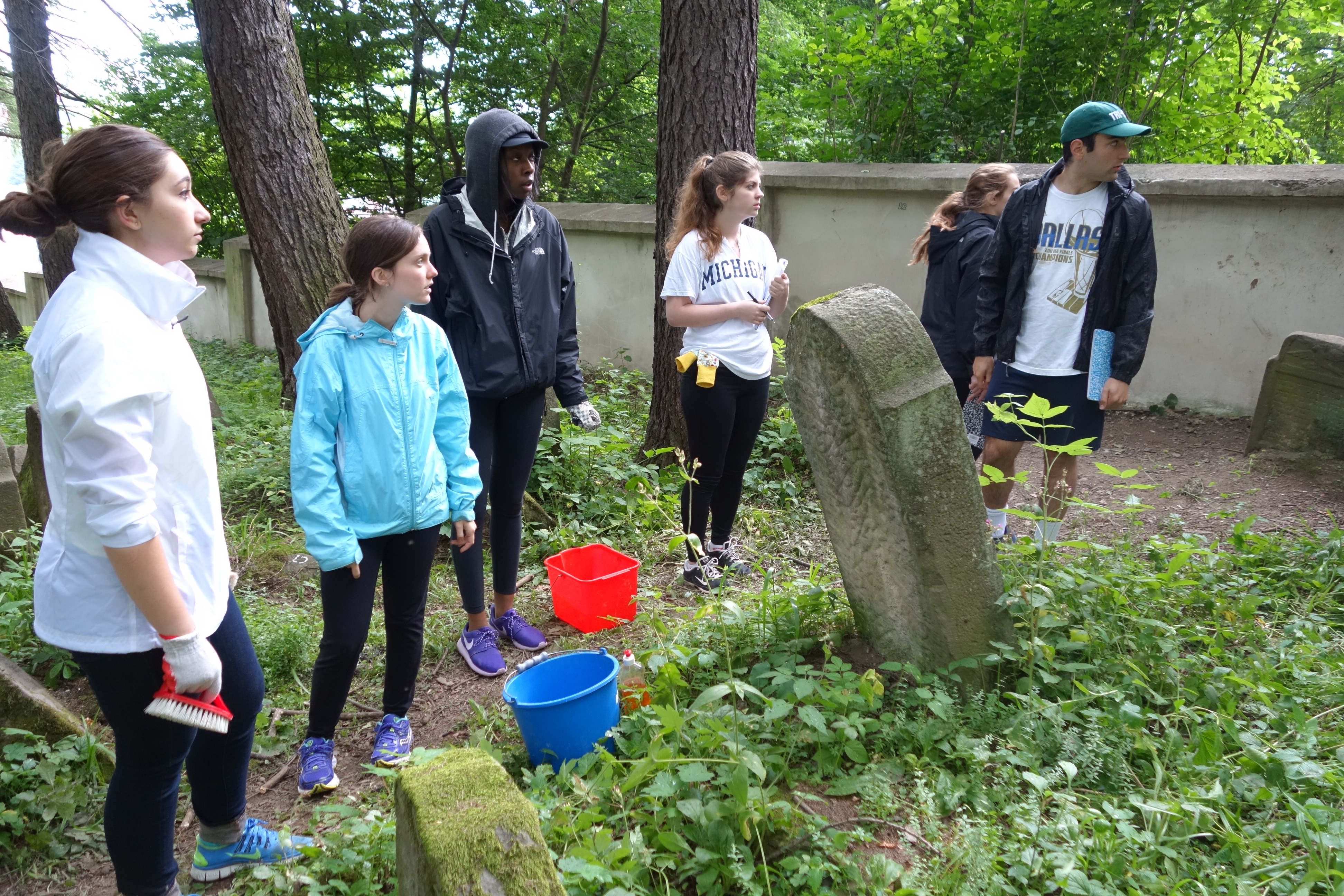
This year in Lesko, I chatted with the students before they began work and asked them what motivated them to sign up for the trip. About half were raised in Jewish households, some more reformed and some more conservative, while the rest were from a variety of backgrounds. Some grew up in neighborhoods with a lot of Jews, others with almost none. They had various levels of familiarity with the history of European Jews and the Holocaust. Some were interested in the project because they knew Holocaust survivors or because their own distant ancestors came from this part of the world. Others focused on the service component of the trip; they wanted to contribute to the preservation of Jewish culture. Still others expressed an interest in history.

The students were impressed by the age and charm of Krakow, although they weren’t so sure about some Polish food practices. It struck some as odd that normal life goes on in the Polish city of Oświęcim right next to the death camp of Auschwitz. They found the tour of the death camp was unsettling, though one student said reading about Holocaust history had a greater personal impact.

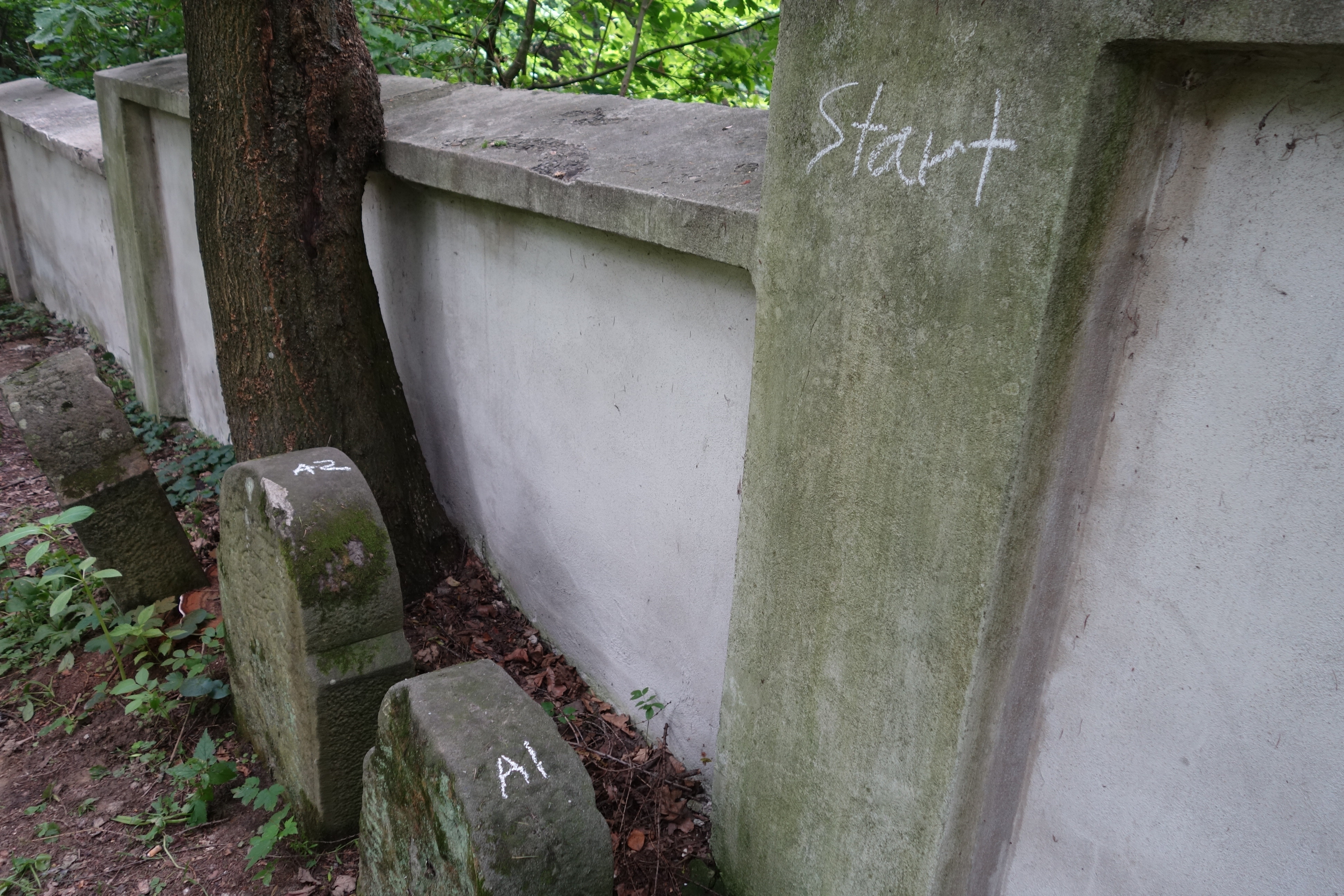
Start

Start

The students got started in the area of the cemetery with the densest concentration of tombstones. One began numbering the stones with chalk, DSC06897

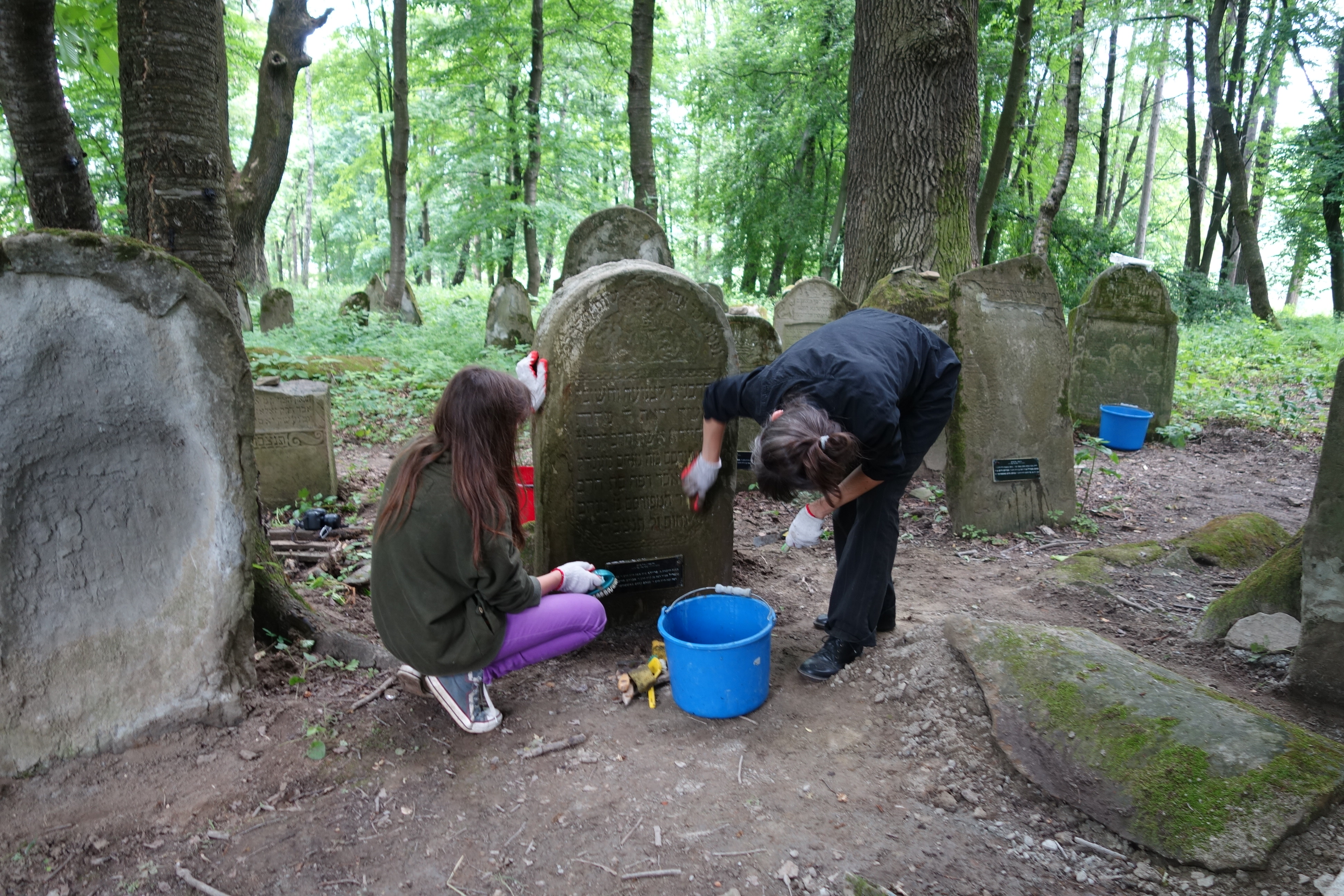
Deciphering inscriptions

Deciphering inscriptions

some set about photographing, transcribing, and translating inscriptions, others used soft brushes and water to gently clean the stones’ surfaces. DSC06895They had to be especially careful because most are of a soft sandstone which is prone to fracturing and wearing away. Many are covered with moss that provides a degree of protection but can also obscure the inscriptions. An additional complication is that some varieties of moss are endangered and protected, and thus not to be disturbed.

The Americans were joined by Poles—a woman who moved to the area from Warsaw with her two teenage daughters and another teenage girl. Some more local residents joined the group in the Lesko synagogue for the Shabbat service Friday afternoon (see mojelesko).

Local residents help clean the tombstones in Lesko

Local residents help clean the tombstones in Lesko

The Jewish cemetery in Lesko is the oldest and largest in the region. The earliest tombstone dates from 1548, and over 2000 stones remain on the site. It was one of the first places I was taken by a couple of local teens who showed me around town when I moved there in 1992. Nevertheless, the cemetery was talked about as a place to hang out with friends away from the scrutiny of adults. Little was known about the former Jewish population, and even less was discussed in public. I hope this is changing, even though (or perhaps because?) few witnesses remain of the prewar community and the removal and murder of Jews.

Grassroots heritage work in Bieszczady

21 Sunday Jun 2015

Posted by Marysia Galbraith in Cemeteries, Dukla, Heritage work, Lesko, Nazi Camps, Polish-Jewish relations, Pre-World War II, Sanok, Synagogues, World War II, Zasław

≈ 6 Comments

Tags

Bieszczady, Jewish culture and history

There is a pattern in the frequency (or rareness) of my posts. When I’m focused on other writing projects, I also write more for the blog. When I’m traveling, interviewing, and attending events, I write less. This month I’ve been traveling.

It seemed important to bring my new research focus to my old fieldsite, and see what is happening in relation to Jewish culture and history in the Bieszczady Mountain region.

The Lesko synagogue. Destroyed in World War II, it was rebuilt in the 1960s.

The Lesko synagogue. Destroyed in World War II, it was rebuilt in the 1960s.

I’ve written elsewhere about how striking it is that, despite the fact that before World War II more Jews lived in Lesko than Poles, only very rarely have contemporary residents volunteered any information about the former Jewish residents. Even though I walked by the former synagogue (bigger than the Catholic Church) and the massive Jewish cemetery countless times, it really only sunk in to me last November that Lesko was a sztetl. One of my friends in Lesko described it really clearly. She said that somehow she always knew that the Jewish history of the town was something that you don’t talk about. It was a taboo topic. This has only recently started to change. Only in the past few years has she noticed that people talk about Jewish culture and history openly. She thinks this is a good thing. Realizing how little she knows about the subject, she has started to educate herself about prewar Jewish life and the Holocaust in Bieszczady.

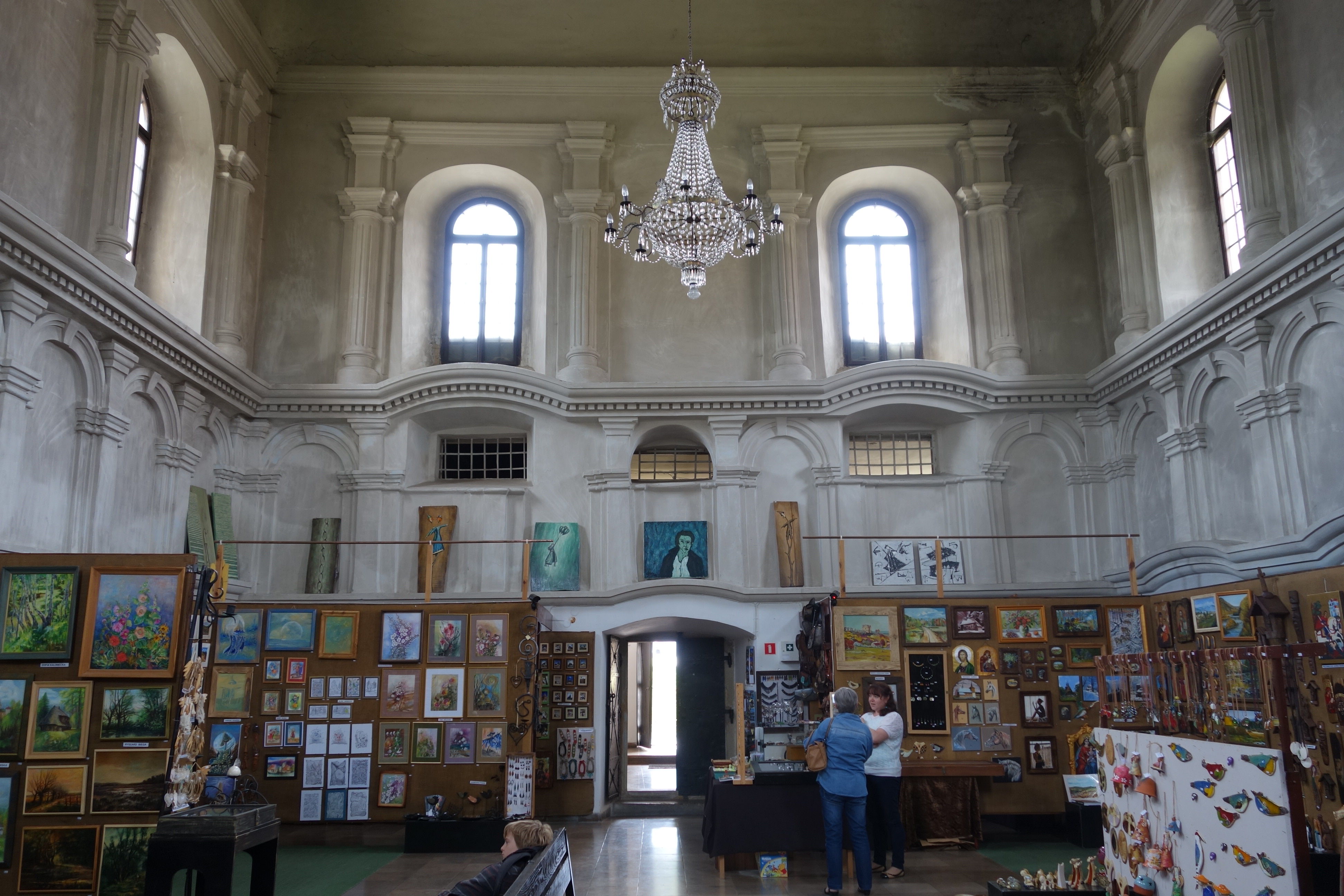
Interior of the Lesko Synagogue. Now owned by the town, it functions as a gallery of regional art.

Interior of the Lesko Synagogue. Now owned by the town, it functions as a gallery of regional art.

Generally, I have found that when I ask, most people have a story or two to tell about Jews in Bieszczady, either something they have read or a some fragmentary memory their grandmother told them. Though also when I told one friend about my interest in Jewish culture and history, she responded, “There were Jews in Bieszczady?” Even though she went to high school in Lesko, she only vaguely remembered the Jewish cemetery and had no recollection of the synagogue. Whether she really didn’t know or just continues to think this is a topic that polite people don’t talk about, I’m not sure.

Nevertheless, some important grass roots work is being done: by Arkadiusz (Arek) Komski in Sanok, Ewa Bryła and her brother Piotr in Zagórz, and Jacek Koszczan in Dukla. Arek is working on a dissertation about the Jews of Sanok. We met at the Słotki Domek Cafe in Lesko after he finished work, and then the next day he showed me the places associated with Jewish life in Sanok.

One of the former synagogues in Sanok

One of the former synagogues in Sanok

Commemorative marker, Sanok

Commemorative marker, Sanok

His interest in the topic originated with a curiosity about history, and particularly the history of his hometown. He has published articles about the Nazi work camp in neighboring Zasław and about the locks that were found at the Jewish cemetery. Last year, he realized a project to place a commemorative marker across the street from the former site of the great synagogue.

Arek also let me know that he was awaiting the arrival of a group of students from Dartmouth College, led by Rabbi Edward Boraz, who were going to clean up and inventory the tombstones in the Jewish cemetery in Lesko (see Project Preservation). He has helped them already, first when they came to the cemetery in Sanok, then to Ustrzyki Dolne, Korczyna, and last year to Lutowiska.

Through Arek, I met Ewa, who helped found the Stowarzyszenie Dziedzictwo Mniejszości Karpackich (Association for the Heritage of Carpathian Minorities). Arek joked that for Ewa, working on heritage preservation is a full time hobby. Her interest emerged out of her own Bojko/Ukrainian roots; her parents and grandparents spoke Ukrainian among themselves, though they only spoke Polish with her and her brother. To date, the association has helped clean up as many as thirty Uniate (Ukrainian) and Jewish cemeteries in the region.

Information about the prison camp and murder of Bieszczady Jews in Zasław, near Zagórz

Information about the prison camp and murder of Bieszczady Jews in Zasław, near Zagórz

Another of the association’s projects is a heritage trail and information sign at the site of the Nazi work camp in Zasław. This is where most Jews from Lesko and neighboring communities were taken and forced to work at a neighboring factory. Approximately 10,000 prisoners were shot on the site, while perhaps 5,000 were sent to extermination camps at Belżec and Sobibor.

Monument at the site of mass murders in Zasław, near Zagórz

Monument at the site of mass murders in Zasław, near Zagórz

I stopped by Dukla on my way back to Krakow, and despite the rain Jacek and Ania, who works at the local tourist office, showed me around. Jacek had already started collecting Judaica around the time of his retirement from the border patrol. An infectiously upbeat and energetic man, he needed something to occupy himself and so decided to get to work protecting and publicizing the sites associated with Dukla’s prewar Jewish population. He told me that the town was as much as 80% Jewish. We walked by the former Jewish school, where boys learned various trades. It is across the street from the old government building; Jacek says that the associate mayor used to be selected from among the Jewish population. Similarly, most of the stone buildings around the market square (rynek) were owned by Jews. Jacek told me the fate of the last rabbi who hid under his rynek home, but then was caught and killed by the Nazis when he tried to escape to Krosno.

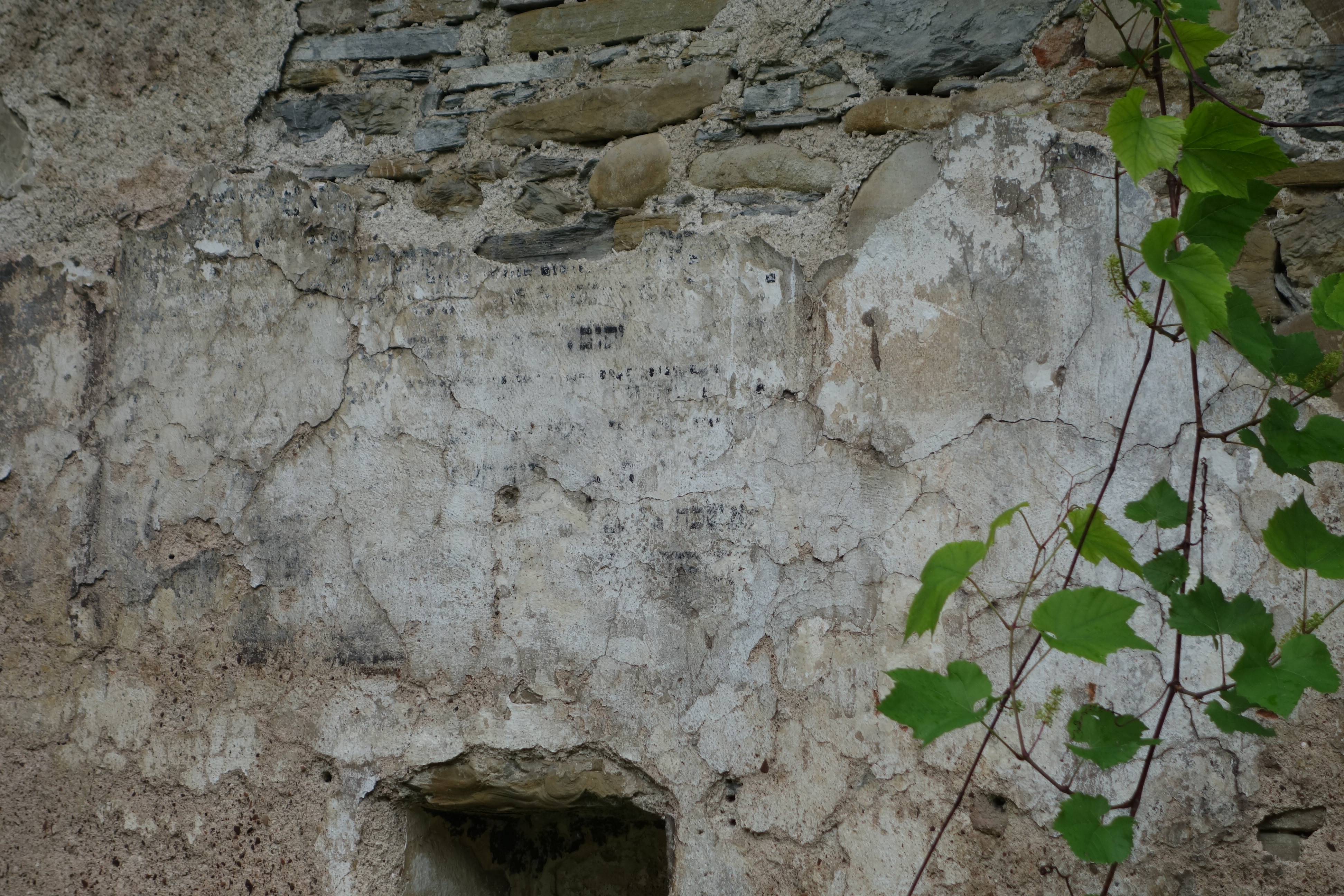
Writing still visible on the wall of the ruined synagogue in Dukla

Writing still visible on the wall of the ruined synagogue in Dukla

Ruin of the 18th century synagogue in Dukla

Ruin of the 18th century synagogue in Dukla


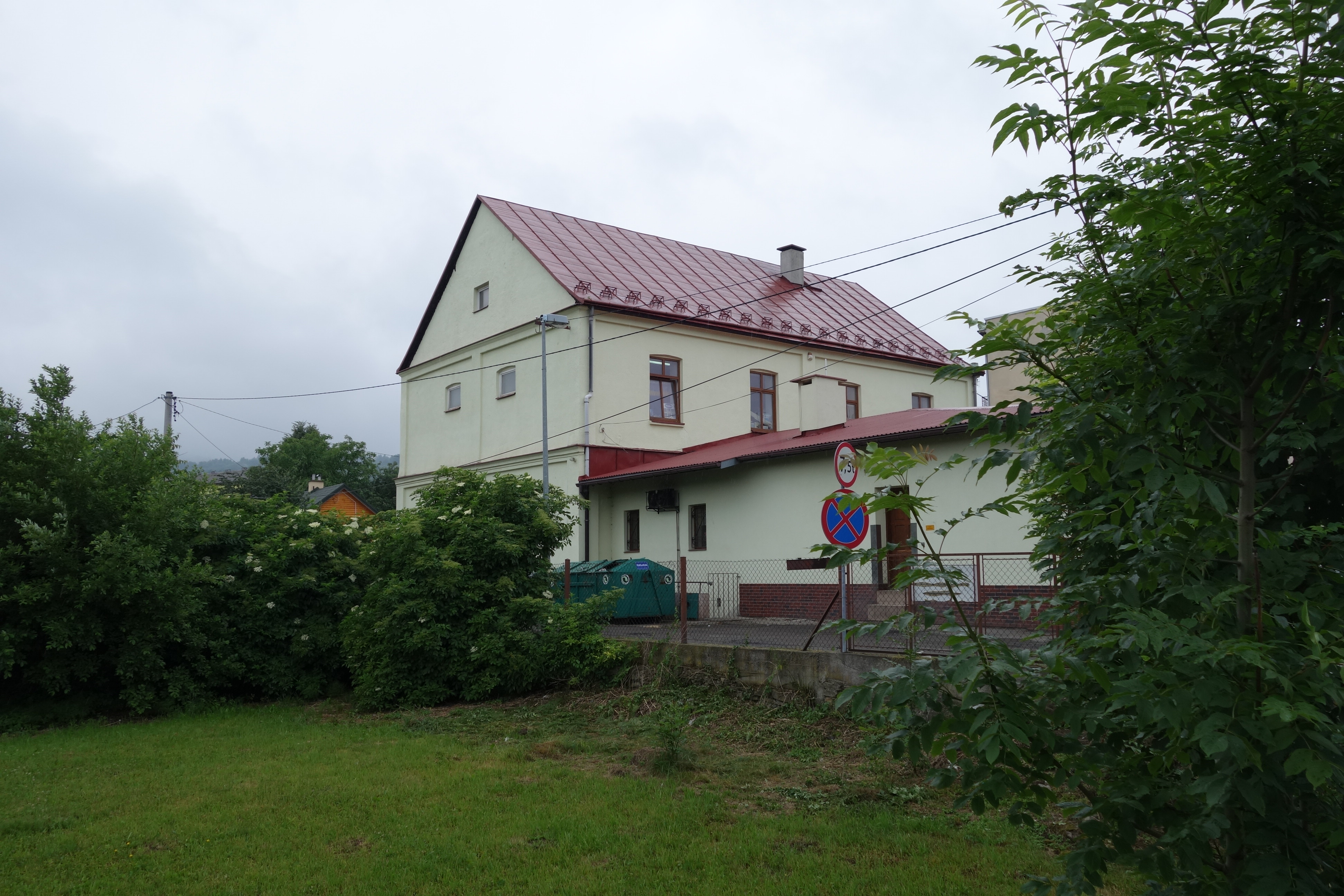
Former synagogue, now a grocery store in Dukla

Former synagogue, now a grocery store in Dukla

Two synagogues stood side by side. The one dating from the 18th century was burned by the Nazis with Jewish residents inside. The neighboring mykwa was also destroyed. Jacek would like to see the remains of this synagogue conserved. All it would take is reinforcing the window arches and putting in a platform on the inside for viewers to walk on; right now a chain link fence surrounds the site. The other synagogue, dating from the late 19th century, is now a grocery store. Dukla also has two Jewish cemeteries, the older one with burials up to World War I, and the newer one beside it used during the interwar period. Jacek mows them himself.

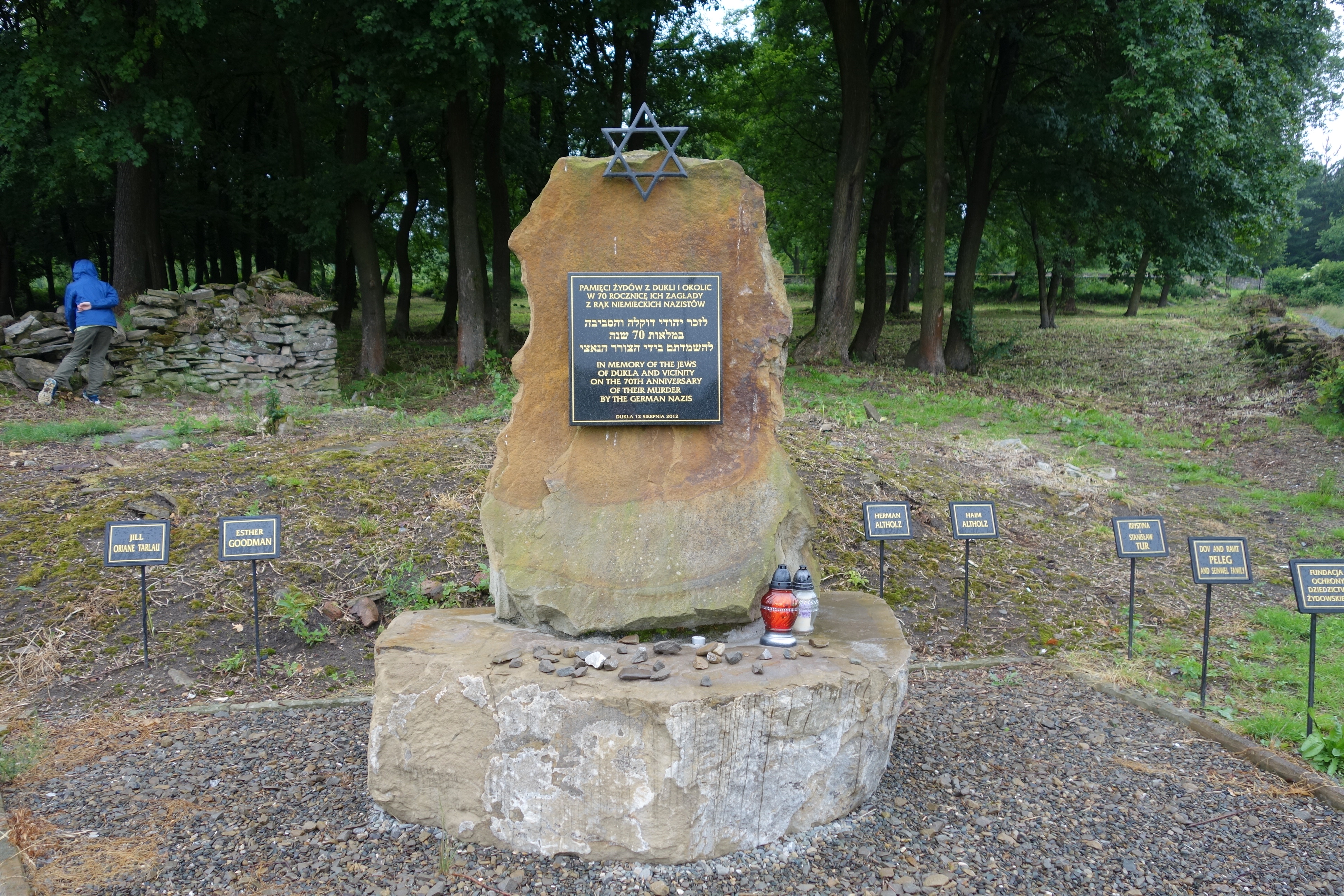
Jacek also coordinated the construction of a monument near the entrance of the old cemetery recognizing the 70th anniversary of the murder of Dukla’s Jewish population. Funders include the Foundation for the Preservation of Jewish Heritage (FODŻ) and descendants of former Jewish residents. While there have been many contributors to these various projects, Jacek is clearly the energy behind them, insuring that they are realized, and doing much of the physical labor himself.

Jacek reading a tombstone in the new Jewish cemetery, Dukla

Jacek reading a tombstone in the new Jewish cemetery, Dukla

Remembering the murder of Dukla's Jews

Remembering the murder of Dukla’s Jews

In each of these cases, someone (or several people) from the local community has taken the initiative to insure that Jewish culture and history is brought back into the public landscape. They are not Jewish themselves, but something compels them to remember, and to teach others about the former residents of their towns.

← Older posts
Newer posts →

Categories

  • Anthropology (38)
    • Archives (14)
    • Fieldwork (7)
    • Ground Penetrating Radar (GPR (5)
    • Research Methodology (8)
  • antisemitism (14)
  • Association of Descendants of Jewish Central Poland (36)
  • Catholicism (8)
  • Conference (1)
  • Discrimination (2)
  • Family (71)
    • Bereda (19)
    • Kolski (13)
    • Piwko (22)
    • Rotblit (3)
    • Walfisz (4)
    • Winawer (7)
  • Genealogy (11)
  • Heritage work (70)
    • Commemoration (24)
  • Identity (18)
  • Israel (6)
  • Jewish Culture (93)
    • Cemeteries (55)
    • Museum (8)
    • Synagogues (34)
    • Torah (1)
  • Jewish immigrants (8)
  • Jewish Religion (1)
  • Memory (73)
  • Names (14)
  • Photographs (6)
  • Pifko-Winawer Circle (5)
  • Poland (131)
    • Baligród (1)
    • Bolimów (1)
    • Brześć Kujawski (5)
    • Buk (1)
    • Chodecz (1)
    • Dukla (2)
    • Dąbrowice (1)
    • Gdynia (1)
    • Gostynin (3)
    • Gąbin (1)
    • Izbica Kujawska (1)
    • Kazimierz (4)
    • Kowal (1)
    • Koło (1)
    • Krakow (7)
    • Krośniewice (1)
    • Kutno (9)
    • Kłodawa (1)
    • Lesko (8)
    • Leszno (1)
    • Lubień Kujawski (1)
    • Lubraniec (1)
    • Lutowiska (3)
    • Piła (3)
    • Podgórze (2)
    • Poznan (11)
    • Przemyśl (2)
    • Pzedecz (1)
    • Radom (1)
    • Radymno (1)
    • Sanok (1)
    • Skierniewice (5)
    • Sobota (2)
    • Tarnów (2)
    • Warsaw (23)
    • Wielkopolska (1)
    • Wronki (7)
    • Włocławek (20)
    • Zasław (2)
    • Łódź (1)
    • Żychlin (33)
  • Polish Culture (10)
  • Polish-Jewish Heritage (60)
  • Polish-Jewish relations (61)
  • Post-World War II (25)
  • Pre-World War II (22)
  • Reclaimed Property (1)
  • stereotypes (3)
  • Survival (9)
  • Trauma (3)
  • Uncategorized (5)
  • Victims and perpetrators (4)
  • World War II (47)
    • Jewish Ghetto (12)
    • Nazi Camps (6)
    • Polish Underground Army (3)
  • Yiddish (5)

Enter your email address to follow this blog and receive notifications of new posts by email. Your email address will not be shared.

Archives

  • July 2026 (1)
  • June 2026 (5)
  • May 2026 (1)
  • October 2025 (1)
  • July 2025 (8)
  • June 2025 (1)
  • April 2025 (1)
  • August 2024 (3)
  • July 2024 (3)
  • May 2024 (2)
  • April 2024 (1)
  • May 2023 (2)
  • January 2023 (2)
  • December 2022 (7)
  • November 2022 (2)
  • October 2022 (5)
  • September 2022 (1)
  • January 2022 (1)
  • August 2021 (1)
  • December 2020 (2)
  • July 2020 (1)
  • May 2020 (3)
  • April 2020 (1)
  • March 2020 (1)
  • January 2020 (2)
  • May 2019 (1)
  • February 2019 (1)
  • November 2018 (1)
  • September 2018 (1)
  • August 2018 (3)
  • July 2018 (1)
  • June 2018 (1)
  • May 2018 (1)
  • April 2018 (2)
  • March 2018 (2)
  • February 2018 (2)
  • January 2018 (2)
  • December 2017 (2)
  • November 2017 (2)
  • October 2017 (1)
  • September 2017 (3)
  • August 2017 (3)
  • June 2017 (2)
  • May 2017 (3)
  • April 2017 (1)
  • March 2017 (2)
  • February 2017 (1)
  • January 2017 (2)
  • December 2016 (2)
  • November 2016 (4)
  • October 2016 (1)
  • September 2016 (6)
  • August 2016 (2)
  • July 2016 (1)
  • May 2016 (4)
  • April 2016 (2)
  • March 2016 (3)
  • February 2016 (4)
  • January 2016 (3)
  • December 2015 (3)
  • November 2015 (5)
  • October 2015 (5)
  • September 2015 (3)
  • August 2015 (4)
  • July 2015 (3)
  • June 2015 (3)
  • May 2015 (4)
  • April 2015 (9)
  • March 2015 (3)
  • February 2015 (2)
  • January 2015 (5)
  • December 2014 (4)
  • November 2014 (9)
  • October 2014 (2)
  • September 2014 (1)

Copyright Notice

All original text and images are copyright © Marysia Galbraith. Please contact the author before quoting.

Blog at WordPress.com.

  • Subscribe Subscribed
    Uncovering Jewish Heritage
    Join 151 other subscribers

    Have a WordPress.com account? Log in now.

  • Uncovering Jewish Heritage
    View site in Reader
    Manage subscriptionsSign upLog in
    Report this content
    Collapse this bar
Loading Comments...