• About
  • The Photo that Started it All

Uncovering Jewish Heritage

Uncovering Jewish Heritage

Category Archives: Poland

Cousins Reunited by a Photo and a Family Tree

23 Thursday Apr 2020

Posted by Marysia Galbraith in Bereda, Family, Genealogy, Israel, Kolski, Photographs, Polish-Jewish relations, Post-World War II, Pre-World War II, Survival, Trauma, Warsaw, World War II, Włocławek

≈ 4 Comments

Tags

Cousins reunite, Finding family, MyHeritage

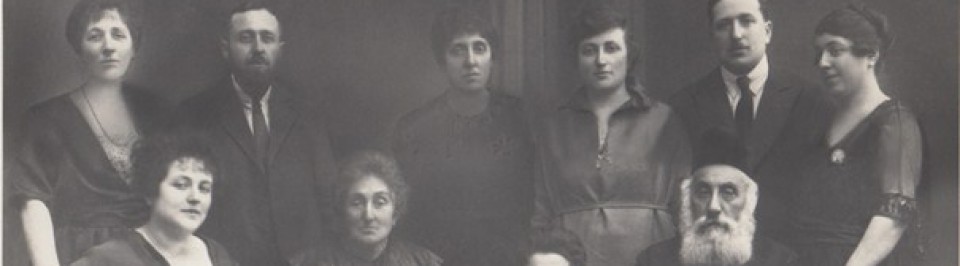
I met my cousin Pini Doron in 2013 when I found his family tree online and wrote to ask if we might be related. He asked for proof, so I sent him the photo in the header of this blog, which he recognized from his own copy. He wrote back “welcome to the family” and ever since I have felt embraced by my extended family in Israel, with Pini at the heart of it. The photo, which includes both of our grandmothers, confirmed that we are cousins.

Last week, we were contacted by Nitay Elboym, who writes for the MyHeritage Hebrew-language blog. He decided to write about our family in commemoration of Holocaust Remembrance Day. It’s a story of connections and separations that span a century.

You can find it in Hebrew at the Internet news service YNet:

אחרי 70 שנות נתק: גילה בארה”ב בני משפחה שנעלמו לאחר השואה

and in the MyHeritage blog:

בזכות תמונה ואילן יוחסין: בן לניצולת שואה גילה בני משפחה שנעלמו

I’ve attached the text in English. I used Google Translate and then edited it. This is the article that appeared in the MyHeritage blog. The YNet version only has minor differences.
1916BabiasFamily_color

Colorized photo of the family from about 1916. Marysia’s grandmother is sitting on the left and Pini’s grandmother is standing on the right

Thanks to a photo and a family tree: a Holocaust survivor son has found family members who disappeared

 By Nitay Elboym

April 21, 2020

74-year-old Pini Doron of Hod Hasharon is a longtime MyHeritage user who built a family tree for many years dating back to 1800. Pini thought he had already finished his search, when he received a message with an old family picture. This time, he realized immediately, it was an extraordinary discovery.

“I get a lot of inquiries from people who think they’re related to me,” Pini says. “I am usually skeptical of my relation to them, so I politely ask everyone to explain how we are connected. In this case too, when I received the message, I responded that I would love to know what our family relationship is,” he recalls.

“Actually, at that time, I was pretty much at the beginning of my family history research,” recalls Marysia Galbraith, a professor of anthropology at the University of Alabama, USA. “I was looking for bits of information wherever possible. But when I saw Pini’s family tree on MyHeritage, I knew it was about me, I just didn’t know how. In short, I had no idea how to prove to him how I was related to his family tree, so I just sent the only picture I had. Besides my grandmother, I didn’t know who the people were. Then he answered me ‘Welcome to family.’ His reply almost made me cry. ”

Operation Rescue

The Piwko family lived in the town of Wloclawek, Poland. At the outbreak of World War II, Pini’s grandparents – Pinchas Kolski and his wife Rachel (nee Piwko) – and their two children, Mirka and Samek, were left there while Pini’s father was saved because he and his two brothers were sent to Israel before the war to work the family lands in Kfar Ata. “Because their city of residence was close to Warsaw, they were transferred to the Warsaw ghetto right at the beginning of the war, around 1940,” Pini says. “In the ghetto, Samek was murdered, and my grandfather died of illness. So my grandmother and her daughter Mirka were left alone, looking for a way to survive.”

1941RachelMirkaKolskiAtPinchasGraveInGhetto

Mirka and Rachel Kolski at Pinchas Kolski’s grave in the Warsaw Ghetto

Meanwhile, Rachel’s sister, Halina, lived in relative safety outside the Warsaw ghetto, because after divorcing her first Jewish husband, she remarried a Christian man named Zygmunt Bereda. “Rachel and Halina’s father were not ready to hear about this relationship. So, when she married a Christian, he sat shiva on her,” said Pini. “Her sisters tried from time to time to keep in touch, but because of their father, the connection got weaker.” Halina and Rachel’s father, who passed away around 1930, could not have imagined that it was precisely the person who, because of his religious identity, he rejected, would save not only his daughters, but also his other descendants.

When Halina told Zygmunt that her sister was in the ghetto alone with her daughter, he decided to come to their aid despite the risk involved. “Zygmunt was a very successful businessman with a lot of property. In addition, he probably had many connections, which opened doors to him that were closed to others,” explains Marysia. “He used these connections to forge documents for Rachel and her sister, which allowed them to escape the ghetto.”

BabciaPuertoRico

Halina Bereda, Marysia’s grandmother. She and her Christian husband saved the family
ZBeredayoung

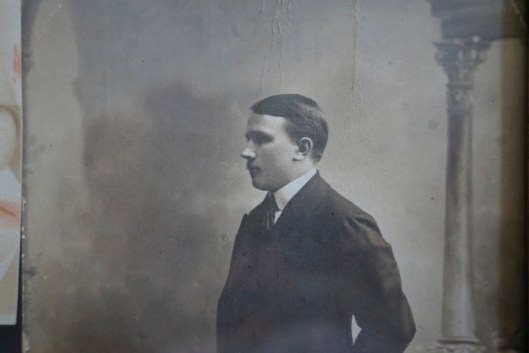
Zygmunt Bereda. A Polish Christian who saved the family of his Jewish wife

But the matter did not end here. Zygmunt and Halina protected the two after they left the ghetto and hid them in buildings they owned throughout the war. At the same time, they were able to forge additional documents that allowed them to leave Poland to Switzerland, and from there, in 1949, the two immigrated to Israel.

“Years of disconnection ended thanks to a surviving photo and family tree on the MyHeritage website. Ever since we started chatting, I have found that Marysia isn’t only a wonderful person, she is also a thoughtful researcher,” says Pini. “She has set up a blog where she writes personally and collects her interesting findings. Everything she does is well organized, backed up by documents, and she knows how to find almost everything. She even studied Polish, which probably helps her a lot in genealogical research.”

The wheel turns over

At the end of the war, Warsaw was devastated by the bombings. The many businesses and houses that Zygmunt owned were also destroyed. He and Halina lost their property and had no place to live. The rescuers now needed help, and the one who came to their aid was the former wife of Samek, Rachel’s son who died in the Holocaust. After the war Halina and her daughter Maria, Marysia’s mother, immigrated to the United States and settled there.

“The truth was kept from us,” says Marysia, who has grown up as a Christian all her life. “For years, family members have been whispering about being Jewish, but never really getting into it. I have spent a long time trying to figure out why my mother and grandmother hid their Jewish heritage and why they were not in contact with Rachel. I think the trauma of the Holocaust left a deep scar on my grandmother. She thought, “If they don’t know, then it won’t hurt them.” That’s probably why they didn’t keep in touch with Rachel and her descendants in Israel.”

Since the family tree has linked Pini to Marysia the two speak regularly, and they have also met in Israel and in Poland with other family members. “When we went to the graves of our families, the sight was unusual. On one side of the cemetery wall are Jews with a rabbi, and on the other side are Christians with a priest,” Pini recalls. “But what is important? In the end, we are human beings and destiny connected us together.”

DSC00438

During the roots journey to Poland. Pini stands to the left and beside him Marysia

PinisTree

Pini’s Tree showing the family connection between Pini and Marysia

The image that led to the discovery – now in color

To revive the old image that made the exciting discovery, the company’s investigators used the MyHeritage In Color ™ auto-coloring tool and sent the result to Pini and Marysia. “It’s wonderful,” says Marysia. “I’m going to share the colorized picture with my family, including my 90-year-old aunt who will be especially happy.”

1916BabiasFamily_color

Colorized photo of the family from about 1916

The Odyssey of a Polish Jew

28 Tuesday Jan 2020

Posted by Marysia Galbraith in antisemitism, Jewish Culture, Memory, Names, Polish-Jewish relations, Pre-World War II, Survival, Tarnów, Warsaw, World War II

≈ 2 Comments

Tags

Roman Szancer, Roman Szydłowski, The War Began in Tarnow

Roman Szydłowski grew up in an affluent assimilated Jewish family in prewar Tarnów, a medium-sized city southeast of Krakow. His “Recollections,” published under the name The War Began in Tarnów, breezily describe the many relatives and acquaintances who populated his youth, though it is jarring how many of their lives were cut short by wartime assaults against Jews.

Szydlowksi_Wojna_cover

The War Began in Tarnów, by Roman Szydłowski

Szydłowski’s book reminds me that Poland is a small country, in the sense that citizens who travel in elite circles know each other, or know of each other. A person raised in a family like Szydłowski’s rubbed shoulders with famous actors, writers, and politicians. Simultaneously, World War II lurks on the edges, and at times overtakes Szydłowski’s narrative, as for example when he describes the explosions at the Tarnów train station, an act of German sabotage that happened on August 23, 1939, a week before the official invasion of Poland began.

The book is interesting for its intimate portrait of everyday life before, during, and immediately after World War II, but it does so from the particular lens of the moment in which it was written: 1982, when Poland was under martial law following the suppression of the Solidarity Movement that had sought to reform the state socialist system. Szydłowski was 63 years old and looking back on his life as he approached retirement. That time and place might explain the glaring absences in his otherwise vivid, detailed, and immediate recollections.

Born Roman Szancer in 1918, the author grew up in comfort in a large apartment at the center of Tarnów. His family owned an enormous mill which his great grandfather established in the early 1800s. It is notable how little Judaism figured in his early life story—it was a factor but hardly a defining one. His first recollection of anti-Jewish sentiment involved one of his classmates who called him “you Jew” in a way that sounded like a slur. Roman couldn’t understanding why being Jewish would be an insult, but he replied in kind, “you Catholic.” When their teacher found out, he made them stop, threatening them with corporal punishment. Later, Roman and the other boy became good friends.

The Szancer family took pride in their unaccented Polish and their assimilation, not only into Polish culture, but also into elite European culture more broadly. As a child, Roman visited relatives in Germany and Austria. His grandmother, a cousin of Austrian philosopher Martin Buber, was the only one in the family who spoke Polish with a strong accent; they had to talk to her in German.

Roman portrays himself as a proud defender of Poland. About the rise of Hitler in Germany, he writes “We feared for the future of Poland, though none of us anticipated that our country, which we considered stable, would soon be pillaged by the Third Reich” (p. 60-1). Szydłowski mentions just a few instances when his early life was touched by prejudice. The first girl he fell in love with was Catholic, and “there were those who couldn’t reconcile with the fact that ‘that Jew goes out with such a pretty Polish girl’,” so they spread rumors that broke them up (p. 74). A few years later at the Jagiellonian University, Jews were separated from the Catholic students and confined to the so-called “ghetto benches.” This didn’t affect Roman directly because he had what people called “a good look.” In other words, he didn’t have the stereotypical features or mannerisms associated with Jews and so could sit wherever he wanted. He makes a point of saying that only the leftist students objected to the “Aryan paragraph” restricting Jews from student organizations; the majority of the student body voted in favor of the restrictions.

Another incident illustrates how distant Roman felt from traditional Jewish life. He describes a Hassidic wedding he attended in the summer of 1939 in a mostly Jewish town. The residents dressed differently than he was used to seeing in the towns around Tarnów, in round hats with small rims, shorter jackets and their pants tucked into manure-covered shoes. About the wedding he writes, “I’m left with an impression of something very colorful, but so far away and foreign as if I found myself suddenly on a distant continent” (p. 125).

Szydłowski’s wartime experiences read like an adventure story, making startling shifts from descriptions of carefree youthful high jinx to hair-raising brushes with death. Because he had connections, he was able to drive east ahead of the invading German army and find refuge with relatives near Lviv (part of Poland before the war, the Soviet Union after 1939, and Ukraine today). He describes his apprehension by Soviet authorities, deportation to the Far East, and eventful return to Lviv, one chance encounter leading to another that eventually got him back to relative safety.

After Hitler broke the German-Soviet nonaggression pact, he witnessed the most horrific events of his own wartime experiences. Thousands of Jews were slaughtered in Lviv, their blood running through the streets. He returned to Tarnów, where he moved freely, neither wearing the Star of David nor staying in the ghetto as dictated by the Nazi occupiers. By December 1941, he settled in Warsaw, where he changed his last name to Szydłowski, thus gaining the protection of a Polish surname. He writes breathlessly about the richness of the culture in the city, where he attended classical concerts, theatre productions, and university classes. All of these activities occurred “underground,” without the knowledge or sanction of the occupying forces.

He explains, “Warsaw during those years was a city impossible to describe. Terrifying contrasts collided at every corner. Luxury alongside poverty, tragedy next to debauchery, death and delight, everything compounded to the maximum. People lived as if in a trance, unsure of tomorrow. Everyone knew they could die soon, so they wanted to get the most out of life” (p. 155). After being arrested under suspicion of conspiracy, and imprisoned in Pawlak Prison, Szydłowski was mysteriously released. He made a quick retreat to the countryside near Krakow, where his “most carefree period of occupied life began” (p. 162). He spent the summer at the ancestral palace of a gentry family who treated him like an esteemed guest. The refuge was an illusion, he admits. A year later, months after he had moved on, German police came and shot the whole family.

What might explain the absences in Szyłowski’s narrative? Why doesn’t he mention the Warsaw Ghetto Uprising in 1943, even though he was living in Warsaw at the time? He lived in the “Aryan” part of the city under his assumed name, but he must have witnessed the armed revolt mounted by the last remaining Jews in the ghetto. The fighting continued for 28 days until most of the partisans were either killed or took their own lives. Why doesn’t he discuss the massive scale of the Holocaust? He makes no mention of the millions who died, nor any details about the death camps. He does not address the nearly complete absence of a Jewish population in Poland after the war. The annihilation of Poland’s Jews only peaks out in the many biographies of family and acquaintances that ended with them murdered by military police or Germans.

Szydłowski’s recollections also elide any direct criticism of communism. He simply gives a matter-of-fact description of the arrival of Soviet troops after the Germans retreated , without addressing the heavy hand the Soviet Union played in shaping the postwar state-socialist republic. He writes directly about joining the Communist Party in 1946, but only indirectly about his disillusionment and retreat from the party just a few years later. Throughout his narrative, he acknowledges his socialist leanings, as well as the socialist and communist affiliations of his friends, but he also makes a point of emphasizing his disinterest in politics.

Szydłowski ran out of time to finish writing about his 35-year career as a theatre critic and journalist. He died in 1983.

What a difficult way to walk through life, carrying so many ghosts in your memories. And yet, Szydłowski speaks with the voice of an optimist.

img_20190625_140213202_hdr

Remains of the Szancer mill, June 2019

Cousin Connections

20 Monday May 2019

Posted by Marysia Galbraith in Family, Genealogy, Jewish immigrants, Names, Pifko-Winawer Circle, Piwko, Walfisz, Winawer, Łódź, Żychlin

≈ Leave a comment

Tags

Akiwa Jakubowicz, Ancestry, Arline Jacoby, Borscht Belt, Catskills, Efraim/Philip Piwko, Jakubowicz, Mrs. Maisel, Nathan Jacoby, Tema Walfisz Piwko Jakubowicz

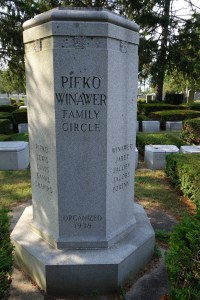
When I met Arline Jacoby in 2016, she was a spry and effervescent nonagenarian with vivid memories of the Pifko-Winawar Family Circle gatherings she attended throughout the early decades of her marriage. She knew that she was related to the Pifkos, but she couldn’t remember exactly how. She thought her husband Harry Jacoby was connected somehow to my great grandmother Hinda Piwko, whose maiden name was Walfisz. She also suggested her ancestors might be part of that family line as well, making her and her husband distant cousins.

DSC07132

Pifko-Winawer Family Circle, New Montefiore Cemetery, Organized 1938. Note the Jacoby name on right

No one else seemed to remember the exact family connections, so I just added this to the long list of mysteries to solve one day.

Periodically, I have come across interesting tidbits about Arline. She was featured in the “Sunday Routine” column of The New York Times (“How Arline Jacoby, Artist, Spends Her Sundays,” by Alexis Cheung, July 21, 2017). The article describes Arline’s daily life on Roosevelt Island. In one photo, dressed in a white blouse and loose off-white pants, she holds her cane in front of her as she talks with friends on a bus. In another, she smiles brightly as she reaches for a plant in her garden. And in a third photo, she’s swimming; “I’ll spend about an hour doing laps, and then I’ll go into the steam room,” she explains. In the final photograph, Arline looks up at a sketch in her installation at Octagon Gallery. Still a practicing artist, she says, “My studio is across the street from my house. I paint, I do printmaking, monoprints, paint in oils and watercolor.” Her vibrant spirit shines through the brief vignettes and quotes.

2017ArlineJacoby_SundayNYTimes

Arline in her garden. Photo credit: Michelle V. Agins/The New York Times

Another article from Tablet Magazine recounts the history of the Borscht Belt resort that the Jacoby family ran for many years. The “colony” was founded in 1941 by Arline’s father-in-law Nathan Jacoby, and later managed by Nathan’s sons Harry and Ben. The Catskills became a summer haven for New York Jews who left the heat of the city and set up house in resorts that organized all kinds of entertainment and outdoor activities. According to the article, some affluent middle-class families preferred the laid-back atmosphere of bungalow colonies like the Jacoby’s over the fancier hotel resorts nearby.

I learned from the article that Nathan Jacoby was born in Łódź, Poland in 1894, and came to America in 1921. He got into the bakery business “through a family connection.” Could that have been my grandmother’s brother Philip Pifko who had bakeries in Brooklyn at that time?

The Tablet article explained, “In the summer, he operated the bungalow colony as a second business, renting the units for the season. Jacoby wanted the colony to be a destination for Jews who had worked their way up into the middle class—light manufacturers and lawyers, many from the Midwood neighborhood in Brooklyn, with good businesses and good cars. The parking lot was filled with Cadillacs and Lincolns. These were families who loved parties and balls, and Jacoby was determined to entertain them, building a stage in his casino building for traveling comics, singers, magicians, and musicians, and for bungalow talent shows, too.” Arline’s daughter Annice said “What my grandfather created was not only a business. He created a sense of place. This was the good life.”

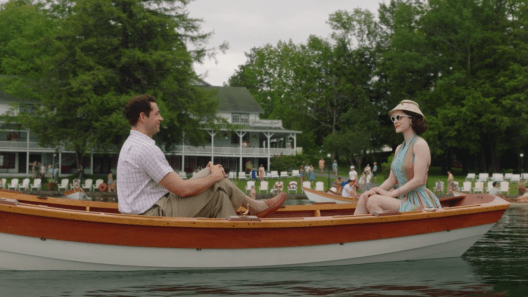
I was reminded of these family-oriented camps when Midge Maisel and her family spent much of Season Two at a similar resort. Arline remembers that comedians like Lenny Bruce performed there, another parallel with The Marvelous Mrs. Maisel, which features Lenny Bruce performing in the Catskills. By the time I was growing up in 1970s, the bungalow colonies declined in popularity. My friends went to sleepover camps for kids only.

Screen-Shot-2018-12-10-at-11.15.44-AM-1200x675

Midge Maisel in the Catskills. Screen shot from The Marvelous Mrs. Maisel.

The breakthrough in my search for a family connection came when I was contacted via Ancestry by Cherie, whose husband is a descendant of Akiva Jakubowicz, the second husband of my great grandmother’s sister Tema. That’s when a light turned on. Could it be that the Jakubowiczes changed their name to Jacoby when they came to the US? Could Arline’s husband Harry have been a grandson of Tema, the sister of my great grandmother Hinda (Walfisz) Piwko?

I already had Akiva (Kiwa) Jakubowicz and his two sons Elias and Nathan in my family tree. Cherie confirmed that her husband descends from Elias, Nathan’s younger brother (Nathan was born in 1896 and Elias was born in 1898), and that they changed their last name to Jacoby after settling in the US. Elias moved from Łódź to Berlin where he married Martha Brusendorf. She was a German protestant, but they raised their children in the Jewish faith. When the war broke out, they lived in hiding in Berlin with their younger daughter, while their older daughter escaped to England on the kindertransport. The family reunited after the war, and immigrated to the US. They were sponsored by Nathan, who had been in New York since 1921.

Armed with this information, I was able to locate documents about Nathan, Arline, and their sons Harry and Ben on Ancestry. Arline Plumer and Nathan Jacoby married in 1947 in Philadelphia, her hometown. I’m not sure, but this might be Arline’s high school yearbook photo from 1943, Girl’s High School, Philadelphia.

ArlinePlumer_HSyearbook1

Arline Plumer, class of 1943, Girls High School, Philadelphia. Is this my cousin?

If so, Arline’s parents were Isidor/Isadore and Anna/Annie Plumer, and she was the youngest of eight siblings. Her father is listed on his naturalization documents as coming from Barski, Russia, but in the 1920 census, he and Anna’s place of origin is listed as Russia (Pol.)  and their native language is Polish. All of their children were born in the US.

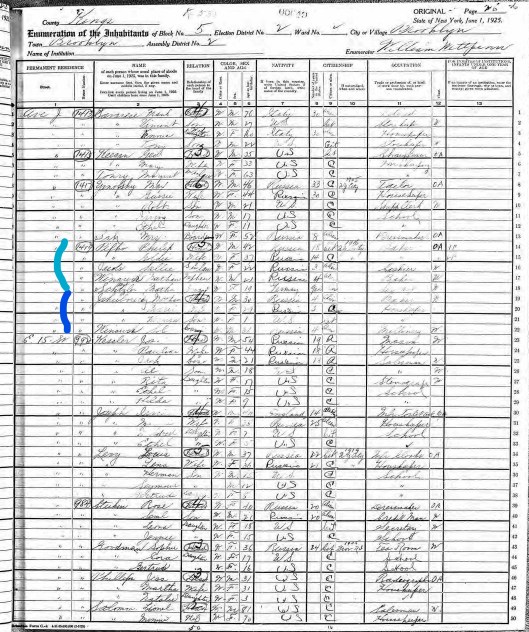
I found Nathan Jakubowicz in the 1925 New York State Census. He worked as a baker and lived with his wife Marie, one-year-old son Harry (listed as Herman), and a cousin Sol Winawer. I believe Sol is the son of my grandmother’s sister Liba, making him and Nathan first cousins once removed. This document also hints at an answer to the question whether Nathan worked in my great uncle’s bakery when he first came to the US. There, in the neighboring apartment, lived my grandmother’s brother Philip Pifko and his wife Goldie. So maybe Nathan is one of the many relatives Philip assisted when they first immigrated, offering them a job in his bakery and helping them find a place to live.

Inked1925NYCensus_NJacobySWinawer_crop_LI

1925 NY State Census. Nathan, Marie, and Herman Jakubowicz live with Sol Winawer. In the neighboring apartment, Philip and Goldie Pifko live with other relatives.

By the the 1930 Federal Census, Nathan had changed his last name to Jacoby.

Inked1930Census_NJacoby_LI

By the 1930 Federal Census, the family name had been changed to Jacoby.

All of this shows pretty convincingly how Arline’s husband Harry was related to the Pifko-Winawers. I’m still looking for comparable evidence that Arline is also a cousin. My guess is she descends from Łaja, the 3rd Walfisz daughter listed in the Żychlin Book of Residents together with my great grandmother Hinda and Harry’s grandmother Tema. I found one hint on Arline’s mother’s death certificate, which lists Anna Plumer’s parents as Morris and Leah Fox, originally from Poland. Elsewhere, I’ve seen Łaja and Leah used interchangeably, so I’ll keep digging.

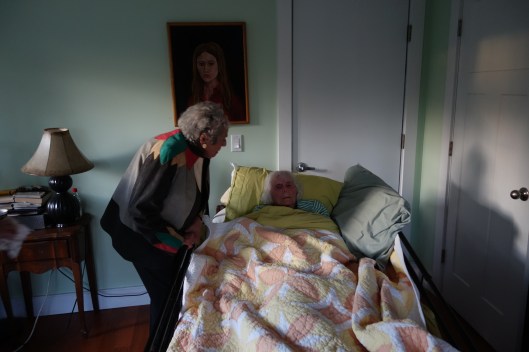
The search continues. I’m glad to have figured out, at least in part, how Arline and I are cousins. At minimum, her husband and my mother were 2nd cousins. Perhaps she and my mother were 2nd cousins, as well.

DSC07428

Cousin Arline talks with Mama, January 2016


Ruth Ellen Gruber on Jewish Heritage

25 Monday Feb 2019

Posted by Marysia Galbraith in Heritage work, Jewish Culture, Memory, Poland

≈ Leave a comment

Tags

Ruth Ellen Gruber, Virtually Jewish

Writer Ruth Ellen Gruber gives two lectures at The University of Alabama:

Imaginary Spaces, Dark Tourism, and Writing about Difficult Topics for a General Audience: A Conversation with Ruth Ellen Gruber

205 Gorgas Library, Monday, February 25, 7 PM

Structured as a conversation, Marysia Galbraith (New College and Department of Anthropology) asks Ruth about her work on “Virtually Jewish” heritage in Europe, “Wild West” theme parks, tourism at sites of terror, Holocaust, and slavery, and the practice of writing for traditional print media as well as digital venues like her website “Jewish Heritage Europe.”


Beyond Virtually Jewish: New Realities and Real Imaginary Spaces

215 Lloyd Hall, Tuesday, February 26, 12:30-1:45 PM

Ruth discusses new forms of Jewishness, Jewish practice, and religious and cultural expression. She describes how she coined the term “Virtually Jewish” to describe non-Jewish involvement, embrace, appropriation and engagement with Jews and Jewish culture — and what that means in today’s changing conditions. She discusses new realities and new authenticities; new definitions of “Jewish.” And she takes her audience on tours to Kazimierz, the old Jewish quarter of Krakow, and other Jewish spaces and places where community and commercialism combine and collide.

REG-krakow-fishman

Ruth Ellen Gruber in the Kazimierz District of Krakow, Poland. Photo credit: Chuck Fishman

Ruth Ellen Gruber has worked on Jewish heritage issues and chronicled Jewish developments in Europe for three decades and currently coordinates the web site www.jewish-heritage-europe.eu. (She also studies the European fascination with the American Wild West, its mythology and its music.) With her 2012 book Virtually Jewish: Reinventing Jewish Culture in Europe, she coined the term “Virtually Jewish” to describe the way the so-called “Jewish space” in Europe is often filled by non-Jews. Among her other books are National Geographic Jewish Heritage Travel: A Guide to Eastern Europe, first published in 1992; Letters from Europe (and Elsewhere), and Upon the Doorposts of Thy House: Jewish Life in East-Central Europe, Yesterday and Today. A former correspondent for UPI in Poland and elsewhere in communist Europe, she has written for many publications, both popular and scholarly. Her awards and honors include a Guggenheim Fellowship and Poland’s Knight’s Cross of the Order of Merit. She was the Distinguished Visiting Chair in Jewish Studies at the College of Charleston (South Carolina) spring semester, 2015.

Sponsored by: College of Arts and Sciences, New College, Department of Anthropology, Department of Religious Studies, Department of Journalism and Creative Media, and Blount Scholars Program

Livestream of the ‘Unforgotten’ Event About Renia Spiegel’s Diary

08 Thursday Nov 2018

Posted by Marysia Galbraith in Memory, Przemyśl, Survival, Uncategorized, World War II

≈ 2 Comments

Tags

Ariana Spiegel, Elizabeth Bellak, Renia Spiegel

I’m counting down the minutes before I tune into this event at the Smithsonian Institute today:

80 Years after Kristallnacht: Diarists of the Holocaust

This is Renia, who was murdered on the streets of occupied Przemyśl at the age of 18 in 1942. She left behind a diary that through some miracle found its way to her family in New York.

NOV2018_N14_SpiegelDiaryPrologue.jpg

Renia in Skole in the 1930s (Courtesy of the Bellak family)

I grew up calling Renia’s sister “Aunt Elizabeth,” but she never mentioned her sister until a few years ago. Encouraged by her daughter Alexandra, they started looking for someone to translate the diary from Polish to English, and Elizabeth started talking about her hidden past. It’s an extraordinary story about two extraordinary sisters. Both Elizabeth and Alexandra will share their stories at 1 PM eastern time today, November 8, 2018.


Would You Live in the Ghetto?

20 Monday Aug 2018

Posted by Marysia Galbraith in Commemoration, Jewish Ghetto, Krakow, Memory, Podgórze, Post-World War II, World War II

≈ Leave a comment

The Stare (Old) Podgórze district of Kraków, nestled between the Vistula River and the hilltop Bednarski Park, has experienced an incredible resurgence over the past several years. What used to be a neglected part of the city, with crumbling townhouses and drunks who congregated in the town square, has become the home of restaurants, cafes, galleries, and museums. A new pedestrian bridge links Podgórze to the heart of Kazimierz; the rhythm of footsteps over the pedestrian walkway causes sculptures suspended from wires to totter like the acrobats that are depicted.


Pedestrian Bridge connecting Podgórze and Kazimierz, Krakow.
Sculptures of acrobats suspended on wires, by Jerzy Kendziora.
A biker pedals by a sculpture of an acrobat suspended on wires, historic Podgórze in the distance.
The pedestrian bridge between Podgórze and Kazimierz, Krakow.

Old Podgórze is also the place the Nazi governor Hans Frank selected for the Krakow Jewish ghetto on March 3, 1941. “Within two weeks, 18,000 Jews were ordered to move to 320 buildings, whose ‘Aryan’ residents had previously been forced to vacate.” [1] Presumably, the district was selected because of its distance from the center of town, further isolated on the other side of the river. By March 20, Podgórze was closed off by a high brick wall; whether the symbolism was intentional or not, the undulating curves along the top edge evoked Jewish headstones stacked side by side. The ghetto shrank in 1942, when residents were taken to their death in camps like Bełżec, and was completely liquidated on March 13-14, 1943. The ghetto existed just two years, but the fact that it existed at all in this very place clashes uncomfortably with the district’s rebirth.

I have written about Podgórze before, and about the way the district captivated me. In fact, I’ve sometimes remarked that if I were to buy an apartment in Krakow, I would want it to be in Podgórze. But that was before I knew what happened there during World War II, before I started to explore my Jewish heritage, before historical markers brought difficult history back into the public sphere, and before the phantom walls of the ghetto became part of my inner map of the district. When I visited Krakow earlier this summer, I decided to rent an apartment in Podgórze to get a better feel for the place. Could I live there, knowing what I now know?

I found a place right in the heart of what used to be the ghetto, in a newly renovated building right beside a ruin, and across the street from the iconic red brick mikvah building that now houses one of the city’s most prestigious art galleries.


Podgórze, crumbling ruin beside new renovation.
Former mikvah, now Starmach Gallery, Podgórze, Krakow

I took long runs past St. Joseph’s Church on the Podgórze Market Square, over the hills of Bednarski Park, and through the narrow streets.


St Józef's Church, Podgórze
St Józef’s Church, Podgórze
Fragment of Jewish ghetto wall, Lwowska Street

I visited the remaining fragments of ghetto wall. A short section on Lwowska Street includes a plaque on which is written in Hebrew and Polish: “Here they lived, suffered, and died at the hands of Hitler’s torturers; from here they were taken on their last road to the death camps.” A larger section separates a school yard from the park; I came upon a group of Israeli teenagers whose armed guards asked me what I was doing there. I came to see the wall, I replied. I watched for a bit as their animated tour guide seemed to be reenacting the experiences of ghetto captives.


Tram stop at Ghetto Heroes' Square
Tram stop at Ghetto Heroes’ Square
Tram stop at Ghetto Heroes' Square
Tram stop at Ghetto Heroes’ Square

I waited for trams at Ghetto Heroes Square, sitting on the chairs that are part of the memorial to those who waited at this very spot to be transported on that final road to their deaths.


Map of Podgórze, including Jewish ghetto boundaries.
Memorial in Ghetto Heroes' Square
Memorial in Ghetto Heroes’ Square

Could I be witness to this on a daily basis? Maybe if I lived in Podgórze, but outside the borders of the ghetto? But that seems no better—to put myself in the position of those who watched from outside the walls.

So my love of this space—a quiet corner just a short walk from the heart of the city—battles with the discomfort of flashes of a painful history.

Could I live there? Could you?

[1] Potel, Jean-Yves. 2010 Koniec Niewinności: Polska Wobec Swojej Żydowskiej Przeszłości. Translated by Julia Chimiak. Krakow: Znak. P. 128.

50.036502 20.015518

What if…

04 Saturday Aug 2018

Posted by Marysia Galbraith in Family, Memory, Polish Culture, Polish-Jewish relations, Post-World War II, Warsaw, World War II

≈ 2 Comments

Just about every time I come to Warsaw I take a pilgrimage to this spot.

The view down to where my mother used to live, when Kościelna Street continued straight at the bottom of the stairs.

My mind turns inward to the way I remember it in my imagination, based on my mother’s stories and archival photos. Back then, these stairs led to a neighborhood of narrow streets where old cottages sat beside brick businesses, and where my grandfather built my grandmother a three story villa behind a cast iron fence.

When I visited today, I pictured roads instead of pathways. With buildings on either side. The villa would have been straight down and on the left, just after the path that runs perpendicular.

For some reason I started to wonder what my mother’s life would have been like if there hadn’t been any war. Would she have married her first love, a priest? Or would he have decided to honor his vows to the church? No doubt, she would not have waited to have children. I imagine her with four, including the daughter that was born instead of me, only 10 years earlier. No need to wait through the war, dozens of surgeries, migration, and illness to start a family. Would she have resigned from her dream of becoming a doctor, or found a way to balance her home and work responsibilities? Maybe she would have lived with her active young family in the villa, where her mother could help.

And the daughter that was born instead of me would no doubt be a grandmother, with a grandchild the same age as my son.

Without the Nazi invasion, Poland’s Jews would not have been murdered, and the Soviets would not have imposed 45 years of state socialism. Instead of being destroyed, Warsaw would have continued to grow, its Jewish population an important component of the city’s economic and cultural vitality. Poles would have had to figure out how to live within a country full of diversity, where the Polish nation could not be defined as ethnically pure or exclusively Catholic.

Would my family still have hidden their Jewish heritage in such a Poland? I wonder. What do you think?

Learning about Jewish Religion and Culture in Leszno

07 Thursday Jun 2018

Posted by Marysia Galbraith in Catholicism, Fieldwork, Heritage work, Jewish Culture, Jewish Religion, Leszno, Museum, Polish-Jewish Heritage, Polish-Jewish relations, Synagogues

≈ Leave a comment

Tags

Leszno Regional Museum, Muzeum Okręgowe w Lesznie, Religious Instruction in Schools

“Why should we learn about Judaism?” Mirosława Maćkowiak asked, gazing kindly at my son’s 5th grade class. The twenty-five ten-year-olds sat in chairs in the Jewish Gallery of the Leszno Regional Museum, which is housed in the former synagogue. I hurried to translate Maćkowiak’s question; the language of instruction at the International School of Poznan is English, and only some of the students speak Polish. Maćkowiak, the curator of the Museum’s Jewish collection, answered her own question: We should learn about Judaism because Jesus was a Jew. He celebrated all the Jewish holidays, followed all the Jewish laws, and dressed like a Jew. It’s important to know about the older religion from which Christians came. Judaism is that older religion.

DSC03937

ISOP students heading to the museum in Leszno, 2015.

Ian’s teacher, Ms. Ania grew up in Leszno, which is about 50 miles south of Poznan. Blond, with the perky beauty of a cheerleader, she is perhaps the only Pole I have ever met who openly declares herself an atheist. She developed a special interest in Judaism after getting to know some Jewish people in London. She lived on a kibbutz in Israel, where she absolutely loved the country and the people. When she returned to Poland, she made a point of learning more about its Jewish history. She brings her students to Leszno every year so they can see artifacts that once were part of the Jewish life that filled the city. She said there isn’t really an equivalent space in Poznan, where the historic synagogue housed a public swimming pool for years, and closed to the public in 2012.

Ania and Mirosława have known each other for years, but each has a very different perspective on religion. Both are positively oriented toward Judaism, and celebrate the historic cultural and religious diversity of Poland, but Mirosława also makes the assumption that the Polish nation is Catholic, and so legitimizes Judaism for her young Polish audience by linking it to the origins of Christianity. Segments of the Catholic Church promote the perspective that Jews are “older brothers in faith, as I witnessed during Judaism Day, which has been a holiday of the Polish Catholic Church since 1997.

During our visit, Ania kept reminding Mirosława that her students were not there to study Judaism from a Catholic theological perspective. “Not all of my students are Catholic,” she insisted. When Ania took a turn translating, she distanced herself from statements framed in a Christian perspective by prefacing them “According to Ms. Mirosława.”

Jewish memory work in Leszno shows us a few things about what can be done with Jewish heritage in Poland. In Leszno, important tangible heritage survived the war, providing a foundation for building public awareness about the history of Leszno’s Jewish population. Additionally, a local institution, the Leszno Regional Museum (Muzeum Okręgowe w Lesznie), became active in historical preservation right after the fall of communism, making Leszno one of the first communities in Poland to renovate Jewish structures, mount Jewish-themed exhibitions, and organize related public events. A central cornerstone of museum activity includes programs for school children, such as the one attended by my son’s class.

Leszno is a regional center with a population of about 64,000. More than a century of Prussian rule contributed to German cultural influences, and in the mid-19th century, the Jewish population began to emigrate to other German cities. By 1923 the last Leszno rabbi departed and was not replaced; only 160 Jews remained in Leszno. When Leszno was absorbed into Hitler’s Third Reich, the few remaining Jews were forced to move to places further east and then became victims of the Holocaust.

Besides the synagogue, several other buildings remain of the city’s Jewish past: a mortuary building where bodies were prepared for burial, now the public library; a mikvah; and multiple houses within the narrow, winding streets of the Jewish district. Little remains of the cemetery, on which socialist-era concrete apartments were built in the 1970s. Some tombstones have returned, however, rediscovered in farmyards and under roads, and now wait in a pile outside the mortuary building until someone gathers the funds and the initiative to create a lapidarium.

Former synagogue, Leszno
Childhood home of Leo Baeck (1987-1958), rabbi and theologian of Liberal Judaism. Leszno.
Mortuary building, Leszno. Apartments behind it were built on the Jewish cemetery
Grave stones outside the former mortuary house, Leszno
Mikvah, Leszno
Mikvah, Leszno
Jewish quarter, Leszno
Old House of Prayer, dating from the first half of the 18th century, Leszno Jewish quarter

The Leszno Regional Museum’s impressive collection of Jewish sacred and everyday objects are mostly on loan from other regional museums. They are arranged in wood-framed glass display cases, each containing objects associated with a religious holiday. A laminated sheet on top of each case describes the historical and religious significance of the holiday, typical activities and meals, as well as characteristic objects associated with the holiday. For instance, one case contains artifacts relevant to Hanukah, mostly nine-candle menorahs called hanukiahs. The written description explains Hanukah, the Holiday of Lights, is “the eight-day holiday commemorating the triumph of Judah Maccabee against the Syrian army in 165 BC….” and explains, “Each day a successive candle is lit.” Words like “hanukiah,” “gelt,” and “dreidel” are written in bold, followed by their definition and their significance for the holiday.

Students meet Mirosława Maćkowiak, Director of the Jewish Division of the Leszno Museum, in the former sanctuary of the synagogue
Maćkowiak, Director of the Jewish Division of the Leszno Museum, discusses Jewish religion and culture. On the wall hangs an ornately embroidered parochet, a curtain that would go in front of the wooden cabinet containing the Torah scrolls.
Shabbat artifacts, including cups, tray, spice tower, and challah draped by a white cloth, Leszno Museum.
Torah, crown and cover, Leszno Museum.
Barrel and dippers for ablution, Leszno Museum.
Maćkowiak explains to the the children how to use a yad, a Torah pointer, Leszno Museum.

Another case labeled “Shabbat table” contains silver cups, goblets, spice towers, candlesticks, a tray, and a knife, all arranged atop a white linen cloth. Two loaves of challah covered with a white cloth complete the display. The information sheet says, “Shabbat (rest) is the most important weekly Jewish holiday, in which there is an obligatory restriction on doing any kind of work. It begins on Friday at sunset and ends on Saturday at dusk. It is a joyful holiday.” It goes on to describe how candles are lit by a woman, while the father of the family says a prayer called kaddish (written in bold). Further, it explains that herbs are placed in the spice tower (bessamin, the Hebrew word is written in bold) and lit on fire. It describes typical Shabbat food, including challah, chicken soup, and the single-dish meal for Saturday dinner called cholent (again, this term is in bold).

The texts signal continuity over change. Jewish culture is portrayed as something that does not modernize. But this emphasis on normative customs also relegates Jewish culture to the past. The objects on display are old, most dating back to the 19th and early 20th centuries. While many of the objects, such as hanukiahs and Shabbat goblets, have contemporary equivalents that remain part of standard Jewish cultural and religious practice, other objects on display are artifacts of a former era. For instance, one of particular interest to the ten-year-olds on my son’s fieldtrip was a massive copper barrel set on the floor in a corner. Mirosława Maćkowiak explained that it would have been placed at the entrance of a mortuary building or some other place where it was customary for Jews to wash their hands. She pointed to two two-handled containers tacked to the wall above the barrel, and said they would have been used to scoop out and pour the water. She related this practice to the importance of cleanliness in the Jewish tradition.

Maćkowiak made similar generalizations about the value Jews placed on education, their kosher dietary practices, as well as the kinds of activities restricted on the Sabbath, such as cooking or turning lights on or off. She made no mention of the fact that many contemporary Jews dispense with these practices, nor did she discuss historical variation among Jewish populations. Even though Mirosława Maćkowiak talked about Judaism as a living religion, still practiced by millions of people worldwide, the static portrayal within the museum exhibition reflects the absence of Jews within contemporary Polish society.

My son’s class, when given the opportunity, gazed at the articles in the display cases with curiosity. Of far greater interest to them, however, was the hands-on demonstration by Maćkowiak in front of a two-meter tall display case intended as the focal point of the room. She explained that this was meant to evoke the most sacred part of a synagogue—the Aron haKodesh, where the Torah scrolls are stored. She pointed out the parochet hanging on the wall to the right of the case, explaining elaborately embroidered curtains such as this would cover the front of the wooden Torah cabinet. She pointed out the items in the case, including a silver crown set atop a fabric Torah cover, as well as some Torah scrolls wound around wooden dowels. Then she put on white archivist gloves, and took out a silver yad with a pointing end shaped like a tiny hand with its index finger extended, and demonstrated how such pointers were used to read the Torah from right to left without touching the parchment.

My son’s class was not the traditional school group. Their teacher brought them as part of a unit on world religions, where the emphasis was on cultural and religious diversity. By contrast, most school trips are initiated by religion teachers.

In most cases, religion is taught by Catholic clergy during the regular school day. This is an artifact of a law passed in 1991 in reaction to the Communist rejection of religion. As a reassertion of the centrality of religion for the Polish nation, religious education in schools became standard. Over the years, many have complained to me about it, but very few go to the trouble of filing the necessary paperwork to have their children attend “ethics” classes instead. After all, 90% of Poles identify as Catholic, and children risk ostracization if they are singled out like that.

Notably, this law passed at the same time that Jewish heritage work came out of the shadows and spurred public projects like the one that established the Jewish exhibition in Leszno. Poland is a complicated place, and relations between Jewish and non-Jewish Polish culture and history are a fundamental knot at the center of that complexity.

Jewish Genealogists in Warsaw

24 Thursday May 2018

Posted by Marysia Galbraith in Conference, Genealogy, Heritage work, Poland, Polish-Jewish Heritage, Research Methodology, Warsaw

≈ Leave a comment

Tags

IAJGS, International Association of Jewish Genealogical Socieities

For the first time, the International Association of Jewish Genealogical Societies (IAJGS) will hold their annual conference in Poland. From my perspective the timing couldn’t be better. It’s a chance for Jewish genealogists to visit the land where so many Jewish ancestors lived, and to highlight the incredible work that has been done in Poland to reassemble Jewish history and culture in towns and cities all over the country. None of this erases the horror of the Holocaust, but the conference promises to be a space for Poles and Jews to meet in a spirit of dialog and reconciliation. The Polish co-hosts, the Jewish Historical Institute and the POLIN Museum of the History of Polish Jews, have been at the forefront of such efforts. They deserve international recognition and support for all they have done, and all there remains to do.

The conference will be in Warsaw from August 5-10. The first hotel filled up so quickly, they added a second, and now a third to the list. In fact, I read somewhere that already more people have registered this year than ever before.

I will have two presentations at the conference. I  tried to think of topics related to my areas of expertise that would also be of relevance to genealogists. This is what I came up with:

The Past in the Present: How the Polish Partitions Shape Jewish Heritage Work Today (a 1 hour presentation)

Returning to the towns and cities of our Jewish ancestors in Poland, we are likely to feel haunted by the absence of Jewish life. And yet, if we know where to look, residents of communities throughout Poland have worked tirelessly to bring Jewish history, heritage, and memory back into the public sphere, in the form of monuments, memorials, and culture festivals. This work is influenced by the legacy of the ruling empires—Russian, Prussian, and Austrian—that partitioned Poland from the end of the 18th century until World War I. Within each partition, the particular character of leadership shaped Jewish communities, which in turn contributed to the different ways in which the Holocaust was carried out. The legacy of the partitions continues to influence Jewish heritage work today—as well as the kinds of records and local allies available to genealogists. The presentation offers insights into finding local resources relevant to genealogical work.

–and–

Pulling Stories Out of Silence: Uncovering my Hidden Jewish-Polish Heritage ( a 25 minute presentation)

I had been visiting Poland for 20 years before I realized that if I really want to know about my family’s Polish heritage, I needed to delve into the big secret in the family: that my grandmother was born Jewish. Since 2011, I have tracked down family photographs, collected memories from relatives, searched archives for family records, and traveled to the towns and cities of my ancestors. Not only have I traced my ancestors back to the 18th century, I have also, more importantly, found my living relatives—in the US, Israel, Switzerland, and Canada. Through my personal story, I explore the complex relationship between Jews and Catholics in Poland before and during World War II, and how it carried over into my family’s life in the US. I also offer clues about the resources available online and in Poland for anyone who wants to trace their Polish-Jewish ancestry.

PolishPartitionRegionsMapJewishGen

Source: : https://www.jewishgen.org/databases/Poland/GeoRegions.htm. Map shows the administrative subdivisions (gubernia) of Congress Poland from 1867-1918.

The first presentation dovetails with the ethnography I’m writing about Jewish heritage work in towns and small cities, provisionally titled Memory in Fragments: Reassembling Jewish Life in Poland. The project asks what can be done with the fragments of Jewish heritage that remain, sometimes hidden and sometimes in plain sight? And what value does such memory work have? I have learned that the legacy of the Polish partitions continues to  shape the various regions of Poland in ways that also influence what is left of Jewish culture, and how local communities mobilize to commemorate and preserve Jewish memory. Genealogists will find it useful to know the history of the Polish partitions because it influences the language in which records were kept, the migration patterns of Jewish populations into and out of various regions, the impact of the Holocaust, and the memories and silences that contributed to the preservation or destruction of Jewish heritage after the war.

The second presentation recounts my more personal journey of discovery about my Polish Jewish family, which I am documenting in what I call a family memoir provisionally titled, Do Not Open: A Family Memoir of Hidden Jewish Ancestry.

The conference website includes a statement, Why Our Jewish Genealogy Conference is Coming to Warsaw. In it, conference co-chair Robinn Magid writes, “We believe in continuing dialogue between people of different perspectives and in supporting the Jewish Community of Poland today.” Especially now, as nativism, tribalism, and nationalism have been overtaking public discourse, such dialog and support are crucial for advancing an alternate narrative of mutual respect and hopefully, reconciliation.

Pavement of Memory

17 Tuesday Apr 2018

Posted by Marysia Galbraith in Cemeteries, Commemoration, Heritage work, Memory, Polish-Jewish Heritage, Poznan

≈ 1 Comment

Tags

Janusz Marciniak

“We recover history…we record history.”

That is what the Jewish Community of Poznan wrote when they announced a new memorial, “Pavement of Memory,” built with fragments of Jewish tombstones that were recovered during roadwork in Poznan.

1_Jewish Cemetery in Poznan

“Pavement of Memory” composed with fragments of matzevot (Jewish Tombstones), Poznan                            Source: Janusz Marciniak

When the road crew dug up the old pavement, they noticed some stones with strange writing on them. Realizing the letters were in Hebrew, they contacted the Jewish Community. The fragments are too small to make out names or details about whose tombstones they were, but at least they have returned to the cemetery where they belong. All over Poland, fragments like this are being found, out of place, reinforcing road beds, bridge foundations, and lake beds. They were harvested during the terror of the Nazi occupation, and sometimes afterwards under state socialism. With only ghosts to look over them, Jewish cemeteries became a source for scarce building materials.

The extraordinary thing is that when public spaces are designated as repositories of Jewish memory and culture, objects return to them. As cemeteries are cleaned up, fenced, and marked, tombstones come back. In some cases, it’s as if people have known for a long time about these objects. They felt they were out of place and it has sat uneasily on their minds. They are relieved to finally know where these objects should go. In others, as with this road project, people are surprised to find these fragments, but they feel a sense of obligation to honor the memory of the past. To put things back into place.

3_Jewish Cemetery in Poznan.JPG

“Pavement of Memory” at the memorial site in a corner of Poznan’s Jewish cemetery.

These fragments are back home on a wall in the corner of the Poznan Jewish Cemetery.

“Pavement of Memory” was designed by Janusz Marciniak, who also designed the memorial at the Jewish cemetery in Piła and did a series of installations in the Poznan synagogue when it still housed a swimming pool. Janusz’s design is simple and powerful, honoring the integrity of each fragment by hanging them in three rows of ten. And yet together, like a mosaic, they make a unified statement.

4_Jewish Cemetery in Poznan.JPG

Detail of macevot fragments in Pavement of Memory

The words on the memorial plaque, in Polish, Hebrew and English, read:

Był czas, kiedy z macew robiono bruk. Czas, w którym najdosłowniej rozbijano, deptano i kaleczono pamięć o ludziach pochowanych pod macewami. Niektóre z kamiennych okruchów tej pamięci przetrwały i dziś ta pamięć łączy się z wdzięcznością dla wszystkich, którzy przyczynili się do jej ocalenia. „Z owocu swoich ust nasycony będzie człowiek dobrem, a odpłacone mu będzie według tego, co zrobity jego rece” (Prz 12, 14).

הייתה עת שבה עשו ממצבות אבני מדרכת, עת שבה היו באופן ממשי מנתצים, רומסים ופוצעים את זכרם של האנשים הטמונים מתחת למצבות. אחדים מהשברים של אבני הזיכרון

אותן הזיכרון מתאחד שרדו, וכיום עם הכרת טובה לכל אלה שתרמו להצלתו. “מפְרִי פי־אישׁ יִשְׂבַּע־טוֹב וּגְמוּל יְדֵי־אָדָם יָשִׁיב לוֹ” (משלי י”נ יד).

There was a time when matzevot [Jewish tombstones] were used for pavement; a time when the memory of the people buried under the matzevot was most literally broken, trampled, and maimed. Some remnants have survived and today this memory is connected with the gratitude to those who contributed to its rescue. “A man shall be satisfied with good by the fruit of his mouth, and the doings of a man’s hands shall be rendered unto him” (Prov. 12:14).

6_Jewish Cemetery in Poznan.JPG

Bird on an old boulder tombstone in the corner of the Poznan Jewish Cemetery that has been designated as a memorial site.

← Older posts
Newer posts →

Categories

  • Anthropology (37)
    • Archives (14)
    • Fieldwork (7)
    • Ground Penetrating Radar (GPR (4)
    • Research Methodology (8)
  • antisemitism (14)
  • Association of Descendants of Jewish Central Poland (32)
  • Catholicism (8)
  • Conference (1)
  • Discrimination (2)
  • Family (69)
    • Bereda (17)
    • Kolski (13)
    • Piwko (22)
    • Rotblit (3)
    • Walfisz (4)
    • Winawer (7)
  • Genealogy (11)
  • Heritage work (66)
    • Commemoration (23)
  • Identity (18)
  • Israel (6)
  • Jewish Culture (89)
    • Cemeteries (51)
    • Museum (7)
    • Synagogues (33)
  • Jewish immigrants (8)
  • Jewish Religion (1)
  • Memory (70)
  • Names (14)
  • Photographs (6)
  • Pifko-Winawer Circle (5)
  • Poland (125)
    • Baligród (1)
    • Bolimów (1)
    • Brześć Kujawski (5)
    • Buk (1)
    • Chodecz (1)
    • Dukla (2)
    • Dąbrowice (1)
    • Gdynia (1)
    • Gostynin (2)
    • Gąbin (1)
    • Izbica Kujawska (1)
    • Kazimierz (4)
    • Kowal (1)
    • Koło (1)
    • Krakow (7)
    • Krośniewice (1)
    • Kutno (6)
    • Kłodawa (1)
    • Lesko (8)
    • Leszno (1)
    • Lubień Kujawski (1)
    • Lubraniec (1)
    • Lutowiska (3)
    • Piła (3)
    • Podgórze (2)
    • Poznan (11)
    • Przemyśl (2)
    • Pzedecz (1)
    • Radom (1)
    • Radymno (1)
    • Sanok (1)
    • Skierniewice (5)
    • Sobota (2)
    • Tarnów (2)
    • Warsaw (22)
    • Wielkopolska (1)
    • Wronki (7)
    • Włocławek (20)
    • Zasław (2)
    • Łódź (1)
    • Żychlin (30)
  • Polish Culture (10)
  • Polish-Jewish Heritage (60)
  • Polish-Jewish relations (60)
  • Post-World War II (24)
  • Pre-World War II (22)
  • Reclaimed Property (1)
  • stereotypes (3)
  • Survival (9)
  • Trauma (3)
  • Uncategorized (5)
  • Victims and perpetrators (4)
  • World War II (45)
    • Jewish Ghetto (12)
    • Nazi Camps (5)
    • Polish Underground Army (3)
  • Yiddish (5)

Enter your email address to follow this blog and receive notifications of new posts by email. Your email address will not be shared.

Archives

  • October 2025 (1)
  • July 2025 (8)
  • June 2025 (1)
  • April 2025 (1)
  • August 2024 (3)
  • July 2024 (3)
  • May 2024 (2)
  • April 2024 (1)
  • May 2023 (2)
  • January 2023 (2)
  • December 2022 (7)
  • November 2022 (2)
  • October 2022 (5)
  • September 2022 (1)
  • January 2022 (1)
  • August 2021 (1)
  • December 2020 (2)
  • July 2020 (1)
  • May 2020 (3)
  • April 2020 (1)
  • March 2020 (1)
  • January 2020 (2)
  • May 2019 (1)
  • February 2019 (1)
  • November 2018 (1)
  • September 2018 (1)
  • August 2018 (3)
  • July 2018 (1)
  • June 2018 (1)
  • May 2018 (1)
  • April 2018 (2)
  • March 2018 (2)
  • February 2018 (2)
  • January 2018 (2)
  • December 2017 (2)
  • November 2017 (2)
  • October 2017 (1)
  • September 2017 (3)
  • August 2017 (3)
  • June 2017 (2)
  • May 2017 (3)
  • April 2017 (1)
  • March 2017 (2)
  • February 2017 (1)
  • January 2017 (2)
  • December 2016 (2)
  • November 2016 (4)
  • October 2016 (1)
  • September 2016 (6)
  • August 2016 (2)
  • July 2016 (1)
  • May 2016 (4)
  • April 2016 (2)
  • March 2016 (3)
  • February 2016 (4)
  • January 2016 (3)
  • December 2015 (3)
  • November 2015 (5)
  • October 2015 (5)
  • September 2015 (3)
  • August 2015 (4)
  • July 2015 (3)
  • June 2015 (3)
  • May 2015 (4)
  • April 2015 (9)
  • March 2015 (3)
  • February 2015 (2)
  • January 2015 (5)
  • December 2014 (4)
  • November 2014 (9)
  • October 2014 (2)
  • September 2014 (1)

Copyright Notice

All original text and images are copyright © Marysia Galbraith. Please contact the author before quoting.

Blog at WordPress.com.

  • Subscribe Subscribed
    • Uncovering Jewish Heritage
    • Join 145 other subscribers
    • Already have a WordPress.com account? Log in now.
    • Uncovering Jewish Heritage
    • Subscribe Subscribed
    • Sign up
    • Log in
    • Report this content
    • View site in Reader
    • Manage subscriptions
    • Collapse this bar
 

Loading Comments...