• About
  • The Photo that Started it All

Uncovering Jewish Heritage

Uncovering Jewish Heritage

Author Archives: Marysia Galbraith

Wyspa pamięci

28 Thursday May 2015

Posted by Marysia Galbraith in Cemeteries, Heritage work, Memory, Piła

≈ 1 Comment

Here is an essay I prepared for the unveiling of a monument commemorating the 17th century jewish cemetery in Piła. It is part of a lecture I will give at the ceremony. Special thanks to Janusz Marciniak for his expert editing.

Monument to Piła Jews who died in World War I. Archival photo. http://www.kirkuty.xip.pl/pila.htm

Monument to Piła Jews who died in World War I. Archival photo. http://www.kirkuty.xip.pl/pila.htm

Co mówią przedmioty, a częściej już tylko fragmenty przedmiotów – okaleczone pamiątki z przeszłości? Jaką wartość mają resztki dawnego świata, materialne okruchy historii, która wydaje się nam coraz bardziej odległa i o której nie myślimy zbyt często z powodu naszych współczesnych trosk? Fragment zniszczonego w czasie wojny cmentarza żydowskiego przypomina nam o czasach pomyślności i harmonijnej koegzystencji mieszkańców Piły i jednocześnie o wydarzeniach, które jeszcze dziś budzą w nas trwogę i sprzeciw. Niepamięć można zrozumieć, bo pamięć bywa bolesna. Łatwiej patrzeć w przyszłość niż w przeszłość. Jednak rzeczywistość nie jest taka prosta. Coś nas łączy z przeszłością, szczególnie z tą tragiczną. Pamięć o niej działa w naszej podświadomości i ma na nas wpływ niezależnie od naszej woli.

One of the few traces remaining today--a fragment of the wall surrounding the Jewish Cemetery wall, Piła

One of the few traces remaining today–a fragment of the wall surrounding the Jewish Cemetery wall, Piła

Pomnik, taki jak ten na ocalonym fragmencie cmentarza żydowskiego w Pile, jest nie tylko wyrazem szacunku dla ludzi pochowanych w tym miejscu, lecz także narzędziem skupiania uwagi na tym, co było kiedyś i co już nie wróci, ale co teraz może służyć jako memento, ostrzeżenie, upomnienie i przestroga. Pomnik może nam pomagać w zachowaniu więzi z przeszłością i także z przyszłością. Nie można myśleć o przyszłości bez myślenia o przeszłości. Pomnik zachęca do poznania historii miasta i jego mieszkańców. Skłania do reflekcji nad fragmentem cmentarnego muru i kilkoma ocalonymi macewami. Prowadzi dialog z tym wszystkim, co pozostało z cmentarza. Także dialog z naturą, a zwłaszcza z najstarszymi drzewami, które są świadkami historii tego miejsca. Pomnik łączy ocalone fragmenty w większą całość i tworzy z nimi wyspę pamięci w centrum miasta. Ta wyspa pamięci uzmysławia nam stan naszej ludzkiej wrażliwości i czyni Piłę piękniejszym miastem, a jej dzisiejszych mieszkańców lepszymi ludźmi. Stojąc na zachowanym fragmencie cmentarza, wspominamy wszystkich mieszkańców dawnej Piły, którzy – tak jak my – mieli swoje troski i marzenia. Pamięć o nich może być źródłem dobra i nadziei.

Foundation of the monument, December 2014

Foundation of the monument, December 2014

Warto poznać i zrozumieć to, co było przed nami, żeby lepiej zrozumieć siebie. Sposób traktowania materialnych i niematerialnych fragmentów przeszłości miasta ma znaczenie dla tych, którzy obcują z nimi na co dzień, i dla tych, którzy patrzą na nie z daleka. Ważną grupą zainteresowanych przeszłością są ci, którzy szukają swojej tożsamości i korzeni.
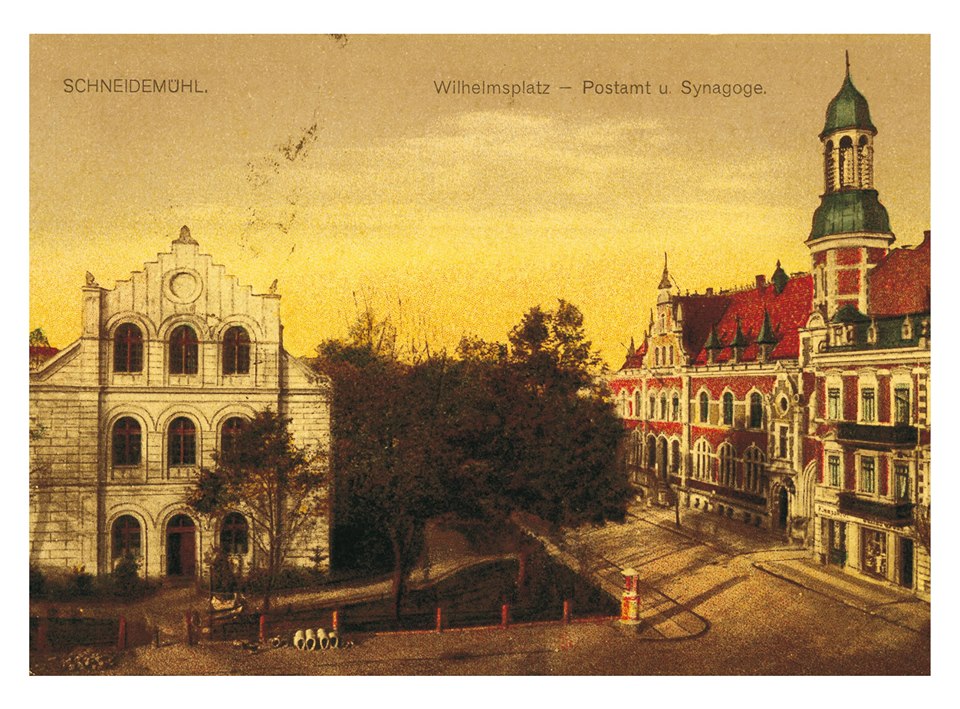
Postcard with the synagogue on the left. Piła was in the Prussian partition of Poland, and was also known as Schneidemühl.

Postcard with the synagogue on the left. Piła was in the Prussian partition of Poland, and was also known as Schneidemühl.

Book with photo of the synagogue on the cover held to show the approximate location of the  synagogue until it was destroyed in the Kristallnacht in 1938.

Book (History of the Jewish Community of Schneidemuhl– 1641 to the Holocaust by Peter Simonstein Cullman) with photo of the synagogue on the cover held to show the approximate location of the synagogue until it was destroyed in the Kristallnacht in 1938.

Kiedy słuchamy tego, co mówią do nas fragmenty przeszłości, to przeszłość ożywa. Fragmenty mówią do nas niezależnie od tego czy staramy się zapomnieć, czy pamiętać o niej. Czasami cudza niepamięć nas rani i zdarza się, że własna pamięć sprawia nam ból. Jest tak, kiedy zamykamy się przed przeszłością i nie chcemy jej zrozumieć. Dlatego lepiej pamiętać i starać się zrozumieć przeszłość oraz jej wpływ na nas. Tylko tak można leczyć traumę.

Inaczej wygląda i działa miejsce z pomnikiem niż bez pomnika. Pomnik wypełnia pustkę po stracie. Pustka może być interpretowana jako obojętność, brak szacunku, a nawet znak nienawiści. Pomnik zaś inspiruje do pracy pamięci i kontemplacji. Cmentarz wrócił na mapę miasta i do świadomości jego mieszkańców. Jest znowu miejscem skupienia i przeżywania straty, a równocześnie szacunku dla fenomenu życia. Nie jesteśmy sami. Odczuwamy znaczenie pamięci podobnie. Pamięć nas zbliża. Dzięki niej stanowimy wspólnotę, chociaż jesteśmy różni. Pamięć sprawia, że różnice nas nie dzielą, lecz łączą. Pamięć staje się podstawą nowych więzi społecznych.

I will post a photo of the completed monument after the unveiling on Tuesday, June 2.

A crowded field

22 Friday May 2015

Posted by Marysia Galbraith in Anthropology, Polish-Jewish Heritage

≈ 1 Comment

I find myself working here in a very crowded field. At all the commemorative events, concerts, and exhibitions, I’m one of many taking photos, writing notes, and doing interviews. The press is there, along with filmmakers, and even other ethnographers. And more often than not, the organizers of events are doing their own documentation for their websites or promotional materials. All of this is a testament of the widespread interest in Jewish heritage in Poland. It’s also, I think, reflective of our mediated lives. Everything is posted on Facebook or a blog such as this one.

It was very different when I began fieldwork 25 years ago. In the Bieszczady Mountains in particular, local residents sometimes wondered if I was a spy. Why else would I spend so much time in such a remote place asking all kinds of questions? I was the only foreigner and the only anthropologist in the small town of Lesko, where I lived for a year.

I’ve had two interesting experiences in the last week alone. First, I interviewed an Israeli woman who lives in Poland. She works as a Hebrew teacher and she is doing a documentary film about what it means to be a Jew (Żyd) in Poland. Over the course of our conversation, I shared some of my own quest for information about my family. Now she wants to interview me for her film. And then today, while attending an educational event sponsored by the Polin Museum of the History of Polish Jews and coordinated by a local museum curator and schoolteacher, I met another ethnographer who is traveling with the exhibition and interviewing people involved with Jewish heritage work in each of the places that are part of the tour.

And next week, I will be the guest speaker at the unveiling of a commemorative monument at the site of the Jewish cemetery in Piła.

This all brings home the impossibility of being an invisible, objective observer in the research I am doing. The participant side of participant-observation is far more robust. I am a collaborator, a lecturer, and myself a subject of other peoples’ projects. All I can do is keep writing notes about how intertwined I become in the various projects I witness. In Jewish Poland Revisted, Erica Lehrer made a similar observation about her “postmodern field site” in Kazimierz, Krakow’s former Jewish quarter which she describes as “transnational, increasingly cyber-mediated, tangled up with flows of tourism” and a site for “the confrontation, dialogue, or at times blurring among ethnography and other practices of cultural representation, translation and brokering” (2014:7; she also describes it as a crowded field of endeavor). I can only wonder at how invisible this all was to me until I started asking the right questions and finding people who are seeking their own answers to them.

Difficult memories

10 Sunday May 2015

Posted by Marysia Galbraith in Archives, Memory, Poland, World War II

≈ 4 Comments

I spent two days at the archive of the Institute of National Memory, reading reports about crimes committed during World War II. Witnesses filled out these forms in the late 1960s and early 1970s, so they were recalling events that occurred thirty years earlier. Different forms were used to document different offenses: repression of the Jewish population before the creation of the ghettos, persecution and extermination of intelligentsia, repression of the Gypsy people, roundups, arrests, prison and arrest, executions, resettlement, ghettos, camps, looting and destroying cultural goods, and help given by Poles to exterminated and persecuted Polish citizens of Jewish descent and other nationalities as well as citizens of other countries. These categories overlap, so sometimes forced labor is reported on the “resettlement” form, while in other cases the “camp” form is used. There are thousands of pages of these testimonies in the archive. I have only requested the ones from towns I have visited: places like Ustrzyki Dolne and Lesko, Żychlin and Kutno.

This is hard material to take in more than small doses. Page after page outlines the dehumanizing conditions Polish citizens were subjected to. The forms illustrate a certain asymmetry of experience. The ultimate fate of most Jews was death, as described on the forms for repression, execution, and ghettos. Most Jews were murdered because they were Jews. There is also an asymmetry of memory: those murders tend to be documented in large, even numbers—4,000, 6,000, 20,000 Jews passed through the Kutno ghetto on their way to the death camps.

Some records are more specific, including the names of 181 Jews who were taken to the Jewish cemetery in Żychlin on March 2, 1942, the day before the liquidation of the ghetto. Then they were shot and buried in shallow mass graves. The names of the five officers who shot them are also listed. Among the victims, #22 is Lajb Białak, age 38, trader; #59 is Hersz Klinger, age 39, shoemaker; #88-92 are Abram (48), Iojne (44), Rywen (16), Sura (14), and Bajla (12) Borensztajn. They may well have been a family. #159, Estera Rajch (62), trader, has the same last name as my great great grandmother, Liba Rajch who was born in 1829 in nearby Kutno.

In Ustrzyki Dolne, several witnesses report the shooting of 100 Jews rounded up from nearby villages and shot by a single SS officer. Only two Jews survived. Szternbach was a dentist who changed his name to Edward Stańkowski and moved to Szczecin, a city at the other corner of Poland. The other, named Szrecher (did they mean Szprecher?), moved to the United States.

More Poles survived and are named in these records, but the accounts also attest to the inhuman treatment to which they were subjected. Reading page after page of testimony gives me a visceral understanding why it would have been so hard for most to offer help to Jews. It doesn’t justify deliberate acts of prejudice and hatred, but it does help to explain what likely prevented more direct assistance. Poles were ordered to leave their homes with hardly any notice, then moved to poorer quarters on other streets or in different towns. Most of their property was taken from them. All they were allowed to bring with them was a pair of underwear, or a spoon and bowl. The luckier ones were told to pack a few days food or a change of clothes and some bedding. Thousands were transported to forced labor throughout the Third Reich. So many were put to work digging ditches. The pages of testimony don’t specify why but I can only imagine that these were in many cases death pits for murdered Jews. Others worked in gardens, factories, or on railroad tracks.

Poles were usually arrested for specific activities: illegal sale of food, making vodka, killing a pig, taking two ration cards, crossing borders, or avoiding work. Most often these offenses resulted in imprisonment or forced labor but sentences were unpredictable. Jan Tobolczyk, “a teacher and a good Pole,” was beaten for not admitting to being a witness of a Pole beating a German. He was sent to Dachau where he was killed. Poles were imprisoned, hanged, or shot for offenses like conspiracy, hiding arms, hiding people, or sabotage. Those caught hiding Jews were killed. Many of those documented on the “persecution and extermination of intelligentsia” form were arrested simply because they were priests; many were sent to Dachau where they were gassed, though some survived imprisonment.

Three railroad workers, Piotr Sand, Kolikst Perkowski, and Wilhelm Czarnewski, were hung in the Old Market Square in Kutno for transporting food to Warsaw. One witness said they were engaged in “illegal trade,” another said they were “transporting food for soldiers.” This happened on July 12, 1940, or perhaps at the end of May 1941. Many witnesses reported this incident. One explained that residents were forced to come at a designated time to watch the execution. The bodies hung all day, guarded by Germans. They were taken down at night and moved to an unknown location.

The accumulation of cases brings home how little Poles’ lives mattered to the occupier, and how easily and unpredictably they were imprisoned, relocated, or killed. These accounts document the inaccuracy, or at least the incompleteness of the claim that most Poles just stood by while the Holocaust happened. Many were preoccupied with the struggle for their own survival. And years later, many felt compelled to leave a public record of what they witnessed.

How Catholic were they?

26 Sunday Apr 2015

Posted by Marysia Galbraith in Catholicism, Family

≈ 4 Comments

Tags

Halina Bereday, Maria Bereda(y) Galbraith

I always thought of my babcia as very religious. On her wall, she kept Jesus on the cross and a Madonna in a gilded frame. Her expressions of faith tended toward the mystical. She believed in miracles and blessings. She prayed on the rosary. She blessed my friend Kara’s baby daughter the first time she held her. She must have been about 90 then.

A bad photo, but one of the few I have of Babcia's apartment on Riverside Drive, showing her Madonna in a gilded frame.

A bad photo, but one of the few I have of Babcia’s apartment on Riverside Drive, showing her Madonna in a gilded frame.

And yet, she never took me to a church service. I wonder if any of my brothers or cousins remember going to church with her?

My mother used to say Babcia was “more Catholic than the Pope.” I don’t think mom appreciated such public expressions of faith. Sometime after 1985, Babcia moved to an assisted living facility in Flushing. It had mostly Jewish residents including many Holocaust survivors. It may have even been run by a Jewish service organization. I’m pretty sure one of our Jewish relatives helped her get a place there, though of course at the time no one told me anything about that. Babcia did not like living there. Doubtless, much of it had to do with her declining health that made it impossible to stay independent in her old apartment, but she also seemed disdainful of the other residents. She flaunted her Catholicism and rebuffed their attempts to befriend her. I don’t think the managers cared much for Babcia, either. When her health declined to the point she couldn’t take care of herself, they said they have no place for her in their more advanced care facilities. She moved for the last time to a nursing home back in Manhattan, around the corner from St. John the Devine Cathedral. Babcia spent most of her life denying her Jewish heritage. I suspect it was too uncomfortable for her to be surrounded by Jews in a Jewish-identified institution.

When my mom talked about her Catholic faith, she essentially did so in the past tense. She was very devout as a child, and wanted to become a nun. When she was fifteen, she went to a boarding school in Belgium run by nuns. One story she told me about living there was that her mother sent her a box of chocolates. She gave them all away, believing that kind of self-sacrifice was an expression of her faith. Then, that night she cried herself to sleep because she wanted one so bad.

Mama liked to sit in churches, but she didn’t go to services. Or if she did go, she didn’t take communion. She said it’s because she doesn’t go to confession. When I asked her why not, she said everything she experienced during and after the war made her grow distant from the church. Mama’s temple was our backyard. She called herself a pantheist, and said that when she wants to pray she just goes outside and meditates. Her mantra was “ocean.” For as long as she could, mama had a chair she would move around the yard depending on the sun and which flowers were in bloom. Thanks to Krystyna, she still gets out into her garden most days.

Mama in the garden

Mama in the garden

My brothers and I weren’t even baptized. Mama said it was because my dad didn’t want Catholic kids, and she didn’t stand up to him. Rather, she wanted to let us make our own decision about religion when we grew up. Was this odd? At the time I didn’t think so. My dad was an atheist. He had the mind of a scientist and just couldn’t take the leap of faith that, well, faith requires. Later in life, he tried. Maybe it was because his best friend Max became a believer. He read Thomas Merton, and even bought me one of his books. But he simply couldn’t overcome his skepticism. Instead, after retiring, he studied philosophy. My son seems to have inherited this skepticism; at the age of seven he decided God does not exist; he hasn’t changed his mind yet.

I still wonder, though, what could have turned Mama away from the church. Maybe witnessing the destruction of war made her question the existence of God. At least the Christian God, because she remained deeply attuned to God in nature. I think she said it had something to do with her injuries, the long series of failed surgeries, the scars they left behind, and then the final straw, getting tuberculosis and losing a year of her life at a TB hospital in Denver. I also wonder if it had something to do with her Jewish heritage and her failed love affair with a priest. But I’ll leave that story for another post.

Remembering the Warsaw Ghetto Uprising, April 19-May 16 1943

19 Sunday Apr 2015

Posted by Marysia Galbraith in Memory, World War II

≈ Leave a comment

Tags

Travel with cousin Krysia, Warsaw Ghetto Uprising

Today marks the 72nd anniversary of the beginning of the Warsaw Ghetto Uprising. This was largest armed resistance of Jews against the Nazis. Fighting lasted nearly a month despite the overpowering force of the Nazis in relation to the sparsely armed Jewish insurgents.

Here is Paul Robeson singing the Warsaw Ghetto Uprising song in Yiddish at a concert in Moscow in 1949:

Robeson’s rich voice communicates to me the pride and bravery of those who rose up against their oppressor. It captures a sense of determination as well as melancholy, as if the fighting was deemed both necessary and doomed.

This short of the film To Live and Die with Honor: The Story of the Warsaw Ghetto Uprising gives a brief outline of events:

The video starts with incredible images of the burning ghetto viewed from outside the wall surrounding it. The narrative is a bit heavy handed, but I can’t help feeling that the resistance fighters deserve to be remembered for their heroism. The video also challenges the common perception that Jews went passively to their death in the Holocaust.

Two years ago, my cousin Krysia and I were in Poland beginning our search for traces of our Jewish relatives. We visited the Jewish Historical Institute in Warsaw just three days after the 70th anniversary, and met a child survivor of the Holocaust. I don’t remember her name, but I’m sure Krysia does. We walked together from Tłomackie Street to the Old City, sharing our stories. Again, I don’t remember the details, but as she described learning (I think later in life) about being adopted and raised in the US after her parents died in the Holocaust I could feel the pain and bewilderment these recollections evoked. When we got to Freta Street in what’s called the New Town (because it’s couple hundred years younger than the medieval Old Town), Krysia and I were drawn into our own family history and following our parents’ footsteps to their home on the Vistula. Before we realized what was happening, our companion had vanished. We looked but didn’t find her again. Krysia tried getting in touch with her later, but I don’t think she got much of a response.

World War II memories and associated emotions remain so real. Especially for witnesses like the woman we met in Warsaw, and witnesses of witnesses like Krysia and me.

I’ve just learned how to embed video into a post, so here is one more worth looking at:

912 Days of the Warsaw Ghetto contains striking footage of the city before and during World War II. I try to imagine my mother on these streets when, as the narrator says, “War may have been coming ever closer but it was nevertheless quite distant.” And then, how her life changed once war broke out.

What happened to Tumska Street?

18 Saturday Apr 2015

Posted by Marysia Galbraith in Polish-Jewish Heritage, Post-World War II, Włocławek

≈ 1 Comment

My great grandparents lived the last years of their lives in Włocławek, a city on the Vistula downriver from Warsaw. I don’t know exactly when or why they moved there, but it was a city that experienced rapid industrialization and growth in the early 20th century. During this time the Jewish population grew to about 20% of the city’s residents. Tomasz Kawski, a professor in the nearby city of Bydgoszcz, has posted an extensive history of Włocławek’s Jews on virtual sztetl. He also showed me around the city in February.

Historically, Jews concentrated around ten streets in the center of town, including Tumska Street which runs from the Old Rynek to the cathedral.[1] This is where Pinkus Kolski and his wife Rachel (my grandfather’s sister) lived and had their store. It was one of the central shopping streets in the city.

When I visited Pini in Israel (he, too is Pinchas like his grandfather, though he has changed his last name to Doron) he and his wife Pnina told me about visiting Włocławek in the 1990s. Here is a photo of Pnina, her mother, and daughter in front of 15 Tumska Street where Pini’s grandparents lived.

My cousins in front of Pinkus and Rachel Kolski's house on Tumska Street, Włocławek

My cousins in front of Pinkus and Rachel Kolski’s house on Tumska Street, Włocławek

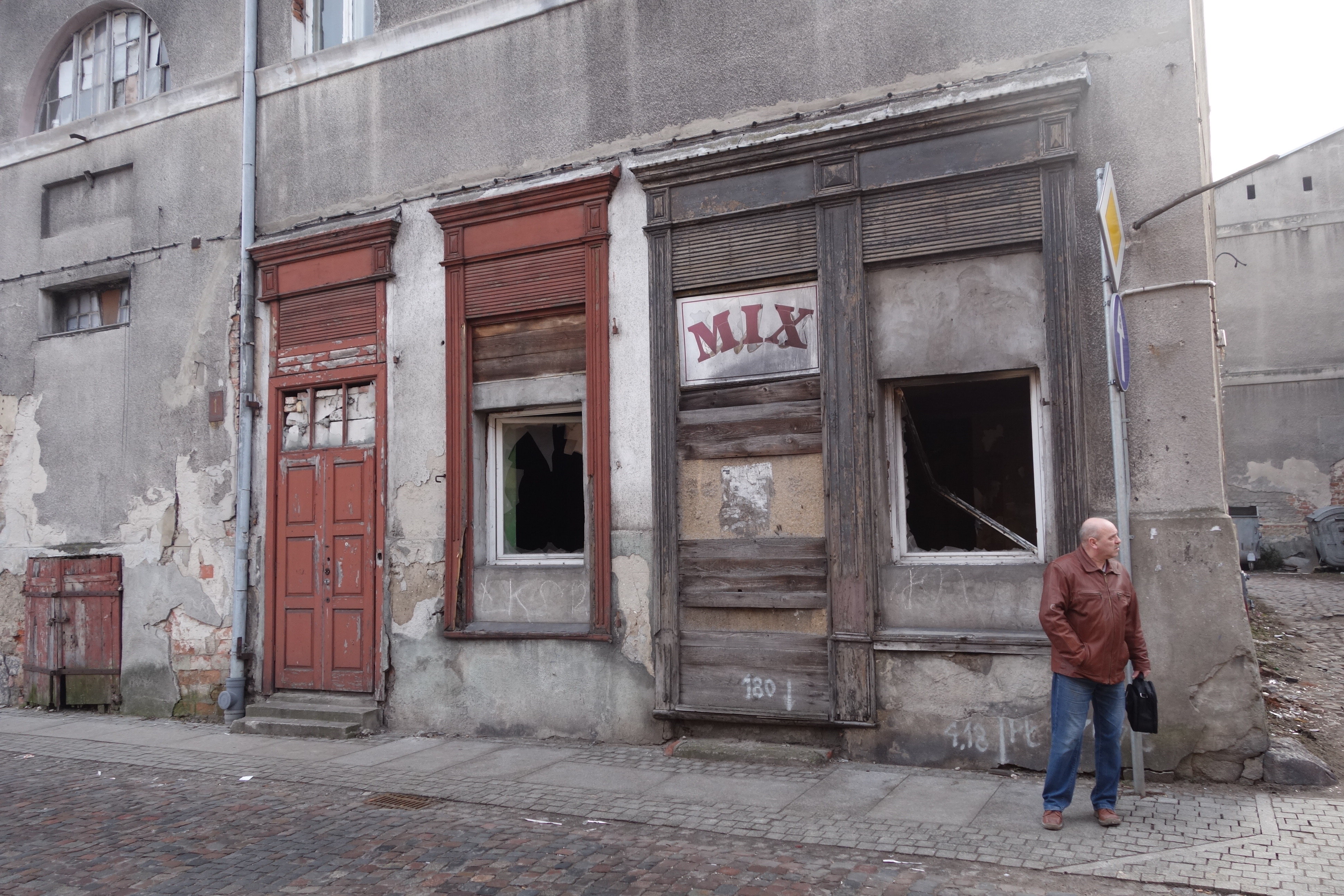
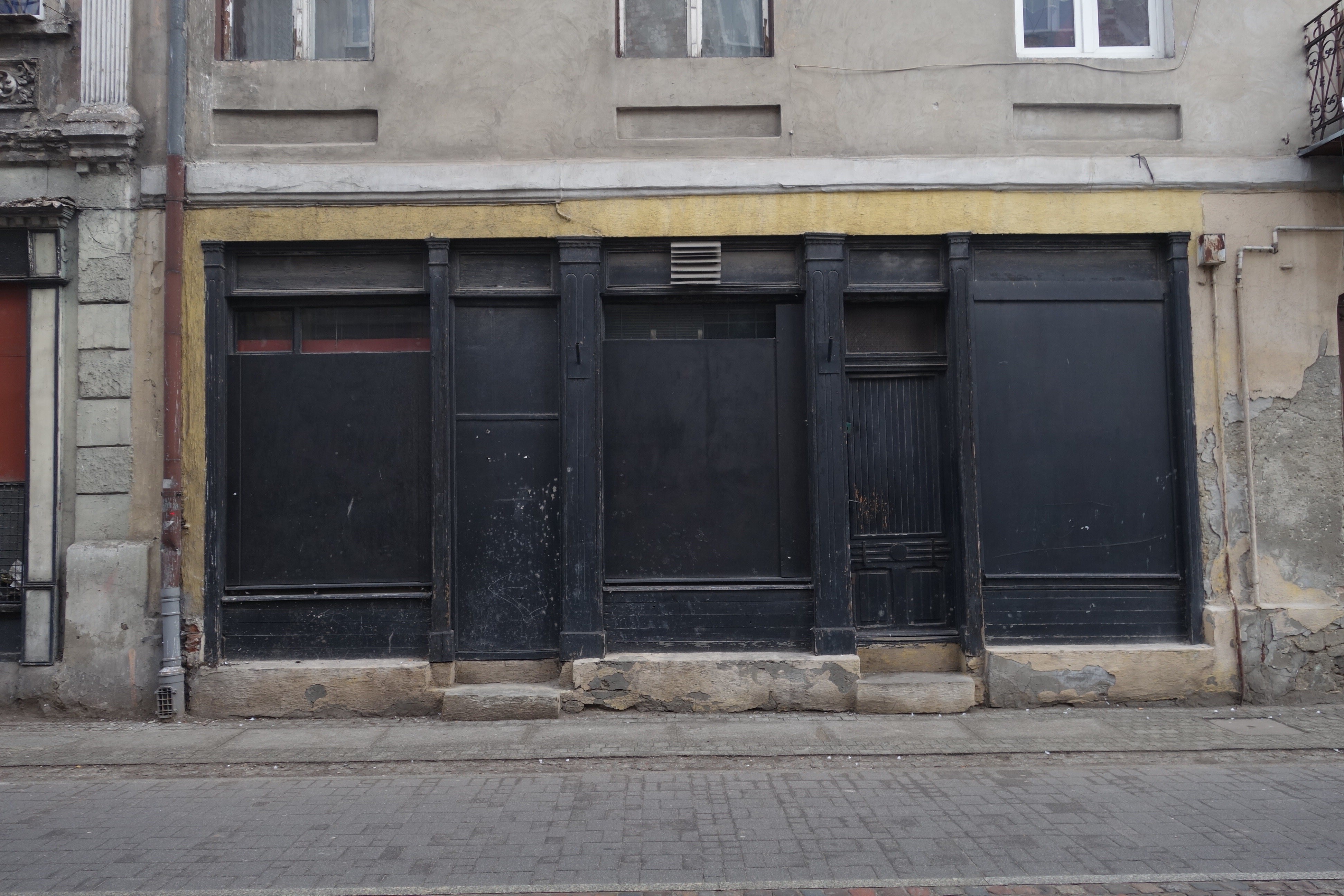
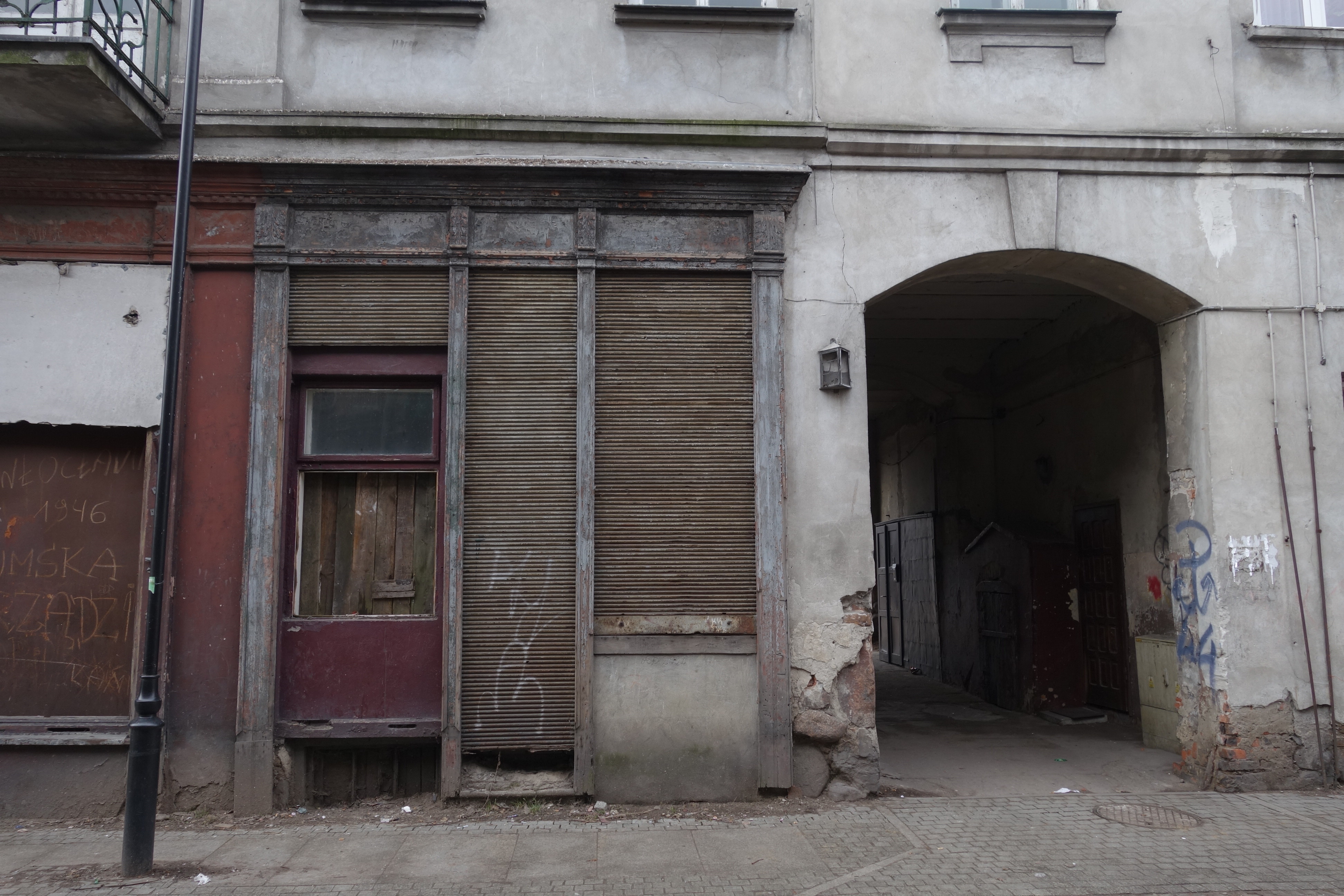
And this is what Tumska Street looked like the week after I returned from Israel.DSC03544

DSC03628Tumska Street is in total decay. Some of the abandoned storefronts have prewar wood paneling that hints at the street’s former glory.

DSC03617

DSC03614Other houses have collapsed into a pile of rubble. Number 15 is gone completely.

A wall stands where 15 Tumska Street used to be. The cathedral is in the background.

A wall stands where 15 Tumska Street used to be. The cathedral is in the background.

I asked a few people why this neighborhood is in such disrepair. I was told the whole city is struggling economically due to the closing of many industries since the fall of communism. About 20% of residents are unemployed. Even before then, residents were moving out of the center and into newer homes and apartments in the outskirts of the city. Also, most of the former Jewish properties were nationalized under communism. In recent years, laws have changed to allow former owners to reclaim their properties, so buildings whose ownership is uncertain or under dispute have been left alone. No one wants to invest in them and risk that someone with a valid claim over them might appear and take possession of them. In fact, communal, city-owned properties nearby are better cared for than those on Tumska Street.

[1] On Virtual Sztetl, Kawski writes, “Ten streets were inhabited by over 88% of the Włocławek Jews (Żabia Street – 6.5%, Kaliska St. – 7.5%, Piekarska St. – 10.1%, Tumska St. – 5.3%, Kościuszki St. – 4.3%, Plac Dąbrowskiego – 6.1%, 3 Maja St. –  26.3%, Łęgska St. –  6.4%, Cygancka St. – 8.4%, Królewiecka St. – 7.5%).”

Jewish heritage in Poland: Remembered pasts and imagined futures

17 Friday Apr 2015

Posted by Marysia Galbraith in Anthropology, Heritage work, Memory, Polish-Jewish Heritage, Research Methodology

≈ 3 Comments

Here is a brief summary of my research project in Poland:

My research on Jewish heritage asks what can be done with the fragments of Jewish culture that remain in Poland, sometimes hidden and sometimes in plain sight? And what value does such memory work have? It might appear that too little is left, or that any attempt to piece together fragments will just expose more horror, trauma, and death. After all, Poland’s numerous and diverse Jewish communities were destroyed in the Holocaust. The few survivors who returned after World War II were made to feel unwelcome by inhospitable neighbors and a political regime that demonized them. By 1968, nearly no Jews were left in Poland. A collective amnesia erased most remaining traces of Poland’s Jews. Physical reminders were torn down or repurposed, and even memories were pushed out of consciousness or silenced. Can anything be gained by revisiting all that has been lost?

I explore these questions on two levels. First, on the social level, I focus on what is actually being done with physical traces of Jewish culture. I have visited Jewish cemeteries and synagogues, including the places where no marker is left of their location. I have also gone to places where active memory work is being done, including commemorative monuments and websites. I have viewed museums and archives where some materials and records are collected. I have talked with curators, artists, historians, and others who engage with the objects of Jewish memory in various ways. From these explorations, it is clear that the silence surrounding Jewish culture in Poland has been challenged at least since the Solidarity period at the beginning of the 1980s, when rediscovering Poland’s historical ethnic and religious diversity was a way of protesting state socialist nationalism which limited all kinds of expressions of difference and freedom. The steady growth of interest in Jewish culture in Poland has been manifested most recently in major projects like Warsaw’s new Polin Museum of the History of Polish Jews, but also in much quieter ways in smaller communities all over Poland. I use ethnographic methods to examine the ways contemporary memory projects piece together the fragments of Jewish memory. If you know where to look, fragments of Jewish lives (and deaths) can be found even where whole Jewish communities and their most visible elements like synagogues and cemeteries have been destroyed. These fragments can reveal something about the past, even if it is just in an incomplete and shattered form. And they can point toward the future—the possibilities that might emerge out of traces of memory.

Second, I explore the fragments of Jewish culture on the personal level. Central to this is the archeology of my own hidden Jewish ancestry. I have dug up secret family photographs, pieced together the memories of living relatives, sifted through numerous archives and online records, and finally I discovered extended family I never knew I had—in Israel, the United States, and Europe. But not in Poland, where only scattered hints of my ancestors’ lives remain. In addition to tracing my own family history, I have been gathering the flashes of memory held by witnesses (and others who like me are witnesses of witnesses), as well as the efforts of contemporary Jews to revive the practice of Jewish culture and religion in Poland.

Lapidarium in Wronki

14 Tuesday Apr 2015

Posted by Marysia Galbraith in Cemeteries, Heritage work, Polish-Jewish Heritage, Wronki

≈ 2 Comments

Tags

Lapidarium

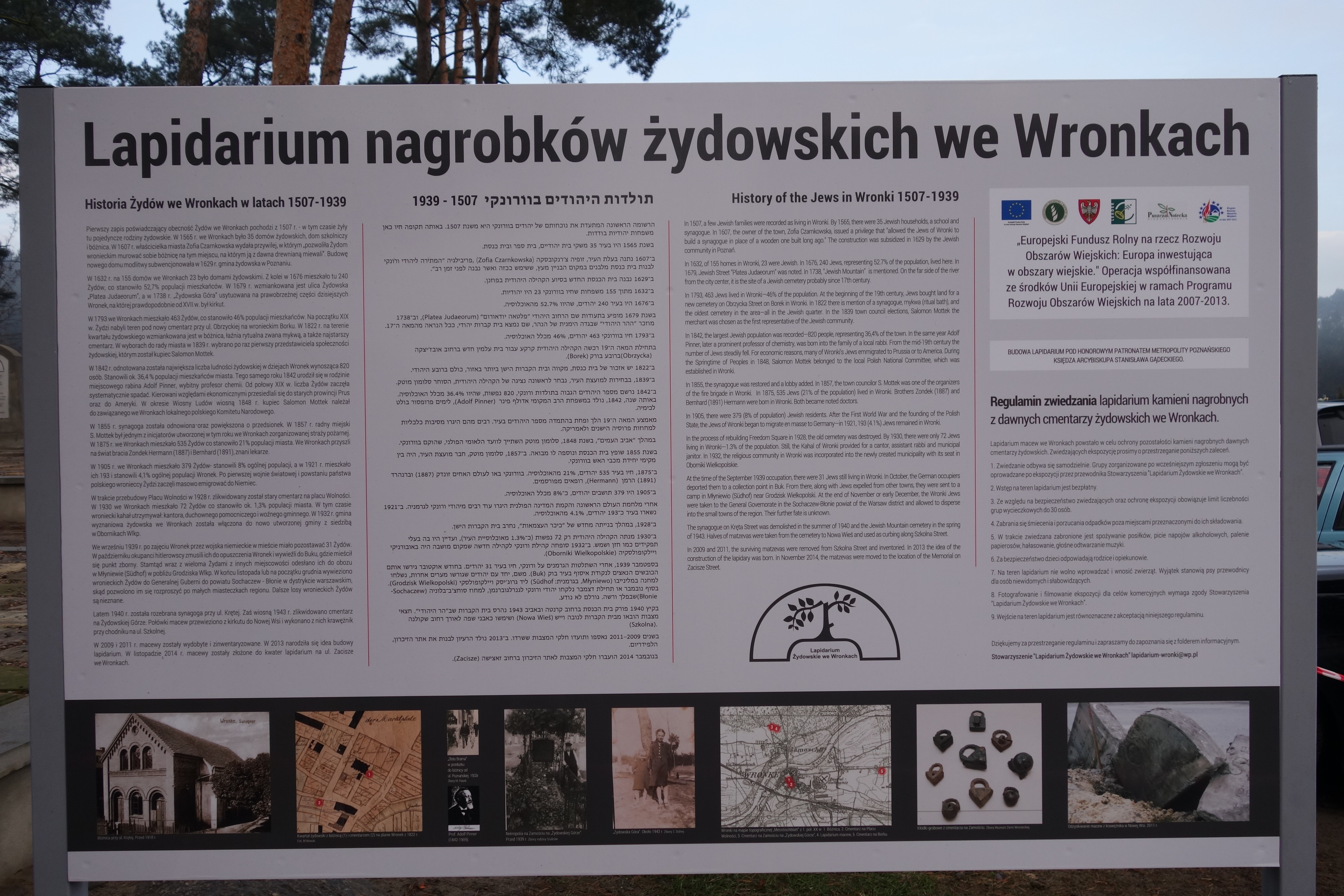
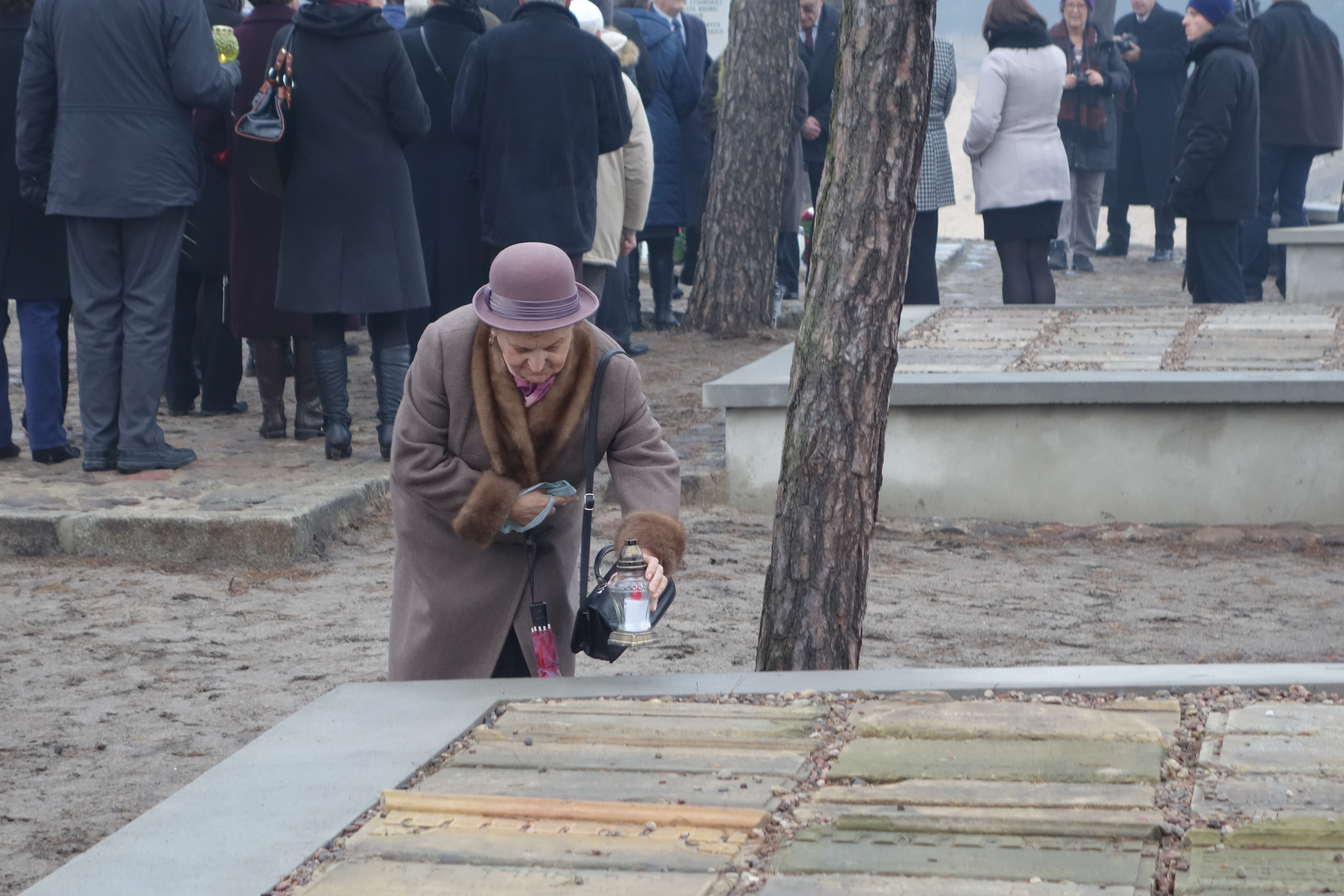
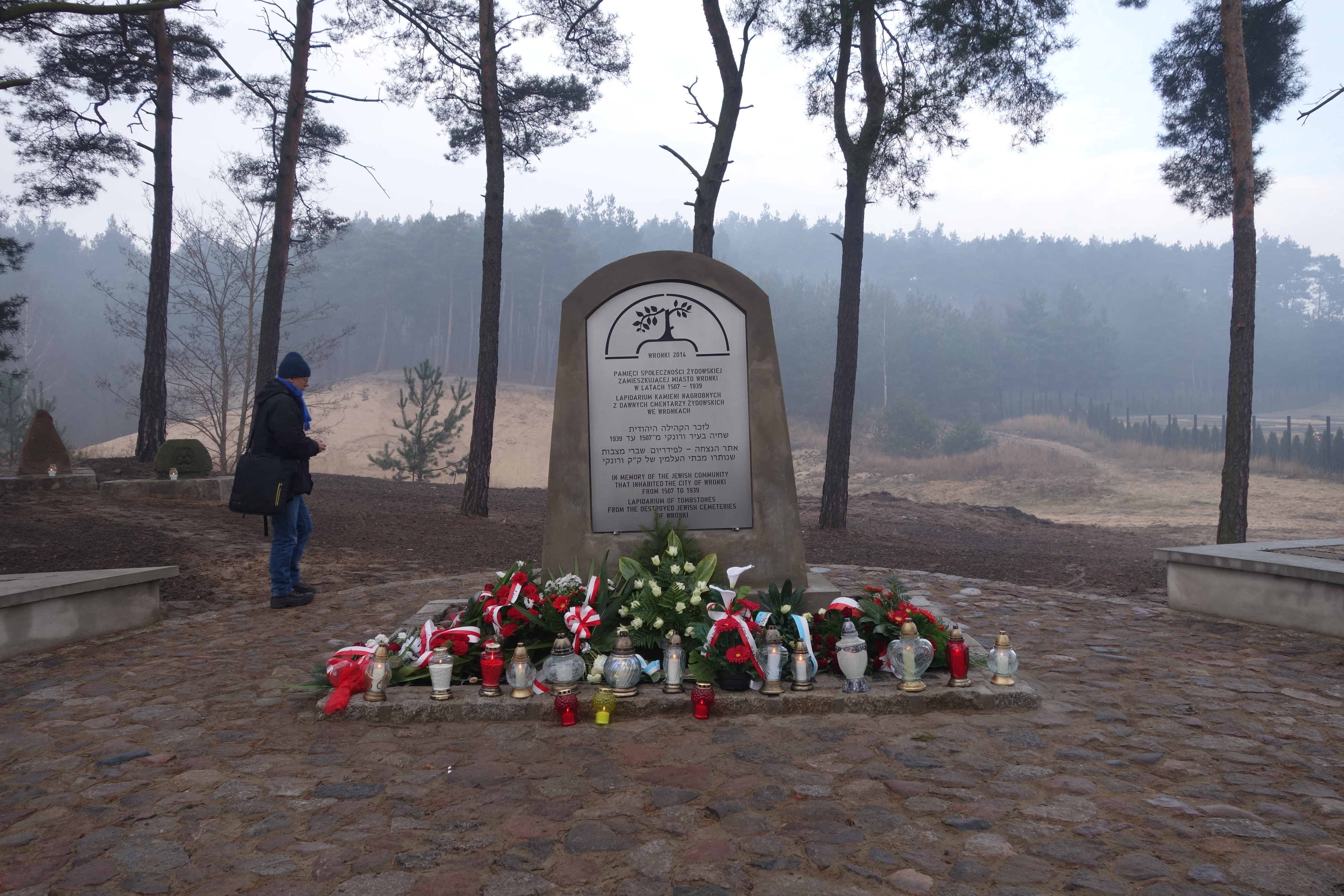
I didn’t know what a lapidarium is until I went to the opening ceremony for one in Wronki, a town about an hour north of Poznan. The opening was on December 14, 2014. Here are some photos:

Lapidarium in Wronki

Lapidarium in Wronki

Sign outlining the history of Jews in Wronki

Sign outlining the history of Jews in Wronki

Piotr Pojasek speaking at the opening of the Lapidarium in Wronki

Piotr Pojasek speaking at the opening of the Lapidarium in Wronki

Placing a lantern at the opening of the Lapidarium in Wronki

Placing a lantern at the opening of the Lapidarium in Wronki

Flowers and candle lanterns placed at the monument at the heart of the Lapidarium in Wronki

Flowers and candle lanterns placed at the monument at the heart of the Lapidarium in Wronki

A stone with a tree with a broken branch, which became the logo for the lapidarium in Wronki

A stone with a tree with a broken branch, which became the logo for the lapidarium in Wronki

A lapidarium is essentially a place where stones are displayed. In this case, the fragments of the tombstones from the Jewish cemetery were recovered and placed in raised beds. The space around them is filled with small stones about the size of those that customarily would be placed on Jewish graves. Written in Polish, Hebrew, and English on a monument in the shape of a large tombstone are the words:

In memory of the Jewish community that inhabited Wronki from 1507-1939. Lapidarium of tombstones from the destroyed Jewish cemeteries of Wronki

This project represents for me the best of what can be done with the fragments of Jewish culture in Poland. It required the engagement of many different organizations and individuals, most of whom are not Jewish but who felt a moral obligation to recover these stones which were removed from the cemetery during World War II and later used to make a curb on a street in a neighboring village. For some, the lapidarium was a project of reclaiming the town’s heritage. For others it was much more bound up with faith and spirituality.

I’ve been back to Wronki a few times and talked with a number of people involved in the project. I’ll fill out this story in future posts.

Nunia on a camel

10 Friday Apr 2015

Posted by Marysia Galbraith in Family, Memory

≈ 1 Comment

Tags

Israel, Maria Weglinska

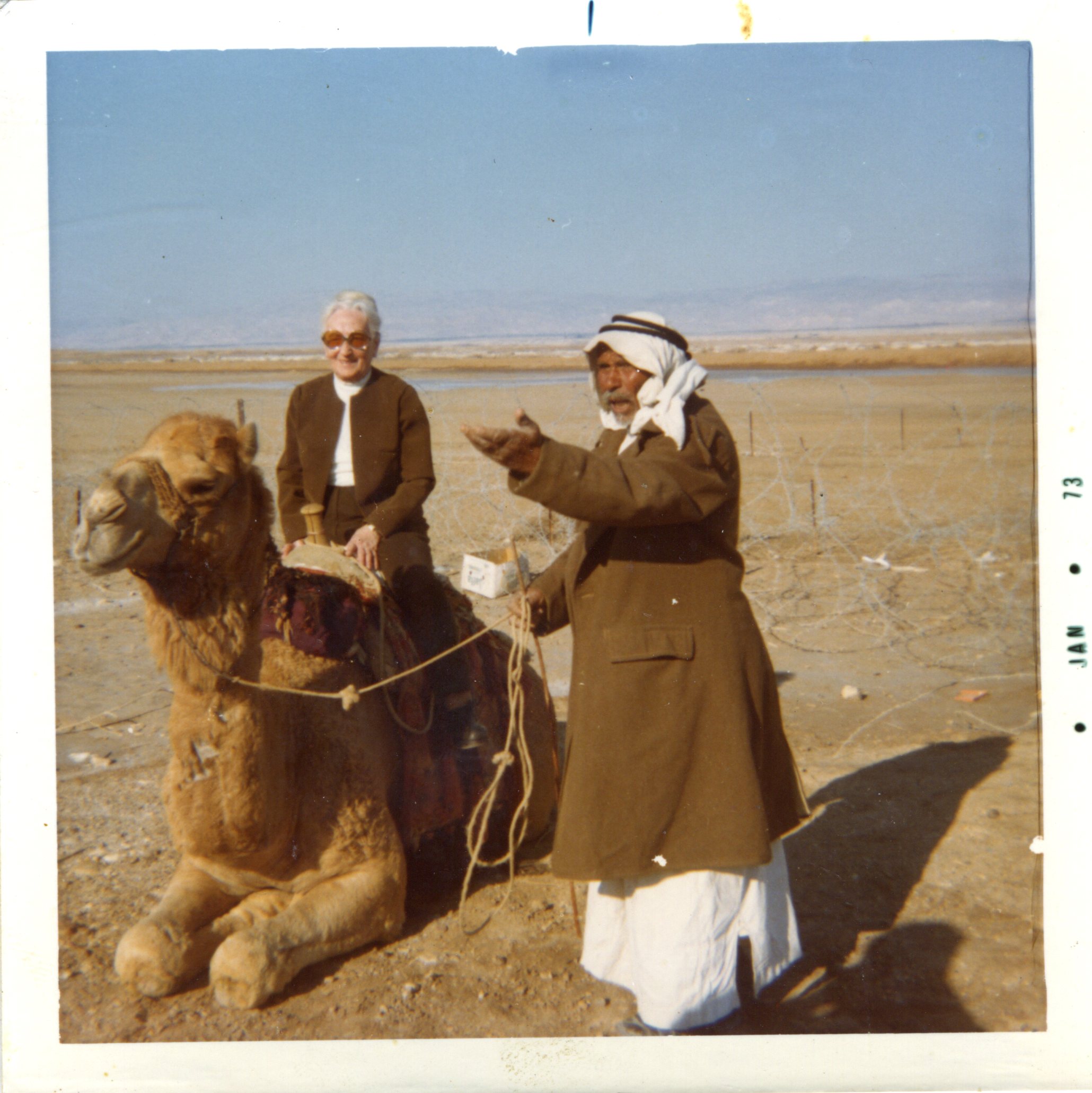
Nunia on a camel in 1972 at about age 86

Nunia on a camel in 1972 at about age 86

When Nunia was in her mid-80s, she went to Israel. I remember my mom’s wonderment as she described Nunia’s continued vitality. The image that proved it is a photo of Nunia perched upon a camel. The photo is stamped 1973, but cousin Yvonne in Israel remembers showing Nunia around Jerusalem in 1972. Back then, the date in the white edge of photos specified when the prints were made, so maybe Nunia didn’t develop the film right away.

Another camel photo.

Another camel photo, printed in January 1973. Yvonne says these photos were taken near the Dead Sea.

Nunia made an impression on the Israeli cousins, too. She kept a very busy schedule during her visit. When asked about it, she responded, “I can rest when I die.”

I don’t remember any mention of Israel when anyone talked about the trip. Rather, I remember being told Nunia went to Egypt. I was only nine at the time, so maybe I misremember, but my brother Chris remembers this, too. He says even then it seemed odd to him that she went to Egypt and yet there were no photos of the pyramids. Could this have been another instance of hiding the family Jewish connection? If so, it was a bizarre way to do so. Why not just say she went to “the Holy Land,” a common way Christians refer to Israel? I can’t help questioning my memory here—could I have been told she went to the Holy Land, but Egypt stuck in my nine-year-old head because it is the place I associated with camels and desert (and pyramids, which as Chris said were not in the photo)?

One thing I know for sure. I was never told Nunia went to visit family. I feel a deep sense of loss about this, especially since meeting my Israeli family. I’m also deeply embarrassed.

Could this be the Tel Aviv airport?

Could this be the Tel Aviv airport?

Gallery

More photos of the Lutowiska Cemetery

04 Saturday Apr 2015

Posted by Marysia Galbraith in Cemeteries, Jewish Culture, Lutowiska

≈ 5 Comments

This gallery contains 1 photo.

← Older posts
Newer posts →

Categories

  • Anthropology (37)
    • Archives (14)
    • Fieldwork (7)
    • Ground Penetrating Radar (GPR (4)
    • Research Methodology (8)
  • antisemitism (14)
  • Association of Descendants of Jewish Central Poland (32)
  • Catholicism (8)
  • Conference (1)
  • Discrimination (2)
  • Family (69)
    • Bereda (17)
    • Kolski (13)
    • Piwko (22)
    • Rotblit (3)
    • Walfisz (4)
    • Winawer (7)
  • Genealogy (11)
  • Heritage work (66)
    • Commemoration (23)
  • Identity (18)
  • Israel (6)
  • Jewish Culture (89)
    • Cemeteries (51)
    • Museum (7)
    • Synagogues (33)
  • Jewish immigrants (8)
  • Jewish Religion (1)
  • Memory (70)
  • Names (14)
  • Photographs (6)
  • Pifko-Winawer Circle (5)
  • Poland (125)
    • Baligród (1)
    • Bolimów (1)
    • Brześć Kujawski (5)
    • Buk (1)
    • Chodecz (1)
    • Dukla (2)
    • Dąbrowice (1)
    • Gdynia (1)
    • Gostynin (2)
    • Gąbin (1)
    • Izbica Kujawska (1)
    • Kazimierz (4)
    • Kowal (1)
    • Koło (1)
    • Krakow (7)
    • Krośniewice (1)
    • Kutno (6)
    • Kłodawa (1)
    • Lesko (8)
    • Leszno (1)
    • Lubień Kujawski (1)
    • Lubraniec (1)
    • Lutowiska (3)
    • Piła (3)
    • Podgórze (2)
    • Poznan (11)
    • Przemyśl (2)
    • Pzedecz (1)
    • Radom (1)
    • Radymno (1)
    • Sanok (1)
    • Skierniewice (5)
    • Sobota (2)
    • Tarnów (2)
    • Warsaw (22)
    • Wielkopolska (1)
    • Wronki (7)
    • Włocławek (20)
    • Zasław (2)
    • Łódź (1)
    • Żychlin (30)
  • Polish Culture (10)
  • Polish-Jewish Heritage (60)
  • Polish-Jewish relations (60)
  • Post-World War II (24)
  • Pre-World War II (22)
  • Reclaimed Property (1)
  • stereotypes (3)
  • Survival (9)
  • Trauma (3)
  • Uncategorized (5)
  • Victims and perpetrators (4)
  • World War II (45)
    • Jewish Ghetto (12)
    • Nazi Camps (5)
    • Polish Underground Army (3)
  • Yiddish (5)

Enter your email address to follow this blog and receive notifications of new posts by email. Your email address will not be shared.

Archives

  • October 2025 (1)
  • July 2025 (8)
  • June 2025 (1)
  • April 2025 (1)
  • August 2024 (3)
  • July 2024 (3)
  • May 2024 (2)
  • April 2024 (1)
  • May 2023 (2)
  • January 2023 (2)
  • December 2022 (7)
  • November 2022 (2)
  • October 2022 (5)
  • September 2022 (1)
  • January 2022 (1)
  • August 2021 (1)
  • December 2020 (2)
  • July 2020 (1)
  • May 2020 (3)
  • April 2020 (1)
  • March 2020 (1)
  • January 2020 (2)
  • May 2019 (1)
  • February 2019 (1)
  • November 2018 (1)
  • September 2018 (1)
  • August 2018 (3)
  • July 2018 (1)
  • June 2018 (1)
  • May 2018 (1)
  • April 2018 (2)
  • March 2018 (2)
  • February 2018 (2)
  • January 2018 (2)
  • December 2017 (2)
  • November 2017 (2)
  • October 2017 (1)
  • September 2017 (3)
  • August 2017 (3)
  • June 2017 (2)
  • May 2017 (3)
  • April 2017 (1)
  • March 2017 (2)
  • February 2017 (1)
  • January 2017 (2)
  • December 2016 (2)
  • November 2016 (4)
  • October 2016 (1)
  • September 2016 (6)
  • August 2016 (2)
  • July 2016 (1)
  • May 2016 (4)
  • April 2016 (2)
  • March 2016 (3)
  • February 2016 (4)
  • January 2016 (3)
  • December 2015 (3)
  • November 2015 (5)
  • October 2015 (5)
  • September 2015 (3)
  • August 2015 (4)
  • July 2015 (3)
  • June 2015 (3)
  • May 2015 (4)
  • April 2015 (9)
  • March 2015 (3)
  • February 2015 (2)
  • January 2015 (5)
  • December 2014 (4)
  • November 2014 (9)
  • October 2014 (2)
  • September 2014 (1)

Copyright Notice

All original text and images are copyright © Marysia Galbraith. Please contact the author before quoting.

Blog at WordPress.com.

  • Subscribe Subscribed
    • Uncovering Jewish Heritage
    • Join 147 other subscribers
    • Already have a WordPress.com account? Log in now.
    • Uncovering Jewish Heritage
    • Subscribe Subscribed
    • Sign up
    • Log in
    • Report this content
    • View site in Reader
    • Manage subscriptions
    • Collapse this bar
 

Loading Comments...