• About
  • The Photo that Started it All

Uncovering Jewish Heritage

Uncovering Jewish Heritage

Category Archives: Jewish Culture

Posts about aspects of Jewish culture.

Americans in Lesko: Project Preservation

04 Saturday Jul 2015

Posted by Marysia Galbraith in Cemeteries, Heritage work, Lesko

≈ 1 Comment

Tags

Dartmouth College, Project Preservation, Rabbi Edward Boraz

Sometimes things just fall into place better than could been planned. I got in touch with Arkadiusz Komski to discuss Jewish heritage work in Sanok. We met at the Słotki Domek Café in Lesko. In addition to being a wealth of knowledge about the history of Jews in the Sanok region, Arek told me that Rabbi Edward Boraz was scheduled to come with a group of Dartmouth students to clean up and inventory the Jewish cemetery in Lesko. I knew I needed to stay an extra day to meet them, and I’m glad I did.

Boraz has been at Dartmouth since 1998. As town rabbi, head of the campus Hillel, and professor in the medical school, he wears many hats. Also, for the past fifteen years, he has led a summer trip to a different town in Eastern Europe to clean up a Jewish cemetery (called Project Preservation). Students receive no academic credit for participating. Before the trip, they attend ten weekly seminars, and read and discuss a range of relevant literature. This year, they focused on the intellectual foundations for the Holocaust, and how science and medicine were used as tools to develop the techniques for mass murder.

The group spent about a week in Poland. They flew into Krakow, visited Auschwitz, the synagogue in Łańcut, and the death camp at Bełżec (where many Jews from the Lesko region were taken). Then they came to Lesko. They were scheduled to work about four days at the cemetery, with a day off for Shabbat. They also held a short Shabbat ceremony in the Lesko synagogue building.

When I met Boraz the night he arrived, I spoke more than I should have. He asks good questions, and is a good listener. He explained that he likes to hear peoples’ stories. Still, as an ethnographer, usually I’m the one who asks the questions and listens to peoples’ stories.

Ewa Bryła speaks with Marek Duszyński of MojeLesko.pl

Ewa Bryła, of the Carpathian Minority Heritage Association, speaks with Marek Duszyński of MojeLesko.pl

Rabbi Boraz says thanks to the help of Arek Komski, Ewa Bryła, and her brother Piotr, this is the fifth time he has returned to southeast Poland. They help coordinate all the logistics, bring equipment and people to help cut the grass, act as translators, and provide information about the region.

Meeting with Rabbi Boraz and his students seems like a fitting bookend to my year in Poland. When I arrived in Poland last August, I just missed them. In Lutowiska, I walked up the new steps they had built and through the gate they had mounted at the cemetery entrance. I followed in their footsteps along the paths through the cemetery and looked at the tombstones they had cleaned.

This year in Lesko, I chatted with the students before they began work and asked them what motivated them to sign up for the trip. About half were raised in Jewish households, some more reformed and some more conservative, while the rest were from a variety of backgrounds. Some grew up in neighborhoods with a lot of Jews, others with almost none. They had various levels of familiarity with the history of European Jews and the Holocaust. Some were interested in the project because they knew Holocaust survivors or because their own distant ancestors came from this part of the world. Others focused on the service component of the trip; they wanted to contribute to the preservation of Jewish culture. Still others expressed an interest in history.

The students were impressed by the age and charm of Krakow, although they weren’t so sure about some Polish food practices. It struck some as odd that normal life goes on in the Polish city of Oświęcim right next to the death camp of Auschwitz. They found the tour of the death camp was unsettling, though one student said reading about Holocaust history had a greater personal impact.
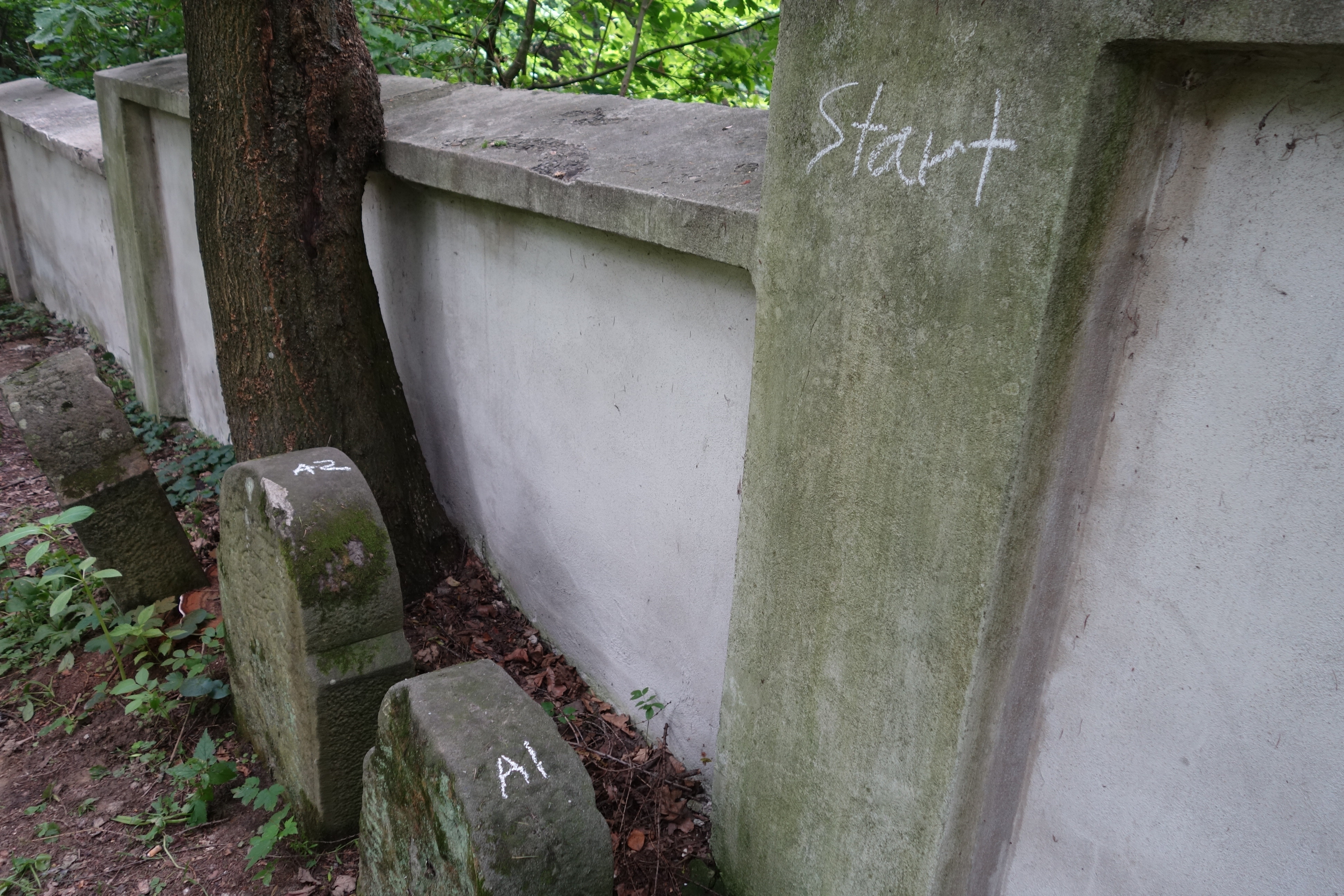
Start

Start

The students got started in the area of the cemetery with the densest concentration of tombstones. One began numbering the stones with chalk, DSC06897

Deciphering inscriptions

Deciphering inscriptions

some set about photographing, transcribing, and translating inscriptions, others used soft brushes and water to gently clean the stones’ surfaces. DSC06895They had to be especially careful because most are of a soft sandstone which is prone to fracturing and wearing away. Many are covered with moss that provides a degree of protection but can also obscure the inscriptions. An additional complication is that some varieties of moss are endangered and protected, and thus not to be disturbed.
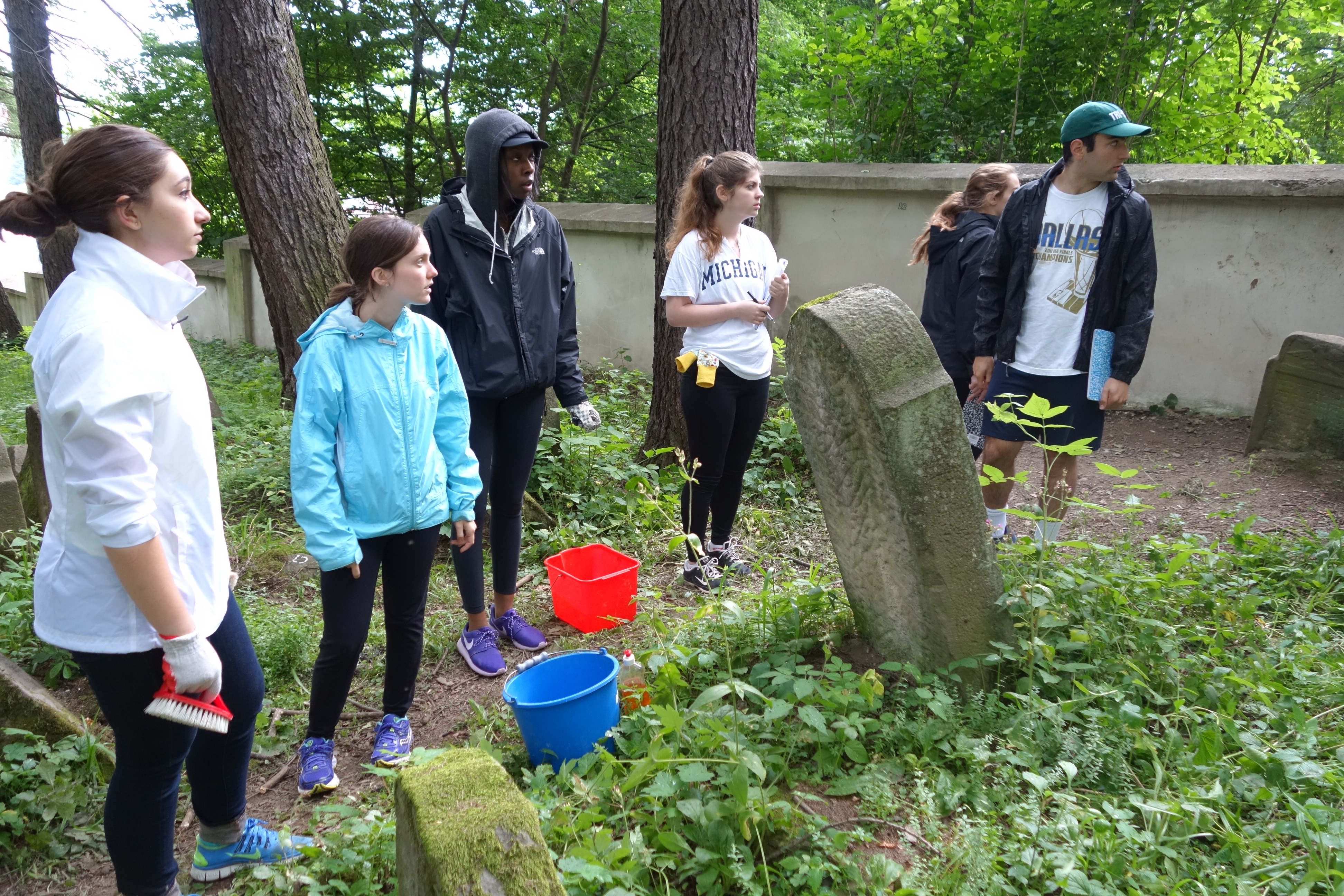
The Americans were joined by Poles—a woman who moved to the area from Warsaw with her two teenage daughters and another teenage girl. Some more local residents joined the group in the Lesko synagogue for the Shabbat service Friday afternoon (see mojelesko).
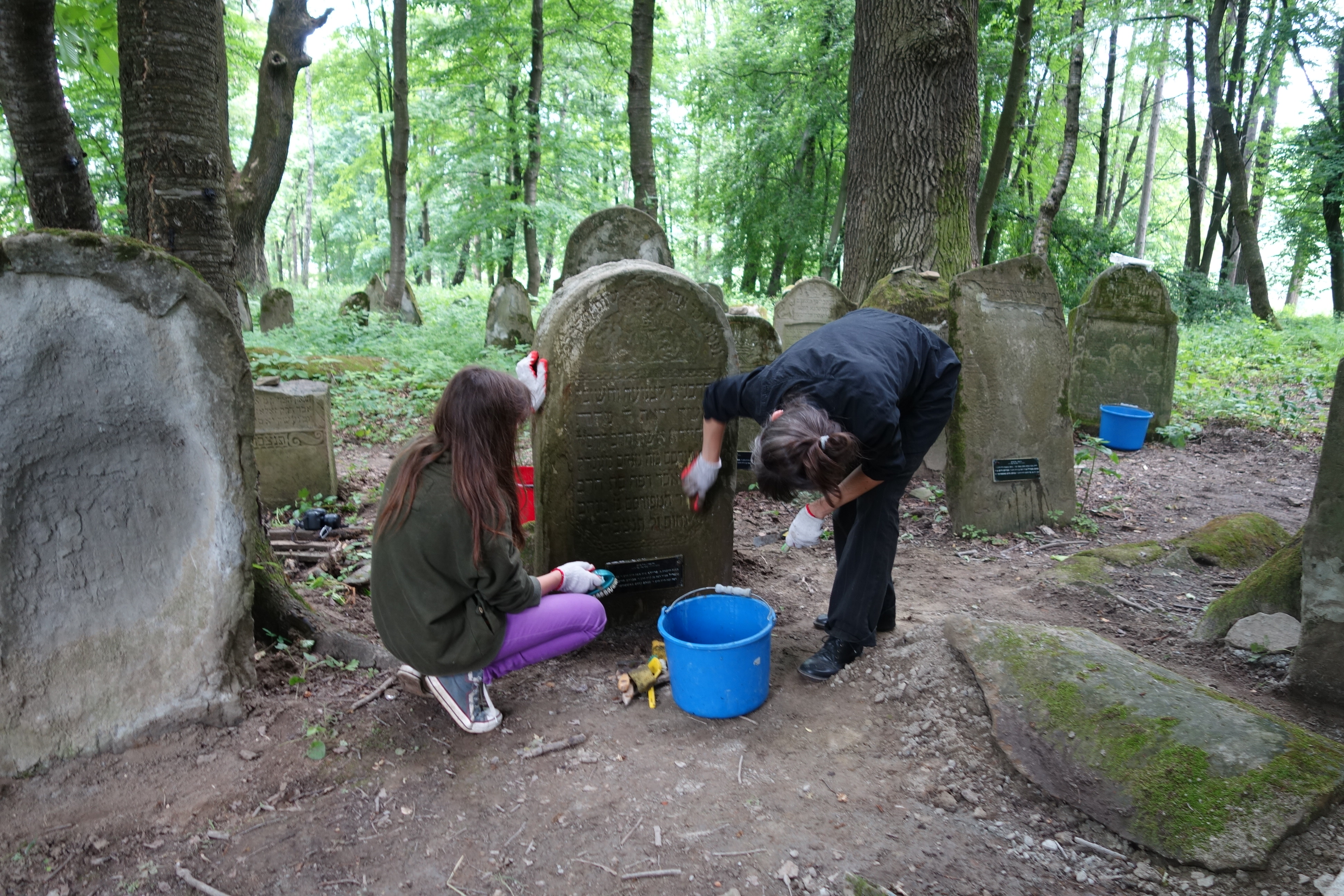
Local residents help clean the tombstones in Lesko

Local residents help clean the tombstones in Lesko

The Jewish cemetery in Lesko is the oldest and largest in the region. The earliest tombstone dates from 1548, and over 2000 stones remain on the site. It was one of the first places I was taken by a couple of local teens who showed me around town when I moved there in 1992. Nevertheless, the cemetery was talked about as a place to hang out with friends away from the scrutiny of adults. Little was known about the former Jewish population, and even less was discussed in public. I hope this is changing, even though (or perhaps because?) few witnesses remain of the prewar community and the removal and murder of Jews.
Grassroots heritage work in Bieszczady

21 Sunday Jun 2015

Posted by Marysia Galbraith in Cemeteries, Dukla, Heritage work, Lesko, Nazi Camps, Polish-Jewish relations, Pre-World War II, Sanok, Synagogues, World War II, Zasław

≈ 6 Comments

Tags

Bieszczady, Jewish culture and history

There is a pattern in the frequency (or rareness) of my posts. When I’m focused on other writing projects, I also write more for the blog. When I’m traveling, interviewing, and attending events, I write less. This month I’ve been traveling.

It seemed important to bring my new research focus to my old fieldsite, and see what is happening in relation to Jewish culture and history in the Bieszczady Mountain region.

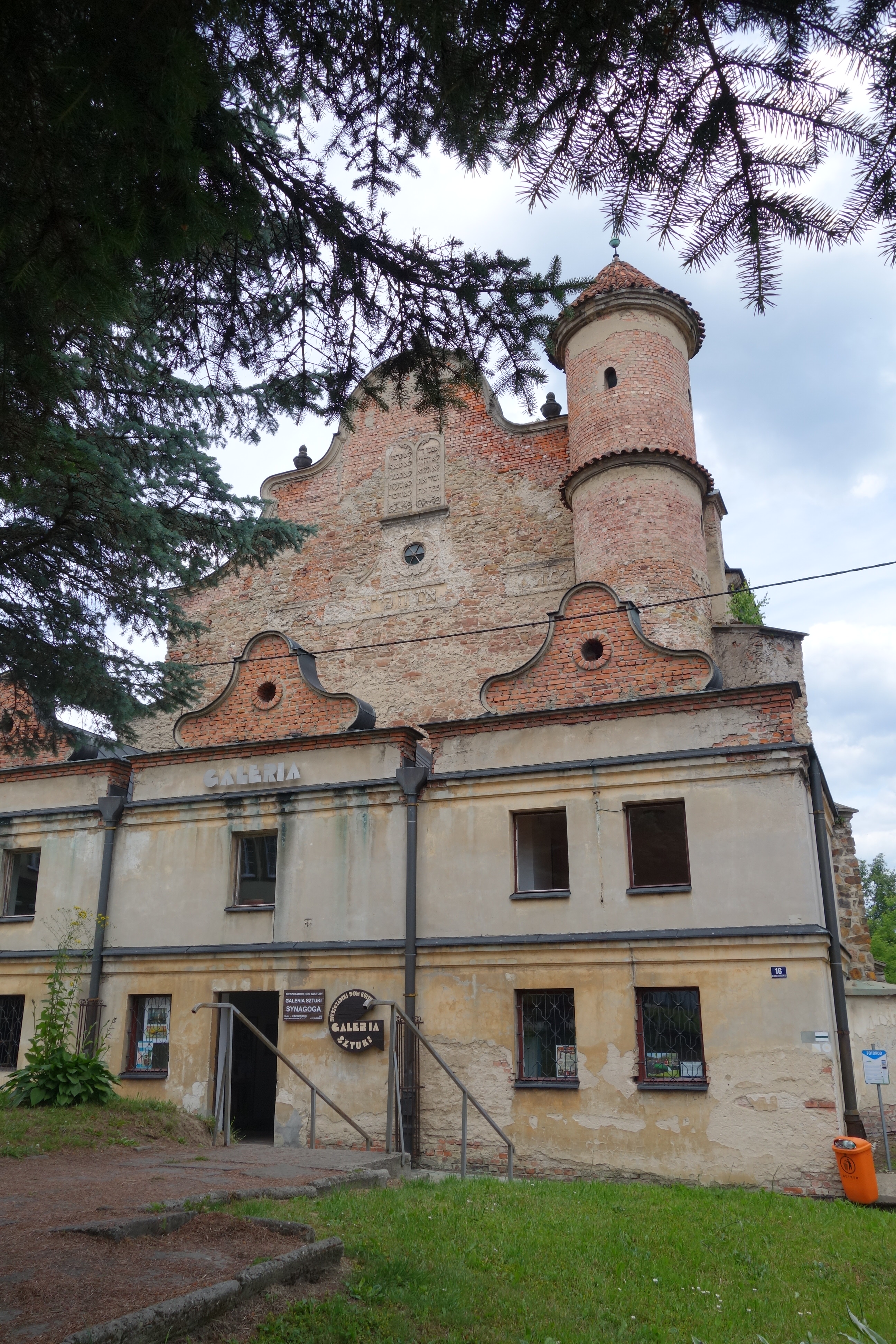
The Lesko synagogue. Destroyed in World War II, it was rebuilt in the 1960s.

The Lesko synagogue. Destroyed in World War II, it was rebuilt in the 1960s.

I’ve written elsewhere about how striking it is that, despite the fact that before World War II more Jews lived in Lesko than Poles, only very rarely have contemporary residents volunteered any information about the former Jewish residents. Even though I walked by the former synagogue (bigger than the Catholic Church) and the massive Jewish cemetery countless times, it really only sunk in to me last November that Lesko was a sztetl. One of my friends in Lesko described it really clearly. She said that somehow she always knew that the Jewish history of the town was something that you don’t talk about. It was a taboo topic. This has only recently started to change. Only in the past few years has she noticed that people talk about Jewish culture and history openly. She thinks this is a good thing. Realizing how little she knows about the subject, she has started to educate herself about prewar Jewish life and the Holocaust in Bieszczady.

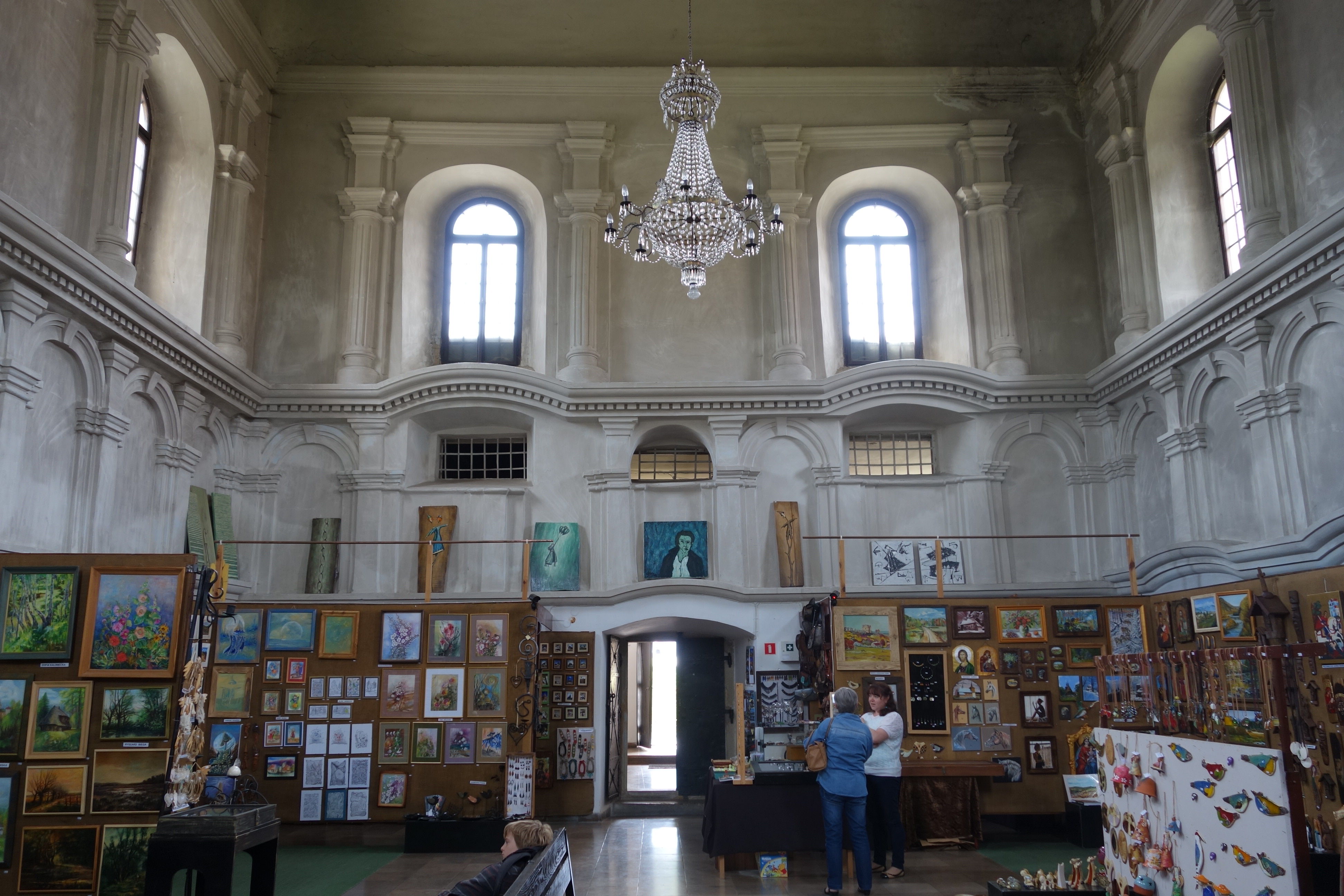
Interior of the Lesko Synagogue. Now owned by the town, it functions as a gallery of regional art.

Interior of the Lesko Synagogue. Now owned by the town, it functions as a gallery of regional art.

Generally, I have found that when I ask, most people have a story or two to tell about Jews in Bieszczady, either something they have read or a some fragmentary memory their grandmother told them. Though also when I told one friend about my interest in Jewish culture and history, she responded, “There were Jews in Bieszczady?” Even though she went to high school in Lesko, she only vaguely remembered the Jewish cemetery and had no recollection of the synagogue. Whether she really didn’t know or just continues to think this is a topic that polite people don’t talk about, I’m not sure.

Nevertheless, some important grass roots work is being done: by Arkadiusz (Arek) Komski in Sanok, Ewa Bryła and her brother Piotr in Zagórz, and Jacek Koszczan in Dukla. Arek is working on a dissertation about the Jews of Sanok. We met at the Słotki Domek Cafe in Lesko after he finished work, and then the next day he showed me the places associated with Jewish life in Sanok.

One of the former synagogues in Sanok

One of the former synagogues in Sanok

Commemorative marker, Sanok

Commemorative marker, Sanok

His interest in the topic originated with a curiosity about history, and particularly the history of his hometown. He has published articles about the Nazi work camp in neighboring Zasław and about the locks that were found at the Jewish cemetery. Last year, he realized a project to place a commemorative marker across the street from the former site of the great synagogue.

Arek also let me know that he was awaiting the arrival of a group of students from Dartmouth College, led by Rabbi Edward Boraz, who were going to clean up and inventory the tombstones in the Jewish cemetery in Lesko (see Project Preservation). He has helped them already, first when they came to the cemetery in Sanok, then to Ustrzyki Dolne, Korczyna, and last year to Lutowiska.

Through Arek, I met Ewa, who helped found the Stowarzyszenie Dziedzictwo Mniejszości Karpackich (Association for the Heritage of Carpathian Minorities). Arek joked that for Ewa, working on heritage preservation is a full time hobby. Her interest emerged out of her own Bojko/Ukrainian roots; her parents and grandparents spoke Ukrainian among themselves, though they only spoke Polish with her and her brother. To date, the association has helped clean up as many as thirty Uniate (Ukrainian) and Jewish cemeteries in the region.

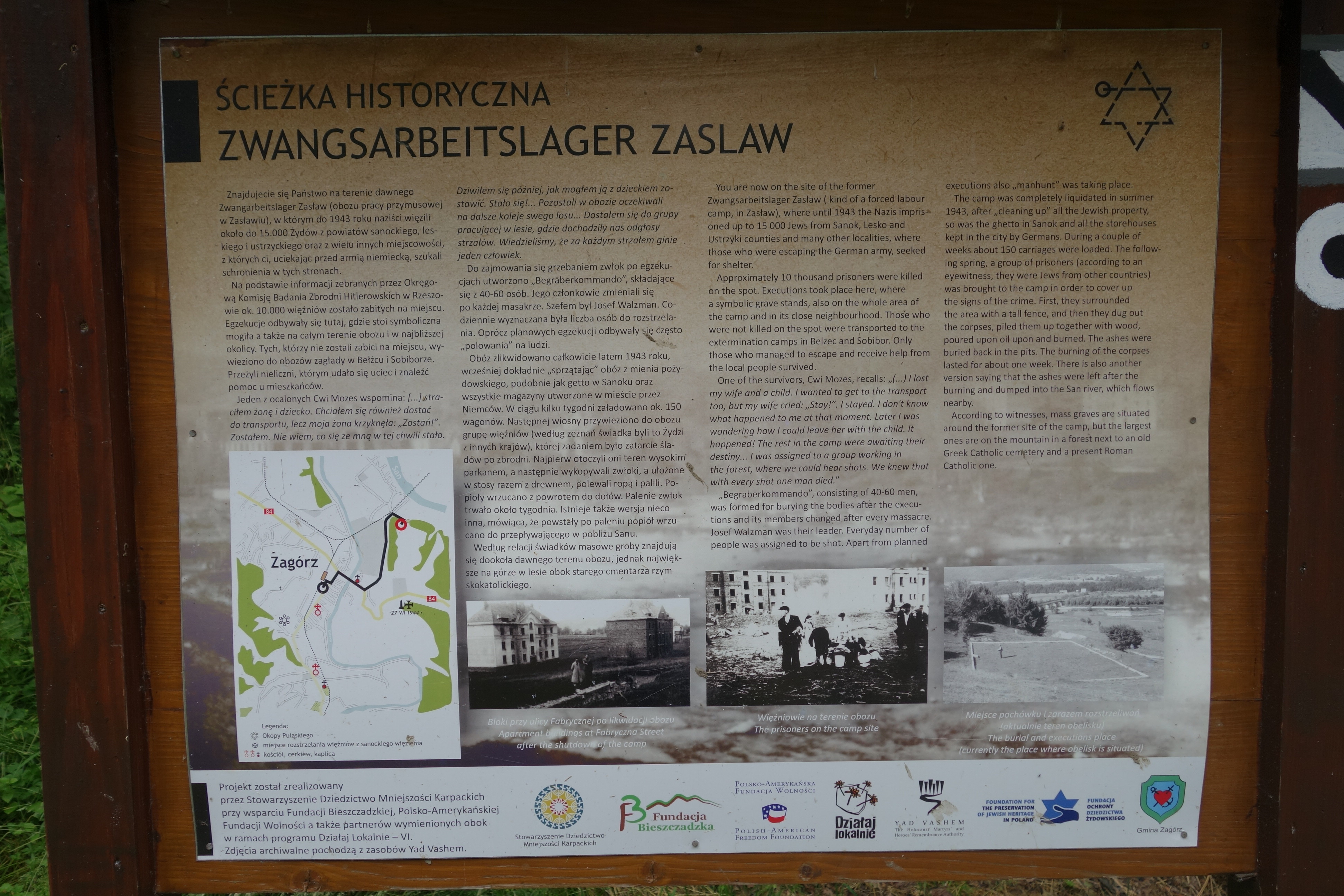
Information about the prison camp and murder of Bieszczady Jews in Zasław, near Zagórz

Information about the prison camp and murder of Bieszczady Jews in Zasław, near Zagórz

Another of the association’s projects is a heritage trail and information sign at the site of the Nazi work camp in Zasław. This is where most Jews from Lesko and neighboring communities were taken and forced to work at a neighboring factory. Approximately 10,000 prisoners were shot on the site, while perhaps 5,000 were sent to extermination camps at Belżec and Sobibor.

Monument at the site of mass murders in Zasław, near Zagórz

Monument at the site of mass murders in Zasław, near Zagórz

I stopped by Dukla on my way back to Krakow, and despite the rain Jacek and Ania, who works at the local tourist office, showed me around. Jacek had already started collecting Judaica around the time of his retirement from the border patrol. An infectiously upbeat and energetic man, he needed something to occupy himself and so decided to get to work protecting and publicizing the sites associated with Dukla’s prewar Jewish population. He told me that the town was as much as 80% Jewish. We walked by the former Jewish school, where boys learned various trades. It is across the street from the old government building; Jacek says that the associate mayor used to be selected from among the Jewish population. Similarly, most of the stone buildings around the market square (rynek) were owned by Jews. Jacek told me the fate of the last rabbi who hid under his rynek home, but then was caught and killed by the Nazis when he tried to escape to Krosno.

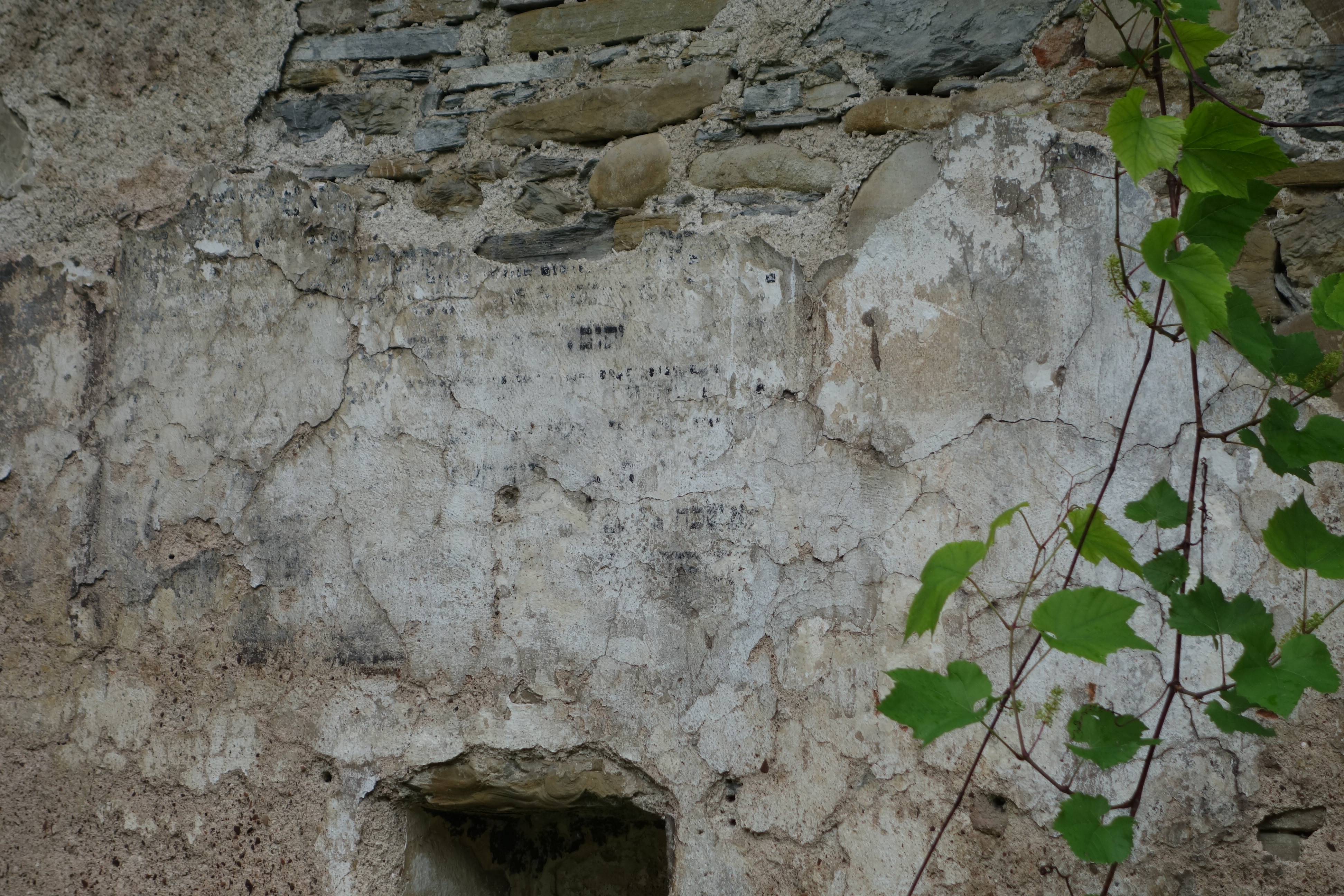
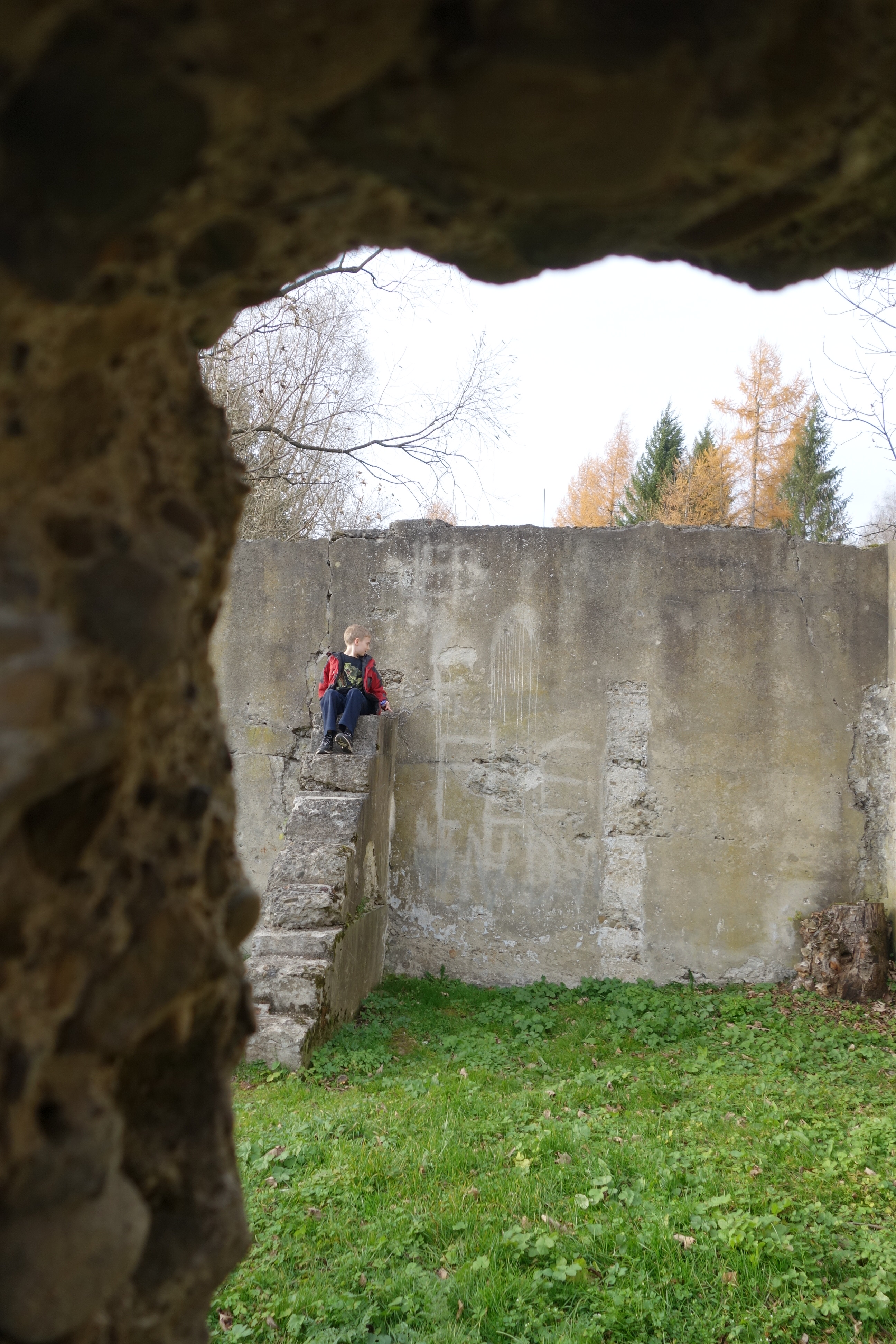
Writing still visible on the wall of the ruined synagogue in Dukla

Writing still visible on the wall of the ruined synagogue in Dukla

Ruin of the 18th century synagogue in Dukla

Ruin of the 18th century synagogue in Dukla


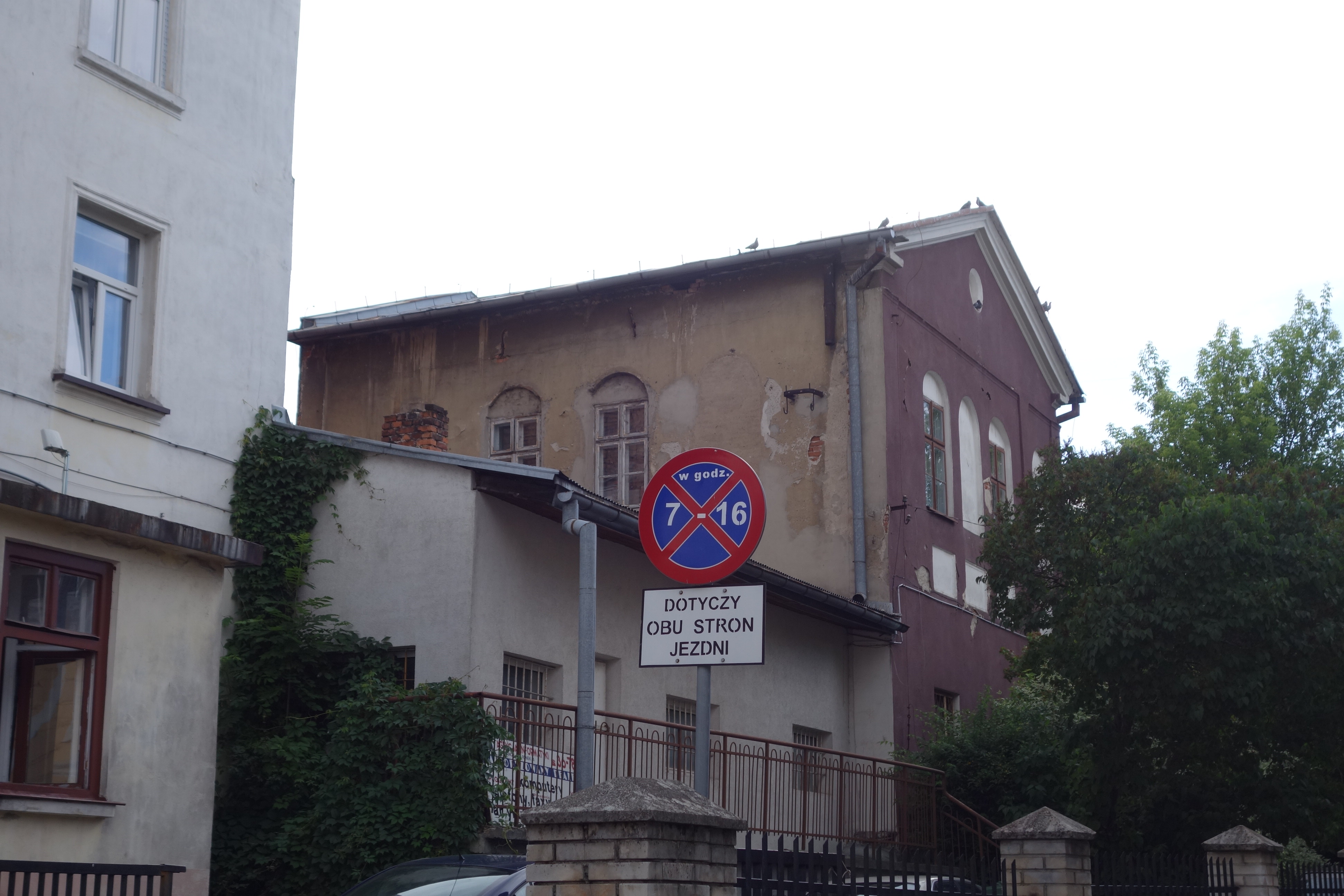
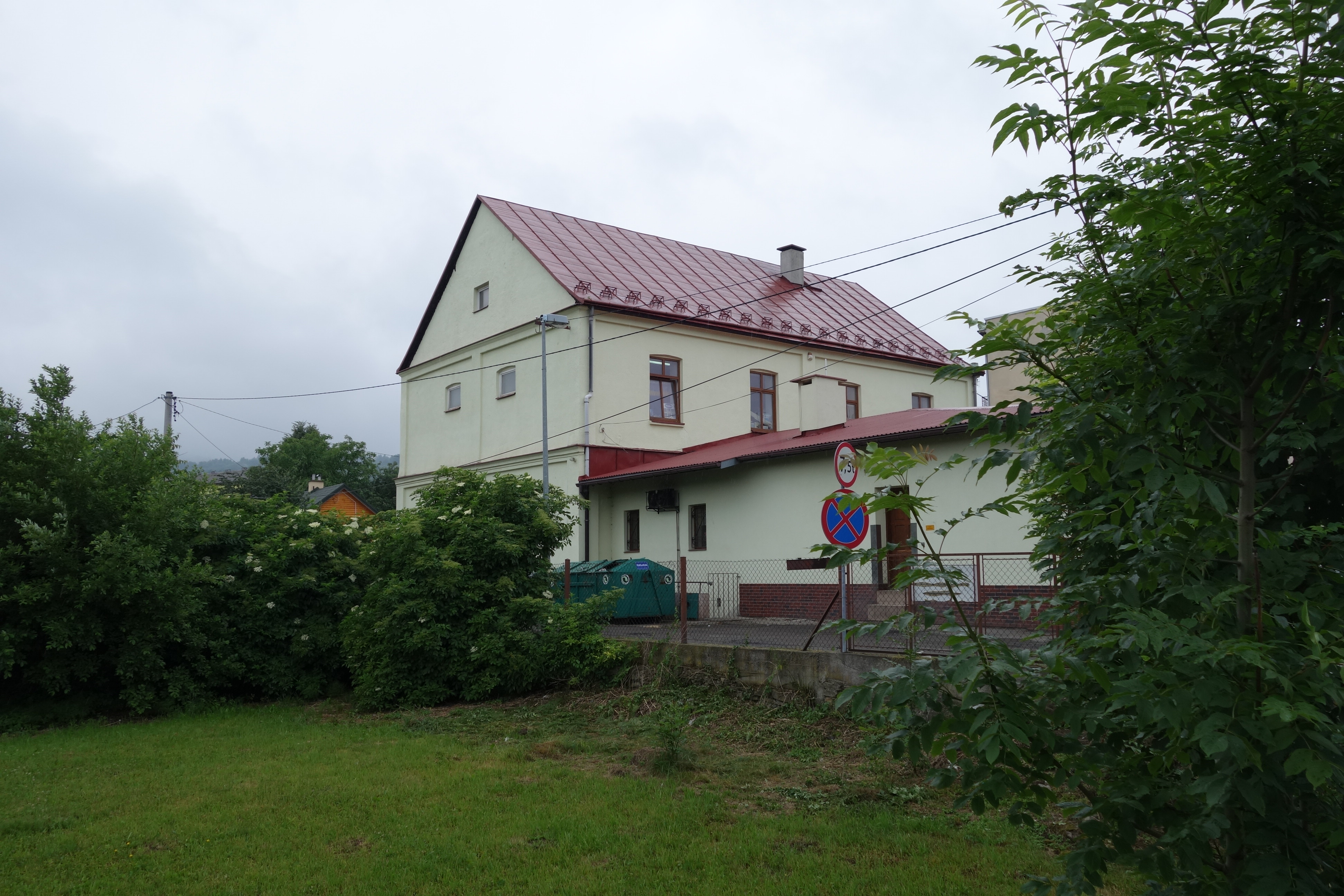
Former synagogue, now a grocery store in Dukla

Former synagogue, now a grocery store in Dukla

Two synagogues stood side by side. The one dating from the 18th century was burned by the Nazis with Jewish residents inside. The neighboring mykwa was also destroyed. Jacek would like to see the remains of this synagogue conserved. All it would take is reinforcing the window arches and putting in a platform on the inside for viewers to walk on; right now a chain link fence surrounds the site. The other synagogue, dating from the late 19th century, is now a grocery store. Dukla also has two Jewish cemeteries, the older one with burials up to World War I, and the newer one beside it used during the interwar period. Jacek mows them himself.

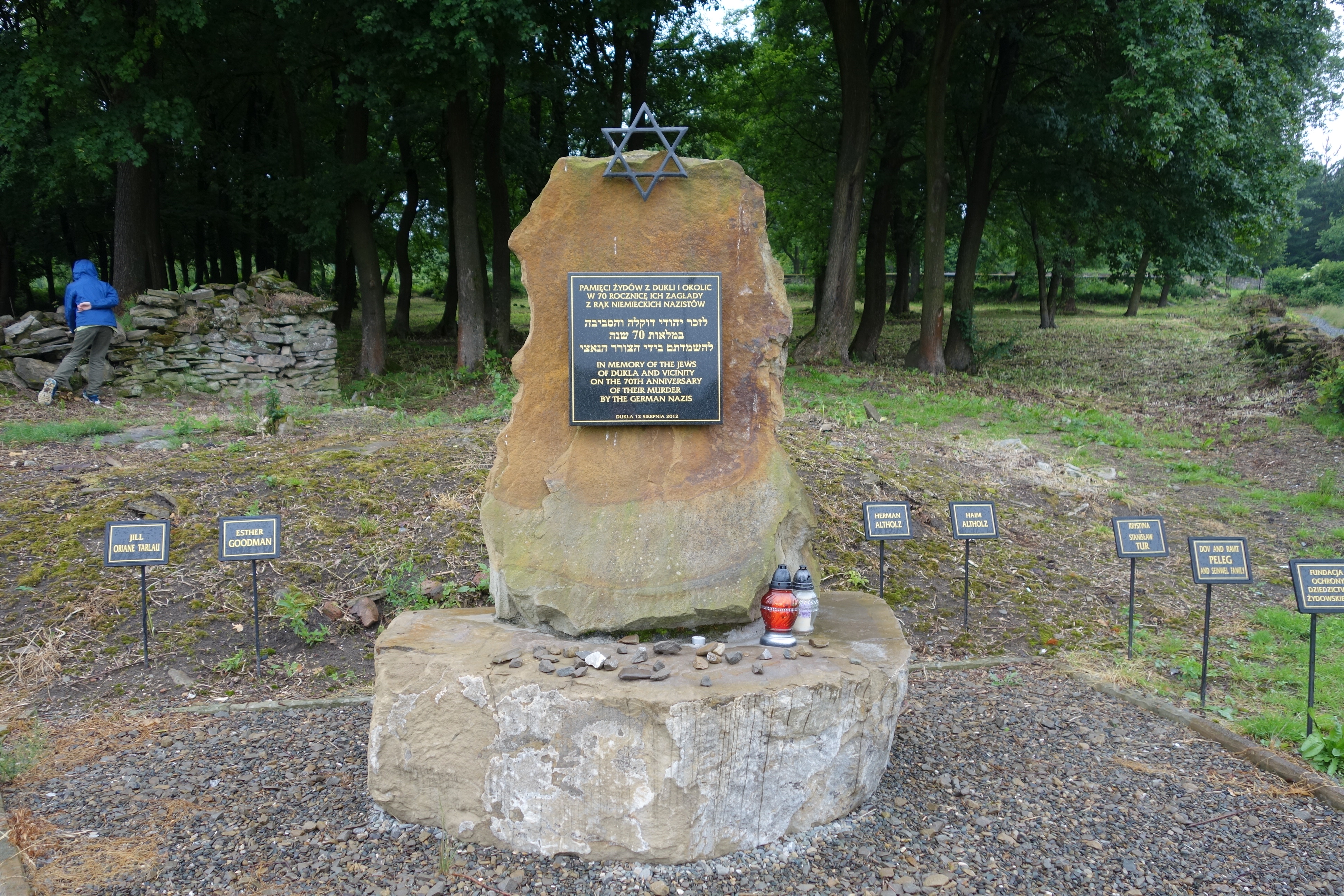
Jacek also coordinated the construction of a monument near the entrance of the old cemetery recognizing the 70th anniversary of the murder of Dukla’s Jewish population. Funders include the Foundation for the Preservation of Jewish Heritage (FODŻ) and descendants of former Jewish residents. While there have been many contributors to these various projects, Jacek is clearly the energy behind them, insuring that they are realized, and doing much of the physical labor himself.

Jacek reading a tombstone in the new Jewish cemetery, Dukla

Jacek reading a tombstone in the new Jewish cemetery, Dukla

Remembering the murder of Dukla's Jews

Remembering the murder of Dukla’s Jews

In each of these cases, someone (or several people) from the local community has taken the initiative to insure that Jewish culture and history is brought back into the public landscape. They are not Jewish themselves, but something compels them to remember, and to teach others about the former residents of their towns.

Commemorative monument in Piła

01 Monday Jun 2015

Posted by Marysia Galbraith in Cemeteries, Heritage work, Piła

≈ 2 Comments

The unveiling of the monument at the 17th century Jewish cemetery in Piła will be tomorrow (June 2) at 10 AM. The monument is on the grounds of the Police Academy, who funded the project together with the Piła City Council.

Cemetery monument in Piła, designed by Janusz Marciniak

Cemetery monument in Piła, designed by Janusz Marciniak

Poznan artist Janusz Marciniak designed the monument. He explains (and this comes from Samuel Gruber’s blog which includes a good description of the project):

“I tried to make the monument simple and minimalist in form, and at the same time full of content. The granite’s color is reminiscent of human ashes. The disc was mounted on a steel frame to create the impression that the star floats above the ground. The monument is an open book, which invites you to read. The top of the star was slightly raised  – according to tradition – facing east (towards Jerusalem). On its smooth surface, like a mirror, is reflected the sky and trees. Under the star is a concrete replica of its shadow. This is the basis of the monument and at the same time symbolic seal the memory of the people buried in this place and to emphasize the permanence of this memory.” 

The inscription reads in Polish, Hebrew, and English:

You are standing in a 17th century Jewish cemetery destroyed by the German Nazis during World War II

The dust returns to the earth from which it came and the spirit returns to God who gave it, Eccl. 12:7

As we remember, thus we shall be remembered

The monument was funded by the Piła commune and the Police School in Piła.

More in Polish about the monument is posted on the Police Academy website.

Wyspa pamięci

28 Thursday May 2015

Posted by Marysia Galbraith in Cemeteries, Heritage work, Memory, Piła

≈ 1 Comment

Here is an essay I prepared for the unveiling of a monument commemorating the 17th century jewish cemetery in Piła. It is part of a lecture I will give at the ceremony. Special thanks to Janusz Marciniak for his expert editing.

Monument to Piła Jews who died in World War I. Archival photo. http://www.kirkuty.xip.pl/pila.htm

Monument to Piła Jews who died in World War I. Archival photo. http://www.kirkuty.xip.pl/pila.htm

Co mówią przedmioty, a częściej już tylko fragmenty przedmiotów – okaleczone pamiątki z przeszłości? Jaką wartość mają resztki dawnego świata, materialne okruchy historii, która wydaje się nam coraz bardziej odległa i o której nie myślimy zbyt często z powodu naszych współczesnych trosk? Fragment zniszczonego w czasie wojny cmentarza żydowskiego przypomina nam o czasach pomyślności i harmonijnej koegzystencji mieszkańców Piły i jednocześnie o wydarzeniach, które jeszcze dziś budzą w nas trwogę i sprzeciw. Niepamięć można zrozumieć, bo pamięć bywa bolesna. Łatwiej patrzeć w przyszłość niż w przeszłość. Jednak rzeczywistość nie jest taka prosta. Coś nas łączy z przeszłością, szczególnie z tą tragiczną. Pamięć o niej działa w naszej podświadomości i ma na nas wpływ niezależnie od naszej woli.

One of the few traces remaining today--a fragment of the wall surrounding the Jewish Cemetery wall, Piła

One of the few traces remaining today–a fragment of the wall surrounding the Jewish Cemetery wall, Piła

Pomnik, taki jak ten na ocalonym fragmencie cmentarza żydowskiego w Pile, jest nie tylko wyrazem szacunku dla ludzi pochowanych w tym miejscu, lecz także narzędziem skupiania uwagi na tym, co było kiedyś i co już nie wróci, ale co teraz może służyć jako memento, ostrzeżenie, upomnienie i przestroga. Pomnik może nam pomagać w zachowaniu więzi z przeszłością i także z przyszłością. Nie można myśleć o przyszłości bez myślenia o przeszłości. Pomnik zachęca do poznania historii miasta i jego mieszkańców. Skłania do reflekcji nad fragmentem cmentarnego muru i kilkoma ocalonymi macewami. Prowadzi dialog z tym wszystkim, co pozostało z cmentarza. Także dialog z naturą, a zwłaszcza z najstarszymi drzewami, które są świadkami historii tego miejsca. Pomnik łączy ocalone fragmenty w większą całość i tworzy z nimi wyspę pamięci w centrum miasta. Ta wyspa pamięci uzmysławia nam stan naszej ludzkiej wrażliwości i czyni Piłę piękniejszym miastem, a jej dzisiejszych mieszkańców lepszymi ludźmi. Stojąc na zachowanym fragmencie cmentarza, wspominamy wszystkich mieszkańców dawnej Piły, którzy – tak jak my – mieli swoje troski i marzenia. Pamięć o nich może być źródłem dobra i nadziei.

Foundation of the monument, December 2014

Foundation of the monument, December 2014

Warto poznać i zrozumieć to, co było przed nami, żeby lepiej zrozumieć siebie. Sposób traktowania materialnych i niematerialnych fragmentów przeszłości miasta ma znaczenie dla tych, którzy obcują z nimi na co dzień, i dla tych, którzy patrzą na nie z daleka. Ważną grupą zainteresowanych przeszłością są ci, którzy szukają swojej tożsamości i korzeni.

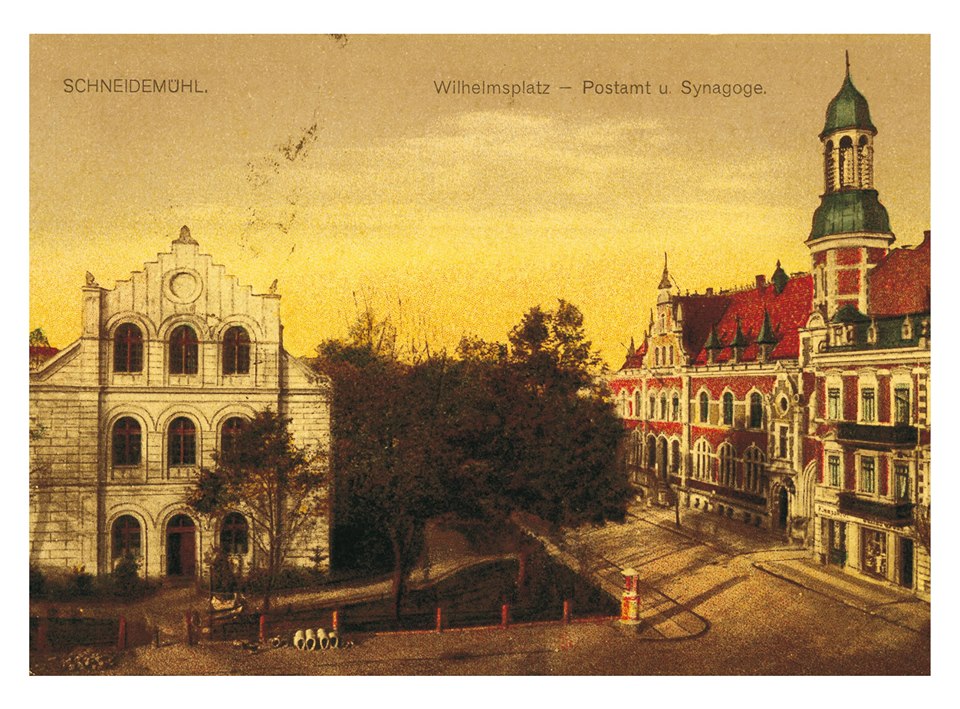
Postcard with the synagogue on the left. Piła was in the Prussian partition of Poland, and was also known as Schneidemühl.

Postcard with the synagogue on the left. Piła was in the Prussian partition of Poland, and was also known as Schneidemühl.

Book with photo of the synagogue on the cover held to show the approximate location of the  synagogue until it was destroyed in the Kristallnacht in 1938.

Book (History of the Jewish Community of Schneidemuhl– 1641 to the Holocaust by Peter Simonstein Cullman) with photo of the synagogue on the cover held to show the approximate location of the synagogue until it was destroyed in the Kristallnacht in 1938.

Kiedy słuchamy tego, co mówią do nas fragmenty przeszłości, to przeszłość ożywa. Fragmenty mówią do nas niezależnie od tego czy staramy się zapomnieć, czy pamiętać o niej. Czasami cudza niepamięć nas rani i zdarza się, że własna pamięć sprawia nam ból. Jest tak, kiedy zamykamy się przed przeszłością i nie chcemy jej zrozumieć. Dlatego lepiej pamiętać i starać się zrozumieć przeszłość oraz jej wpływ na nas. Tylko tak można leczyć traumę.

Inaczej wygląda i działa miejsce z pomnikiem niż bez pomnika. Pomnik wypełnia pustkę po stracie. Pustka może być interpretowana jako obojętność, brak szacunku, a nawet znak nienawiści. Pomnik zaś inspiruje do pracy pamięci i kontemplacji. Cmentarz wrócił na mapę miasta i do świadomości jego mieszkańców. Jest znowu miejscem skupienia i przeżywania straty, a równocześnie szacunku dla fenomenu życia. Nie jesteśmy sami. Odczuwamy znaczenie pamięci podobnie. Pamięć nas zbliża. Dzięki niej stanowimy wspólnotę, chociaż jesteśmy różni. Pamięć sprawia, że różnice nas nie dzielą, lecz łączą. Pamięć staje się podstawą nowych więzi społecznych.

I will post a photo of the completed monument after the unveiling on Tuesday, June 2.

Lapidarium in Wronki

14 Tuesday Apr 2015

Posted by Marysia Galbraith in Cemeteries, Heritage work, Polish-Jewish Heritage, Wronki

≈ 2 Comments

Tags

Lapidarium

I didn’t know what a lapidarium is until I went to the opening ceremony for one in Wronki, a town about an hour north of Poznan. The opening was on December 14, 2014. Here are some photos:

Lapidarium in Wronki

Lapidarium in Wronki

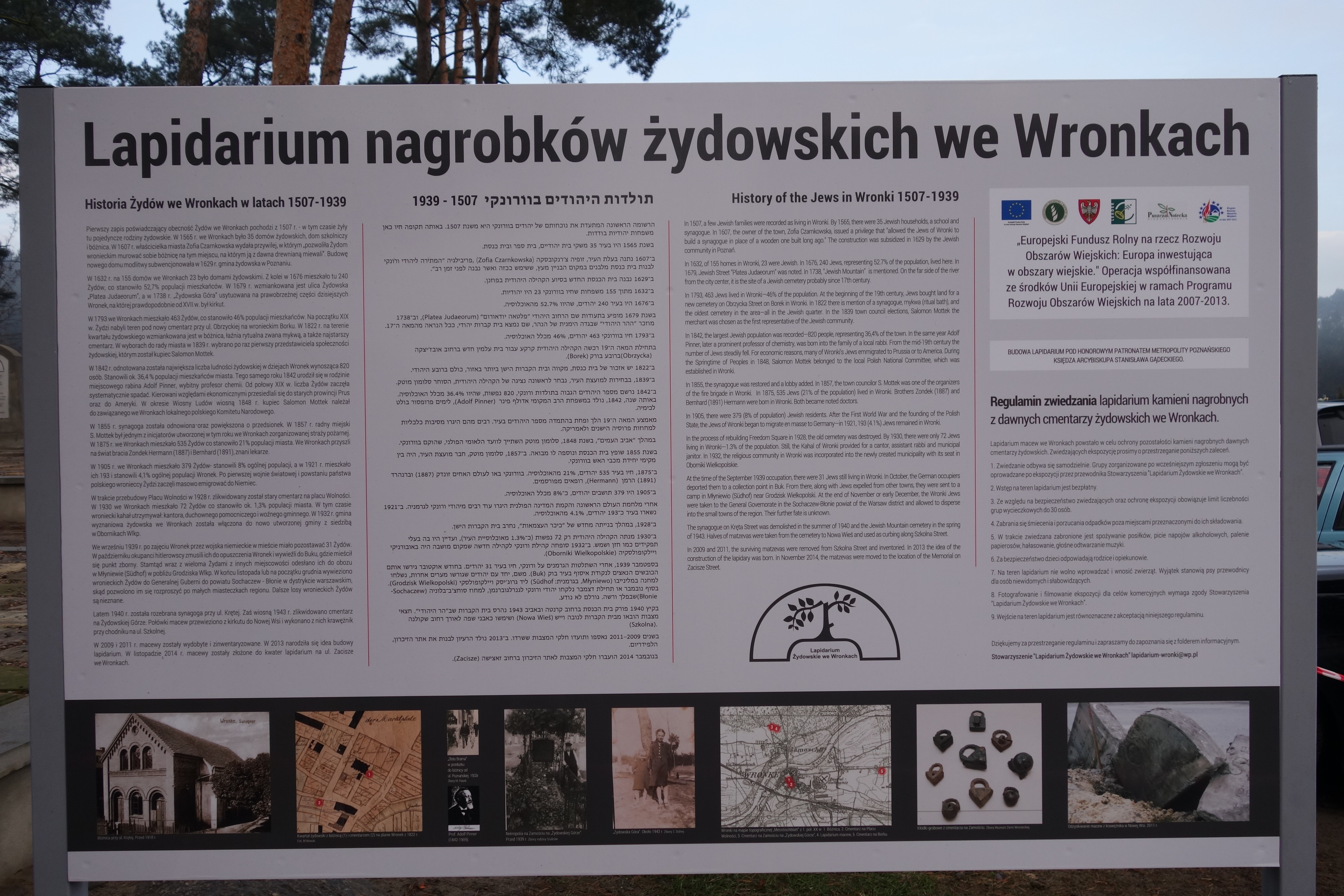
Sign outlining the history of Jews in Wronki

Sign outlining the history of Jews in Wronki

Piotr Pojasek speaking at the opening of the Lapidarium in Wronki

Piotr Pojasek speaking at the opening of the Lapidarium in Wronki

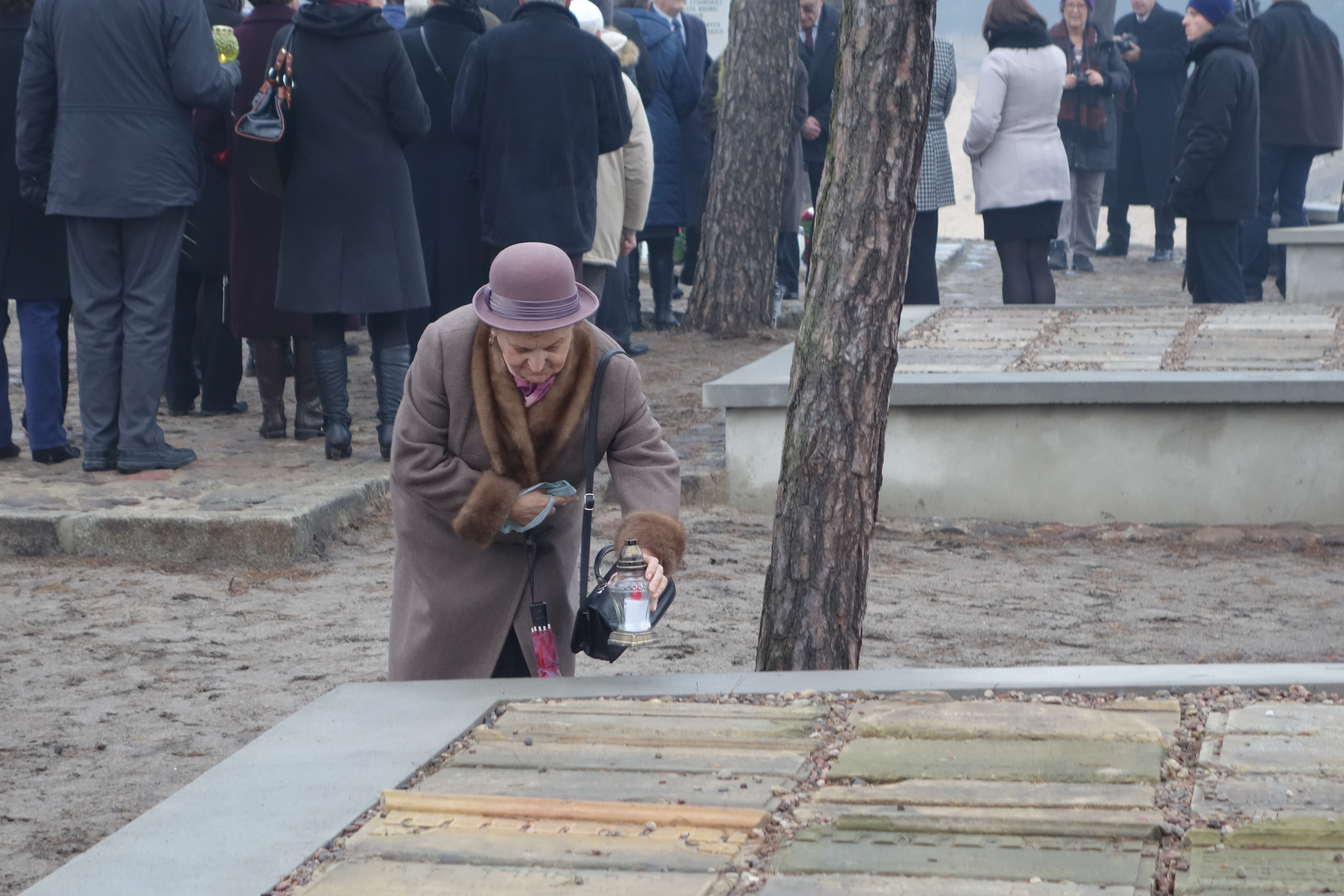
Placing a lantern at the opening of the Lapidarium in Wronki

Placing a lantern at the opening of the Lapidarium in Wronki

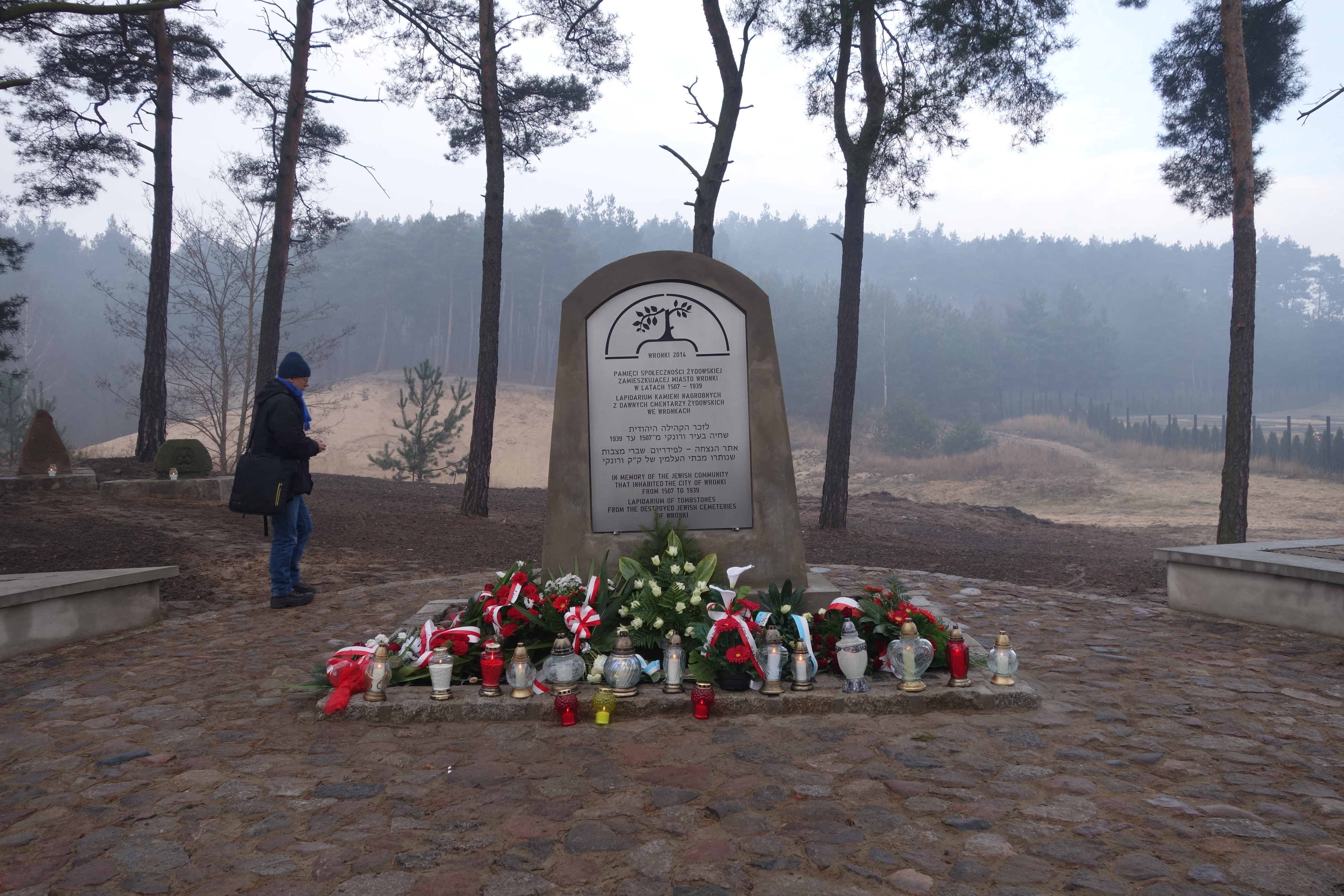
Flowers and candle lanterns placed at the monument at the heart of the Lapidarium in Wronki

Flowers and candle lanterns placed at the monument at the heart of the Lapidarium in Wronki

A stone with a tree with a broken branch, which became the logo for the lapidarium in Wronki

A stone with a tree with a broken branch, which became the logo for the lapidarium in Wronki

A lapidarium is essentially a place where stones are displayed. In this case, the fragments of the tombstones from the Jewish cemetery were recovered and placed in raised beds. The space around them is filled with small stones about the size of those that customarily would be placed on Jewish graves. Written in Polish, Hebrew, and English on a monument in the shape of a large tombstone are the words:

In memory of the Jewish community that inhabited Wronki from 1507-1939. Lapidarium of tombstones from the destroyed Jewish cemeteries of Wronki

This project represents for me the best of what can be done with the fragments of Jewish culture in Poland. It required the engagement of many different organizations and individuals, most of whom are not Jewish but who felt a moral obligation to recover these stones which were removed from the cemetery during World War II and later used to make a curb on a street in a neighboring village. For some, the lapidarium was a project of reclaiming the town’s heritage. For others it was much more bound up with faith and spirituality.

I’ve been back to Wronki a few times and talked with a number of people involved in the project. I’ll fill out this story in future posts.

Gallery

More photos of the Lutowiska Cemetery

04 Saturday Apr 2015

Posted by Marysia Galbraith in Cemeteries, Jewish Culture, Lutowiska

≈ 5 Comments

This gallery contains 1 photo.

Lutowiska’s Ecomuseum of Three Cultures

03 Friday Apr 2015

Posted by Marysia Galbraith in Cemeteries, Heritage work, Jewish Culture, Lutowiska, Memory, Polish-Jewish relations, Synagogues

≈ 4 Comments

Nestled at the Ukrainian border in the Bieszczady Mountains of southeast Poland, Lutowiska integrates the remnants of the village’s multiethnic past in a walking trail called the Ecomuseum of Three Cultures (here’s a brochure and map ekomuzeum_trzy_kultury-2).

When I moved to Bieszczady in 1992 to do my dissertation fieldwork, some residents of the region had only just started to exercise new postcommunist freedoms by talking openly about their Ukrainian heritage. For the first time, they felt free to speak Ukrainian in public. But neither then nor now, has anyone ever spoken to me in a similar way about their Jewish heritage. Either no one is left, or no one wants to admit it. In Bieszczady, silence persists with regard to the topic of Jews. This is all the more startling when you realize that the prewar towns—Lesko, Lutowiska, Ustrzyki Dolne, Baligród—were all sztetls. Jews outnumbered Christians. According to a guidebook from 1914 (M. Orłowicz Ilustrowany Przewodnik po Galicyi, republished in 1998), Lutowiska had 1700 Jews, 180 Poles, and 720 Rusyns (the name used for the Ukrainian speaking population).

A former Jewish home across the street from the school in Lutowiska

A former Jewish home across the street from the school in Lutowiska. Characteristic for the time, it was made of wood with a stone foundation.

Today, Lutowiska is a large village on the road that runs south from Ustrzyki Dolne into the high mountains of Bieszczady National Park. Immediately after World War II, it fell on the Soviet side of the border, but it was annexed to Poland in 1951 as part of a land swap. Residents were forced to move, as well; those from the chunk of Poland that was ceded to the Soviet Union were moved to the region between Ustrzyki Dolne and Lutowiska that had been depopulated during and after the war. I did my original fieldwork with some of the children of these resettled farmers who never got used to the rocky, hilly soil and colder weather of the higher elevations and longed for the rich, flat farmlands they were forced to leave behind.

So one possible explanation for the silence about the Jewish residents who were brutally murdered during the war is that very few prewar residents, those who would have had personal memories of Jews, remained in Bieszczady. Of course, this isn’t a sufficient explanation. It seems that many forces converged to produce this absence of memory. The state socialist government evoked Marxist internationalism to deemphasize ethnic differences while at the same time trying to solidify Poland’s claim over the land by Polonizing the resident population. Church rhetoric, too, frequently demonized Jews. Certain stereotypes persist in everyday discourse—Poland was weakened by Jewish domination of commerce, and Jews running the contemporary press constantly criticize the Church and the government. Some repeated a phrase they said Jews used to tell Poles, “the streets are yours but the buildings are ours.” But mostly in my experience, not even disparaging stereotypes broke the silence surrounding the topic of Jews; they simply were not talked about.
This backdrop of silence makes it all the more remarkable that, when a group of young Lutowiska residents got together in the early 2000s to explore ways of promoting their village, they decided to view the region’s multiethnic history as an asset rather than a liability. They were not specifically interested in Jewish heritage. Rather, they had a more pragmatic goal: to create attractions that would encourage tourists passing through on their way to the high mountains to stop for a while in Lutowiska. To achieve this, they developed a project called the Ecomuseum of Three Cultures, a 13 kilometer walking trail with information tablets at various sites associated with the village’s cultural and natural history. The three cultures were distinguished most clearly by faith—Roman Catholic (generally understood to be Polish), Uniate (generally understood to be Ukrainian), or Jewish. The trail includes views of the high peaks of the Bieszczady Mountains and the site where the classic Pan Wołodyjowski (1968) was filmed. It winds past the 19th century Catholic church, the former site of the Uniate church, and the ruins of the Jewish synagogue.

One of the main designers of the museum, Agnieszka Magda-Pyzocha, teaches at the local school. She explained to me that nearly everyone forgot that the synagogue ruins still stood right at the heart of the village. For years, the old walls were used by the Polish Army’s Border Patrol as a trash dump. Agnieszka explained:

I remember when I was a child I walked there and saw that some stones stood, trees growing out of them, and nearly nobody knew. By looking in various sources, talking with people, and looking at photographs, we discovered that this was the synagogue that used to be here. Several truckloads of trash were carted away, the whole place was cleaned, and in this way it became an attraction that most residents had known nothing about for all these years.

Synagogue ruins and information sign, Lutowiska

Synagogue ruins and information sign, Lutowiska

An information board next to the synagogue ruins outlines the history of Jews in Lutowiska. It points out that, contrary to popular belief, most Jews were poor. Most were petty traders and craftspeople, though a few were farmers. The wealthiest Jews in Lutowiska were the Rand family. Mendel Rand started out as a traveling trader of sewing supplies. He worked hard enough to buy a country inn (karczma), and eventually bought the home of the local nobleman. On June 22, 1942, Nazi soldiers instructed Ukrainian peasants to dig trenches near the Catholic Church. That evening Ukrainian police gathered 650 Jews remaining in Lutowiska and neighboring villages Two Nazi officers shot them all, and had them buried in the trenches. A teenage boy escaped and hid in the Jewish cemetery, but he was discovered and brought back. Only seventeen-year old Blima Meyer survived; she was pulled out of the mass grave still alive (A. Potocki, Żydzi na Podkarpaciu 2004).

Lutowiska synagogue ruins

Lutowiska synagogue ruins

Information sign next to the synagogue, Lutowiska

Information sign next to the synagogue, Lutowiska

A boy connecting with his Jewish roots.

A boy connecting with his Jewish roots.

The Jewish cemetery is on a hill that is visible from the synagogue, but to reach it you have to go down to the school, back around the playing fields, and up a dirt road. It holds as many as 1000 headstones, some dating back to the 18th century. The cemetery was easier to get around in November than it was in August because the grass and weeds had died back. It is on a hill, with a steep slope to one side that is also covered with tombstones. Many stones are decorated with lions or deer (on males’ graves only), birds or candles (females only), crowns or torahs (for men with knowledge of the torah). In places, trees have grown into and around the grave markers. As Agnieszka noted, there is no graffiti or trash in the cemetery. She also told me a group of students from Dartmouth were there for about 3 days this summer. They built steps up to a gate they installed, cleaned some of the stones (they had an expert help them do this), and cut the grass. On the Internet, I saw Dartmouth Rabbi Edward Boraz organizes service trips to a different Jewish cemetery each summer. It’s called Project Preservation.

Tombstones in the Lutowiska Jewish Cemetery

Tombstones in the Lutowiska Jewish Cemetery

Agnieszka likes to visit the cemetery: “It’s peaceful there, and sometimes it’s so pretty when the sun is setting and the light is falling a certain way. I lie down in the grass between those tombstones, birds sing, I feel peaceful and some sort of connection.”

At first I couldn’t find the plaque marking the site where 650 Jews were murdered by Nazis. Between the Catholic church and cemetery, there was a monument to those killed at Katyn and another for victims of Ukrainian aggression. I asked someone walking by and she explained the place I was looking for was up the road on the other side of the church. Notably, she knew, and was very pleasant about sharing the information with me.

Monument at the mass grave, Lutowiska

Monument at the mass grave, Lutowiska

And there it was, a short way off the road down a shrub-lined pathway—a simple monument with two plaques. I almost cried when I saw it. The inscriptions read:

Mass grave for Jewish and Gypsy victims of terror murdered in 1943 [sic] by Nazis

In memory of 650 victims of fascism shot here by the Gestapo in 1943 [sic]—The people of Lutowiska 1969

It is disturbing to stand on a place where hundreds of people were brutally murdered.

DSC02016

I was deeply moved to see perhaps a dozen candle lanterns and a bouquet of red roses left at the site, probably earlier that week on the occasion of All Saint’s Day. Granted, it’s barely marked from the street. There is just a small sign on a tree saying “National Memorial, Places of Martyrdom.” But it is well maintained. It has not been forgotten as have so many other places I’ve visited associated with Jewish life.

Marker for "National Memorial, Places of Martyrdom"

Marker for “National Memorial, Places of Martyrdom”

Thanks to the Ecomuseum of Three Cultures, Lutowiska feels like a place that has embraced its history, even the tragic events. They have literally cleaned the trash out of the synagogue ruins and marked the site with a sign that hints at the life Jews had there, and how it ended.

Purim po Polsku

03 Friday Apr 2015

Posted by Marysia Galbraith in Jewish Culture, Poznan

≈ 1 Comment

Tags

Gmina Żydowska Poznan, Purim

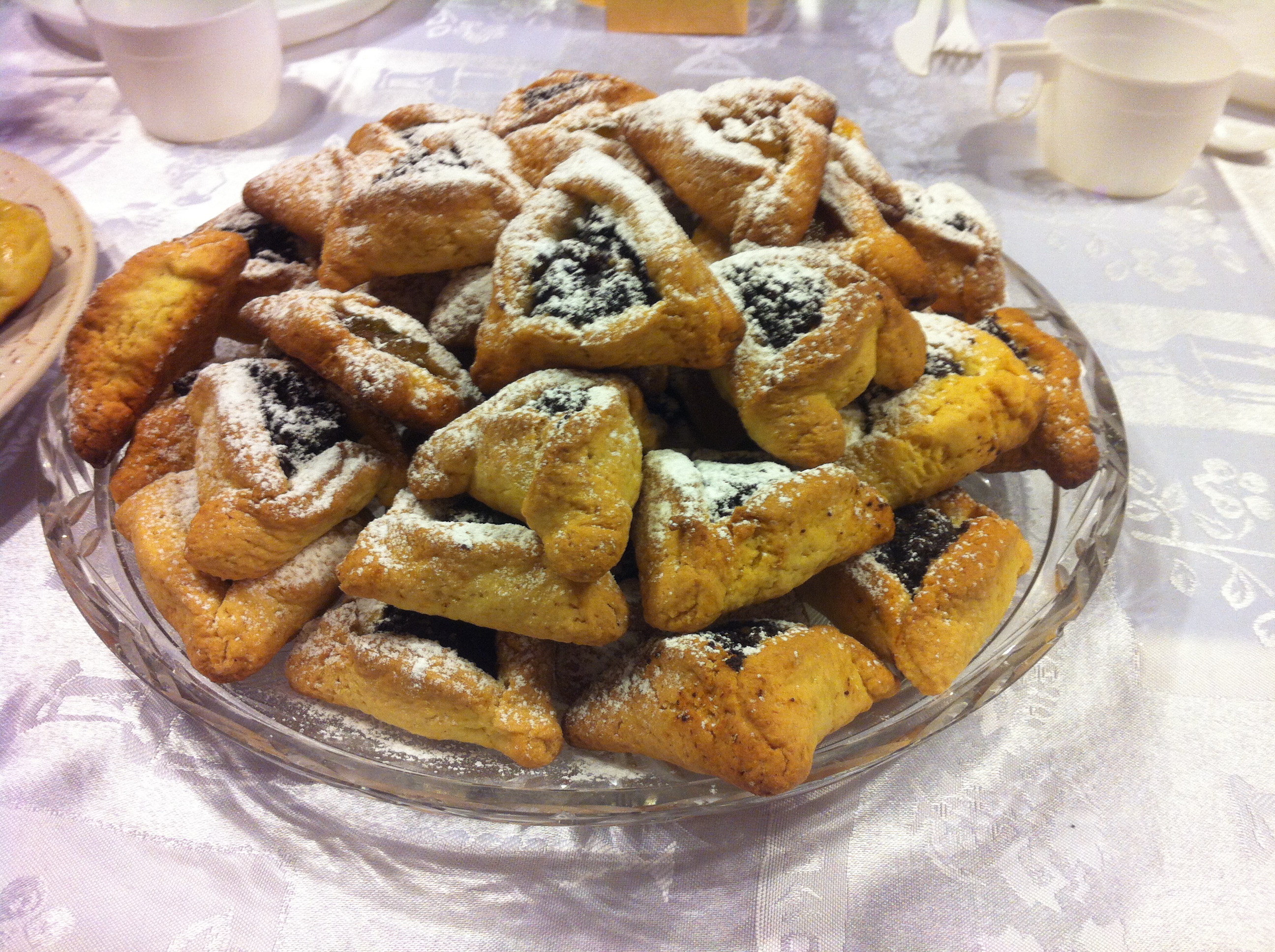
As I look forward to the Passover celebration at the Gmina Żydowska (Jewish Community) in Poznań, I’m remembering Purim which occurred last month. Purim is a fun holiday; people dress up, give gifts, and tell the story of Esther who outsmarts the evil Haman and saves the Jews. The celebration also involves feasting and drinking.

Hamentashen

Hamentashen

The evening started with a brief introduction to the holiday, conducted in the form of questions and answers. Purim is celebrated on 14 Adat (on the Hebrew calendar) in most places, on 15 Adat in walled cities. I learned that Purim is particularly associated with Jerusalem, which is why holiday preparations were already in full swing when I was there in February. The candy stores, basket sellers, and costume shops in the Mahane Jehuda Market were busy with customers.

Four things should be done on Purim; the story of Esther is told, donations are given to the poor, presents are given to family and friends, and you are supposed to have fun. Everyone was given a gift box that included a booklet in Hebrew, a noisemaker, toys, and snacks. Copies of the story of Esther were passed out, and participants took turns reading it out loud. Any time the name “Haman” was mentioned everyone stamped their feet and sounded their noisemakers. Haman was advisor to the Persian King Ahasuerus who conspired to kill the Jews, but he was outsmarted by Mordecai and Esther, Queen of the Persians. Celebration and feasting are supposed to commemorate these events.

Everyone received a gift box

Everyone received a gift box

Guests filled two long tables; some wore funny hats. There were visitors from Israel, Germany, and the US, and I sat beside Jose Maria Florencio, conductor for the Pomeranian Philharmonic in Bydgoszcz. A native of Brazil, he came to Poland 30 years ago to get a masters degree and never left. After discovering his crypto-Jewish heritage, he converted and is now a practicing Jew.

Głos Wielkopolski published an article with more photos.

Photo by Waldemar Wylegalski, Głos Wielkopolski 3-5-2015

Photo by Waldemar Wylegalski, Głos Wielkopolski 3-5-2015

Three Minutes in Poland

17 Saturday Jan 2015

Posted by Marysia Galbraith in Jewish Culture, Memory, Pre-World War II, Research Methodology

≈ 2 Comments

Tags

Glenn Kurtz, Three Minutes in Poland, working with fragments

Glenn Kurtz’s book Three Minutes in Poland: Discovering a Lost World in a 1938 Family Film (2014) recounts a project similar to my own, of piecing together fragments. Kurtz’s journey began with a film recorded during his grandparent’s visit to his grandfather’s native town in Poland. Seeing the places and faces on film inspired him to learn all he could about the town and its prewar inhabitants—what life was like in Nasielsk, how it was disrupted by World War II, the fate of those who perished, and what became of those who survived. It’s a fascinating story of discovery, tacking between information revealed in archival records and the stories recounted by survivors and their families. He makes use of the same archival resources I’ve been using—JewishGen, Ancestry.com, Yad Vashem, Warsaw Database, ship manifests of passengers, archival photographs. And extraordinarily, out of these fragments, he was able to find some of the people in the three-minute film, or find people who remembered them and could tell some of their story.

These stories bring the fragments, and the town, back alive. Still partial, still shadowy, but alive. I see this particularly in the words of Morry Chandler (Moszek Tuchendler), whom Kurtz found in Florida with his wife, children, and grandchildren. He appears momentarily in Kurtz’s grandfather’s film jumping out and smiling in front of the camera. For Morry, looking at himself and his town on film, and recalling the people he lived with in Nasielsk reminded him he ever had a childhood, and that he was happy:

It’s looking back and saying, Yes, there was a world. Other than what we have lived all these years, knowing what happened. It was a real world there. I mean people were going about their business. Kids were running, and doing all the things that kids do. And here I look at myself, and I see it was a happy face.

The book models two guidelines for my fieldwork: first, how to weave together fragments into a coherent story, integrating as well the gaps and inconsistencies that remain. Information is labeled along a scale of likelihood; the probable, the possible, and the still unknown outnumber what can be unambiguously confirmed. The book also provides a model for working with personal accounts. It corroborates Greenspan’s argument for ongoing contact with survivors, which provides the space for new stories to be recounted, for the revision or elaboration of past accounts, and for interviewers to ask questions that lead to new explanations and deeper insight into survivors’ experiences. (See Henry Greenspan’s “The Unsaid, the Incommunicable, the Unbearable, and the Irretrievable,” Oral History Review 2014, Vol 41, No. 2, pp. 229–243).

Kurtz writes, “Memories, like artifacts, are tightly wound bundles of information. Pull one thread, try to identify one figure, and the whole bundle unfurls.”

Memory and forgetting in Poznan, part 2

29 Monday Dec 2014

Posted by Marysia Galbraith in Heritage work, Jewish Culture, Memory, Polish-Jewish relations, Poznan, Synagogues

≈ Leave a comment

Monument to the victims of the Poznan labor camp

Monument to the victims of the Poznan labor camp

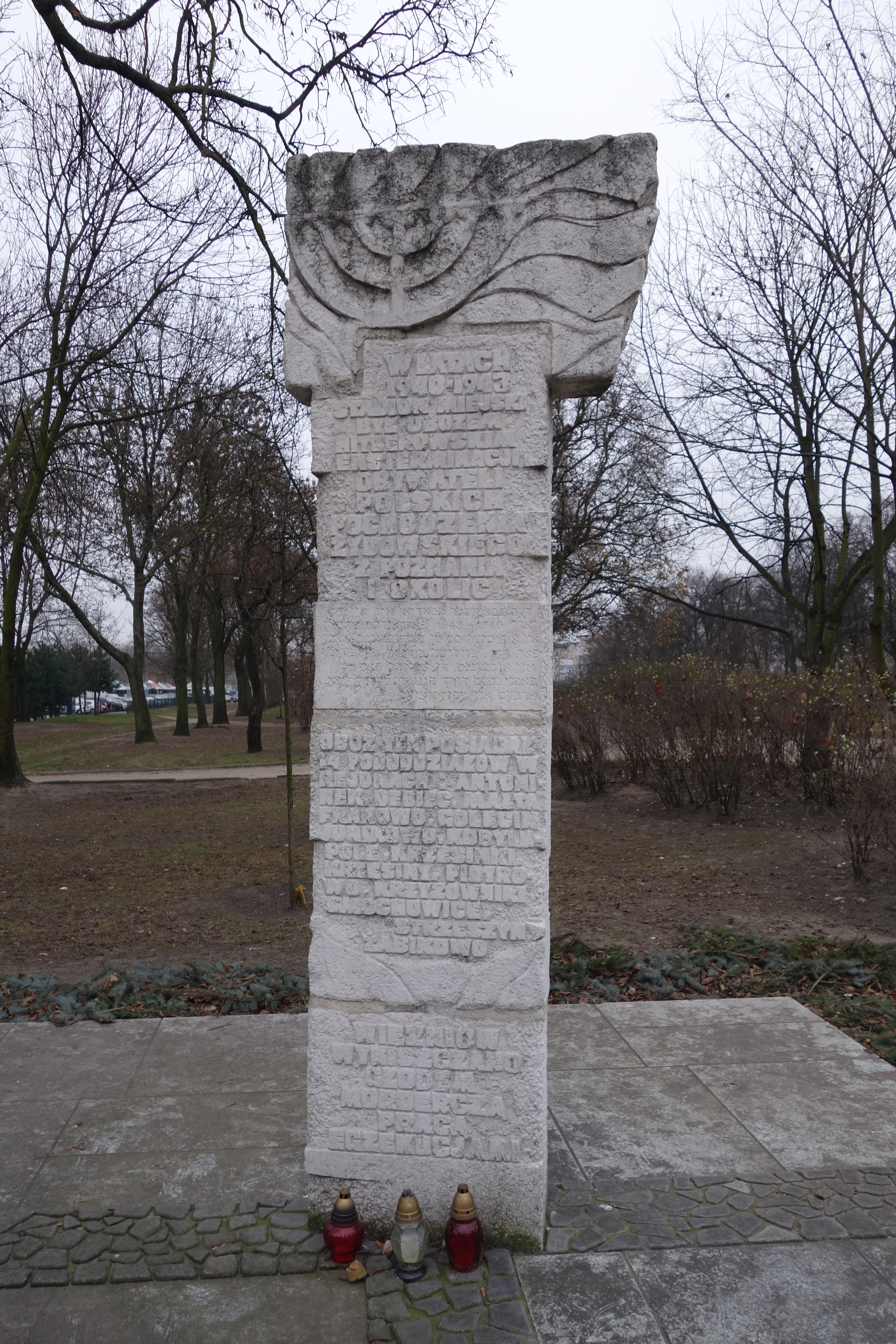
Despite the cold, Anka, Małgosia and I visited a few other sites associated with Jewish culture and history. The monument to the victims of the Poznan labor camp is on Królowa Jadwiga Street even though the actual detainment site was a block away in the old football stadium. The socialist-era monument is a tall concrete pillar with what looks like a menorah at the top. Anka pointed out the dedication on back of the monument stating it was erected on the 40th anniversary of the Warsaw Ghetto Uprising; even sites commemorating local events reproduce the idea that the Holocaust happened elsewhere—in cities such as Warsaw and Krakow.

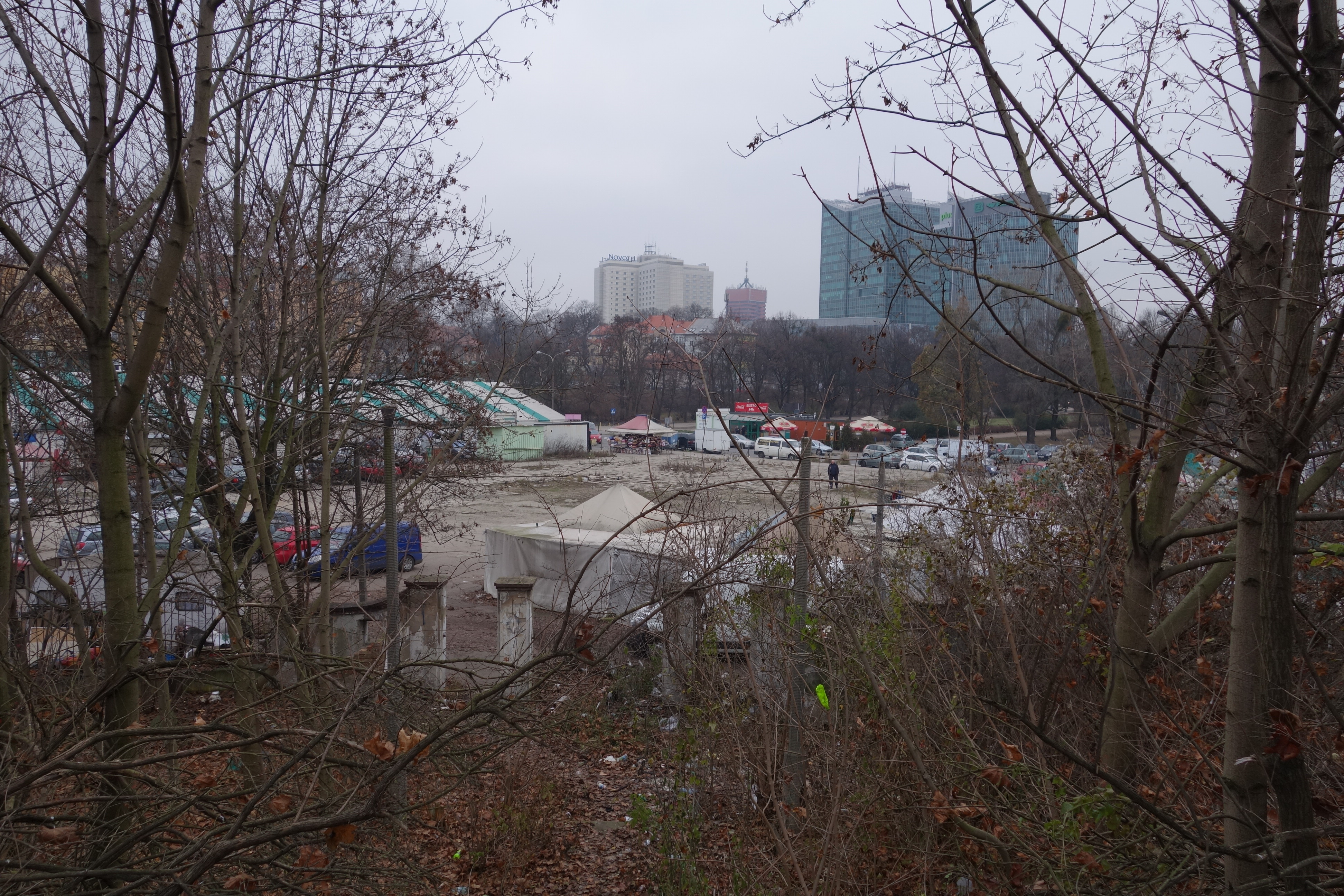
The actual stadium was abandoned in the 1990s when a new one was built for the Warta football team. Warta is Poznan’s smaller club, rival to Lech, who got a big new stadium for the European football championship Euro 2012. Małgosia conducted ethnographic research in which Warta fans turned out to be the only ones who know the function the stadium served during the war. Essentially, it was a work camp where Jews were briefly held before being shipped off to the death camps. Many detainees were shot right there on the spot. We walked through the broken down gateway, up a set of stairs to an earthen berm surrounding what used to be the playing field. Today, the site is covered with trash, and trees grow everywhere including where the bench seating used to be. Only the concrete supports of the benches are left. Goal posts stand on the field, left over from 2012 when local teams competed in a kind of lighthearted protest against the massive outlay of funds for Euro 2012.

DSC02577

Looking out from the old football stadium toward the outdoor market and new high-rises.

Looking out from the old football stadium toward the outdoor market and new high-rises.

For the most part, this is forgotten space, despite its proximity to the center of the city. It is separated from Królowa Jadwiga Street by a dilapidated outdoor market. On this frigid day, there were no customers, just very cold sellers who urged us to their buy their wares. I was told the outdoor market used to be bigger. When they were in high school, it was the place to get real Adidas and blue jeans. With all the competition from new shopping centers, the market has shrunk. There is an ongoing debate about what to do with the old stadium—what primary purpose should the space fill? Should it be a place for sports activities? A nature preserve? A place of commemoration for those who suffered and died there? Or should it become another housing development or mall?

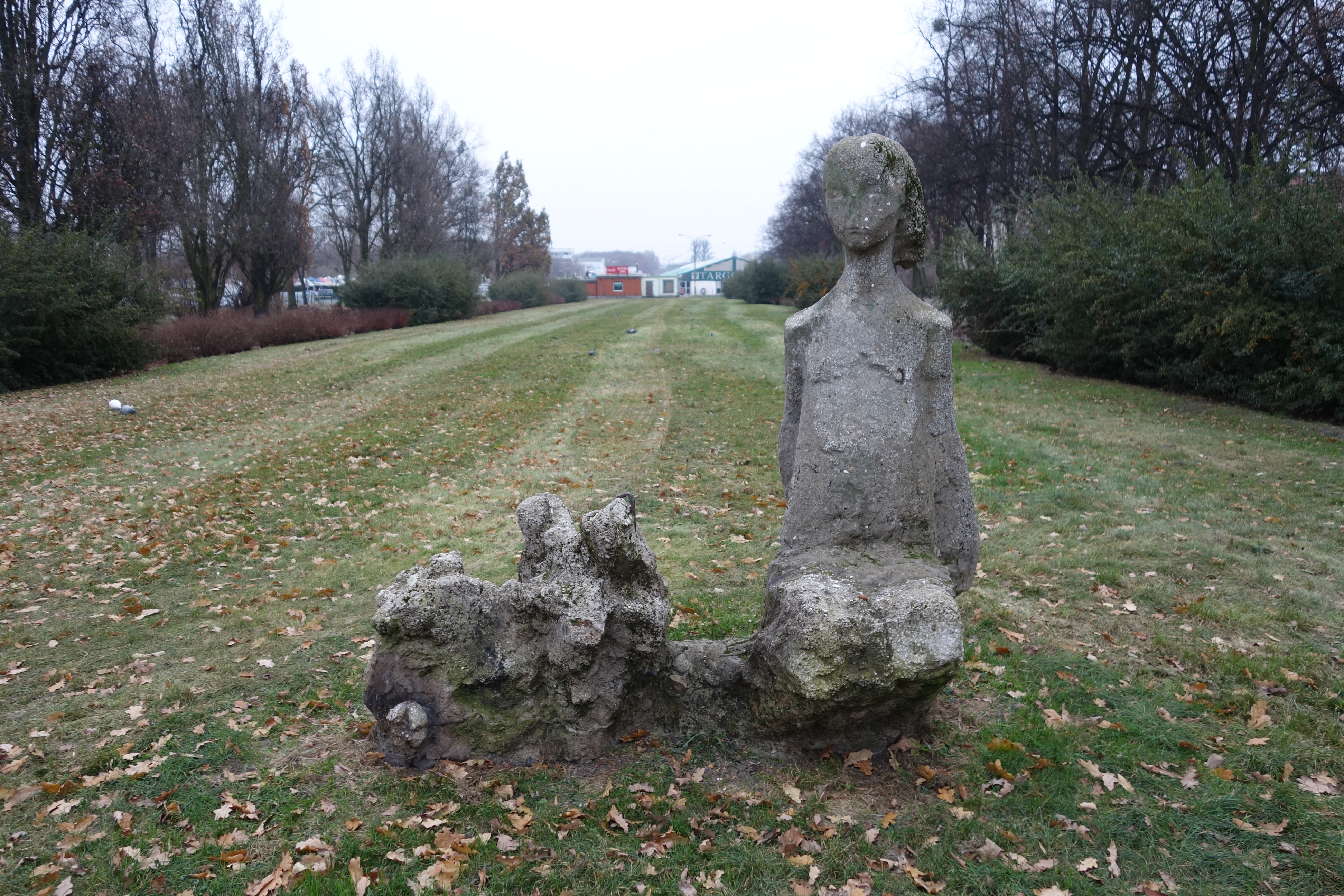
What is the origin and meaning of this sculpture? Why is it in the newly named Square of the Righteous among Nations of the World?

What is the origin and meaning of this sculpture? Why is it in the newly named Square of the Righteous among Nations of the World?

Heading back toward the center of the old city to thaw out at a café, we chanced upon an unmarked, decaying stone sculpture. I think it was Małgosia who said it suggests some sort of Holocaust memorial. Then we noticed the sign designating the area as “Square of the Righteous Among Nations of the World.” I’ve since learned that this is a new name, approved by the city just this year.

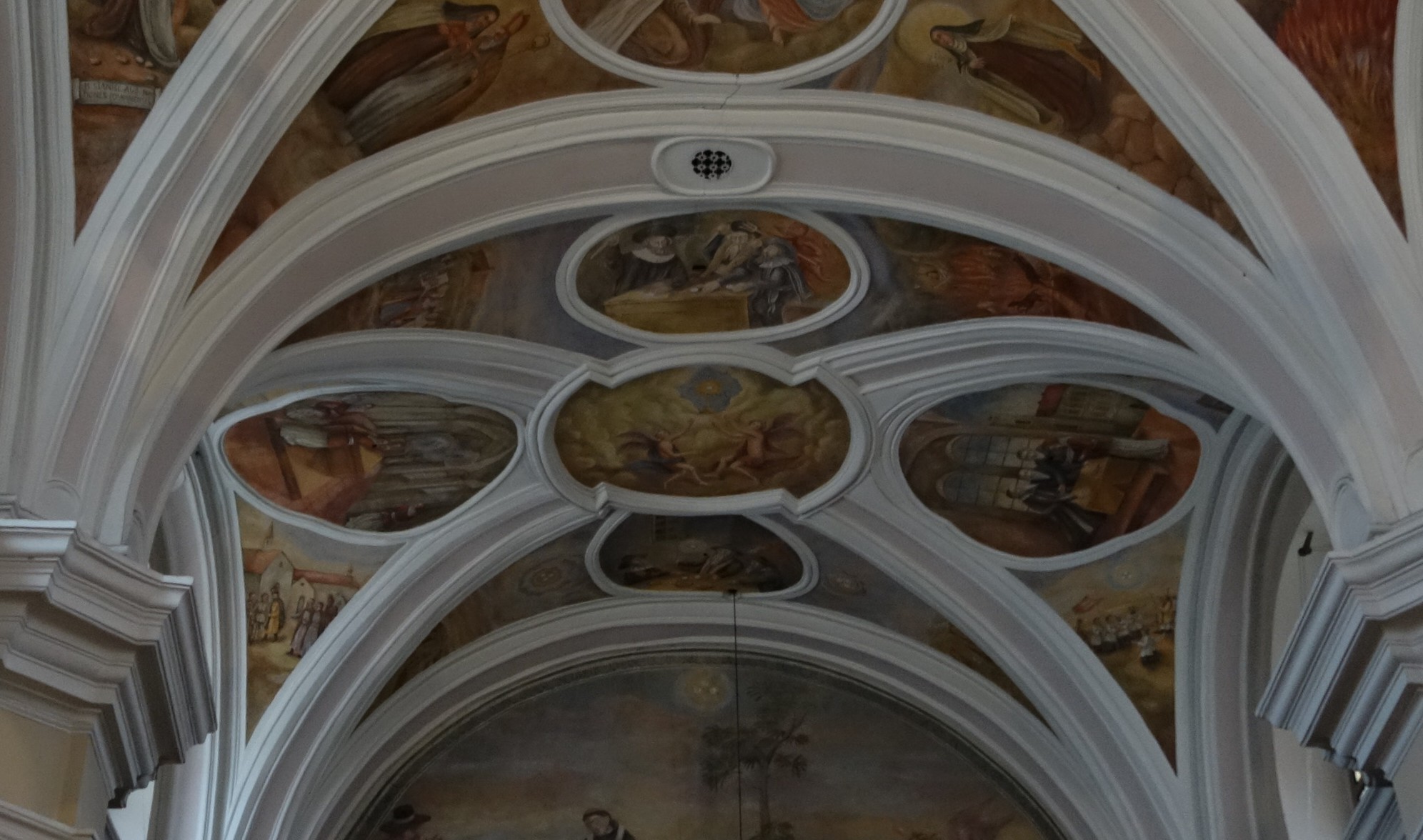
We made two more brief stops on our tour. We peaked into the Church of the Most Holy Blood of Christ (Najświętszej Krwi Pana Jezusa) on Żydowska (Jewish) Street, where I showed Anka and Małgosia the ceiling frescos depicting Jews profaning the host.

Frescos over the alter depicting the profaning of the host

Frescos over the alter depicting the profaning of the host

In Sinners on Trial, Magda Teter outlines the historical context in which this story was told:

On Fridays, as late as 1926, and perhaps even up to the eve of World War II, in a small Catholic church on what has been known as “the Jewish street,” a few meters off the main market square in the city of Poznań, the faithful did not sing the prayer Kyrie Eleison, “God Have Mercy, Christ Have Mercy.” Instead, the church followed a liturgy that diverged markedly from the approved official liturgy of the Catholic Mass. The song’s text that replaced the words of the Kyrie Eleison told of Jewish desecration of the host in Poznan:

O, Jesus, unsurpassed in your goodness,

Stabbed by Jews and soaked in blood again

Through your new wounds

And spilled springs of blood

            Have Mercy on Us, Have Mercy on Us, Have Mercy!

The hearts of stone from the Jewish street

In the house once known as the Świdwińskis’

Sank their knives in You

In the Three Hosts, the Eternal God

            Have Mercy on Us, Have Mercy on Us, Have Mercy!

The song recounted the story of three hosts stolen by a Christian woman from a Dominican church in Poznań in 1399. According to the story, she delivered the three hosts to Jews who desecrated them, “stabbing” them with knives. Unable to dispose of them, the Jews took them outside the city and buried them in swamps. The hosts miraculously emerged to reveal themselves to a shepherd boy. The Christian woman and the Jews were punished by the magistrate, and the Church of Corpus Christi was constructed on the site after the miracle (2011: 89-90).

Teter goes on to suggest that this story might have been used as a rationale for building a new church on Żydowska Street. Pani Alicja, the head of the Poznan Jewish Community, told me that she has been waging another battle to have an informational plaque installed in the entranceway of the church explaining that the story of the profaning of the host is a legend, not historical fact. To date, church representatives have only agreed to post an explanation in the basement where most people will never see it.

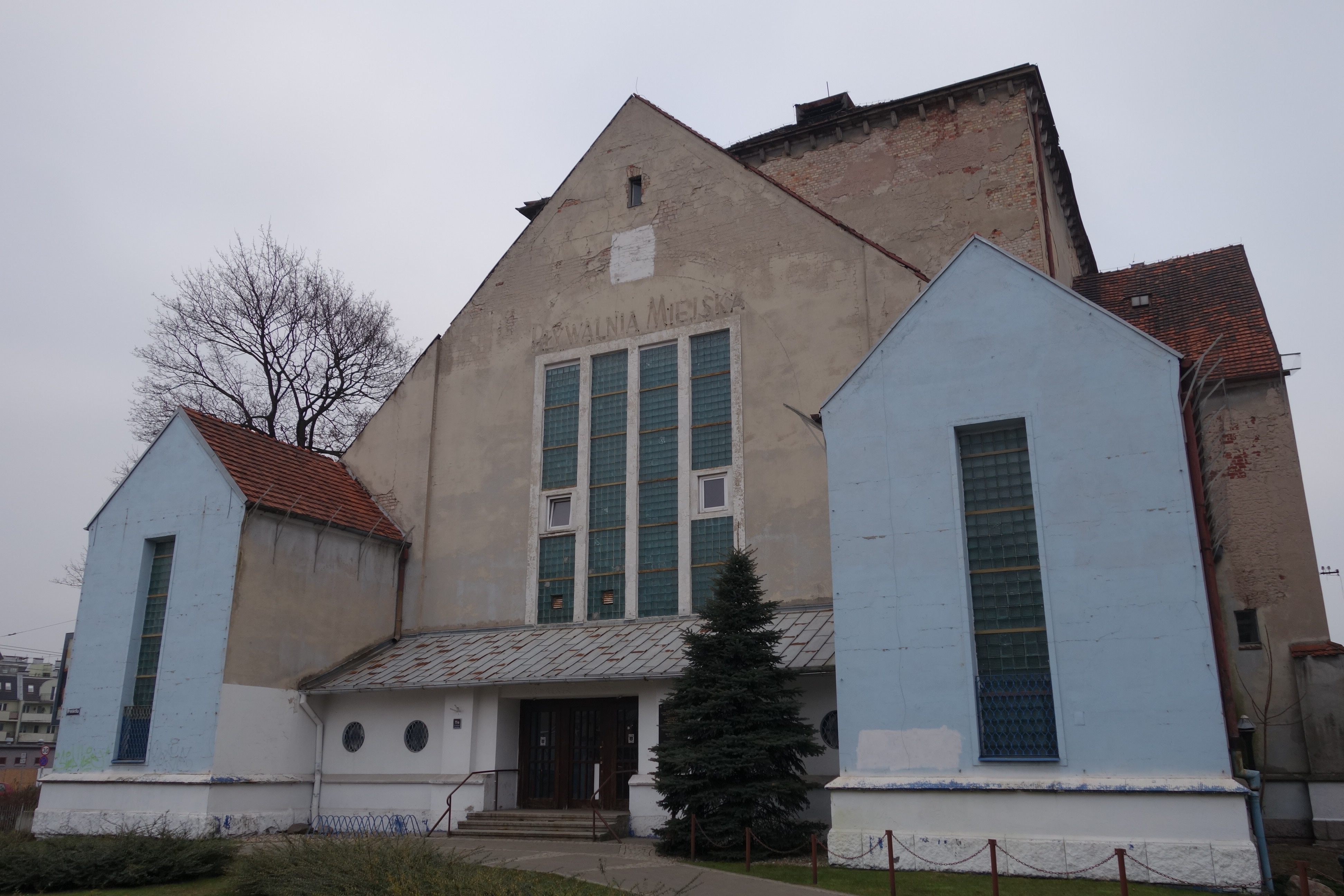
The exterior of the former "new" synagogue in Poznan. The words "Pływalnia Miejska" (City Pool) can be made out above the long windows. The pool was closed just three years ago in 2011.
The exterior of the former “new” synagogue in Poznan. The words “Pływalnia Miejska” (City Pool) can be made out above the long central windows. The pool was closed just three years ago in 2011.
Our final stop was the former synagogue near the end of Żydowska Street. When built in 1907, it was considered the “new” synagogue. It could hold 1200 worshipers, and was richly ornamented with a copper dome. During the war, the Nazis stripped off the dome and transformed the synagogue into a swimming pool. It continued to function as a pool even after the Jewish Community regained possession of the building in 2002. Małgosia has seen the interior. She described how the bottom of the sanctuary was tiled with the pool at the center, but the upper part remained just like a synagogue. She also said she has been in the attic above the wooden beams of the sanctuary which is still filled with old papers and books. The building is in bad shape and in need of major renovation. Efforts have so far failed to turn it into a Center for Dialog and Tolerance (see this essay by Janusz Marciniak, which includes photos of the exterior in 1907 and today. An essay by Teddy Weinberger describes his visit to the synagogue when it was still a pool; he includes photos of the interior as a place of worship and as a swimming pool).

← Older posts
Newer posts →

Categories

  • Anthropology (37)
    • Archives (14)
    • Fieldwork (7)
    • Ground Penetrating Radar (GPR (4)
    • Research Methodology (8)
  • antisemitism (14)
  • Association of Descendants of Jewish Central Poland (32)
  • Catholicism (8)
  • Conference (1)
  • Discrimination (2)
  • Family (69)
    • Bereda (17)
    • Kolski (13)
    • Piwko (22)
    • Rotblit (3)
    • Walfisz (4)
    • Winawer (7)
  • Genealogy (11)
  • Heritage work (66)
    • Commemoration (23)
  • Identity (18)
  • Israel (6)
  • Jewish Culture (89)
    • Cemeteries (51)
    • Museum (7)
    • Synagogues (33)
  • Jewish immigrants (8)
  • Jewish Religion (1)
  • Memory (70)
  • Names (14)
  • Photographs (6)
  • Pifko-Winawer Circle (5)
  • Poland (125)
    • Baligród (1)
    • Bolimów (1)
    • Brześć Kujawski (5)
    • Buk (1)
    • Chodecz (1)
    • Dukla (2)
    • Dąbrowice (1)
    • Gdynia (1)
    • Gostynin (2)
    • Gąbin (1)
    • Izbica Kujawska (1)
    • Kazimierz (4)
    • Kowal (1)
    • Koło (1)
    • Krakow (7)
    • Krośniewice (1)
    • Kutno (6)
    • Kłodawa (1)
    • Lesko (8)
    • Leszno (1)
    • Lubień Kujawski (1)
    • Lubraniec (1)
    • Lutowiska (3)
    • Piła (3)
    • Podgórze (2)
    • Poznan (11)
    • Przemyśl (2)
    • Pzedecz (1)
    • Radom (1)
    • Radymno (1)
    • Sanok (1)
    • Skierniewice (5)
    • Sobota (2)
    • Tarnów (2)
    • Warsaw (22)
    • Wielkopolska (1)
    • Wronki (7)
    • Włocławek (20)
    • Zasław (2)
    • Łódź (1)
    • Żychlin (30)
  • Polish Culture (10)
  • Polish-Jewish Heritage (60)
  • Polish-Jewish relations (60)
  • Post-World War II (24)
  • Pre-World War II (22)
  • Reclaimed Property (1)
  • stereotypes (3)
  • Survival (9)
  • Trauma (3)
  • Uncategorized (5)
  • Victims and perpetrators (4)
  • World War II (45)
    • Jewish Ghetto (12)
    • Nazi Camps (5)
    • Polish Underground Army (3)
  • Yiddish (5)

Enter your email address to follow this blog and receive notifications of new posts by email. Your email address will not be shared.

Archives

  • October 2025 (1)
  • July 2025 (8)
  • June 2025 (1)
  • April 2025 (1)
  • August 2024 (3)
  • July 2024 (3)
  • May 2024 (2)
  • April 2024 (1)
  • May 2023 (2)
  • January 2023 (2)
  • December 2022 (7)
  • November 2022 (2)
  • October 2022 (5)
  • September 2022 (1)
  • January 2022 (1)
  • August 2021 (1)
  • December 2020 (2)
  • July 2020 (1)
  • May 2020 (3)
  • April 2020 (1)
  • March 2020 (1)
  • January 2020 (2)
  • May 2019 (1)
  • February 2019 (1)
  • November 2018 (1)
  • September 2018 (1)
  • August 2018 (3)
  • July 2018 (1)
  • June 2018 (1)
  • May 2018 (1)
  • April 2018 (2)
  • March 2018 (2)
  • February 2018 (2)
  • January 2018 (2)
  • December 2017 (2)
  • November 2017 (2)
  • October 2017 (1)
  • September 2017 (3)
  • August 2017 (3)
  • June 2017 (2)
  • May 2017 (3)
  • April 2017 (1)
  • March 2017 (2)
  • February 2017 (1)
  • January 2017 (2)
  • December 2016 (2)
  • November 2016 (4)
  • October 2016 (1)
  • September 2016 (6)
  • August 2016 (2)
  • July 2016 (1)
  • May 2016 (4)
  • April 2016 (2)
  • March 2016 (3)
  • February 2016 (4)
  • January 2016 (3)
  • December 2015 (3)
  • November 2015 (5)
  • October 2015 (5)
  • September 2015 (3)
  • August 2015 (4)
  • July 2015 (3)
  • June 2015 (3)
  • May 2015 (4)
  • April 2015 (9)
  • March 2015 (3)
  • February 2015 (2)
  • January 2015 (5)
  • December 2014 (4)
  • November 2014 (9)
  • October 2014 (2)
  • September 2014 (1)

Copyright Notice

All original text and images are copyright © Marysia Galbraith. Please contact the author before quoting.

Blog at WordPress.com.

  • Subscribe Subscribed
    • Uncovering Jewish Heritage
    • Join 147 other subscribers
    • Already have a WordPress.com account? Log in now.
    • Uncovering Jewish Heritage
    • Subscribe Subscribed
    • Sign up
    • Log in
    • Report this content
    • View site in Reader
    • Manage subscriptions
    • Collapse this bar
 

Loading Comments...