• About
  • The Photo that Started it All

Uncovering Jewish Heritage

Uncovering Jewish Heritage

Category Archives: Family

Posts about my family.

Halina’s legacy

10 Monday Aug 2015

Posted by Marysia Galbraith in Bereda, Family

≈ 4 Comments

Tags

Halina Bereday

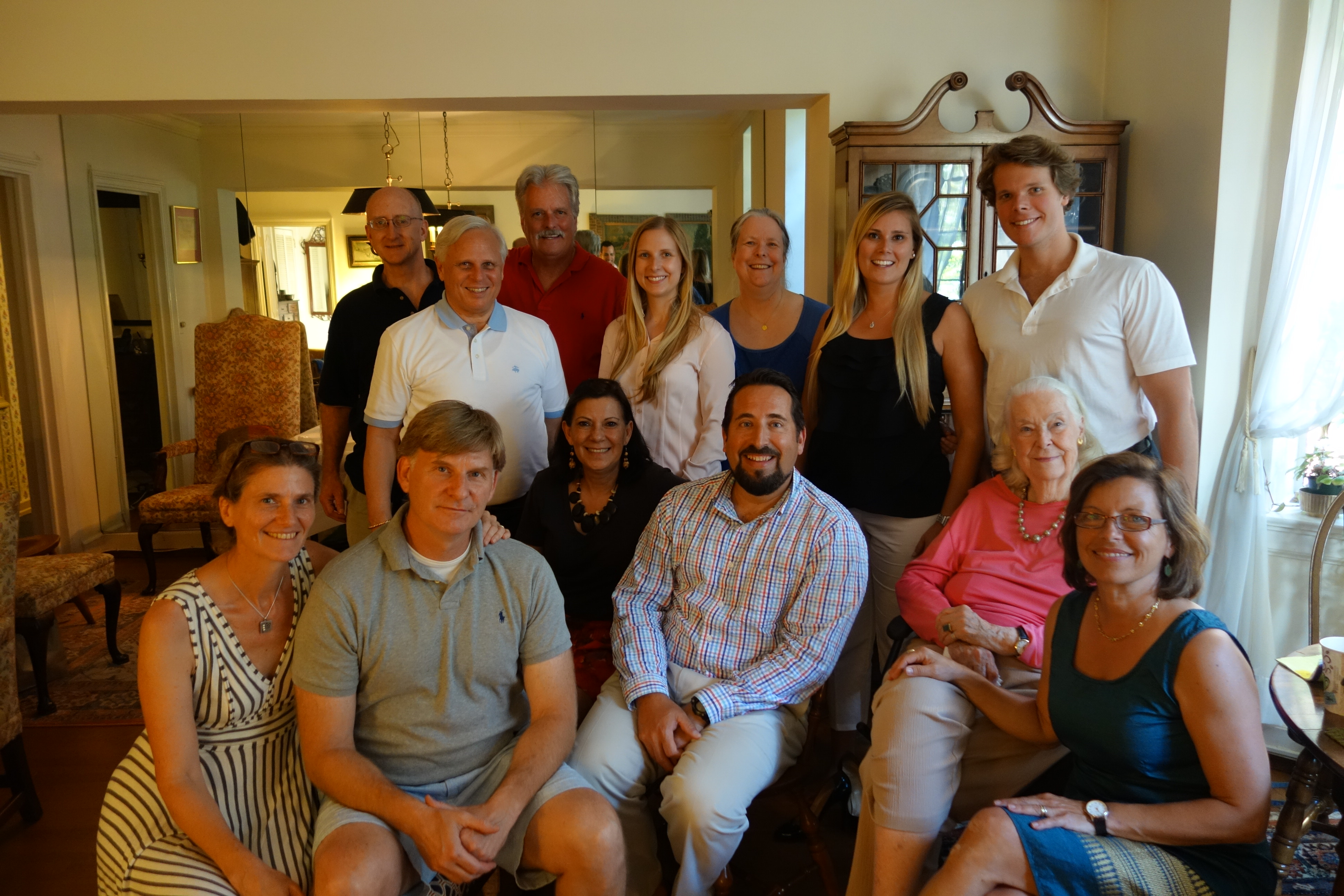
The Bereday cousins met at Aunt Pat’s in late July. Nearly all Halina’s grandchildren were there.

Family reunion--Halina Bereday's grandchildren and great grandchildren

Family reunion–Halina Bereday’s grandchildren and great grandchildren

We are Halina’s legacy.

It has long been my desire to fulfill my Babcia’s wish to be buried in Poland. Our reunion seemed like a good time to take steps toward making that happen. Babcia was cremated over twenty years ago; I offered to bring her ashes to Warsaw, where she can be buried beside her husband Zygmunt Bereda. This is what she wanted. Fortunately, everyone agreed. I’m now in possession of Babcia’s remains and all that is left is to make the arrangements.

The photo: some reassembled stories

10 Friday Jul 2015

Posted by Marysia Galbraith in Family, Names, Piwko, Polish-Jewish Heritage, Włocławek

≈ 4 Comments

Tags

Abram Janas Piwko, Efraim/Philip Piwko, Halina Bereda/Haja Piwko, Hanna Cytryn, Hil Majer Piwko, Hinda Walfisz Piwko, Jakub Piwko, Liba Piwko Winawer, Natan Kolski, Rachel Piwko Kolski, Sarah Piwko Winawer

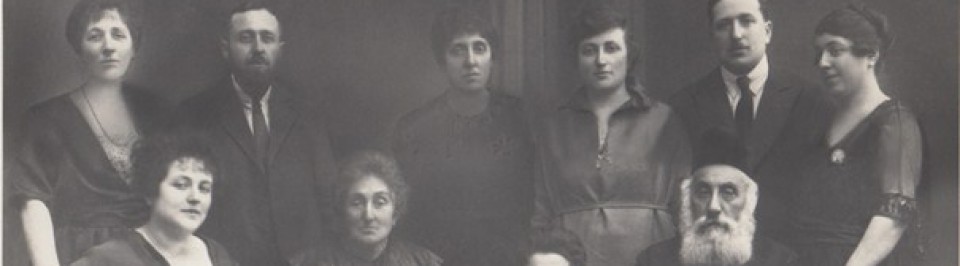
When I first saw this photo in the summer of 2011, I knew almost nothing— I didn’t know who was in it, nor even my grandmother’s maiden name. I figured the older couple was my grandmother’s parents. Were the others their children? Could one of them be my grandmother? And who was the boy in the front row?

JechielHindaAndChildren

My brother Chris and cousin Krysia almost immediately recognized the woman on the bottom left, as our grandmother. With her coquettishly tilted head, her stylish clothes, and her hand resting on her mother’s wrist, it seemed likely to me, too. But I wanted to be sure.

This photo has proven to be an essential clue in my search for family history. Many of the cousins I have met are familiar with the photo and helped me identify everyone in it. In fact, it has helped me establish connections with cousins, and served as proof that we are actually related. When I contacted Pini in Israel, he was skeptical at first that we were cousins. But when I sent him this photo, he responded, “Welcome back to the family.” And he meant it. I feel embraced by the large clan of descendants of my great grandparents, the elderly couple in the photo whom I now know are Hinda (nee Walfisz) and Hil Majer Piwko.

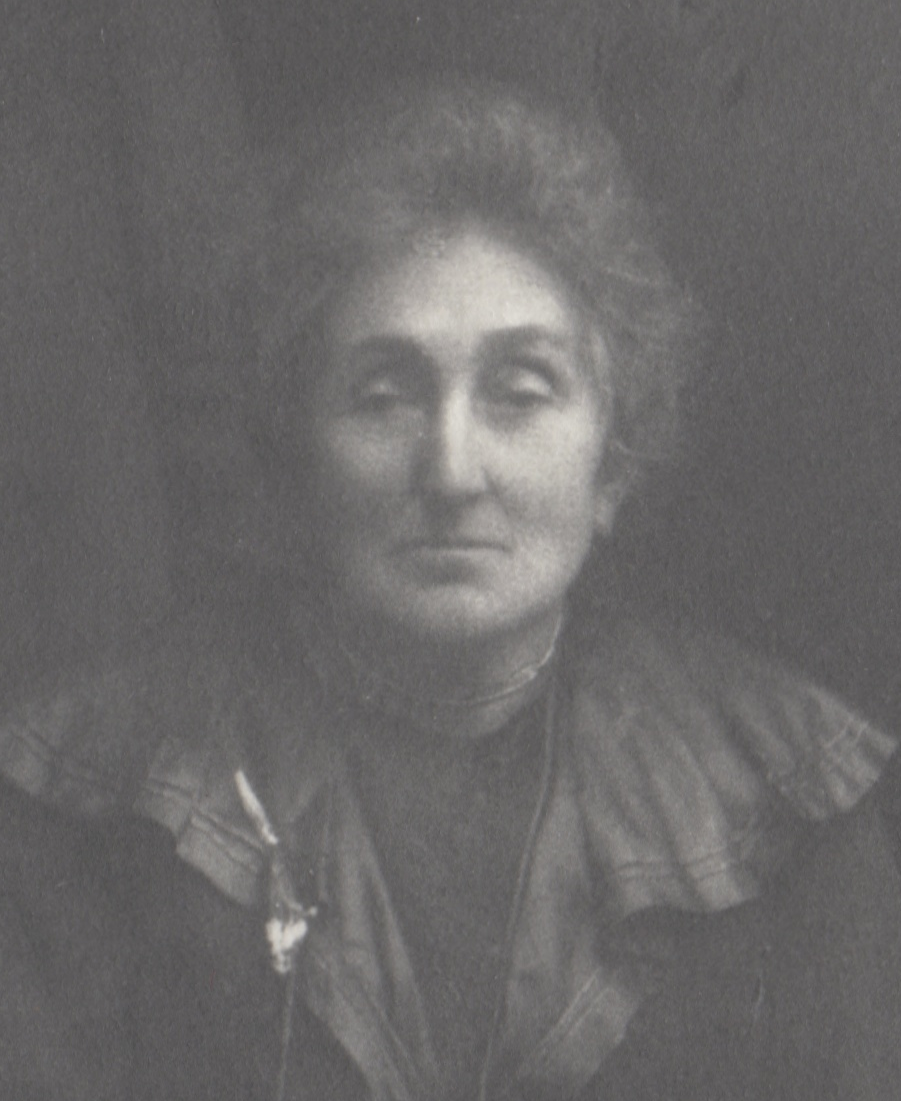
Hil Majer Piwko

Hil Majer Piwko

Hinda Piwko

Hinda Piwko

And it is indeed my grandmother Halina in the bottom left corner.
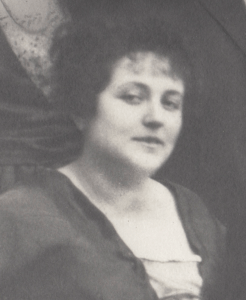
Halka Piwko

Halka Piwko, my grandmother

This photo has led me to living relatives, and back to the time depicted in the image. It helps me see and feel what family life was like back then, and adds depth to my understanding of the dry genealogical facts I have gathered.

Even my uncle Stanley Winawar has spoken to me from the grave in the form of a letter he wrote to Pini in 2002 (just two years before his death) in which he identifies everyone in this photo, and lists many of their descendants as well. One of my regrets is not having started this search sooner so I could have talked with Stanley and others before they died. At least through the letters, I’ve had a taste of the conversations we might have had.

So let me introduce my family:
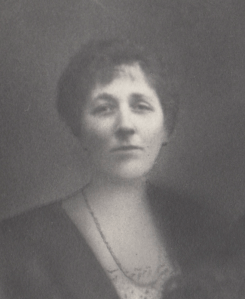
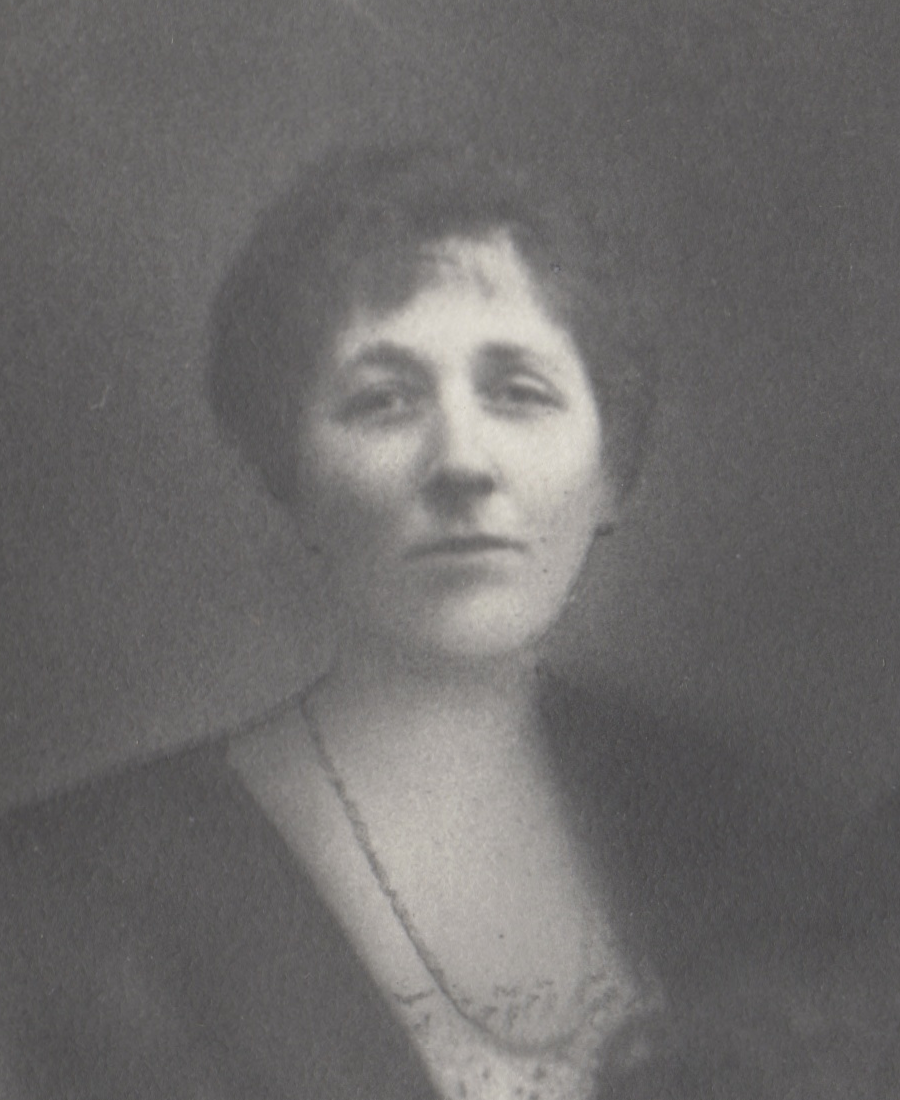
Sarah Winawer

Sarah Winawer

Starting at the top left, most people identify the elegantly dressed woman as Sara (Piwko) Winawer, Uncle Stanley’s mother. Born in 1880, she was the second daughter of my great grandparents. On a list compiled by my Aunt Pat (probably based on a conversation with my grandmother’s sister Hanna/Nunia), she is described as having “beautiful hair.” She married Saul Winawer in 1899, and they had four children (Nathan, Milton, Stanley, and Paulina). My mom stayed in touch with her aunt Sara in the United States, though she was known in my family as Lusia (apparently no one besides our branch of the family called her that). She died in 1964 when I was 6 months old. She was too sick to visit me, but told my Mom on the phone that she would watch over me from heaven. I only heard this story once or twice when I was a child, but it left an impression on me. I liked the idea of having a guardian angel of sorts. Who knows? Maybe it foreshadowed this search for deeper connections with my mother’s extended family.

Jakub Piwko

Jakub Piwko

Next in the top row is Jakub, the oldest son born around 1874. Aunt Pat says he had four wives, including Helen Esther Kirsten, Genia Ellinberg, and Rozalia Kirsten. She (Nunia?) describes him as blond, delicate, of medium height, resembling his maternal grandfather Natan Walfisz. He was a Zionist and member of the governing board of the Jewish Community of Włocławek from December 1917 until resigning on March 3, 1922. He was also a representative on the City Council from 1917-19 (see virtual sztetl). Jakub died in 1942; by one cousin’s account he owned a small hotel in Otwock and was shot by Nazis for being out on the street after curfew. He had a son Natan who emigrated to Israel and a daughter, Pola.

In a letter to Pini, Stanley (Sara’s son) wrote, “The space missing between Jacob and Liba was obviously reserved for Yona…” Abraham/Abram, the second-born son, was called by his middle name John/Yona/Janas. Born around 1876, Pat (Nunia?) describes him “devil eyes, tall, brunette, liked girls and girls liked him, 6’ 2”-6’ 4”.” He was the first in the family to come to the United States, arriving in New York in January 1906. His wife Bertha/Blima (they married in 1901) followed in May 1907 with their children Nathan, Paula/Pauline, and Ewa. A fourth child, Sarah, was born in New York. Abraham owned a bakery in Brooklyn until his death in 1925.
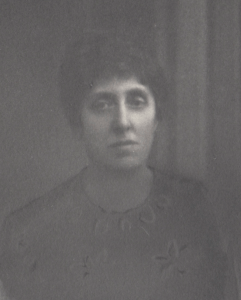
Liba Winawer

Liba Winawer

In the middle of the top row is the oldest child Liba, born around 1872. Aunt Pat’s list (Nunia’s description?) says she was tall, blond, and beautiful. At the age of 17 or 18 she married Jakob/Jankiel Winawer. I don’t know how he was related to Saul Winawer (Sarah’s husband), but some say they were cousins. Liba and Jakob had four sons—Nusen, Sol/Saloman, Max, and Morris. In 1928, Liba and Jakob came to the US, where their three younger sons were living. Jakob died there in 1932, but I haven’t found a record of Liba’s death. Did she die in the US? If so, why isn’t it documented? Could she have returned to Poland, where her oldest son still lived? Could she have died in the death camp at Treblinka in 1942, as some say Natan did?

Hanna Cytryn

Hanna Cytryn

Next to Liba is Hanna (born around 1886), though everyone in the family called her Nunia. I’ve already written about her, but briefly, she married Stanisław/Samson Cytryn and had one daughter, Teresa. She and Samson lived in Warsaw where they ran a shop that has variously been described as a pharmacy or a supplier of lotions and toiletries. Maybe she was an herbalist and so offered products that crossed the boundary between health and beauty? She took over the shop after her husband’s death in 1927. Nunia spent World War II in Warsaw under the false identity of Maria Weglinska (the name she kept until her death in 1984) After the war, she lived in Paris, and then in 1951 she moved to the US.

Philip Piwko

Philip Piwko

Next is Philip/Efraim, described by Pat (Nunia?) as “six foot, blond, pock marked, shy, sweet.” Born around 1882, he came to the US a couple of years after his brother, at the end of 1907. He, too, owned a bakery though I don’t know if it was the same one as his brother or a different one. Philip married Goldie. They never had any children of their own, but they took care of siblings, nieces, and nephews as they immigrated to the US. Many of the cousins remember him as the glue that held the family together in the US. Philip died tragically in an auto accident in 1947 on his way home from Boston.

Rachel Kolska

Rachel Kolska

At the far right of the top row is Rachel, who was born around 1890 between Hanna and Halina (my grandmother). Pat (Nunia?) describes her as shorter than her sisters, with thick thick hair. She married Pinkus/Pinchas Kolski, the widow of her older sister Regina who died giving birth to a son, Natan. Rachel raised Natan, and had four more children with Pinkus—Samek, Abram, Naftali/Maniek, and Mirka. They settled in Włocławek, where they had a store right in the center of town. After the war broke out, Rachel, Pinkus, and Mirka (who was just a teenager—she was ten years younger than her youngest brother) were moved to the ghetto in Warsaw. Pinkus, who was in ill health, died there in 1940, and Rachel and Mirka escaped and lived on the Aryan side under false papers. After the war ended, they joined Natan, Abram, and Maniek who were living in Israel. Rachel died in 1969.

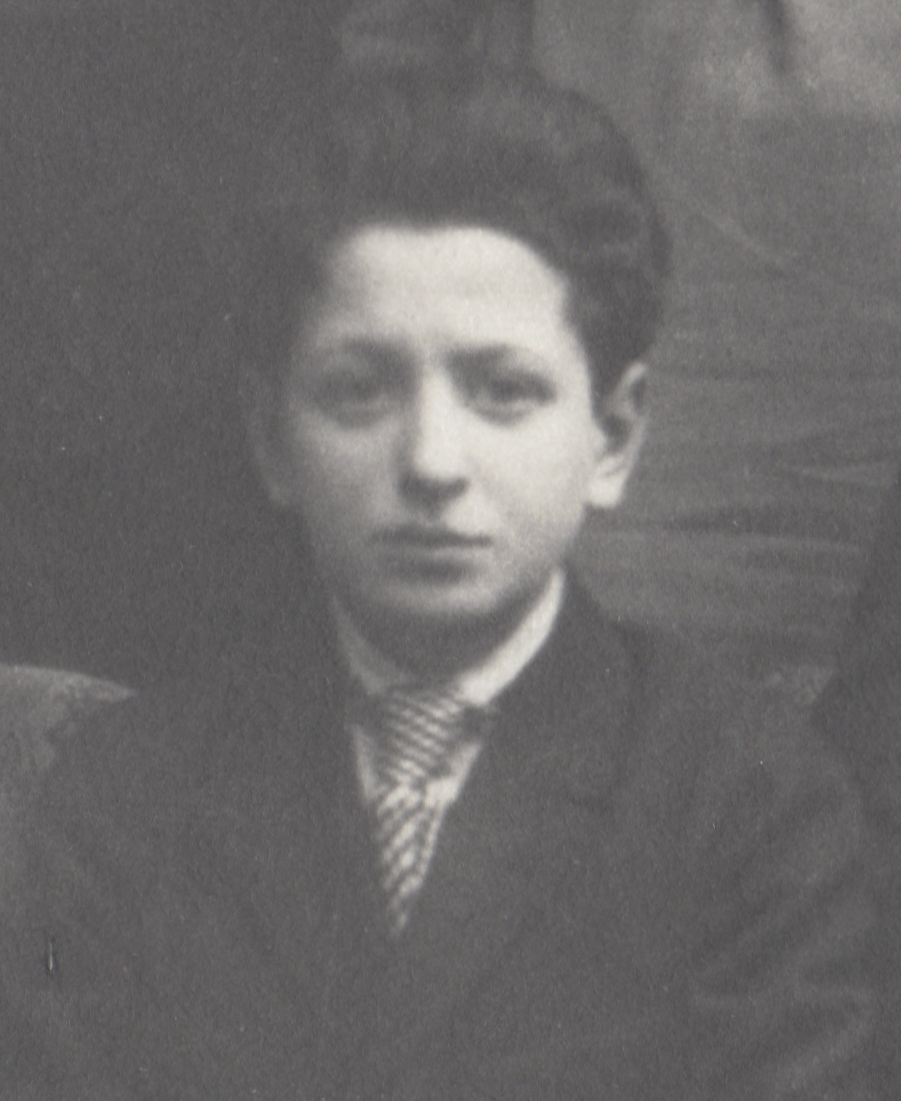
Natan Kolski

Natan Kolski

On the bottom left, as I have already said, is my grandmother Haja/Halina, born in 1894. Seated beside her is her mother, Hinda (Walfisz) Piwko, while her father Hil Majer Piwko is on the far right. The young boy is Natan, the son of Regina and Pinkus Kolski. Perhaps he was there in his mother’s place, just like a gap was left for Abraham/John? Natan is said to have spent a lot of time with his grandparents. His position between them suggests they were very fond of each other. And I almost forgot one more member of the family—the dog under the couch behind Natan’s feet. Could this have been Natan’s dog? Another sign of the favor of his grandparents? I don’t know but I like to think of it that way.

So that’s my grandmother’s family, excluding only Małka who died as a teenager and two other siblings who died as infants.

Considering Natan was born in October 1905, I would guess this photo was taken near the end of the 1910s, maybe in 1919. Natan looks like he’s about 12, like my son is now, or maybe a little older. It seems unlikely the photo would have been taken during World War I, especially because of Philip’s presence. Philip was living in the US already (he is listed in both the 1910 and 1920 US census) and I don’t think he would have made the journey during the war. I don’t know enough about the history of fashion to be sure, but Halina’s dress seems scandalously short for the period, and even Rachel’s hemline is a few inches above her ankles. Still, I read that hemlines started to rise in Europe in 1915. I wonder, as well, whether Hanna’s comparatively simple dress was because she was less well off than her sisters, or perhaps was rather due to a more practical nature (which fits with how I remember her).

The photo is a window into the past. In it, I see a large, affluent, close family, but one in which social and cultural divisions were growing through the generations. While father Hil’s thick beard, black cap and long coat were characteristic of a conservative, religious Jew, his older son (the Zionist) had a shorter, more trimmed beard, and his younger son, by now an American citizen, sported only a moustache. The twenty-two-year gap between Liba, the oldest sibling, and Halina, the youngest, also seems apparent in the way they carried themselves and dressed.

I’ve learned a lot since I pulled this photo out of the envelope my grandmother had marked “Do Not Open.” And yet it all remains fragmentary. Most of the richer details are tentative, based on stories I try to piece together into something more substantial. But the fragments stand stubbornly apart from each other, and sometimes even in opposition to each other. Did Rachel accept her sister’s son Natan as one of her own, or did he spend much of his time with his grandparents? Perhaps it was both, since Hinda and Hil also lived in Włocławek later in life. Why does Liba seem to be retreating into the background? Is it just an accident of the lighting or a reflection of her character? Why was my grandmother holding her mother’s hand like that? Was it a sign of affection or perhaps an assertion of autonomy? The more I sit with this photo, the stronger I feel a connection with these people. And still, how distant they remain from me.
Chil Majer Piwko’s death notices in the Yiddish press

01 Monday Jun 2015

Posted by Marysia Galbraith in Archives, Family, Piwko, Polish-Jewish relations, Yiddish

≈ 2 Comments

Tags

Hil Majer Piwko

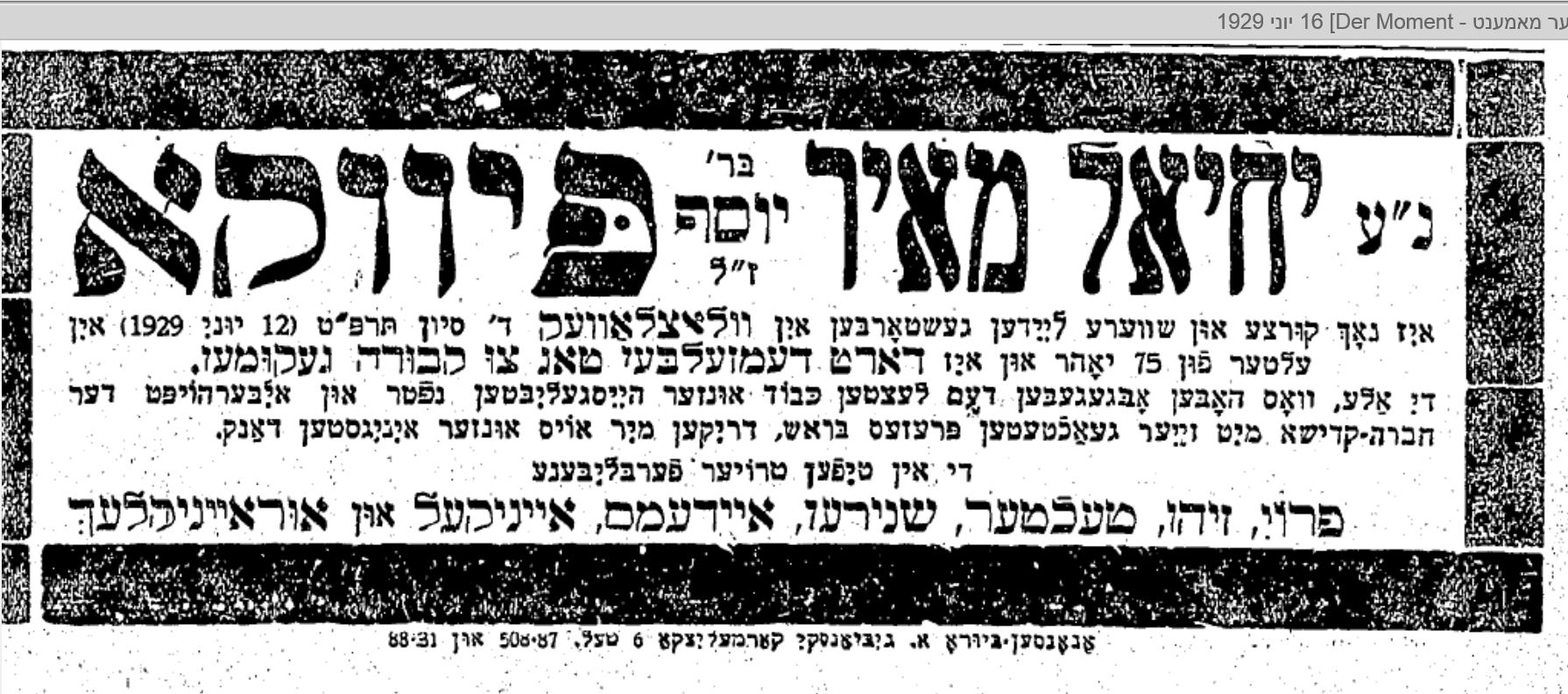
After reading my previous post about Chil Majer Piwko’s death notice, my cousin Raphael from Switzerland sent me a couple more that were published the same day (June 16 1929). These were in the Yiddish newspapers Hajnt and Der Moment.

Chil Majer Piwko's death notice from the Yiddish-language newspaper Der Moment

Chil Majer Piwko’s death notice from the Yiddish-language newspaper Der Moment

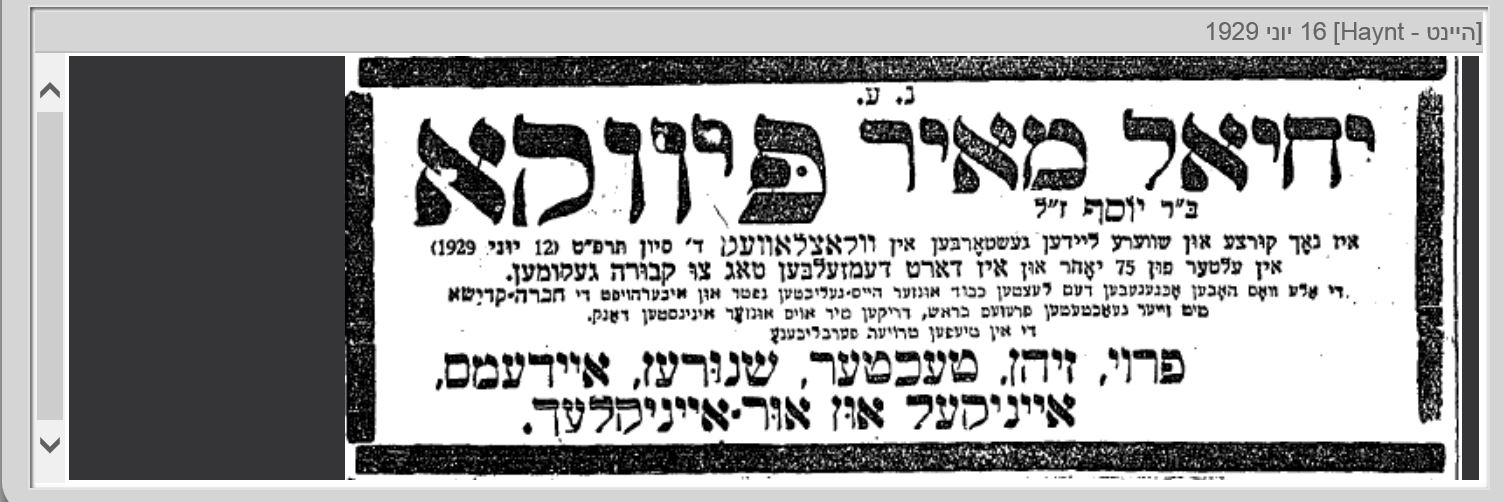
Chil Majer Piwko's death notice from the Yiddish-langugage newspaper Hajnt

Chil Majer Piwko’s death notice from the Yiddish-langugage newspaper Hajnt

Besides wanting to share them, this gives me the opportunity to revise what I said about Chil Majer. My conversations with a couple of readers helps me realize my hasty use of the term “assimilated” (even though it is widely used in the historic literature) probably does not communicate what I intended. What I meant to signal was that Chil Majer likely considered himself Polish as well as Jewish. But I have no doubt that he was also a very religious man. Nor did I mean to suggest he was on the road to adopting Polish culture in replacement of his Jewish faith. On the contrary, I’m interested in the places and spaces where Polish and Jewish affiliations intersected, complemented each other, or existed side by side.

The fact that his death notice appeared in three Jewish newspapers emphasizes even more strongly the important position Chil Majer filled in the community. The Polish-language Nasz Przegląd tended to take a more integrationist stance, in the sense that it catered to Jews who were comfortable operating in the Polish language, and who tended to invision a place for Jews within the broader Polish society. The Yiddish-language Haynt and Der Moment were competing papers that were Zionist in orientation. As such, they tended to highlight the interests of Jews as distinct from the Polish (Catholic) majority. The publication of the death notice in both languages shifts the emphasis, indicating an allegiance to both Jewish autonomy and to Polish-Jewish allegiances.

For more information about the Jewish press, see a brief summary by the Yivo Institute or Angela White’s dissertation on the Polish language Jewish press.

Warsaw archive weekend

31 Sunday May 2015

Posted by Marysia Galbraith in Archives, Family, Piwko, Polish-Jewish relations

≈ 4 Comments

Tags

Hil Majer Piwko

The first find of the weekend, at the National Library in Warsaw: my great grandfather Hil Majer Piwko’s death notice in Nasz Przegląd, one of the main Polish-language Jewish newspapers in interwar Poland.

DSC06314

Chil Majer Piwko’s death notice in Nasz Przegląd, June 16, 1929.

The text reads:

B. P. [Blessed in memory] Chil Majer Piwko died in Włocławek after brief but heavy suffering on the 12th of June 1929 (4 Siwon), at the age of 75, and was buried the same day.

To everyone who helped him on his final road, lamenting our husband and father, and especially the Funeral Brotherhood with its honorable president at its head. Wishing to express “God bless,” left in deep sadness,

Wife, sons, daughters, daughters-in-law, sons-in-law, grandchildren and great grandchildren.

The size and placement of the notice indicates my great grandfather held a position of relative prominence in the Jewish community. Also, appearing in Nasz Przegląd as opposed to any of the Yiddish or Hebrew language newspapers indicates that he identified as a Pole as well as a Jew. He was assimilated into the broader society, even though he maintained conservative modes of dress and religious practices.

I’m also struck by the mention of great grandchildren in the death notice. That’s also me, even though I wouldn’t be born for another 35 years

How Catholic were they?

26 Sunday Apr 2015

Posted by Marysia Galbraith in Catholicism, Family

≈ 4 Comments

Tags

Halina Bereday, Maria Bereda(y) Galbraith

I always thought of my babcia as very religious. On her wall, she kept Jesus on the cross and a Madonna in a gilded frame. Her expressions of faith tended toward the mystical. She believed in miracles and blessings. She prayed on the rosary. She blessed my friend Kara’s baby daughter the first time she held her. She must have been about 90 then.

A bad photo, but one of the few I have of Babcia's apartment on Riverside Drive, showing her Madonna in a gilded frame.

A bad photo, but one of the few I have of Babcia’s apartment on Riverside Drive, showing her Madonna in a gilded frame.

And yet, she never took me to a church service. I wonder if any of my brothers or cousins remember going to church with her?

My mother used to say Babcia was “more Catholic than the Pope.” I don’t think mom appreciated such public expressions of faith. Sometime after 1985, Babcia moved to an assisted living facility in Flushing. It had mostly Jewish residents including many Holocaust survivors. It may have even been run by a Jewish service organization. I’m pretty sure one of our Jewish relatives helped her get a place there, though of course at the time no one told me anything about that. Babcia did not like living there. Doubtless, much of it had to do with her declining health that made it impossible to stay independent in her old apartment, but she also seemed disdainful of the other residents. She flaunted her Catholicism and rebuffed their attempts to befriend her. I don’t think the managers cared much for Babcia, either. When her health declined to the point she couldn’t take care of herself, they said they have no place for her in their more advanced care facilities. She moved for the last time to a nursing home back in Manhattan, around the corner from St. John the Devine Cathedral. Babcia spent most of her life denying her Jewish heritage. I suspect it was too uncomfortable for her to be surrounded by Jews in a Jewish-identified institution.

When my mom talked about her Catholic faith, she essentially did so in the past tense. She was very devout as a child, and wanted to become a nun. When she was fifteen, she went to a boarding school in Belgium run by nuns. One story she told me about living there was that her mother sent her a box of chocolates. She gave them all away, believing that kind of self-sacrifice was an expression of her faith. Then, that night she cried herself to sleep because she wanted one so bad.

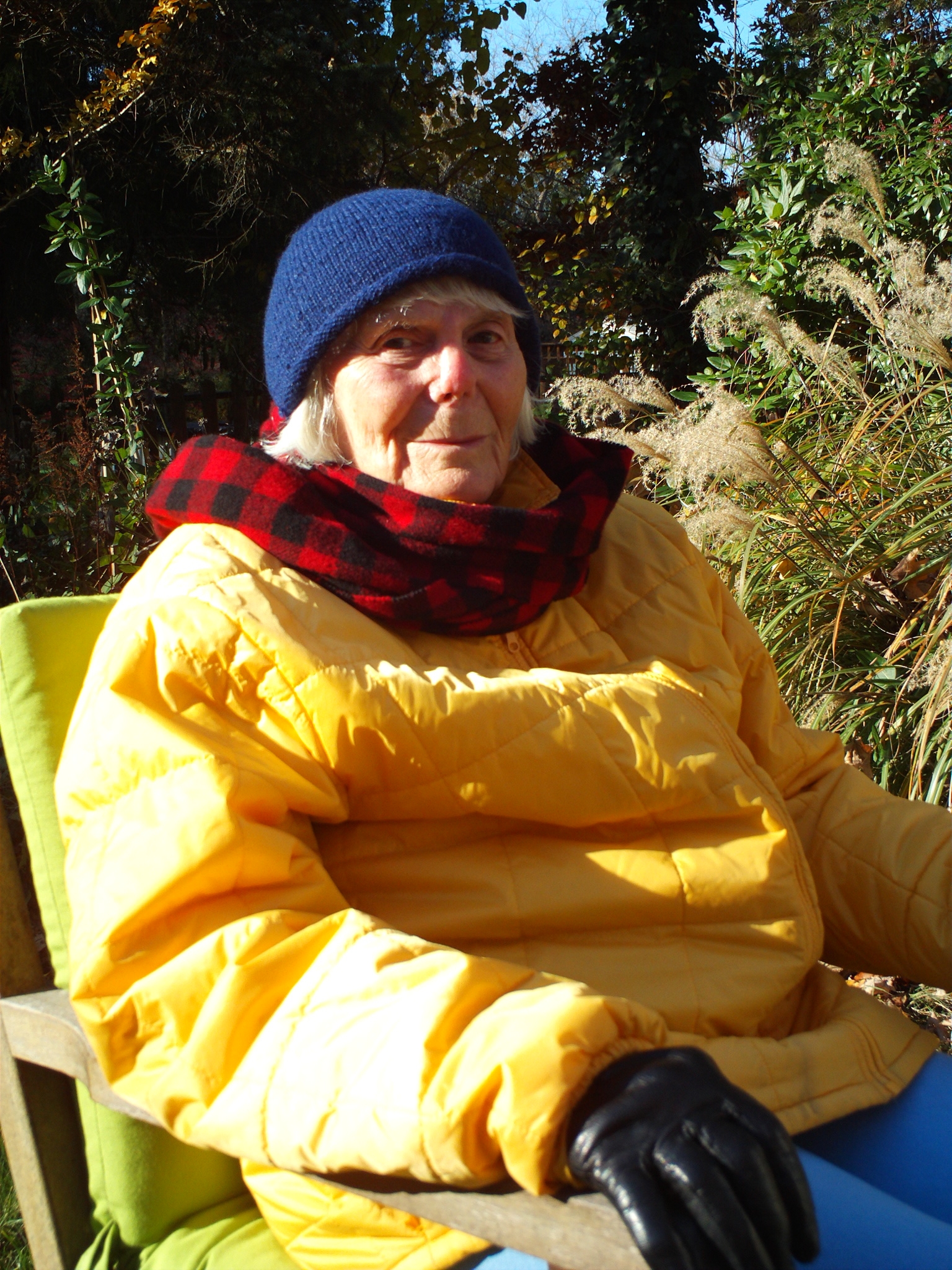
Mama liked to sit in churches, but she didn’t go to services. Or if she did go, she didn’t take communion. She said it’s because she doesn’t go to confession. When I asked her why not, she said everything she experienced during and after the war made her grow distant from the church. Mama’s temple was our backyard. She called herself a pantheist, and said that when she wants to pray she just goes outside and meditates. Her mantra was “ocean.” For as long as she could, mama had a chair she would move around the yard depending on the sun and which flowers were in bloom. Thanks to Krystyna, she still gets out into her garden most days.

Mama in the garden

Mama in the garden

My brothers and I weren’t even baptized. Mama said it was because my dad didn’t want Catholic kids, and she didn’t stand up to him. Rather, she wanted to let us make our own decision about religion when we grew up. Was this odd? At the time I didn’t think so. My dad was an atheist. He had the mind of a scientist and just couldn’t take the leap of faith that, well, faith requires. Later in life, he tried. Maybe it was because his best friend Max became a believer. He read Thomas Merton, and even bought me one of his books. But he simply couldn’t overcome his skepticism. Instead, after retiring, he studied philosophy. My son seems to have inherited this skepticism; at the age of seven he decided God does not exist; he hasn’t changed his mind yet.

I still wonder, though, what could have turned Mama away from the church. Maybe witnessing the destruction of war made her question the existence of God. At least the Christian God, because she remained deeply attuned to God in nature. I think she said it had something to do with her injuries, the long series of failed surgeries, the scars they left behind, and then the final straw, getting tuberculosis and losing a year of her life at a TB hospital in Denver. I also wonder if it had something to do with her Jewish heritage and her failed love affair with a priest. But I’ll leave that story for another post.

Nunia on a camel

10 Friday Apr 2015

Posted by Marysia Galbraith in Family, Memory

≈ 1 Comment

Tags

Israel, Maria Weglinska

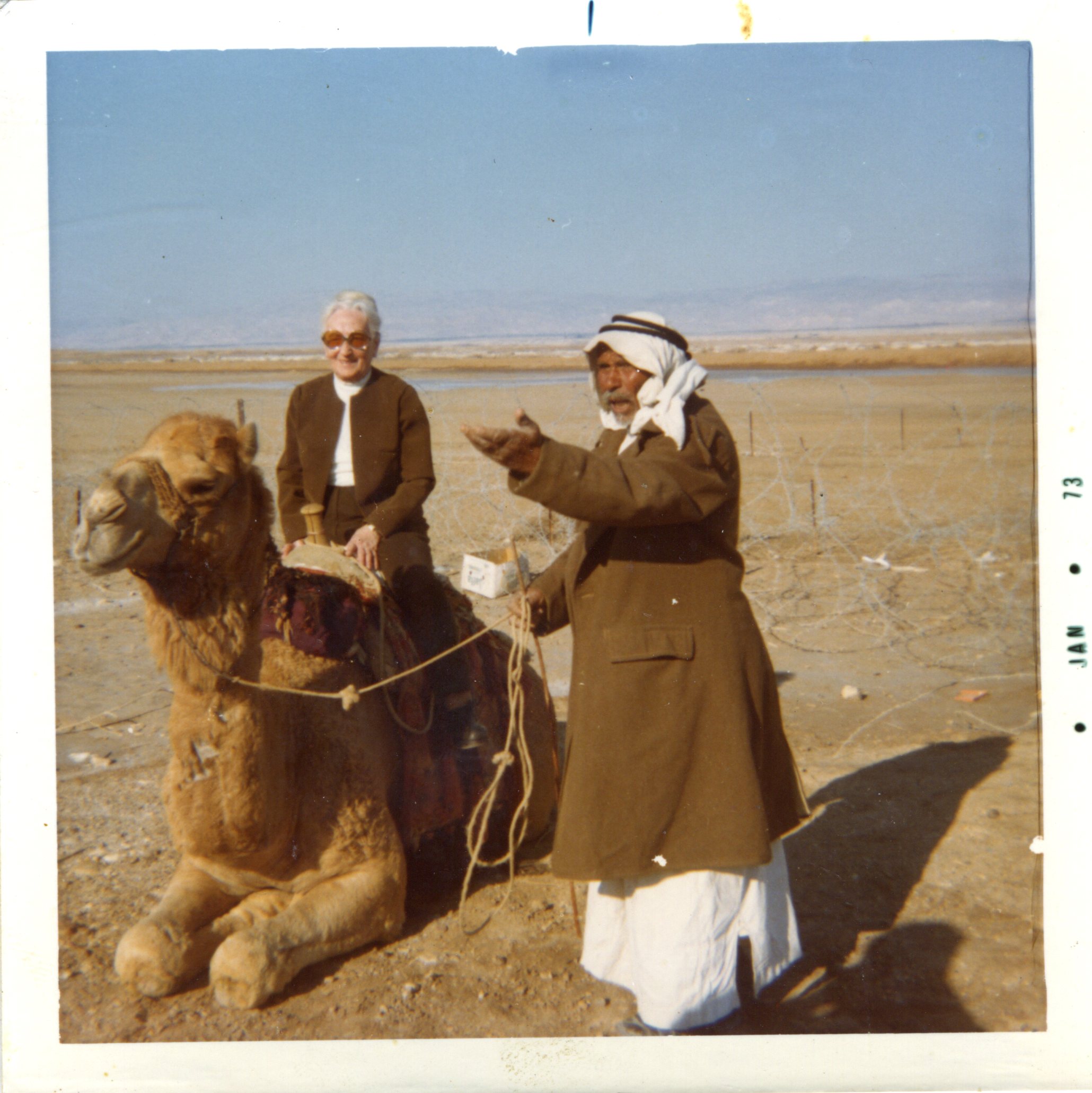
Nunia on a camel in 1972 at about age 86

Nunia on a camel in 1972 at about age 86

When Nunia was in her mid-80s, she went to Israel. I remember my mom’s wonderment as she described Nunia’s continued vitality. The image that proved it is a photo of Nunia perched upon a camel. The photo is stamped 1973, but cousin Yvonne in Israel remembers showing Nunia around Jerusalem in 1972. Back then, the date in the white edge of photos specified when the prints were made, so maybe Nunia didn’t develop the film right away.

Another camel photo.

Another camel photo, printed in January 1973. Yvonne says these photos were taken near the Dead Sea.

Nunia made an impression on the Israeli cousins, too. She kept a very busy schedule during her visit. When asked about it, she responded, “I can rest when I die.”

I don’t remember any mention of Israel when anyone talked about the trip. Rather, I remember being told Nunia went to Egypt. I was only nine at the time, so maybe I misremember, but my brother Chris remembers this, too. He says even then it seemed odd to him that she went to Egypt and yet there were no photos of the pyramids. Could this have been another instance of hiding the family Jewish connection? If so, it was a bizarre way to do so. Why not just say she went to “the Holy Land,” a common way Christians refer to Israel? I can’t help questioning my memory here—could I have been told she went to the Holy Land, but Egypt stuck in my nine-year-old head because it is the place I associated with camels and desert (and pyramids, which as Chris said were not in the photo)?

One thing I know for sure. I was never told Nunia went to visit family. I feel a deep sense of loss about this, especially since meeting my Israeli family. I’m also deeply embarrassed.

Could this be the Tel Aviv airport?

Could this be the Tel Aviv airport?

The Piwko Saga, Vital Records Version

10 Tuesday Mar 2015

Posted by Marysia Galbraith in Archives, Brześć Kujawski, Family, Names, Piwko, Pre-World War II, Skierniewice, Sobota, Włocławek, Żychlin

≈ 1 Comment

Tags

Abram Janas Piwko, Efraim/Philip Piwko, Halina Bereda/Haja Piwko, Hil Majer Piwko, Hinda Walfisz Piwko, Jakub Piwko, Liba Piwko Winawer, Maria Weglinska/Hana Piwko, Małka/Maria Piwko, Pinkus Kolski, Rachel Piwko Kolski, Ryfka Piwko Kolski, Sarah Piwko Winawer

I’ve found records connecting my great grandparents’ lives to five different towns in central Poland.

Hiel Mayer Piwko's birth certificate, 1854

Hiel Mayer Piwko’s birth certificate, 1854

A birth certificate in the Łódź archive states that Josek Piwko, a thirty-year-old tanner appeared with two witnesses to report that his wife Cywia nee Raych, age 26, gave birth to a son Hil Majer on October 26/ November 7, 1854[1] at eight in the evening in the city of Skierniewice.

Żychlin book of residents, Walfisz family first half. Hinda, third from the top, was crossed out when she married and moved to Skierniewice.

Żychlin book of residents, Walfisz family first half. Hinda, third from the top, was crossed out when she married and moved to Skierniewice.

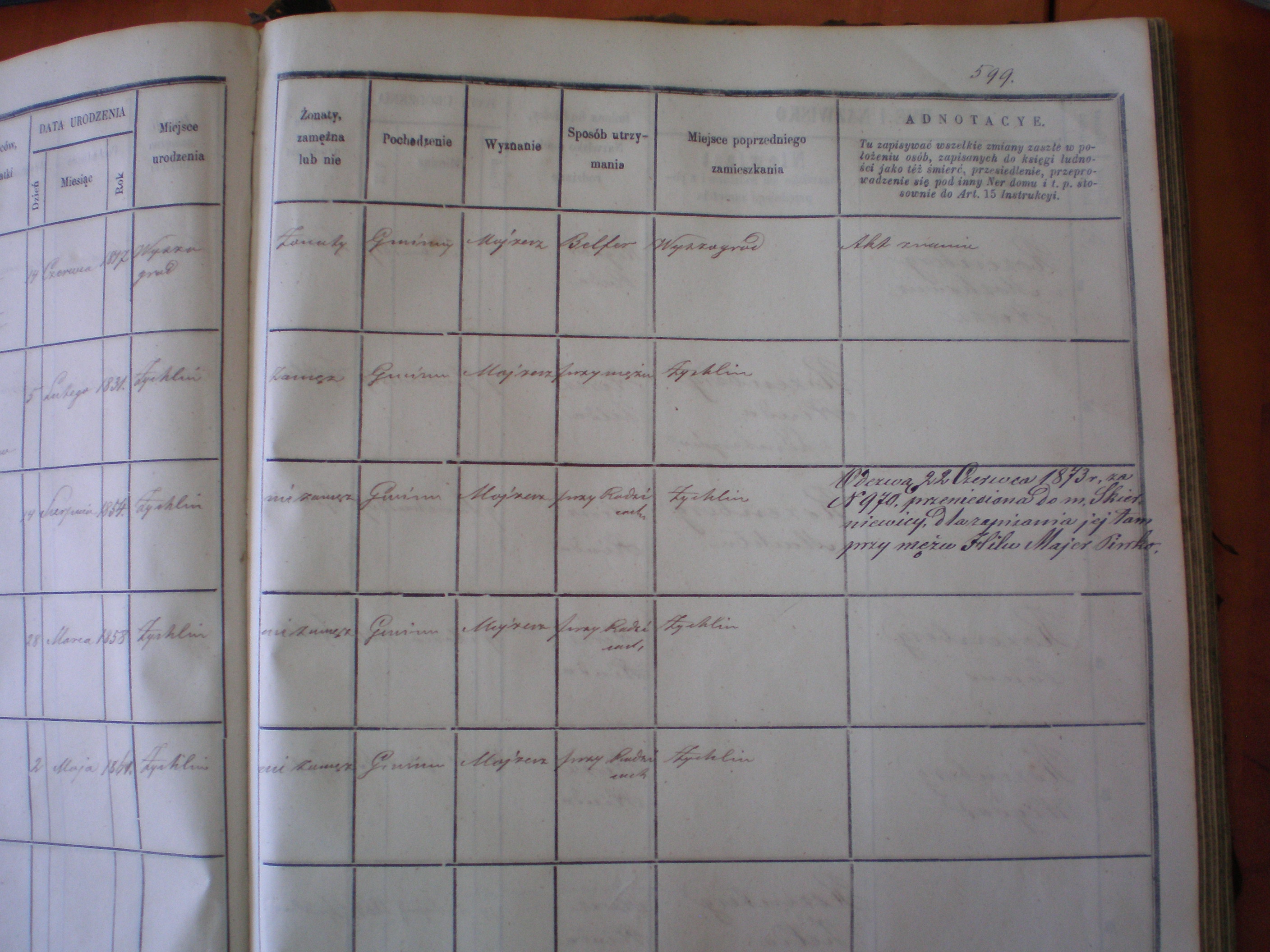
In the Kutno archive, the book of Żychlin residents includes Hinda Walfisz, born August 14, 1854 (making her two months older than her future husband). Others in the household include her parents and two younger sisters. Her father Nusen was born June 14, 1817 in Wyszogród. His profession is listed as belfer, (According to JewishGen this means an assistant melamed in cheder [religious teacher]). His parents were Jamoch and Hinda nee Pigel. Her mother Pesa was born February 5, 1831 in Żychlin to Dawid Losman and Tema nee Majerek. The two other girls were Tema, born March 28, 1858 and Łaja, born May 2, 1861.

Żychlin Book of Residents, Walfisz family second half.

Żychlin Book of Residents, Walfisz family second half.

Hinda’s name is crossed out and a note is added on June 22, 1873 that she moved to Skierniwice to live with her husband Hil Majer Piwko. Hinda’s sister Tema eventually married Hil Majer’s younger brother Jankel Wolf, from whom the Zurich Piwkos descended.

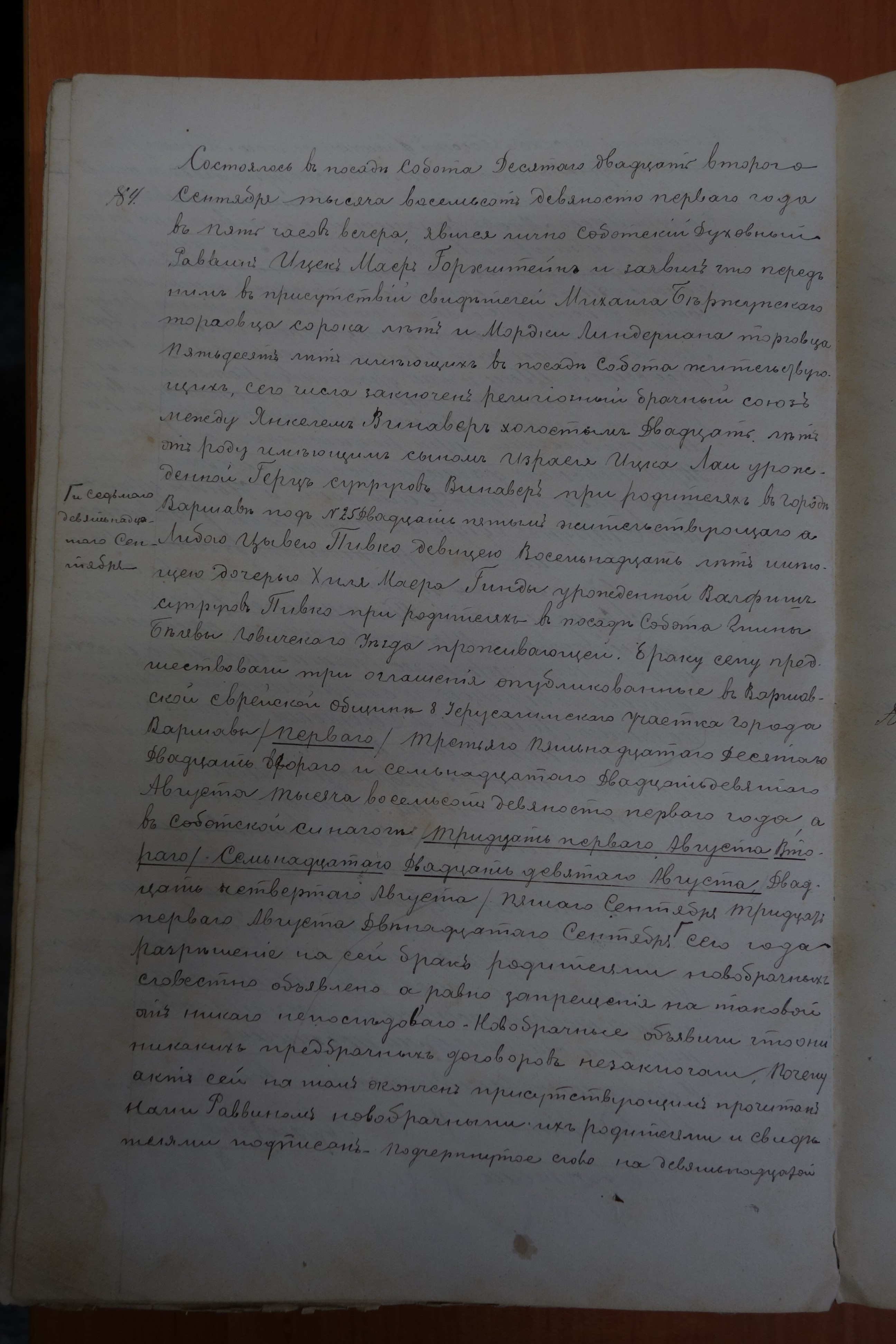
The next document, found in the Łowicz archive, is the marriage certificate of Hil and Hinda’s oldest daughter, Liba Cywja, and Jankel Winawer in 1891. She was 18 and he was 20. His family was from Warsaw, while her family was living in Sobota, a village outside of Łowicz and not far from Żychlin. So at some point, Hil and Hinda moved from Skierniewice to Sobota. I wonder why? I’m told it was common to move from smaller to larger settlements, so why move from a town to a village?

Liba Piwko and Jankel Winawer's marriage record, 1891

Liba Piwko and Jankel Winawer’s marriage record, 1891

DSC03689

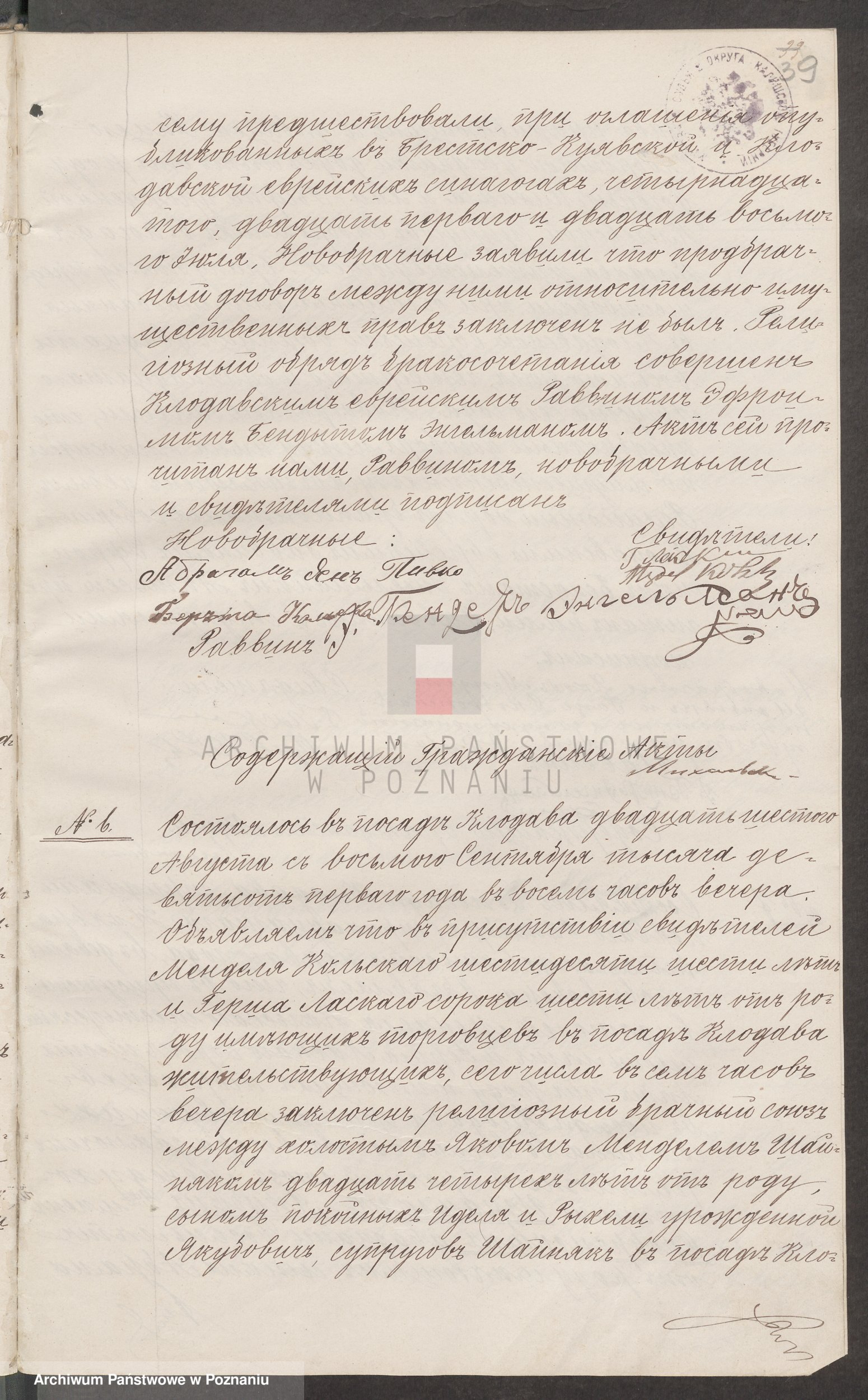
By 1901, when a son, Abram Janas (born in 1877) married Blima Kolska, the Piwko family was listed as living in Brześć Kujawski. Abram and Blima were married in Blima’s hometown of Kłodawa. I found this marriage certificate online; the Poznań archive has digitized these records.

Abram Piwko and Blima Kolska married in Kłodawa in 1901

Abram Piwko and Blima Kolska married in Kłodawa in 1901

PiwkoAbramKolskaBlimaAktMalzenstwa1901_2

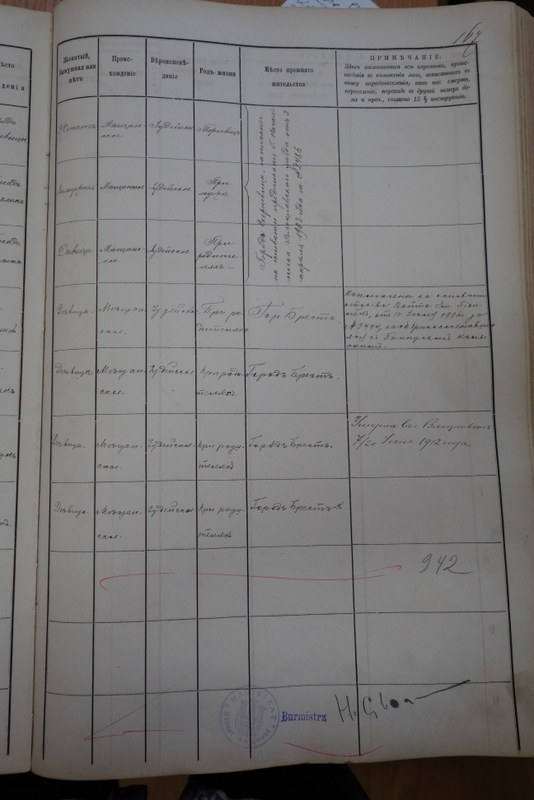
In the Włocławek archive, I found the Piwkos in the book of residents of Brześć Kujawski. This is my Holy Grail—the thing I’ve been looking for—a document that includes my grandmother. My guide for the day, Tomasz Kawski, a historian who has written about Jews of the area, said, “It’s a miracle [cuda]” I found it. I agree.

Piwkos in the Brześć Kujawski Book of Residents

Piwkos in the Brześć Kujawski Book of Residents

DSC03393

The document lists Hil Majer, son of Icek and Cywja nee Rajch, born October 26/ November 7, 1854 in Skierniewice, married, townsman, Jewish faith, trader (handlarz), and Hinda Piwko nee Wolfisz, daughter of Nusen and Pesa nee Losman, born August 2/14, 1854 in Żychlin, married, townswoman, Jewish faith, [supported] by her husband. In addition, five daughters are listed: Liba Cywja (b. January 27/February 2, 1874), Ryfka (b. December 20, 1884/ January1, 1885), Hana (b. October 11/23, 1886), Małka (b. December 10, 1895), and Haja (b. January 21/ February 2, 1894). Haja is Halina, my babcia. So I finally know her Jewish name.

The document confirms several details that have been passed down in the family; it also raises new questions:

  • All the sisters are listed as having been born in Żychlin. Perhaps Hinda returned to her native home to give birth? Or maybe it was just customary to list girls as being born in their mother’s hometown?
  • There is a note from July 16, 1906 that Ryfka (called Regina on Pat and Pini’s family trees) married Pinkus Kolski and moved to Piątek. The dates don’t correspond exactly to information from other sources which say Pinkus and Ryfka had a son Natan already in 1905. It might just be that the note was added a while after the wedding. Still, why then wasn’t it also noted that Ryfka died giving birth?
  • According to another note on the page, Małka died in Włocławek on June 7/20, 1912. This fits the story Mom told me about Babcia’s younger sister who committed suicide at age 17. No one knew why, but they suspected it was related to unhappiness in love. My mom was fascinated with her story. Maybe it is because she was named after her (the Christianized family tree lists Małka as Maria Renata). Maybe it is because of my mom’s interest in psychology. She wondered what would have compelled Małka to take her own life. Was her love unrequited? Did her father forbid it? Mom told me that Małka was beautiful, with dark hair and a dark complexion unlike the other girls in the family who were fair. In 2011, when I found Babcia’s family photos in the envelope labeled “Do Not Open,” and showed them to Mama, one of the few ones she recognized was Małka’s (though of course mom called her Maria).
  • Hana is my auntie Nunia. The document confirms her birth name and birth year, but the birthdate is different—her US records list her birthday as July 21. Similarly, my grandmother’s birthday is different on her US records—July 16. They also changed her birth years, claiming to be four years younger than they actually were, but this was a known secret in the family.

It is not clear from this document when the family moved to Brześć Kujawski. A note by the first three names states they were registered as residents of Skierniewice; it’s dated April 3, 1903. So where were they living at the end of the 19th and beginning of the 20th centuries? In Skierniewice, Sobota, or Brześć Kujawski? Or could they have been in Włocławek already? Hil Majer is on the Włocławek voters list in 1907, and his obituary says he died there in 1929. Aunt Pat lists Hinda’s place of death as Włocławek in 1933. All these places are within one hundred miles of each other, more or less in a line headed northwest from Warsaw.

And why aren’t some of the other siblings listed? Jakób, the oldest boy may well have been living on his own already. But what about Sarah who supposedly married Saul Winawer in Brześć Kujawski in 1899? Or Efraim (who changed his name to Philip in the US) who was two years younger than Sarah? Why is there no mention of Rachel? She was born around 1890, between Hana and Haja who are listed. Rachel married Pinchas Kolski after the death of her sister Ryfka, so she should still have been living at home when this record was made. Conversely, why is Liba listed as single and living with her parents? Wasn’t she with her husband, Jankel (Jakub) Winawer, whom she married in 1891 in Sobota?

Of course, I wonder about the records I can’t find. The vital records for Jews of Żychlin and Brześć Kujawski no longer exist. My new Holy Grail would be to find Babcia’s marriage certificates and the birth certificates of my mom and her brothers. Vital records are made public only after 100 years, so some of these might be available through the Civil Registration Office (Urząd Stanu Cywilnego). But do they even exist? Were they destroyed by war, or somehow expunged when Babcia broke ties with her old (Jewish) life and took on her new Christian identity?

[1] According to JewishGen, when two dates appear on vital records, the first refers to the Julian calendar used by the Russians while the second refers to the Gregorian calendar, used in most of Europe.

Family traces in the Business Directory, 1926 and 1930

03 Tuesday Feb 2015

Posted by Marysia Galbraith in Archives, Bereda, Family, Kolski, Piwko, Rotblit, Warsaw, Winawer, Włocławek

≈ 4 Comments

Tags

Hanna Cytryn, Jakub Rotblit, Lourse, Pinkus Kolski, Stanisław Cytryn

The Business Directory of Poland and Gdańsk (Danzig) from the years 1926 and 1930 are available online. My Mac can’t read the djvu format the documents are in, but fortunately I was able to view them at the university library.

I found some interesting listings—tiny fragments that support bits of information from other sources.

I found a store in Warsaw selling “składy apteczny i perfum,” pharmacy ingredients and perfume. The business is listed under “S. Cytryn,” which was my grandmother’s sister Nunia’s husband’s name. Further, this fits with my mom’s description of Nunia as “something like a pharmacist.” The business was listed again in the 1930 issue. If this is Nunia’s husband Stanisław Cytryn’s business, it supports the family story that she maintained the business on her own after her husband died in 1927. The address listed is Leszno 113.

And here I move deeper into the realm of speculation: According to Google Maps, several apartments blocks sit where this address used to be. This is at the intersection of ul. Młynarska, after which the street takes on a different name, both on historical and contemporary maps. In what is likely a coincidence, a pharmacy, Cefarm, is right across the street at Leszno 38. Could the address numbering have changed? Google Maps doesn’t seem to list street address numbers beyond the 50s. In a map I found at http://warszawa.fotopolska.eu, showing prewar photos, I don’t see any listing for 113, either—in fact, the highest I saw was for #54. Still, a photo taken outside Leszno 43 was inside the Jewish Ghetto, while Google Maps pinpoints #113 about three blocks outside of the ghetto. The photo seems to show a child curled up on the sidewalk (sleeping? Ill? Dead?) being ignored by pedestrians who walk by or grin into the camera; one woman is glancing over her shoulder, but she too might be looking at the photographer and not at the prone child.

Outside Leszno 43, May 1941 in the Warsaw Ghetto (photo from fotopolska.eu)

Outside Leszno 43, May 1941 in the Warsaw Ghetto (photo from fotopolska.eu)

Other Warsaw listings include the Lourse “fabr. czekolady i cukiernie” (chocolate factory and pastry shops). In 1926 the addresses are Krakowski Przedmieście 13 and Senatorska 23, Teatr Wielki. The comment (dawne Semadeni; formerly Semadeni’s) is in parentheses after the second address. Here are more clues that fit with family stories. As my mom described, one Lourse Café was located in the Europejski Hotel at the corner of Krakowski Przedmieście nearest the Old Town while the other was in the Teatr Wielki. She also described how Papa (her stepfather) was first in business with the “great Semadeni family,” known for their sweet confections since the beginning of the 19th century. Later, he bought them out. In the 1930 business listing, a third address is added, Leszno 64, the same street as Nunia’s pharmacy.

I also looked for listings for other family surnames—Winawer, Kolski, Piwko, Rotblit—and other towns—Brześć Kujawski, Gdańsk, Skierniewice, Włocławek, Żychlin. I found three entries worth exploring:

  • In Warsaw H. Winawer is listed in 1930 as “fabr. knotów do lamp,” factory of lamp wicks at ul. Chłodna 43 in Warsaw. Cousin Joan, whose maiden name was Winawer, sent me the following account in November: “My father told me that his parents had a millinery factory. His father “studied” and his mother ran the factory. He had a governess and went to gymnasium. One of his brothers worked in the factory. He never spoke of grandparents. He had very pleasant memories of his childhood. From all the conversations I always got the feeling that there was a great deal of money. If my father’s story was true (not just memories that got changed) there might even be a record of the factory.” This week, she added, “My father would say that he was from Warsaw, but cousin Herbert (Melodie’s father) said that they were really from Lodz. He might have been correct.” While I would like to think the owner of the lamp wick factory is a relative, by 1930 most of the Winawers in the family were in the US. Two of my grandmother’s sisters married Winawers. Liba married Jacob; their sons were Natan (Nusen), Sol (Saloman), Max, and Morris. Sarah married Saul; their sons were Nathan, Milton (Mordko), and Stanley (Samuel). No one had a name starting with “H.” It can’t be Max’s son Herbert because Herbert was born in New York in 1929. So I still need to search for “our” Winawers’ factory; it probably wasn’t this one.
  • In Włocławek in 1930, Natan Kolski is listed as a seller of “farby,” paint, at ul. 3 Maja 28. Pinkus Kolski is listed as a seller of “farby, szczotki, tapety, i chemiczne prod.,” paint, brushes, wallpaper, and chemical products at ul. Tumska 3. Pinkus is also listed in 1926, though Natan is not. Could this be the husband and son of another of Babcia’s sisters? Regina married Pinkus Kolski, but died giving birth to Natan in 1905. Another sister, Rachel, married Pinkus, adopted Natan, and had four more children including Naftali (Maniek). This branch of the family lived in Włocławek, but moved to Israel. I am visiting Maniek’s son Pini later this month. Pini has written to me that his grandparents lived on ul. Tumska. Pini just got back to me about this:

    Yes that is my grandfather; they had a store in Tumska 3 (I was there) but the store was handled by Rachel Piwko Kolski-she was the manager. He was a big business man who imported from Brazil and other places from all over.
    Natan Kolski left Poland in 192?? to Israel with his wife and 2 daughters (Sara & Judith ) to run Pinkus Kolski business and lands that he bought in Israel (1912-1938). He was the first son that came to Israel, then Abrash and my father came in 1932.
    The house in Tumska 3 in Worzlavek is still there (next to the big Church and the Vistula River).

  • In the 1930, but not the 1926 Gdańsk listings, under samochody, automobiles, is an ad for Jacob Rotblit’s Ford dealership in Zoppot—the Baltic Coast resort town of Sopot. Sopot is between Gdańsk, which was the free city of Danzig between the world wars, and Gdynia, the industrial city that grew up across the Polish border. I’ve also found ads for this dealership in Gazeta Gdańska from 1935. My mom remembers visiting Rotblit, her biological father, at the Baltic Coast when she was about 13 (so around 1935). Aunt Pat has in her notes that Rotblit sold jewelry, and then automobiles. The business directory listing could well be another sign of my elusive grandfather—the one my mother and her brothers tried to forget.

    Rotblit Ford Ad, Gazeta Gdańska 1935

    Rotblit Ford Ad, Gazeta Gdańska 1935

Business Directory of Poland and Danzig 1930: Jacob Rotblit's Ford Dealership in Sopot

Business Directory of Poland and Danzig 1930: Jacob Rotblit’s Ford Dealership in Sopot

Archives and Ancestors

31 Saturday Jan 2015

Posted by Marysia Galbraith in Archives, Family, Names, Piwko, Skierniewice

≈ 6 Comments

Tags

Hiel Majer Piwko, Łódź

I went to Łódź in search of my great grandfather’s birth certificate. It was my first time there. I had heard Łódź is an ugly, dying industrial center, but I was pleasantly surprised to see it is full of attractive 19th century brownstones. Many are in disrepair, some are in ruins, but others have been renovated and recall the former prosperity of the city. I need to reread Reymont’s Ziemia Obiecana, a novel involving relations among Polish, German, and Jewish cloth manufacturers; as I recall, it provided a snapshot of the business relationships as well as the prejudices among them.

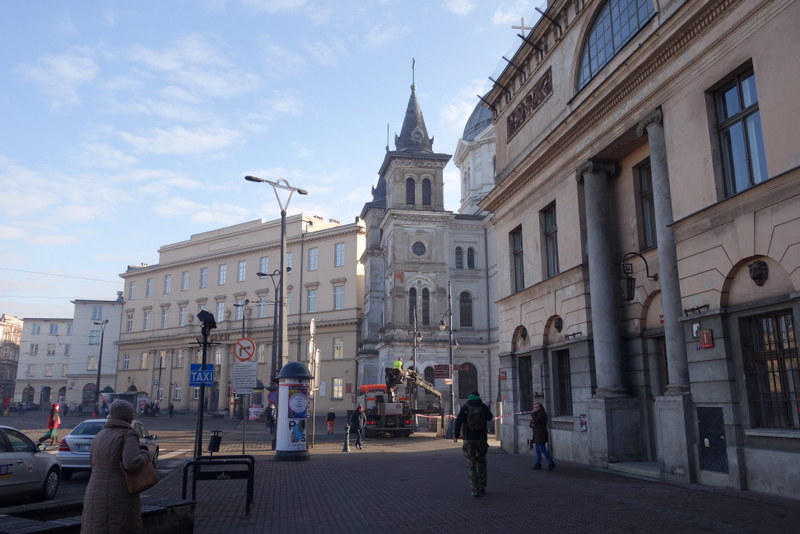
Plac Wolnośći, archive on the right.

Plac Wolnośći, archive on the right.

The archive is in an old building in Plac Wolności, a circular intersection which, depending where you look, evokes either socialist monumentalism or the bourgeois elegance of the century before. Archives are odd places, and archivists generally seem more comfortable around paper and books than around people. In Łódź the documents I wanted are on microfilm. In other places, I have been fortunate enough to leaf through the original record books. They are large ledgers with thick yellowish paper. Some of the hardbound covers are riddled with insect holes. The handwritten entries can be hard to read—some scribes were neater than others; some added their own unique flourishes.

Still, I hit the jackpot—records from Skierniewice dating from the 1840s-60s. I found Hiel Piwko’s birth certificate and traced his line back two or three more generations. I found out that his father and mother came from smaller towns near Skierniewice, Rawa Mazowiecka and Bolimów. These older records are in Polish, though the handwriting can still be hard to decipher. I learned that my great-great grandfather Josek was a tanner (garbarz). This is consistent with what Aunt Pat has in her notes, but Hiel’s mother is listed with a different name—instead of Lucyna King, she’s Cywia Rajch. I traced back further after getting home, and found reference on JRI (Jewish Records Indexing) to her birth certificate, which lists her as Lieba Cywia Raich. Pat also lists Babcia’s sister Libe Piwko as Lucyna, so that likely explains the first name. Lucyna, Libe, Lieba can easily be versions of the same name. Could King and Rajch be related, too?

The birth records follow a standard pattern. They identify the father, the date he came to the record office, his age, town, and sometimes profession. Next, two witnesses’ names, ages, towns, and sometimes professions are listed. Then comes the name of the mother, her age and town, and finally the sex, birthdate, and name of the child. The witnesses and father sign, along with the clerk. I’ve been paying particular attention to signatures, which are occasionally in Hebrew, but are mostly in Polish.

The language used in these record books mark the political transformations of the 19th century. After the Uprising in the early 1860s, records in the Russian partition switched to Russian instead of Polish. In Lęczyca (where I went the next day to trace the ancestry of Pinkus Kolski, who married Babcia’s sister), although the records were in Russian, peoples’ names were listed in both Russian and Polish.

I also was able to trace other historical facts about the Piwko line. Great-great grandmother Cywia, Josek Piwko’s first wife, died in 1862 at age 32, just a month after giving birth to a son Dawid. According to Aunt Pat’s records, Cywia (Lucyna) died of cholera (but at age 27). Hiel would have been just 7 years old in 1862. Three years later, Dawid died. Within a year, Josek had another son, Nusen Dawid with a new wife, Sura Burgierman. She was 24 and he was 42.

According to Aunt Pat’s notes, Josek had four wives. I am still looking for mention of the other two. Maybe I’ll find something when I get the Russian language records I collected in Grodzisk Mazowiecki translated.

Hiel Majer Piwko’s birth certificate

28 Wednesday Jan 2015

Posted by Marysia Galbraith in Family, Piwko

≈ 2 Comments

Tags

Hiel Majer Piwko

In mid-December, I drove across the flat plain from Poznań to the city of Łódź, where I found the birth certificate of my great grandfather, my babcia Halina’s father. So here is one more fragment that connects me to Poland, and to my Jewish heritage. From it, I learn that in Skierniewice on the third/fifteenth of November, 1854, Josek Piwko, tanner, age thirty appeared with two witnesses (I can’t read the first’s name, but he’s listed as a laborer, age forty-five; the second is David Lęczner, szkolnik [teacher?], age fifty-one) to report that he and his wife Cywia (maiden name Raych), age twenty-six, had a son Hiel Majer on the 26th of October/ 7th of November.

Hiel Majer Piwko's birth certificate, 1854

Hiel Majer Piwko’s birth certificate, 1854

Someone, maybe my great great grandfather? Signed the document in what looks like Hebrew letters. The image quality is poor because I had to photograph the image on a microfilm reader. In other archives I have gotten to page through the actual record books.

← Older posts
Newer posts →

Categories

  • Anthropology (37)
    • Archives (14)
    • Fieldwork (7)
    • Ground Penetrating Radar (GPR (4)
    • Research Methodology (8)
  • antisemitism (14)
  • Association of Descendants of Jewish Central Poland (32)
  • Catholicism (8)
  • Conference (1)
  • Discrimination (2)
  • Family (69)
    • Bereda (17)
    • Kolski (13)
    • Piwko (22)
    • Rotblit (3)
    • Walfisz (4)
    • Winawer (7)
  • Genealogy (11)
  • Heritage work (66)
    • Commemoration (23)
  • Identity (18)
  • Israel (6)
  • Jewish Culture (89)
    • Cemeteries (51)
    • Museum (7)
    • Synagogues (33)
  • Jewish immigrants (8)
  • Jewish Religion (1)
  • Memory (70)
  • Names (14)
  • Photographs (6)
  • Pifko-Winawer Circle (5)
  • Poland (125)
    • Baligród (1)
    • Bolimów (1)
    • Brześć Kujawski (5)
    • Buk (1)
    • Chodecz (1)
    • Dukla (2)
    • Dąbrowice (1)
    • Gdynia (1)
    • Gostynin (2)
    • Gąbin (1)
    • Izbica Kujawska (1)
    • Kazimierz (4)
    • Kowal (1)
    • Koło (1)
    • Krakow (7)
    • Krośniewice (1)
    • Kutno (6)
    • Kłodawa (1)
    • Lesko (8)
    • Leszno (1)
    • Lubień Kujawski (1)
    • Lubraniec (1)
    • Lutowiska (3)
    • Piła (3)
    • Podgórze (2)
    • Poznan (11)
    • Przemyśl (2)
    • Pzedecz (1)
    • Radom (1)
    • Radymno (1)
    • Sanok (1)
    • Skierniewice (5)
    • Sobota (2)
    • Tarnów (2)
    • Warsaw (22)
    • Wielkopolska (1)
    • Wronki (7)
    • Włocławek (20)
    • Zasław (2)
    • Łódź (1)
    • Żychlin (30)
  • Polish Culture (10)
  • Polish-Jewish Heritage (60)
  • Polish-Jewish relations (60)
  • Post-World War II (24)
  • Pre-World War II (22)
  • Reclaimed Property (1)
  • stereotypes (3)
  • Survival (9)
  • Trauma (3)
  • Uncategorized (5)
  • Victims and perpetrators (4)
  • World War II (45)
    • Jewish Ghetto (12)
    • Nazi Camps (5)
    • Polish Underground Army (3)
  • Yiddish (5)

Enter your email address to follow this blog and receive notifications of new posts by email. Your email address will not be shared.

Archives

  • October 2025 (1)
  • July 2025 (8)
  • June 2025 (1)
  • April 2025 (1)
  • August 2024 (3)
  • July 2024 (3)
  • May 2024 (2)
  • April 2024 (1)
  • May 2023 (2)
  • January 2023 (2)
  • December 2022 (7)
  • November 2022 (2)
  • October 2022 (5)
  • September 2022 (1)
  • January 2022 (1)
  • August 2021 (1)
  • December 2020 (2)
  • July 2020 (1)
  • May 2020 (3)
  • April 2020 (1)
  • March 2020 (1)
  • January 2020 (2)
  • May 2019 (1)
  • February 2019 (1)
  • November 2018 (1)
  • September 2018 (1)
  • August 2018 (3)
  • July 2018 (1)
  • June 2018 (1)
  • May 2018 (1)
  • April 2018 (2)
  • March 2018 (2)
  • February 2018 (2)
  • January 2018 (2)
  • December 2017 (2)
  • November 2017 (2)
  • October 2017 (1)
  • September 2017 (3)
  • August 2017 (3)
  • June 2017 (2)
  • May 2017 (3)
  • April 2017 (1)
  • March 2017 (2)
  • February 2017 (1)
  • January 2017 (2)
  • December 2016 (2)
  • November 2016 (4)
  • October 2016 (1)
  • September 2016 (6)
  • August 2016 (2)
  • July 2016 (1)
  • May 2016 (4)
  • April 2016 (2)
  • March 2016 (3)
  • February 2016 (4)
  • January 2016 (3)
  • December 2015 (3)
  • November 2015 (5)
  • October 2015 (5)
  • September 2015 (3)
  • August 2015 (4)
  • July 2015 (3)
  • June 2015 (3)
  • May 2015 (4)
  • April 2015 (9)
  • March 2015 (3)
  • February 2015 (2)
  • January 2015 (5)
  • December 2014 (4)
  • November 2014 (9)
  • October 2014 (2)
  • September 2014 (1)

Copyright Notice

All original text and images are copyright © Marysia Galbraith. Please contact the author before quoting.

Blog at WordPress.com.

  • Subscribe Subscribed
    • Uncovering Jewish Heritage
    • Join 145 other subscribers
    • Already have a WordPress.com account? Log in now.
    • Uncovering Jewish Heritage
    • Subscribe Subscribed
    • Sign up
    • Log in
    • Report this content
    • View site in Reader
    • Manage subscriptions
    • Collapse this bar
 

Loading Comments...