• About
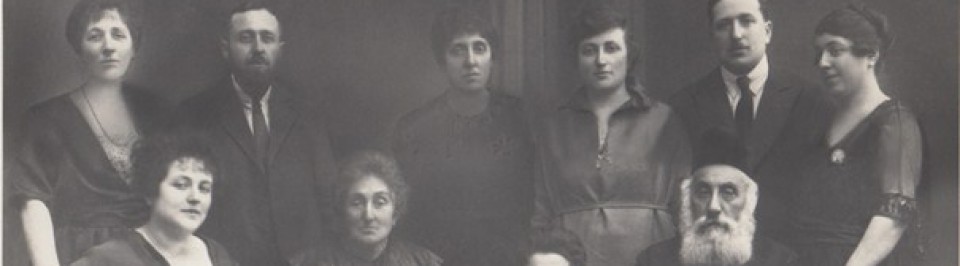
  • The Photo that Started it All

Uncovering Jewish Heritage

Uncovering Jewish Heritage

Category Archives: Poland

Mapping Family Roots

23 Sunday Oct 2016

Posted by Marysia Galbraith in Archives, Family, Identity, Polish-Jewish Heritage, Pre-World War II, Walfisz, Żychlin

≈ 2 Comments

Tags

map

I made an extraordinary find in the Kutno archive—a map of Żychlin dating from 1869. I found reference to it in an article, but the archivists had a little difficulty locating it because it didn’t have an identification number (signatura). One archivist said something about it being so fragile they don’t show it. But another found it hanging on the wall and brought it out for me. The writing is in Russian. At that time, Żychlin was in the Russian partition of Poland. After the January Insurrection in 1863, the Russians mandated all public documents had to be in Russian, not Polish. That is why archival documents before the 1860s are in Polish while the later ones are mostly in Russian.

Russian writing on the 1869 map of Żychlin

I don’t know what is written here–maybe a reader could translate it for me?

dsc08463

Map of Żychlin dated 1869

Properties are numbered on the map, but not by street address. That means the numbers are scattered throughout the city making it difficult to find particular locations. According to the Żychlin Books of Residents (Akta Miasta Żychlina, also in the archive), my Walfisz ancestors lived at various times at numbers 28, 53, and 63. My great grandmother Hinda Walfisz married my great grandfather Hiel Majer Piwko. I wrote about them in previous posts: Piwko Saga, The Photo, and Super Kosher Cookies and Sliced Ham.

The map is hard to read, patched, and creased. The cross-shaped church stands out in the top half. Below it is the market square, and #53 is in the row of buildings along its lower edge. #63 is further to the left, and #28 is on the street running down from the market square.Not surprisingly, these properties are all near the synagogue, which as best as I can tell is #86 on the map (a bit below #63).

I had already seen one Book of Residents in 2013, but in 2016 I found my great grandmother’s family listed in three others, as well. Since the books have been indexed, the archivist was able to tell me what page to look on. And even though these records are only a few years older than the map, they are in Polish. There is only one Walfisz family in the books (my great grandmother with her sisters and parents), but other more distant family names also appear: many Losmans, a couple of Kolskis, and one Jakubowicz. Each household has its own page in the book, but there can be several households in the same building. Because religion is one of the things recorded in the Books, I could see that it wasn’t uncommon for addresses with multiple households to include families of multiple faiths: some Catholic, some Jewish, some Evangelical.

I know this is just an old map, but being able to pore over it, to touch it, helped to transport me back in time, and to once again (for the first time?) connect with the place where I’m from. It doesn’t matter that I never actually lived there (nor did my mother nor even my grandmother). Some of my people did. Right there in that place. With this newfound knowledge, I drove back through Żychlin one more time, this time gazing at the buildings that once housed my family. It didn’t really matter that the buildings had changed, nor that I was still unsure how exactly the old building numbers match the contemporary ones. Once this was their home.

My elusive grandfather Jakob Rotblit

27 Tuesday Sep 2016

Posted by Marysia Galbraith in Family, Gdynia, Memory, Names, Poland, Pre-World War II, Rotblit, Warsaw

≈ 3 Comments

Tags

Jakub Rotblit

The danger of digging up family skeletons is that you never know what kind of bones you’ll find.

My mom rarely said anything about her biological father. In fact, it wasn’t until I was a teenager that she told me the man she called Papa, the husband of her mother, was not her birth father. As children, she and her older brother felt like orphans. They never saw their birth father, which I’m sure was related to the fact that talking about him would have revealed the family’s secret Jewish roots. Back then, in prewar Poland, Catholics did not divorce and remarry.

When she finally opened up to me about him, Mama said she barely knew her father. She almost never saw him. Then one summer, following a big fight between him and her mother, Babcia (my grandmother) got fed up and told him, “If you want your children you can have them.” She put George (who was 15 at the time) and my mother (who was 13) onto a train to Gdansk, where they joined their father with his second wife and their daughter.

The Baltic Coast was beautiful, but Mama was miserable. Her father didn’t know what to do with them, and his 2nd wife didn’t want them there; perhaps she felt threatened. After two months (that’s what I remember mom said, though some relatives have told me it’s inconceivable Babcia would have left her children for that long), my grandmother came to Gdansk and with effusive tears and passionate apologies, she brought them back with her to Warsaw. That’s the last time Mama saw her father. She told me she did not know what happened to him, but that probably he died during the war. She never told me his name.

Victorian high button shoes. Source: http://antique-gown.com/

Victorian high button shoes. Source: http://antique-gown.com/

One of the stories my mother would tell me from time to time was about the “high button shoes” her father insisted she wear when she was around 13 years old. The bitterness still lingered when she described to me how much she hated those boots; they were old fashioned and ugly, the kind that were commonly worn in the 19th century. Her father contended they were sturdy, and proper for a young girl. They were also expensive because he’d had them custom made for her. I always assumed this was a conflict Mama had with Papa, her stepfather. It’s only now, as I piece together the fragments, it occurs to me this argument might have been with her biological father. The timing fits. Also I imagine he was probably the more conservative of the two.

I only learned my biological grandfather’s name in 2011, when my Aunt Pat (the wife of my mother’s younger brother Sig) showed me a family tree she had made identifying my grandfather as Jacob Rotblit (in a previous post, I’ve written about how names can vary), son of Ignacy and Hanna, and brother of Maurice and Helena. Pat reiterated another fact my mother had mentioned: Jacob was from Warsaw but had moved to the Baltic Coast. Pat also had notes, presumably from conversations with my grandmother’s sister, that Rotblit had been a merchant who sold fine jewelry and luxury cars.

Jakub Rotblit b. 1891

Jakob Rotblit, b. 1891

Then my cousin Krysia remembered that before he died, her father (my mother’s brother George) gave her a photo of his father. Krysia wrote some notes on the back of the photo: “He was a respected Jew. Babcia fell in love with his friend Zygmunt and left him.” Then, with a rectangle around it was the name “Jakup Rotblit” and under that “my father’s father” and a roughly sketched family tree. So not only could I attach a name to my mysterious grandfather. I also had a photograph. And yes, his children resemble him. And so does one of my brothers and a cousin.

From here, the trail went cold. It took another two years before Krysia and I obtained a copy of a birth certificate of a Jacob Rotblit who was born in Warsaw in 1891. The name, city, and date were plausible, but we didn’t know if this was our grandfather, our Jacob Rotblit or some other one. Though not a common name, I have found prewar records of at least three.

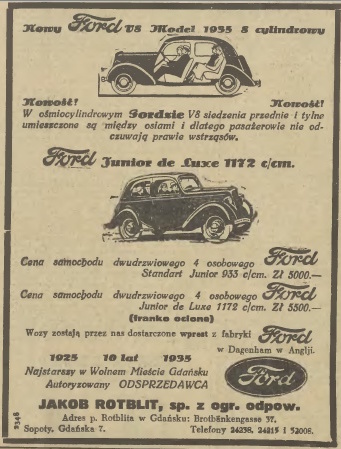
This was in 2013, a time when Krysia and I would stay up until early morning searching everything we could think of on Google, and sending tidbits back and forth to try and fill out the story of our grandfather . She contacted several Rotblits she found to inquire if we might be related. I dug up references to Jacob Rotblit’s Ford dealership. This business, car sales, corresponded with my aunt’s notes. Granted, neither now nor then were Fords “luxury cars,” but in the 1930s any car was a luxury.

Ad for Jakob Rotblit, Ford Dealer in Gdansk, Sopot, and Gdynia, Gazeta Gdanska 1935

Ad for Jakob Rotblit, Ford Dealer in Gdansk, Sopot, and Gdynia, Gazeta Gdanska 1935

In September 2013, when I was back in Warsaw at the Jewish Historical Institute, Anna Przybyszewska recalled seeing the name in a book, J. Drozd Społeczność Żydowska Gdyni w Okresie Miedzywojennym [Jewish Residents of Gdynia during the Interwar Period]. Indeed, on page 309 is the following (I’ve translated it):


On November 20, 1936, a company was registered in Gdynia named “Permanent Automobile Market (Stałe Targi Samochodowe).” It was the initiative of the married couple Jakub and Bronisława Rotblit. The object of the enterprise Stałe Targi Samochodowe was the management of the trade in domestic and international products, specifically mechanized vehicles (new and used) as well as their accessories. In addition, the company offered parts, service, and repairs of vehicles. Jakub Rotblit specialized in the sale of automobiles and accessories of the Ford firm, of which he was an authorized dealer. The specific headquarters of the Rotblit’s company were always located in places beneficial to the interests of the place—first in the BGK building (at #31 10 Lutego [Tenth of February] Street), and from July 1938 in the new office building of the firm “Bananas” (at #24 Kwiatkowskiego Street). The operation of the firm ended suddenly upon the death of Bronisława Rotblit, as a result of which her husband moved to Warsaw.

In the footnote: Jakub Rotblit (born June 25, 1891 in Warsaw), son of Arkadiusz Rotblit and Racheli Prowizor, married, merchant. Arrived in Gdynia from Warsaw June 25 1935. He lived at 25/7 10 Lutego Street and 6 Hetmańskiej Street.


It took another year before I got the birth certificate (which was in Russian) translated and could confirm the vital information was consistent with what was written in this book: The birthdate was the same; the parent’s names were similar enough to likely be Hebrew and Polish versions of the same names (Aron/Arkadiusz and Ruchla/Racheli Prowizor). In my Aunt Pat’s notes, Jacob’s second wife was “Blanka” and their daughter’s name “Rosa.” I still couldn’t be sure, but it was looking more likely I had uncovered more traces of my biological grandfather.

I have continued to collect fragments, fleeting references to Jacob Rotblit, never sure if they’re about my grandfather or not. Did his 2nd wife really commit suicide? Was he really arrested for business fraud? Was he shot outside of Warsaw in 1941 by a German officer? I have documents saying these things happened, but I have no way of checking these details and no way of linking them conclusively to my grandfather.

But I have recently learned something truly extraordinary. Last month I was contacted by someone through Ancestry’s DNA matches. Genetically, we appear to be second cousins. And yes. His mother was a Rotblit, daughter of Louis/Leib Rotblit who came from Russia/Poland. Louis arrived in England, married and had three children around the time of World War I. My cousin knows very little about his grandfather because he left his grandmother after several years. His mother never talked about him. But on his grandparent’s marriage certificate, Louis’ father was named Aaron and his brothers Moshe and Ya’akov (all written in Hebrew, so the English or Polish forms could easily be Arkadiusz, Maurice (?), and Jacob).

Enough of these details add up. And DNA is likely to be the most concrete evidence I’ll ever find. Another branch of my family tree is filling out. More relatives survived.

Dwie Butelki Wódki

21 Wednesday Sep 2016

Posted by Marysia Galbraith in Memory, Polish-Jewish relations, Post-World War II, Żychlin

≈ Leave a comment

Historia “Dwie Butelki Wódki,” napisana przez Mirosława Stojak, prezentacja opracowana przez Henryk Olszewski:

dwie-butelki

Two Bottles of Vodka

19 Monday Sep 2016

Posted by Marysia Galbraith in Heritage work, Jewish Culture, Memory, Polish-Jewish relations, Post-World War II, Survival, Włocławek, Żychlin

≈ Leave a comment

Two times over the course of my visit to Żychlin, my host Henryk told me a story about a young Jewish boy who survived the war and returned to the town to collect his family’s jewels. A bad Pole threatened the boy’s life unless he showed him where the valuables were hidden. The frightened boy showed him. They sat down at a table and for each one item the bad Pole gave the boy, he took several for himself. The boy took out a roll of money and offered to buy the jewelry. Then, the brother of the bad Pole came in and saw what was going on. He told his brother, “Here, I have two bottles of vodka. We’ll drink together.” Then he gave the boy all his money and jewels back.

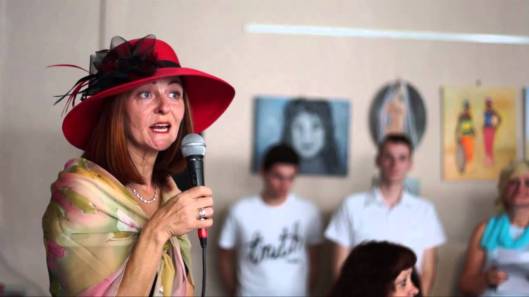
The story made an impression on Henryk. He said a woman from Włocławek had told it to him. Because they were talking on the phone, he didn’t want her to tell him the real names of the men. He wants to save it for when they meet in person. That kind of information is better shared face-to-face. The second time he told me this story, it occurred to me I might know the woman he had spoken with. Indeed, it turned out that it was Mirosława Stojak, who has made it her personal quest to learn all she can about Włocławek Jews. Henryk promptly called Mira so we could talk. I met Mira during my first visit to Włocławek in 2014, and then again when I was there in June.

Mira uses her talents as a poet, writer, and actress to share the stories of Włocławek Jews. In her book Utkane Sercem Włocławskim Żydom, she includes the story that so captivated Henryk, called “Two Bottles of Vodka.” Here is the translation of the story:

Two Bottles of Vodka

Utkane Sercem Włocławskim Żydom by Mirosława StojakWinter 1946 was cold. All around, snow covered homes, roads, and trees. Long icicles hung from the roofs. On a January afternoon, Ariel came on the snowy road to the home of his relatives. Before the war, together with his sisters, he was there a few times. During his last visit in 1939 Ariel’s father, a merchant from Żychlin, knew that soon Germans would attack Poland militarily. Sixteen-year-old Ariel, a short boy, emaciated after the experience of the camp, walked pensively listening to the scrape of his creaking shoes. In his ears rang what his father once told him:

“You have to save yourself, and whoever survives should return here…”

He knew perfectly well that his visit would not be viewed happily by the new owners of the house. He was even afraid that he would be treated poorly. He wasn’t sure, either, if the home still stood, or if it was bombed during the war. He hoped not. He walked slowly, every once in a while touching an icy rock. He passed ruins of houses and ashes, people shoveled snow. He heard dogs barking. Before the war he loved dogs, and they even had two beautiful German shepherds at home. Now, they reminded him of scenes from the camp and he was horribly afraid of them. In Auschwitz they were trained to murder. Ariel picked up his pace. Soon the sun would set and it would be dark. After a while, he saw the home of his uncles and aunts, who didn’t much care for visitors during the war. Fearfully, he knocked on the door. A young man stood before him, tall and well built. He had an unfriendly expression on his face, as if he had been expecting him. With his strong hand, he pulled Ariel inside, shutting the door, and yelled,

“Where is it?”

The frightened Jew led him down the stairs to the basement, and then the “brute” pushed him against a wall and demanded he say where the treasure is. A few strikes of a hammer against a wall and in the hands of his “captor” appeared a casket. Now, the boy was led upstairs and into the kitchen. The man grabbed his shirt and sat him on a chair at the table, then sat down across from him and opened the box. Inside was the ancestral jewelry of Ariel’s family. There were brilliantly shiny rings, broaches, and necklaces. Taking the valuables out of the casket, the man put them on the table, between himself and Ariel, loudly counting:

“Mine, mine, yours, mine, mine, mine, yours, mine, mine…”

When he finished, there were just three family heirlooms in front of Ariel. Tears appeared in his eyes. They reminded him of his mother, who always wore a string of white pearls around her neck when she went to synagogue. Now they lay in front of him on the table awaiting their verdict. The boy slowly reached into his pocket and pulled out a role of banknotes, explaining that for him the jewelry has sentimental value for his family and he would gladly buy them back. The “brute,” without thinking, took all the valuables lying on the table for himself, and in a deep resonant voice called out,

“Józek!”

In the kitchen doorway appeared a “man like an oak,” big and broad-shouldered, who asked contemptuously,

“What?” and looked at the table.

The brute moved aside, his eyes not leaving the valuables. Józek who was much older was supposed to settle the matter. Ariel began quickly explaining, persuading him to agree to his proposition to buy the jewelry. He asked Józek to take the money and give back the valuables and then everyone would be satisfied. Józek thought; he silently looked at the young Jew and the table with an appraising eye. Frightened, Ariel imagined them closing him in the basement and starving him, or God forbid, murdering him. Wouldn’t it be ironic to die here and now, after he had the good fortune to miss death at the hands of the Nazis? After a while, Józek broke the silence, yelling:

“Karol!”

A boy who was perhaps eight years old came into the kitchen. Freckled, with wavy hair and an intelligent look. From the pile of money lying on the table, Józek took one bill, gave it to the boy and told him:

“Go and buy two bottles of vodka.”

The boy, like a shot, ran from the cottage. Józek pushed the jewelry and money in the direction of Arial and said:

“Take it and go!”

Ariel ran as fast as his legs would take him. It was a marathon. He didn’t even touch the rock; he didn’t hear the barking dogs. He sped ahead with all the strength in his legs, not looking back. When he got to the station, the train stood ready for departure.

Mirosława Stojak recounting stories about Włocławek Jews, October 1, 2015

Mirosława Stojak recounting stories about Włocławek Jews, October 1, 2015

Mirka told me she met the boy from the story when he visited Włocławek (now of course, he’s an elderly man). His wife wore some beautiful jewelry; she doesn’t know if these were pieces he recovered, but it is nice to think that they were. At his request, she changed all the names when she wrote down the story. Nor did she write about the further misfortunes the boy experienced before he found his way to safety in Israel. I won’t either—the most important thing is that he survived.

How Żychlin Remembers, part 2

01 Thursday Sep 2016

Posted by Marysia Galbraith in antisemitism, Jewish Ghetto, Memory, Polish-Jewish Heritage, Polish-Jewish relations, Post-World War II, Pre-World War II, stereotypes, Synagogues, World War II, Żychlin

≈ Leave a comment

The next morning I met Tadeusz Kafarski for a tour of the city. He was with Józef Staszewski, the director of the Żychlin branch of the Association of Children of War. Because Józef was born in 1929, he remembers wartime better than Tadeusz, who was only a year old when the Nazis invaded. The two sometimes disagreed about details, but together they reconstructed for me Jewish life in Żychlin. As they pointed to the buildings that stand here and now, their descriptions transported me back and forth through time, to prewar life, wartime murder, and communist era absence. I had the odd sensation as I did so many times on this trip of being both here (in the present) and then (in the past), my mind trying to reconcile what stood before my eyes with what used to be. My guides led me back in time with varied fragments of information:

On Łukasieńskiego Street, we passed concrete apartment buildings built in the 1970s on the site of the second, larger Jewish ghetto.

Mr. Helmer, the richest Jew in town, lived across from the market square, to the left of Narutowicza Street, in what is now a well maintained two story building.

One block south, near the synagogue (the blue Star of David on the map below) on Kilińskiego Street, we passed the former home of a Jewish doctor, a building that used to be a dairy collection point, and another that was the preschool Tadeusz attended. A man named Merc lived nearer the synagogue. Behind some houses was the Jewish slaughterhouse, but Christian Poles also bought meat from there.

Jews and Poles lived side by side, even though this part of town was predominantly Jewish. Today, this section of town is run down though these particular buildings seem in good shape.
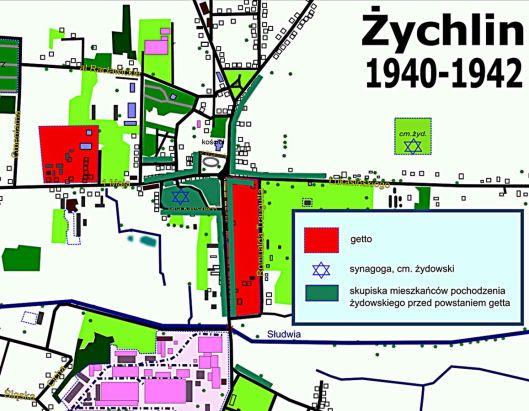
Map of Żychlin 1940-42 showing the ghettos in red, the first one is on the left and the second is on the right. The dark green shows the main areas where Jews lived--note that most were not in what became the ghetto. That meant gentiles had to move out of those areas when the Jews were forced to move in.

Map of Żychlin 1940-42 showing the ghettos in red, the first one is on the left and the second is on the right. The dark green shows the main areas where Jews lived–note that most were not in what became the ghetto. That meant gentiles had to move out of the ghetto areas when the Jews were forced to move into them.

As we wound through the dusty streets, the contemporary residents stared at us suspiciously, though some who know my guides greeted them, “Dzień dobry (Good day).”

The patch of tall weeds in front of the synagogue (on Jana Kulińskiego Street) used to be a fenced garden. The garden continued to be maintained after the war, even though the Polish residents used the synagogue as a warehouse, as did the Nazis. The lower sections of the windows were bricked in and new doorways were installed in the sides of the building to facilitate loading and unloading.

What's left of the Żychlin synagogue. Note the windows used to extend much father down, and the more recent doorway (now blocked) added when the building was used as a warehouse. The weedy area in the foreground used to be a fenced garden.
What’s left of the Żychlin synagogue. Note the windows used to extend much father down, and the more recent doorway (now blocked) added when the building was used as a warehouse. The weedy area in the foreground used to be a fenced garden.
Pan Józef beside the site of the well and mikvah
Worn stones--something I learned to value as a student archeologist. These were used in place of asphalt before World War II
Worn stones–something I learned to value as a student archeologist. These were used in place of asphalt before World War II

As a child, Józef went inside several times with his parents, though he could only describe the general layout of the interior. The candlelit altar was on the east wall, the main entrance on the west. Above the entrance was a balcony that would have been for the choir in a church but in the synagogue was for women to pray in. In a neighboring building, the rabbi would change. On the other side of the synagogue were a well (with the best water in town) and mikvah. After the war, everyone used that bathhouse.

Józef said, “There is just one faith; Jews believe in God just like we do.” He declared children played together regardless of religion. He described distinctive aspects of the Jewish population. Men wore head covers and beards. They would take their shoes off in the synagogue, but had to keep their head covered. The Jewish “priest” was the only one with side curls. He wore a black hat, black clothes, and a white shirt. Jews stayed home Friday and Saturday; they didn’t work. They held their hands at their waist and rocked as they prayed. They read scrolls. Jews used to bury their dead in a sitting position with money on their eyes. Men carried the unclothed, shrouded body to the cemetery. They returned to God as they began. When they left the cemetery after the burial, mourners dispersed in different directions . He asked why and was told it was so the spirit doesn’t return home with them.

Are these personal memories or stereotypes picked up from other sources?

My guides told me about a man named Rozenberg. They pointed to the yard of his bakery, and then we walked around to what used to be its storefront on Narutowicza Street. Rozenberg lived in a multi-story home on the other side of the street. He married a Christian named Czajka. Jozek said the Rozenbergs’ children Krysia and Rudek were Jewish. He played with the boy. After her husband died, Czajka married her brother-in-law, a judge. They had two more children. After the war, the family was harassed by the police so they sold all their buildings and went to Israel. One child moved to Norway.

The Germans occupied the town on September 15. At first, they didn’t treat anyone harshly, but they did take their property—first the stores and richer buildings owned by Jews, and then jewelry and everything anyone had that was valuable.

The main entrance to the ghetto used to be across from Rozenberg’s bakery. This was the second ghetto, established later for the poorer Jews. The first ghetto, where the richer Jews were sent, was on the grounds of an old factory outside the center of town. As Jews were forced into the ghetto, Poles whose homes were within the ghetto territory had to move to homes on the other side of the street—homes that had been emptied of their Jewish residents.

In July 1942, the second ghetto was liquidated. It took five hours because thousands of people were loaded onto wagons, and then everything was removed from their homes and segregated into piles. Some Poles helped, forced to work under threat of death. My guides disputed claims that Poles plundered Jewish possessions. They insisted the Germans took everything valuable, then piled up all the remaining dirty and broken things and burned them.

We crossed the street to the main square. Right there in front of the church there used to be a row of market stalls run by Jews. The church owned the land, but didn’t have any problem with Jewish venders. We continued behind the church and across another market square to the town library. This solid stone structure was originally built for Hempel, the Nazi mayor of the town remembered for his cruelty.

My guides Tadeusz Kafarski and Józef Staszewski in the town square
The Żychlin town square
Director of the Żychlin Library, Ewa Andrzejewska
Nazi Mayor Hempel's villa is now the Żychlin Public Library
Nazi Mayor Hempel’s villa is now the Żychlin Public Library

Tadeusz told me the wartime mayor’s villa was built with tombstones from the Jewish cemetery. Jews were pressed into service carrying the heavy stones. It was backbreaking labor made more difficult by the extreme heat. When one of the workers asked for a drink of water, the Nazi officer shot and killed him. Then, he held up a stick threateningly and asked who else wants a drink. No one dared ask for water after that. Józef told the story a little differently. He said the man who asked for water was dragged to the nearby lake and drowned.

Pani Ewa Andrzejewska, the director of the library, said her aunt who took care of Hempel’s children described him as ruthless, “A typical German.” He furnished his house with things he took from the richer people in the city. He rode a white horse. She also suggested my guides were a little too invested in showing Poles in a positive light to me—emphasizing heroism and victimization and minimizing complicity. She said that on one hand, Jews and Poles lived peacefully together. She was raised to not feel any prejudice. But on the other, many have negative sentiments toward Jews. She even went further to say Poles are genetically indisposed toward Jews. I challenged her on this saying that since sentiments toward Jews have changed over time, it’s a matter of history, not biology. She still didn’t agree, and repeated that Poles have a problem with this.

A dream of mine would be to help preserve and maybe even rebuild the town synagogue. My hosts said the TMHŻ has looked into turning it into their meeting space. Ewa said the ownership of the building is in dispute. So for now it just sits there, slowly crumbling away.

Leaving town the next day, I was once again stopped at the railway crossing as a train sped by. I didn’t mind having one last moment in this town where my great grandmother lived. I felt saddened and rooted by what I had learned, and grateful for the acquaintances who showed me Żychlin as it is now and as it was then.
How Żychlin Remembers, part 1

01 Thursday Sep 2016

Posted by Marysia Galbraith in Bolimów, Jewish Ghetto, Memory, Polish-Jewish Heritage, Polish-Jewish relations, Post-World War II, Pre-World War II, Sobota, Synagogues, World War II, Żychlin

≈ 1 Comment

My visit to Żychlin began and ended at the railway crossing. I had meandered up from the highway, passing through the small communities of Bolimów and Sobota where my ancestors lived over a century ago, and had to stop as a train sped by. I called pan Henryk to make sure I was on the right road. He assured me I was, and met me a few minutes later. Henryk, whom I met in 2014 through his website Historia Żychlina, had arranged meetings, tours, and interviews for me with resident fans of local history.

Bolimów synagogue, now the police station at 6 Farna Street
Central Square, Sobota

Tadeusz Kafarski, Vice President of the Association of Enthusiasts of Żychlin History (TMHŻ) joined us for a look around the train station. He and Henryk pointed across the tracks where during World War II transports took 2500 Jews from the Żychlin ghetto to Kulmhof (Chełmno) Camp near Poznań. They debated exactly where the trains had stood, but later, Henryk and his wife took me to a platform across from the main train station, saying that is where it happened.

Pan Tadeusz describing the transports that took away the Jewish residents of Żychlin in 1942.
Żychlin Train station, boarded up and unused
Looking across the express train tracks to the platform where Jews were loaded onto transports
A closer look at the same platform

The station building signals the effects of communism and its demise on this community. My guides told me the prewar station was imposing and beautiful. The postwar building that stands today—boarded up in places, broken windows and graffiti in others—is more functional than attractive. Its size shows that this used to be a major stop on the route from Moscow to Berlin. But since the express tracks were laid following the fall of communism, only a few trains stop here each day. Instead, every few minutes, one zips by at breakneck speed. The place was deserted, except for a group of teenagers who were hanging out.

Tadeusz told me he remembers the transports as they left the station with their human cargo in 1942, even though he was only four years old. During the war, when his family was forced to move from their home, as were many residents, they were resettled in a former Jewish residence. From the street it looked like a normal cottage with a living room on one side and a kitchen on the other. A distinctive feature of this house, though, was the stairs from the kitchen to the basement and the door from the basement to the courtyard behind the house. This private entrance was used sometimes by the men of the family who didn’t want to be seen returning in their dirty clothes.

Others whom I met during my visit shared similar memories of childhood. Janusz Tomczak, who was a teenager during the war, remembers seeing the land covered with wagons. Only later, he understood that these belonged to the Jews who were being taken to the camps. Józef Staszewski was with some older boys when the ghetto was being liquidated. It was a few days before Easter. He was a scout at the time and he made a vow to God he that he would choose death before he betrayed his friends. A couple of blocks from where they stood, Nazis loaded people into wagons and took them away. Now he knows that the captives were segregated by age and ability, and the children and elderly were led to special vehicles and then gassed inside them.

To be continued….


Włocławek’s Forgotten Street: The Street of Death (Ulica Śmierci)

04 Thursday Aug 2016

Posted by Marysia Galbraith in Heritage work, Memory, Polish-Jewish Heritage, Synagogues, World War II, Wronki, Włocławek

≈ 4 Comments

Tags

Facebook Fan Page, Memory for the Future, Miejsce Pamięci Zagłady Blisko Nas, Pamięć dla Przyszłości, Places of Holocaust Memory Near Us, Włocławek’s Forgotten Street, Włocławska Zapomniana Ulica

“Here and then” (“Tu i wtedy”)…that was the recurring line in Deputy Mayor Robert Dorna’s speech at the unveiling of the lapidarium in the Jewish cemetery in Wronki in December 2014. He linked the place we were standing (tu—here) to various moments in history (wtedy—then).

This could be an apt description of many of the heritage projects I have observed. They are efforts to gather together the fragments that can be recovered, and to reassemble them so they bring back to everyday landscapes the memories of multiple historical events in the lives of former Jewish residents. Seeing the past in the present has also been the touchstone of my recent trip to Poland. Everywhere, it seemed I was walking through streets as they look today, and at the same time carrying envisioning the way they looked back then (wtedy). Linking a particular place concretely to its past was also the goal of the contest that led the students and teachers at the Automotive High School in Włocławek (Zespół Szkół Samochodowych im. Tadeusza Kościuszki) to develop their Facebook “fan page” Włocławek’s Forgotten Street (Włocławska Zapomniana Ulica). They decided to focus on Piwna Street, which despite its small size (just two blocks long) became a focal point for viewing Jewish life and death in this city.

Screen Shot 2016-08-04 at 12.05.30 PM

Włocławska Zapomniana Ulica–the Facebook fanpage documenting the history of Włocławek’s Jews, on Piwna Street and beyond.

For thirteen years, the program “Memory for the Future” (“Pamięć dla Przyszłości”) has held annual contests for middle and high school students, challenging them to explore some aspect of Holocaust history. Initiated by the Association of Children of the Holocaust in Poland, and joined in recent years by the Polin Museum, Jewish Historical Institute, and Center for Educational Development, students have produced a variety of projects—essays, posters, and drawings. This year, the sponsors decided to try something new, more in keeping with the way young people communicate today. That’s why this year’s challenge “Places of Holocaust Memory Near Us” (“Miejsce Pamięci Zagłady Blisko Nas”) involved the production of a Facebook page.

Włocławek is a city of about 114,000 residents; the population has been declining since the fall of state socialism as local industries have closed and residents have sought better opportunities in more prosperous places within and outside of Poland. A century earlier, the city experienced rapid growth; during the four decades before World War II, it became a regional industrial center and the population tripled, reaching 68,000 by 1939. Jews were important contributors to the city’s development, and comprised nearly 20% of residents. My family was among the migrants to the city during this time. By the end of the war, most of Włocławek’s Jews had been murdered, the synagogues burned, and the cemetery desecrated.

Screen Shot 2016-08-03 at 4.33.01 PM

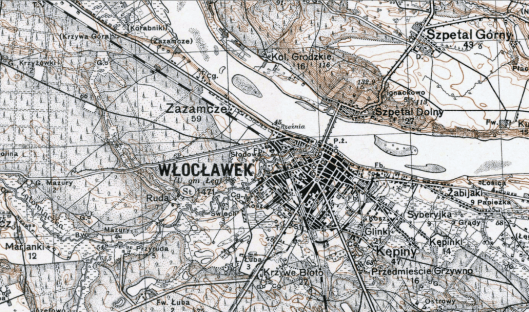
Map of Włocławek in 1930. Piwna Street is to the left of the bridge, just past an estuary opening out to the river. Map by Wojskowy Instytut Geograficzny.

Piwna Street is located off of Wyszyński Street (one of the main routes through town). About one third of the way along its short length it makes a 90 degree turn and runs for another block parallel to the Vistula River. On the river side is a massive two story building and dock that includes the Rejs na Przystani Café. Across the street, colorful depictions of fruits and the products made with them decorate the wall around the Delecta factory (see the cover photo of the Facebook page above). Until the Forgotten Street project, nothing indicated that Piwna was called the “Street of Death” after the Nazi occupation.

In September of 1939, the city’s synagogues were burned to the ground and the Jewish population was terrorized (read more about this here); some were arrested while others were killed. The retreating Polish forces had blown up the bridge across the Vistula, so the Nazis decided to replace it with a pontoon bridge at Piwna Street. But first the riverbank had to be reinforced. Captive Jews were forced to do this backbreaking work, using the stone and concrete remnants of the synagogue as building materials. Many died in the process, hence the name “Street of Death.”

What’s extraordinary about the high schoolers’ project is how effectively it brings into the present an awareness of the past. It does so with a wide variety of archival information, photographs, and first-person recollections. The public nature of the fan page also meant that other people learned about this history and could even contribute to it. For instance, one viewer posted this gouache painting of Piwna Street from the mid-19th century.

WloclawekUlPiwna1853

The view across Zgłowiączki Estuary and Piwna Street. Gouache by Alfons Matuszkiewicz, c. 1853. Posted on Włocławkska Zapomniana Ulica

To date the fan page has 1773 “likes.” Another component of the project was the posting of a QR code that when scanned with a smartphone connects to a brief explanation of the history of Piwna Street in four languages. QR codes were also posted at several other sites around town that are associated with Jewish culture (listen here).

DSC08097

QR code linking to a brief history of Piwna Street.

For now, these notices are just on laminated paper, but the hope is that something more permanent will be installed so visitors will continue to connect here and then—this particular location with the events that occurred in the past. When I visited in June, the city’s president expressed his support for the project. The question remains where the money will come from to pay for a more lasting marker. Still, with people of good will and extraordinary energy like the teachers and students at the Automotive High School, I’m hopeful something will be done in the not too distant future.

DSC08098

The teachers who worked on the project Włocławska Zapomniana Ulica: from the left, Anita Kaniewska-Kwiatkowska, Monika Lamka-Czerwińska, and Robert Feter.

Threading the Needle

27 Wednesday Jul 2016

Posted by Marysia Galbraith in antisemitism, Baligród, Commemoration, Fieldwork, Heritage work, Jewish Culture, Kazimierz, Krakow, Lesko, Memory, Poland, Polish Culture, Polish-Jewish Heritage, Polish-Jewish relations, Tarnów, Warsaw, Wronki, Włocławek, Zasław, Żychlin

≈ Leave a comment

Tags

Erica Lehrer, Jacek Nowak, Jewish Poland Revisited, Katka Reszke, Return of the Jew

I am back from six weeks in Poland. I envisioned regular posts from the field in this blog. But instead, doing fieldwork left little time for writing and reflecting about it. Nevertheless, a structure for my next book project has been emerging. The challenge will be threading the needle between celebrating the renewal of interest in Jewish life in Poland, captured so well in Erica Lehrer’s Jewish Poland Revisited and Katka Reszke’s Return of the Jew, and addressing the ongoing silences, distaste, even hatred expressed toward Jews, as revealed in Jacek Nowak’s interviews with ordinary Poles. Because both are happening at the same time, often in the same places, and sometimes even within the same people.

And I’ve seen evidence of both in my own research. People all over Poland are doing incredible work to preserve cemeteries, renovate synagogues, document first-person accounts, and celebrate Jewish music and culture, often in the absence of any involvement from living Jews. They work with passion to fill what they feel to be a void in their local communities. And they do so despite the resistance they sometimes face from fellow residents and local government representatives. Every place tells a different story, even though many of the same elements can be found in each of them. Over the next several posts, I’ll highlight the places and projects I visited. Watch for the place names to become links to more details.

Włocławek

DSC08792

Students and teachers from the Automotive High School in Włocławek receive the first place award for their Facebook “fan page” “Włocławska zapomniania ulica” (“Wloclawek’s forgotten street”) at the Polin Museum in Warsaw, June 22, 2016. The contest was “Places of Holocaust Memory Near Us” and the challenge was to highlight a place in the local community. The team from Włocławek chose Piwna Street, called “the street of death” during World War II.

Żychlin

DSC08396

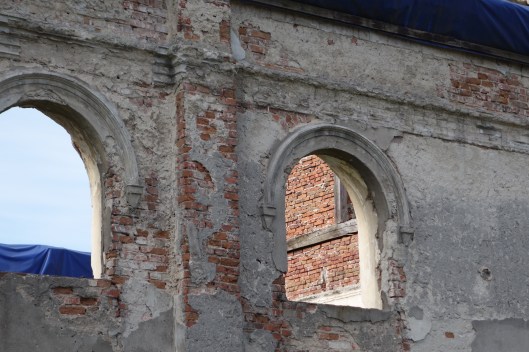
Detail of the synagogue in Żychlin, converted into a warehouse by the Nazis and used as such for many years after. The roof caved in several years ago. Traces of frescos are barely visible through the empty windows.

Kutno

KutnoCemetery

New signs at the Kutno Jewish cemetery provide historical information and urge residents to keep in mind this green hillside is a cemetery. Installed by Towarzystwo Przyjaciół Ziemi Kutnowski (Association of the Friends of the Kutno Region).

Wronki

An arial view of the Lapidarium in Wronki that shows the shape of the raised beds, meant to evoke an open book.

Warsaw

konferencja_zdk_polin-eng_1600_rgbIn Warsaw, the conference Jewish Cultural Heritage: Projects, Methods, Inspirations at the Polin Museum of the History of Polish Jews gave me a good idea of the scope of heritage work throughout Europe, as well as ongoing debates about Jewish heritage projects.

Krakow

IMG_0956

Glass House Orchestra performing at Shalom on Szeroka, the outdoor concert culminating the Krakow Jewish Culture Festival.

Tarnów

DSC09413

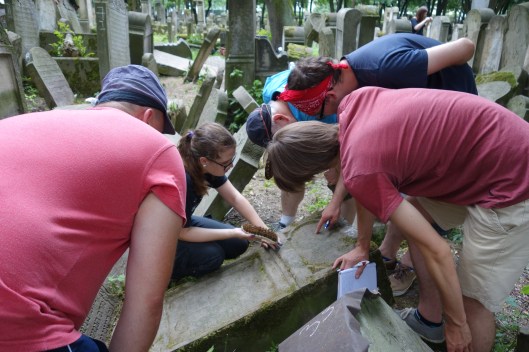
Professor Hońdo of the Jagiellonian University helps participants in the Tarnów Tombstone camp for volunteers (Tarnowskie macewy – obóz dla wolontariuszy) decipher the text on a tombstone.

Baligród

IMG_0998

The weeds grow tall in the Jewish cemetery in Baligród, despite indications of maintenance done not too long ago. It takes constant attention to keep these sites from slipping back into obscurity.

Zasław

ZaslawSignZagorz

Historical information about the Nazi Work Camp in Zasław marking the beginning of the trail from the Zagórz train station to the monument on the mass grave at Zasław. A project of the Stowarzyszenie Dziedzictwo Mniejszości Karpackich (Association of the Heritage of Minorities of the Carpathians).

Lesko

DSC09276

The synagogue in my beloved Lesko–much of the front facade was rebuilt and reinvented around 1960.


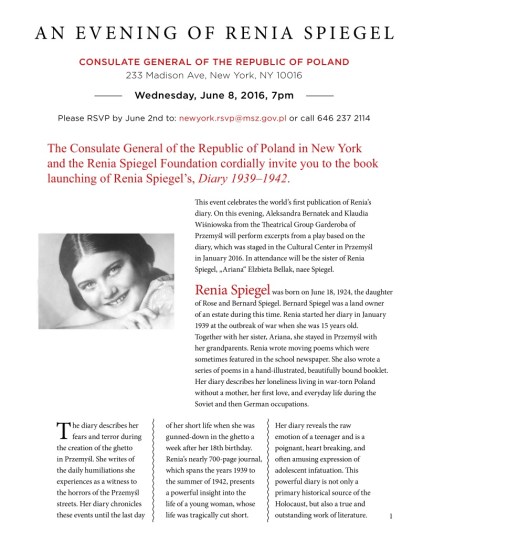
An Evening of Renia Spiegel

26 Thursday May 2016

Posted by Marysia Galbraith in Memory, Poland, World War II

≈ Leave a comment

Tags

Polish Consulate, Renia Spiegel

ReniaEvent1ReniaEvent2

The Polish Shirley Temple and her sister the poet

25 Wednesday May 2016

Posted by Marysia Galbraith in Memory, Names, Poland, Polish-Jewish Heritage, Pre-World War II, World War II

≈ 3 Comments

Tags

Ariana Spiegel, Elizabeth Bellak, Polish Consulate, Renia Spiegel

ReniaEvent1


Elizabeth Bellak and my mother met in Poland, when Elizabeth was just a child and mama a teenager. Years later, they reconnected in New York and have been best friends and confidants ever since. Elizabeth, her husband George, and their children Andrew and Alexandra visited us on Long Island more often than our biological relatives did. In fact, I’ve grown up calling her my aunt.

Elizabeth is as outgoing as my mother is shy. She loves to socialize, to tell stories, even to sing and dance. She dresses elegantly in heels and designer clothes, her hair and make up always perfect. I don’t think I’ve ever seen her in pants.

But she and my mother share a deep fondness for each other. They also share a hidden Jewish heritage that they kept silent about until recently. Elizabeth was actually Ariana Spiegel, born in eastern Poland in what is now Ukraine. Her talent was recognized at a young age, when she appeared in films like Gehenna, and was called “the Polish Shirley Temple.”

Ariana as the Gypsy girl in Gehenna, 1938.
Review of Ariana Spigiel's performance in Gehenna. She is called the "Polish Shirley Temple." In Kurier Filmowy 1938, vol. 12, nr.27.
Review of Ariana Spigiel’s performance in Gehenna. She is called the “Polish Shirley Temple.” In Kurier Filmowy 1938, vol. 12, nr.27.
Ariana Spigiel
Ariana Spigiel

Her older sister Renia was equally talented, though as a writer and poet. Renia kept a diary for the last few years of her short life which has just been published along with her poetry (in Polish, though there are plans for it to be published in English as well).

I can’t wait to read it.


ReniaEvent2


← Older posts
Newer posts →

Categories

  • Anthropology (37)
    • Archives (14)
    • Fieldwork (7)
    • Ground Penetrating Radar (GPR (4)
    • Research Methodology (8)
  • antisemitism (14)
  • Association of Descendants of Jewish Central Poland (32)
  • Catholicism (8)
  • Conference (1)
  • Discrimination (2)
  • Family (69)
    • Bereda (17)
    • Kolski (13)
    • Piwko (22)
    • Rotblit (3)
    • Walfisz (4)
    • Winawer (7)
  • Genealogy (11)
  • Heritage work (66)
    • Commemoration (23)
  • Identity (18)
  • Israel (6)
  • Jewish Culture (89)
    • Cemeteries (51)
    • Museum (7)
    • Synagogues (33)
  • Jewish immigrants (8)
  • Jewish Religion (1)
  • Memory (70)
  • Names (14)
  • Photographs (6)
  • Pifko-Winawer Circle (5)
  • Poland (125)
    • Baligród (1)
    • Bolimów (1)
    • Brześć Kujawski (5)
    • Buk (1)
    • Chodecz (1)
    • Dukla (2)
    • Dąbrowice (1)
    • Gdynia (1)
    • Gostynin (2)
    • Gąbin (1)
    • Izbica Kujawska (1)
    • Kazimierz (4)
    • Kowal (1)
    • Koło (1)
    • Krakow (7)
    • Krośniewice (1)
    • Kutno (6)
    • Kłodawa (1)
    • Lesko (8)
    • Leszno (1)
    • Lubień Kujawski (1)
    • Lubraniec (1)
    • Lutowiska (3)
    • Piła (3)
    • Podgórze (2)
    • Poznan (11)
    • Przemyśl (2)
    • Pzedecz (1)
    • Radom (1)
    • Radymno (1)
    • Sanok (1)
    • Skierniewice (5)
    • Sobota (2)
    • Tarnów (2)
    • Warsaw (22)
    • Wielkopolska (1)
    • Wronki (7)
    • Włocławek (20)
    • Zasław (2)
    • Łódź (1)
    • Żychlin (30)
  • Polish Culture (10)
  • Polish-Jewish Heritage (60)
  • Polish-Jewish relations (60)
  • Post-World War II (24)
  • Pre-World War II (22)
  • Reclaimed Property (1)
  • stereotypes (3)
  • Survival (9)
  • Trauma (3)
  • Uncategorized (5)
  • Victims and perpetrators (4)
  • World War II (45)
    • Jewish Ghetto (12)
    • Nazi Camps (5)
    • Polish Underground Army (3)
  • Yiddish (5)

Enter your email address to follow this blog and receive notifications of new posts by email. Your email address will not be shared.

Archives

  • October 2025 (1)
  • July 2025 (8)
  • June 2025 (1)
  • April 2025 (1)
  • August 2024 (3)
  • July 2024 (3)
  • May 2024 (2)
  • April 2024 (1)
  • May 2023 (2)
  • January 2023 (2)
  • December 2022 (7)
  • November 2022 (2)
  • October 2022 (5)
  • September 2022 (1)
  • January 2022 (1)
  • August 2021 (1)
  • December 2020 (2)
  • July 2020 (1)
  • May 2020 (3)
  • April 2020 (1)
  • March 2020 (1)
  • January 2020 (2)
  • May 2019 (1)
  • February 2019 (1)
  • November 2018 (1)
  • September 2018 (1)
  • August 2018 (3)
  • July 2018 (1)
  • June 2018 (1)
  • May 2018 (1)
  • April 2018 (2)
  • March 2018 (2)
  • February 2018 (2)
  • January 2018 (2)
  • December 2017 (2)
  • November 2017 (2)
  • October 2017 (1)
  • September 2017 (3)
  • August 2017 (3)
  • June 2017 (2)
  • May 2017 (3)
  • April 2017 (1)
  • March 2017 (2)
  • February 2017 (1)
  • January 2017 (2)
  • December 2016 (2)
  • November 2016 (4)
  • October 2016 (1)
  • September 2016 (6)
  • August 2016 (2)
  • July 2016 (1)
  • May 2016 (4)
  • April 2016 (2)
  • March 2016 (3)
  • February 2016 (4)
  • January 2016 (3)
  • December 2015 (3)
  • November 2015 (5)
  • October 2015 (5)
  • September 2015 (3)
  • August 2015 (4)
  • July 2015 (3)
  • June 2015 (3)
  • May 2015 (4)
  • April 2015 (9)
  • March 2015 (3)
  • February 2015 (2)
  • January 2015 (5)
  • December 2014 (4)
  • November 2014 (9)
  • October 2014 (2)
  • September 2014 (1)

Copyright Notice

All original text and images are copyright © Marysia Galbraith. Please contact the author before quoting.

Blog at WordPress.com.

  • Subscribe Subscribed
    • Uncovering Jewish Heritage
    • Join 145 other subscribers
    • Already have a WordPress.com account? Log in now.
    • Uncovering Jewish Heritage
    • Subscribe Subscribed
    • Sign up
    • Log in
    • Report this content
    • View site in Reader
    • Manage subscriptions
    • Collapse this bar
 

Loading Comments...