• About
  • The Photo that Started it All

Uncovering Jewish Heritage

Uncovering Jewish Heritage

Category Archives: Synagogues

Rosh Hashanah, Poznan, September 26, 2014

30 Sunday Nov 2014

Posted by Marysia Galbraith in Jewish Culture, Poznan, Synagogues

≈ 3 Comments

Tags

contemporary Jewish practice in Poland

It seems fitting that I would celebrate Rosh Hashanah for the first time in Poland, considering that generations of my family lived and worshiped here. It’s our removal that is bizarre, not our presence on Polish territory.

I have been told there are only about sixty Jews in Poznan today. Most Jews in this part of Poland left when the region was under Prussian rule in the 19th century. The story contained in a number of sources is that they left because larger German cities farther west offered them more economic opportunity. I can’t help wondering, though, if they were also seeking a place with greater freedom and less persecution (a subject for further research). Over 20% of the city’s population was Jewish in 1837, but by 1922 only 1.2% were, about 2000 residents (Rafał Witkowski, 2012, The Jews of Poznań, Poznań: Wydawnictwo Miejskie Posnania). By contrast, 30% of Warsaw’s citizens at the time were Jewish.

I met the head of the Poznan Jewish Community (Gmina Żydowska), Pani Alicja Kobus, shortly before Rosh Hashanah. She has the energy and charm I remember in my grandmother and her sister, my Auntie Nunia. Pani Alicja established the Jewish Community about 15 years ago. She said nothing was happening in Poznan related to Jewish culture and heritage so she had to start from scratch. All the momentum was in Krakow and Warsaw, and much of worth in and around Poznan was being forgotten. So she negotiated with the city, and got permission to begin operations in a space the city gave her in a rough part of town. Through persistence and a lot of work, she managed to reclaim the former Jewish Community Headquarters, the building that houses the Jewish Community offices today. She said that she has had to fight for everything. She is a bulldozer. She only goes forward; she doesn’t give up. She doesn’t let obstacles stand in her way, even when people refuse her or tell her what she is trying to do is impossible. She attributes her success to this level of effort, along with the unfailing encouragement of others, as well as divine intervention. She often refers to God and miracles.

I asked pani Alicja if I could attend the events she was planning for Rosh Hashanah. She said I could, adding, “We’re such a small community, we have to be open.

I really didn’t know what to expect when I arrived at the Jewish Community Headquarters the evening of Rosh Hashanah. The building is unmarked. Last time, I had to be buzzed in. This time a few people were standing outside. One greeted me as I arrived and told me the door was open. As I climbed the wide wooden staircase to the first floor, I heard the sound of many voices. The main room was packed with people standing and sitting around two long tables laid out with tablecloths, candles, and all kinds of dishes. Two large, round challah were placed at the head of one table, and each plate had a large challah roll on it.

Pani Alicja greeted me from across the room and invited me to sit near the head of a table already full of people. She introduced me to several of the people around her. The atmosphere was warm, and the conversations friendly.

Pani Alicja got the attention of the crowd. She expressed her joy at seeing so many people (I counted over fifty, but there were more; I never saw everyone at once). She called our presence there a miracle (cud). “Just look around you,” she said, noting there were guests from the US, Germany and Israel. She lit the candles at the head of the table. It was a moving moment for me.

The synagogue is one floor up, in a smaller room with high ceilings and windows. Pews fill the back, with room to seat about 30 people. The men sit behind a partition on the side by the windows and the women sit on the side by the door. A table with a lectern faces the pews. A cabinet in the corner behind the table holds the Torah and the crown, gifts from international donors. Along the wall by the door is an old synagogue pew with faded Hebrew lettering. Pani Alicja told me it dates back to the 1800s. Someone had it in his attic, and she convinced him to donate it to the synagogue.

Rabbi Jaakov has the long ringlets (peyot), black coat and hat characteristic of Hassidic Jews. He spoke to us in Polish, explaining a little about the ceremony, how it differs from a typical Shabbat, and how to read the prayer books, which contain a combination of Hebrew, transliterated and in Hebrew lettering, and I think Polish translations. He promised to guide us through the ceremony, telling us which page to turn to in the prayer books, and explaining the various prayers and songs. In other words, he took on a teaching role as well as leading the service. He read the prayers and songs in Hebrew, with his back to us, swaying forward and back.

Some men were given prayer shawls, and removed the Torah from the cabinet. They took turns carrying it around for everyone to touch. Many also kissed their hand. There was a call for a young male volunteer to blow a horn, the shofar. One said he has tried but couldn’t. Finally someone stepped up. He was supposed to make one long and then three short toots. His first attempts didn’t produce much sound. Eventually, some awkward sounds came out. Pani Alicja remarked it was important “tylko żeby było” (just to make it).
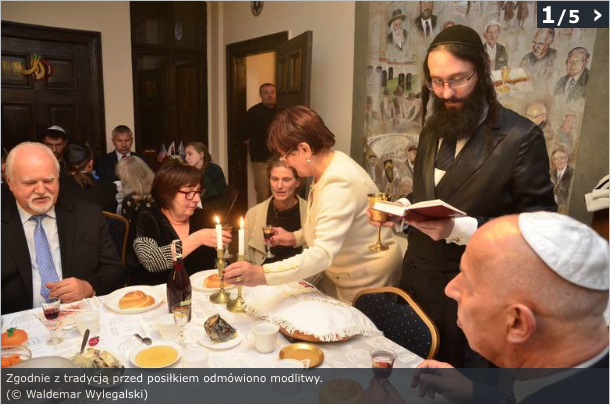
http://www.gloswielkopolski.pl/

Rosh Hashanah, Poznan Jewish Community, September 26, 2014. http://www.gloswielkopolski.pl/

After the service, everyone returned downstairs to the tables, which were covered with a variety of dishes. Besides challah, there was carp in vinegar, beet salad, tsimis (sweet carrot salad), pomegranates, and various meat dishes, which guests identified as kosher. Rabbi Yaakov blessed the bread, which was broken and passed around. There were plates of honey to dip the challah into. Pani Alicja made a toast, and the feast began.

The event was strange and familiar at the same time. My secular upbringing makes any religious service unfamiliar. Here, especially, everything was new to me—the language, the rabbi’s motions, the separation between women and men. But the feeling was not strange—that of solidarity, of connection to something bigger than we are. It felt, oddly like a kind of homecoming.

More about Lesko

22 Saturday Nov 2014

Posted by Marysia Galbraith in Heritage work, Lesko, Synagogues, World War II

≈ 8 Comments

While he was in Poland in August, my older brother Wiley had some valuable insights about Jewish heritage and about our family. This was his first time in Poland and his fresh perspective gave me a lot to think about.

This is what he posted on Facebook about Lesko:

“The largest structure in Lesko, Poland is a synagogue yet there are no Jews. Larger than the church. Not only are there no Jews there is no memory that there were any Jews. Let’s remember that 3,000 human beings, Jews, were murdered from this town, half the population, and there are those that care.”

The interior of the Lesko Synagogue. It is used as an art gallery. During my last trip to Lesko, I learned that the gallery is closed from fall to spring because the building has no heat.

The interior of the Lesko Synagogue.

201408LeskoSynagogueNames1

Inside the synagogue: List of 3000 residents of Lesko and surroundings murdered by Nazis during the years 1939-1944.

About this photo, my brother’s commented, “Someone took the time to list the names. Thank you.” About me he remarked, “Taking the time to read the names and remember.”

Today, the synagogue belongs to the county (gmina) and is used as an art gallery. Just this month, I learned that the gallery is closed from fall to spring because the building has no heat. The Dom Kultury (Community Center) which manages the building wants to apply for funds to renovate the synagogue. The most pressing problem is moisture issues. Water creeps through the old stone walls and plaster, weakening the structure and even damaging the art housed within it.

Żychlin, part 3

10 Monday Nov 2014

Posted by Marysia Galbraith in Synagogues, Żychlin

≈ Leave a comment

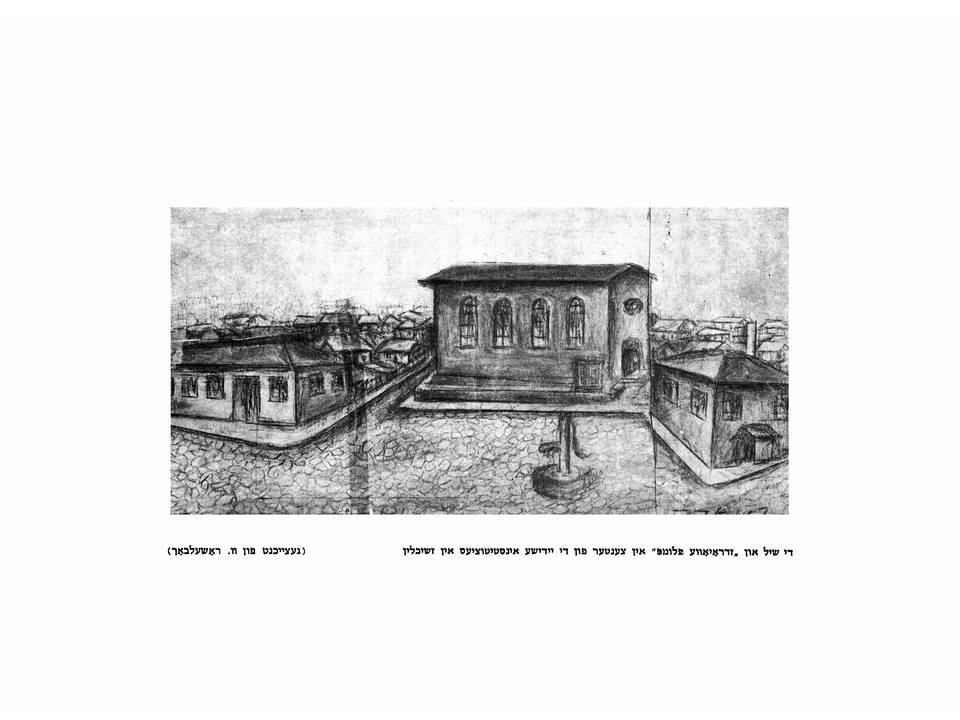
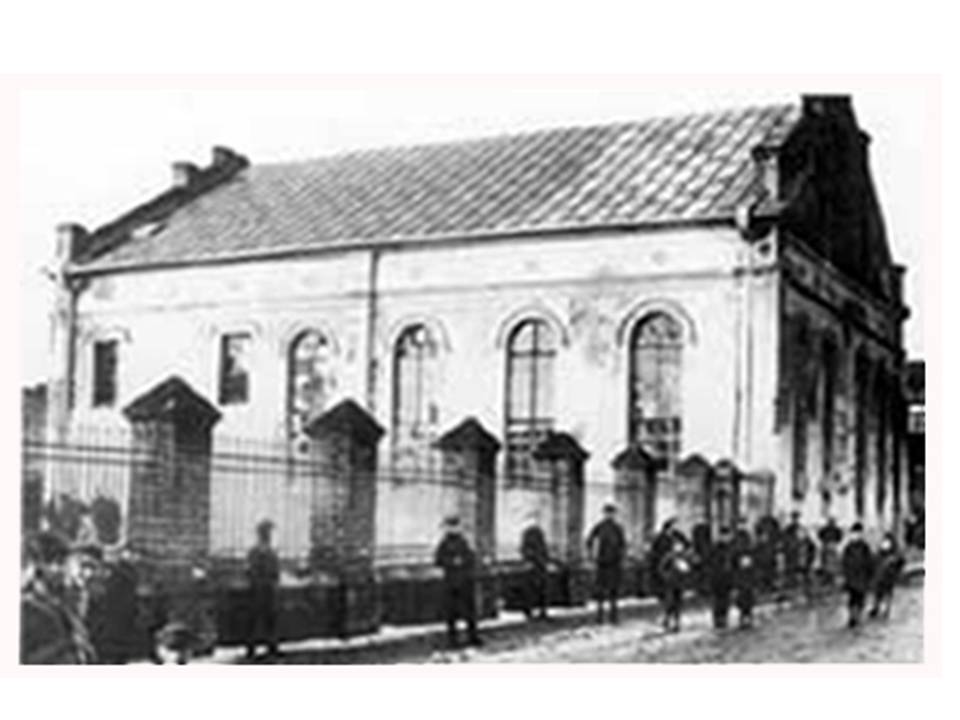
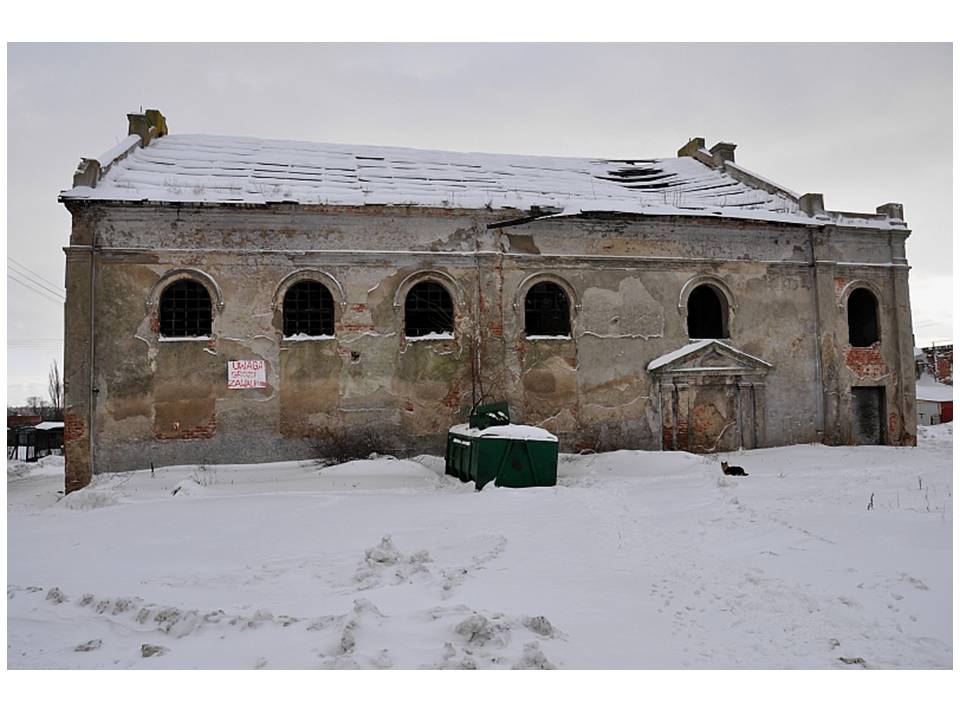
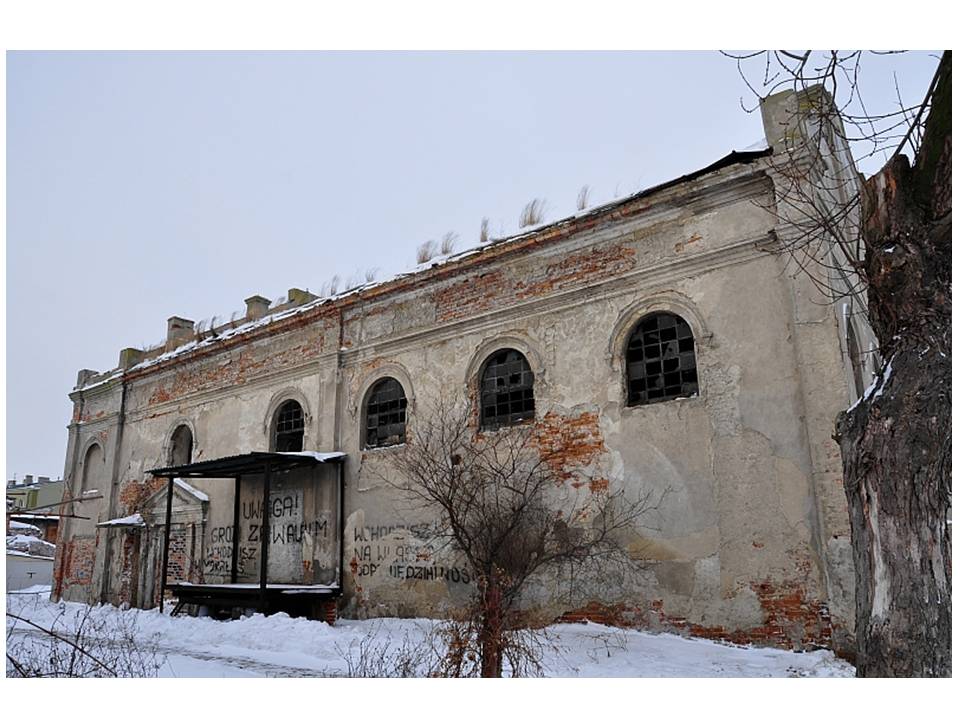
Promised photos of the Żychlin synagogue before the roof fell in:

Slajd17

Sketch of the Żychlin synagogue, with well in front and mikvah on right. From “Memorial Book of Zychlin” Ami Shamir . The Zychliner Organization of Israel and America”. Tel Aviv 1974. Posted on “Zychlin-Historia.com.pl

Slajd18

Żychlin synagogue during the Interwar Period. From Zychlin-Historia.com.pl

Slajd22

Around 2008, roof still intact. From H. Olszewski

Slajd23

Żychlin, part 1

01 Saturday Nov 2014

Posted by Marysia Galbraith in Synagogues, Żychlin

≈ 6 Comments

My great-grandmother Hinda Walfisz was born in 1854 in Żychlin, a town near Kutno and perhaps 100km from Warsaw. Before World War II, its Jewish residents (the first of whom settled in the 16th century) comprised as much as 60% of the population. None returned after the war. Many were shot by the Nazis; others were moved into ghettos and then to the death camps. Today, Żychlin has about 10,000 residents, including descendents of prewar Catholic families and others who migrated to the town after the war.

My guides where local historians Henryk and Agnieszka Olszewski. Pan Henryk emphasized to me that local history is his passion, but that he is an amateur (his word). I found him through his blog http://zychlin-historia.com.pl/ in which he documents his ongoing discovery of historical information about the town. Henryk’s wife Agnieszka said she couldn’t avoid becoming interested in history through her husband. She took the lead when describing the places we visited, while pan Henryk talked more about the supporting documents he has found through the people he has met, in Polish archives, and online.

DSC01541

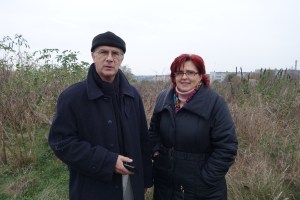
Henryk and Agnieszka, Żychlin historians

From the very beginning, pan Henryk stressed to me that Jews and Christians lived well together. There were no pogroms in Żychlin. He drove us through former Jewish neighborhoods to the synagogue, Jewish cemetery, and World War II ghettos.

Former Jewish homes

Former Jewish homes

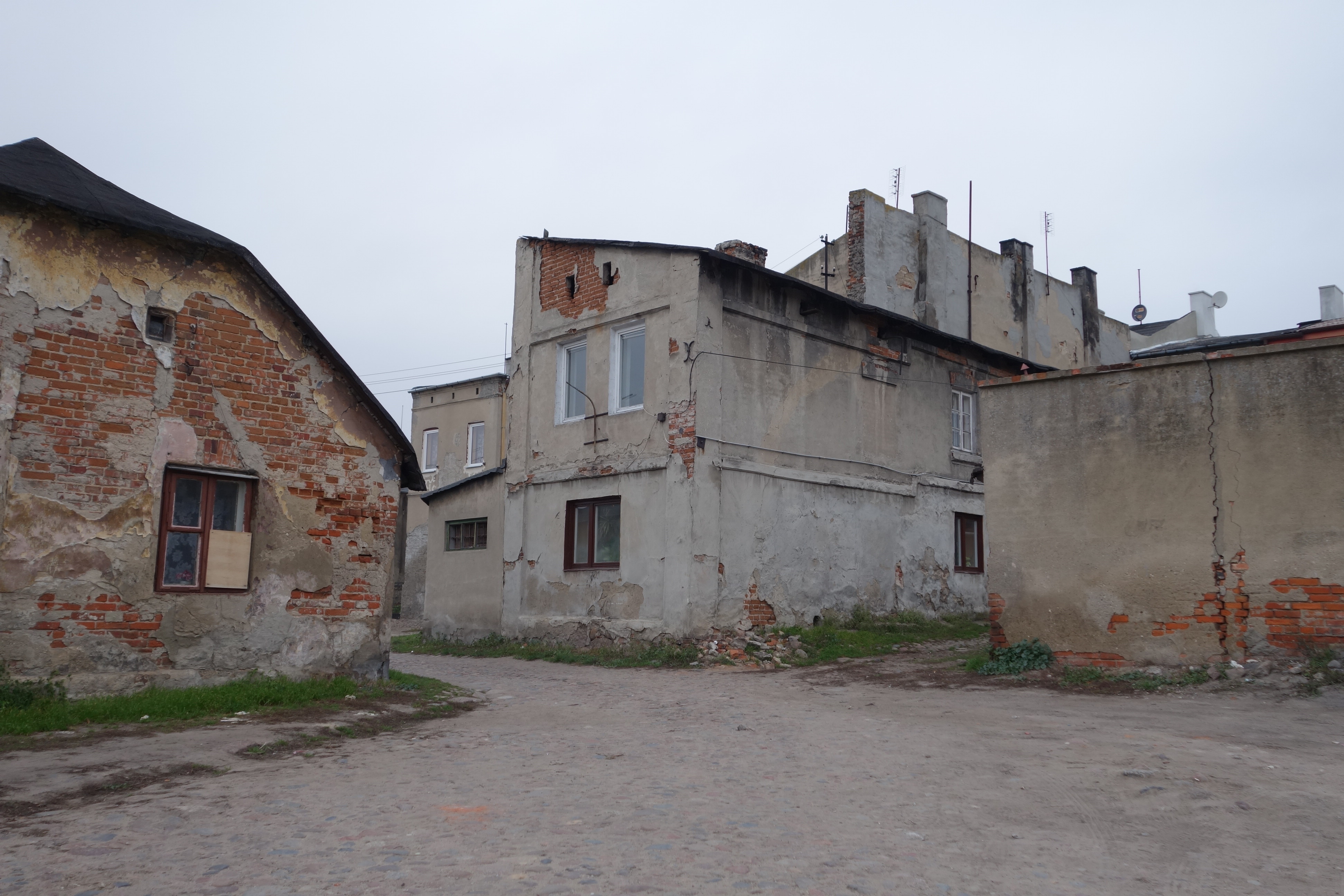
The synagogue is in a neglected part of town, surrounded on two sides by the backs of buildings. The roads here have not been resurfaced in a long time. They have ruts and holes, and one paved with rounded stones probably dates back a hundred years. Pani Agnieszka explained that all the buildings around there used to be owned and occupied by Jews. Now they belong to the town and are rented. It doesn’t look like anyone bothers to maintain them. For instance, the wall of one house has a wide crack, windows are old, and plaster is falling off walls. Residents looked out at us from behind curtains and doorways.

DSC01494

Żychlin synagogue

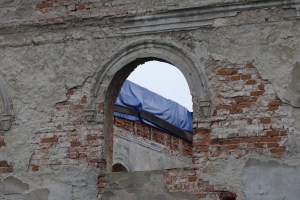
The synagogue was used by the Nazis as a warehouse. They bricked up all but the tops of the long arched windows. For many years after the war, a state cooperative continued to use the building as a warehouse, but now it stands abandoned. The roof fell in five or six years ago. Pan Henryk said one day there was a loud crash as it just collapsed. Until recently, the wooden babiniec (2nd floor where women sat) was still held up by metal beams, and the wall paintings were still intact in places. But only a few fragments of paint survive today, barely visible through the gaps where the windows used to be.

DSC01502

Little is left of the interior paintings

The salvageable metal and wood were carted away. “You know how it is,” pan Henryk explained. The fate of the remaining walls is uncertain. Pan Henryk says the Jewish Community gave it to the local government after the roof fell in, but they have no money to renovate it, nor can they tear it down because it’s protected as a historic site. For now, it seems fated to continue to deteriorate along with the homes and roads around it.

Newer posts →

Categories

  • Anthropology (38)
    • Archives (14)
    • Fieldwork (7)
    • Ground Penetrating Radar (GPR (5)
    • Research Methodology (8)
  • antisemitism (14)
  • Association of Descendants of Jewish Central Poland (36)
  • Catholicism (8)
  • Conference (1)
  • Discrimination (2)
  • Family (70)
    • Bereda (18)
    • Kolski (13)
    • Piwko (22)
    • Rotblit (3)
    • Walfisz (4)
    • Winawer (7)
  • Genealogy (11)
  • Heritage work (70)
    • Commemoration (24)
  • Identity (18)
  • Israel (6)
  • Jewish Culture (93)
    • Cemeteries (55)
    • Museum (8)
    • Synagogues (34)
    • Torah (1)
  • Jewish immigrants (8)
  • Jewish Religion (1)
  • Memory (73)
  • Names (14)
  • Photographs (6)
  • Pifko-Winawer Circle (5)
  • Poland (131)
    • Baligród (1)
    • Bolimów (1)
    • Brześć Kujawski (5)
    • Buk (1)
    • Chodecz (1)
    • Dukla (2)
    • Dąbrowice (1)
    • Gdynia (1)
    • Gostynin (3)
    • Gąbin (1)
    • Izbica Kujawska (1)
    • Kazimierz (4)
    • Kowal (1)
    • Koło (1)
    • Krakow (7)
    • Krośniewice (1)
    • Kutno (9)
    • Kłodawa (1)
    • Lesko (8)
    • Leszno (1)
    • Lubień Kujawski (1)
    • Lubraniec (1)
    • Lutowiska (3)
    • Piła (3)
    • Podgórze (2)
    • Poznan (11)
    • Przemyśl (2)
    • Pzedecz (1)
    • Radom (1)
    • Radymno (1)
    • Sanok (1)
    • Skierniewice (5)
    • Sobota (2)
    • Tarnów (2)
    • Warsaw (23)
    • Wielkopolska (1)
    • Wronki (7)
    • Włocławek (20)
    • Zasław (2)
    • Łódź (1)
    • Żychlin (33)
  • Polish Culture (10)
  • Polish-Jewish Heritage (60)
  • Polish-Jewish relations (61)
  • Post-World War II (24)
  • Pre-World War II (22)
  • Reclaimed Property (1)
  • stereotypes (3)
  • Survival (9)
  • Trauma (3)
  • Uncategorized (5)
  • Victims and perpetrators (4)
  • World War II (47)
    • Jewish Ghetto (12)
    • Nazi Camps (6)
    • Polish Underground Army (3)
  • Yiddish (5)

Enter your email address to follow this blog and receive notifications of new posts by email. Your email address will not be shared.

Archives

  • June 2026 (5)
  • May 2026 (1)
  • October 2025 (1)
  • July 2025 (8)
  • June 2025 (1)
  • April 2025 (1)
  • August 2024 (3)
  • July 2024 (3)
  • May 2024 (2)
  • April 2024 (1)
  • May 2023 (2)
  • January 2023 (2)
  • December 2022 (7)
  • November 2022 (2)
  • October 2022 (5)
  • September 2022 (1)
  • January 2022 (1)
  • August 2021 (1)
  • December 2020 (2)
  • July 2020 (1)
  • May 2020 (3)
  • April 2020 (1)
  • March 2020 (1)
  • January 2020 (2)
  • May 2019 (1)
  • February 2019 (1)
  • November 2018 (1)
  • September 2018 (1)
  • August 2018 (3)
  • July 2018 (1)
  • June 2018 (1)
  • May 2018 (1)
  • April 2018 (2)
  • March 2018 (2)
  • February 2018 (2)
  • January 2018 (2)
  • December 2017 (2)
  • November 2017 (2)
  • October 2017 (1)
  • September 2017 (3)
  • August 2017 (3)
  • June 2017 (2)
  • May 2017 (3)
  • April 2017 (1)
  • March 2017 (2)
  • February 2017 (1)
  • January 2017 (2)
  • December 2016 (2)
  • November 2016 (4)
  • October 2016 (1)
  • September 2016 (6)
  • August 2016 (2)
  • July 2016 (1)
  • May 2016 (4)
  • April 2016 (2)
  • March 2016 (3)
  • February 2016 (4)
  • January 2016 (3)
  • December 2015 (3)
  • November 2015 (5)
  • October 2015 (5)
  • September 2015 (3)
  • August 2015 (4)
  • July 2015 (3)
  • June 2015 (3)
  • May 2015 (4)
  • April 2015 (9)
  • March 2015 (3)
  • February 2015 (2)
  • January 2015 (5)
  • December 2014 (4)
  • November 2014 (9)
  • October 2014 (2)
  • September 2014 (1)

Copyright Notice

All original text and images are copyright © Marysia Galbraith. Please contact the author before quoting.

Blog at WordPress.com.

  • Subscribe Subscribed
    • Uncovering Jewish Heritage
    • Join 149 other subscribers
    • Already have a WordPress.com account? Log in now.
    • Uncovering Jewish Heritage
    • Subscribe Subscribed
    • Sign up
    • Log in
    • Report this content
    • View site in Reader
    • Manage subscriptions
    • Collapse this bar

Loading Comments...