• About
  • The Photo that Started it All

Uncovering Jewish Heritage

Uncovering Jewish Heritage

Category Archives: Commemoration

Restoring Jewish Memory in Żychlin

12 Wednesday Oct 2022

Posted by Marysia Galbraith in Association of Descendants of Jewish Central Poland, Commemoration, Heritage work, Polish-Jewish Heritage, Polish-Jewish relations, Synagogues, Żychlin

≈ 2 Comments

Report #3 about Roberta Books and Marysia Galbraith’s trip to meet Polish partners in preparation for the ADJCP‘s memorial visit to central Poland. Reports include contributions by Roberta.

Our visit to Żychlin began with a meeting at Town Hall with 8th graders and their teachers from the local school. The children were shy—reluctant to speak in English or in Polish with us—but clearly we had their full attention as we shared our family connection to central Poland and explained why we were visiting. We used a question and answer format to gauge their knowledge about Jewish culture, history, and religion, and to share some basic knowledge with them.

8th grade students with Yosef, Roberta, and Marysia. Their teacher is on the right

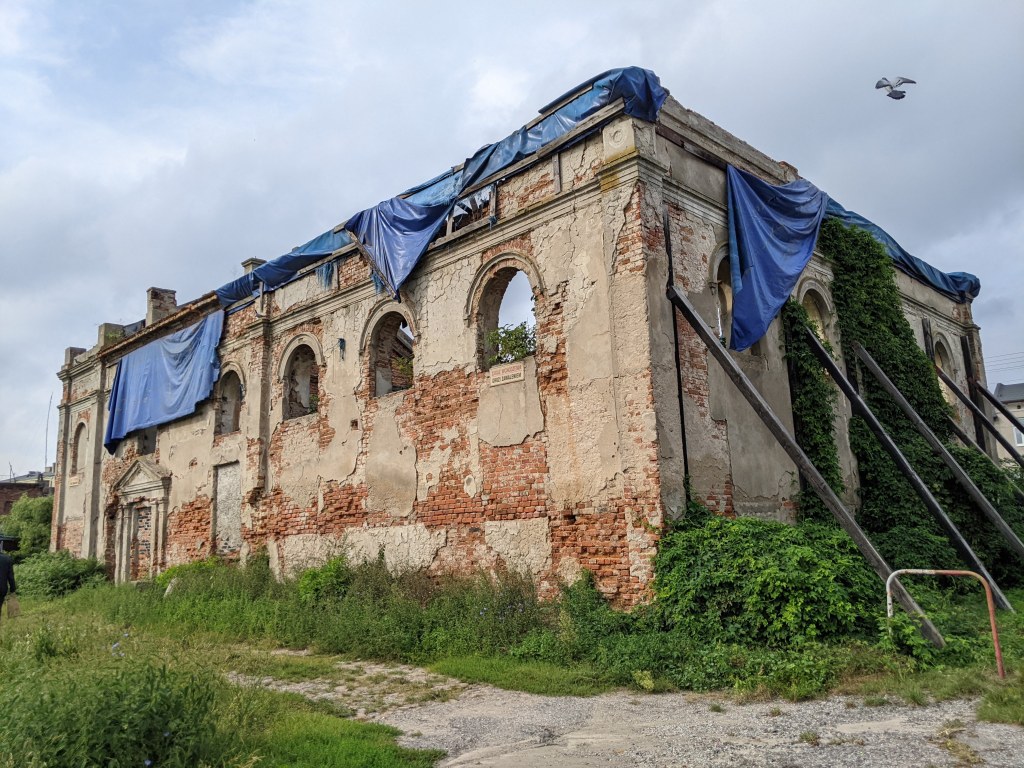
Because I heard Żychlin Mayor Grzegorz Ambroziak speak at the unveiling of the new monument commemorating Żychlin’s Jewish community, I had the sense he wants to preserve the memory of the town’s Jews. At our meeting, he confirmed this. He led the conversation with his concerns about the fate of the synagogue ruins, which are situated in an impoverished area just off the central town square. After the war, the city used the building as a warehouse, and they maintained it until the Jewish Community of Warsaw reclaimed the property. For years it stood empty as the city negotiated with the Jewish Community to obtain legal possession of the building. They envisioned turning it into a museum of regional history. The city was granted possession of the synagogue in 2007-8, exactly when the roof caved in. Since then, the decay of the building has accelerated due to the lack of a roof. Currently, wooden supports hold up the shorter walls of the building, but it looks like it could fall down at any moment.  The city would like to use the space for a museum.
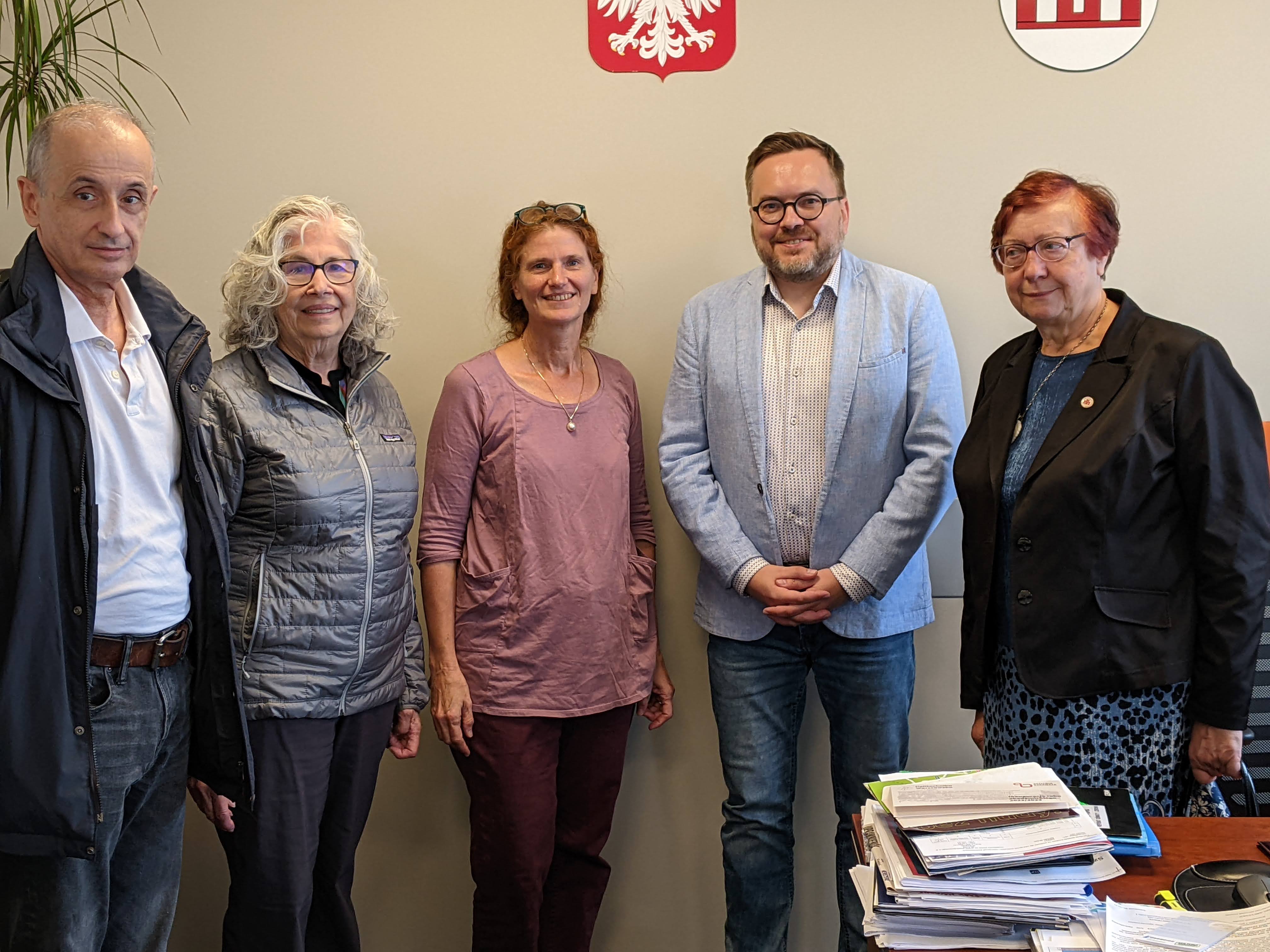
Meeting at Żychlin Town Hall: Yosef Kutner, Roberta Books, Marysia Galbraith, Mayor Grzegorz Ambroziak, President of the Association of Żychlin History Enthusiasts (TMHŻ) Anna Wrzesińska

Mayor Ambroziak invited the ADJCP to cosign a Letter of Intent attesting to our interest in rebuilding the synagogue. With this affirmation that interest in the synagogue extends beyond the immediate needs of Żychlin residents, he is confident the city can obtain funds from the Ministry of Culture and the EU for the renovation. All such funding requires cost-sharing by the municipality, and he is prepared to provide those matching funds from the city budget.

We also gained the mayor’s support for 3 other ADJCP projects in Żychlin: the plaque for righteous gentile Szułdrzyński, cemetery restoration, and help organizing our memorial trip.

  • The ADJCP will provide a plaque commemorating a righteous gentile from Zychlin named Stanisław Szułdrzynski; Bożena Gajewska will arrange its manufacture for us. The mayor agreed to find an appropriate place for the plaque, and to arrange for it to be officially unveiled during our memorial visit in May 2023. 
  • The mayor welcomes our efforts to clean up and restore the Jewish Cemetery.  The cemetery is managed by the Foundation for the Preservation of Jewish Heritage (FODŻ). The city does not take responsibility for regular maintenance. When they do cut the vegetation (as they did for the recent Forum for Dialogue project “In the Footsteps of Żychlin’s Jews”) they have to cut back thorny bushes (trzcina, black thorn). They said they are not allowed to dig the roots out or use pesticides, which means within a few months the bushes grow right back. Roberta has contacted Rabbi Schudrich for clarification of what maintenance practices are allowed and to confirm who owns the cemetery.
  • The Mayor will be pleased to greet ADJCP in May 2023. Anna Wrzesińska will walk around with them.

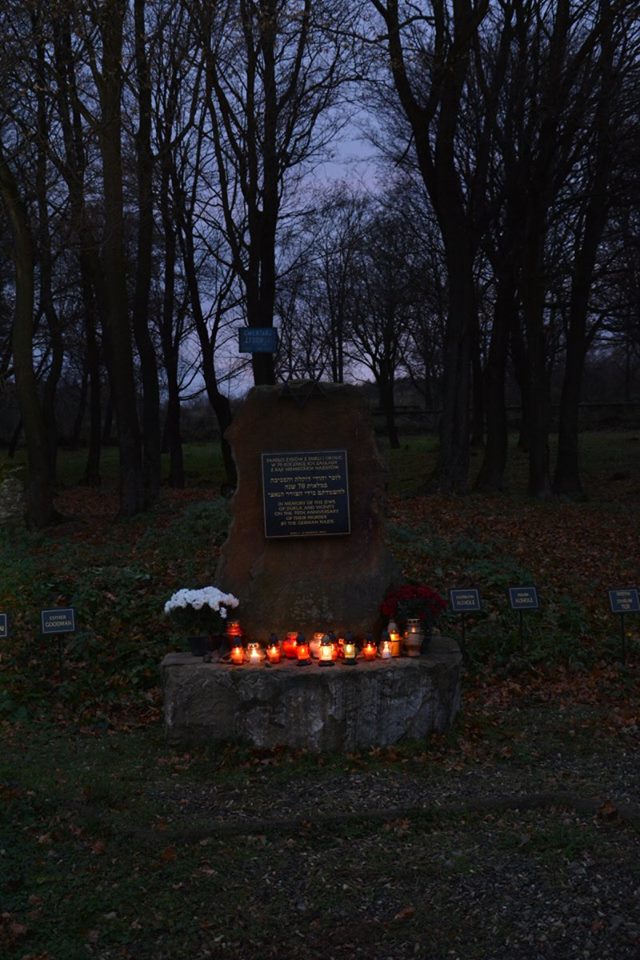
After the meeting, we stepped across the street to see the monument to Żychlin’s Jews, unveiled in June as part of the project “In the Footsteps of Zychlin Jews.” Bożena Gajewska of the Friends of the Kutno Region (TPŻK) ran the program with the help of Anna Wrzesińska and funding from the Forum for Dialogue. Mayor Ambroziak also contributed funds for the plaque; because of the length of the inscription, it exceeded the approved budget.

Memorial to Żychlin’s Jewish community

Anna Wrzesińksa took us to the office of the Association of Żychlin History Enthusiasts (Towarzyszenie Miłośników Histori Żychlinskiej, TMHŻ) where we met with members of the organization and learned about their recent projects. They showed us the display boards from an exhibition they put together about Żychlin’s Jewish Community. It was on display this spring during the Forum for Dialogue project “In the Footsteps of Żychlin’s Jews.” They also showed us the numerous publications they have released, including a photocopy of their latest work, still awaiting publication, about Żychlin’s Jewish history.
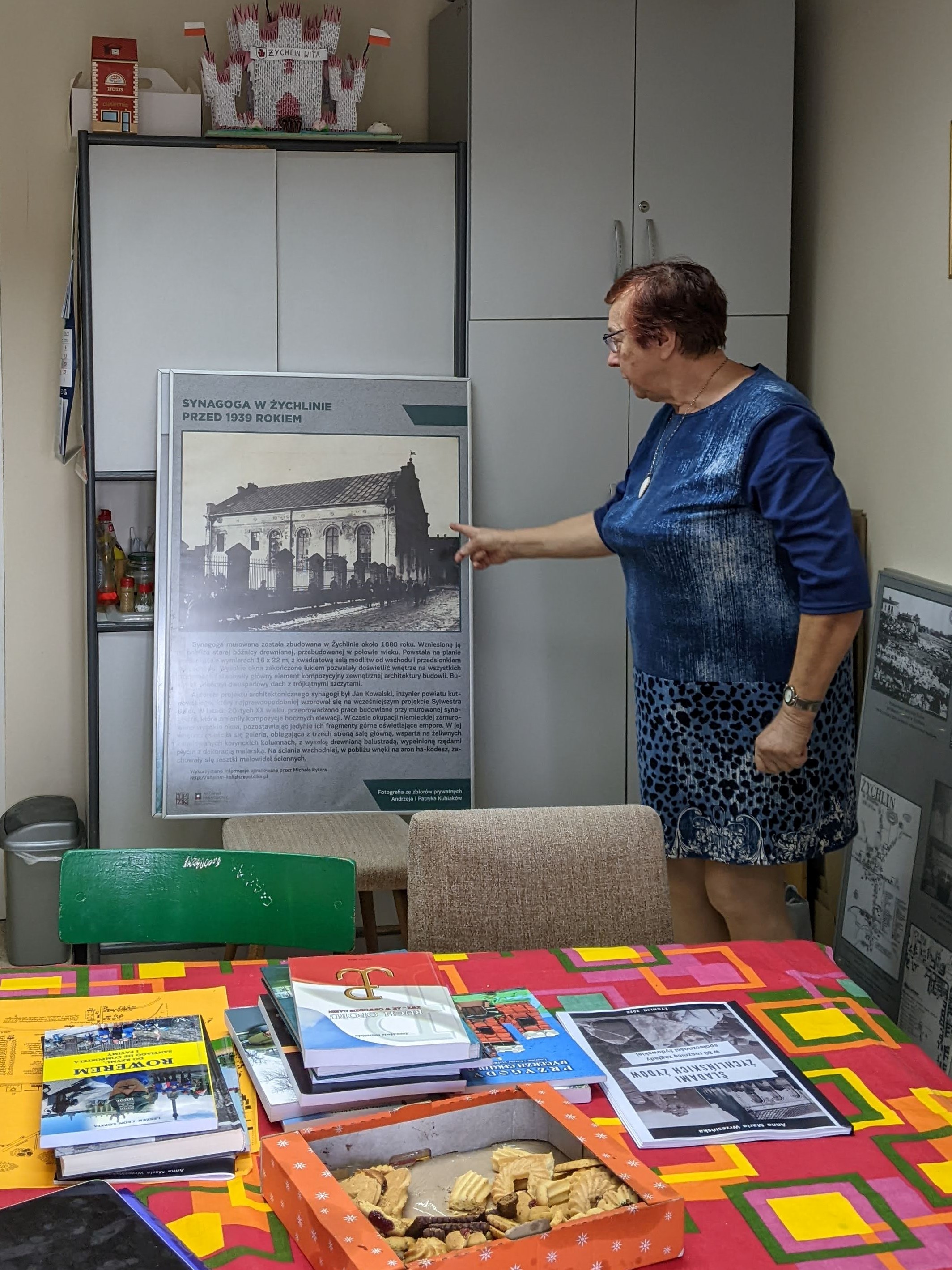
Jerzy Werwiński, 92-year-old member (born in 1931) shared his recollections of wartime, starting with the liquidation of the Jewish ghetto in 1942. He was just a boy; he hid in an attic across the street and watched from a window as the Jewish residents were rounded up and placed in horse-drawn farmer’s wagons and carted 2 km to the train station. From there, they were transported by train to the Chełmno Death Camp. Once Jerzy started talking he couldn’t stop. Visibly shaken, he described his own wartime experiences. Essentially, he spent the next three years in work camps and prison, until he was liberated by the advancing Soviet Army in January 1944. He recounted living in barracks, sleeping on hard wooden planks with no blankets even in the coldest winter nights. They had very little to eat; each morning a loaf of bread would be cut in six pieces for six people for the whole day. He was told he can eat it all at once but then go hungry the rest of the day or he could nibble on it throughout the day. At night, they got a cup of soup that was mostly water with just a few chunks of potato or other vegetables. The other TMHŻ members were born after the war, but their parents told them stories of deprivation and forced labor. Clearly, they have more to say about the hardships experienced during the war; I asked if I can return so they can tell me more and I can record their stories.

We finished our visit with a walk to the synagogue ruins. The remaining walls are in bad shape and look like they could collapse at any moment. This is a shame because even a few years ago when I first visited, the walls were reasonably sturdy. Some of the interior wall paintings could still be seen through the empty windows; these all appear to have been erased by the weather. The first step of any project will need to be to assess the condition of the remaining structure.

Kutno: Partnerships for Preservation

08 Saturday Oct 2022

Posted by Marysia Galbraith in Association of Descendants of Jewish Central Poland, Cemeteries, Commemoration, Heritage work, Kutno, Polish-Jewish Heritage, Polish-Jewish relations

≈ 6 Comments

Report #2 about Roberta Books and Marysia Galbraith’s trip to meet Polish partners in preparation for the ADJCP‘s memorial visit to central Poland. Reports include contributions by Roberta.

September 8-12, ADJCP Members Roberta Books and Marysia Galbraith, Jewish Kutno Member Yosef Kutner

Our visit to Kutno was organized by our tireless partner Bożena Gajewska, until recently the director of the Friends of Kutno (Towarzystwo Przyjaciół Żiemi Kutnowski, TPŻK) and the coordinator of multiple projects related to Jewish memory.

We started the day in the Kutno Jewish Cemetery.

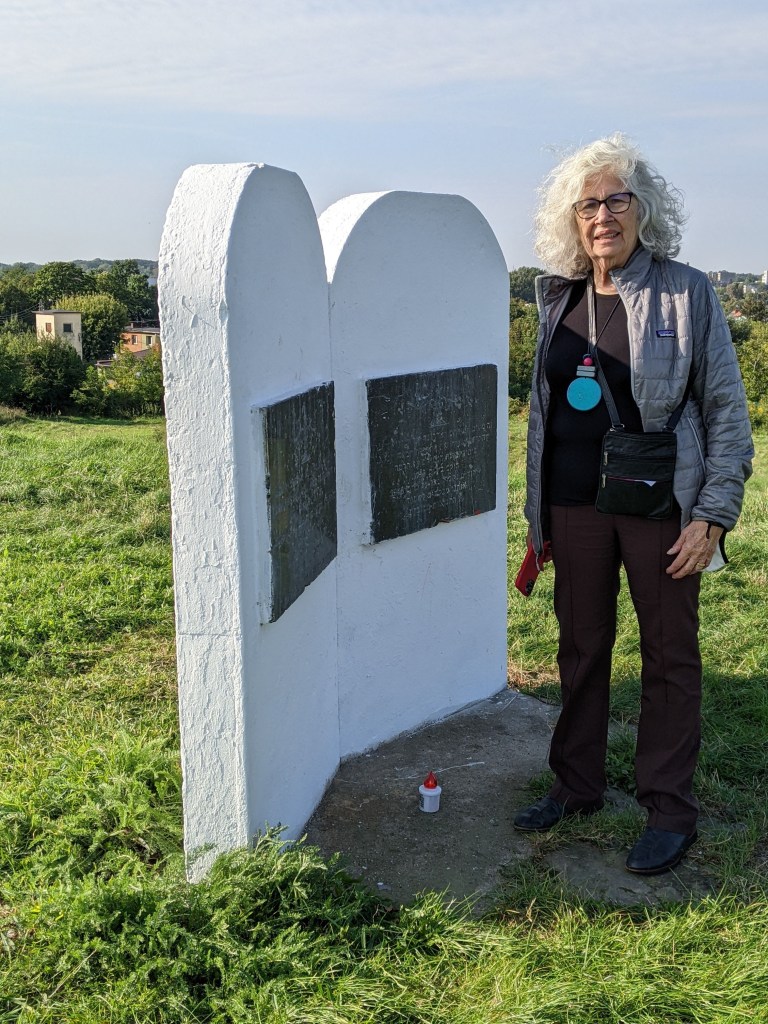
Panorama of the Kutno Jewish Cemetery from the top of the hill, Roberta stands beside the memorial monument on the left

The cemetery is the largest one in our area, covering 3 hectares. Yosef’s mission was to inspect the boundaries to see the condition of the fence. We found some fragments of the prewar brick fence. There are several access points to the cemetery, making it a place where Kutno residents cut through on their way to school or home, or where they walk their dogs or children play. Despite signs posted by the TPŻK explaining this is a cemetery and should be respected, piles of trash in remote corners of the cemetery suggest it is used as a place to drink and socialize. We located a sunken area where a tree grows, the likely sight of the Ohel of Rabbi Israel Joshua Trunk (1821-93), and larger sunken area hidden by overgrowth that might be the site of a wartime mass grave.

  • Sign reminding visitors to respect the Jewish Cemetery
  • Possible fragment of the original brick wall that surrounded the cemetery
  • Possible site of Rabbi Trunk’s Ohel
  • Sunken area that may be site of mass grave
  • Roberta next to the commemorative monument, Kutno cemetery

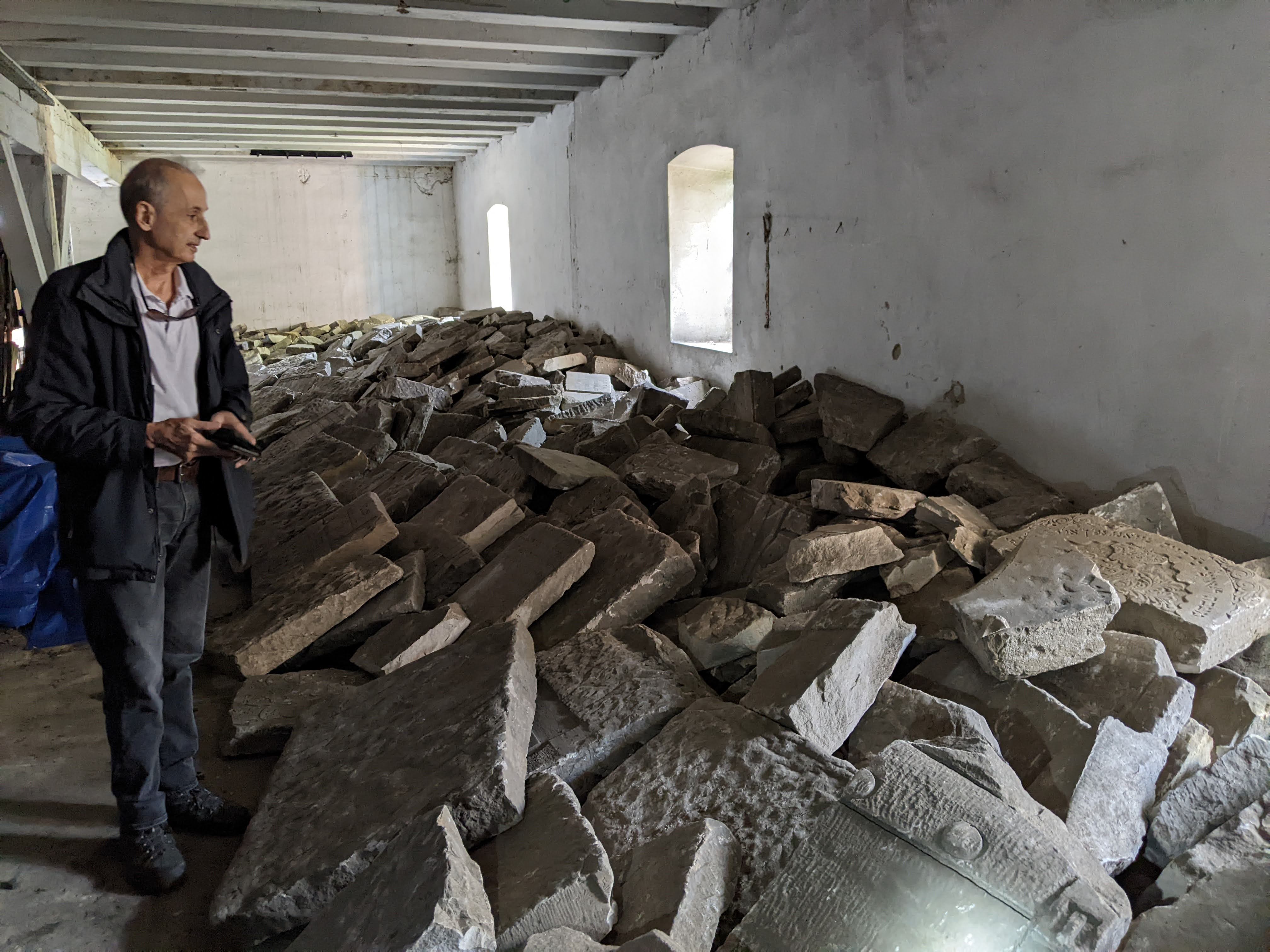
Next, we met the Kutno Regional Museum Director Grzegorz Skrzynecki and others at a defunct brewery warehouse where the museum stores hundreds of matzevot fragments recovered from the places they were used in road and construction projects (a common practice during and after the German occupation). The volume of stones is astounding, though still just a fraction of the matzevot plundered from the cemetery. You can see many of them with English translations of the decipherable texts in Yosef Kutner’s book Broken Memories: Remains from the Jewish Cemetery in Kutno. Yosef compiled the book from photographs, so this is the first time he saw the actual stones. Piled as they were, most of their identifying numbers are not visible. Nevertheless, there on the surface, Yosef found the top of his great grandfather’s tombstone. Mr. Skrzynecki explained that more fragments were found during a recent road project. They didn’t make it into the book, but I’m sure Yosef will find a way to share that information once he has it.

Yosef scans the recovered matzevot fragments, many of which he includes in his book Broken Memories

Meeting to discuss cemetery protection and maintenance

The meeting to discuss the future of the Kutno Jewish Cemetery followed. It was attended by key figures from the Jewish Community of Poland (Chief Rabbi Michael Schudrich), from the town of Kutno (Deputy Mayor Zbigniew Wdowiak, town attorney Agnieszka Wojkowska-Pawlak, museum director Grzegorz Skrzynecki, museum public relations and marketing Katarzyna Erwińska, library head Magdalena Konczarek, and Michael Adamski, head of the Department of Culture, Promotion, and Development), from the Association of Friends of the Kutno Region–TPŻK (Bożena Gajewska), and from international Jewish heritage groups (Yosef from Jewish Kutno and Roberta and me from ADJCP).

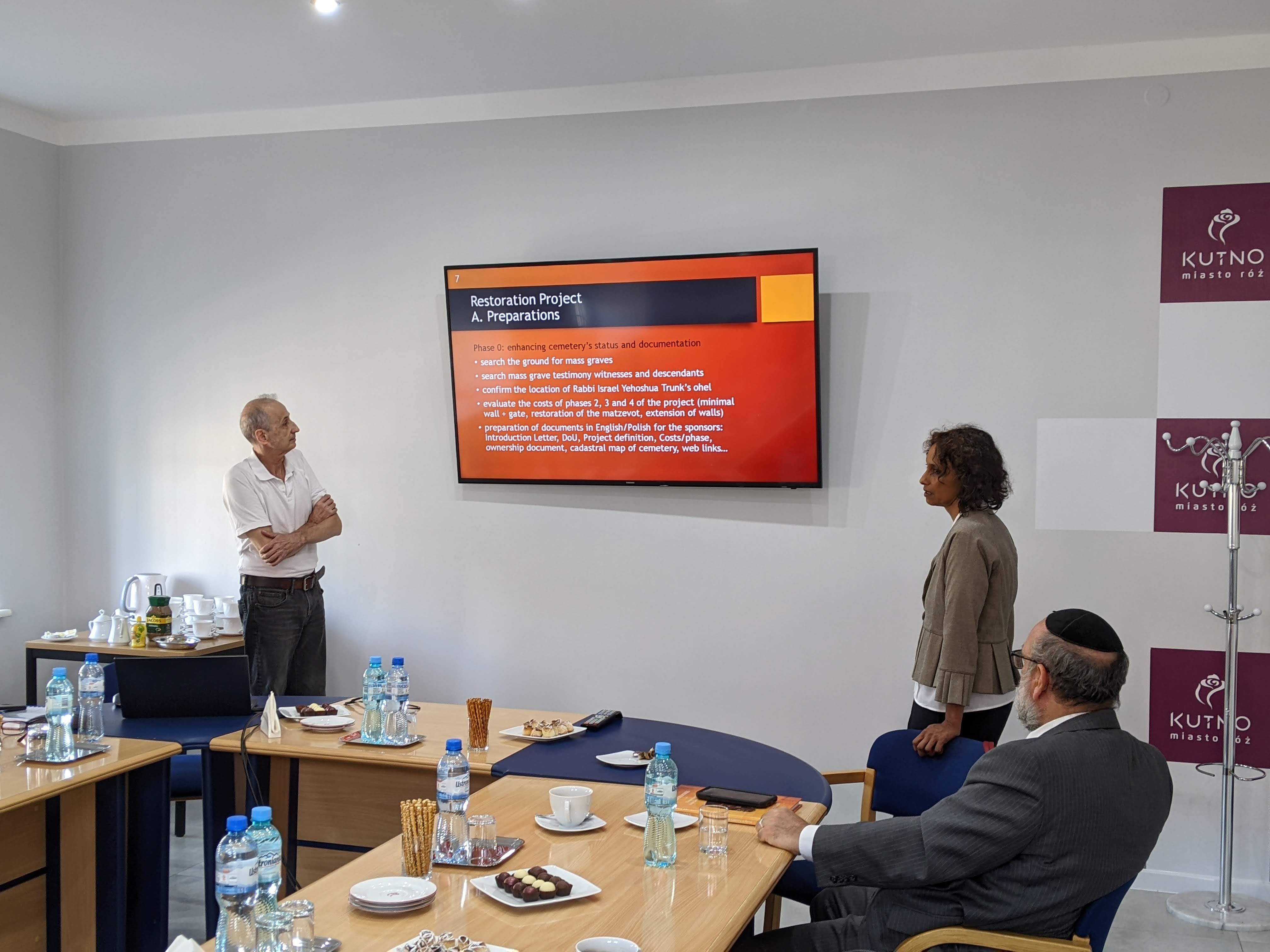
Yosef Kutner presenting his proposal for the Kutno Jewish Cemetery. Rabbi Schudrich seated on the right

This description is based on Roberta Books’ memo: The city deputy president opened the meeting with a presentation of the many actions the Town of Kutno has undertaken in support of remembrance of the Jewish history of Kutno, including the biennial Asch Festival.  

Josef Kutner followed with a slide presentation about the Jewish cemetery of Kutno, and his proposal for protection of the property. His proposal includes fencing the entire property with a brick wall that resembles the wall around the Christian cemetery, confirming the location of two mass graves mentioned in the Yizkor book and commemorating the mass graves with an appropriate marker, and limiting access to the site in order to prevent partygoers and others from disrespecting the site. Kutner also advocated creating a memorial with the preserved matsevot and marking the site of Rabbi Trunk’s Ohel.  

The town attorney then discussed the ownership of the site. Important records for verifying with legal clarity that the Jewish Community of Kutno owned the site, in particular the Land Registry Book, are missing and unlikely to be located. Despite 20 years of effort, the town has been caught between legal requirements and administrative rulings that have called into question their legal right to maintain the site. Although no interested party questions that the site belonged to the Jewish Community of Kutno, legally this remains a murky area.  

Rabbi Schudrich responded that he has dealt with similar problems in Poland on a number of occasions and he is confident that he can sort this out satisfactorily. He told the parties that they should begin planning while the legal issues were being sorted.  

Schudrich and the deputy president talked about the change in mentality that they expect will come about when the plans began to come to fruition. When Jewish cemeteries are protected, local residents begin to take pride in them and matsevot have a way of coming out of hiding and returning to the cemetery.  

The deputy president voiced his full support for the cemetery renovation, including covering the costs of a new wall. He noted that he, too, had drawn up preliminary plans for fencing the cemetery. They differ from Kutner’s proposal in two key ways. His design would be constructed of metal with brick pillars, not brick like the historical wall or the wall surrounding the Christian cemetery. Also, it would have multiple access points rather than the single access point in the Kutner proposal. The deputy president wants current residents to remain able to walk across the site; he pointed out that its location in the middle of the city would complicate closing it off. He wants the site to be respected as an integral part of the town. He noted that Rabbi Schudrich was consulted throughout the development of the plan, and he supported this idea. 

I want to emphasize the good will everyone projected toward each other as well as the resolve to push through the twenty-year roadblock that has stalled the project to secure the cemetery. Since the meeting, Yosef Kutner has continued to share materials about the likely location of the mass grave and to push for his vision for the cemetery restoration.

Additional meetings

After lunch, we visited the city library, where director Magdalena Konczarek showed us a short film they produced about Sholem Asch, his work, and the biennial Kutno Sholem Asch Festival. The library sponsors the festival, which has been held every other year since 1993. They also have an extensive collection of materials related to the Jewish history of Kutno and of Asch. They have published several academic volumes based on papers delivered at the conference that occurs in conjunction with the festival, as well as Polish translations of Asch’s work. For the memorial trip in May, Magdalena and library historian/regional specialist Andrzej Olewnik will mount an exhibition featuring their collection.

We continued to the offices of the TPŻK where we met Bożena Gajewska (until recently the organization president) and the vice-president Grażyna Baranowska (former librarian and organizer of the Sholem Asch Festival). Bożena reaffirmed her commitment to continue working on projects associated with Jewish Kutno, and Grażyna affirmed the continued support of the TPŻK.

The next day, we viewed an exhibition in the Kutno Community Center about the Eizyk brothers who bred and grew roses before and after the war. From this successful business, the city adopted the moniker “City of Roses.” The exhibition was part of the annual Rose Festival that attracts thousands of visitors to Kutno.

Students at the Jan Kasprowicz High School in Kutno, together with Roberta, Marysia, and principal Ciurlej

On September 12, we visited students at the Jan Kasprowicz High School (Liceum II). Roberta and I agree that such outreach to young people was one of the most important (if not the most important) part of our visit. We were welcomed by school director (principal) Artur Ciurlej, teacher Anna Ambrosiak, and a room full of students eager to hear from us. They showed us a short video about their recent activities related to Jewish memory (including dancing lessons!), and then Roberta and I each told our personal family story, explained our ancestors lived nearby, and talked briefly about our desire to restore Jewish memory. The meeting took place in English, but the students clearly understood us; they asked thoughtful questions and shared some of their own experiences with us. We spoke for more than a class period, even after the bells rang. Some students promised to meet us again in May, although they will have graduated by then.

Final note: Clearly, we have strong partners in the Kutno city government and with the TPŻK. They all expressed the desire to work with us and seem to have a sincere interest in preserving and promoting the Jewish heritage of the city. They are eager to participate in the memorial trip in May.

Would You Live in the Ghetto?

20 Monday Aug 2018

Posted by Marysia Galbraith in Commemoration, Jewish Ghetto, Krakow, Memory, Podgórze, Post-World War II, World War II

≈ Leave a comment

The Stare (Old) Podgórze district of Kraków, nestled between the Vistula River and the hilltop Bednarski Park, has experienced an incredible resurgence over the past several years. What used to be a neglected part of the city, with crumbling townhouses and drunks who congregated in the town square, has become the home of restaurants, cafes, galleries, and museums. A new pedestrian bridge links Podgórze to the heart of Kazimierz; the rhythm of footsteps over the pedestrian walkway causes sculptures suspended from wires to totter like the acrobats that are depicted.


Pedestrian Bridge connecting Podgórze and Kazimierz, Krakow.
Sculptures of acrobats suspended on wires, by Jerzy Kendziora.
A biker pedals by a sculpture of an acrobat suspended on wires, historic Podgórze in the distance.
The pedestrian bridge between Podgórze and Kazimierz, Krakow.

Old Podgórze is also the place the Nazi governor Hans Frank selected for the Krakow Jewish ghetto on March 3, 1941. “Within two weeks, 18,000 Jews were ordered to move to 320 buildings, whose ‘Aryan’ residents had previously been forced to vacate.” [1] Presumably, the district was selected because of its distance from the center of town, further isolated on the other side of the river. By March 20, Podgórze was closed off by a high brick wall; whether the symbolism was intentional or not, the undulating curves along the top edge evoked Jewish headstones stacked side by side. The ghetto shrank in 1942, when residents were taken to their death in camps like Bełżec, and was completely liquidated on March 13-14, 1943. The ghetto existed just two years, but the fact that it existed at all in this very place clashes uncomfortably with the district’s rebirth.

I have written about Podgórze before, and about the way the district captivated me. In fact, I’ve sometimes remarked that if I were to buy an apartment in Krakow, I would want it to be in Podgórze. But that was before I knew what happened there during World War II, before I started to explore my Jewish heritage, before historical markers brought difficult history back into the public sphere, and before the phantom walls of the ghetto became part of my inner map of the district. When I visited Krakow earlier this summer, I decided to rent an apartment in Podgórze to get a better feel for the place. Could I live there, knowing what I now know?

I found a place right in the heart of what used to be the ghetto, in a newly renovated building right beside a ruin, and across the street from the iconic red brick mikvah building that now houses one of the city’s most prestigious art galleries.


Podgórze, crumbling ruin beside new renovation.
Former mikvah, now Starmach Gallery, Podgórze, Krakow

I took long runs past St. Joseph’s Church on the Podgórze Market Square, over the hills of Bednarski Park, and through the narrow streets.


St Józef's Church, Podgórze
St Józef’s Church, Podgórze
Fragment of Jewish ghetto wall, Lwowska Street

I visited the remaining fragments of ghetto wall. A short section on Lwowska Street includes a plaque on which is written in Hebrew and Polish: “Here they lived, suffered, and died at the hands of Hitler’s torturers; from here they were taken on their last road to the death camps.” A larger section separates a school yard from the park; I came upon a group of Israeli teenagers whose armed guards asked me what I was doing there. I came to see the wall, I replied. I watched for a bit as their animated tour guide seemed to be reenacting the experiences of ghetto captives.


Tram stop at Ghetto Heroes' Square
Tram stop at Ghetto Heroes’ Square
Tram stop at Ghetto Heroes' Square
Tram stop at Ghetto Heroes’ Square

I waited for trams at Ghetto Heroes Square, sitting on the chairs that are part of the memorial to those who waited at this very spot to be transported on that final road to their deaths.


Map of Podgórze, including Jewish ghetto boundaries.
Memorial in Ghetto Heroes' Square
Memorial in Ghetto Heroes’ Square

Could I be witness to this on a daily basis? Maybe if I lived in Podgórze, but outside the borders of the ghetto? But that seems no better—to put myself in the position of those who watched from outside the walls.

So my love of this space—a quiet corner just a short walk from the heart of the city—battles with the discomfort of flashes of a painful history.

Could I live there? Could you?

[1] Potel, Jean-Yves. 2010 Koniec Niewinności: Polska Wobec Swojej Żydowskiej Przeszłości. Translated by Julia Chimiak. Krakow: Znak. P. 128.

50.036502
20.015518

Restoring Peace and Justice in America

06 Friday Jul 2018

Posted by Marysia Galbraith in Commemoration, Discrimination, Identity, Memory, Victims and perpetrators

≈ 4 Comments

Tags

Equal Justice Initiative, Montgomery, National Memorial for Peace and Justice, Racial Injustice, Supreme Court

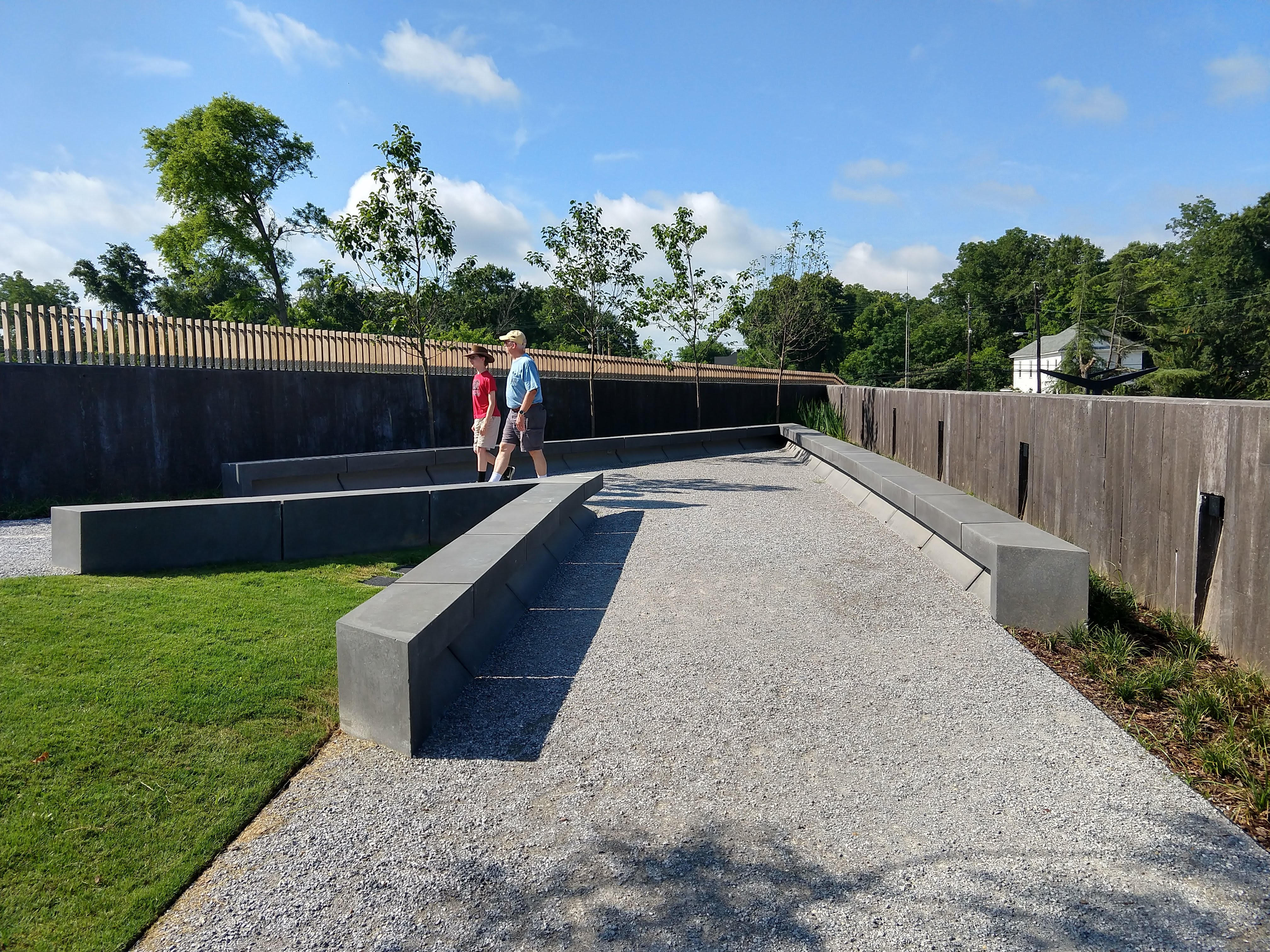
The new National Memorial for Peace and Justice opened in Montgomery, Alabama on April 26, 2018. It stands as a reminder of the many acts of discrimination against African Americans over the course of American history, and in particular memorializes over 4400 documented lynchings that occurred between 1877 and 1950.

img_20180627_100113817_hdr

National Peace and Justice Memorial, Montgomery, Alabama

800 rectangular iron blocks hang several layers deep in rows around a square. Each block contains the name of a county and state where lynching occurred, as well as the names of the victims and the dates they were lynched. Some contain the name of just one victim, others contain dozens.

My husband, son, and I visited the memorial last week. The monument looms large atop an elevated earth mound. We walked past a sculpture of life-sized bronze figures in chains, and up the path from the entrance. The wall to our right got shorter as we climbed to the level of the memorial.

img_20180627_091844954_hdr

The wall to our right got shorter as we climbed to the level of the memorial.

We should have been climbing out of slavery and into freedom, but instead were confronted by the sea of iron blocks. The first ones we approached were set on the ground. At six feet tall, they approximate the height of a person. At the next corner of the monument, a path leads downward.


Blocks incised with county, state, and names of people who were lynched there.
We turn a corner and descend. The iron blocks hang around us.

The blocks in the first row are marked with counties in Alabama, each deeper row listing counties in other states and their victims. We couldn’t figure out how the inscriptions are ordered, so we asked one of the guards. He explained the blocks are arranged alphabetically by state and county in a spiral that starts in the outside row, goes all the way around the square, and then continues through each successive row ending with the most interior blocks.

As we walked downward, the blocks became suspended from iron poles. By the time we reached the bottom, they loomed above us, eerily echoing the hanging victims they document.

Hanging blocks loom above

On either side of this below-ground passage, signs describe the circumstances in which people were lynched—for frightening a white child, or asking a white man for money they were owed, or for “standing around” in a white neighborhood.

img_20180627_093903565
img_20180627_094746871

On the lawn outside the monument, we walked by a second set of blocks, twins of the ones hanging in the memorial. Laid on their side as they are, they resemble coffins. The intent is for counties to claim the block with their name on it and to each set up their own memorial site. Over time, as such monuments proliferate, more and more gaps will appear in the blocks resting on the lawn. In effect, the memorial will become a network of sites mapping the places where lynching occurred.

Between 1884 and 1933, 10 people were lynched in Tuscaloosa, Alabama
Duplicate blocks await placement in the counties where lynching occurred.

Clearly, parallels can be made between the National Memorial for Peace and Justice and sites throughout the world memorializing the Holocaust. Rather than commemorating moments of national pride, they compel us to remember our failures. It doesn’t matter that I wasn’t born when these events took place. I’m an American, and proud to be one. And it is because of that sense of connection to my nation that I feel a sense of responsibility for what happened in my country, for the injustices that Americans perpetrated against other Americans. Even if I weren’t American, if it weren’t a failing of my nation, of people with whom I share a national affiliation, I would feel guilty—as a human being. Like I feel guilty that the Holocaust ever happened. It was a failure of humanity, of empathy that is only conceivable in its monumental horror because it actually occurred.

But no.

That’s not the entire truth. The fact is that, as a person of Jewish descent, I identify with the group that was victimized in the Holocaust. As a person of European descent, however, my group was responsible for the victimization of people of African descent. This shift in perception, from victim to victimizer, is a difficult one.

And the harm caused by racial bias and discrimination continues.

img_20180627_100344336_hdr

“Raise Up,” sculpture by Hank Willis Thomas at the Peace and Justice Memorial. Represents continued racial bias and discrimination by the criminal justice system.

Several blocks from the Peace and Justice Memorial, the Equal Justice Initiative’s Legacy Museum further highlights racial injustice in the United States. One exhibition has left me with a nagging feeling of distress, maybe because of uneasy associations with current conflicts about the highest courts in both the US and in Poland.

A single illuminated display summarizes all of the US Supreme Court’s rulings that address racial justice issues. Alongside the decisions most often discussed and celebrated, like expanding the right to vote and defending equal access to education, are many more that maintained or reinstitutionalized discriminatory practices. I didn’t know how complicit the Supreme Court has been in perpetuating injustice, but there it was made visible right in front of me.

For a brief period right after the Civil War, African Americans gained the right to vote and were elected into political offices. But then, Jim Crow laws imposed poll taxes and literacy tests that kept them from voting, and enforced segregation in businesses, buses, and public institutions. With one decision after another, the Supreme Court upheld such discriminatory practices, and whittled away at the rights of freed people of color. The 1896 Plessy vs. Ferguson ruling, in which the Supreme Court defended the constitutionality of segregation as long as African Americans had “separate but equal” facilities, is only the most well-known of many decisions upholding segregation and discrimination.

We like to see ourselves in a positive light. We identify more with Brown vs. The Board of Education than we do with Plessy vs. Ferguson. We celebrate the Civil Rights Movement, but shy away from a deeper acknowledgement of the harm inflicted by slavery, discrimination, and deeply entrenched biases. There is still a lot we need to come to terms with. I’m glad to see this new museum and memorial taking steps in that direction, and that they are in my adopted state of Alabama.

Pavement of Memory

17 Tuesday Apr 2018

Posted by Marysia Galbraith in Cemeteries, Commemoration, Heritage work, Memory, Polish-Jewish Heritage, Poznan

≈ 1 Comment

Tags

Janusz Marciniak

“We recover history…we record history.”

That is what the Jewish Community of Poznan wrote when they announced a new memorial, “Pavement of Memory,” built with fragments of Jewish tombstones that were recovered during roadwork in Poznan.

1_Jewish Cemetery in Poznan

“Pavement of Memory” composed with fragments of matzevot (Jewish Tombstones), Poznan                            Source: Janusz Marciniak

When the road crew dug up the old pavement, they noticed some stones with strange writing on them. Realizing the letters were in Hebrew, they contacted the Jewish Community. The fragments are too small to make out names or details about whose tombstones they were, but at least they have returned to the cemetery where they belong. All over Poland, fragments like this are being found, out of place, reinforcing road beds, bridge foundations, and lake beds. They were harvested during the terror of the Nazi occupation, and sometimes afterwards under state socialism. With only ghosts to look over them, Jewish cemeteries became a source for scarce building materials.

The extraordinary thing is that when public spaces are designated as repositories of Jewish memory and culture, objects return to them. As cemeteries are cleaned up, fenced, and marked, tombstones come back. In some cases, it’s as if people have known for a long time about these objects. They felt they were out of place and it has sat uneasily on their minds. They are relieved to finally know where these objects should go. In others, as with this road project, people are surprised to find these fragments, but they feel a sense of obligation to honor the memory of the past. To put things back into place.

3_Jewish Cemetery in Poznan.JPG

“Pavement of Memory” at the memorial site in a corner of Poznan’s Jewish cemetery.

These fragments are back home on a wall in the corner of the Poznan Jewish Cemetery.

“Pavement of Memory” was designed by Janusz Marciniak, who also designed the memorial at the Jewish cemetery in Piła and did a series of installations in the Poznan synagogue when it still housed a swimming pool. Janusz’s design is simple and powerful, honoring the integrity of each fragment by hanging them in three rows of ten. And yet together, like a mosaic, they make a unified statement.

4_Jewish Cemetery in Poznan.JPG

Detail of macevot fragments in Pavement of Memory

The words on the memorial plaque, in Polish, Hebrew and English, read:

Był czas, kiedy z macew robiono bruk. Czas, w którym najdosłowniej rozbijano, deptano i kaleczono pamięć o ludziach pochowanych pod macewami. Niektóre z kamiennych okruchów tej pamięci przetrwały i dziś ta pamięć łączy się z wdzięcznością dla wszystkich, którzy przyczynili się do jej ocalenia. „Z owocu swoich ust nasycony będzie człowiek dobrem, a odpłacone mu będzie według tego, co zrobity jego rece” (Prz 12, 14).

הייתה עת שבה עשו ממצבות אבני מדרכת, עת שבה היו באופן ממשי מנתצים, רומסים ופוצעים את זכרם של האנשים הטמונים מתחת למצבות. אחדים מהשברים של אבני הזיכרון

אותן הזיכרון מתאחד שרדו, וכיום עם הכרת טובה לכל אלה שתרמו להצלתו. “מפְרִי פי־אישׁ יִשְׂבַּע־טוֹב וּגְמוּל יְדֵי־אָדָם יָשִׁיב לוֹ” (משלי י”נ יד).

There was a time when matzevot [Jewish tombstones] were used for pavement; a time when the memory of the people buried under the matzevot was most literally broken, trampled, and maimed. Some remnants have survived and today this memory is connected with the gratitude to those who contributed to its rescue. “A man shall be satisfied with good by the fruit of his mouth, and the doings of a man’s hands shall be rendered unto him” (Prov. 12:14).

6_Jewish Cemetery in Poznan.JPG

Bird on an old boulder tombstone in the corner of the Poznan Jewish Cemetery that has been designated as a memorial site.

Holocaust Remembrance Day in Włocławek

29 Monday Jan 2018

Posted by Marysia Galbraith in Cemeteries, Commemoration, Jewish Ghetto, Memory, Polish-Jewish relations, Włocławek

≈ 2 Comments

Tags

International Holocaust Remembrance Day, January 27

Thanks to Mirosława Stojak for all the work she does to preserve the memory of Jewish history and culture in Włocławek.

Here is a video from Holocaust Remembrance Day (January 27) when she and students and teachers from the Automotive High School visited the memorial at the site of the World War II Jewish ghetto, also the prewar Jewish cemetery.

Flim credit: Q4.pl, http://q4.pl/?id=17&news=170583

The interviews are in Polish, but even if you can’t understand the words, you can see that these people remember the Jewish history of their city. And they are passing on those memories to the next generation.  They lit candle lanterns in front of the commemorative monument, and the students placed pebbles upon which they had written words like “traditions,” “love,” and “memories.”

There’s more about Włocławek’s Jews on Ms. Stojak’s website Zydzi.Wloclawek.pl. The tagline of her site: “Ku pamięci, z nadzieją, na pojednanie,” “In memory, with hope, for reconciliation.”

Crossing Boarders

07 Thursday Sep 2017

Posted by Marysia Galbraith in Commemoration, Polish-Jewish Heritage, Polish-Jewish relations, Radom

≈ 1 Comment

Here’s a post from a heritage seeker on a similar quest to my own. She attended the commemoration of the 75th anniversary of the liquidation of the Radom ghetto, which took place in Radom last month.

radommusings1945's avatarRadom Musings

After a few weeks of decompression, I am finally able to sort through some of my feelings about last month’s commemoration ceremony in Radom.  At times solemn, while at other times celebratory, the event was a reflection of how present day Catholic Poles choose to confront Poland’s complicated relationship between Christians and Jews.

Poland’s internal and external struggles to reconcile its past were highlighted by the incongruity of a klezmer band playing music at the entrance of the Jewish cemetery, and by the reverence demonstrated when a Holocaust Survivor spoke about his fond pre-War memories, followed by a concert of a well-known Polish performer.  While one can say that this combination of somber commemoration and entertaining celebration reflects the merger of past and present, not all of us are ready for the journey.  Poland’s past has a long way to travel before it catches up to present day Jewry.  At…

View original post 287 more words

Healing Collective Trauma: Jewish Heritage Work in Poland

18 Saturday Mar 2017

Posted by Marysia Galbraith in Cemeteries, Commemoration, Fieldwork, Heritage work, Memory, Polish-Jewish Heritage, Trauma, Wronki

≈ Leave a comment

Tags

affect, Aleida Assmann, collective memory, lapidarium in Wronki, Piotr Pojasek, Shadows of Trauma, Society for Psychological Anthropology Meeting

Healing Collective Trauma: Jewish Heritage Work in Poland is the title of the paper I presented at the Society for Psychological Anthropology Meeting in New Orleans on March 12. Here is the abstract I submitted:

The legacy of the Holocaust weighs heavily on Polish communities that were witness to unspeakable events. The paper examines how collective and personal trauma and recovery are intertwined, particularly in relation to Jewish heritage work in Poland. It emphasizes the affective engagement of heritage workers, most of whom are Catholic Poles, working on local projects intended to bring the history and culture of the community’s absent Jews back into the public sphere. Person-centered ethnography helps to reveal how participants talk about the work they do in relation to notions of self and society, and associated personal and social meanings. It further reveals their particular narratives about past and present relationships between Catholics and Jews in Poland, which they often pose as a challenge to the silences of the socialist era and the present-day reemergence of xenophobic nationalism. As members of the post-memory generation—they grew up with stories about former Jewish residents and the destruction of their communities, but they did not actually experience these events themselves—heritage workers are able to work towards reconciliation in ways that older generations could not. They have coming-of-age stories associated with the moment historical events became real to them, and their emotional distress about the past became the force that compelled them to do something about it in the present. Their personal narratives suggest motivation stems from the convergence of attachment to their native place, a sense of responsibility to those who are no longer present, and a desire to realize a more inclusive community that accepts past and present diversity within the Polish polity.

In memory of the Jewish community that inhabited Wronki from 1507-1939. Lapidarium of tombstones from the destroyed Jewish cemeteries of Wronki
Lapidarium of Jewish Tombstones, Wronki
Piotr Pojasek pointing to one of Wronki's Jewish cemeteries. Some pedestals of tombstones remain buried, as well as a large spruce tree that was planted when the cemetery was still functioning.
Piotr Pojasek pointing to one of Wronki’s Jewish cemeteries. Some pedestals of tombstones remain buried, as well as a large spruce tree that was planted when the cemetery was still functioning.

The paper starts with the story of Piotr Pojasek, who grew up in an old farmhouse near Wronki. From childhood, he knew that the curb on his street had been made out of Jewish tombstones during the Nazi occupation, but it was only as an adult that he really realized how wrong that was. And once he became engaged emotionally and morally, he knew he had to do something about it. It took many years, but in 2014, the lapidarium of the tombstones was completed. Applying the categories of memory as defined by Aleida Assmann, I use this case to explore how individual memories can shape social memory, and in turn national and cultural (collective) memory. The point is that individual connections to the past, as Piotr had through the uneasy presence of the tombstones outside his front door and the stories his father told him, are what compelled action. By collecting and sharing historical evidence and the stories of witnesses, social memory about the impact of the Holocaust grew, and developed a resonance for others. Eventually, a large coalition of local, national, and even international sponsors succeeded in building a public monument that revives and perpetuates collective memory of the Jews who lived there, of the inhuman circumstances of their death, and of the Polish citizens who recognize this as an important part of the history of their community.

Commonly, scholarship on collective memory focuses on public symbols and commemorative spaces, and has little to say about the transmission of meaning on the individual level. In my work, I am trying to show the relevance of individual memory workers and their personal engagement with the past as well as their local community. They are the ones who can bring things together, forging personal, affective links that make others care about far distant people and events.

Podgórze: Below the hill and through the ghetto

16 Monday Jan 2017

Posted by Marysia Galbraith in antisemitism, Commemoration, Jewish Ghetto, Krakow, Memory, Podgórze, Polish-Jewish relations, Post-World War II, Reclaimed Property, World War II

≈ 2 Comments

Tags

Ghetto Heroes Square, Plac Bohaterów Getta, Places of Holocaust Memory

When Krysia and I visited Poland a few years ago, we walked to her friend Wanda’s apartment in Podgórze, a district across the Vistula River from Krakow’s Old City. Historically, Podgórze was an industrial part of town, and also the site of the Jewish Ghetto during World War II. Until recently, this was not a particularly desirable place to live. I went there for the first time in 1986 when my Polish teacher invited me for dinner. She lived with her doctor husband and baby daughter on Limanowski Street in a ground floor apartment that was a converted storefront. The building was grey and crumbling, and the tram rumbled by loudly and frequently. They couldn’t wait to move somewhere better. In 1992, I met a high school student whose classmates joked he was “from the country” because he lived in Podgórze. Even though you could see Wawel Castle on the opposite shore of the river, Podgórze was considered a remote corner of the city.

I really discovered Podgórze in 2005 when I was back in Kraków for 5 months during my first sabbatical leave. I made a point of exploring all the city’s parks and playgrounds as a way of entertaining my two-year-old son; long afternoon walks were often the only way I could get him to nap. Podgórze charmed me. The buildings along the tramline on Limanowski Street were still grey and crumbling, but there was also a lovely triangular plaza and a beautiful church with a hillside rising up behind it. Maybe that’s the source of the name—Podgórze means “below the hill.” Climbing up the curving street from the plaza, large houses with fenced gardens replaced the apartment buildings, and then a massive park appeared on the right. And yet, despite these explorations, I still didn’t know that I had been moving in and out of the borders of the former ghetto, where the Nazis had forced Jews to live (and die).

Plaza and church in Podgórze
Heading up the hill
Heading up the hill
One of the large houses on the way to the park

Wanda, a long-time resident of Podgórze, pointed out traces of that difficult era as we walked to her apartment. It was the first time I actually connected the contemporary streets of Podgórze with the places associated with the Holocaust. Just over the bridge, we entered Ghetto Heroes Square (Plac Bohaterów Getta), the site where Jews were assembled before being transported to work, the ghetto, or the camps. It wasn’t until December 2005 that a monument commemorating these historical events was installed. The monument is comprised of 33 large chairs arranged in rows throughout the plaza and 37 smaller chairs scattered around the edges of the square and at the nearby tram stop. These serve as a symbol of the people whose material possessions were taken from them as they were selected for the ghetto and elsewhere. The idea was “to tell the story of the place through the configuration of the urban space itself, so that the memory of the absent ones would be manifested through the presence of everyday objects which compose the urban furniture” (Bordas 2006). The chairs make an impression, especially the big ones. They look like they should be functional but they’re not–another way they symbolize the way ordinary life became abnormal.

Chair monument in Ghetto Heroes Square

Ghetto Heroes Square

Wanda led us to a nearby street where a fragment of the ghetto wall still stands. Its characteristic scalloped top makes it resemble side-by-side tombstones. Flowers rested at the foot of a historical marker, an offering made during a commemorative event in March. Wanda also pointed out where a gate of the ghetto used to cross the street near her apartment. For 23 years, Wanda lived on that street. But then the prewar owners—Jews—regained ownership of the property and doubled the rent. Faced with the option of paying 2000 zloties per month or move, Wanda decided it would be better to invest that kind of money in a place she could own herself. That way, she doesn’t have to worry about being displaced again.

Like many Poles, Wanda feels personally affronted by former owners reasserting their claim over property. These feelings are complicated.

It seems only right that descendants of victims of the Holocaust be compensated. Regaining ownership of a building can only to the slightest degree address what those families lost.

And yet, losing their home to the prewar owner seems particularly unfair to the generation that endured years of communism, and never was able to accumulate much wealth in their own lives. Since the end of communism, prices have risen, unemployment has become common, and wages remain modest. Often it’s the poorest residents who live in former homes of Jews because the government took over their management and made them into low-cost housing for those in greatest need. This affordable housing was a small oasis of security in unsettled times. Many such residents today are elderly; others are unemployed; some have problems with their health or with substance abuse. They don’t have many options.

Wanda was one of the lucky ones with the wherewithal and the financial means to buy her own place. But still she carries the resentment with her that she sometimes translates into resentment of Jews more generally. Who was looking out for her rights when the apartment was returned to the prewar owners? What did some rich foreigner need with her building? Why should they get even wealthier at her expense?

In fact, prewar owners are reclaiming properties all over Poland, and even though they are not all Jewish, the greatest resentment is directed toward those who are.

Ghetto Memory Trail marker
Star of David crossed out--on a storefront in Podgórze
Star of David crossed out–on a storefront in Podgórze

In Podgórze, you can see both the effort to acknowledge sites of Jewish heritage, and also signs of continued antisemitism.

Wanda loves her neighborhood and doesn’t want to live anywhere else (even though she has to spend part of each year in the US to earn enough money to pay her mortgage). The apartment she lives in now is new construction on top of a historic townhouse; an additional floor was added to an existing building. As we climbed the three flights of stairs, she explained that when she bought the place, all that was there were the bare walls. This is standard practice in Poland. The buyer has to select, purchase, and install all the flooring, fixtures, wall coverings cabinets, and appliances. The apartment is long and narrow, with a wall of windows and a sleeping loft. Wanda said she bought it at the peak of the market; today she could find something for half that price. But that would mean moving again.

As we ate a generous spread of Polish dishes, including stuffed cabbage (gołąbki) and two kinds of pickles, Wanda said that Podgórze has become one of the most popular neighborhoods in Krakow. The new heritage sites and museums—including the Ghetto Heroes Square, the Schindler Factory Museum, and the Museum of Modern Art—have brought with them tourists and the amenities that tourists expect. People are moving out of the center of the city because it has become too crowded, cars are restricted on most streets, there are few stores with everyday necessities, and the prices are too high. Podgórze is desirable because it has good public transportation, is within walking distance of the city center, and because of the park, the trees, and the hill that I find so appealing.

OLYMPUS DIGITAL CAMERA

The new pedestrian bridge across the Vistula River to Podgórze.

Poles Remember

01 Tuesday Nov 2016

Posted by Marysia Galbraith in Catholicism, Cemeteries, Commemoration, Dukla, Memory, Polish Culture, Polish-Jewish Heritage, Polish-Jewish relations

≈ Leave a comment

Tags

All Saints Day

Today is the Catholic holiday, All Saints Day, the time to honor the dead. Customarily, Poles visit cemeteries to clean and decorate the graves of their family members. During the day, chrysanthemums in all shades adorn tombstones. At night, candle lanterns on graves make the cemeteries glow. Twinkling hillsides can be seen from far away.

I’m pleased to see that some Poles also remember Poland’s now-absent Jewish population on November 1. I’ve seen this in Warsaw and in Lutowiska. And here is a photo Jacek Koszczan posted on Facebook today showing the candle lanterns on the commemorative monument at the town of Dukla’s Jewish cemetery.

Candle lanterns on the monument commemorating Dukla's Jewish population, November 1, 2016, All Saint's Day.

Candle lanterns on the monument commemorating Dukla’s Jewish population, November 1, 2016, All Saint’s Day.

He and other citizens of Dukla made the trip out to the cemetery to light a candle for the dead. In this, I see an expression of honor that transcends religious difference.

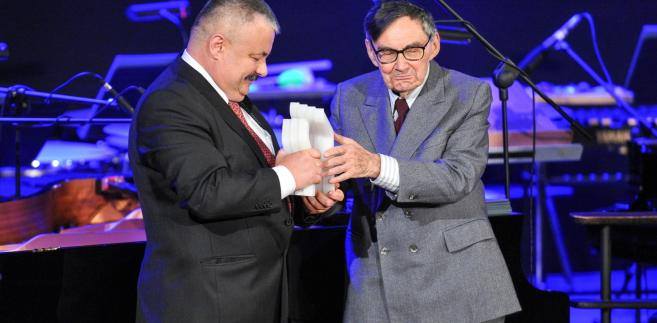
Jacek has done a great deal to reassemble the memory of Jewish life in Dukla. In fact, he was honored last month by the Polin Museum for his work. The Polin website explains, “Jacek Koszczan is the founder and director of the Organization for the Preservation of Jewish Heritage in the Dukla Region–Dukla Shtetl. His work involves both obtaining and archiving knowledge about the Jews of Dukla and its surroundings, as well as educational activities. Jacek Koszczan is the initiator and builder of a monument commemorating the 70th anniversary of the murder of Dukla’s Jews, the volunteer caretaker of the Jewish cemeteries, mass grave, as well as the ruins of the Dukla synagogue. Thanks to his efforts and knowledge, he succeeded in facilitating the honoring of two Dukla-region families with the medal for the Righteous among Nations.”

Jacek Koszczan receiving his award from the Polin Museum for his work on Jewish heritage in Dukla, October 21, 2016. Photo by Janusz Czamarski

Jacek Koszczan receiving his award from the Polin Museum for his work on Jewish heritage in Dukla, October 21, 2016. Photo by Janusz Czamarski

All in all, Jacek has been instrumental in the return of the memory of Jews to his community. I have been impressed by his energy, enthusiasm, and generosity. For him, this is a labor of love–for his community, for the memory of those who suffered, and for humanity in the face of evil.

← Older posts
Newer posts →

Categories

  • Anthropology (37)
    • Archives (14)
    • Fieldwork (7)
    • Ground Penetrating Radar (GPR (4)
    • Research Methodology (8)
  • antisemitism (14)
  • Association of Descendants of Jewish Central Poland (32)
  • Catholicism (8)
  • Conference (1)
  • Discrimination (2)
  • Family (69)
    • Bereda (17)
    • Kolski (13)
    • Piwko (22)
    • Rotblit (3)
    • Walfisz (4)
    • Winawer (7)
  • Genealogy (11)
  • Heritage work (66)
    • Commemoration (23)
  • Identity (18)
  • Israel (6)
  • Jewish Culture (89)
    • Cemeteries (51)
    • Museum (7)
    • Synagogues (33)
  • Jewish immigrants (8)
  • Jewish Religion (1)
  • Memory (70)
  • Names (14)
  • Photographs (6)
  • Pifko-Winawer Circle (5)
  • Poland (125)
    • Baligród (1)
    • Bolimów (1)
    • Brześć Kujawski (5)
    • Buk (1)
    • Chodecz (1)
    • Dukla (2)
    • Dąbrowice (1)
    • Gdynia (1)
    • Gostynin (2)
    • Gąbin (1)
    • Izbica Kujawska (1)
    • Kazimierz (4)
    • Kowal (1)
    • Koło (1)
    • Krakow (7)
    • Krośniewice (1)
    • Kutno (6)
    • Kłodawa (1)
    • Lesko (8)
    • Leszno (1)
    • Lubień Kujawski (1)
    • Lubraniec (1)
    • Lutowiska (3)
    • Piła (3)
    • Podgórze (2)
    • Poznan (11)
    • Przemyśl (2)
    • Pzedecz (1)
    • Radom (1)
    • Radymno (1)
    • Sanok (1)
    • Skierniewice (5)
    • Sobota (2)
    • Tarnów (2)
    • Warsaw (22)
    • Wielkopolska (1)
    • Wronki (7)
    • Włocławek (20)
    • Zasław (2)
    • Łódź (1)
    • Żychlin (30)
  • Polish Culture (10)
  • Polish-Jewish Heritage (60)
  • Polish-Jewish relations (60)
  • Post-World War II (24)
  • Pre-World War II (22)
  • Reclaimed Property (1)
  • stereotypes (3)
  • Survival (9)
  • Trauma (3)
  • Uncategorized (5)
  • Victims and perpetrators (4)
  • World War II (45)
    • Jewish Ghetto (12)
    • Nazi Camps (5)
    • Polish Underground Army (3)
  • Yiddish (5)

Enter your email address to follow this blog and receive notifications of new posts by email. Your email address will not be shared.

Archives

  • October 2025 (1)
  • July 2025 (8)
  • June 2025 (1)
  • April 2025 (1)
  • August 2024 (3)
  • July 2024 (3)
  • May 2024 (2)
  • April 2024 (1)
  • May 2023 (2)
  • January 2023 (2)
  • December 2022 (7)
  • November 2022 (2)
  • October 2022 (5)
  • September 2022 (1)
  • January 2022 (1)
  • August 2021 (1)
  • December 2020 (2)
  • July 2020 (1)
  • May 2020 (3)
  • April 2020 (1)
  • March 2020 (1)
  • January 2020 (2)
  • May 2019 (1)
  • February 2019 (1)
  • November 2018 (1)
  • September 2018 (1)
  • August 2018 (3)
  • July 2018 (1)
  • June 2018 (1)
  • May 2018 (1)
  • April 2018 (2)
  • March 2018 (2)
  • February 2018 (2)
  • January 2018 (2)
  • December 2017 (2)
  • November 2017 (2)
  • October 2017 (1)
  • September 2017 (3)
  • August 2017 (3)
  • June 2017 (2)
  • May 2017 (3)
  • April 2017 (1)
  • March 2017 (2)
  • February 2017 (1)
  • January 2017 (2)
  • December 2016 (2)
  • November 2016 (4)
  • October 2016 (1)
  • September 2016 (6)
  • August 2016 (2)
  • July 2016 (1)
  • May 2016 (4)
  • April 2016 (2)
  • March 2016 (3)
  • February 2016 (4)
  • January 2016 (3)
  • December 2015 (3)
  • November 2015 (5)
  • October 2015 (5)
  • September 2015 (3)
  • August 2015 (4)
  • July 2015 (3)
  • June 2015 (3)
  • May 2015 (4)
  • April 2015 (9)
  • March 2015 (3)
  • February 2015 (2)
  • January 2015 (5)
  • December 2014 (4)
  • November 2014 (9)
  • October 2014 (2)
  • September 2014 (1)

Copyright Notice

All original text and images are copyright © Marysia Galbraith. Please contact the author before quoting.

Blog at WordPress.com.

  • Subscribe Subscribed
    • Uncovering Jewish Heritage
    • Join 147 other subscribers
    • Already have a WordPress.com account? Log in now.
    • Uncovering Jewish Heritage
    • Subscribe Subscribed
    • Sign up
    • Log in
    • Report this content
    • View site in Reader
    • Manage subscriptions
    • Collapse this bar
 

Loading Comments...