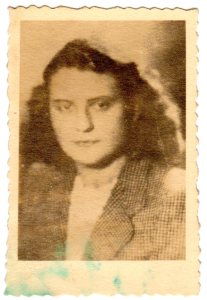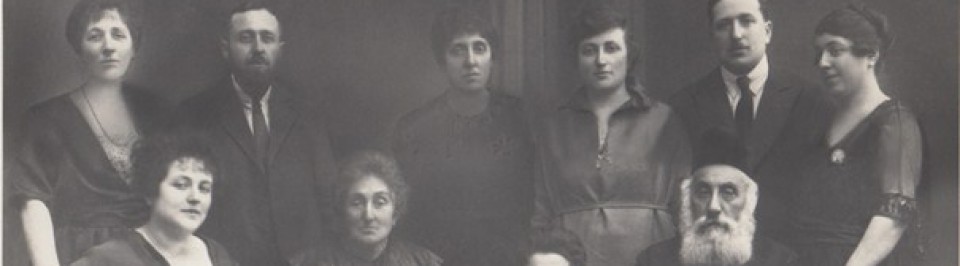
• About
  • The Photo that Started it All

Uncovering Jewish Heritage

Uncovering Jewish Heritage

Category Archives: Anthropology

Posts about anthropology and anthropological methods.

AK Verification, Part III

02 Saturday Sep 2017

Posted by Marysia Galbraith in Archives, Bereda, Family, Memory, Polish Culture, Polish Underground Army, Warsaw, World War II

≈ Leave a comment

Tags

AK, Armia Krajowa, Maria Bereda(y) Galbraith, patriotism

NOTE: This overview of my recent discoveries at the Polish Underground Movement Study Trust, Studium Polskiej Podziemniej (SPP) got so long I am publishing it in three separate posts. Here is part III. During the German occupation of Poland during World War II, the Polish Underground Army worked in secret to resist, sabotage, and fight against the Nazis. Another name for the Polish forces is “AK,” short for “Armia Krajowa,” or “Home Army.” I talk about the soldiers as “the partisans;” in Polish sources they are also called “konspiracja,” “the conspiracy.”

Sorry it’s taken a while for me to get to part III. The semester has begun which means I’ve been very busy.

DSC00534

Pencil sketch of Maria Bereday from the 1950s, signed Ditri. Friends tell me she looks like a spy.

All of the questions the archivist Krystyna asked me about the names Mama went by paid off because she found another file; the envelope was mislabeled “Maria Fijułkowska.” Inside was a six-page report, relacja, Mama had written titled, “Outline of Courier Work.”

Initially, neither Krystyna nor I found this file because not only was “Bereda” missing, but Fijałkowska was also misspelled. Krystyna wrote “Fijałkowska” on a new envelope; I don’t know why she didn’t also add the Bereda, even after I pointed out that Mama’s full name was hand-written in large letters along the left margin of the document’s first page. Around World War II, the family usually used the name Bereda-Fijałkowska. Mama told me they added the Fijałkowski/a, which was grandpa Bereda’s mother’s maiden name and a name associated with the Polish gentry, because of Babcia’s social aspirations.

DSC00333

Mama’s name (Bereda-Fijałkowska) and pseudonym “Renata” in the margins of her typewritten report.

Mama’s report matches up with some of the stories she told me, and confirms some of what she did during the occupation. It also gives more details about the way her courier unit “Zadra,” was organized, and how couriers carried out their duties. The report is dry and factual. It contains no specifics about her emotional engagement or personal thoughts. A historian might find it interesting for what it reveals about the operations of the Underground conspiracy. I keep trying to look beyond the words to find the person behind them.

She writes, that “Zadra” started out very small, and because the work wasn’t systematized, the couriers were on call at all times. “By the end of 1942,” she writes, “the number of couriers stabilized at 15, and that group became close and experienced, and worked together for a long time without changing members.” This all changed in the fall of 1943 when the occupier, okupant, limited train travel to Germans only. Overnight, the courier corps dropped from 60 to just six who spoke German well and had German papers. “The work for these couriers during this time was nonstop,” she continues, “The number of trips for each courier came to 10-12 per month, depending on the route.” My mother doesn’t state it in the report, but she must have been one of the couriers who carried out missions during this time. Some of her most vivid stories were about traveling in the train cars with an assumed identity as a “volksdeutch,” a half-German whose father was fighting for the Reich on the Eastern front.

After about two months, the courier corps were reorganized and expanded, with more reserve couriers brought into regular service. In the half year before the Warsaw Uprising, the number of couriers in her unit approached 40, and overall reached 100.

The duties of the couriers included delivering coded and uncoded orders hidden in ordinary objects such as candles or paint, special messages that had to be handed to specific commanders, and large sums of money (1/4-12 million zloties in 500 zloty bills). Some missions involved carrying the messages brought by paratroopers they called “ptaszki,” “little birds.” This is the code name for the cichociemni, the officers who parachuted in from the West carrying money and messages from the Polish Government in Exile.

The report includes an example of a special mission Mama undertook at the end of 1943. Instead of being briefed by her usual commander “Wanda”, “Beata,” the head of communication with the west, did it. “Wanda” gave her a special coded message she had to hand directly to the chief of staff or the commander of the Radom District. This was to occur in private with no witnesses. Mama also had to memorize and deliver the oral message, “The commanders of the divisions and subdivisions of “Burza” require complete secrecy in the event of the invasion of the Russians.” Burza, Tempest, was the code name for the Warsaw Uprising.

Because the chief of staff wasn’t available on the day Mama arrived, she had to spend the night at a safe house. The next day, she delivered the messages to Chief of Staff “Rawicz” [his real name was Jan Stencel or Stenzel], but had to spend another two days before “Rawicz” returned from the forest, where the partisans were hiding out, with the required response for the Central Command in Warsaw.

Reading this sparked another memory for me. I think it was a big deal for Mama to stay away from home for so long, especially because her father didn’t know she was in the Underground. Her mother did know, though, and they hatched an alibi about a visit to Mama’s fiance’s family. Or maybe this is the story she told the authorities on the train to explain why she was returning several days late. Hopefully, my brothers remember this story, too, and can confirm one of these versions.

The documents from the Studium Polski Podziemnej in London have been a lynch pin that holds together information from a variety of sources. While I was there, I also found a citation for Communication, Sabotage, and Diversion: Women in the Home Army, Łączność, Sabotaż, Dywersja: Kobiety w Armii Krajowej, published in 1985. The book was written in Polish but published in London. I found a copy of it at an online used bookstore whose brick and mortar shop is in Warsaw. I called, and sure enough they had it in the shop, so I picked it up while I was in Warsaw. It contains the recollections of the head of the Women’s division of Central Command (VK) Janina Karasiówna, the oficer who confirmed Mama’s verification file. Another chapter contains the report of Natalia Żukowska who was the assistant commander of Mama’s courier unit; Mama identifies her by her pseudonym “Klara.” From Żukowska’s report, I learned that “Zadra” was the name used by the couriers who had been working with the unit for the longest, but in 1943 the name was changed to “Dworzec Zachodni.” Reviewing Mama’s documents, I see now that she identified her unit as Zadra-Dworzec Zachodni in one place. She underlined it, too. Until I read this book, I had thought Dworzec Zachodni, which means Western Station, referred to Zadra’s location, not an alternative cryptonym. And then there’s this: the names of the 15 couriers, including “Renata.” That’s Mama’s pseudonym; her last name is misidentified as “Brodzka” instead of “Bereda,” but Natalia writes, “Unfortunately, it wasn’t possible to decrypt all of the last names” (p. 118).

Mama was proud of her service for her country, but she was also painfully aware of the cost of war. She called herself a pacifist and the war solidified her abhorrence of armed conflict. I remember her asking, “Are there times when fighting is necessary?” I could tell from her voice that she wanted to believe all conflicts can be resolved peaceably. But her experience had taught her otherwise.
AK Verification: Part II

13 Sunday Aug 2017

Posted by Marysia Galbraith in Archives, Bereda, Family, Poland, Polish Culture, Polish Underground Army, Warsaw, World War II

≈ Leave a comment

Tags

"Zadra", AK, Armia Krajowa, Courier, General Bór Komorowski, Grupa "Koło", Major Janina Karaś, Maria Bereda(y) Galbraith, Polish Home Army, Polish Underground Study Trust, Studium Polski Podziemnej, Warsaw Uprising

NOTE: This overview of my recent discoveries at the Polish Underground Movement Study Trust, Studium Polskiej Podziemniej (SPP) got so long I am publishing it in three separate posts. Here is part II. During the German occupation of Poland during World War II, the Polish Underground Army worked in secret to resist, sabotage, and fight against the Nazis. Another name for the Polish forces is “AK,” short for “Armia Krajowa,” or “Home Army.” I talk about the soldiers as “the partisans;” in Polish sources they are also called “konspiracja,” “the conspiracy.”


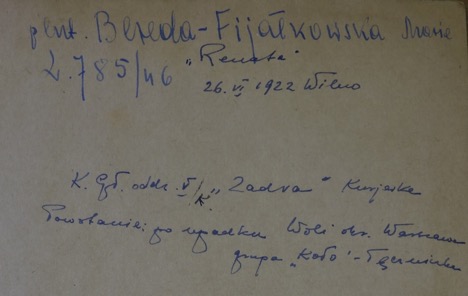
The file at the archive of the Polish Underground Movement Study Trust, Studium Polski Podziemnej (SPP), contained the same verification questionnaire I had from my mother’s papers and so much more. On the envelope itself is the following identifying information:

VerificationEnvelope

Information on the envelope containing Mama’s papers at the SPP

I ‘ve learned how to decipher all of this. Here’s what it means:

Cadet Bereda-Fijałkowska Maria

2.785/46 [record #]     “Renata” [her pseudonym]

   26. VI 1922 Wilno [birth date and place of birth]


            Central Command division V/Women “Zadra” courier

Uprising: after the fall of the Wola district of Warsaw

                                    “Koło” Group-liaison officer [the names of her units]

The documents inside the envelope confirm Mama’s service and rank in the AK [Home Army], as well as her receipt of the Cross of Bravery. She submitted her questionnaire on March 9, 1946, her commanding officer confirmed her claims on April 15th of the same year, and the official report was completed the next day on April 16. The final report says the head of the Polish Army himself, General Bór-Komorowski, confirmed her receipt of the Cross of Bravery. Here is what looks like his signature on the document:

BórSignature

General Bór Komorowski’s signature verifying Mama’s service in the Polish Home Army. It looks like he wrote “Stwierdzam (I confirm)  16/IV 46” above his signature. Note the “gn” for “generał.”

Mama started military training in middle school, gimnasium, at the Klementyna Hoffman School in the mid-1930s. She continued training in high school, liceum, and entered the Underground in June 1941, right after finishing high school. She took courses on how to be a courier, the organization of the Underground and of the German military, as well as marksmanship, topography, and first aid. She was in “Zadra” Group, part of the women’s courier corps in the 5th Division of the Central Command. She delivered encoded communications, money, and oral messages on the routes between Warsaw and Krakow, Radom and Skarżysko-Kamienna. In these latter two places, she acted as a go-between for the partisans in the surrounding forests and Central Command in Warsaw. From 1942-4, she also worked as an instructor training other women to serve in the Underground.

When the Warsaw Uprising began on August 1, 1944, she was with her unit “Zadra” in Wola, a district to the northwest of downtown. A handwritten note on her typed questionnaire says “wounded on route from Wola to the Old City.” The handwriting is different from Mama’s distinctive, almost calligraphic style, so somebody else must have added it after Mama submitted her answers.

The archivist Krystyna Zatylna said that the heaviest fighting in the first days of the Uprising was in Wola. Mama was lucky to have survived. By August 8, 40,000 civilians died in Wola.

The Home Army regrouped in the Old City. Mama got separated from her unit and joined “Koło” group. She is referred to here as a “liaison,” “lączniczka,” rather than “courier,” “kurierka.” Both terms refer to people entrusted with delivering critical information. Initially, however, she worked as a medic on Długa Street. When the Germans pushed the partisans out of the Old City, they escaped to the City Center, Śródmieście, via the sewers.

14SPPVerificationDossier

Document dated September 9, 1944 that allowed “Renata” to travel through the City Center during the Warsaw Uprising.

The file contains two papers dated from the Uprising. No doubt Mama brought them with her to London to help corroborate her report. These tattered notes—physical proof of her service—must have been very precious to her. The first, on a third of a piece of paper that has deep creases from having been folded many times, is dated September 9, 1944. It states:

I assert that cadet Renata is a liaison of “Koło” Group. The conditions of her service require movement within the region between Savior Square and Napoleon Square.

The note is signed by the Chief of Staff of “Koło” Group, Major Krynicki. The document contains a round stamp with a crowned eagle in the middle surrounded by the words “Motorized Transport Brigade, “Brygada Dyspozycyjna Zmotoryzowana.” Mama must have shown this note at barricades on the streets so the AK soldiers would let her pass. Savior Square and Napoleon Square are in the City Center, which means she retreated through the sewers before September 9. I can, however, imagine her dodging Nazi bullets as she ran across the barricaded Jerusalem Street carrying messages from Napoleon Square to Savior Square. These names would sound good in a poem. Too bad I’m not a poet.

The second paper dates from October 3, 1944, the last day of the Uprising. Signed by Colonel Bolesław Kołodziejski, the commander of “Koło” Group, it is titled, “Provisional certificate (to be exchanged after the war for official recognition).” The text reads:

I confirm that “Renata Lewandowska” was decorated for her activity during the Uprising from August 1 to October 3 1944 with the Cross of Bravery for the first time.

Based on: the personal confirmation of the head of the Warsaw Corps of the A.K. Brigadier General Montera and his assistant Colonel Wachowski, as told to the commander of “Koło” Group during the last days of the Uprising.

“Montera” was the code name for General Antoni Chruściel, who led the Home Army (AK) in Warsaw during the Uprising. Kołodziejski was also a code name. Elsewhere in the documents, Mama writes that his real name was Zygmunt Trzaska-Reliszko.

Mama writes that she was promoted twice; in September 1944 she became a cadet, plutonowy podchorązy and in October she was promoted again to ensign, podporucznik. It looks as though the Verification Commission could only confirm the first promotion. A handwritten note on Mama’s questionnaire says they weren’t able to contact her commanding officer from “Koło” Group to verify the second promotion.

Also in the file are two statements written by the commander of the women’s branch of the 5th division of Central Command (V.K. KG) Major Janina Karaś, dated April 15, 1946. In them Karaś, also known as Karasiówna, confirmed that Mama earned the rank of cadet in “Koło” Group, and was also granted the Cross of Bravery for her service. Clearly, the Verification Commission contacted Karaś to corroborate Mama’s claims on her questionnaire. One of Karaś’s statements reads:

As the chief of the V.K. [5th Women’s] Central Command I certify that in the course of her service as a courier, “Renata” Maria Bereda Fijałkowska distinguished herself on the route Warsaw-Krakow and Warsaw-Skarzysko-Radom with bravery and decision to take risks. Traveling with German false papers she carried money, mail, and oral orders /for example related to the order for [Operation] Tempest. She earned the Cross of Bravery for her service.

Operation Tempest, “Burza,” was the code name for the beginning of the Warsaw Uprising. In other words, some of the messages Mama carried between Central Command and the partisans in the forest involved critical details about the Polish Underground’s battle to free the capital city from German occupation. I’m reminded of something the archivist at the Warsaw Uprising Museum kept repeating when I showed him Mama’s verification questionnaire two years ago: “She must have been very high in the conspiracy.” He couldn’t find the exact connection, but I believe I have it right here.

Krystyna Zatylna helped me put the pieces together. The forests around Radom are where the so-called “cichociemni,” “the quiet unseen” soldiers parachuted in from the West, bringing messages and money from the Polish Government in Exile for the leaders of the Underground in Poland. I believe Mama was given these items from the cichociemni and carried them back to Central Command in Warsaw. It fits with stories she sometimes told, and it fits with the seven-page report she filed with her verification papers. And that will be the subject of the third part of this blog post.

AK Verification, Part I

12 Saturday Aug 2017

Posted by Marysia Galbraith in Archives, Bereda, Family, Polish Culture, Polish Underground Army, World War II

≈ 3 Comments

Tags

AK, Armia Krajowa, Cross of Bravery, Krzyż Waleczny, Maria Bereda(y) Galbraith, Polish Home Army, Polish Underground Study Trust, Studium Polski Podziemnej

NOTE: This overview of my recent discoveries at the Polish Underground Movement Study Trust, Studium Polskiej Podziemniej (SPP) got so long I will publish it in three separate posts over the next few days. Here is part I. During the German occupation of Poland during World War II, the Polish Underground Army worked in secret to resist, sabotage, and fight against the Nazis. Another name for the Polish forces is “AK,” short for “Armia Krajowa,” or “Home Army.” I talk about the soldiers as “the partisans;” in Polish sources they are also called “konspiracja,” “the conspiracy.”

MamaPrewar

Mama in Poland


The extraordinary story of my mother’s service in the Polish Underground can be hard to reconcile with the person I knew. Mama would hide when strangers visited the house because she was afraid they would stare at her scars. How could she have carried secret messages to the partisans in the forest or talked calmly with Nazi officers on the German-only trains right under signs that read, “Danger! The Enemy is Listening!”? And yet, as her daughter I also knew her strength and persistence, especially when matters of principal were involved.

I couldn’t find much specific information about my mother at the Warsaw Uprising Museum or the Polish National Archive of New Records in Warsaw. Next, I turned to the Studium Polski Podziemnej (SSP), Polish Underground Movement Study Trust in London. But when the archivist responded they have no record of Maria Bereda in their indexes, a part of me wondered if Mama could have fabricated her whole story.

Logo-spp-londyn_0c8ba9117ddbff8485e5dca98f7fae14

Logo of the Polish Underground Movement Study Trust (SPP)

But that made no sense. My mother didn’t lie. She struggled with guilt even when she tried to tell the smallest untruth. Instead, she would avoid certain subjects, and would keep silent when people came to their own incorrect conclusions about them. That’s why for instance I thought she was the same age as my dad when I was a child. My oldest brother inferred it from the sequence of their birthdays—Dad’s was on March 1 and Mom’s was a few months later on June 26—and Mama didn’t bother to correct us.

Mama didn’t like talking about her past, but the story about how she was verified after the war was one she was more willing to tell. She had to go to London to do it because wartime records were scattered and incomplete. During the war, the Underground Army didn’t have the infrastructure to maintain centralized records. Often, lists of personnel and promotions were memorized or scribbled on any available scrap of paper. Also, to prevent the Nazis from infiltrating the underground forces, details of separate units were kept from each other. Most partisans only knew about those serving directly above and below them, and even members of the same unit referred to each other by code name. All of these were strategies for insuring that if someone was caught or compromised, they would have minimal information to share and so could inflict a minimum of damage to the organization. Also, few records remained after Warsaw was bombed to the ground following the Warsaw Uprising. The Central Verification Commission was in London, where the Polish Government in Exile had been throughout the war.

Mama travelled from Poland to London in March 1946. She wanted to be sure that an official record would exist to mark her participation in the war, and she wanted to get the Cross of Bravery she had been granted but never received. At the Commission, she reported on her training, her unit, her superior officers, and her activities. When she told me this story many years later, she was very proud of her ability to recall all these details from memory, things that could only be known by someone who actually served in the Underground.  The commission checked everything for accuracy before the verification was confirmed.

I already had a copy of the “Special Questionnaire” Mama had filled out as part of this process; I had found it in her papers. At minimum, I should have been able to find the original at the Polish Underground Movement Study Trust (SPP), which houses the archive of the Verification Commission. Fortunately during a recent trip to London, some focused digging at the SPP turned up a treasure trove of documents. Already in our e-mail correspondence, the SPP archivist Krystyna Zatylna had seemed confident that something would turn up if we looked harder. She eventually found Mama’s records where they had been mislabeled and misfiled.

Home_01_about_spp_londyn-b87ae1de57

Headquarters of the Polish Underground Movement Study Trust at 11 Leopold Road, Ealing, London. Photo from studium.org.uk website.

According to their website, “The Polish Underground Movement (1939-1945) Study Trust (PUMST), was founded in London in 1947. It is a research and academic institution, which contains historical material on the Polish Underground State (the Underground Administration and the Polish Home Army – Armia Krajowa) during the Second World War.” Included among their materials, the verification papers sit on high shelves right in the reading room in accordion folders shelved alphabetically. Personal files are arranged alphabetically inside the folders, each in a separate manila envelope.

The first folder Krystyna pulled out for me contained last names starting with “Br” instead of “Be.” My heart fell when I didn’t find Mama’s records. But then Krystyna climbed up a wooden ladder and found the folder with the “Be” names. There it was: an envelope labeled Maria Bereda-Fijałkowska. For a time, Mama used this hyphenated name, tacking on the maiden name of her grandmother.

Krystyna explained that much of the work at the archive has been done by volunteers so there are a lot of mistakes. She also asked me a lot of questions. Was Mama’s name always hyphenated? Did she use any other names? Did she ever go by Fijałkowska? Was she ever married? She also asked the names of my mother’s units. I rattled off what I knew: she belonged to “Zadra” in the Women’s 5th Division of the Central Command stationed in the Wola District of Warsaw; shortly after the Warsaw Uprising began, she joined “Koło” Group, and served in the Old City–Stare Miasto and City Center–Śródmieście Districts . I also gave her the names of Mama’s superior officers. It was as if I was being verified myself.

To be continued…

Healing Collective Trauma: Jewish Heritage Work in Poland

18 Saturday Mar 2017

Posted by Marysia Galbraith in Cemeteries, Commemoration, Fieldwork, Heritage work, Memory, Polish-Jewish Heritage, Trauma, Wronki

≈ Leave a comment

Tags

affect, Aleida Assmann, collective memory, lapidarium in Wronki, Piotr Pojasek, Shadows of Trauma, Society for Psychological Anthropology Meeting

Healing Collective Trauma: Jewish Heritage Work in Poland is the title of the paper I presented at the Society for Psychological Anthropology Meeting in New Orleans on March 12. Here is the abstract I submitted:

The legacy of the Holocaust weighs heavily on Polish communities that were witness to unspeakable events. The paper examines how collective and personal trauma and recovery are intertwined, particularly in relation to Jewish heritage work in Poland. It emphasizes the affective engagement of heritage workers, most of whom are Catholic Poles, working on local projects intended to bring the history and culture of the community’s absent Jews back into the public sphere. Person-centered ethnography helps to reveal how participants talk about the work they do in relation to notions of self and society, and associated personal and social meanings. It further reveals their particular narratives about past and present relationships between Catholics and Jews in Poland, which they often pose as a challenge to the silences of the socialist era and the present-day reemergence of xenophobic nationalism. As members of the post-memory generation—they grew up with stories about former Jewish residents and the destruction of their communities, but they did not actually experience these events themselves—heritage workers are able to work towards reconciliation in ways that older generations could not. They have coming-of-age stories associated with the moment historical events became real to them, and their emotional distress about the past became the force that compelled them to do something about it in the present. Their personal narratives suggest motivation stems from the convergence of attachment to their native place, a sense of responsibility to those who are no longer present, and a desire to realize a more inclusive community that accepts past and present diversity within the Polish polity.

In memory of the Jewish community that inhabited Wronki from 1507-1939. Lapidarium of tombstones from the destroyed Jewish cemeteries of Wronki
Lapidarium of Jewish Tombstones, Wronki
Piotr Pojasek pointing to one of Wronki's Jewish cemeteries. Some pedestals of tombstones remain buried, as well as a large spruce tree that was planted when the cemetery was still functioning.
Piotr Pojasek pointing to one of Wronki’s Jewish cemeteries. Some pedestals of tombstones remain buried, as well as a large spruce tree that was planted when the cemetery was still functioning.

The paper starts with the story of Piotr Pojasek, who grew up in an old farmhouse near Wronki. From childhood, he knew that the curb on his street had been made out of Jewish tombstones during the Nazi occupation, but it was only as an adult that he really realized how wrong that was. And once he became engaged emotionally and morally, he knew he had to do something about it. It took many years, but in 2014, the lapidarium of the tombstones was completed. Applying the categories of memory as defined by Aleida Assmann, I use this case to explore how individual memories can shape social memory, and in turn national and cultural (collective) memory. The point is that individual connections to the past, as Piotr had through the uneasy presence of the tombstones outside his front door and the stories his father told him, are what compelled action. By collecting and sharing historical evidence and the stories of witnesses, social memory about the impact of the Holocaust grew, and developed a resonance for others. Eventually, a large coalition of local, national, and even international sponsors succeeded in building a public monument that revives and perpetuates collective memory of the Jews who lived there, of the inhuman circumstances of their death, and of the Polish citizens who recognize this as an important part of the history of their community.

Commonly, scholarship on collective memory focuses on public symbols and commemorative spaces, and has little to say about the transmission of meaning on the individual level. In my work, I am trying to show the relevance of individual memory workers and their personal engagement with the past as well as their local community. They are the ones who can bring things together, forging personal, affective links that make others care about far distant people and events.

Jewish history of Kutno

18 Saturday Feb 2017

Posted by Marysia Galbraith in Archives, Fieldwork, Heritage work, Jewish Culture, Kutno

≈ 10 Comments

Tags

Kutno Museum, Kutno Public Library

When I first visited Kutno in 2013, I only stopped for a few minutes on the way from Poznan to Warsaw. I had found a record of my great grandmother on JewishGen, and the original document from the 1860s was in the Kutno archive. I got there too late to see the record (the archive was about to close), but I spoke briefly with one of the archivists, and asked her if any traces of Kutno’s Jewish culture can be found today. She said she didn’t know of anything, except perhaps some fragments of tombstones in the municipal museum.

I returned to that museum in early 2015, and the director showed me their small display of Jewish artifacts.

Jewish candleholders in the Kutno Museum
Torah in the Kutno Museum
Fragment of a tombstone in Kutno Museum

Finally last summer, I met some people who have spent years documenting the history of Kutno’s Jews. It turns out a lot is going on. There is a biannual festival in honor of Sholem Asch, a highly regarded Yiddish writer who was from Kutno. There are also commemorative markers at a number of sites around town. And a book was just published—a collection of articles about the Jews of Kutno (Karol Koszada, Elżbieta Świątkowska, Bożena Gajewska, Zaryz Historii Żydów Ziemi Kutnowski, 2016, Kutno: Towarzystwo Przyjaciół Ziemi Kutnowskiej).

I’ve been to the archive a few times now, often enough to break through the reserve of the archivists a couple of times. One told me that school groups sometimes come to visit. “This is a good thing,” she told me “because youths need to know that heritage is not always as straightforward as some people make it out to be. Things change.” She also said that youth don’t necessarily value the past, but seeing the records in the archive helps them to connect with history.

At the Kutno public library, I met Andrzej Olewnik, a librarian with a deep interest in town history. He seemed delighted to meet someone who shared his interest; his whole face smiled as we talked. Pan Andrzej is also a collector, and finds documents associated with Kutno in auctions. He showed me old postcards and photos, including a photo taken in the Kutno ghetto during the Nazi occupation. He also showed me one of Sholem Asch’s business cards, given to him by Asch’s great grandson. He keeps these treasures in protective plastic covers, but slid them out so I could examine them more closely.

Sketch of Kutno synagogue, in Kutno Museum. My shadow reflection is on the far left.
Postcard of the Sugar Factory in Kutno
Passport application of Icek and Ruchla Holeman, 1865. In the collection of the Kutno Museum

The library has a collection of books about Kutno history. One features historic passport photos from the Kutno museum collection, many of which belonged to Jewish residents of the region. It turns out that the museum has other items related to Jewish culture they keep in storage. Some tombstones were found in a sidewalk and brought to the museum. The museum has them in storage, but took photographs of the inscriptions, which are in Yiddish and Hebrew. They are looking for someone to transcribe and translate them.

Another book Andrzej showed me was the Kutno Yizkor book. Yizkor books were compiled after World War II; in them, Jews who survived the Holocaust collected all the information they could about the Jewish population of their hometowns, including historic documents, demographic data, and personal accounts. This one was written in Hebrew—only some Yizkor books have been translated into English. Other books are by or about Sholem Asch, including precious Polish language translations of some of Asch’s plays.

Andrzej showed me digital photos of the prewar synagogue. It was right in the center of the street. Traffic would go around it on both sides. It had columns on one side, and the main entrance on the other. A map from the 1820s shows there was a long narrow green area in front of the building. Across the street from the synagogue there used to be the Jewish school, and behind that the ritual bathes. Andrzej had photos that were taken from the air showing synagogue’s destruction. First the roof was removed in 1940. Later, explosives were embedded in the pillars and the building was blown up.

Grażyna Baranowska, another librarian, organizes the Sholem Asch Festival which takes place every other year. It started as a literature contest, in which contestants competed for prizes for their original writing or their reading of literary texts. Then, it expanded into a culture festival. Next, an academic conference on the life and work of Sholem Asch was added. For the past two festivals, the great-grandson of Asch, David Mazower, has come from England. The next conference is in September 2017 and the festival is in October or November 2017. I’m trying to work out a way to attend this year.

Polish Anthropologists against Discrimination

15 Tuesday Nov 2016

Posted by Marysia Galbraith in Anthropology, Identity

≈ Leave a comment

Tags

Adam Mickiewicz University, globalization, immigrants, Institute of Ethnology and Cultural Anthropology, minorities, national mythology, patriotism, populism, presidential election, refugees, xenophobia

Poland is having its own troubles with a turn toward intolerance and the reassertion of a monoethnic Polish–and Catholic–norm. It parallels trends in numerous countries, including my own, against immigrants, Muslims, Syrian refugees, and minorities. I’m proud to say my friends and colleagues in the Institute of Ethnology and Cultural Anthropology at Adam Mickiewicz Univeristy in Poznan are organizing in support of multiculturalism and migration. An article in Gazeta Wyborcza, Anthropologists against Racism in Discussions about Refugees, begins:
“Different terms have become politicized. The word patriotism begins to be identified with aggressive nationalism, culture becomes an instrument of exclusion,” assert anthropologists. They are convening a special meeting in which they want to oppose racism and the appropriation of concepts by radicals and xenophobes.”

The original text in Polish reads- Różne terminy zostały upolitycznione. Słowo patriotyzm zaczyna być utożsamiane z agresywnym nacjonalizmem, kultura staje się narzędziem wykluczenia – twierdzą antropolodzy. Zwołują nadzwyczajny zjazd, na którym chcą się sprzeciwić rasizmowi i zawłaszczaniu pojęć przez radykałów i ksenofobów.

In Poland’s election in 2014, the Law and Justice Party, riding a wave of populist frustration with the status quo, won in a surprise victory over then-President Komorowski. They have since won a plurality in the parliament and are more powerful than ever. Joanna Kakissis examined this in her report Populist Party Campaigns on Making Poland Great Again on All Things Considered today.

I’m fearful about what will happen next in Poland, and in the US. Already last summer, some heritage workers in Poland said they are confronting more road blocks against raising money for projects. Some people in government are also trying to limit free speech by making it a crime to speak out against the Polish nation. Scholars and journalists who investigate historic events and uncover evidence of crimes Poles committed against Jews feel threatened they might be accused of treason; it doesn’t seem to matter whether they are reporting the truth or not. What matters to some is that they may besmirch Poland’s good name; Nothing should challenge the national mythology that Poles were heroes who were themselves victims of Nazi oppression. There is no room for ambiguity, for dealing with cases where victims were also perpetrators. After our own election, I worry that the need for a simple collective narrative about American exceptionalism will now challenge free speech in the US. I already see hints of it in the anger some have expressed toward the people who are protesting the election results.

Something is definitely shifting all over the world. I believe it is a reaction to globalization and the failed promises of neoliberalism. I fear, though, it is easier to look for a scapegoat than it is to fix these fundamental institutional problems.


Revisioning Jewish Poland through Art

11 Friday Nov 2016

Posted by Marysia Galbraith in Anthropology, Memory, Poland, Polish-Jewish Heritage, Post-World War II

≈ Leave a comment

Tags

American Anthropological Association Meeting 2016, Andrzej Niziołek, art, Janusz Marciniak, moral self, political action, Wojtek Wilczyk

The abstract for the paper I will be giving at the American Anthropological Association Meeting next week:

Artistic expression can be a powerful means to challenge the hegemonic power structure and to imagine an alternative social and moral order. In this paper, I highlight the work of three Polish artists who experienced a moral awakening during the Solidarity Movement in the early 1980s which made them sensitive to the repression of memories of Poland’s multi-ethnic, multi-religious past. In the ensuing years, they have engaged politically through their art to expose what remains of Jewish material culture (such as synagogues, cemeteries, and photographs), and to bring back into the public sphere a recognition of the space Jews once filled in everyday life in Poland. This artwork is both documentary and affective; it is intended to simultaneously inform viewers and to generate in them deep emotional responses that encourage ethical reflection.  Through various media, the artists seek to communicate that Jews were an essential part of Polish culture until the Holocaust, and also to give form to a collective sense of loss experienced after their violent removal. The cases examined are Wojtek Wilczyk’s photographs of former synagogues, called “There is no Innocent Eye,” Janusz Marciniak’s installations in the former synagogue in Poznan, and Andrzej Niziołek’s book Fira which traces the everyday life of a Jewish woman as revealed in her photo album of snapshots taken between the World Wars. These artists engage their moral selves to challenge political exclusion, public indifference, and antisemitism that until recently has kept Jewish spaces outside of everyday public and personal memories.

Synagogue by Wojtek Wilczyk
Atlantis, 2004, by Janusz Marciniak. Star of David floating on water and lit by hundreds of blue candle lanterns, while the Academic Choir sang "Meditation on Peace."
Atlantis, 2004, by Janusz Marciniak. Star of David floating on water and lit by hundreds of blue candle lanterns, while the Academic Choir sang “Meditation on Peace.”
Fira by Andrzej Niziołek

It’s part of a panel organized by Natasa Garic-Humphrey at UCSD:

The Politics of Indignation, Resistance, and Reconstitution of the Moral Self

This panel explores the intersections of governmentality, citizenship, political subjectivity, activism, ethics, and morality, and critically examines the importance of inserting “the moral self” within political theory to better understand how citizens come to confront political organizations and policies. Recent years have provided unprecedented examples of large-scale resistance, uprising, protest, and violent confrontation to authoritarian regimes, invidious state policies, and localized manifestations of neoliberal political-economics. To explain current confrontations to prevailing forms of state power, scholars have successfully highlighted the gaps between policy making from above and people’s on-the-ground experiences, resulting in citizens’ alienation from governmental ideologies, programs, and practices, while another line of research explored the various ways in which experiences of subjectivity and suffering are shaped within particular contexts of political economy.

This panel however, takes a closer look at the ways people manage to change their moral orientations within the context of hegemonic power and (re)make their moral selves to engage in and confront larger political and socioeconomic processes. How do specific situations, events, and visceral experiences in people’s lives evoke moments of self-reflection, engender reorientations towards the self, and inspire courses of action that cultivate a new sense of moral personhood? How does this experience of generating a new moral self shape one’s perceptions of government ineptitude and prepare them to engage in citizen-based action to confront political injustices and socio-political reforms? What motivates people to resist, initiate change, and form new senses of themselves as moral actors in the midst of stifling crises brought by socioeconomic and political transformations, war, genocide, fear, and other examples of structural violence?

Mapping Family Roots

23 Sunday Oct 2016

Posted by Marysia Galbraith in Archives, Family, Identity, Polish-Jewish Heritage, Pre-World War II, Walfisz, Żychlin

≈ 2 Comments

Tags

map

I made an extraordinary find in the Kutno archive—a map of Żychlin dating from 1869. I found reference to it in an article, but the archivists had a little difficulty locating it because it didn’t have an identification number (signatura). One archivist said something about it being so fragile they don’t show it. But another found it hanging on the wall and brought it out for me. The writing is in Russian. At that time, Żychlin was in the Russian partition of Poland. After the January Insurrection in 1863, the Russians mandated all public documents had to be in Russian, not Polish. That is why archival documents before the 1860s are in Polish while the later ones are mostly in Russian.

Russian writing on the 1869 map of Żychlin

I don’t know what is written here–maybe a reader could translate it for me?

dsc08463

Map of Żychlin dated 1869

Properties are numbered on the map, but not by street address. That means the numbers are scattered throughout the city making it difficult to find particular locations. According to the Żychlin Books of Residents (Akta Miasta Żychlina, also in the archive), my Walfisz ancestors lived at various times at numbers 28, 53, and 63. My great grandmother Hinda Walfisz married my great grandfather Hiel Majer Piwko. I wrote about them in previous posts: Piwko Saga, The Photo, and Super Kosher Cookies and Sliced Ham.

The map is hard to read, patched, and creased. The cross-shaped church stands out in the top half. Below it is the market square, and #53 is in the row of buildings along its lower edge. #63 is further to the left, and #28 is on the street running down from the market square.Not surprisingly, these properties are all near the synagogue, which as best as I can tell is #86 on the map (a bit below #63).

I had already seen one Book of Residents in 2013, but in 2016 I found my great grandmother’s family listed in three others, as well. Since the books have been indexed, the archivist was able to tell me what page to look on. And even though these records are only a few years older than the map, they are in Polish. There is only one Walfisz family in the books (my great grandmother with her sisters and parents), but other more distant family names also appear: many Losmans, a couple of Kolskis, and one Jakubowicz. Each household has its own page in the book, but there can be several households in the same building. Because religion is one of the things recorded in the Books, I could see that it wasn’t uncommon for addresses with multiple households to include families of multiple faiths: some Catholic, some Jewish, some Evangelical.

I know this is just an old map, but being able to pore over it, to touch it, helped to transport me back in time, and to once again (for the first time?) connect with the place where I’m from. It doesn’t matter that I never actually lived there (nor did my mother nor even my grandmother). Some of my people did. Right there in that place. With this newfound knowledge, I drove back through Żychlin one more time, this time gazing at the buildings that once housed my family. It didn’t really matter that the buildings had changed, nor that I was still unsure how exactly the old building numbers match the contemporary ones. Once this was their home.

Marysia Galbraith: Anthropologist, Teacher, Potter

11 Sunday Sep 2016

Posted by Marysia Galbraith in Anthropology

≈ Leave a comment

Come see my new website! It contains a bit about my work as an anthropologist in Poland, a professor in Alabama, and a potter.

Anthropology, objectivity, and activism. Processing the field research experience.

19 Friday Aug 2016

Posted by Marysia Galbraith in Anthropology, Fieldwork, Research Methodology, World War II

≈ Leave a comment

Tags

Disability, Ethics

Interesting reflections by my student Mirjam Holleman about ethics and anthropology. Is there a place for activist ethnography? This is something I’m grappling with in my own research.

mirjam's avatarConstructing Cultural Models of (Dis)ability and Society

There is this image of an anthropologists as a detached observer, who doesn’t let his or her own ideals or visions of how society should function or ethical views of how people ought to treat each other guide her research.  But sometimes it’s hard not to care.  Pressing issues of social justice challenge the border between scientific  disengagement and ethical activism, and “open up important possibilities for rethinking what anthropology is and does, and what contributions it can make to global activism concerning social justice “ (Merry 2005: 241).

While I was in the field, I was working, I was a researcher, and I didn’t feel personally affected by the things I was observing or hearing.  I was (and still am) supper thankful that my ‘informants,’ the people I’ve had the pleasure of speaking with, didn’t treat me with kid gloves. They spoke to me quite candidly about their, or their…

View original post 1,716 more words

← Older posts
Newer posts →

Categories

  • Anthropology (37)
    • Archives (14)
    • Fieldwork (7)
    • Ground Penetrating Radar (GPR (4)
    • Research Methodology (8)
  • antisemitism (14)
  • Association of Descendants of Jewish Central Poland (32)
  • Catholicism (8)
  • Conference (1)
  • Discrimination (2)
  • Family (69)
    • Bereda (17)
    • Kolski (13)
    • Piwko (22)
    • Rotblit (3)
    • Walfisz (4)
    • Winawer (7)
  • Genealogy (11)
  • Heritage work (66)
    • Commemoration (23)
  • Identity (18)
  • Israel (6)
  • Jewish Culture (89)
    • Cemeteries (51)
    • Museum (7)
    • Synagogues (33)
  • Jewish immigrants (8)
  • Jewish Religion (1)
  • Memory (70)
  • Names (14)
  • Photographs (6)
  • Pifko-Winawer Circle (5)
  • Poland (125)
    • Baligród (1)
    • Bolimów (1)
    • Brześć Kujawski (5)
    • Buk (1)
    • Chodecz (1)
    • Dukla (2)
    • Dąbrowice (1)
    • Gdynia (1)
    • Gostynin (2)
    • Gąbin (1)
    • Izbica Kujawska (1)
    • Kazimierz (4)
    • Kowal (1)
    • Koło (1)
    • Krakow (7)
    • Krośniewice (1)
    • Kutno (6)
    • Kłodawa (1)
    • Lesko (8)
    • Leszno (1)
    • Lubień Kujawski (1)
    • Lubraniec (1)
    • Lutowiska (3)
    • Piła (3)
    • Podgórze (2)
    • Poznan (11)
    • Przemyśl (2)
    • Pzedecz (1)
    • Radom (1)
    • Radymno (1)
    • Sanok (1)
    • Skierniewice (5)
    • Sobota (2)
    • Tarnów (2)
    • Warsaw (22)
    • Wielkopolska (1)
    • Wronki (7)
    • Włocławek (20)
    • Zasław (2)
    • Łódź (1)
    • Żychlin (30)
  • Polish Culture (10)
  • Polish-Jewish Heritage (60)
  • Polish-Jewish relations (60)
  • Post-World War II (24)
  • Pre-World War II (22)
  • Reclaimed Property (1)
  • stereotypes (3)
  • Survival (9)
  • Trauma (3)
  • Uncategorized (5)
  • Victims and perpetrators (4)
  • World War II (45)
    • Jewish Ghetto (12)
    • Nazi Camps (5)
    • Polish Underground Army (3)
  • Yiddish (5)

Enter your email address to follow this blog and receive notifications of new posts by email. Your email address will not be shared.

Archives

  • October 2025 (1)
  • July 2025 (8)
  • June 2025 (1)
  • April 2025 (1)
  • August 2024 (3)
  • July 2024 (3)
  • May 2024 (2)
  • April 2024 (1)
  • May 2023 (2)
  • January 2023 (2)
  • December 2022 (7)
  • November 2022 (2)
  • October 2022 (5)
  • September 2022 (1)
  • January 2022 (1)
  • August 2021 (1)
  • December 2020 (2)
  • July 2020 (1)
  • May 2020 (3)
  • April 2020 (1)
  • March 2020 (1)
  • January 2020 (2)
  • May 2019 (1)
  • February 2019 (1)
  • November 2018 (1)
  • September 2018 (1)
  • August 2018 (3)
  • July 2018 (1)
  • June 2018 (1)
  • May 2018 (1)
  • April 2018 (2)
  • March 2018 (2)
  • February 2018 (2)
  • January 2018 (2)
  • December 2017 (2)
  • November 2017 (2)
  • October 2017 (1)
  • September 2017 (3)
  • August 2017 (3)
  • June 2017 (2)
  • May 2017 (3)
  • April 2017 (1)
  • March 2017 (2)
  • February 2017 (1)
  • January 2017 (2)
  • December 2016 (2)
  • November 2016 (4)
  • October 2016 (1)
  • September 2016 (6)
  • August 2016 (2)
  • July 2016 (1)
  • May 2016 (4)
  • April 2016 (2)
  • March 2016 (3)
  • February 2016 (4)
  • January 2016 (3)
  • December 2015 (3)
  • November 2015 (5)
  • October 2015 (5)
  • September 2015 (3)
  • August 2015 (4)
  • July 2015 (3)
  • June 2015 (3)
  • May 2015 (4)
  • April 2015 (9)
  • March 2015 (3)
  • February 2015 (2)
  • January 2015 (5)
  • December 2014 (4)
  • November 2014 (9)
  • October 2014 (2)
  • September 2014 (1)

Copyright Notice

All original text and images are copyright © Marysia Galbraith. Please contact the author before quoting.

Blog at WordPress.com.

  • Subscribe Subscribed
    • Uncovering Jewish Heritage
    • Join 145 other subscribers
    • Already have a WordPress.com account? Log in now.
    • Uncovering Jewish Heritage
    • Subscribe Subscribed
    • Sign up
    • Log in
    • Report this content
    • View site in Reader
    • Manage subscriptions
    • Collapse this bar
 

Loading Comments...