• About
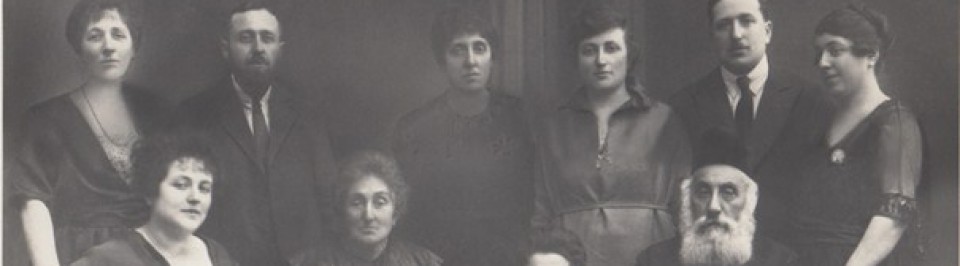
  • The Photo that Started it All

Uncovering Jewish Heritage

Uncovering Jewish Heritage

Category Archives: Family

Posts about my family.

George Bereday and His Vision of Education

09 Thursday Jan 2020

Posted by Marysia Galbraith in Bereda, Family, Photographs, Pre-World War II

≈ 6 Comments

Tags

George Z. F. Bereday/Jerzy Bereda, Halina Piwko Bereda, Maria Bereda(y) Galbraith, Maria Weglinska/Hana Piwko

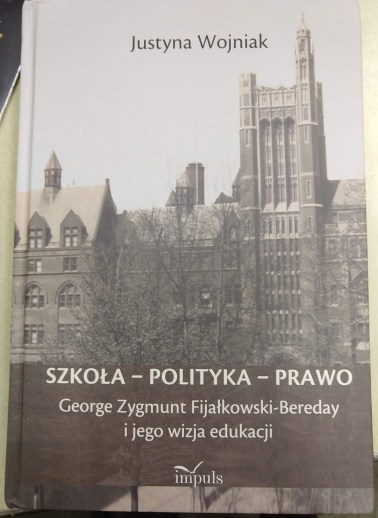
I was happy to receive a package from Poland yesterday–a surprise post-holiday gift? In fact, it was a book by Justyna Wojniak titled Szkoła – Polityka – Prawo: George Zygmunt Fijałkowsky-Bereday i Jego Wizja Edukacji (School, Politics, Law: George Z. F. Bereday and His Vision of Education).

img_20200108_160148_01

School, Politics, Law: George Z. F. Bereday and His Vision of Education by Justyna Wojniak

The author contacted me a year ago to talk about my mother and her brother for her doctoral dissertation about my uncle George Bereday, who was instrumental in establishing the discipline of Comparative Education. Most of the book focuses on Bereday’s scholarly work on the idea of equal education for all, methods for comparing educational systems in different countries, as well as his concerns about equal rights and social justice generally. I will read the whole book eventually, but the first chapter is most relevant to my search for family heritage. Wojniak cites this blog in the chapter about my uncle’s childhood and early life in Poland, and even discusses my mom’s service in the Polish Underground Army during World War II. It’s great to see my work being put to use, and translated into Polish for Polish speakers to read.

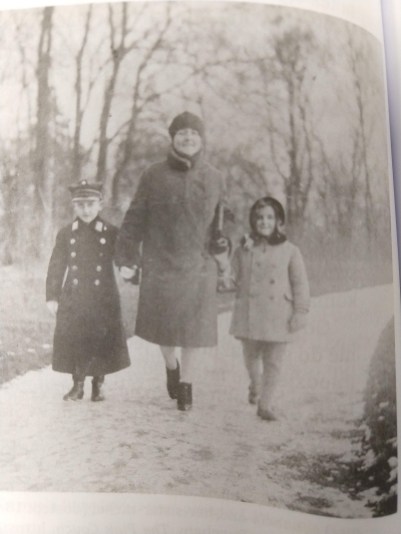
I was also amazed to find a photo on page 28 of my babcia with a young George/Jurek on one side and a young Maria/my Mama on the other. They are all smiling, and Babcia holds both children by the hand. It’s winter–they are wrapped up in warm coats, hats, gloves, and boots, walking along a gravel road with barren trees in the background. I would guess my mom is about six years old and Uncle George about eight, which would make it around 1928 or 1929. Based on the time and rural setting, my guess is it was taken at Dębinki, the estate outside of Warsaw where they lived from about 1928-1934. Mama always said those were the happiest years of her life.

img_20200109_150120152

George/Jerzy, Halina/my Babcia, and Maria/my Mama Bereda in Poland around 1928 or 1929.

I have never seen this photo before. In fact, I don’t recall ever seeing a photo of my mother as a child. And even more surprisingly, the source of the photo is my own cousin Krysia! We’ve been in touch, and I’m counting on her to send me a better copy than this one.

Cousin Connections

20 Monday May 2019

Posted by Marysia Galbraith in Family, Genealogy, Jewish immigrants, Names, Pifko-Winawer Circle, Piwko, Walfisz, Winawer, Łódź, Żychlin

≈ Leave a comment

Tags

Akiwa Jakubowicz, Ancestry, Arline Jacoby, Borscht Belt, Catskills, Efraim/Philip Piwko, Jakubowicz, Mrs. Maisel, Nathan Jacoby, Tema Walfisz Piwko Jakubowicz

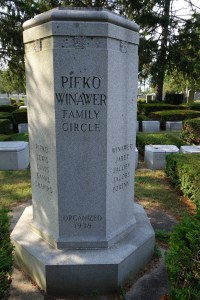
When I met Arline Jacoby in 2016, she was a spry and effervescent nonagenarian with vivid memories of the Pifko-Winawar Family Circle gatherings she attended throughout the early decades of her marriage. She knew that she was related to the Pifkos, but she couldn’t remember exactly how. She thought her husband Harry Jacoby was connected somehow to my great grandmother Hinda Piwko, whose maiden name was Walfisz. She also suggested her ancestors might be part of that family line as well, making her and her husband distant cousins.

DSC07132

Pifko-Winawer Family Circle, New Montefiore Cemetery, Organized 1938. Note the Jacoby name on right

No one else seemed to remember the exact family connections, so I just added this to the long list of mysteries to solve one day.

Periodically, I have come across interesting tidbits about Arline. She was featured in the “Sunday Routine” column of The New York Times (“How Arline Jacoby, Artist, Spends Her Sundays,” by Alexis Cheung, July 21, 2017). The article describes Arline’s daily life on Roosevelt Island. In one photo, dressed in a white blouse and loose off-white pants, she holds her cane in front of her as she talks with friends on a bus. In another, she smiles brightly as she reaches for a plant in her garden. And in a third photo, she’s swimming; “I’ll spend about an hour doing laps, and then I’ll go into the steam room,” she explains. In the final photograph, Arline looks up at a sketch in her installation at Octagon Gallery. Still a practicing artist, she says, “My studio is across the street from my house. I paint, I do printmaking, monoprints, paint in oils and watercolor.” Her vibrant spirit shines through the brief vignettes and quotes.

2017ArlineJacoby_SundayNYTimes

Arline in her garden. Photo credit: Michelle V. Agins/The New York Times

Another article from Tablet Magazine recounts the history of the Borscht Belt resort that the Jacoby family ran for many years. The “colony” was founded in 1941 by Arline’s father-in-law Nathan Jacoby, and later managed by Nathan’s sons Harry and Ben. The Catskills became a summer haven for New York Jews who left the heat of the city and set up house in resorts that organized all kinds of entertainment and outdoor activities. According to the article, some affluent middle-class families preferred the laid-back atmosphere of bungalow colonies like the Jacoby’s over the fancier hotel resorts nearby.

I learned from the article that Nathan Jacoby was born in Łódź, Poland in 1894, and came to America in 1921. He got into the bakery business “through a family connection.” Could that have been my grandmother’s brother Philip Pifko who had bakeries in Brooklyn at that time?

The Tablet article explained, “In the summer, he operated the bungalow colony as a second business, renting the units for the season. Jacoby wanted the colony to be a destination for Jews who had worked their way up into the middle class—light manufacturers and lawyers, many from the Midwood neighborhood in Brooklyn, with good businesses and good cars. The parking lot was filled with Cadillacs and Lincolns. These were families who loved parties and balls, and Jacoby was determined to entertain them, building a stage in his casino building for traveling comics, singers, magicians, and musicians, and for bungalow talent shows, too.” Arline’s daughter Annice said “What my grandfather created was not only a business. He created a sense of place. This was the good life.”

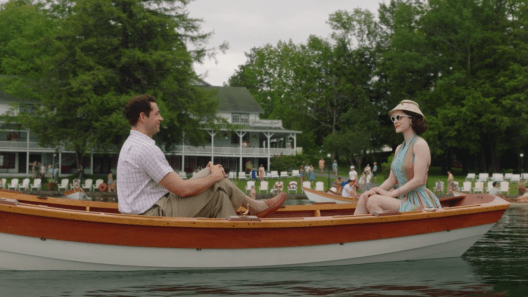
I was reminded of these family-oriented camps when Midge Maisel and her family spent much of Season Two at a similar resort. Arline remembers that comedians like Lenny Bruce performed there, another parallel with The Marvelous Mrs. Maisel, which features Lenny Bruce performing in the Catskills. By the time I was growing up in 1970s, the bungalow colonies declined in popularity. My friends went to sleepover camps for kids only.

Screen-Shot-2018-12-10-at-11.15.44-AM-1200x675

Midge Maisel in the Catskills. Screen shot from The Marvelous Mrs. Maisel.

The breakthrough in my search for a family connection came when I was contacted via Ancestry by Cherie, whose husband is a descendant of Akiva Jakubowicz, the second husband of my great grandmother’s sister Tema. That’s when a light turned on. Could it be that the Jakubowiczes changed their name to Jacoby when they came to the US? Could Arline’s husband Harry have been a grandson of Tema, the sister of my great grandmother Hinda (Walfisz) Piwko?

I already had Akiva (Kiwa) Jakubowicz and his two sons Elias and Nathan in my family tree. Cherie confirmed that her husband descends from Elias, Nathan’s younger brother (Nathan was born in 1896 and Elias was born in 1898), and that they changed their last name to Jacoby after settling in the US. Elias moved from Łódź to Berlin where he married Martha Brusendorf. She was a German protestant, but they raised their children in the Jewish faith. When the war broke out, they lived in hiding in Berlin with their younger daughter, while their older daughter escaped to England on the kindertransport. The family reunited after the war, and immigrated to the US. They were sponsored by Nathan, who had been in New York since 1921.

Armed with this information, I was able to locate documents about Nathan, Arline, and their sons Harry and Ben on Ancestry. Arline Plumer and Nathan Jacoby married in 1947 in Philadelphia, her hometown. I’m not sure, but this might be Arline’s high school yearbook photo from 1943, Girl’s High School, Philadelphia.

ArlinePlumer_HSyearbook1

Arline Plumer, class of 1943, Girls High School, Philadelphia. Is this my cousin?

If so, Arline’s parents were Isidor/Isadore and Anna/Annie Plumer, and she was the youngest of eight siblings. Her father is listed on his naturalization documents as coming from Barski, Russia, but in the 1920 census, he and Anna’s place of origin is listed as Russia (Pol.)  and their native language is Polish. All of their children were born in the US.

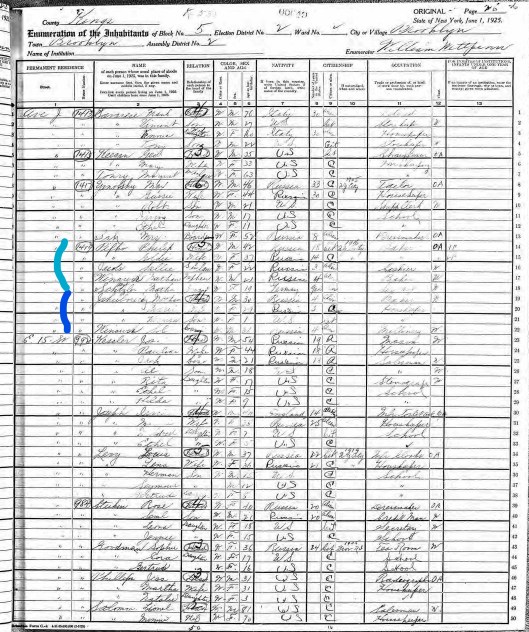
I found Nathan Jakubowicz in the 1925 New York State Census. He worked as a baker and lived with his wife Marie, one-year-old son Harry (listed as Herman), and a cousin Sol Winawer. I believe Sol is the son of my grandmother’s sister Liba, making him and Nathan first cousins once removed. This document also hints at an answer to the question whether Nathan worked in my great uncle’s bakery when he first came to the US. There, in the neighboring apartment, lived my grandmother’s brother Philip Pifko and his wife Goldie. So maybe Nathan is one of the many relatives Philip assisted when they first immigrated, offering them a job in his bakery and helping them find a place to live.

Inked1925NYCensus_NJacobySWinawer_crop_LI

1925 NY State Census. Nathan, Marie, and Herman Jakubowicz live with Sol Winawer. In the neighboring apartment, Philip and Goldie Pifko live with other relatives.

By the the 1930 Federal Census, Nathan had changed his last name to Jacoby.

Inked1930Census_NJacoby_LI

By the 1930 Federal Census, the family name had been changed to Jacoby.

All of this shows pretty convincingly how Arline’s husband Harry was related to the Pifko-Winawers. I’m still looking for comparable evidence that Arline is also a cousin. My guess is she descends from Łaja, the 3rd Walfisz daughter listed in the Żychlin Book of Residents together with my great grandmother Hinda and Harry’s grandmother Tema. I found one hint on Arline’s mother’s death certificate, which lists Anna Plumer’s parents as Morris and Leah Fox, originally from Poland. Elsewhere, I’ve seen Łaja and Leah used interchangeably, so I’ll keep digging.

The search continues. I’m glad to have figured out, at least in part, how Arline and I are cousins. At minimum, her husband and my mother were 2nd cousins. Perhaps she and my mother were 2nd cousins, as well.

DSC07428

Cousin Arline talks with Mama, January 2016


What if…

04 Saturday Aug 2018

Posted by Marysia Galbraith in Family, Memory, Polish Culture, Polish-Jewish relations, Post-World War II, Warsaw, World War II

≈ 2 Comments

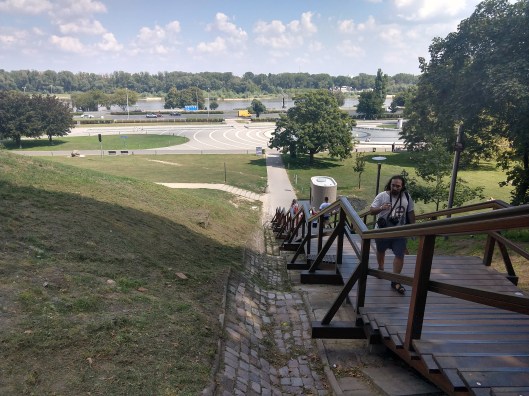
Just about every time I come to Warsaw I take a pilgrimage to this spot.

The view down to where my mother used to live, when Kościelna Street continued straight at the bottom of the stairs.

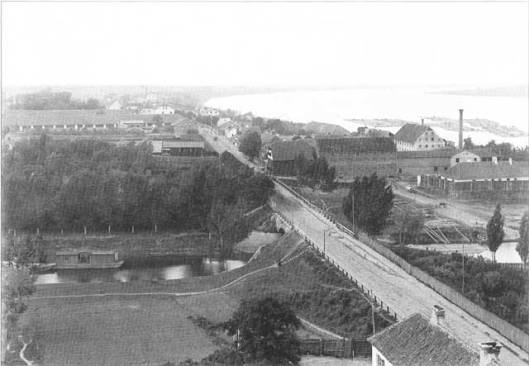
My mind turns inward to the way I remember it in my imagination, based on my mother’s stories and archival photos. Back then, these stairs led to a neighborhood of narrow streets where old cottages sat beside brick businesses, and where my grandfather built my grandmother a three story villa behind a cast iron fence.

When I visited today, I pictured roads instead of pathways. With buildings on either side. The villa would have been straight down and on the left, just after the path that runs perpendicular.

For some reason I started to wonder what my mother’s life would have been like if there hadn’t been any war. Would she have married her first love, a priest? Or would he have decided to honor his vows to the church? No doubt, she would not have waited to have children. I imagine her with four, including the daughter that was born instead of me, only 10 years earlier. No need to wait through the war, dozens of surgeries, migration, and illness to start a family. Would she have resigned from her dream of becoming a doctor, or found a way to balance her home and work responsibilities? Maybe she would have lived with her active young family in the villa, where her mother could help.

And the daughter that was born instead of me would no doubt be a grandmother, with a grandchild the same age as my son.

Without the Nazi invasion, Poland’s Jews would not have been murdered, and the Soviets would not have imposed 45 years of state socialism. Instead of being destroyed, Warsaw would have continued to grow, its Jewish population an important component of the city’s economic and cultural vitality. Poles would have had to figure out how to live within a country full of diversity, where the Polish nation could not be defined as ethnically pure or exclusively Catholic.

Would my family still have hidden their Jewish heritage in such a Poland? I wonder. What do you think?

Imagined conversations with unknown ancestors

30 Monday Apr 2018

Posted by Marysia Galbraith in Family, Photographs, Piwko

≈ 2 Comments

Gazing at old photos, I imagine having conversations with my ancestors. Photos are deceptive that way. They appear so immediate, so full of meaning. And yet, these are relatives I never met. I don’t even know who they are. Take a look at this handsome fellow:

Przystojniak

Mama called him “przystojniak,” “handsome guy.” But who is he?

When I showed this photograph to my mother in 2011, when she could only communicate in single words, she exclaimed, “przystojniak!” In Polish that means “handsome fellow,” or if I want to believe Google Translate, “hunk.” Mom would never have called someone a “hunk,” so I’m sticking with “handsome fellow.”

When I asked mom who the handsome guy was, though, she didn’t know.

I wonder if it might be one of her mother’s brothers, perhaps Abraham/Jon Piwko who came to the US long before mama was born. It would help if I could pinpoint the year in which the photo was taken. His clothes provide some hints–the short, wide tie, the jacket pocket, and the cuffed pants. Still, I don’t know enough about historical fashion to figure it out.

If this is Abraham, it was taken when he was young, maybe even before he left Poland in 1906. The carved stone bench looks more European than American, but who knows? It’s also striking that his feet are not on the ground, but rather on a round pillow. By 1908, when this photo was taken Abraham wore a mustache without a beard:

BerthaPiwkoNathanPaulineEwa c1908

The Pifko brothers around 1908, New York. Front from left: Philip, Abraham, Paulina, Ewa, Bertha, Nathan. Back from left: Raphael Kolski, Sam and Max Alexander

Looking back and forth between the two photographs, I can’t tell if it’s the same person or not.

These photos were in the envelope my grandmother labelled “Do Not Open.” She didn’t want us to know about our family history because she didn’t want us to know our ancestors were Jewish.

One other photo in that envelope depicts a young girl. She stares at the camera with assurance, a charming smile revealing her dimples. Long curled locks reach down to her waist. She holds a telephone to her ear, tilting her head down toward the hand-held earpiece. A cousin has identified her as Abraham’s daughter Paulina Piwko, the older girl in the group photo above.

PaulinePiwkoRosen

Again, clues to the date of the photo should be in the clothing–the white lace-up boots worn with knee-high stockings held up with garters, the pleated white dress reaching just above the knee, with a frilled collar and pleated short sleeves. Again, I don’t know enough to be able to read these clues and pinpoint the date the photo was taken. If this is Paulina, she would have been a little older than in the group photo. If she is 10 in this photo, it was taken around 1913.

My cousin Krysia has remarked on how much this looks like our grandmother. And I agree. Babcia also had dimples, thick, long hair, and the kind of charm that seems to radiate from the girl in the picture. If it were Babcia, that would mean this photo was taken around 1904. Candlestick phones like this were in use from around 1890-1940, so that clue doesn’t narrow things down enough to confirm or rule out either possibility.

Still, my cousin, a descendant of Abraham, knows this photo and recognized it as his great aunt Paulina. Why would he have seen a picture of my grandmother? Why would it have been among the photos that were passed down in his line?

Here’s a fantasy explanation–one I have no evidence for outside of the photographs themselves. Could the photos of the handsome fellow and the charming girl have been taken at the same time? Might the siblings have wanted photos of each other when the older brother went away the America, never to return? It’s a long shot, but it would make a good story.

Inclusion and Exclusion in the Polish Nation

20 Tuesday Mar 2018

Posted by Marysia Galbraith in antisemitism, Catholicism, Family, Genealogy, Identity, Jewish immigrants, Poland, Polish-Jewish Heritage, Polish-Jewish relations, Pre-World War II, Włocławek

≈ 1 Comment

Tags

Honorary Citizen of the Russian Empire, Mizrahi Party

Were Jews included as part of the Polish nation or were they excluded from it? This was one of my driving questions when I started to uncover the Jewish roots of my (Polish) mother’s family. I wondered if I might find my ancestors in some kind of hybrid Polish-Jewish space in which they identified as both Polish and Jewish. Or perhaps they lived in a world that ran parallel to that of their non-Jewish neighbors, with limited points of interaction. What I have found so far is neither straightforward nor consistent. It doesn’t fit entirely nor unambiguously into a narrative of hostile separation nor of peaceful coexistence. I’ll be focusing here on my ancestors’ lives before World War II. The Holocaust was such a devastating event that it needs to considered in its own terms, something I’ll try to do in another post.

The Polish lands were hospitable to my Jewish ancestors, allowing them to prosper for generations. My grandfather Jacob Rotblit owned a Ford dealership in the 1930s, and before then he was a manager of an international trading firm. Or maybe he sold jewelry. It’s hard to find absolute proof, but either way, he maintained important business interests.

Poland PartitionMap

Poland was under Russian, Prussian, and Austrian rule from the end of the 18th century until World War I. The region around Warsaw, where my family lived, was under Russian rule, though it had some degree of autonomy for some of this time. Map source and more information about the partitions of Poland: http://www.britannica.com/EBchecked/topic/466910/Partitions-of-Poland

My grandmother’s father Hil Majer Piwko was in the lumber trade. Documents from the National Archive in Włocławek show he owned a building supply store in the 1920s, and according to Aunt Pat, he owned a sawmill before then. Pat also writes that he was recognized as an “honorary citizen of the Russian Empire” for his service during a cholera epidemic. This was sometime before 1918, when the region near Warsaw was part of the Russian Empire. Apparently, the title “honorary citizen” came with some of the rights that were normally reserved for the nobility.

So there was separation but also opportunity. It was not very easy for Jews to become gentry, unless perhaps through marriage, but there were other means by which they were granted special honors and rights. By comparison, different social classes faced road blocks against entering the gentry, regardless of ethnicity or religion. For instance, most peasants lacked the financial means and cultural capital to gain such social standing. At least in some times and places, wealthy, educated Jews would have had more avenues to social advancement.

More about my family’s prosperity can be read from the family portrait that was taken around 1916. Hil Majer and his wife Hinda had many children. They were wealthy enough to dress in fine fabrics. Hil Majer’s traditional clothing suggests that he had the freedom to practice his faith and customs, while his children were free to assimilate, as indicated by their modern clothing. Separation wasn’t just enforced by the majority, but also sometimes chosen to preserve cultural and religious distinctiveness.

JechielHindaAndChildren

The Piwkos c. 1916. For more about this photo see: The Photo That Started it All, Some Reassembled Stories, and What Year Was It?


Why did the family move from Hil Majer’s native Skierniewice to the village of Sobota, before settling down in Brześć Kujawski and then Włocławek? It seems likely they were following economic opportunities, but also possibly they were seeking a place more hospitable to Jews. This fits a common narrative about the Jews as wanderers. They arrived in Eastern Europe as tradespeople, financial advisers, and estate managers, and eventually established settled communities. But I’ve also been told that by the 19th century, most Jewish families stayed put. That’s why knowing the place of origin of one relative usually leads to many more relations.

Włocławek hadn’t always welcomed Jews. Until the end of the 18th century, it was a Church town, home to a bishop’s cathedral, with restrictions against Jewish residents. But then the city secularized, and as it industrialized and became an engine of commerce, the Jewish population also grew. Located as it was between Warsaw and the Baltic Coast on the Vistula River, Włocławek became an important port, and home to paper, ceramic, metal, chemical, and food processing factories.

Włocławek-Wyszyński_street_on_photograph_by_Sztejner

Włocławek before 1898. Note the factories near the river. By Bolesław Julian Sztejner (1861-1921) (http://www.wuja.republika.pl/widoki_ogolne_wl.html) [Public domain], via Wikimedia Commons

In addition to economics and religion, political factors shaped the degree of inclusion available to Jews within the broader society. Antisemitism grew in the 1880s throughout the Polish lands, as Polish nationalists became more active in their pursuit of national sovereignty. Once Poland gained its autonomy in 1918, tensions deepened. Some political forces, led by Józef Piłsudski, argued for a broad definition of citizenship within the new Polish state, insuring equal rights for the 1/3 of the population that was Ukrainian, German, Jewish, and other minorities. Another political faction, led by Roman Dmowski, advocated for a narrower definition of Polishness, based on an idea of “pure blood,” by which he meant shared descent that also tied the nation to Catholicism. At the same time, Jewish nationalism grew, and took on a number of forms, leading some to embrace  Yiddish culture, and others to espouse Zionism. Some Jewish nationalists dreamed of a safe place within the countries in which they lived, while others turned their eyes toward Palestine.

Włocławek became a crossroad for different varieties of Judaism, including Zionism, Hasidism, and Reform. Around the time that my great grandfather moved there, a new rabbi, Jehuda Lejb Kowalski, also arrived. He was very popular, and succeeded in reconciling the factions within the Jewish community. In 1902, Kowalski helped found the Mizrahi Party, and was a key leader in this Orthodox Zionist organization. Perhaps Kowalski is what drew the family to Włocławek? I’m not sure of Hil Majer’s affiliation, but his son-in-law, Rachel’s husband Pinkas, was a member of the Mizrahi Party in Włocławek, and a representative of the governing board of the city’s Jewish Community in 1931. Hil Majer’s oldest son Jacob represented the Zionist Party on the governing board from 1917 until 1922, and he was on the City Council from 1917-19. In other words, Jacob wasn’t only involved in Jewish political life; he also held a position in city government.

So there were opportunities to integrate into the broader society, to pursue economic and political goals, and to flourish as a distinct religious and cultural group.

But clearly there were problems that caused my relatives to leave for other countries, long before the German occupation and Nazi assaults against Jews. One of Hil Majer’s brothers went to Canada in the 1880s; the son of another went to Switzerland. In 1906-7, two of Hil Majer’s sons went to New York. Over the years, Philip sponsored many of the next generation who started out in the US at his bakery. Four more sisters, including my grandmother, also came to the US. Jacob’s children, as well as Rachel and her children, went to Palestine starting in the 1930s. Still, choosing, or even being forced, to leave didn’t necessarily signal a lack of attachment to Poland. For over a century, there have been mass migrations from the Polish lands by Catholics, Protestants, and Jews who, regardless of their national or ethnic affiliation, chased after their dreams in distant lands.

Mama’s Room

16 Friday Mar 2018

Posted by Marysia Galbraith in Family, Memory

≈ 1 Comment

Tags

Maria Bereda(y) Galbraith

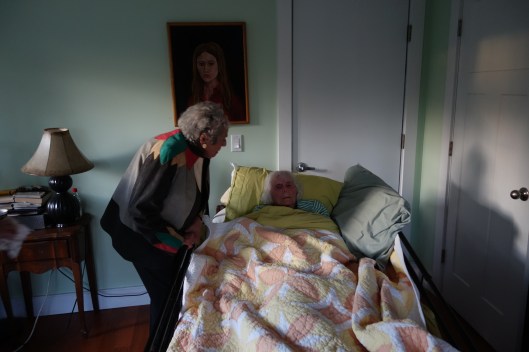
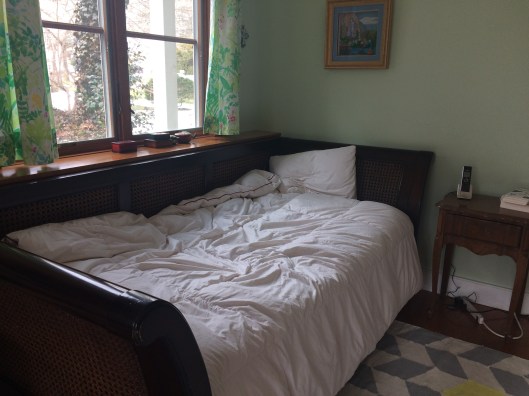
It would be easy to avoid this room, to bypass the emptiness left behind by Mama. But instead, I find myself drawn to this space, where memories run in my head like movies, and also where I feel the pain of loss.

IMG_1001

Mama’s place

Here is where Mama spent more and more of her time, in her hospital bed. Though nothing is there now, it still feels full.

IMG_0994

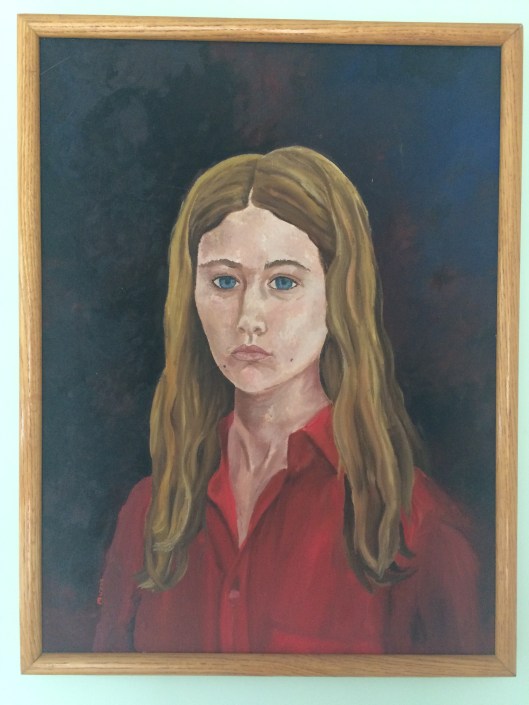
Self Portrait, 1980, oil on canvas

The self-portrait I did in high school hung on the wall behind her.

Small gifts from various visits
Some of Mama's favorite books
Some of Mama’s favorite books
Family photos
Family photos

Traces remain of Mama’s life in this space. Small gifts I brought her, or others gave her. Garden books. Mama leafed through the pages over and over again. She enjoyed the colors and shapes of the plants long after she stopped reading. Photographs of family. Our images surrounded her even when we couldn’t be there in the flesh.

IMG_0996

Krystyna’s bed

The place left behind by Krystyna, who loved her like a daughter, and whom I loved like a sister. There’s a double hole without Krystyna, who survived barely a month longer than Mama.

IMG_0999

The view of the garden

I still love this room, not only for what it was—a safe haven for Mama as she faded from this world—but also for what it is. Its walls of windows show off the garden. I watch as the sun slowly melts the remaining patches of snow, until clouds blow in and threaten another storm. It’s bright and spring-like inside, with the green and white walls and honey wood floor. A space waiting to be reinvented, maybe into a playroom for the kids, or a sitting room for guests, but where I’ll still be able to visit Mama resting quietly in her bed, while Krystyna swirls around her, a source of both company and comfort.

“The Polish Anne Frank” in The Forward

12 Monday Feb 2018

Posted by Marysia Galbraith in Family, Memory, Przemyśl, World War II

≈ Leave a comment

Tags

Ariana Spiegel, Elizabeth Bellak, Renia Spiegel

Today in The Forward is an article Why Renia Spiegel is Called ‘The Polish Anne Frank‘.

During the Nazi occupation of Przesmyśl, Poland, she filled notebooks with her poetry and diary. Renia was only 18 when she was shot on the street, after someone reported her hiding place to the Nazis. Ariana, her younger sister, survived because she had been brought to Warsaw just a few days before that. Ariana became Elizabeth, whom I grew up calling Aunt Elizabeth. She was my mother’s friend for nearly 80 years.

The Family Burial Plot

18 Thursday Jan 2018

Posted by Marysia Galbraith in Cemeteries, Family, Genealogy, Jewish Culture, Jewish immigrants, Photographs, Pifko-Winawer Circle, Piwko

≈ 2 Comments

Tags

New Montefiore Cemetery

I was shocked to learn that the family burial plot is just 20 minutes from where I grew up. No one had ever told me about it.

AbrahamBerthaPifkoTombstone_BKosovsky

Gravestone of Abraham and Bertha Pifko, Washington Cemetery. Photo credit: B Kosovsky

I met my 2nd cousin Bob right around the same time my 1st cousin Krysia found his photo of Abraham and Bertha Pifko’s gravestone. Abraham and Bertha were Bob’s great-grandparents, and Krysia’s and my great-uncle and aunt. Poking around some more on the Internet, I figured out that this photograph comes from Bob’s Flickr account, in a folder containing photos of all the tombstones in the Pifko-Winawer Circle in New Montefiore Jewish Cemetery.

Since I was on Long Island for a visit, I decided to see the Family Circle for myself. I went with my friend Krystyna, who is Polish, on our way to Copiague, a town on the south shore of Long Island with a large Polish community and several Polish delis. I’ve driven that route many times to get black current jam, kasha, makowiec, white cheese, and other foods I miss so much from Poland, as well as my son’s favorites: kielbasa and ptasie mleczko, rectangles of marshmallow covered in chocolate. I’ve tried buying kielbasa from the grocery store, but Ian won’t eat it; he insists only the real stuff from Poland is any good.

You can practically see the cemetery from the road, but I never knew it was there. Nor did I know that my relatives were buried there. This is what family silence does. Because we weren’t supposed to know about our Jewish heritage, I had never been there, not even to visit the graves of Stanley and Stella Winawer or Pauline Kanal, relatives whom I remember so fondly.

Pifko-Winawer Family Circle, New Montefiore Cemetery, Organized 1938
Philip and Goldie Pifko's gravestones
Philip and Goldie Pifko’s gravestones
Sarah Winawer's gravestone
Sarah Winawer’s gravestone
Memorial bench for Jacob and Libe Winawer

It’s a large cemetery. Krystyna and I had to figure out how the sectors, blocks, and rows are organized, but eventually we found the Pifko-Winawer Family Circle. The size of the plot is astonishing. It contains dozens of graves. A hexagonal pillar toward the front is labelled “Pifko Winawer Family Circle Organized 1938.” Other faces of the hexagon include the last names Pifko, Lewis, Davis, Kanal, Shapiro, Winawer, Jaret, Jacoby, Jacobs, and Portny. Written on the back face is “In Memorium; Abraham J. Pifko; Max Winawer Rosen.” I had only begun my genealogical research and only recognized a few of those last names. Even today, after six years of genealogical research, I’m still not sure how I’m related to the Davises, Jacobys, and Portnys.

We wandered through the rows of gravestones—raised blocks with blunted front corners, backed by low evergreen hedgerows. Among them, I found Babcia’s sister Sarah Winawer, “beloved mother, grandmother, great grandmother, March 16, 1880-Feb. 16, 1964.” This is the sister my immediate relatives called Lusia, the one who died a few months after I was born and who said before her death that she would look down on me from heaven. She rests beside her husband Saul, and near their children Nathan, Stanley, and Pauline. Another son, Milton, is not there; much later, I learned he chose a different cemetery because his wife Nettie, who was not Jewish, couldn’t be buried in New Montefiore. I recognized names of other relatives Aunt Pat has told me about—Abraham Pifko’s daughters: Eva Lewis and Sarah Lewis who share a last name because they married brothers; and Pauline who was there with her husband Fred Rosen.

I found Babcia’s brother Philip with his wife Goldie, whose graves are on the side of the family plot, facing perpendicular to the others. Their stones have Hebrew lettering on top and English on the side. The others either have both languages on top, or English on top and Hebrew on the sides. Could this signal something? Perhaps Goldie felt a closer affinity with the Hebrew/Yiddish language?

I did not find Abraham and Bertha’s grave. When I asked Bob about it, he explained that they are buried in Washington Cemetery in Brooklyn. Abraham died before the family circle was established, and even though his great-grandmother wanted to be buried with the rest of the family, her spot was waiting for her with her husband. Another sister, Liba’s grave is not there, either, though she and her husband are remembered on a memorial bench with the inscription, “In memory of Jacob and Libe Winawer.”

Walking among my extended family, I felt the joy of finding them, and simultaneously the sense of loss that I never got to know, or even know anything about, most of them.

Pifko-Winawer Family Circle, New Montefiore Cemtery
My brother Chris resting on a commemorative bench at the family burial plot.

Is it odd that I spoke in Polish the first time I visited family graves in a Jewish cemetery? I don’t think so because Babcia’s family prided themselves in their ability to speak the language well. In some ways my ancestors straddled the boundary between Polish and Jewish culture. But the gulf was wide, and when my grandmother converted, she closed the door on her Jewish heritage, just as her father expelled her from the Jewish world in which she had been raised.

The Photo that Started it All: What Year Was It?

22 Friday Dec 2017

Posted by Marysia Galbraith in Family, Genealogy, Jewish immigrants, Kolski, Memory, Photographs, Piwko, Włocławek

≈ 9 Comments

Tags

1910s fashion, Efraim/Philip Piwko

This blog started with a photograph. A family portrait of adult siblings with their parents. The photo also instigated my search for my hidden Jewish ancestors.

JechielHindaAndChildren

The Photo that started it all

Here, in my great grandfather’s long beard, head covering, and black robe, I saw for the first time visible proof that I descend from Jews. It took a long time, but I managed to identify everyone in the photo, including my grandmother (Babcia) who appears in the bottom left, her hand resting proprietarily on her mother’s wrist.

Based on their clothing and ages, I have guessed this photo was taken sometime around World War I. But I just came across some new information about my grand uncle Philip, the man standing to the right, that throws this date into question. Let me walk through what I have figured out.

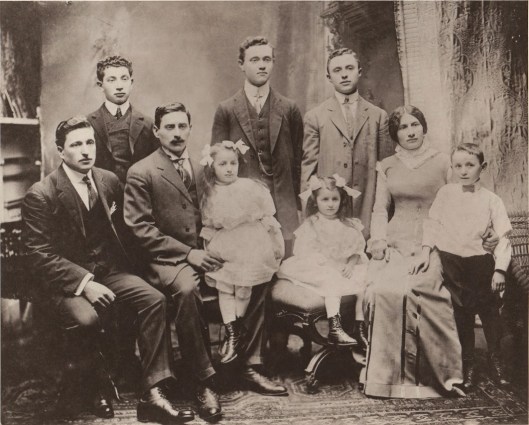
Two Pifko brothers came to America, Abraham in 1906 and Philip in 1907. Here they are with Abraham’s wife and children and some other relatives:
BerthaPiwkoNathanPaulineEwa c1908

The Pifko brothers around 1908, New York. Front from left: Philip, Abraham, Paulina, Ewa, Bertha, Nathan. Back from left: Raphael Kolski, Sam and Max Alexander

This photo is easy to date; everything fits together. It must have been taken after Bertha and the children arrived in New York in May 1907, and Philip arrived in December 1907, but before Abraham and Bertha had their fourth child in October 1909. The style of Bertha’s dress is also consistent with this time period. Census records add another piece of supporting evidence; in 1910, all the people in the photo lived in the same household in Manhattan. So the photo was taken sometime between 1908 and the middle of 1909.
2Brothers

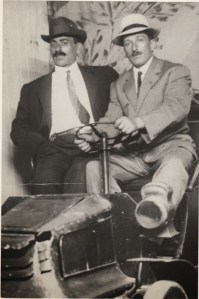
Philip and Abraham Pifko in the US.

In another photo of Philip and Abraham (on the right), they look a bit older, and Philip has grown a mustache. In my last post, I said that Philip is on the left, but my cousin Joan, who knew Philip when he was older, says she’s pretty sure he is on the right, driving the car. She also has no idea why his complexion was labeled “light brown” on an official document I found. His skin was not dark.

The photo that started this blog, and my search for ancestors, would seem to have been taken next, sometime around 1914-1918. Except it seems strange that Philip visited Poland during World War I.

Then, while looking through Philip’s documents on Ancestry.com, I clicked on a passport application from 1920. It was for both him and his wife Goldie, to go to England and France. According to what is written, Philip became a US citizen in January 1916, and resided in the US uninterruptedly since arriving in 1907. In response to a question about where he has lived outside of the US since his naturalization, the space is stamped, “I have never resided outside of the U.S.” Below, in response to a question about previous passports, it’s stamped “I have never had a passport.”

So this got me wondering. If Philip didn’t leave the country between 1907 and 1920, could the photo have been made later than I thought, in 1920? Could it have been when he traveled on this passport?

1920PPifkoPassportAppln

Goldie and Philip Pifko 1920, passport application photo

I found this passport application a while ago, but it didn’t occur to me until now that it might have a back. Sure enough, when I clicked to the next page in the database, there it was. The back of the form includes a place where a lawyer verified the truth of everything on it. There is also a handwritten note, “Applicant says he will not go to Russia or Poland. Instruct Amer consul [American Consulate] at France and England.” And even more convincingly, Philip and Goldie’s photo is attached at the bottom.

At age 37, Philip clearly seems older than in any of the other photos. His hair is receding (and, by the way, his skin does not look particularly dark).

It seems unlikely, after all, that the photo was taken in 1920. Could it have been taken before Philip’s departure in 1907? I went back to the photo itself, to reconsider all the details. First, I checked everyone’s ages. In 1907, my grandmother would have only been 13, but clearly she is older in the photo. The boy in front, sitting between his grandparents is Nathan Kolski, whose mother Regina died when he was born; several of my cousins have confirmed his identity. But Nathan was born in 1905, and he is definitely not a toddler in the photo. He almost certainly isn’t 15 either, making it unlikely the photo was taken in 1920. Also, the oldest sister Liba was 20 years older than Babcia. It’s really hard to tell for sure, but I would say that none of the women who are standing in the photo look as old as 48. Perhaps a couple are around 40. So again, considering everyone’s ages, it seems most likely the photo was taken around 1915, when Babcia was 21, Nathan was 10, Liba was 42, and Philip was 32.

It is also worth noting that the youngest child in the family, Malka, is missing, making me think the photo was taken after she died in 1913. Otherwise she would have been in it.

Next, I looked at the way everyone is dressed. Clearly, there is a great deal of variation between my great grandmother’s conservative dress and my grandmother’s short hemline and high heels. The dresses of the younger women flow; they are not fitted and buttoned up like Bertha’s in the photo from 1908. Fashion catalogs from the period show that during World War I, fashions changed markedly. Hemlines went up, waistlines became higher, and clothes used less fabric to conserve resources for the war. Other characteristics from the period include the “V” neckline with a lace inset, as well as attractive high heeled shoes, like Babcia and her sisters wear. The clothes date this photo back at my original estimate, 1914-1918.

I even considered whether I could be mistaken about the identity of the man standing to the right. Could it be the spouse of one of the sisters beside him? But several relatives have identified him as Philip, and he looks like Philip based on the other photos. Rachel’s husband Pinkus Kolski looked completely different. I don’t have a photo of Nunia’s husband, so I can’t compare.

But if the photo was taken around 1914-1918, how can Philip have been there? Occam’s razor says when there are multiple explanations, the simplest is probably the best one. The simplest explanation in this case is that Philip was indeed in Poland at some point during World War I. Maybe the photo was taken in celebration of his visit. Maybe a space was left between Jacob and Nunia to symbolically mark where Abraham, the brother who stayed in the US, would have stood. Maybe it was taken for Abraham, so he would have a memento of his kin back in Poland. That would explain why the photo was passed down in Abraham’s family. Many years later, his grandson made copies for my grandmother and other branches of the family.

Does that mean Philip lied on his passport application? Maybe not. If he traveled to Poland before he became a US citizen in 1916, maybe he didn’t need to report it on the form. And if that’s what happened, maybe I can pinpoint the photo more specifically to 1914-1916, before his hair had receded quite so much, and before the US entered the war. That seems like the simplest solution, even though it still doesn’t explain why Philip went back to Europe in the middle of a war.
Two Pifko Brothers Came to America

20 Wednesday Dec 2017

Posted by Marysia Galbraith in Family, Genealogy, Jewish immigrants, Kolski, Memory, Names, Pifko-Winawer Circle, Piwko, Winawer

≈ 3 Comments

Tags

Abram Janas Piwko, Census data, Efraim/Philip Piwko

Two of Babcia’s brothers sailed to America during the first decade of the 20th century. They both established bakeries in Manhattan and Brooklyn, and the younger brother Philip also made a small fortune in real estate. Philip never had any children of his own, but he became the patriarch of the family in the US. For many years, he maintained the family circle that met monthly, and helped to sponsor relatives who came from Poland. At first relatives came to work, often starting out in his bakery. Later, during and after World War II, efforts to bring relatives over from Europe became more urgent. He wanted to save their lives.

The older brother came first. He is listed as “Abram,” on the ship manifest, though some relatives called him Abraham and others used his middle name Jan (the Polish form of John). He arrived in New York on the SS Moltke on January 24, 1906, and was released into the custody of his uncle Samuel Jaretzky, who was probably related to him through his wife Bertha/Blima. There is some confusion whether Bertha’s maiden name was Kolski or Jaretzky. Bertha’s great grandson Bob has heard different stories about this—either the names were used interchangeably or one branch of the family changed their name. As if that weren’t complicated enough, In the US, the Jaretzkys dropped the Slavic ending and became the Jarets.

Bertha joined her husband in May 1907 with their three young children, Nathan, Paulina, and Ewa. Their fourth child, Sarah, was born in 1909.

BerthaPiwkoNathanPaulineEwa c1908

The Pifko brothers around 1908, New York. Front from left: Philip, Abraham, Paulina, Ewa, Bertha, Nathan. Back from left: Raphael Kolski, Sam and Max Alexander

The younger brother, Philip/Efraim arrived in December 1907. Philip was twenty-six and still a bachelor. At first, he lived with Abraham and worked as a driver of a bakery wagon. In 1910, Abraham was foreman at a pants manufacturer.

I love this photo of them.

2Brothers

Philip and Abraham Pifko in the US.

The photo was in my grandmother’s collection, inside the envelope she labeled “do not open,” along with the others in this post. I’m guessing it was taken in New York sometime in the 1910s. They seem to be inside, so maybe the automobile was just a prop of the photographer. I’ve tried to figure out what kind of car it is. It might be some sort of runabout from the earliest years of the 20th century.

Both brothers had dark hair, and usually wore a mustache without a beard. Abraham, as described by his sister Nunia, had “devil eyes;” he “liked girls and girls liked him.” She described Philip as “shy, pockmarked, and sweet.” Nunia described both as tall, but official documents list Philip’s height as 5’ 7”. He had grey eyes and a “light brown” complexion. That’s one reason I think Philip is on the left in this photo; he looks dark, like a gypsy. Also, I imagine Abraham, as the older brother, would have been in the driver’s seat. But then again, Philip was the bakery wagon driver so maybe I have it backwards.

BabciasSisterMarja

The youngest sister, Malka/Maria c. 1912 in Poland

Nunia described the youngest sibling Maria/Malka as dark like a gypsy.

In 1911, Philip married Goldie Przedecka, though her name might have been Gertrude Jacobs. In my aunt’s tree, she is listed as the former, but their marriage record says the latter. Names are complicated in my family; Goldie’s sister and mother had the last name Jacobs or Posner. I’m still working on this.

Philip and Goldie never had any children, but his memory lives on, much more strongly than that of his brother. Abraham died at the age of 47 in 1925, and even though he had children and grandchildren, the cousins I have spoken with know very little about him. They have personal memories of his wife Bertha, who lived until 1968.

Census records show that by 1920, Philip had his own bakery. In 1930, his occupation is “employer.” In 1940, he is listed as a manager of real estate.

Philip’s legacy lives on thanks to everything he did for others during his lifetime. The census shows that he opened his home to a niece, sister-in-law, nephew, and mother-in-law. In 1925, his sister Sarah’s son Nathan Winawer, age 22, lived there, as well as Goldie’s much younger sister Sallie Jacobs, who was 21 years old. Around this time, Nathan and Sallie married. In 1930, Nathan and Sallie were no longer living with Philip, but Nathan was working in a bakery which may well have been Philip’s. In 1940, Bertha’s mother Nicha Posner and Abraham’s daughter Pauline lived with Philip and Goldie.

Other relatives also worked in Philip’s bakery, including Nathan’s brother Stanley Winawer. Stanley went on to open his own bakery, which he had for many years in Brooklyn. Philip helped family members in other ways. Joan, Philip’s grand niece, says he was involved in relatives’ schooling, and he was important for opening doors for them. She was just a child at the time, but she remembers anxious discussions about getting the family out of Poland during World War II.

I don’t have to look any further than my immediate family to see Philip’s generosity. When Babcia, my mother, and uncles came the US, Philip helped them, too. I’m not 100% sure whether they stayed with him, or just in an apartment he owned.

AbrahamBerthaPiwko

Bertha and Abraham Pifko in the US.

Philip may well have been following in his older brother’s footsteps. After all, Philip was one of several boarders at his brother’s in 1910. Others included the brother of Abraham’s wife, as well as two cousins, all of whom are in the photo from 1908 that’s at the top of this post. In the 1920 census, Abraham is listed as “proprietor” of a “bakerstore,” and a boarder named Charles Jacobs lived with them. Charles, age 35, had come from Poland in 1913 and worked as a bakery clerk. Could he be related to Philip’s wife Goldie, whose maiden name might also have been Jacobs?

I keep trying to fit the pieces together, to tell a story about their  lives.


← Older posts
Newer posts →

Categories

  • Anthropology (37)
    • Archives (14)
    • Fieldwork (7)
    • Ground Penetrating Radar (GPR (4)
    • Research Methodology (8)
  • antisemitism (14)
  • Association of Descendants of Jewish Central Poland (32)
  • Catholicism (8)
  • Conference (1)
  • Discrimination (2)
  • Family (69)
    • Bereda (17)
    • Kolski (13)
    • Piwko (22)
    • Rotblit (3)
    • Walfisz (4)
    • Winawer (7)
  • Genealogy (11)
  • Heritage work (66)
    • Commemoration (23)
  • Identity (18)
  • Israel (6)
  • Jewish Culture (89)
    • Cemeteries (51)
    • Museum (7)
    • Synagogues (33)
  • Jewish immigrants (8)
  • Jewish Religion (1)
  • Memory (70)
  • Names (14)
  • Photographs (6)
  • Pifko-Winawer Circle (5)
  • Poland (125)
    • Baligród (1)
    • Bolimów (1)
    • Brześć Kujawski (5)
    • Buk (1)
    • Chodecz (1)
    • Dukla (2)
    • Dąbrowice (1)
    • Gdynia (1)
    • Gostynin (2)
    • Gąbin (1)
    • Izbica Kujawska (1)
    • Kazimierz (4)
    • Kowal (1)
    • Koło (1)
    • Krakow (7)
    • Krośniewice (1)
    • Kutno (6)
    • Kłodawa (1)
    • Lesko (8)
    • Leszno (1)
    • Lubień Kujawski (1)
    • Lubraniec (1)
    • Lutowiska (3)
    • Piła (3)
    • Podgórze (2)
    • Poznan (11)
    • Przemyśl (2)
    • Pzedecz (1)
    • Radom (1)
    • Radymno (1)
    • Sanok (1)
    • Skierniewice (5)
    • Sobota (2)
    • Tarnów (2)
    • Warsaw (22)
    • Wielkopolska (1)
    • Wronki (7)
    • Włocławek (20)
    • Zasław (2)
    • Łódź (1)
    • Żychlin (30)
  • Polish Culture (10)
  • Polish-Jewish Heritage (60)
  • Polish-Jewish relations (60)
  • Post-World War II (24)
  • Pre-World War II (22)
  • Reclaimed Property (1)
  • stereotypes (3)
  • Survival (9)
  • Trauma (3)
  • Uncategorized (5)
  • Victims and perpetrators (4)
  • World War II (45)
    • Jewish Ghetto (12)
    • Nazi Camps (5)
    • Polish Underground Army (3)
  • Yiddish (5)

Enter your email address to follow this blog and receive notifications of new posts by email. Your email address will not be shared.

Archives

  • October 2025 (1)
  • July 2025 (8)
  • June 2025 (1)
  • April 2025 (1)
  • August 2024 (3)
  • July 2024 (3)
  • May 2024 (2)
  • April 2024 (1)
  • May 2023 (2)
  • January 2023 (2)
  • December 2022 (7)
  • November 2022 (2)
  • October 2022 (5)
  • September 2022 (1)
  • January 2022 (1)
  • August 2021 (1)
  • December 2020 (2)
  • July 2020 (1)
  • May 2020 (3)
  • April 2020 (1)
  • March 2020 (1)
  • January 2020 (2)
  • May 2019 (1)
  • February 2019 (1)
  • November 2018 (1)
  • September 2018 (1)
  • August 2018 (3)
  • July 2018 (1)
  • June 2018 (1)
  • May 2018 (1)
  • April 2018 (2)
  • March 2018 (2)
  • February 2018 (2)
  • January 2018 (2)
  • December 2017 (2)
  • November 2017 (2)
  • October 2017 (1)
  • September 2017 (3)
  • August 2017 (3)
  • June 2017 (2)
  • May 2017 (3)
  • April 2017 (1)
  • March 2017 (2)
  • February 2017 (1)
  • January 2017 (2)
  • December 2016 (2)
  • November 2016 (4)
  • October 2016 (1)
  • September 2016 (6)
  • August 2016 (2)
  • July 2016 (1)
  • May 2016 (4)
  • April 2016 (2)
  • March 2016 (3)
  • February 2016 (4)
  • January 2016 (3)
  • December 2015 (3)
  • November 2015 (5)
  • October 2015 (5)
  • September 2015 (3)
  • August 2015 (4)
  • July 2015 (3)
  • June 2015 (3)
  • May 2015 (4)
  • April 2015 (9)
  • March 2015 (3)
  • February 2015 (2)
  • January 2015 (5)
  • December 2014 (4)
  • November 2014 (9)
  • October 2014 (2)
  • September 2014 (1)

Copyright Notice

All original text and images are copyright © Marysia Galbraith. Please contact the author before quoting.

Blog at WordPress.com.

  • Subscribe Subscribed
    • Uncovering Jewish Heritage
    • Join 145 other subscribers
    • Already have a WordPress.com account? Log in now.
    • Uncovering Jewish Heritage
    • Subscribe Subscribed
    • Sign up
    • Log in
    • Report this content
    • View site in Reader
    • Manage subscriptions
    • Collapse this bar
 

Loading Comments...