• About
  • The Photo that Started it All

Uncovering Jewish Heritage

Uncovering Jewish Heritage

Category Archives: Anthropology

Posts about anthropology and anthropological methods.

More Discoveries in the Żychlin Cemetery

17 Thursday Jul 2025

Posted by Marysia Galbraith in Association of Descendants of Jewish Central Poland, Cemeteries, Ground Penetrating Radar (GPR, Heritage work, Memory, Polish-Jewish Heritage, Polish-Jewish relations, Żychlin

≈ 7 Comments

Tags

Matzevah Foundation

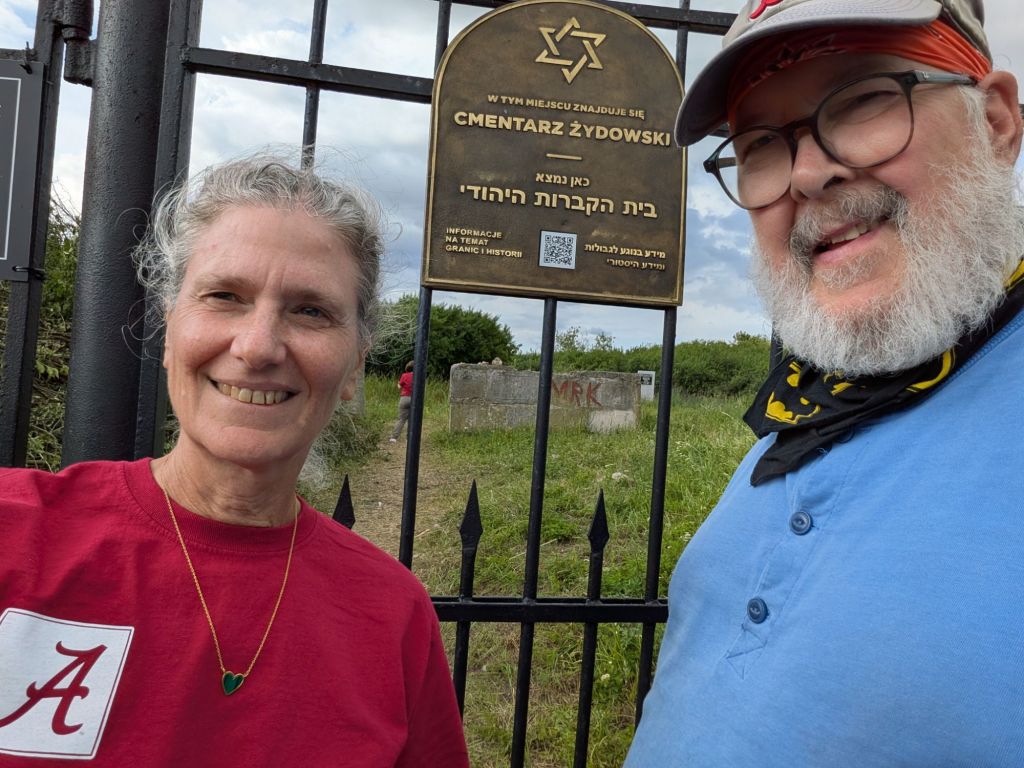
Presence matters. By spending time in the Żychlin Jewish cemetery, we’ve accumulated more knowledge about the town’s Jewish community and we’ve deepened connections with local inhabitants.
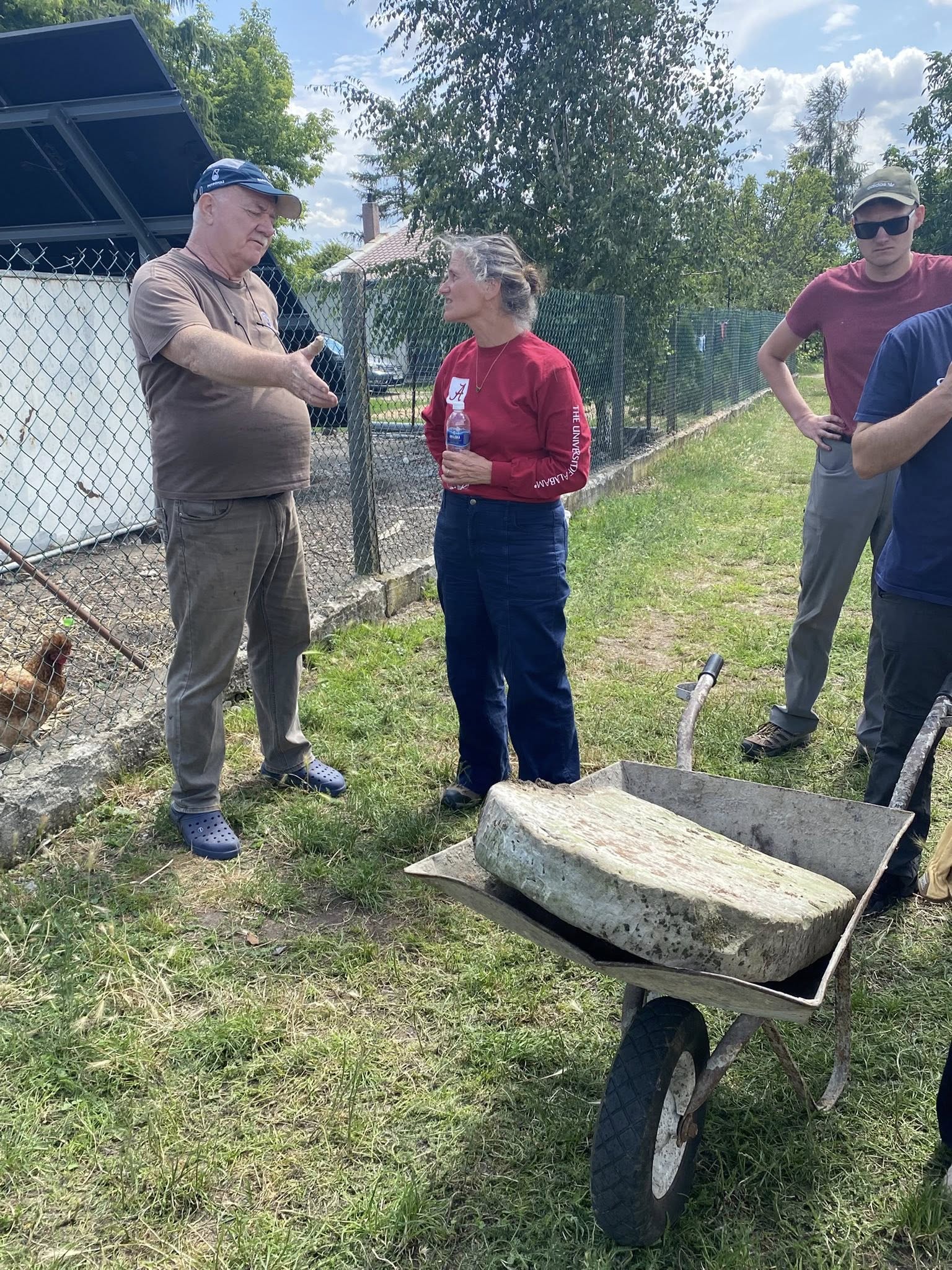
The stones come back. Photo credit Michele Hoferitza

Toward the end of the day, a man living a few doors down from the cemetery stopped by to tell us he had found a tombstone in his garden about three years ago when he built a fence. He noticed from the lettering it came from the Jewish cemetery but didn’t know who to contact or how to return it. He just kept it leaning up against his new fence until he heard we are in town. With the help of a couple of volunteers, he brought it to us in his wheelbarrow and now it stands beside the one that was returned several days ago. People have told me that tombstones return once residents know that someone is taking care of the cemetery. Our presence here in Żychlin attests to that.
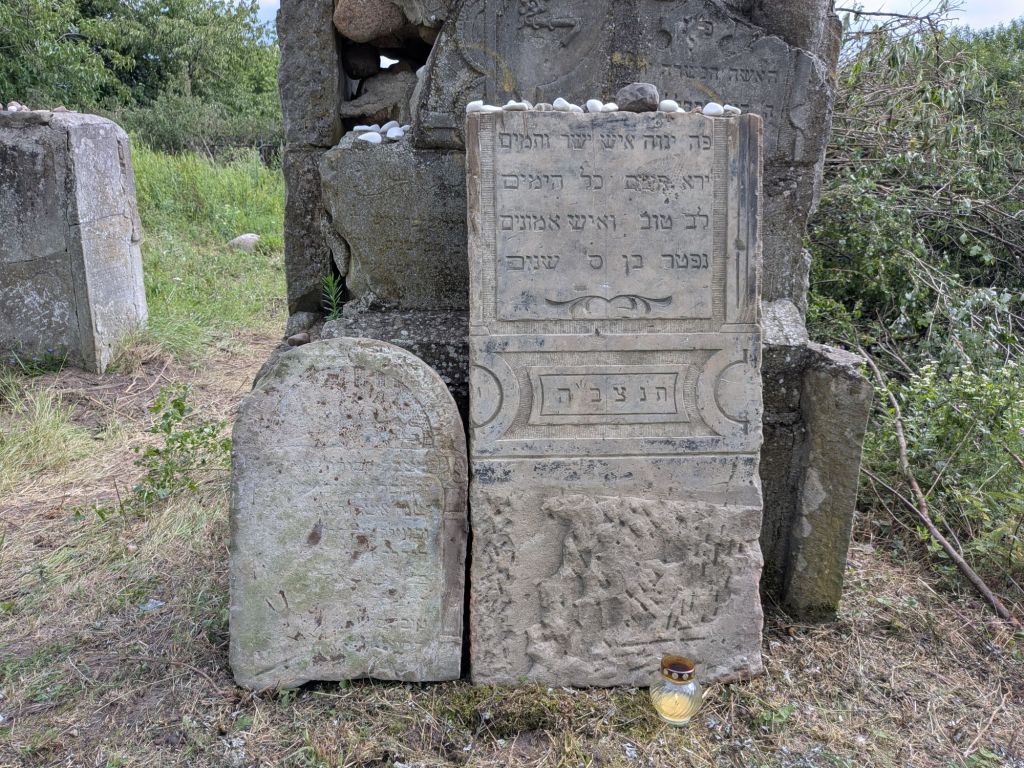
Two returned matzevot

A candle lantern still burned in front of the first tombstone that returned, a reminder of the informal ceremony we had in the morning, lead by Żychlin descendant Lawrence Zlatkin. He told us about his connection to the town; something has drawn him back 5 or 6 times since he first came in 1985 with his father.
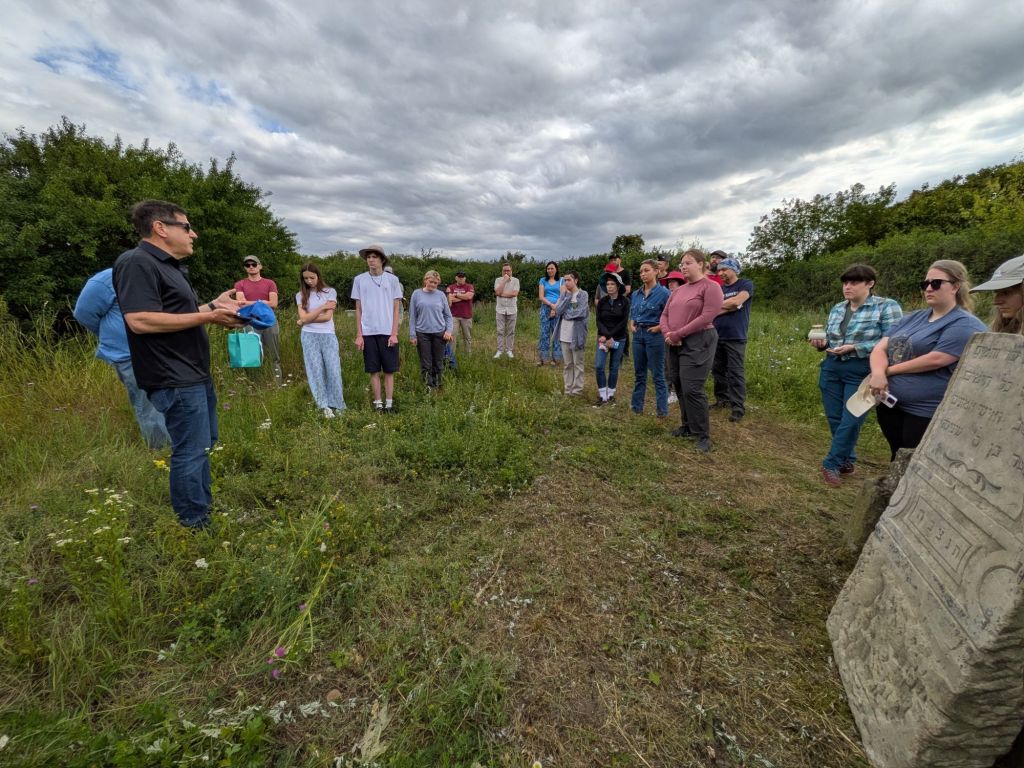
Lawrence shares his father’s story by the first returned Matzevah

Raphael Zlatkin was born in Żychlin in 1924 and he was just a teenager when the war broke out. His younger brother was sent to a work camp, but he managed to avoid capture. He didn’t want to leave his mother all alone. Then, he was warned that staying was a death sentence so at the age of 17 he signed up for transport to a work camp. He spent two years in Auschwitz working in food procurement and making himself indispensable to his captors. He was able to smuggle food to his younger brother and others he knew from Żychlin, helping to keep them alive. In January 1945, as the Soviet troops were approaching Raphael elected not to stay, instead traveling west where he spent time in two other camps before he was finally liberated. From his modest beginnings in a basement apartment at 3 Narutowicza Street in Żychlin, he became a successful businessman in the US.

Lawrence said Kaddish in Hebrew and then in English, explaining it doesn’t say anything about the dead but it rather praises God and calls for peace. Everyone laid stones on the tombstone as a mark of remembrance for those who were buried in the cemetery.

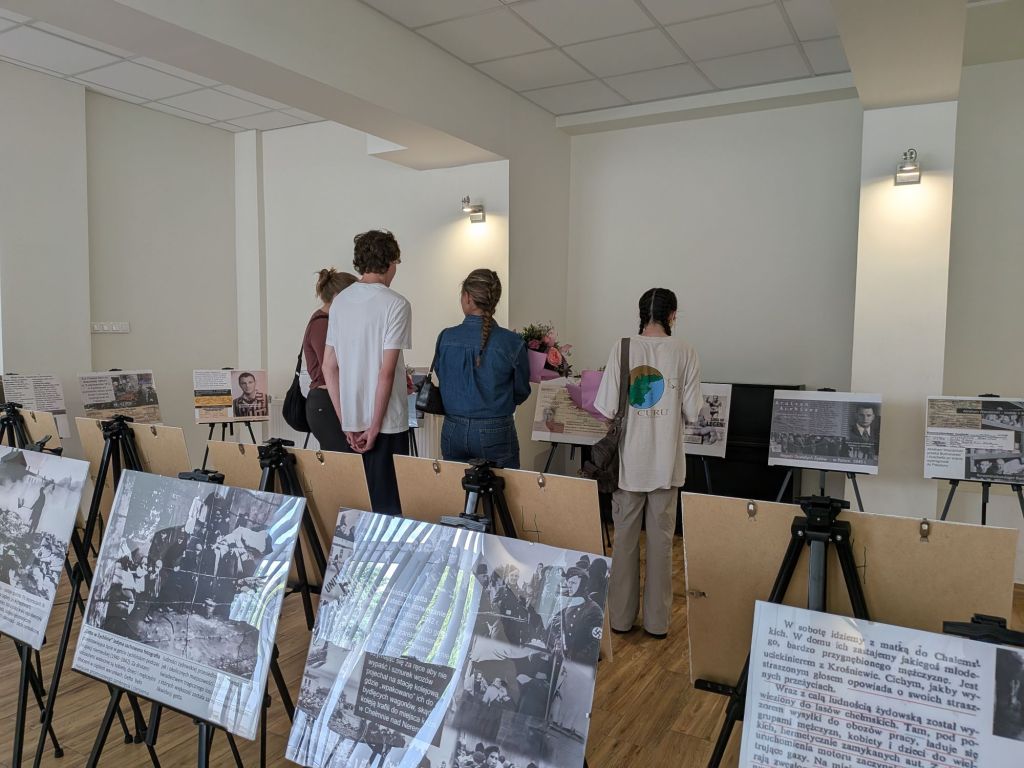
In the afternoon we visited the Community Center where Henry Olszewski had an exhibition about the Jewish history of Żychlin, with photographs of the synagogue and biographic details about Jewish inhabitants including Raphael Zlatkin.
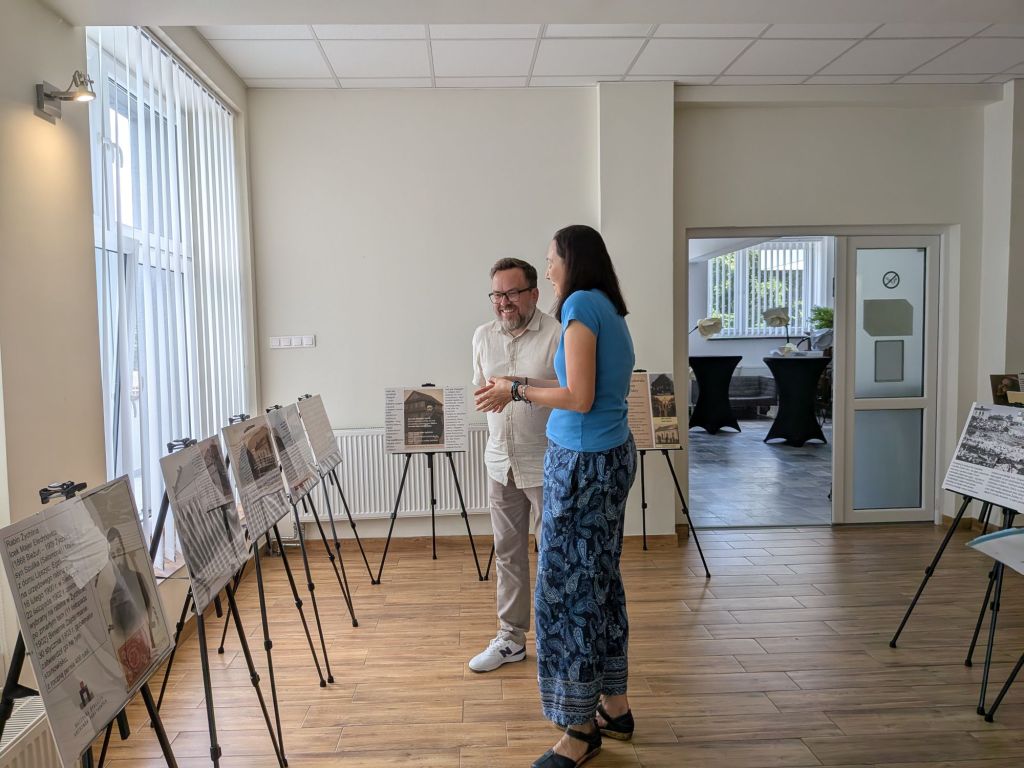
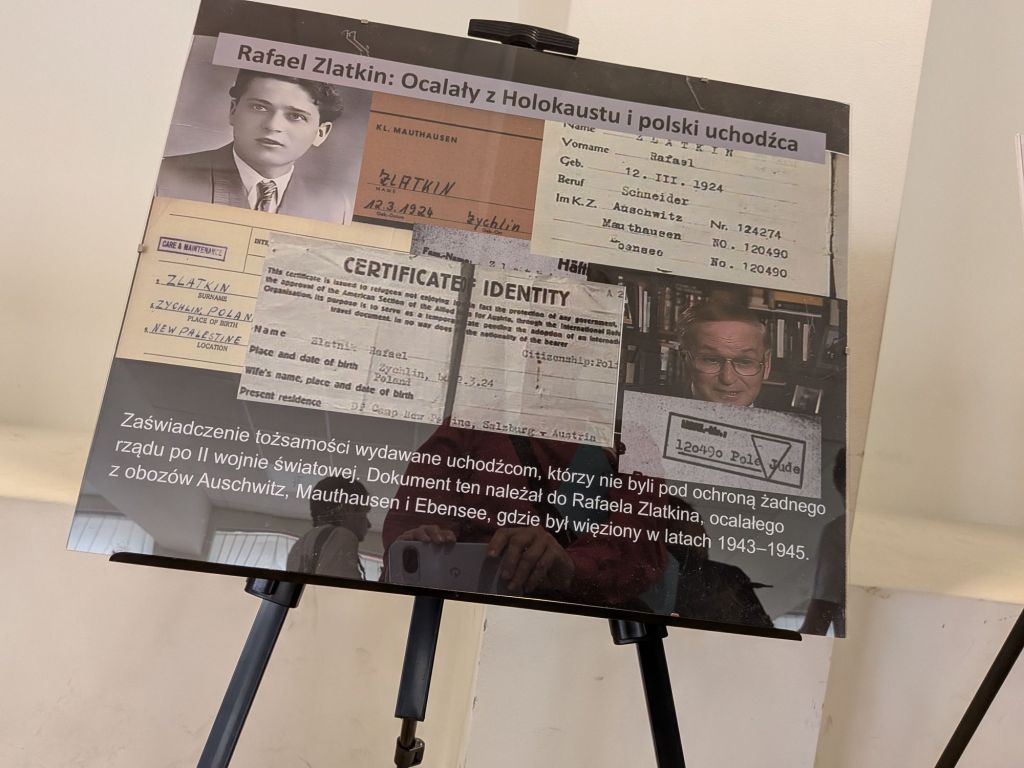
Exhibit by Henryk Olszewski

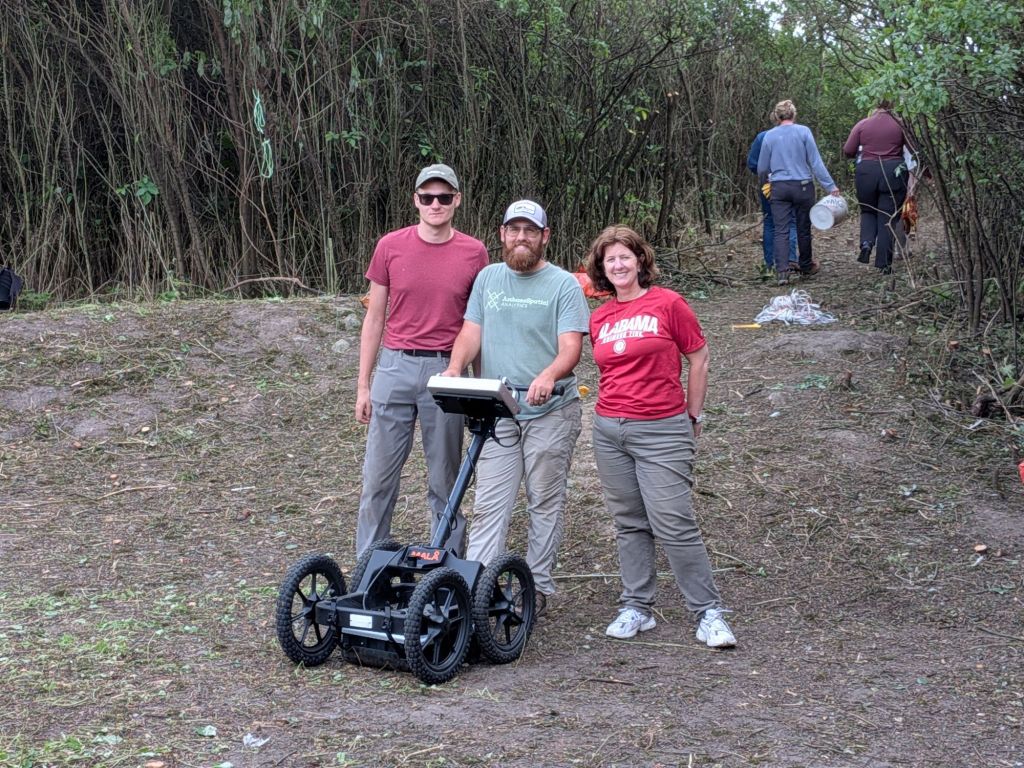
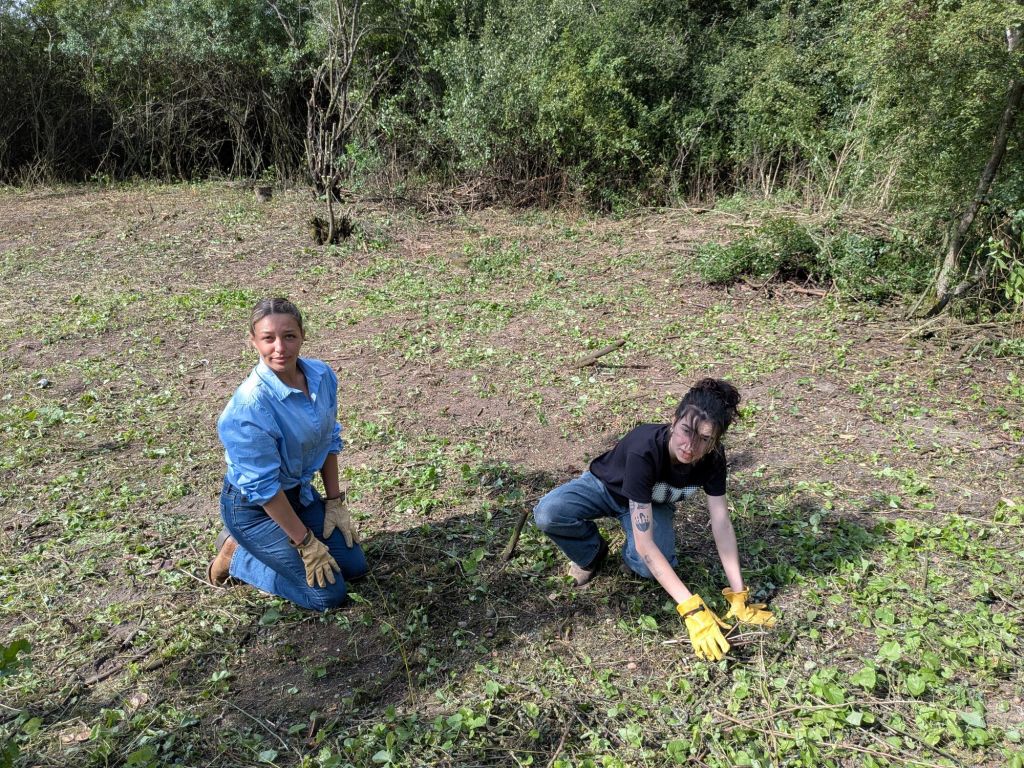
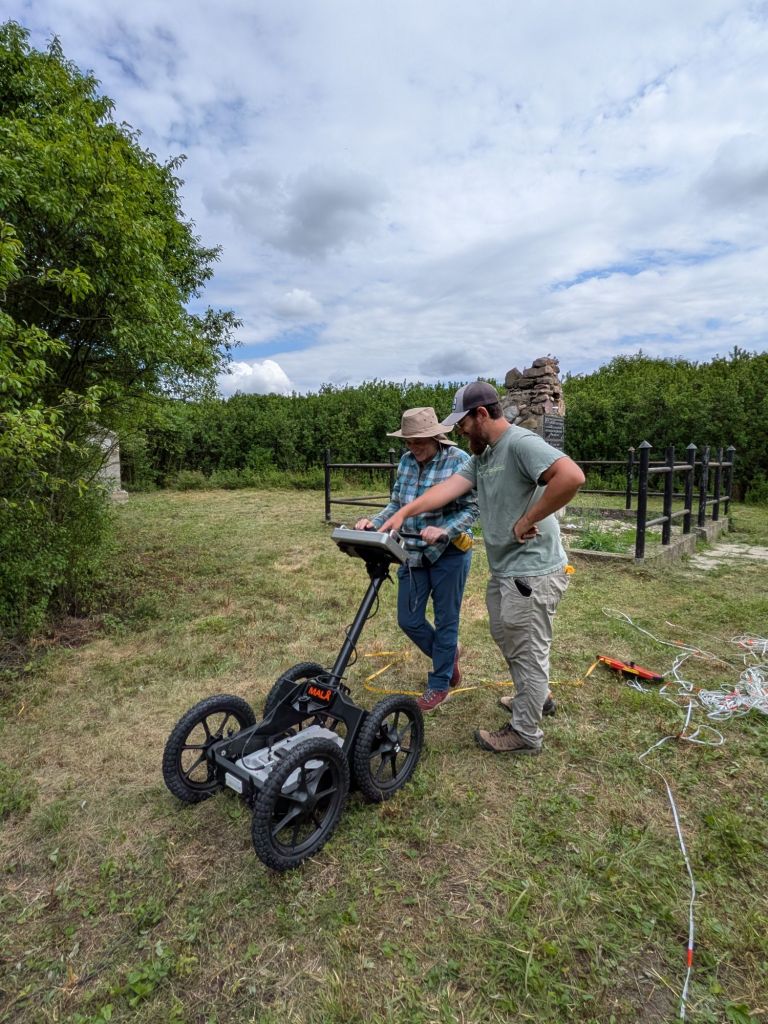
Not everyone could attend because they were hard at work helping UA Archaeology graduate student Claiborne Sea run the GPR (ground-penetrating radar) across the sites we had cleared. He showed the other students how the machine operates and gave them opportunities to operate the device. Claiborne’s work has only begun. It will take weeks to process the data and analyze the results.

More from UA archaeology graduate student Michele Hoferitza:

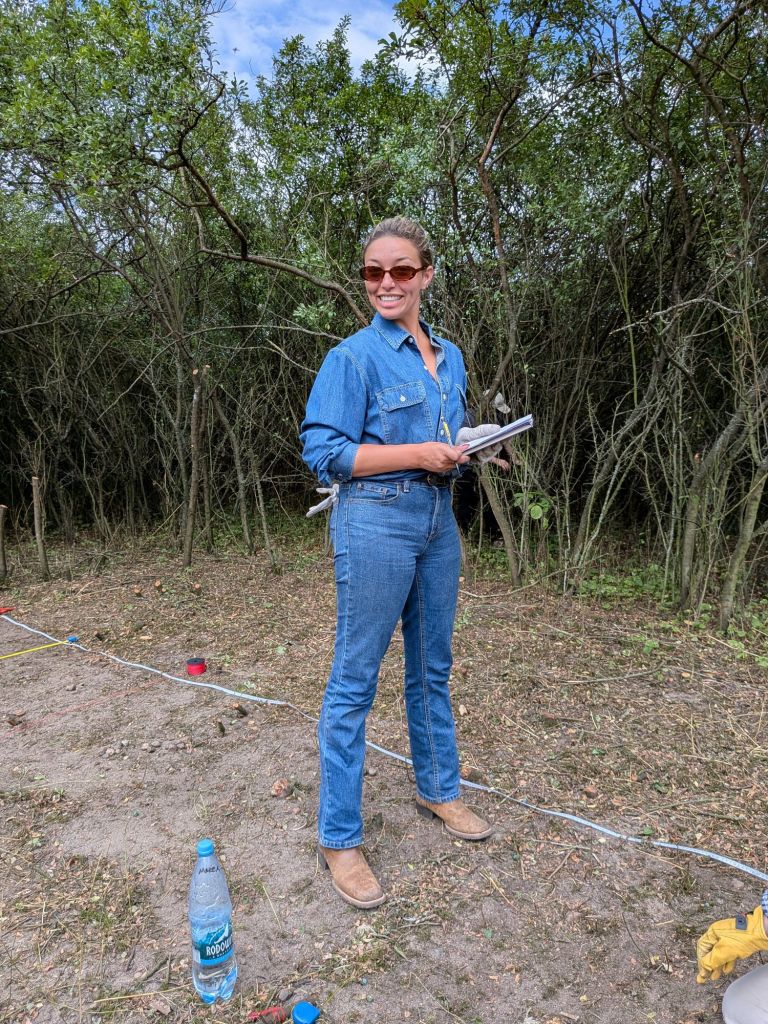
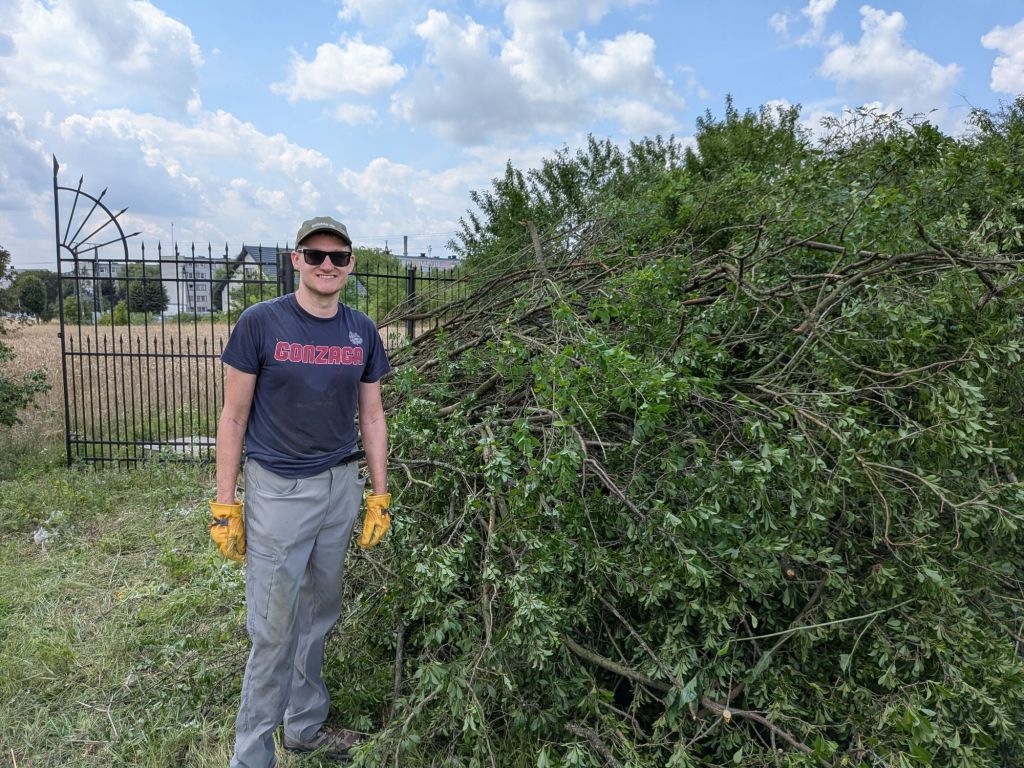
I figured I would post about our Europe trip a week at a time, but this week in Poland is going to need some extra explanation, and there are too many photos to dump. We are here as volunteers for the Matzevah Foundation, a US-based organization that works to preserve Jewish cemeteries in Poland. Many were simply obliterated by Nazis, and others were sites of mass execution before gas chambers were systematically used. Both are the case for our site in Zychlin, where LiDAR data has shown two depressed areas under dense growth of blackthorn. We have cleared a significant area in order to do a GPR survey to verify a mass burial site. It has been a lot of physical work, but it feels amazing to be part of this project. We are not just uncovering history, but living it. As we have worked, a few local people have brought old Jewish headstones they have found on farm property, recognizing that these monuments were taken to desecrate the memory of those who died. Restoring these is a sacred work of healing and remembrance.

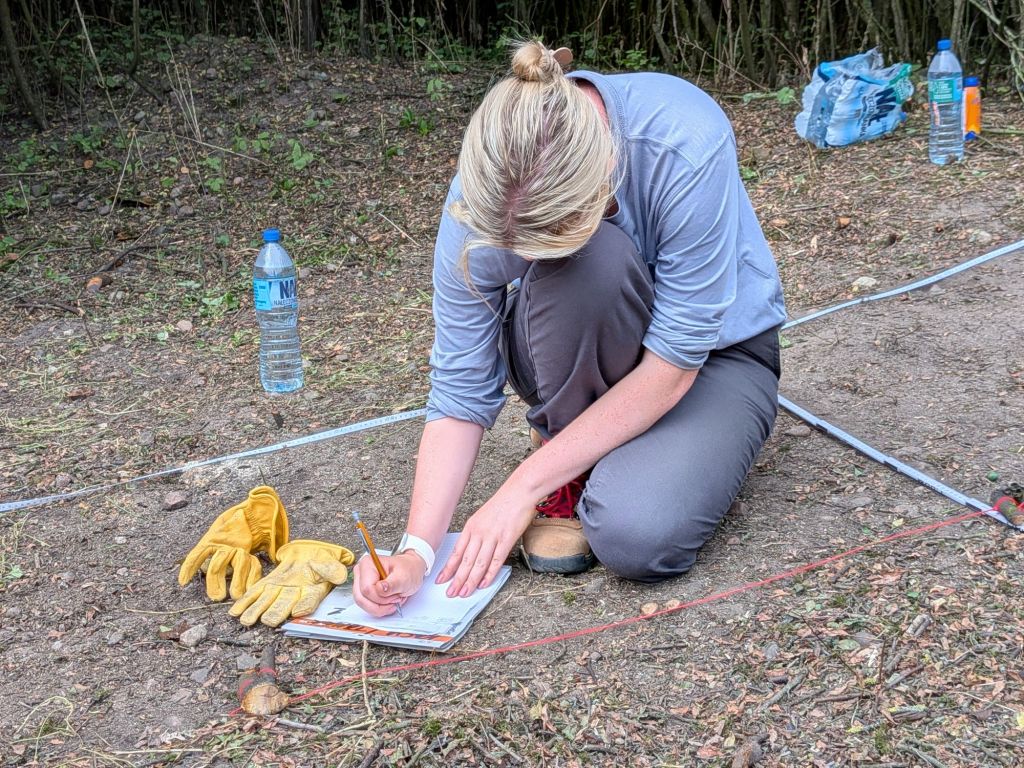
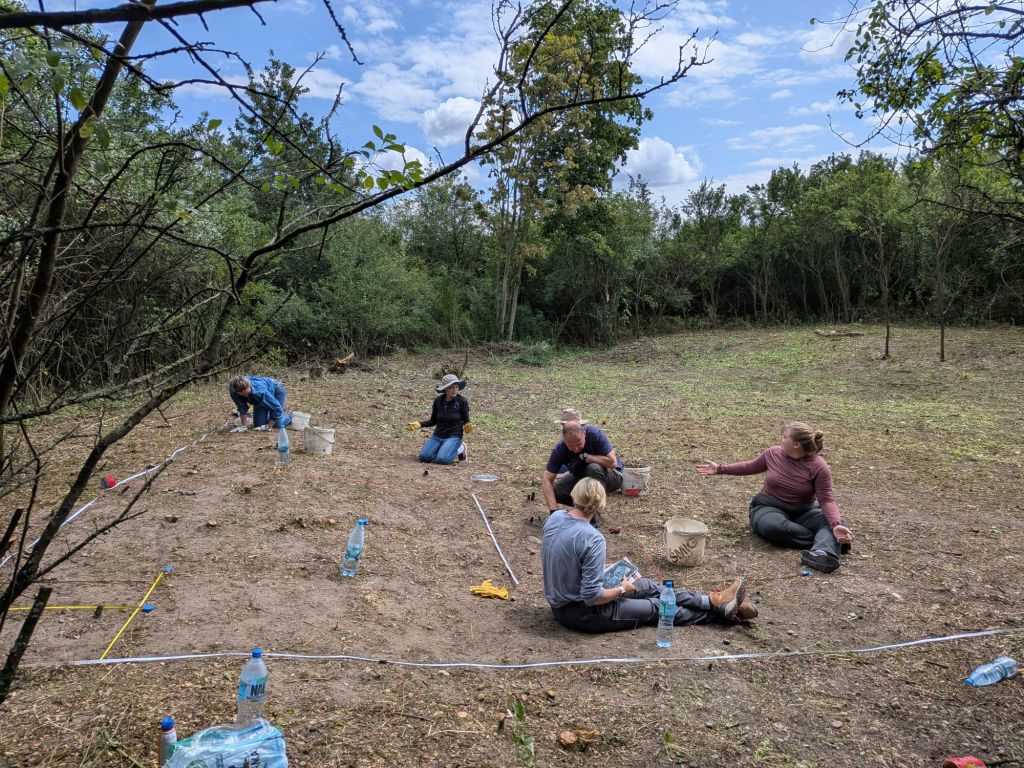
Students do a surface survey led by Michele

From Steven Reece of the Matzevah Foundation:

While some volunteers continued to clear the overgrowth, the main activity was an introduction to the Ground Penetrating Radar (GPR) that was used to evaluate the mass grave within the cemetery. Students from the University of Alabama learned how to use the equipment and take some initial findings. The GPR investigators will need time to analyze the results so those will come at a later date.

We also held a commemorative ceremony where Lawrence Zlatkin said Kaddish. About 25 people joined us today including Grzegorz Ambroziak, the major of Żychlin.

Thank you to the many local volunteers who joined us again today…your efforts made a big difference in what we were able to accomplish!

From volunteer Michael Mooney:

On the final day in Żychlin, our team completed an incredibly meaningful day of volunteer work at the Jewish cemetery. While some of us cleared overgrowth, the main focus was introducing Ground Penetrating Radar (GPR) technology to evaluate a suspected mass grave on site. Students from the University of Alabama learned to use the equipment and began initial surveys; the results will take time to analyze, but we hope they’ll shed more light on the tragic history of Żychlin’s Jewish community.

Throughout the day, we made several poignant discoveries—including human bones exposed above ground, among them the leg bones of a toddler—painful reminders of the atrocities endured here during the Holocaust. In a remarkable moment, a neighbor living four houses away approached and revealed he had a Jewish headstone in his garden, likely displaced when Nazis destroyed the cemetery. The stone, belonging to a 96-year-old woman named Beila, will now be returned to its rightful place, helping to reclaim her memory and dignity.

We also held a moving commemorative ceremony at the cemetery, with Lawrence Zlatkin reciting Kaddish in memory of those lost. Roughly 25 people attended, including Mayor Grzegorz Ambroziak and many local residents, whose dedication made all the difference.

At the end of the day, before leaving the cemetery, we gathered to respectfully bury the bones we found—ensuring those whose remains were uncovered received the dignity and rest they so deserve.

Our project is part of ongoing research led by Professor Marysia Galbraith of the University of Alabama—a descendant of Żychlin Jews—who documents these histories, stories, and testimonies of survivors and witnesses to ensure that the past is not forgotten.
Third Day in Żychlin: Sticks and Stones

16 Wednesday Jul 2025

Posted by Marysia Galbraith in Association of Descendants of Jewish Central Poland, Cemeteries, Ground Penetrating Radar (GPR, Memory, Nazi Camps, Research Methodology, World War II, Żychlin

≈ Leave a comment

Tags

Matzevah Foundation, Museum of the Former German Kulmhof Death Camp in Chełmno on Ner

How do we learn difficult history? What is the most effective way of gaining factual and emotional understanding of what happened?

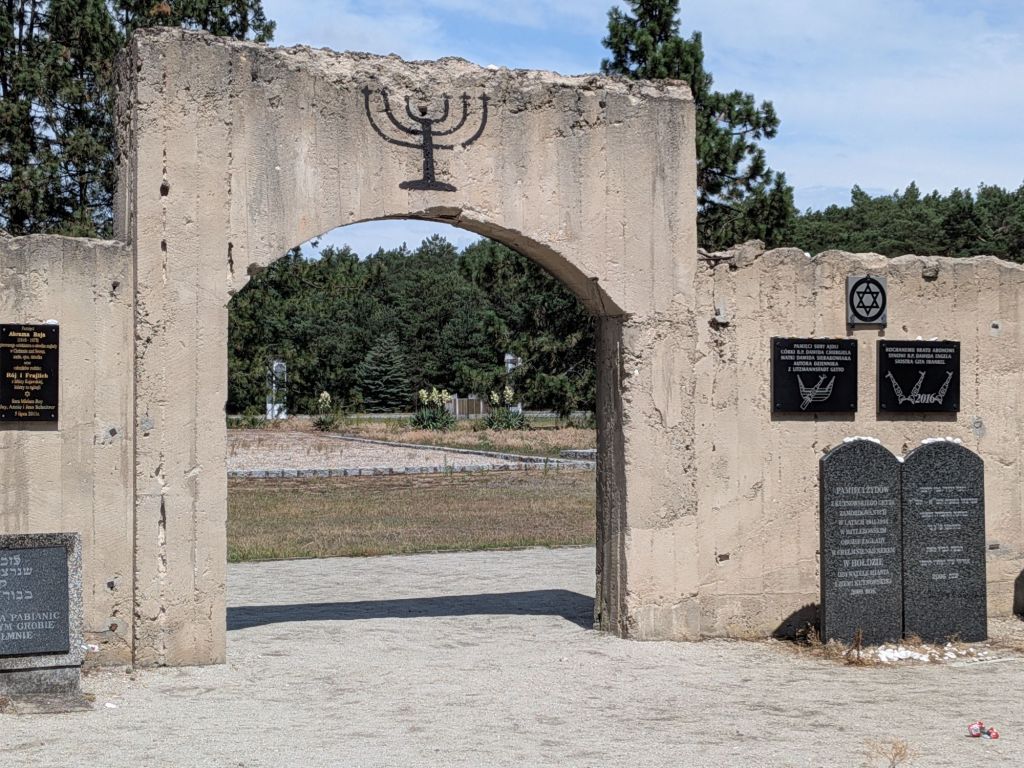
Memorial wall in the forest

One thing participants are learning is how important it is to consider multiple factors and viewpoints, to resist the urge to tell a simple moralistic story that avoids ambiguity and nuance.

Another is the importance of learning through individuals’ personal stories. These are what make the events of the Holocaust real to the students. By learning the stories of those who survived and those who died, they come to understand the human cost of the dehumanization at the core of the Shoah, and the suffering and resilience of the victims.

A third lesson comes from simply being in the spaces where history happened. The Żychlin Cemetery is one such place. The Chełmno Death Camp is another.

For our tour of Chełmno, we had no guide, each of us instead weaving our own path through the museum exhibit and the remains of the camp buildings. Though less known than Auschwitz, what happened at Chełmno needs to be remembered. There, techniques for mass murder were tested to tragic effect. More than 200,000 Jews, 4000 Roma, and many Poles were gassed in makeshift gas chambers, and then their ashes were buried in the forest five kilometers away.

Most prisoners came via train from towns like Żychlin and Kutno, as well as the city of Łódż, bypassing the tiny town of Chełmno and disembarking at a mansion next to the church. Arrivals were reassured by the fancy façade, the invitation to write postcards to their loved ones describing how nice the place was, and the promise they could relax after cleaning up after their long journey. They were instructed to list their valuables on a form so that they could be returned to them after they washed. They were led into rooms to remove their clothes, then led down a corridor to the back of a waiting truck they were told was a shower. But instead of water, the truck’s exhaust filled the space. With the door locked behind them, they had nowhere to go and no way of saving themselves.

Initially, workers were instructed to bury the dead, but quickly the leadership realized they needed to cremate the bodies, so crematoria were added in the forest and human ashes were spread over clearings.

After viewing the museum exhibitions, we drove on to the ash fields in the forest. Everyone moved through the space in the way that felt most appropriate for themselves–some solo, most in pairs.

Our group got to the memorial wall, solemn as they contemplated this killing space, only to be met by a glimpse of home–a couple from Mobile, Alabama on their own historical tour of Poland. Meeting them helped lighten the mood, a reminder about the living and our own familiar places.

Back in the Żychlin Cemetery, the graduate students and other volunteers were busy. Half of the back depression is cleared.

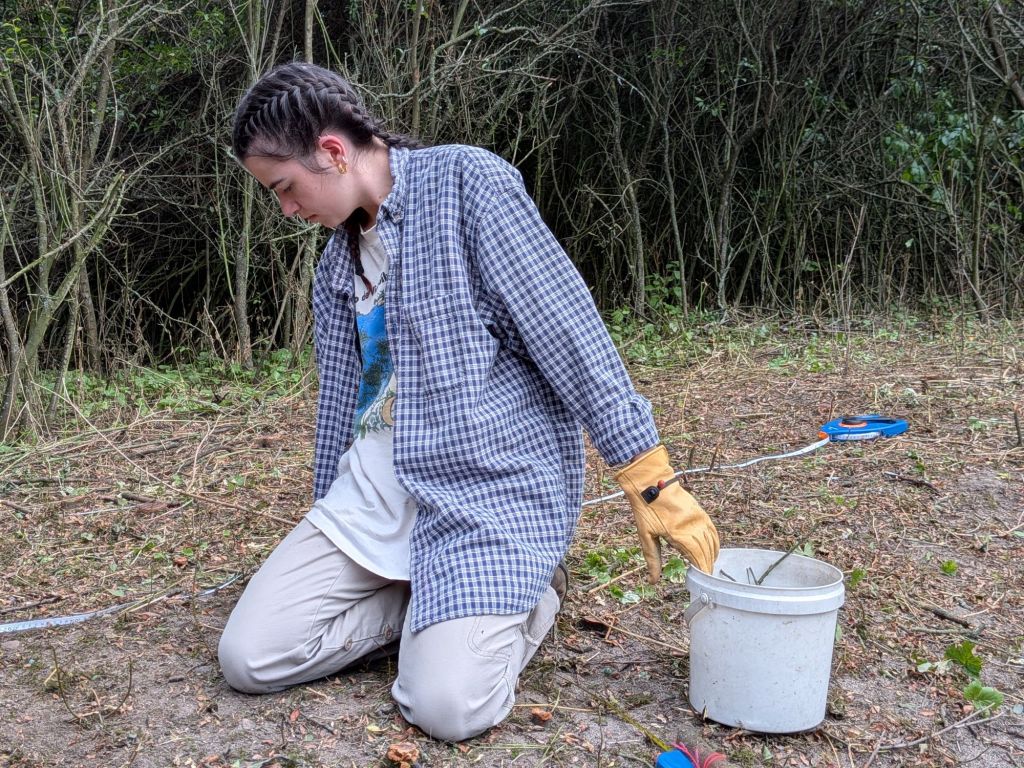
When we joined them, archaeology graduate student Michele Hoferitza helped us think about artifacts and making sense of their significance. She set up a task for us to remove all the small sticks still covering the surface of the ground so that the rocks and other objects on top of the ground would be more visible. Tomorrow, we’ll map what we see in 1 meter square grids. Maybe it will provide some indication of what happened at this site–how the space was used, what caused the depression, and whether we have located the mass grave.

Day Two in Żychlin

16 Wednesday Jul 2025

Posted by Marysia Galbraith in Association of Descendants of Jewish Central Poland, Cemeteries, Ground Penetrating Radar (GPR, Heritage work, Polish-Jewish relations, Synagogues, Żychlin

≈ Leave a comment

Tags

Mass grave, Matzevah Foundation

A Guest Post by Michael Mooney of the Matzevah Foundation

Day two has wrapped up for the Matzevah Foundation, our core team of volunteers, three individuals from a local reintegration program, and several local residents who stepped forward to lend their hands. These community members have their own reasons for joining us—personal, deeply-felt convictions about the importance of this work. They rarely say much about it, but their quiet presence speaks volumes. Their support adds a layer of silent solidarity that is deeply moving.

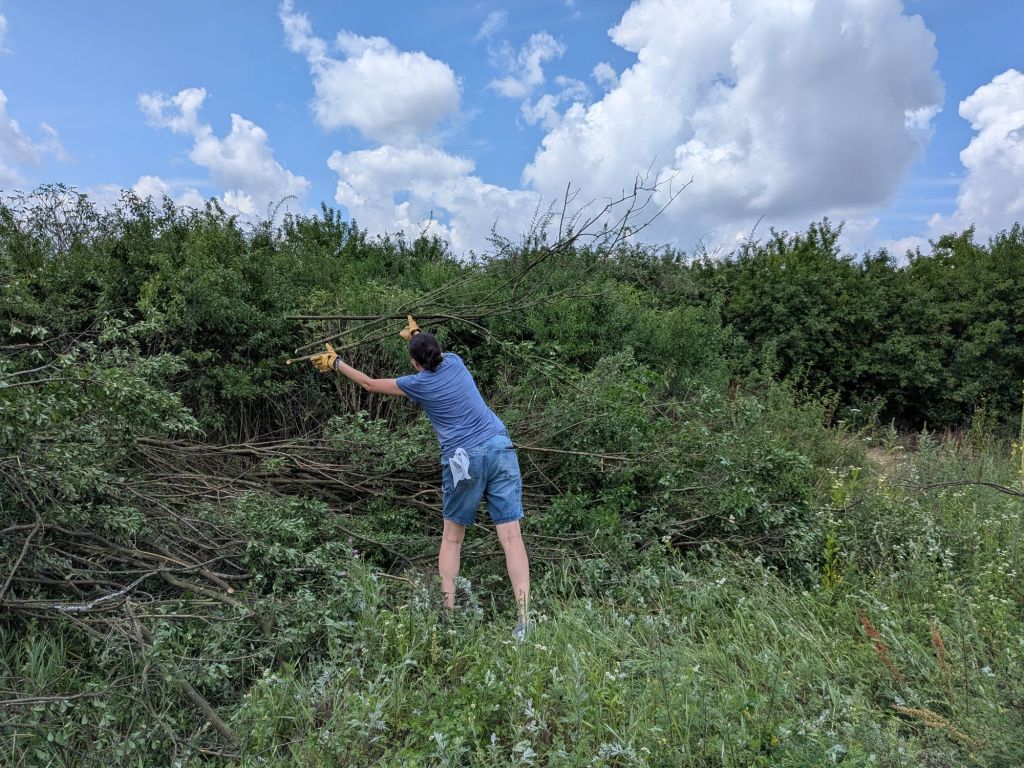
Our main task today focused on continuing the physically intensive work of clearing the brush and thick overgrowth from the depressed area believed to mark the site of a mass grave—just outside Żychlin. The sunken terrain could be the final resting place of hundreds of Jews—families and children—who were massacred during the German occupation of Poland. Step by step, we’re reclaiming this space from years of neglect, trying to bring dignity to a site long obscured both by vegetation and silence. Evidence and testimonies collected over the years suggest this area may be one of many unmarked mass graves, now hidden within the landscape yet never truly forgotten.

Before the war, Żychlin was home to a thriving Jewish community, with Jews making up over 40% of the town’s population. They had their own schools, synagogues, businesses, and institutions woven into the daily life of the town. The Nazi invasion brought devastation—ghettoization, mass deportations, executions, and widespread destruction. Few Jews from Żychlin survived the war.

Later in the day, our group visited what remains of the town’s historic Jewish quarter. Only the gutted walls of a 19th-century synagogue still stand—silent and broken. The cheder (Jewish school) and mikveh (ritual bath) that once operated nearby were destroyed long ago. The courtyard is cracked pavement, overrun with weeds and scattered debris. There is no plaque. No sign. Just the vacant presence of what was once central to community life.

Żychlin synagogue

As we surveyed the site, a few residents peered from behind curtains or doorways, then disappeared back inside. One person reportedly remarked to a member of our team that the synagogue “should just be torn down.” Is this concern about safety and dereliction? Or is it also a quiet wish to erase uncomfortable history—to bury the memory of a tragically obliterated community? Is forgetting easier than remembering?

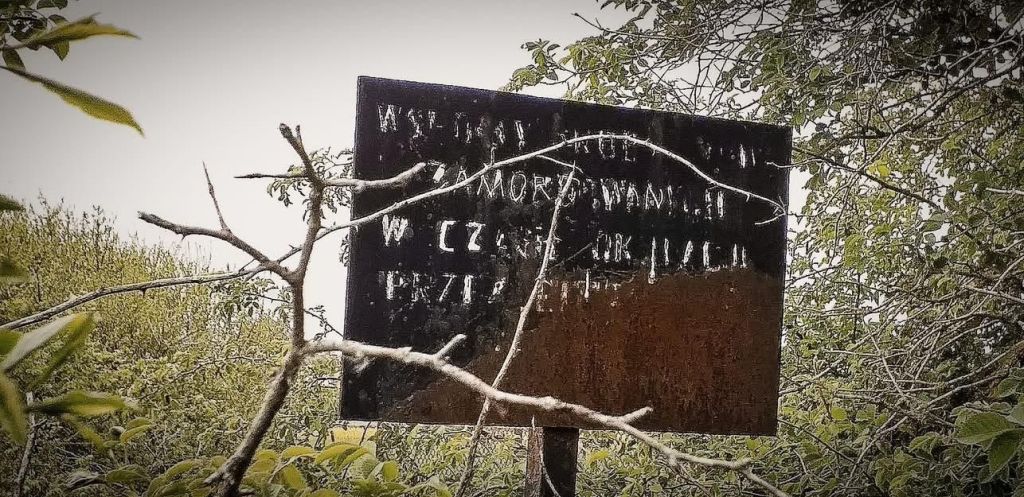
Near the clearing at the suspected grave site, we stumbled upon a weathered old sign—almost completely obscured by plants and exposure to the elements. The sign matches a photograph taken about eight years ago at (or near) this same location that once surfaced online. Most of the paint has worn away, but a few phrases remain legible:

– **”WSPÓLNY GRÓB”** – “In this place rest”

– **”ZAMORDOWANYCH”** – “Murdered people”

– **”W CZASIE OKUPACJI PRZEZ”** – “During the occupation by”

– One barely visible word at the bottom: **”HITLEROWCÓW,”** meaning “Nazis”

Metal sign indicating a collective grave is nearby

This style of memorial wording is common on World War II-era markers around Poland. It typically refers to civilians—often Jews or resistance members—murdered by the Nazis and buried in unmarked sites like this one.

Even in its deteriorated state, that plaque whispers a truth: this place is hallowed ground. And while some might look away, we cannot. Our work is about remembrance, dignity, and bearing witness to what many would rather forget.

When I return home, I plan to read *Neighbors: The Destruction of the Jewish Community in Jedwabne, Poland* by Jan T. Gross. The book tells the horrifying account of how, in 1941, the Jews of Jedwabne were not killed by distant Nazis, but by their own non-Jewish neighbors in an act of unspeakable violence. The story Gross tells echoes here in Żychlin and many other towns across Poland—places once filled with Jewish life, now emptied of memory, unless someone comes to uncover it. https://amzn.to/3Ixc0rK

Tomorrow, on Day Three, we’ll begin with a sobering visit to Chełmno—the extermination camp where most of Żychlin’s Jews were murdered and incinerated for the simple “crime” of being Jewish.

Please follow the The Matzevah Foundation, Inc.

See What the ADJCP Has Planned!

11 Wednesday Jun 2025

Posted by Marysia Galbraith in Association of Descendants of Jewish Central Poland, Cemeteries, Chodecz, Gostynin, Ground Penetrating Radar (GPR, Memory, Nazi Camps, Pzedecz, World War II, Włocławek, Żychlin

≈ Leave a comment

Tags

Fundraising

LiDAR image of the Żychlin Jewish Cemetery reveals two trenches that are likely mass graves. We’ll focus on the one outlined in green this July. Image details added by Claiborne Sea, a doctoral student in archaeology at The University of Alabama who will lead the ground penetrating radar (GPR) research.
We need your support for projects in Żychlin, Przedecz, Gostynin, and more

Testimonies from Żychlin

02 Wednesday Apr 2025

Posted by Marysia Galbraith in Archives, Heritage work, Jewish Ghetto, Memory, Synagogues, Victims and perpetrators, World War II, Żychlin

≈ Leave a comment

Tags

Association of Friends of the Kutno Lands, holocaust, Poland, Towarzystwo Przyjaciół Ziemi Kutnowski, TPZK

As I piece together information about wartime mass burials in the Żychlin Jewish Cemetery, I’m finding other valuable records like this photograph of the Żychlin synagogue:

Synagogue built around 1880. Source: collection of Andrzej Kubiak

The Association of Friends of the Kutno Lands (TPZK) posted excerpts from Anna Wrzesińska’s article about Żychlin’s Jews. Mostly, they are wartime memories passed down in Żychlin families. The original post is here: https://tpzk.eu/getto-w-zychlinie/.

These difficult truths are what compel me to contribute to the memorialization of those who suffered and died during the Shoah.

The Google translation:

(…) After the outbreak of World War II and the occupation of the town by the Germans, there were about 3,600 Jews in Żychlin, including many refugees. From the beginning, Jews were treated badly: they were humiliated and beaten, their apartments, workshops and shops were searched and robbed. Then came the obligation to wear emblems with a star. In April 1940, the Germans arrested Jewish intellectuals, who were deported to concentration camps. In June 1940, a ghetto was established on the premises of the so-called Fabianówka, i.e. Karol Fabian’s complex of industrial buildings. In July 1940, a second ghetto was established. In total, over 4,000 Jews were gathered in them. About 800 people died of hunger and disease in the ghettos. In February 1942, the German police killed 100 Jews on the streets of the large ghetto. In March 1942, the Germans carried out an action to liquidate the ghettos, deporting over 3,000. Jews to Krośniewice and then to the Kulmhof Nazi extermination camp in Chełmno nad Nerem. The members of the Żychlin History Lovers Society often talk about the ordeal of Jews during World War II. They shared their memories once again on March 9, 2016.

Józef Staszewski: “After the Germans entered Żychlin, initially they were not harsh towards the Jews. Until July 1940, that is, until the creation of the ghetto, they lived rather freely. On July 15, the decision was made to create a ghetto, or rather a second ghetto. The large ghetto was along Narutowicza Street, partly Łukasińskiego Street and today’s Traugutta Street. It reached all the way to the river. Several buildings were excluded from this area, including the Kumm house and Sędkiewicz bakery.

The large ghetto was created in one day, within four hours. The Germans simply relocated the residents of Narutowicza Street, where most Jews lived. They were relocated from the left side of the street to the right, just as they stood, both Jews and Poles. The German mayor led all this, he had it perfectly planned.

Looking from the church, the ghetto was on the left side of Narutowicza Street. The gate to the ghetto was from the Narutowicza side, like the billboard is today. The ghetto was not surrounded by a wall, but fenced with pickets. It was relatively easy to leave it, and Jews often did so. It had its own board and police. On its territory there was Rabinówka and a hospital.

The small ghetto was located on ul. 1 Maja, then Pierackiego, in the buildings of the so-called Fabianówka. It was established almost at the same time as the large one. Jews who did not fit into the large ghetto were sent there.

Information on this subject is supplemented by Jerzy Banasiak: “The ghetto was large on Narutowicza from the river to the right. My uncles Edek and Tadek had a mechanical workshop there, he did not join the..and they were richer than them. in Yiddish. ghetto, like Andrzejewski’s workshop, was taken over by the German Krebs. This area was fenced off. From the river, on the corner, there was a second gate to the ghetto, it was made of planks and reinforced with barbed wire. I lived near the smaller ghetto – Aleje Racławickie 20. In Fabianówka there were wealthier Jews, displaced from the left side of the city. There was a brickyard, to which a gate led, a palace, two large buildings, a brickyard, to which a gate led. buildings and a row of workers’ houses, still stand today. It was very cramped there, when it was warm, people slept under the roof of the brickyard.

Jews had to wear Jewish stars, initially on their backs, then on the sleeve. The stars were painted on the clothes or sewn on. My father, who worked in a dairy, made stars from sheet metal for sale.”

Tadeusz Kafarski: “The Germans also resettled my family. We lived near today’s veterinary clinic, and they resettled us to ul. Kościuszki 3, to a former Jewish house. I saw how in the summer the Germans would drive the Jews to the nearby ponds to swim. If they didn’t want to go into the water, they would shoot them. They ordered us, the children, to throw pebbles at them.”

The Jews were used for various cleaning jobs in the city. On the orders of the Germans, they dismantled crosses and chapels. They also built a villa for the mayor of Żychlin, Hempel, in the city park on the site of the demolished Kościuszko Stone (today it houses the Municipal Public Library).

“The most terrible thing I saw, recalls Mr. Staszewski, was the image of exhausted Jewish children. How hungry they were! We had orders from the scouts to deliver food to the ghetto, and that’s what we did: we brought bread, beets, potatoes, carrots…”.

It wasn’t safe. As Mirosław Zomerfeld recalls: “My father wasn’t displaced because he had a forge. We lived nearby. My aunt helped Jews in the ghetto. They deported her to Germany for work, she was not far from Dachau.” (…)

People’s behaviors varied. This is how Father Roman Indrzejczyk recalls the events of 1942: “I experienced the war and the German occupation in Żychlin near Kutno as a small boy. I came across people’s terror, helplessness, suffering, humiliation, persecution, injustice… I also saw the ghetto – I felt the great injustice done to these people, closed, fenced offfrom “our” world. A world that was already very limited by the violence and cruelty of the harsh, ruthless Nazi rule. I know that some of us tried to do something to give a little help and hope or at least show kindness and solidarity, but we always did it marked by great fear. Fear was widespread then, because “they” – the occupiers – could do everything worst. I don’t remember exactly when it was, but it was definitely before the liquidation of the ghetto: one of my peers, Stasiek, told me that tomorrow there would be a “deportation” in the city, “they will be deporting Jews from the ghetto” and his father would have to participate in it. I didn’t fully understand this information, but my father said then: “You don’t have to, an adult doesn’t have to do what is wrong, even if they tell you to. (…) You have to help, you have to defend the wronged, and not participate in doing wrong”. I understood that my father was talking about something very difficult, but I remember it to this day as an oracle. This “does not have to”, “should not do evil”, “should save, help the wronged” is more important than all fear and egoism. In my little heart, this awareness remained that only such a person deserves respect and recognition. I guessed that such an attitude rarely happens…”.

And this is how the Jewish woman Helena Bodek recounts the last days of her stay in the Żychlin ghetto (Jak tropione zwierząt. Wspomnienia, Wydawnictwo Literackie, Kraków 1993, p. 66): “General panic. The ground is burning under people’s feet. They walk as if unconscious. In their eyes there is mad fear, fear of death. Everything indicates that the time of liquidation is approaching. Finally, the mail to the ghetto is stopped. The interruption of contact with the outside world is a warning signal for us: we have to escape – now or never”.

Helena Bodek and her mother managed to escape from the ghetto. They reach Gąbin on a horse-drawn carriage they accidentally meet. They stop in the local ghetto, where there is still peace. There, three days later, they learn from other escapees – several young boys – about the liquidation of the Żychlin ghetto.

“They avoided arrest completely by accident. […] the navy blue policeman Ćwik, for his friendly attitude – he went from house to house with words of comfort – received many valuable gifts. These things were brought to his apartment by these young men. When they were about to return to the ghetto, it turned out that it was surrounded by the Gestapo. Ćwik, fearing for his own skin, ordered them to flee. The boys tell the story of the last moments of the Żychlin ghetto. Shortly before its liquidation, the local police went crazy. All the Jewish policemen were ordered to line up and were shot one by one. Hilek Zygier was killed shouting: “Long live the Jewish nation!” Under the pretext of contacting her husband, she was led out of the Oberman home. After taking a few steps, she fell to the ground, shot in the back. The same fate befell Oberman’s elderly parents. Of the entire family, only a several-year-old son remained. When a neighbor tried to take care of him, the Germans killed her on the spot. The child stood in the cold and cried, and people were afraid to approach him. On the evening of Oberman’s death, Altek’s brother was also shot.

The terror intensified with each hour. The police led groups of people to the Jewish cemetery. There they were murdered – among them the young Halusia Chude. Blood flowed in streams, leaking into the gutter outside the ghetto. Dr. Winogron died – a large diamond was noticed on her finger. According to other rumors, at the last moment she tried to contact her former maid Aryan to entrust her with little Maciuś. Desperate people went mad: a young married woman in the last month of pregnancy, Rachcia Gelman, threw herself into a river in front of the Gestapo, where she was hit by German bullets. Chałemski’s mother, an old woman, locked herself in a wardrobe, fearing the Germans, and died of suffocation. At dawn, the carriages commandeered from peasants from the surrounding villages arrived. People were loaded onto them. They stood and, so as not to fall out of the carriages, held each other’s hands tightly. Amid the cries of children, the lamentations and screams of women, the line of carriages moved towards the railway station. There, the unfortunate were packed into cattle wagons for their last journey…

The small, Jewish town of Żychlin is “Judenfrei”, the ghetto has ceased to exist. And it happened on Purim. It was on this holiday – a holiday of joy, a holiday of children – that thousands of innocent beings were sent to death and torture together with their fathers and mothers…”

After the Jewish residents of Żychlin were deported to Kulmhof, the Germans searched their homes for hidden valuables. At that time, the manor house and factory buildings of Fabianówka, Rabinówka on Narutowicza Street and several other buildings were demolished to their foundations. Only after systematic plundering were the Polish population ordered to settle the area of ​​the former ghetto.

We have presented fragments of the article by Anna Maria Wrzesińska entitled “Jews in Żychlin”, which was published in the 20th volume of Kutnowskie Zeszyty Regionalne.

Marry Someone We Know

11 Wednesday Aug 2021

Posted by Marysia Galbraith in Anthropology, Family, Genealogy, Kolski, Names, Pifko-Winawer Circle, Piwko, Walfisz, Winawer

≈ 7 Comments

Tags

cousin marriage, endogamy

My Mom was always looking for wives for my brothers. She favored people we knew—the O’Leesky girls next door or my best friend Kara. These were girls who were in and out of our house all the time and Mama came to love and trust them. All it took was noticing one of her sons was also friends with one of these girls and that was it. “June and Ronnie should get married,” she would say, noticing how they walked hand in hand at age ten. Then, she wanted Wilan to marry June’s younger sister Kim. Once Kara became a fixture in our house, Mama talked longingly about keeping her close and the best way to do so seemed to be marrying her off to one of her sons. First, she hoped Kara would marry Ronnie. Later, she hoped Kara would marry Chris. After all, they got along so well. Only now, years later, I realize Mama never tried to match me with any of the boys in the neighborhood. She never felt sure about me pairing off with anyone, though she began to warm up to my first love—around the time we broke up—and she developed a fondness for my husband. Eventually.
Ron and June hold hands circa 1969. In front, my brothers Wiley and Chris, me, cousin Andrew, and June's sister Kim
Ron and June hold hands circa 1969. In front, my brothers Wiley and Chris, me, cousin Andrew, and June’s sister Kim.

Mama was slow to make room for people in her inner circle, but once she did, she wanted to keep them close for life.

This may well be a holdover from the Jewish family she was distanced from by her mother’s conversion. After all, that family is made up of a crisscross web of Piwko, Walfisz, Kolski, and Winawer ancestors. Her grandfather’s brother married her grandmother’s sister (Hil Majer Piwko married Hinda Walfisz, while Jankel Wolf Piwko married Tema Walfisz). My grandmother’s brother Abraham Jon married Bertha Kolska (the female version of the surname), while her sister Regina married Pinchas Kolski. I don’t know how Bertha and Pinchas were related, but it’s likely they were since they both came from the same town, Kłodawa. When Regina died, another sister, Rachel, married Regina’s widow.

The practice of marrying within these linked families continued even among descendants who moved to Switzerland, Israel, and the United States. A generation later, Pinchas and Rachel’s son Abrash married Jankel Wolf and Tema’s granddaughter Poili. So Abrash and Poili were second cousins twice over—their Walfisz grandmothers were sisters and their Piwko grandfathers were brothers.

Other overlapping relations tie the family web together even more tightly. Two of my grandmother’s other sisters married cousins—Liba married Jacob Winawer and Sarah married Saul Winawer. Sarah and Saul’s son married Sally, whose older sister was married to Sarah’s brother Philip.

It takes a 3-D chart to keep track of it all.

For the longest time, I couldn’t figure out how another cousin, Arline Jacoby, was related to me. Eventually, I figured out the connection goes back to both sisters of my great grandmother Hinda Walfisz. Arline’s grandmother was Łaja/Leah Walfisz. Arline’s husband Harry was the grandson of Tema Walfisz, or more likely, Tema was his step-grandmother.  After Tema’s first husband Jankel Wolf Piwko died, she remarried Akiva Jakubowicz, who was also a widow and the father of two sons including Harry’s father. It took me a while to piece this all together because in the US, the family name was shortened to Jacoby.

Clearly, the family pattern was to marry within the group—what anthropologists call endogamy. Endogamy was very common among Ashkenazi Jews; they very rarely married non-Jews, and if they did it usually meant that the offspring were not raised Jewish. That’s why it is more common to find traces of Jewish DNA among non-Jewish Slavs than it is to find Slavic DNA within Ashkenazi Jewish populations. I wonder, though. How common was it to seek spouses among families that were already related to via other marriage ties? And what were the reasons for it? Was it akin to my mother’s desire to strengthen emotional links with people she already felt an intimate attachment to? Or was it more related to the pragmatics of religious and business connections?

Learning about Jewish Religion and Culture in Leszno

07 Thursday Jun 2018

Posted by Marysia Galbraith in Catholicism, Fieldwork, Heritage work, Jewish Culture, Jewish Religion, Leszno, Museum, Polish-Jewish Heritage, Polish-Jewish relations, Synagogues

≈ Leave a comment

Tags

Leszno Regional Museum, Muzeum Okręgowe w Lesznie, Religious Instruction in Schools

“Why should we learn about Judaism?” Mirosława Maćkowiak asked, gazing kindly at my son’s 5th grade class. The twenty-five ten-year-olds sat in chairs in the Jewish Gallery of the Leszno Regional Museum, which is housed in the former synagogue. I hurried to translate Maćkowiak’s question; the language of instruction at the International School of Poznan is English, and only some of the students speak Polish. Maćkowiak, the curator of the Museum’s Jewish collection, answered her own question: We should learn about Judaism because Jesus was a Jew. He celebrated all the Jewish holidays, followed all the Jewish laws, and dressed like a Jew. It’s important to know about the older religion from which Christians came. Judaism is that older religion.

DSC03937

ISOP students heading to the museum in Leszno, 2015.

Ian’s teacher, Ms. Ania grew up in Leszno, which is about 50 miles south of Poznan. Blond, with the perky beauty of a cheerleader, she is perhaps the only Pole I have ever met who openly declares herself an atheist. She developed a special interest in Judaism after getting to know some Jewish people in London. She lived on a kibbutz in Israel, where she absolutely loved the country and the people. When she returned to Poland, she made a point of learning more about its Jewish history. She brings her students to Leszno every year so they can see artifacts that once were part of the Jewish life that filled the city. She said there isn’t really an equivalent space in Poznan, where the historic synagogue housed a public swimming pool for years, and closed to the public in 2012.

Ania and Mirosława have known each other for years, but each has a very different perspective on religion. Both are positively oriented toward Judaism, and celebrate the historic cultural and religious diversity of Poland, but Mirosława also makes the assumption that the Polish nation is Catholic, and so legitimizes Judaism for her young Polish audience by linking it to the origins of Christianity. Segments of the Catholic Church promote the perspective that Jews are “older brothers in faith, as I witnessed during Judaism Day, which has been a holiday of the Polish Catholic Church since 1997.

During our visit, Ania kept reminding Mirosława that her students were not there to study Judaism from a Catholic theological perspective. “Not all of my students are Catholic,” she insisted. When Ania took a turn translating, she distanced herself from statements framed in a Christian perspective by prefacing them “According to Ms. Mirosława.”

Jewish memory work in Leszno shows us a few things about what can be done with Jewish heritage in Poland. In Leszno, important tangible heritage survived the war, providing a foundation for building public awareness about the history of Leszno’s Jewish population. Additionally, a local institution, the Leszno Regional Museum (Muzeum Okręgowe w Lesznie), became active in historical preservation right after the fall of communism, making Leszno one of the first communities in Poland to renovate Jewish structures, mount Jewish-themed exhibitions, and organize related public events. A central cornerstone of museum activity includes programs for school children, such as the one attended by my son’s class.

Leszno is a regional center with a population of about 64,000. More than a century of Prussian rule contributed to German cultural influences, and in the mid-19th century, the Jewish population began to emigrate to other German cities. By 1923 the last Leszno rabbi departed and was not replaced; only 160 Jews remained in Leszno. When Leszno was absorbed into Hitler’s Third Reich, the few remaining Jews were forced to move to places further east and then became victims of the Holocaust.

Besides the synagogue, several other buildings remain of the city’s Jewish past: a mortuary building where bodies were prepared for burial, now the public library; a mikvah; and multiple houses within the narrow, winding streets of the Jewish district. Little remains of the cemetery, on which socialist-era concrete apartments were built in the 1970s. Some tombstones have returned, however, rediscovered in farmyards and under roads, and now wait in a pile outside the mortuary building until someone gathers the funds and the initiative to create a lapidarium.

Former synagogue, Leszno
Childhood home of Leo Baeck (1987-1958), rabbi and theologian of Liberal Judaism. Leszno.
Mortuary building, Leszno. Apartments behind it were built on the Jewish cemetery
Grave stones outside the former mortuary house, Leszno
Mikvah, Leszno
Mikvah, Leszno
Jewish quarter, Leszno
Old House of Prayer, dating from the first half of the 18th century, Leszno Jewish quarter

The Leszno Regional Museum’s impressive collection of Jewish sacred and everyday objects are mostly on loan from other regional museums. They are arranged in wood-framed glass display cases, each containing objects associated with a religious holiday. A laminated sheet on top of each case describes the historical and religious significance of the holiday, typical activities and meals, as well as characteristic objects associated with the holiday. For instance, one case contains artifacts relevant to Hanukah, mostly nine-candle menorahs called hanukiahs. The written description explains Hanukah, the Holiday of Lights, is “the eight-day holiday commemorating the triumph of Judah Maccabee against the Syrian army in 165 BC….” and explains, “Each day a successive candle is lit.” Words like “hanukiah,” “gelt,” and “dreidel” are written in bold, followed by their definition and their significance for the holiday.

Students meet Mirosława Maćkowiak, Director of the Jewish Division of the Leszno Museum, in the former sanctuary of the synagogue
Maćkowiak, Director of the Jewish Division of the Leszno Museum, discusses Jewish religion and culture. On the wall hangs an ornately embroidered parochet, a curtain that would go in front of the wooden cabinet containing the Torah scrolls.
Shabbat artifacts, including cups, tray, spice tower, and challah draped by a white cloth, Leszno Museum.
Torah, crown and cover, Leszno Museum.
Barrel and dippers for ablution, Leszno Museum.
Maćkowiak explains to the the children how to use a yad, a Torah pointer, Leszno Museum.

Another case labeled “Shabbat table” contains silver cups, goblets, spice towers, candlesticks, a tray, and a knife, all arranged atop a white linen cloth. Two loaves of challah covered with a white cloth complete the display. The information sheet says, “Shabbat (rest) is the most important weekly Jewish holiday, in which there is an obligatory restriction on doing any kind of work. It begins on Friday at sunset and ends on Saturday at dusk. It is a joyful holiday.” It goes on to describe how candles are lit by a woman, while the father of the family says a prayer called kaddish (written in bold). Further, it explains that herbs are placed in the spice tower (bessamin, the Hebrew word is written in bold) and lit on fire. It describes typical Shabbat food, including challah, chicken soup, and the single-dish meal for Saturday dinner called cholent (again, this term is in bold).

The texts signal continuity over change. Jewish culture is portrayed as something that does not modernize. But this emphasis on normative customs also relegates Jewish culture to the past. The objects on display are old, most dating back to the 19th and early 20th centuries. While many of the objects, such as hanukiahs and Shabbat goblets, have contemporary equivalents that remain part of standard Jewish cultural and religious practice, other objects on display are artifacts of a former era. For instance, one of particular interest to the ten-year-olds on my son’s fieldtrip was a massive copper barrel set on the floor in a corner. Mirosława Maćkowiak explained that it would have been placed at the entrance of a mortuary building or some other place where it was customary for Jews to wash their hands. She pointed to two two-handled containers tacked to the wall above the barrel, and said they would have been used to scoop out and pour the water. She related this practice to the importance of cleanliness in the Jewish tradition.

Maćkowiak made similar generalizations about the value Jews placed on education, their kosher dietary practices, as well as the kinds of activities restricted on the Sabbath, such as cooking or turning lights on or off. She made no mention of the fact that many contemporary Jews dispense with these practices, nor did she discuss historical variation among Jewish populations. Even though Mirosława Maćkowiak talked about Judaism as a living religion, still practiced by millions of people worldwide, the static portrayal within the museum exhibition reflects the absence of Jews within contemporary Polish society.

My son’s class, when given the opportunity, gazed at the articles in the display cases with curiosity. Of far greater interest to them, however, was the hands-on demonstration by Maćkowiak in front of a two-meter tall display case intended as the focal point of the room. She explained that this was meant to evoke the most sacred part of a synagogue—the Aron haKodesh, where the Torah scrolls are stored. She pointed out the parochet hanging on the wall to the right of the case, explaining elaborately embroidered curtains such as this would cover the front of the wooden Torah cabinet. She pointed out the items in the case, including a silver crown set atop a fabric Torah cover, as well as some Torah scrolls wound around wooden dowels. Then she put on white archivist gloves, and took out a silver yad with a pointing end shaped like a tiny hand with its index finger extended, and demonstrated how such pointers were used to read the Torah from right to left without touching the parchment.

My son’s class was not the traditional school group. Their teacher brought them as part of a unit on world religions, where the emphasis was on cultural and religious diversity. By contrast, most school trips are initiated by religion teachers.

In most cases, religion is taught by Catholic clergy during the regular school day. This is an artifact of a law passed in 1991 in reaction to the Communist rejection of religion. As a reassertion of the centrality of religion for the Polish nation, religious education in schools became standard. Over the years, many have complained to me about it, but very few go to the trouble of filing the necessary paperwork to have their children attend “ethics” classes instead. After all, 90% of Poles identify as Catholic, and children risk ostracization if they are singled out like that.

Notably, this law passed at the same time that Jewish heritage work came out of the shadows and spurred public projects like the one that established the Jewish exhibition in Leszno. Poland is a complicated place, and relations between Jewish and non-Jewish Polish culture and history are a fundamental knot at the center of that complexity.

Jewish Genealogists in Warsaw

24 Thursday May 2018

Posted by Marysia Galbraith in Conference, Genealogy, Heritage work, Poland, Polish-Jewish Heritage, Research Methodology, Warsaw

≈ Leave a comment

Tags

IAJGS, International Association of Jewish Genealogical Socieities

For the first time, the International Association of Jewish Genealogical Societies (IAJGS) will hold their annual conference in Poland. From my perspective the timing couldn’t be better. It’s a chance for Jewish genealogists to visit the land where so many Jewish ancestors lived, and to highlight the incredible work that has been done in Poland to reassemble Jewish history and culture in towns and cities all over the country. None of this erases the horror of the Holocaust, but the conference promises to be a space for Poles and Jews to meet in a spirit of dialog and reconciliation. The Polish co-hosts, the Jewish Historical Institute and the POLIN Museum of the History of Polish Jews, have been at the forefront of such efforts. They deserve international recognition and support for all they have done, and all there remains to do.

The conference will be in Warsaw from August 5-10. The first hotel filled up so quickly, they added a second, and now a third to the list. In fact, I read somewhere that already more people have registered this year than ever before.

I will have two presentations at the conference. I  tried to think of topics related to my areas of expertise that would also be of relevance to genealogists. This is what I came up with:

The Past in the Present: How the Polish Partitions Shape Jewish Heritage Work Today (a 1 hour presentation)

Returning to the towns and cities of our Jewish ancestors in Poland, we are likely to feel haunted by the absence of Jewish life. And yet, if we know where to look, residents of communities throughout Poland have worked tirelessly to bring Jewish history, heritage, and memory back into the public sphere, in the form of monuments, memorials, and culture festivals. This work is influenced by the legacy of the ruling empires—Russian, Prussian, and Austrian—that partitioned Poland from the end of the 18th century until World War I. Within each partition, the particular character of leadership shaped Jewish communities, which in turn contributed to the different ways in which the Holocaust was carried out. The legacy of the partitions continues to influence Jewish heritage work today—as well as the kinds of records and local allies available to genealogists. The presentation offers insights into finding local resources relevant to genealogical work.

–and–

Pulling Stories Out of Silence: Uncovering my Hidden Jewish-Polish Heritage ( a 25 minute presentation)

I had been visiting Poland for 20 years before I realized that if I really want to know about my family’s Polish heritage, I needed to delve into the big secret in the family: that my grandmother was born Jewish. Since 2011, I have tracked down family photographs, collected memories from relatives, searched archives for family records, and traveled to the towns and cities of my ancestors. Not only have I traced my ancestors back to the 18th century, I have also, more importantly, found my living relatives—in the US, Israel, Switzerland, and Canada. Through my personal story, I explore the complex relationship between Jews and Catholics in Poland before and during World War II, and how it carried over into my family’s life in the US. I also offer clues about the resources available online and in Poland for anyone who wants to trace their Polish-Jewish ancestry.

PolishPartitionRegionsMapJewishGen

Source: : https://www.jewishgen.org/databases/Poland/GeoRegions.htm. Map shows the administrative subdivisions (gubernia) of Congress Poland from 1867-1918.

The first presentation dovetails with the ethnography I’m writing about Jewish heritage work in towns and small cities, provisionally titled Memory in Fragments: Reassembling Jewish Life in Poland. The project asks what can be done with the fragments of Jewish heritage that remain, sometimes hidden and sometimes in plain sight? And what value does such memory work have? I have learned that the legacy of the Polish partitions continues to  shape the various regions of Poland in ways that also influence what is left of Jewish culture, and how local communities mobilize to commemorate and preserve Jewish memory. Genealogists will find it useful to know the history of the Polish partitions because it influences the language in which records were kept, the migration patterns of Jewish populations into and out of various regions, the impact of the Holocaust, and the memories and silences that contributed to the preservation or destruction of Jewish heritage after the war.

The second presentation recounts my more personal journey of discovery about my Polish Jewish family, which I am documenting in what I call a family memoir provisionally titled, Do Not Open: A Family Memoir of Hidden Jewish Ancestry.

The conference website includes a statement, Why Our Jewish Genealogy Conference is Coming to Warsaw. In it, conference co-chair Robinn Magid writes, “We believe in continuing dialogue between people of different perspectives and in supporting the Jewish Community of Poland today.” Especially now, as nativism, tribalism, and nationalism have been overtaking public discourse, such dialog and support are crucial for advancing an alternate narrative of mutual respect and hopefully, reconciliation.

Independence Day: The Emotional Tenor of Populism in Poland

05 Sunday Nov 2017

Posted by Marysia Galbraith in Anthropology

≈ 1 Comment

Tags

American Anthropological Association Meeting 2017, cultural relativism, Ethics, globalization, minorities, November 11, Polish Independence Day, populism, xenophobia

As November 11, Polish Independence Day, approaches, I am preparing a paper about the official and unofficial marches in Warsaw that took place in 2014. I’ll present it at the American Anthropological Association Meeting in Washington DC on a panel entitled “Cycles of Hatred and Rage: What Right Wing Extremists in Europe and Their Parties Tell Us About the U.S.” on Thursday, November 30.

The unofficial March of Freedom
DSC02382
DSC02394
DSC02429

The panel will examine the dissatisfaction with the status quo that seems to have overtaken people in Europe, the US, and beyond, and the associated movements pushing for change. Anthropological studies of resistance and revolution tend to view popular dissent as a positive expression of agency by people who are underrepresented or oppressed by powerful political and economic interests. However, many of these contemporary movements are closely allied with xenophobia, making it harder to celebrate the changes they wish for.

Anthropologists usually work very closely with people, on the ground and in their everyday lives, giving voice to their thoughts, beliefs, values, aspirations and frustrations. They try to explain why they feel what they feel, and why they do what they do, so that their perspective is comprehensible for others who don’t necessarily share those beliefs, values, and experiences. Hopefully, what comes out of the effort is a broader understanding of the varied expressions of culture throughout the globe. I also think that anthropologists have tended to argue that such understanding can be grounds for greater tolerance, and even help to alleviate suffering. However, these assumptions are difficult to reconcile with the the recent rise of nationalism, nativism, and rejection of anyone and anything perceived as different.

I’ve been struggling with this myself since the last presidential election. It’s made me realize how much much my own world view is based on a belief in human progress, despite the fact that I have been critical of the so-called “metanarrative of progress” that assumes that modernization, industrialization, and for that matter globalization, lead inevitably to better lives. Other notions of progress have had a fundamental impact on my perceptions. For example, I thought I was witnessing the growth of tolerance, and the possibility of people working together toward common goals regardless of ethnic, religious, gender, cultural, and even political differences. This was part of the promise of globalization–a world more deeply interconnected, and thus interdependent. The global spread of democracy was supposed to limit warfare and global networks were supposed to contribute to economic prosperity.

Anthropologists have pointed out for decades that the benefits of globalization are unequally distributed. Some people feel left out; for them, the prosperity of others just deepens their sense of stagnation and frustration. And this brings me back to the favorable view anthropologists have tended to have of popular revolts. We’ve written about hegemony, and the failure of the oppressed to question the power structures that prevent them from getting ahead. We’ve celebrated the moments when underprivileged groups have organized and fought for civil rights and greater voice in leadership. Well, people are rising up right now. They are fighting against the structures that they see as limiting their freedom and opportunities. Cultural relativism, one of the foundational principals of anthropology, compels us to withhold judgement and understand the views of others in their own terms.

But as I tell my students when I introduce the concept to them, while it’s important to take a culturally relativistic approach in order to understand others’ beliefs and actions, that doesn’t mean we withhold critical evaluation or moral judgement. Some viewpoints need to be challenged, especially when they are dangerous to whole classes of people, whether it be because of their religion, or ethnicity, or gender.

In my paper about the official and opposition Independence Day celebrations in Poland. I will explore the reasons for the raw anger expressed by marchers in the opposition, showing how they are grounded in a legitimate critique of the failed promises of globalization. But I’ll also challenge the retreat into xenophobic nationalism. There is room in Poland  (and in the US and elsewhere) for different ethnicities and religions. There has to be, because the alternative will be worse. We’ll be back to forced resettlement, battles over territory, maybe even genocide.

See, I still hold out hope for progress–social progress where people rely on deliberation and negotiation to work out disagreements. They don’t immediately throw bottles and call each other names.

Official ceremony at Pilsudski Square.
Soldiers from the four branches of the military line up for the parade.
"I'm with Bronek," one of the few political banners in the parade, expressing support for President Bronisław Komorowski.
“I’m with Bronek,” one of the few political banners in the parade, expressing support for President Bronisław Komorowski.

Here is the panel abstract:

Cycles of Hatred and Rage: What Right Wing Extremists in Europe and Their Parties Tell Us About the U.S

The growing support for extreme right wing movements and authoritarianism in the United States and Europe has caused apprehension among political analysts and scholars. Anthropologists are uniquely positioned to make a difference and have a direct impact on understanding these events that are of such grave importance in the U.S. and abroad. This panel underscores this year’s theme, “Anthropology Matters,” precisely because anthropologists’ commitment to long-term, in-depth research on the ground with participants in these movements and through inquiry into reception to the ideas transmitted during and after election campaigns contributes to a layered understanding of these movements. The support for these movements has occurred even in well-established, formerly stable democracies. These movements are nothing new, and many have origins in the later nineteenth century. Curiously, supporters of these movements often sacrifice their own economic and social best interests in elections in order to achieve ideological goals. Anthropologists have long been interested in this phenomenon, and David Kertzer, in Ritual, Politics and Power (1988) developed salient theoretical explanations for such voters, incorporating, among other sources, his own research in Italy. This panel of anthropologists working in Europe, from Poland to Germany to Italy to France to Great Britain, addresses these concerns, drawing on their own recent fieldwork and historical research.
Attitudes toward the European Union, economic nationalism, immigration and the acceptance of refugees, deindustrialization, and globalization are among the themes discussed in this panel. A number of questions will be addressed: 1) What motivates such support? 2) Is this support something new, or is a cyclical process at work? 3) If cyclical, can existing or new theoretical explanations be derived from the process? 4) Are these movements and their supporters increasingly becoming a threat to democracy? 5) Have effective countermeasures minimized such a threat?
Discussants from Europe and North America will use these findings to analyze the impact of these European movements on current developments in the U.S. and to reflect on the cross-cutting relationships of these developments with these European social and political movements.

And here is my paper abstract:

Independence Day: The Emotional Tenor of Populism in Poland

Just as David Kertzer (1988) points to the emotional and cognitive power of symbols to shape popular support, or opposition, for political authority, Jan Kubik (1994) showed how both the state socialist authorities and the opposition Solidarity Movement made use of national and religious symbols in their competition for popular approval during the waning days of state socialism in Poland. In recent years, with market liberalization and European integration firmly established, the same national symbols are employed once again in both official and opposition rituals. Independence Day events in Warsaw (November 11, 2014) reveal the stark contrast between the official ceremony, characterized by formality and pomp, and the opposition march, full of energy and anger. Notably, both events employed national symbols and claimed to be the legitimate heirs of past struggles for freedom, but the contrasting emotional tenor of each signals fundamentally opposed orientations toward open borders, global markets, and indeed the character of the Polish nation. Considered in the context of nationalist/populist movements elsewhere, it points to a global shift toward fragmentation and isolationism. I argue that the populist reassertion of nationalism in Poland can be viewed as the rejection of neoliberal hegemony. My point is not to support or condone the concurrent rise of xenophobia, but rather to understand how the turn to a protectionist vision of Poland free of external influences emerges from disillusionment with the failed promises of open markets, especially for the working class men who dominate the opposition Independence Day March of Freedom.

Finding Family at the Jewish Historical Institute

24 Sunday Sep 2017

Posted by Marysia Galbraith in Archives, Family, Genealogy, Piwko, Research Methodology, Rotblit, Warsaw

≈ 2 Comments

Tags

Jewish Historical Institute, JewishGen, Żydowski Instytut Historyczny

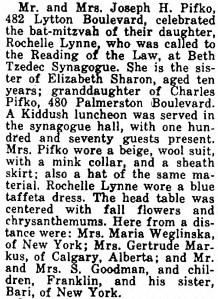
When my cousin Krysia and I first started searching for our Jewish roots, we barely knew where to start. Our Aunt Pat, a genealogist, had shared an impressive record of names, places, and even stories. Obsessive Internet searches yielded limited results–things like a notice in the Canadian Jewish Review from October 1963 that listed my grandmother’s sister Maria Weglinska among the out-of-town guests at Rochelle Pifko’s bat mitzvah in Toronto. Pifko/Piwko was my grandmother and her sister’s maiden name. But how were they related to these Canadian Pifkos?

1963CanadianJewishReviewBatMizvah

Notice in the Canadian Jewish Review on October 18, 1963 about Rochelle Pifko’s bat mitzvah.

How could we push beyond these tidbits? What more could we learn about our family?

Thanks to the Jewish Historical Institute (JHI, Żydowski Instytut Historyczny) in Warsaw we made some breakthroughs that have helped us piece together our family tree. Krysia’s husband Steve stopped in during a business trip to Warsaw and met Anna Przybyszewska-Drozd at the genealogical division of the JHI. She did a preliminary search on JewishGen, and found references to vital records of some of our ancestors. A few months later, Krysia and I went on our first roots trip to Poland. We still had no idea what we were doing so we stopped in at the JHI, meeting with Anna’s associate Aleksandra (Ola) Dybkowska-Grefkowicz who stayed after hours to help us with our search. She prefaced everything with her usual caution, “Don’t be disappointed if you don’t find anything” because so many records were destroyed and most Holocaust deaths were not recorded. Then, she showed us how to make use of the records in JewishGen and the databases of  the Polish National Archives, and suggested other places we could search for records.

I learned enough at that meeting to make some breakthroughs. I discovered my Zurich cousins through the Family Finder database on JewishGen, and shortly after my Israeli cousins through myHeritage.

On successive trips to Warsaw, Anna and Ola helped me learn more about my grandfather Jakob Rotblit. I was speaking with Ola about his automobile dealership in Gdansk when Anna walked in. A look of recognition flashed across her face; she pulled a book off the shelf about Jewish business owners in Gdansk between the World Wars. Sure enough, Jakob Rotblit was listed with information about his Ford dealership and with details about his wife and his parents. Another time, I mentioned that my mother and grandmother are on the list of Jewish survivors who registered after World War II ended. With a satisfied smile, Ola told me that the original registration cards are in the JHI archive. I walked upstairs to the archive and was able to hold those cards in my hand. The archivist showed me how the earliest records, from 1945, were handwritten on the backs of cut up prewar accounting records. Paper was scarce, so they used what they could find. By 1946, information was filled in on larger, pre-printed cards made especially for this purpose.

Once again, just a few months ago, the genealogical division helped me with my search. Anna e-mailed me that a woman, Ellen, had contacted her to find out about her Piwko ancestors. Anna thought we were related and asked if she could share my contact information with her. Of course I agreed, and since then Ellen and I have been in ongoing communication. She is an avid genealogist who turns out to be my 3rd cousin. Her great grandfather was my great grandfather Hiel Majer Piwko’s younger brother Urish. I knew nothing about him, maybe in part because he moved to Canada in the 1880s.

DSC00199

3rd Cousins in Krakow, Poland in June 2017

Ellen and I had the extraordinary good fortune to be in Poland at the same time this June. She was on a once in a lifetime Jewish history tour of Eastern Europe with Professor Stephen Berk. Although I didn’t know anything about her or her great grandfather, I had an inkling about her branch of the family from that notice I found years ago about my Auntie Nunia’s (Maria Weglinska) visit to Toronto in 1963. Rochelle Pifko, the girl whose bat mitzvah she attended, was Ellen’s cousin and another descendent of Urish. So another mystery is solved. Some contact was maintained between my great aunt and her uncle who migrated to Canada shortly after she was born. And when Nunia/Maria came to the US in the 1950s, she renewed that connection and even visited. Ellen remembers when Nunia came to Canada some years later for another family event.

← Older posts

Categories

  • Anthropology (37)
    • Archives (14)
    • Fieldwork (7)
    • Ground Penetrating Radar (GPR (4)
    • Research Methodology (8)
  • antisemitism (14)
  • Association of Descendants of Jewish Central Poland (32)
  • Catholicism (8)
  • Conference (1)
  • Discrimination (2)
  • Family (69)
    • Bereda (17)
    • Kolski (13)
    • Piwko (22)
    • Rotblit (3)
    • Walfisz (4)
    • Winawer (7)
  • Genealogy (11)
  • Heritage work (66)
    • Commemoration (23)
  • Identity (18)
  • Israel (6)
  • Jewish Culture (89)
    • Cemeteries (51)
    • Museum (7)
    • Synagogues (33)
  • Jewish immigrants (8)
  • Jewish Religion (1)
  • Memory (70)
  • Names (14)
  • Photographs (6)
  • Pifko-Winawer Circle (5)
  • Poland (125)
    • Baligród (1)
    • Bolimów (1)
    • Brześć Kujawski (5)
    • Buk (1)
    • Chodecz (1)
    • Dukla (2)
    • Dąbrowice (1)
    • Gdynia (1)
    • Gostynin (2)
    • Gąbin (1)
    • Izbica Kujawska (1)
    • Kazimierz (4)
    • Kowal (1)
    • Koło (1)
    • Krakow (7)
    • Krośniewice (1)
    • Kutno (6)
    • Kłodawa (1)
    • Lesko (8)
    • Leszno (1)
    • Lubień Kujawski (1)
    • Lubraniec (1)
    • Lutowiska (3)
    • Piła (3)
    • Podgórze (2)
    • Poznan (11)
    • Przemyśl (2)
    • Pzedecz (1)
    • Radom (1)
    • Radymno (1)
    • Sanok (1)
    • Skierniewice (5)
    • Sobota (2)
    • Tarnów (2)
    • Warsaw (22)
    • Wielkopolska (1)
    • Wronki (7)
    • Włocławek (20)
    • Zasław (2)
    • Łódź (1)
    • Żychlin (30)
  • Polish Culture (10)
  • Polish-Jewish Heritage (60)
  • Polish-Jewish relations (60)
  • Post-World War II (24)
  • Pre-World War II (22)
  • Reclaimed Property (1)
  • stereotypes (3)
  • Survival (9)
  • Trauma (3)
  • Uncategorized (5)
  • Victims and perpetrators (4)
  • World War II (45)
    • Jewish Ghetto (12)
    • Nazi Camps (5)
    • Polish Underground Army (3)
  • Yiddish (5)

Enter your email address to follow this blog and receive notifications of new posts by email. Your email address will not be shared.

Archives

  • October 2025 (1)
  • July 2025 (8)
  • June 2025 (1)
  • April 2025 (1)
  • August 2024 (3)
  • July 2024 (3)
  • May 2024 (2)
  • April 2024 (1)
  • May 2023 (2)
  • January 2023 (2)
  • December 2022 (7)
  • November 2022 (2)
  • October 2022 (5)
  • September 2022 (1)
  • January 2022 (1)
  • August 2021 (1)
  • December 2020 (2)
  • July 2020 (1)
  • May 2020 (3)
  • April 2020 (1)
  • March 2020 (1)
  • January 2020 (2)
  • May 2019 (1)
  • February 2019 (1)
  • November 2018 (1)
  • September 2018 (1)
  • August 2018 (3)
  • July 2018 (1)
  • June 2018 (1)
  • May 2018 (1)
  • April 2018 (2)
  • March 2018 (2)
  • February 2018 (2)
  • January 2018 (2)
  • December 2017 (2)
  • November 2017 (2)
  • October 2017 (1)
  • September 2017 (3)
  • August 2017 (3)
  • June 2017 (2)
  • May 2017 (3)
  • April 2017 (1)
  • March 2017 (2)
  • February 2017 (1)
  • January 2017 (2)
  • December 2016 (2)
  • November 2016 (4)
  • October 2016 (1)
  • September 2016 (6)
  • August 2016 (2)
  • July 2016 (1)
  • May 2016 (4)
  • April 2016 (2)
  • March 2016 (3)
  • February 2016 (4)
  • January 2016 (3)
  • December 2015 (3)
  • November 2015 (5)
  • October 2015 (5)
  • September 2015 (3)
  • August 2015 (4)
  • July 2015 (3)
  • June 2015 (3)
  • May 2015 (4)
  • April 2015 (9)
  • March 2015 (3)
  • February 2015 (2)
  • January 2015 (5)
  • December 2014 (4)
  • November 2014 (9)
  • October 2014 (2)
  • September 2014 (1)

Copyright Notice

All original text and images are copyright © Marysia Galbraith. Please contact the author before quoting.

Blog at WordPress.com.

  • Subscribe Subscribed
    • Uncovering Jewish Heritage
    • Join 145 other subscribers
    • Already have a WordPress.com account? Log in now.
    • Uncovering Jewish Heritage
    • Subscribe Subscribed
    • Sign up
    • Log in
    • Report this content
    • View site in Reader
    • Manage subscriptions
    • Collapse this bar
 

Loading Comments...