• About
  • The Photo that Started it All

Uncovering Jewish Heritage

Uncovering Jewish Heritage

Category Archives: World War II

Survival through luck and pluck

12 Thursday Feb 2015

Posted by Marysia Galbraith in Polish-Jewish Heritage, Survival, World War II

≈ 2 Comments

Tags

Embodiment, Eugene Bergman, False Papers, Memoir, Robert Melson, Survival Artist

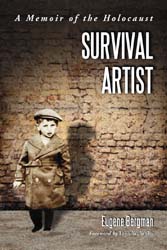
Survivial Artist by Eugene Bergman

Survivial Artist by Eugene Bergman

Today, I played mental hooky and finished Survival Artist: A Memoir of the Holocaust, written by Eugene Bergman (2009, McFarland). A Jew born in Poznan, he was nine years old when the war started in 1939. About surviving three ghettos—Łódź, Warsaw, and Częstochowa—and two years on the “Aryan side” he says, “I am not such a hotshot survival artist. If I have survived those sinister wartime years it was owing more to luck than to pluck” (p. 183). Still, to have survived at all, even after a German officer beat him with the butt of his rifle causing him to go deaf, required pluck as well as luck.

Every memoir helps reveal more facets of Jewish life (and death) in Poland. What stands out to me about this one is the way it shows the diversity of prewar Jewish culture, and the continued effects of those differences during the war. Poznan Jews generally had resources that helped them survive, particularly the fact that they were more integrated into Polish society; they were more secular, wore contemporary clothes and hairstyles, and spoke good Polish (or German). Bergman emphasizes his father’s business acumen, as well—a prewar fabric store owner, he supported the family by buying and selling whatever he could throughout the war. Further, he describes the family’s ability to “pass” through less tangible attitudes and behaviors. Instead of displaying fear in front of Germans (or Poles) they were bold, looking them in the eyes or ignoring them as the situation demanded.

This is interesting to me as a cultural anthropologist because they were able to embody the unmarked characteristics that tended to set non-Jews apart from Jews, and to shed the characteristics that made Jews targets. In many cases, these subtle cues were the only things that distinguished Jews and Catholic Poles. Bergman’s ability to embody that other identity is where I see his pluck. It reminds me of another fascinating memoir, Robert Melson’s False Papers: Deception and Survival in the Holocaust (2005, University of Illinois Press), also written by a child survivor on the Aryan side. Melson’s parents demonstrated “chutzpah and bravado” not only by taking on Catholic Polish identities, but also by claiming to belong to the noble Zamoyski family.

I was fortunate enough to meet Bob Melson when I was first embarking on this journey to uncover my own Jewish heritage. As a person, he stuck me as instantly familiar, as if he could have been my uncle. I think I was reading in him some of those same embodied ways of being I associate with my mom’s family–intellectual, refined, and Polish. But a particular kind of Polish. My family masked their Jewishness in a way that Melson hasn’t since the war ended, but I think what I recognized was a shared heritage, a particular version comprising both Jewish and Polish accents.
My brother’s thoughts during his first trip to Poland

22 Saturday Nov 2014

Posted by Marysia Galbraith in Bereda, Family, World War II

≈ 2 Comments

My brother Wiley wrote some other moving posts about our Mom’s experiences in Poland.

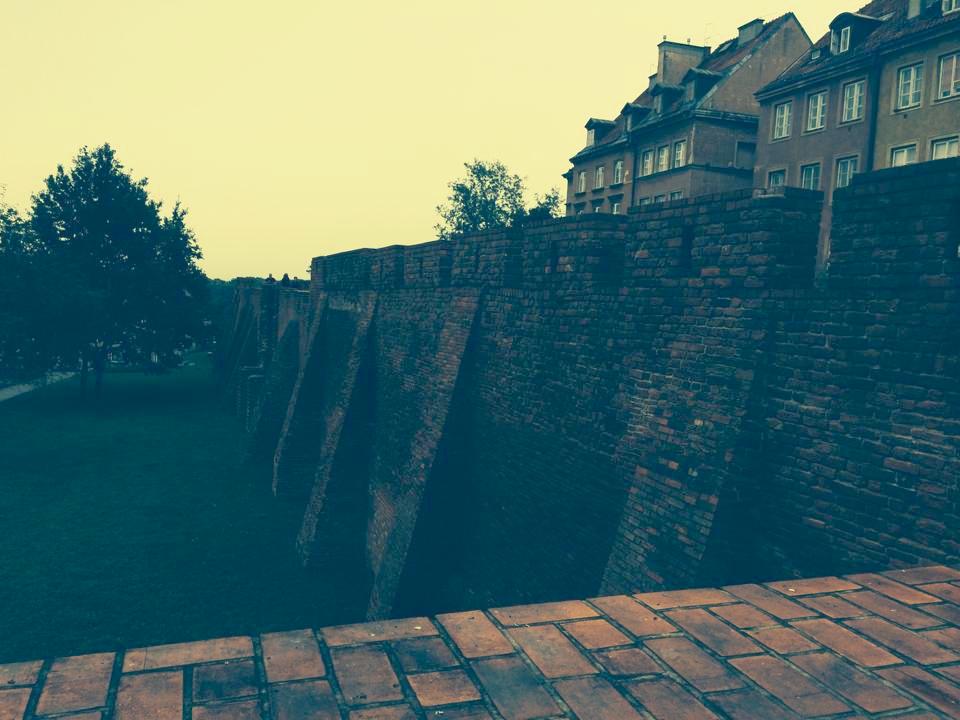
About Warsaw: “Growing up my Mom shared chilling accounts of her experience during WWII as a courier in the Polish Underground Army and a medic during the Polish uprising. The German response was to level Warsaw destroying / leveling over 85% of the city. My mom survived, not without physical injuries and she required over 22 plastic surgeries to piece her scull and face back together. She was forever changed by the war. She was always concerned about how her face looked. I never noticed anything wrong, she was just my mom. In retrospect she suffered from what today is called PTSD and I am convinced passed the trauma of war on to her four kids. Visiting Warsaw, seeing the images of the leveled city and walking through the Old City (that was rebuilt and recreated after the war), makes these memories and stories become very much more real.”

A fragment of the old wall surrounding Warsaw's Old City. All of it has been reconstructed.

A fragment of the old wall surrounding Warsaw’s Old City. All of it has been reconstructed.

About Dębinki, the estate Mom lived on as a child. It’s about an hour outside of Warsaw, near a town with the regrettable name Tłuszcz (Fat):

“Mom spoke to me about her Pony, yes like the Seinfeld episode, but mostly about the wonderful gardens, meadows and trees of her childhood. Visiting this estate located in a small town about an hour by train outside of Warsaw was a very emotional experience. The town is Tluszcz, and the estate is Debinki, please don’t ask me to say these words.

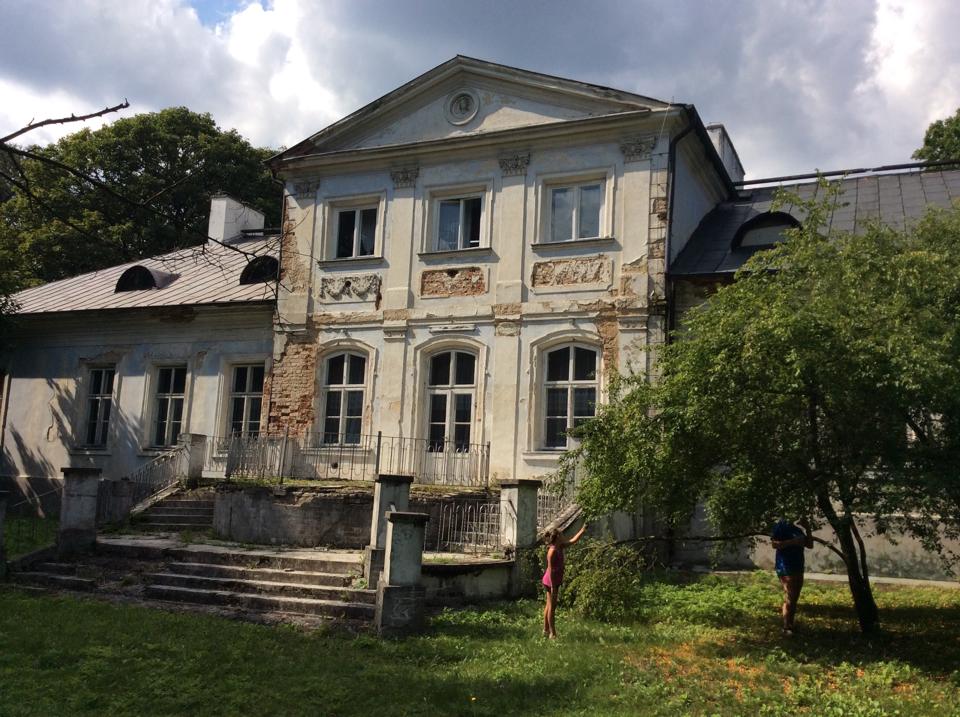
“The house was taken by the German’s during the war and did sustain some bomb damage. Never returned to its original state, it is currently used as an orphanage.

“Mom lived here from the age of six to 12 and than moved with her family to a villa in Warsaw along the Vistula river.

The villa was destroyed by German bombs during the war and today the land is a park and roadway.”

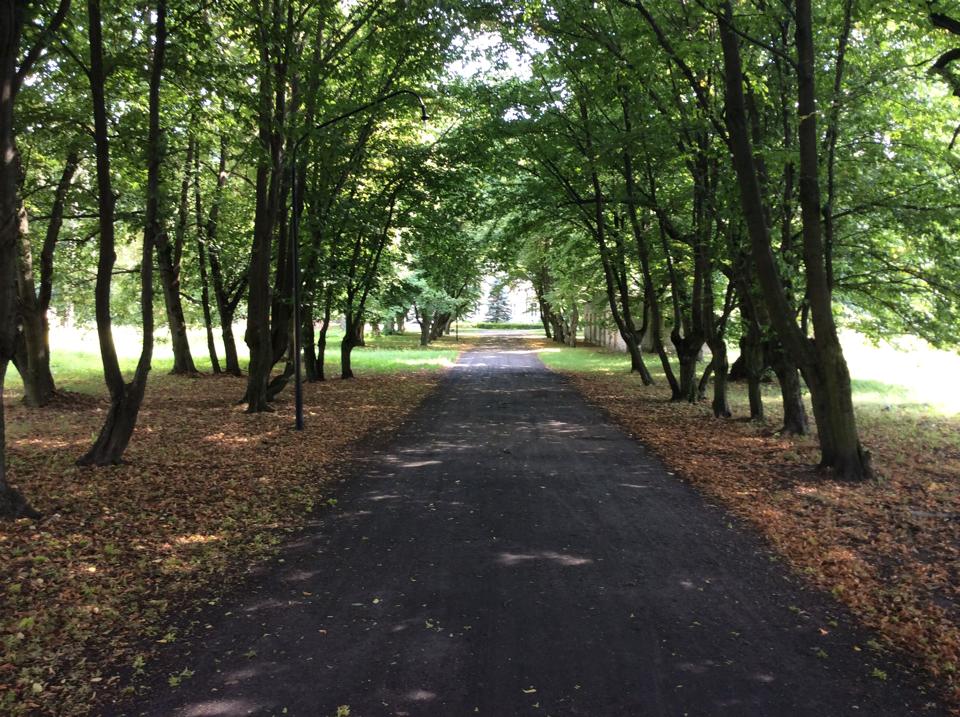
The drive from the road to Dębinki

The drive from the road to Dębinki

The front of Dębinki

The front of Dębinki

The back of Dębinki

The back of Dębinki

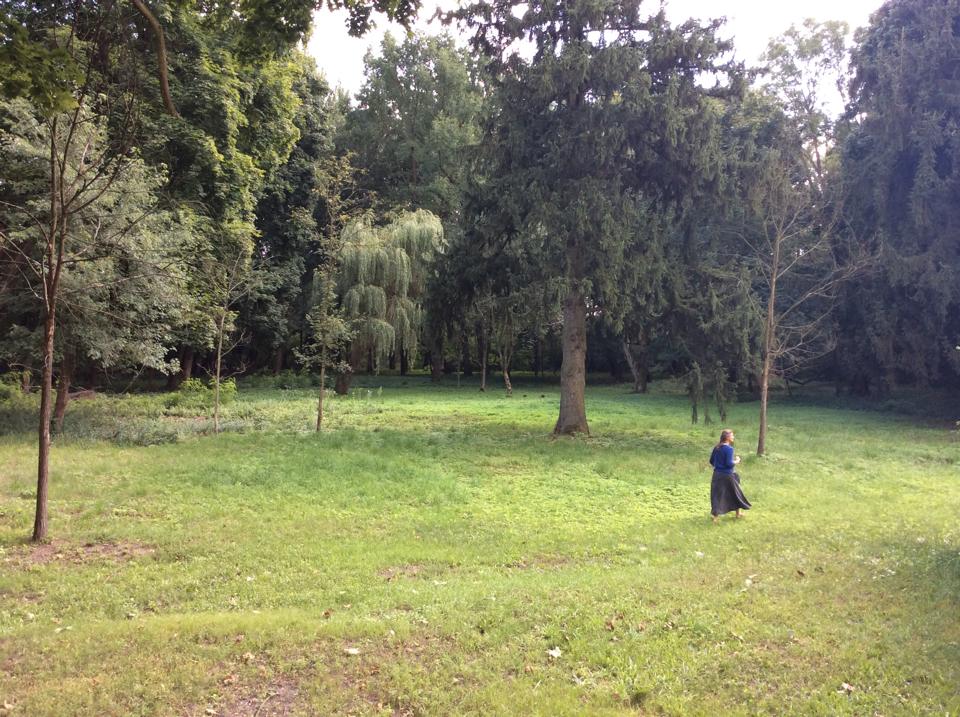
20140822Debinki5

That’s me walking in the back lawn, as we imagined our Mama would have as a child.

More about Lesko

22 Saturday Nov 2014

Posted by Marysia Galbraith in Heritage work, Lesko, Synagogues, World War II

≈ 8 Comments

While he was in Poland in August, my older brother Wiley had some valuable insights about Jewish heritage and about our family. This was his first time in Poland and his fresh perspective gave me a lot to think about.

This is what he posted on Facebook about Lesko:

“The largest structure in Lesko, Poland is a synagogue yet there are no Jews. Larger than the church. Not only are there no Jews there is no memory that there were any Jews. Let’s remember that 3,000 human beings, Jews, were murdered from this town, half the population, and there are those that care.”

The interior of the Lesko Synagogue. It is used as an art gallery. During my last trip to Lesko, I learned that the gallery is closed from fall to spring because the building has no heat.

The interior of the Lesko Synagogue.

201408LeskoSynagogueNames1

Inside the synagogue: List of 3000 residents of Lesko and surroundings murdered by Nazis during the years 1939-1944.

About this photo, my brother’s commented, “Someone took the time to list the names. Thank you.” About me he remarked, “Taking the time to read the names and remember.”

Today, the synagogue belongs to the county (gmina) and is used as an art gallery. Just this month, I learned that the gallery is closed from fall to spring because the building has no heat. The Dom Kultury (Community Center) which manages the building wants to apply for funds to renovate the synagogue. The most pressing problem is moisture issues. Water creeps through the old stone walls and plaster, weakening the structure and even damaging the art housed within it.

Only a few survived in Lesko

17 Monday Nov 2014

Posted by Marysia Galbraith in Lesko, Polish-Jewish relations, Survival, World War II

≈ 9 Comments

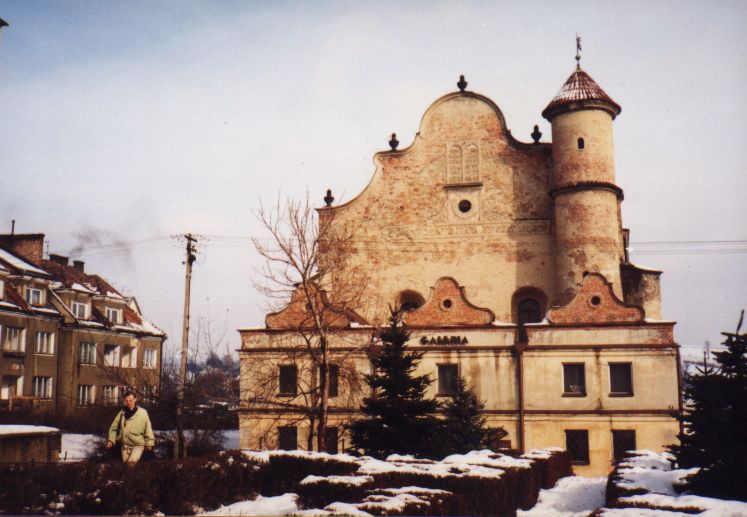
I have often remarked how the synagogue in Lesko is larger than the Catholic Church. It stands as a silent reminder of the prewar Jewish majority. Lesko is a small town of about 6000 residents on the edge of the Bieszczady Mountains in the southeast corner of Poland, and the site of my ethnographic fieldwork since 1992. The Bieszczady region was home to a multicultural population until the devastation of the mid-20th century turned it into Poland’s underpopulated, ethnically homogenous “wild east.” The Jews became victims of the Holocaust, while many Ukrainians and Poles escaped the German-Soviet front during the war. After the war most of the remaining Ukrainians were removed to the Soviet Union or the land acquired from Germany by the postwar Polish state, and Poles were resettled from across the Soviet border or emigrated voluntarily from overpopulated communities in western Poland.

Lesko Synagogue, 1992

Lesko Synagogue, 1992

While in Lesko last week, I asked some of my friends what they know about the town’s Jews—is there anyone who can tell me what happened before and during the war? Did any Jews survive? Are there any Jewish descendants left in the area? Ever since embarking on this investigation of Jews in Poland, I have wanted to find out why the topic of Jews has come up so rarely during my frequent visits to Lesko over the past twenty years. Sure, I was shown the synagogue and the Jewish Cemetery on my first tour of the town, and rarely, someone mentioned that certain buildings used to belong to Jews, but that’s where it ended. Unlike in Krakow, where having a Jewish ancestor became for some a badge of distinction, in Bieszczady no one ever mentioned their own or anyone else’s Jewish heritage. It simply was not talked about. Or maybe I never asked?

Based on my initial conversations last week, there is still a lot of reluctance to think about, let alone talk about Lesko’s Jews. But a few people gladly engaged with the topic.

First the reluctance. Often there is a pause, and then the response, “No, there is nobody left. Or at least they don’t admit it (nie przyznają się).” I got the same response in places like Lutowiska, which was over 60% Jewish before World War II. In Lutowiska, nearly all the contemporary residents have roots in other parts of Poland or in the former Soviet Union (borders were not fixed there until the 1950s), which might explain the general ignorance about the village’s history. Many of Lesko’s residents arrived after the war, but there is also a good number of autochthonous families who remain in the town.

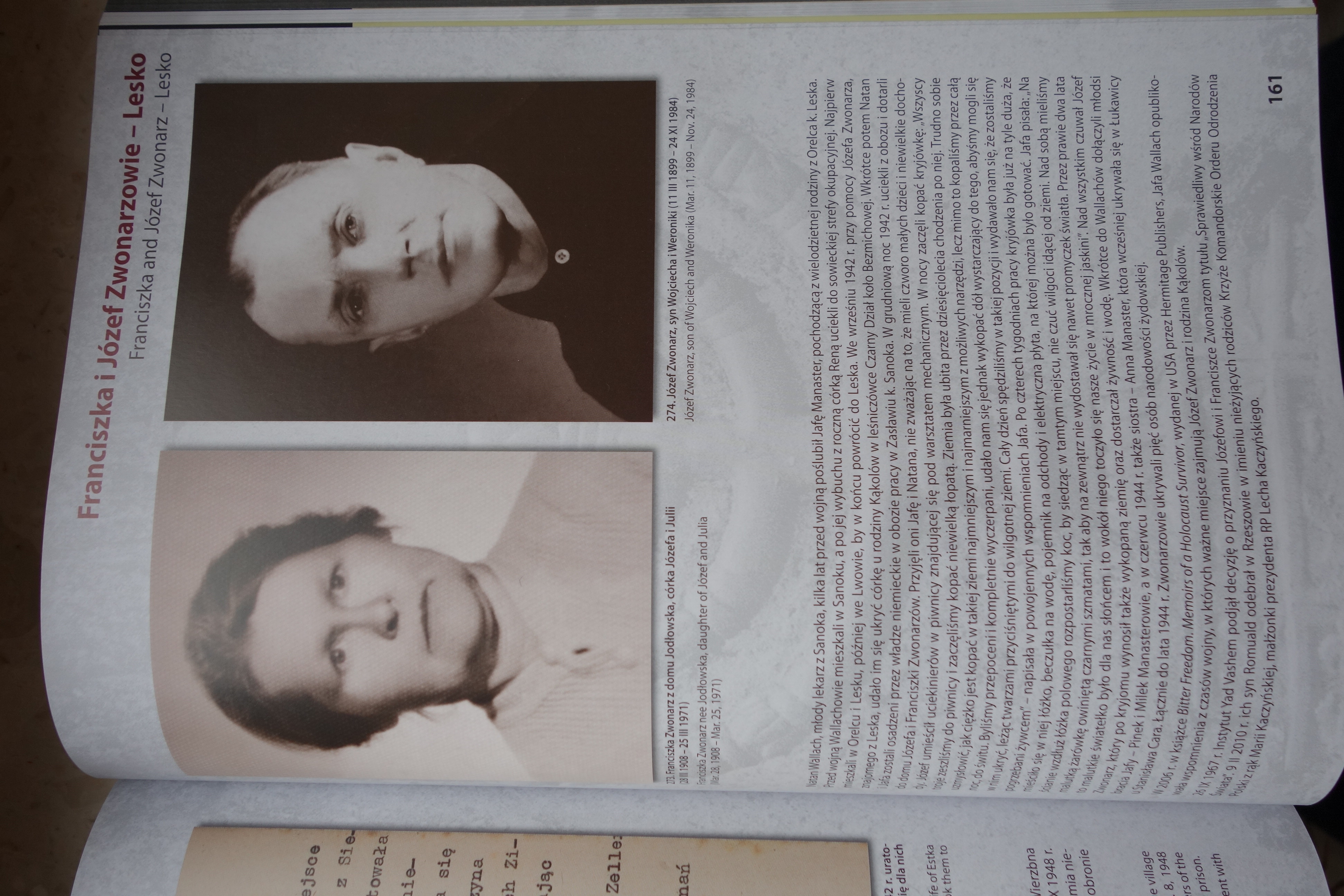
The one person several people suggested might be willing to talk to me was Romuald Zwonarz, whose father Józef saved the lives of several Jews by helping them hide from the Nazis for nearly two years. Fortunately, pan Romuald agreed to meet me. Over a long conversation, he told me his father’s story, mostly by sharing published accounts with me, annotated with marginal comments and sticky notes that correct errors and point out inconsistencies. He did not want to be recorded because he aspires toward a perfect historical record and is too painfully aware of the false starts and misremembered details that taint spoken language. Still, he is proud of what his father did.

DSC01915

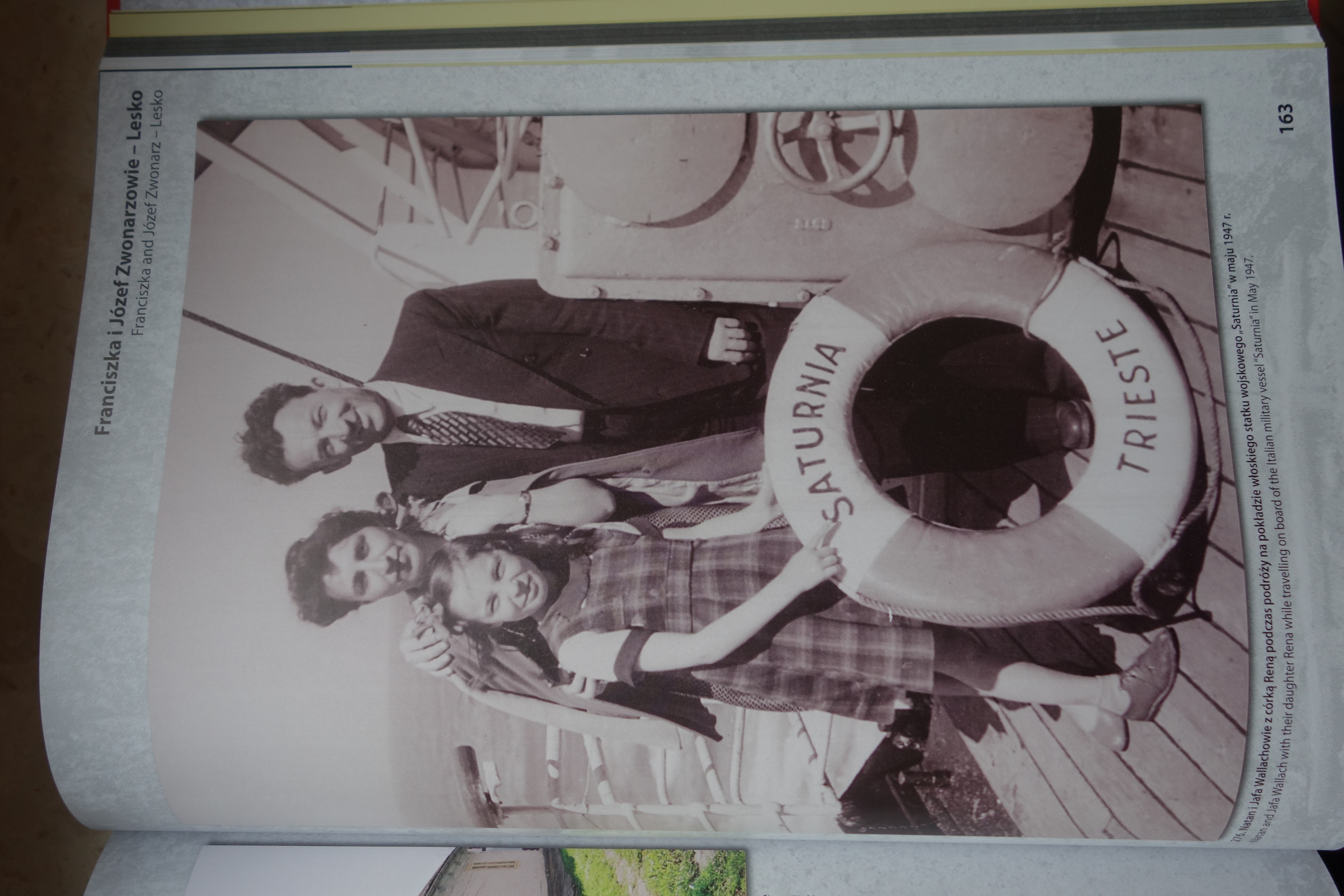
Rena, Jafa, and Natan Wallach 1947

DSC01912

Józef Zwonarz and his wife Franciszka

The story is told in rich detail in Bitter Freedom, written by one of the survivors, Jafa Wallach shortly after she settled in the United States. Jafa wrote it to her daughter Rena to explain their wartime experiences and why they left Rena with strangers from the age of four to six. It’s an amazing account of an awful story. Basically, Jafa along with her husband Natan, who was a doctor, her two brothers, and toward the very end her sister, all hid under Józef’s mechanic workshop in a crawl space they dug themselves. It had earthen walls and was barely tall enough to kneel in with your head against the ceiling. Even more extraordinarily, the workshop was situated between Gestapo headquarters and the Ukrainian police offices in the center of town. Józef worked long hours repairing the occupiers’ vehicles, and then would sneak water and food to the hidden Jews at night. He also helped to find a safe place for Rena with a forest guard in a remote hut several kilometers from Lesko. Józef was recognized in 1967 as one of the Righteous among Nations, though he could not receive his medal until 1980.

From Romuald and his family’s story, I learned there was a work camp for Jews across the river from Zagórz. Lesko’s Jews were taken there before being killed on the spot or at the concentration camp at Belzec. Jafa only knew of a few who survived in hiding or with false (Aryan) papers. Romuald mentioned a few more he is aware of. Out of 30,000 Jews in the region before the war, only eighty survivors gathered in nearby Sanok after it ended. Those who came out of hiding were not made to feel welcome. As Jafa explains, some asked them “What are you doing among the living?” while others just looked with expressions of indifference.

I count on it that on future visits, I will learn of other people who remember Lesko’s Jews and are willing to talk about them.

Żychlin, part 2

02 Sunday Nov 2014

Posted by Marysia Galbraith in Jewish Culture, World War II, Żychlin

≈ Leave a comment

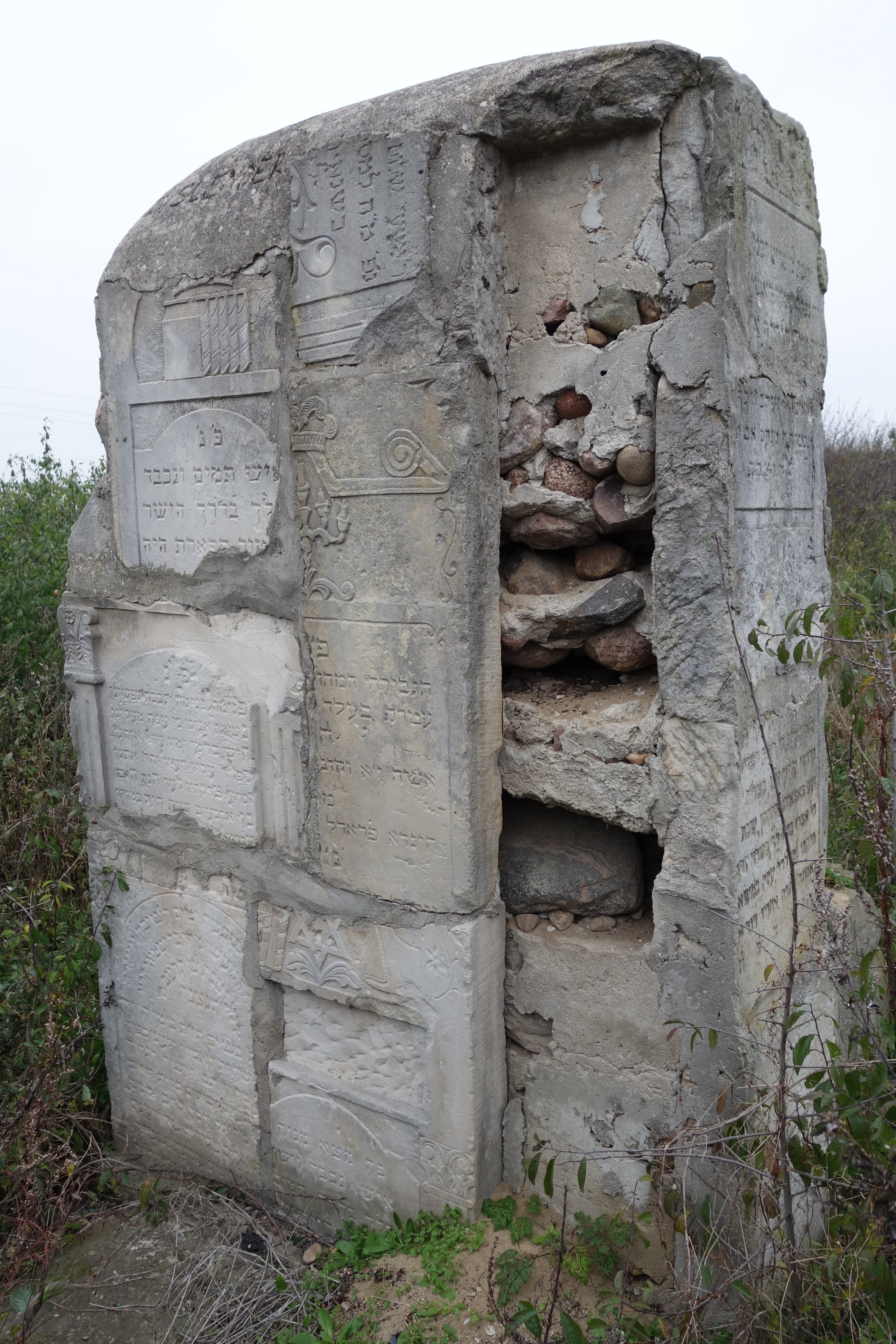
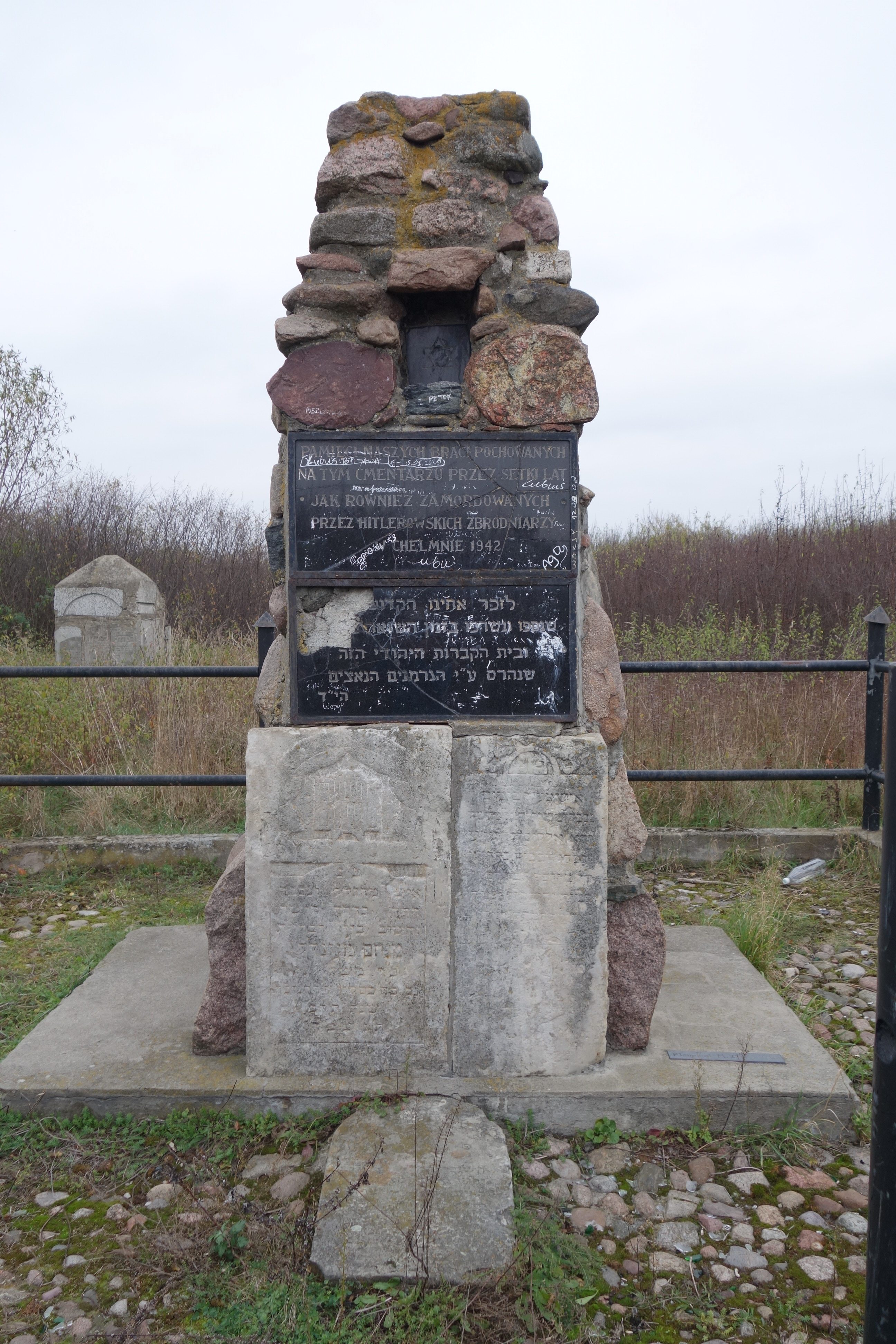
The Jewish cemetery is on a hillside on the outskirts of Żychlin, surrounded by a metal fence. The place is overgrown, though not too long ago someone cleared out some of the underbrush, leaving cut branches in piles. The tombstones were decimated during World War II. The remaining fragments were assembled into roughly formed monuments, which are disturbing for several reasons. For one, there are so few remnants relative to the size of the cemetery. Second, most are just pieces of the original stones. Third, the monuments have a haphazard quality. I wished for something better able to display the details of the remaining tombstones, and more visually compelling. Three such piles (I don’t really know what to call them) are near the entrance gate. A fourth is behind a monument with the inscription in Polish and Hebrew, “In memory of our brothers buried in this cemetery as well as for those murdered by Hitler’s criminals at Chełm [Concentration Camp] 1942.” The plaques are covered with graffiti—mostly peoples’ names, though “Wisła,” the name of a soccer team, is also inscribed. The only grave in what seems like its full form is that of a rabbi. The upright rectangular stone has a plaque inscribed in Hebrew, and domed stones cover the gravesite.

DSC01533

Monument made of fragments of tombstones

Commemorative monument

Commemorative monument

DSC01543

Grave of the tzadik Szmuel Abba, son of Zelig (sztetl.org.pl)

No one remembered for sure, but pani Agnieszka said she thinks a foundation paid for the renovation of the cemetery in the early 1990s. Later, pan Józef at the local government offices recalled the work was done during the first term of the postcommunist local government, which would put it about 22 years ago.

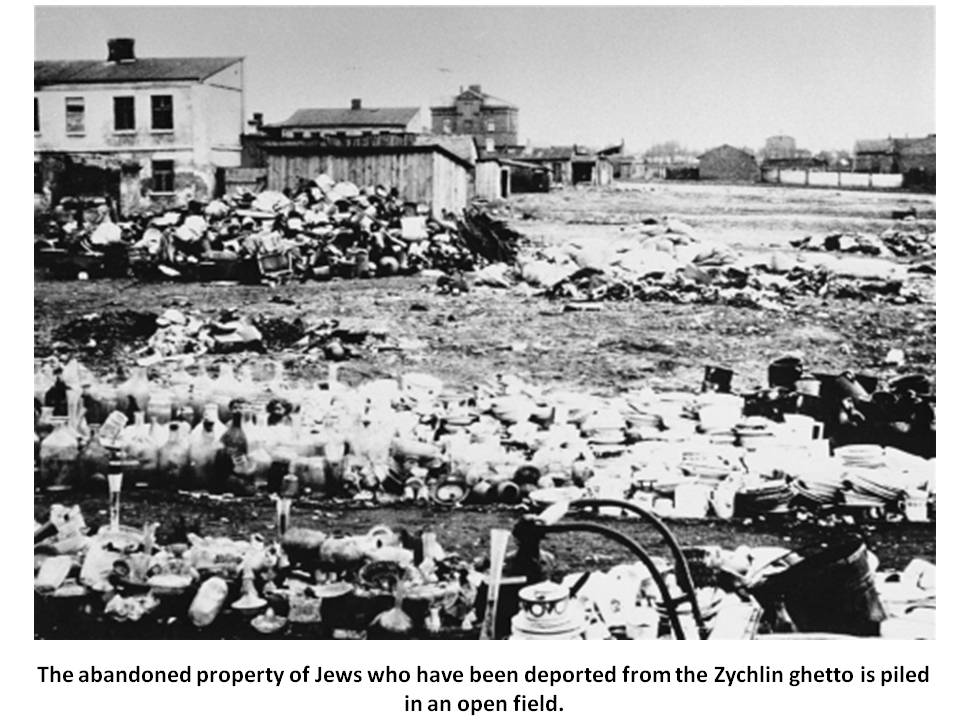
Other events directly associated with the destruction of Jewish life and lives occurred in Żychlin. Nazi occupiers marched 200 Jews to the cemetery and shot them. Pan Józef recalls his father and two other neighbors were awakened by the Nazis and told to dig graves for murdered Jews. There were also two Jewish ghettos in town. The smaller one was on the grounds of an old factory. A long, low workers’ residence (which remains occupied today) was also where Jews lived in the ghetto. The larger ghetto was nearer the center of town. One side of it ran along Budzyńska Street, which was the most common address for Jews in the early 20th century (see Tomasz Kawski, Gminy zydowskie pogranicza Wielkopolski Mazowsza i Pomorza w latach 1918-1942, 2007, pp. 270-77). Pan Henryk explained that the area used to contain smaller, older homes. All the Jews were moved to the area on one side of Budzińska Street, and all the Poles were moved to the area on the other side. Jews were only allowed to walk on the side of street that was in the ghetto. The Jews were removed in 1942 to death camps in other parts of Poland. All the buildings in the ghetto were burned. Pan Henryk gave me a photo of Jews’ possessions stacked in piles in a barren field that had been the ghetto, and a thriving neighborhood before that. In total about 4000 people lived in both ghettos. Most were from Żychlin, though some came from the surrounding area. No one returned after the war.

Slajd4

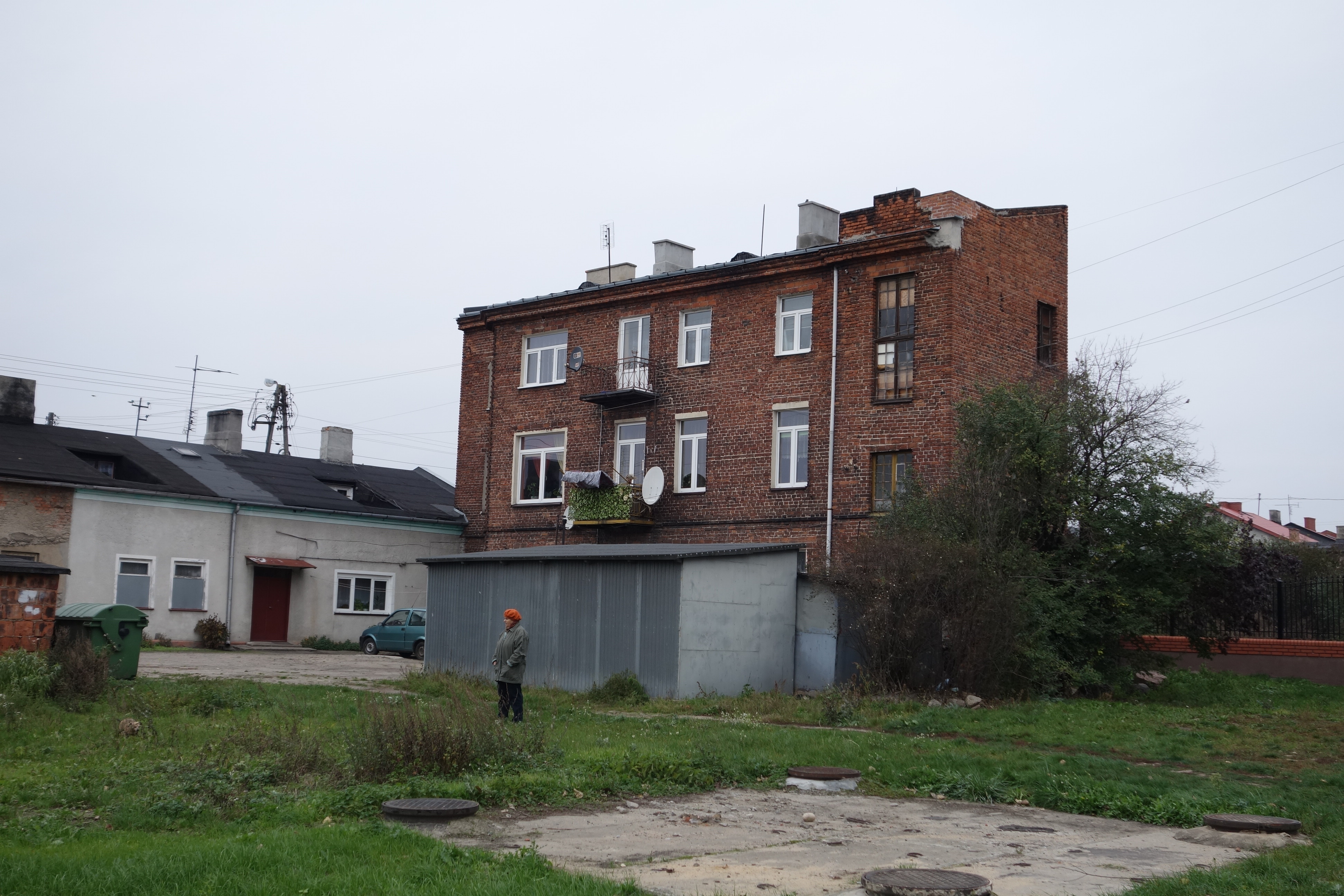
The former ghetto area is now filled with block apartments dating from the 1970s. Some older homes survived along Budzyńska Street. Pani Agnieszka pointed out typical characteristics of Jewish buildings. They tend to be shallow with windows on just the front and sides, and a flat windowless back as if the owners anticipated adding on another home that would share the back wall. She pointed out one house where after the war bedding and other valuables were found above a false ceiling in the attic. There was mention of other places where hidden treasures were found or where former residents returned to dig up the valuables they left behind, but the details were fuzzy. So maybe they really happened, though maybe they are stories built out of the stereotype of rich Jews.

A former Jewish home with characteristic flat back

A former Jewish home with characteristic flat back

Newer posts →

Categories

  • Anthropology (37)
    • Archives (14)
    • Fieldwork (7)
    • Ground Penetrating Radar (GPR (4)
    • Research Methodology (8)
  • antisemitism (14)
  • Association of Descendants of Jewish Central Poland (32)
  • Catholicism (8)
  • Conference (1)
  • Discrimination (2)
  • Family (69)
    • Bereda (17)
    • Kolski (13)
    • Piwko (22)
    • Rotblit (3)
    • Walfisz (4)
    • Winawer (7)
  • Genealogy (11)
  • Heritage work (66)
    • Commemoration (23)
  • Identity (18)
  • Israel (6)
  • Jewish Culture (89)
    • Cemeteries (51)
    • Museum (7)
    • Synagogues (33)
  • Jewish immigrants (8)
  • Jewish Religion (1)
  • Memory (70)
  • Names (14)
  • Photographs (6)
  • Pifko-Winawer Circle (5)
  • Poland (125)
    • Baligród (1)
    • Bolimów (1)
    • Brześć Kujawski (5)
    • Buk (1)
    • Chodecz (1)
    • Dukla (2)
    • Dąbrowice (1)
    • Gdynia (1)
    • Gostynin (2)
    • Gąbin (1)
    • Izbica Kujawska (1)
    • Kazimierz (4)
    • Kowal (1)
    • Koło (1)
    • Krakow (7)
    • Krośniewice (1)
    • Kutno (6)
    • Kłodawa (1)
    • Lesko (8)
    • Leszno (1)
    • Lubień Kujawski (1)
    • Lubraniec (1)
    • Lutowiska (3)
    • Piła (3)
    • Podgórze (2)
    • Poznan (11)
    • Przemyśl (2)
    • Pzedecz (1)
    • Radom (1)
    • Radymno (1)
    • Sanok (1)
    • Skierniewice (5)
    • Sobota (2)
    • Tarnów (2)
    • Warsaw (22)
    • Wielkopolska (1)
    • Wronki (7)
    • Włocławek (20)
    • Zasław (2)
    • Łódź (1)
    • Żychlin (30)
  • Polish Culture (10)
  • Polish-Jewish Heritage (60)
  • Polish-Jewish relations (60)
  • Post-World War II (24)
  • Pre-World War II (22)
  • Reclaimed Property (1)
  • stereotypes (3)
  • Survival (9)
  • Trauma (3)
  • Uncategorized (5)
  • Victims and perpetrators (4)
  • World War II (45)
    • Jewish Ghetto (12)
    • Nazi Camps (5)
    • Polish Underground Army (3)
  • Yiddish (5)

Enter your email address to follow this blog and receive notifications of new posts by email. Your email address will not be shared.

Archives

  • October 2025 (1)
  • July 2025 (8)
  • June 2025 (1)
  • April 2025 (1)
  • August 2024 (3)
  • July 2024 (3)
  • May 2024 (2)
  • April 2024 (1)
  • May 2023 (2)
  • January 2023 (2)
  • December 2022 (7)
  • November 2022 (2)
  • October 2022 (5)
  • September 2022 (1)
  • January 2022 (1)
  • August 2021 (1)
  • December 2020 (2)
  • July 2020 (1)
  • May 2020 (3)
  • April 2020 (1)
  • March 2020 (1)
  • January 2020 (2)
  • May 2019 (1)
  • February 2019 (1)
  • November 2018 (1)
  • September 2018 (1)
  • August 2018 (3)
  • July 2018 (1)
  • June 2018 (1)
  • May 2018 (1)
  • April 2018 (2)
  • March 2018 (2)
  • February 2018 (2)
  • January 2018 (2)
  • December 2017 (2)
  • November 2017 (2)
  • October 2017 (1)
  • September 2017 (3)
  • August 2017 (3)
  • June 2017 (2)
  • May 2017 (3)
  • April 2017 (1)
  • March 2017 (2)
  • February 2017 (1)
  • January 2017 (2)
  • December 2016 (2)
  • November 2016 (4)
  • October 2016 (1)
  • September 2016 (6)
  • August 2016 (2)
  • July 2016 (1)
  • May 2016 (4)
  • April 2016 (2)
  • March 2016 (3)
  • February 2016 (4)
  • January 2016 (3)
  • December 2015 (3)
  • November 2015 (5)
  • October 2015 (5)
  • September 2015 (3)
  • August 2015 (4)
  • July 2015 (3)
  • June 2015 (3)
  • May 2015 (4)
  • April 2015 (9)
  • March 2015 (3)
  • February 2015 (2)
  • January 2015 (5)
  • December 2014 (4)
  • November 2014 (9)
  • October 2014 (2)
  • September 2014 (1)

Copyright Notice

All original text and images are copyright © Marysia Galbraith. Please contact the author before quoting.

Blog at WordPress.com.

  • Subscribe Subscribed
    • Uncovering Jewish Heritage
    • Join 146 other subscribers
    • Already have a WordPress.com account? Log in now.
    • Uncovering Jewish Heritage
    • Subscribe Subscribed
    • Sign up
    • Log in
    • Report this content
    • View site in Reader
    • Manage subscriptions
    • Collapse this bar
 

Loading Comments...