• About
  • The Photo that Started it All

Uncovering Jewish Heritage

Uncovering Jewish Heritage

Category Archives: Post-World War II

Jewish Youth and Identity in Postwar France

30 Monday Nov 2015

Posted by Marysia Galbraith in Family, Identity, Post-World War II

≈ Leave a comment

Tags

Daniella Doron, France, Jewish Youth and Identity

My cousin’s book was just published by Indiana University Press: Jewish Youth and Identity in Postwar France: Rebuilding Family and Nation.

The book description:

“At the end of World War II, French Jews faced a devastating demographic reality: thousands of orphaned children, large numbers of single-parent households, and families in emotional and financial distress. Daniella Doron suggests that after years of occupation and collaboration, French Jews and non-Jews held contrary opinions about the future of the nation and the institution of the family. At the center of the disagreement was what was to become of the children. Doron traces emerging notions about the postwar family and its role in strengthening Jewish ethnicity and French republicanism in the shadow of Vichy and the Holocaust.”

9780253017413_med

Cover of Daniella Doron’s new book Jewish Youth and Identity in Postwar France

The author Daniella Doron and I share great-grandparents; her father’s mother was the sister of my mother’s mother. We started corresponding after I discovered her parents live twenty miles from where I grew up. It’s interesting how our scholarly interests have converged even though our family connection was broken until just a couple of years ago.

Babcia and her sister Rachel

16 Sunday Aug 2015

Posted by Marysia Galbraith in Bereda, Family, Kolski, Polish-Jewish relations, Post-World War II, Warsaw

≈ 3 Comments

Tags

Halina Piwko Bereda, Nelly Kolska Mochorowska, Rachel Piwko Kolski

There was one silence that drowned out any mention of a relative very close to us– my grandmother’s sister Rachel.

I grew up knowing Babcia (the Polish term for grandmother) came from a large family, though on the rare occasions this was mentioned, it remained unclear how many siblings she had. The number of siblings was fluid, probably in part because even simple quantitative questions like this often have no absolute answer. It depends on temporal factors–who was living at a given time–and also on who was counted. As best I can tell, my great grandmother Hinda gave birth to twelve children; two died in infancy, leaving ten; one more committed suicide as a teenager and another died in her early twenties during childbirth, leaving eight; The older siblings died before I was born–one in the 1920s, two more in the 1940s, and another probably in the second half of the 1930s. This left four sisters, two who lived into the 1960s, one who died in the 1980s, and my grandmother who died in 1993. From oldest to youngest these four were Sarah, Hanna, Rachel, and my babcia Halina.

My mom told me about Sarah (though we called her Lusia), and I knew Hanna (whom we called Nunia) well, but I don’t recall any mention of Rachel. This is despite the fact that she was the sister closest in age to my grandmother. I’m sure that part of the reason for this silence was that it would have been difficult to talk about her without revealing she lived in Israel, and that would have further revealed she and the rest of Babcia’s family were Jewish. Another reason I never heard about her may well be because Rachel passed away when I was just five or six years old. Still, I was only a few months old when Sarah died and yet I did know about her.

I just don’t know; I can only guess why no one told me about Rachel.

When I first started to learn about Babcia’s family, I thought that maybe there wasn’t any contact between Halina and Rachel, but the more I find, the clearer it is that relations were not cut off between them. In fact, the secret of our Jewish heritage was hiding in plain sight. No one denied it. They just refrained from talking to my generation about it.

It’s likely Babcia never had much to do with her oldest siblings. Liba was 22 years older and married with two children of her own before Babcia was born; Jakob was 20 years older and Abraham/Jon was 17 years older. Abraham and Efraim/Philip (12 years her senior) moved to the United States when Babcia was just ten years old. Sarah, though two years older than Philip, stayed in Poland until the 1930s so Babcia probably knew her better. Still, Philip visited Poland regularly; he seems to have valued family and worked to maintain relationships. He sponsored a steady stream of relatives to the US, including eventually Babcia and my mother.

I have found some fragments—bits of information and partial vignettes—confirming Rachel and Halina were in regular contact, and even came to each other’s assistance during and after World War II. Some traces suggest, however, that these two sisters may not have always seen eye to eye.

I remember being told that “Papa” (what my mother and my grandmother called Zygmunt Bereda, my grandmother’s second husband) saved a number of Jews during the war. It seems possible Rachel was one of them. She spent some time in the Warsaw ghetto. After her husband Pinkas Kolski died in 1940, she escaped with her youngest child Mirka and spent the rest of the war on the Aryan side under false papers. Papa had both the connections and the money to arrange such things. Stanley, Sarah’s son, credits Bereda with saving Jews including family members. Aunt Pat (the wife of Bereda’s son and namesake) told me last month that when Mirka came to the US in the late 1960s, she went out of her way to find Uncle Sig to thank him because his father (namely Zygmunt Bereda) saved her and her mother. I wonder if anyone else in the family knows this story. Did Rachel and Mirka tell their descendants anything about this? That would have meant acknowledging they had Catholic relatives; was there a mirrored silence about that among my Jewish relatives?

Immediately after the war, fortunes reversed. Babcia and Papa’s properties were mostly destroyed and they lived for a time with Rachel and the Mochorowskis. The Mochorowskis’ connection to the family is interesting. Rachel’s son Samek was murdered by Nazis in 1942. His widow Kornelia (Nelly) remarried an engineer named Czesław Mochorowski. Babcia, Papa, and Maria (my mother) are listed as residing at two addresses in 1945 “u Mochorowskich” which means “at the Mochorowskis’ [home].” One was on Lwowska Street in the Mokotów district which was not bombed because it was where the occupying Germans had lived; the other was across the river in the Praga district that was not severely damaged, either.

What led me to discover that Babcia lived with Rachel after the war was the electronic database of Warsaw ghetto survivors. But why were the Beredas (Halina, Maria, and Zygmunt) in this database? As far as I know, they never lived in the ghetto, and Zygmunt was never a Jew. Further, I was under the impression that Babcia and Mama had hid their Jewish roots for years before the war, and especially vigilantly during the war. Why would they report themselves as Jews after the war ended?

It’s a good thing the Jewish Historical Institute (ŻIH) in Warsaw keeps the original records. Even though they don’t answer the basic question why my family was listed at all, the original documents contain additional information about them, information that was not recorded in the digitized database. The archivists at ŻIH also explained to me that immediately after the war ended, all surviving European Jews were asked to register, not just those who had been in the Warsaw ghetto. Over 58,000 names were collected in Poland.

Paper was hard to come by right after the war, so the registry cards from 1945 are written on the backs of old business records (accounting information and the like) cut into small rectangles. By 1946, printed “information cards” had spaces for specific data, including name, age, residence before and after the war, profession, and means of survival. I will say more about these cards in a future blog post. The key point here is that Halina, Maria, and Zygmunt Bereda were listed at the same addresses as Rachel Kolska and Nelly Kolska (later Mochorowska). In other words, although Babcia’s father declared her dead after she married a Catholic (Bereda), Babcia and her sister Rachel were on good enough terms in 1945 to share an apartment.

A photo from my grandmother's papers of Mirka (Rachel's daughter), Rachel (Babcia's sister), Czesław Mochorowski, and Nelly. The boy who is standing is Bogdan, Rachel's grandson, the son of Samek and Nelly. I don't know who the man on the right or the boy at the very bottom are.

A photo from my grandmother’s papers of Mirka (Rachel’s daughter), Rachel (Babcia’s sister), Czesław Mochorowski, and Nelly. The boy who is standing is Bogdan, Rachel’s grandson, the son of Samek and Nelly. I don’t know who the man on the right or the boy at the very bottom are. This was probably taken in Warsaw right after the war ended.

I recently came across another document linking Babcia and Czesław Mochorowski. In a letter to George (Halina’s son and my mother’s brother), my grandmother included Mochorowski in a list of people he should visit on his trip to Poland. I don’t know the year this was written but There is no mention of visiting Nelly, so it was probably after her death in 1957. I believe George visited Poland in the early 1960s. Significantly, in the letter Babcia explained who Mochorowski was: “Samek was my sister’s son, he was murdered by the Germans and his wife, Nelly, married Czesław Mochorowski…but during/after the war/ we lived in the same apartment and he called me auntie and Papa uncle [she uses the diminutive form of uncle, wujaszek].”

While I was visiting Israel in February, a few of Rachel’s descendants told me an anecdote that may well point to ongoing correspondence between Halina and Rachel even after Rachel moved to Israel, but also some tensions. As the story goes, a sister of Rachel’s fell out of touch for three years after Rachel sent her a letter in which she had written on both sides of the paper. This was somehow offensive to the sister. The cousins said they weren’t sure which sister this was, but it definitely sounds like something Babcia might have done. She was the one who took pride in her gentility. Nunia, as far as I recall, was far less concerned with formality, and Sarah has been described to me as very sweet. Neither sounds like they would have taken offense over a point of etiquette.

But who knows? I can only assemble these fragments, and occasionally draw tentative lines between them. If Rachel was anything like my grandmother (and her descendants have indicated to me she was), she was a formidable individual with definite ideas about the world. It’s not hard to imagine that she and her sister, my grandmother, would have locked horns sometimes.
What happened to Tumska Street?

18 Saturday Apr 2015

Posted by Marysia Galbraith in Polish-Jewish Heritage, Post-World War II, Włocławek

≈ 1 Comment

My great grandparents lived the last years of their lives in Włocławek, a city on the Vistula downriver from Warsaw. I don’t know exactly when or why they moved there, but it was a city that experienced rapid industrialization and growth in the early 20th century. During this time the Jewish population grew to about 20% of the city’s residents. Tomasz Kawski, a professor in the nearby city of Bydgoszcz, has posted an extensive history of Włocławek’s Jews on virtual sztetl. He also showed me around the city in February.

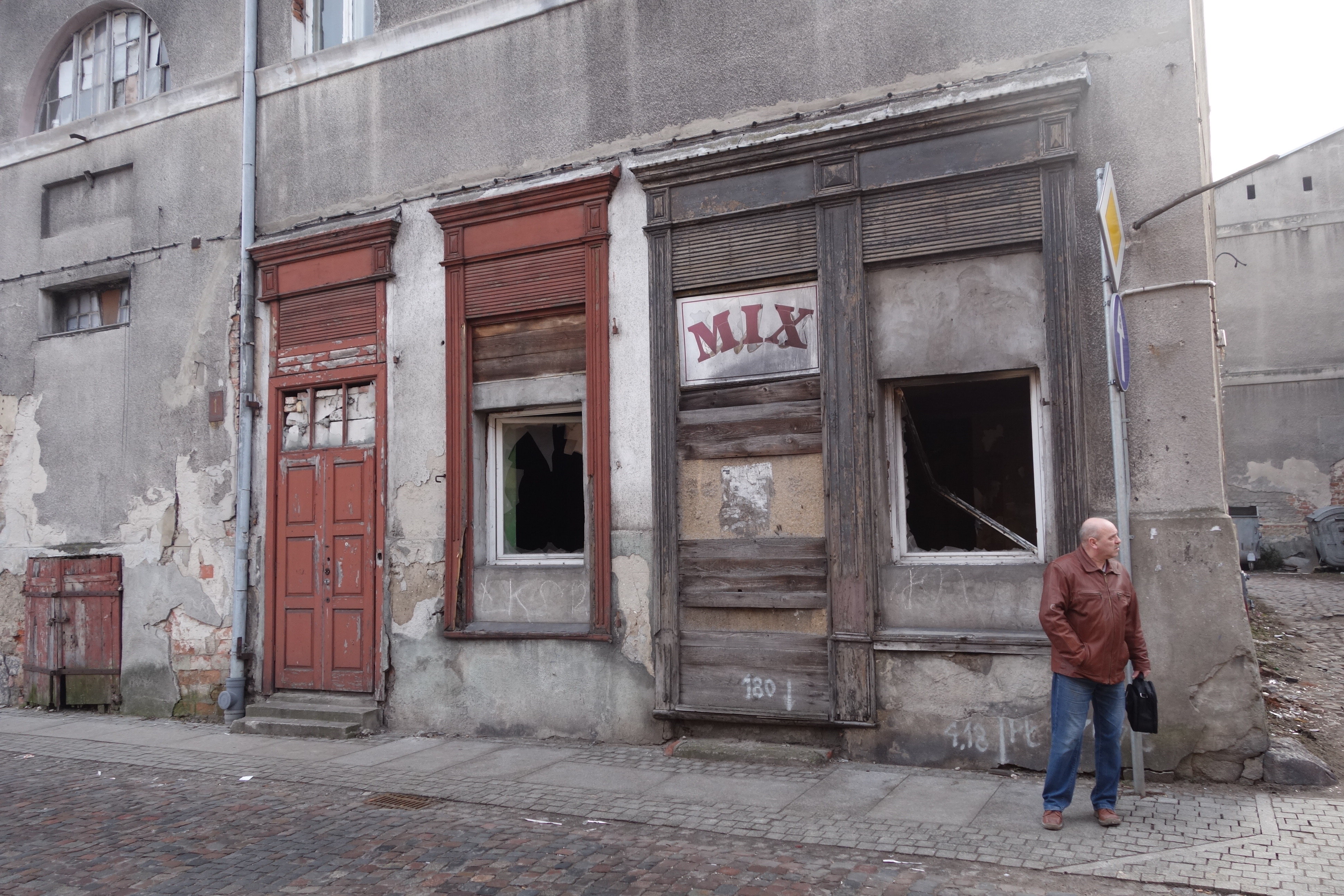
Historically, Jews concentrated around ten streets in the center of town, including Tumska Street which runs from the Old Rynek to the cathedral.[1] This is where Pinkus Kolski and his wife Rachel (my grandfather’s sister) lived and had their store. It was one of the central shopping streets in the city.

When I visited Pini in Israel (he, too is Pinchas like his grandfather, though he has changed his last name to Doron) he and his wife Pnina told me about visiting Włocławek in the 1990s. Here is a photo of Pnina, her mother, and daughter in front of 15 Tumska Street where Pini’s grandparents lived.

My cousins in front of Pinkus and Rachel Kolski's house on Tumska Street, Włocławek

My cousins in front of Pinkus and Rachel Kolski’s house on Tumska Street, Włocławek

And this is what Tumska Street looked like the week after I returned from Israel.DSC03544

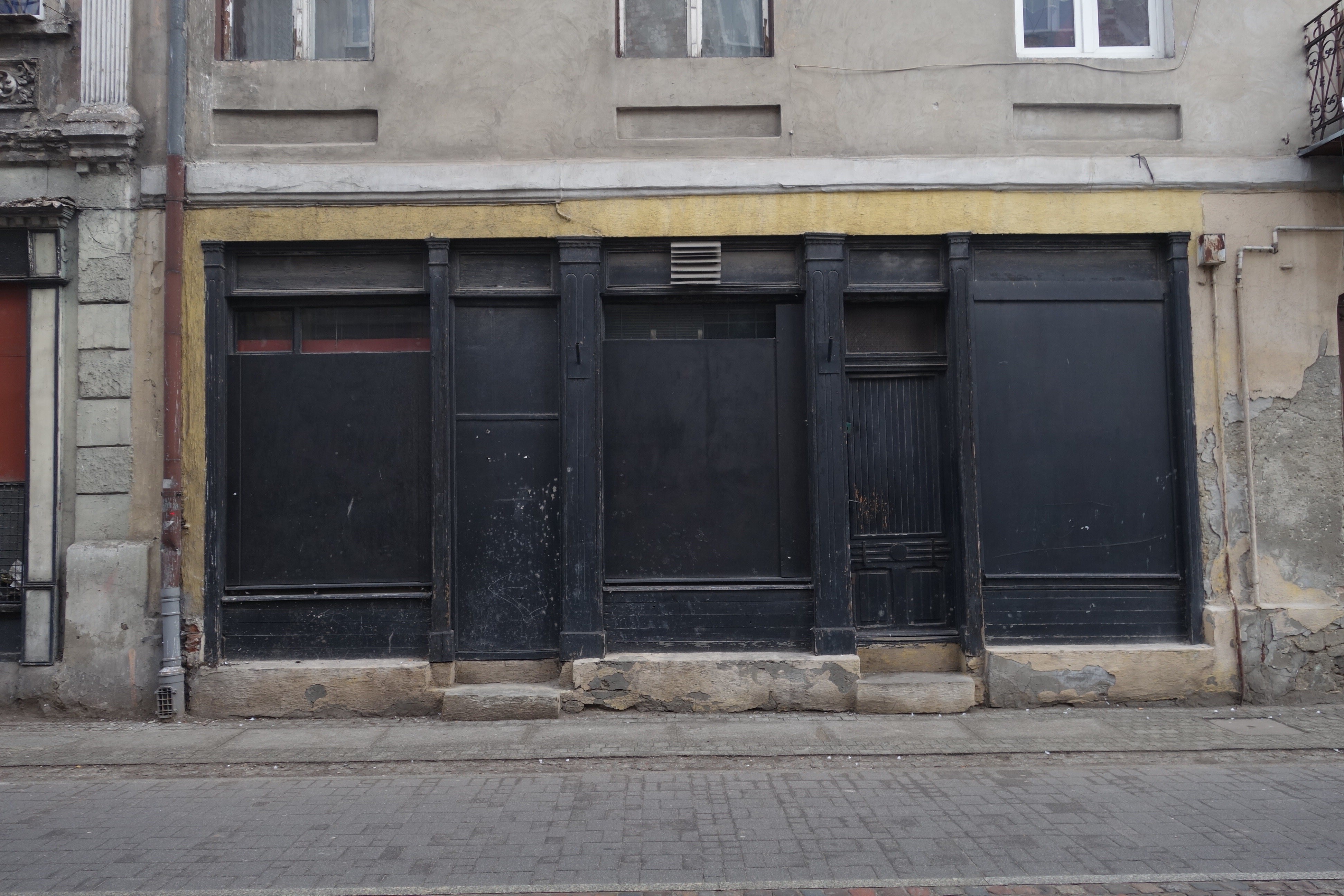
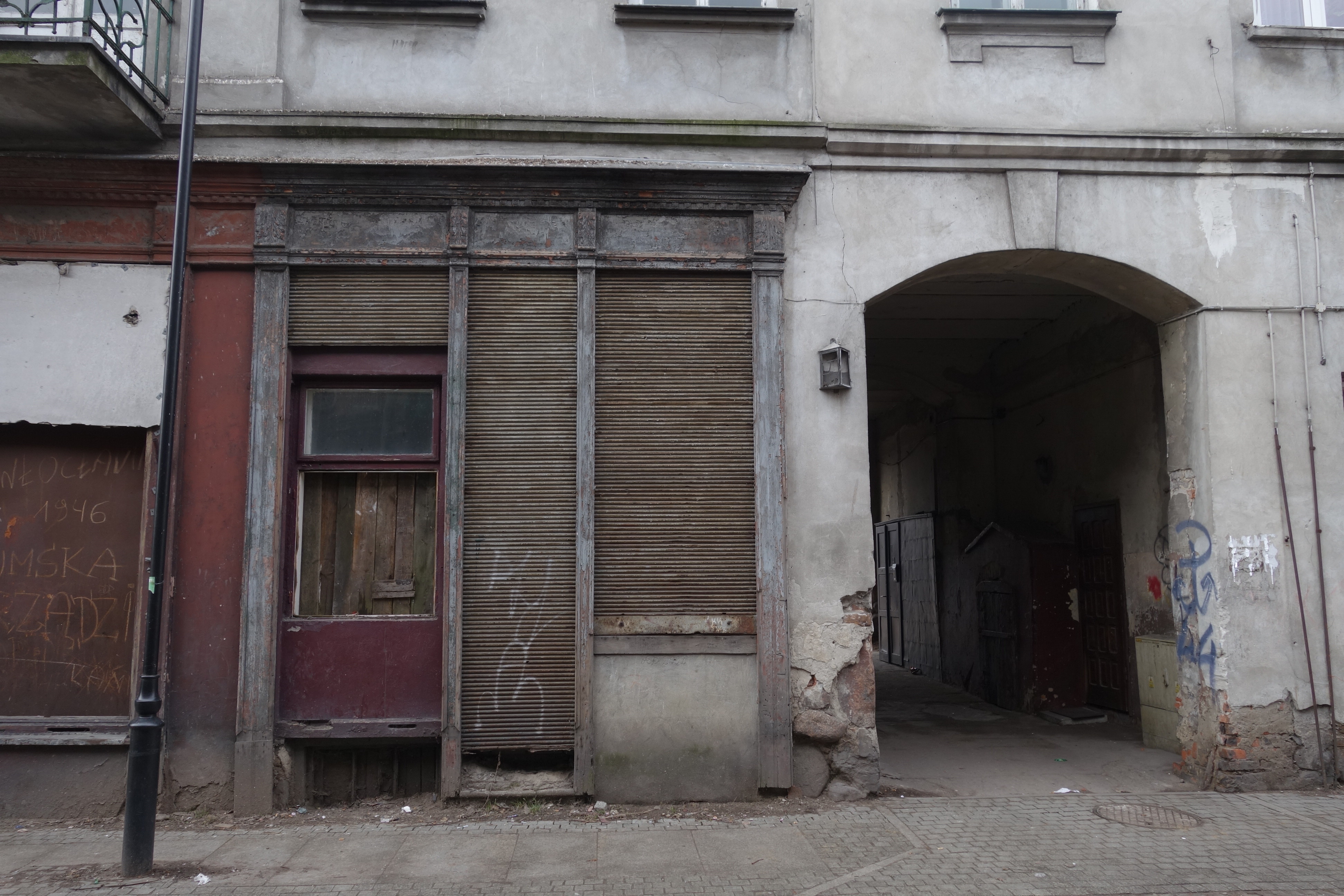
DSC03628Tumska Street is in total decay. Some of the abandoned storefronts have prewar wood paneling that hints at the street’s former glory.

DSC03617

DSC03614Other houses have collapsed into a pile of rubble. Number 15 is gone completely.

A wall stands where 15 Tumska Street used to be. The cathedral is in the background.

A wall stands where 15 Tumska Street used to be. The cathedral is in the background.

I asked a few people why this neighborhood is in such disrepair. I was told the whole city is struggling economically due to the closing of many industries since the fall of communism. About 20% of residents are unemployed. Even before then, residents were moving out of the center and into newer homes and apartments in the outskirts of the city. Also, most of the former Jewish properties were nationalized under communism. In recent years, laws have changed to allow former owners to reclaim their properties, so buildings whose ownership is uncertain or under dispute have been left alone. No one wants to invest in them and risk that someone with a valid claim over them might appear and take possession of them. In fact, communal, city-owned properties nearby are better cared for than those on Tumska Street.

[1] On Virtual Sztetl, Kawski writes, “Ten streets were inhabited by over 88% of the Włocławek Jews (Żabia Street – 6.5%, Kaliska St. – 7.5%, Piekarska St. – 10.1%, Tumska St. – 5.3%, Kościuszki St. – 4.3%, Plac Dąbrowskiego – 6.1%, 3 Maja St. –  26.3%, Łęgska St. –  6.4%, Cygancka St. – 8.4%, Królewiecka St. – 7.5%).”

Zygmunt Bereda’s death notice

12 Monday Jan 2015

Posted by Marysia Galbraith in Bereda, Family, Post-World War II

≈ 1 Comment

Tags

Zygmunt Bereda

Though not specifically related to Jewish heritage (since he was Catholic), here is the death notice of Zygmunt Bereda, my grandmother’s second husband and the stepfather with whom my mother grew up. I found a reference to it online, and then tracked down the issue of the newspaper at the library of Adam Mickiewicz University.

Zygmunt Bereda death notice, Życie Warszawy 14 October, 1945

Zygmunt Bereda death notice, Życie Warszawy 14 October, 1945

The text reads:

Zygmunt Bereda

Son of Szymon and Maria (maiden name Fijałkowska)

Industrialist, citizen of the capitol city of Warsaw, member of the main board of the Yacht Club of Poland, president of the Polish Association of Confectioners, president of the board of the firm L. Lourse

After brief suffering died on 10 October 1945 at the age of 58 years.

His wife, daughter, and two absent sons inform family and friends that the funeral service will be at the Powązki chapel on Monday the 15th at 11 in the morning, after which the body will be put to rest in the family grave.

I can only imagine what it must have been like to survive the war only to die months later like that. According to his death certificate, he died of a heart attack.

My grandmother would have been 51.  Their home and businesses were destroyed, and shortly thereafter, the postwar government nationalized what little of value remained.

I’ve been told that even then my mom did not want to leave Poland. She was emotionally fragile after all that had happened in the war, and also she did not want to desert her fatherland. As it became obvious that Poland would not be free, and that prewar elite and Home Army soldiers would be persecuted in the communist system, she finally relented. She and my grandmother joined my uncles in England at the end of 1946.

Newer posts →

Categories

  • Anthropology (37)
    • Archives (14)
    • Fieldwork (7)
    • Ground Penetrating Radar (GPR (4)
    • Research Methodology (8)
  • antisemitism (14)
  • Association of Descendants of Jewish Central Poland (32)
  • Catholicism (8)
  • Conference (1)
  • Discrimination (2)
  • Family (69)
    • Bereda (17)
    • Kolski (13)
    • Piwko (22)
    • Rotblit (3)
    • Walfisz (4)
    • Winawer (7)
  • Genealogy (11)
  • Heritage work (66)
    • Commemoration (23)
  • Identity (18)
  • Israel (6)
  • Jewish Culture (89)
    • Cemeteries (51)
    • Museum (7)
    • Synagogues (33)
  • Jewish immigrants (8)
  • Jewish Religion (1)
  • Memory (70)
  • Names (14)
  • Photographs (6)
  • Pifko-Winawer Circle (5)
  • Poland (125)
    • Baligród (1)
    • Bolimów (1)
    • Brześć Kujawski (5)
    • Buk (1)
    • Chodecz (1)
    • Dukla (2)
    • Dąbrowice (1)
    • Gdynia (1)
    • Gostynin (2)
    • Gąbin (1)
    • Izbica Kujawska (1)
    • Kazimierz (4)
    • Kowal (1)
    • Koło (1)
    • Krakow (7)
    • Krośniewice (1)
    • Kutno (6)
    • Kłodawa (1)
    • Lesko (8)
    • Leszno (1)
    • Lubień Kujawski (1)
    • Lubraniec (1)
    • Lutowiska (3)
    • Piła (3)
    • Podgórze (2)
    • Poznan (11)
    • Przemyśl (2)
    • Pzedecz (1)
    • Radom (1)
    • Radymno (1)
    • Sanok (1)
    • Skierniewice (5)
    • Sobota (2)
    • Tarnów (2)
    • Warsaw (22)
    • Wielkopolska (1)
    • Wronki (7)
    • Włocławek (20)
    • Zasław (2)
    • Łódź (1)
    • Żychlin (30)
  • Polish Culture (10)
  • Polish-Jewish Heritage (60)
  • Polish-Jewish relations (60)
  • Post-World War II (24)
  • Pre-World War II (22)
  • Reclaimed Property (1)
  • stereotypes (3)
  • Survival (9)
  • Trauma (3)
  • Uncategorized (5)
  • Victims and perpetrators (4)
  • World War II (45)
    • Jewish Ghetto (12)
    • Nazi Camps (5)
    • Polish Underground Army (3)
  • Yiddish (5)

Enter your email address to follow this blog and receive notifications of new posts by email. Your email address will not be shared.

Archives

  • October 2025 (1)
  • July 2025 (8)
  • June 2025 (1)
  • April 2025 (1)
  • August 2024 (3)
  • July 2024 (3)
  • May 2024 (2)
  • April 2024 (1)
  • May 2023 (2)
  • January 2023 (2)
  • December 2022 (7)
  • November 2022 (2)
  • October 2022 (5)
  • September 2022 (1)
  • January 2022 (1)
  • August 2021 (1)
  • December 2020 (2)
  • July 2020 (1)
  • May 2020 (3)
  • April 2020 (1)
  • March 2020 (1)
  • January 2020 (2)
  • May 2019 (1)
  • February 2019 (1)
  • November 2018 (1)
  • September 2018 (1)
  • August 2018 (3)
  • July 2018 (1)
  • June 2018 (1)
  • May 2018 (1)
  • April 2018 (2)
  • March 2018 (2)
  • February 2018 (2)
  • January 2018 (2)
  • December 2017 (2)
  • November 2017 (2)
  • October 2017 (1)
  • September 2017 (3)
  • August 2017 (3)
  • June 2017 (2)
  • May 2017 (3)
  • April 2017 (1)
  • March 2017 (2)
  • February 2017 (1)
  • January 2017 (2)
  • December 2016 (2)
  • November 2016 (4)
  • October 2016 (1)
  • September 2016 (6)
  • August 2016 (2)
  • July 2016 (1)
  • May 2016 (4)
  • April 2016 (2)
  • March 2016 (3)
  • February 2016 (4)
  • January 2016 (3)
  • December 2015 (3)
  • November 2015 (5)
  • October 2015 (5)
  • September 2015 (3)
  • August 2015 (4)
  • July 2015 (3)
  • June 2015 (3)
  • May 2015 (4)
  • April 2015 (9)
  • March 2015 (3)
  • February 2015 (2)
  • January 2015 (5)
  • December 2014 (4)
  • November 2014 (9)
  • October 2014 (2)
  • September 2014 (1)

Copyright Notice

All original text and images are copyright © Marysia Galbraith. Please contact the author before quoting.

Blog at WordPress.com.

  • Subscribe Subscribed
    • Uncovering Jewish Heritage
    • Join 145 other subscribers
    • Already have a WordPress.com account? Log in now.
    • Uncovering Jewish Heritage
    • Subscribe Subscribed
    • Sign up
    • Log in
    • Report this content
    • View site in Reader
    • Manage subscriptions
    • Collapse this bar
 

Loading Comments...