• About
  • The Photo that Started it All

Uncovering Jewish Heritage

Uncovering Jewish Heritage

Category Archives: Żychlin

The Żychlin Cemetery Begins to Reveal its Secrets

14 Sunday Jul 2024

Posted by Marysia Galbraith in Association of Descendants of Jewish Central Poland, Cemeteries, Heritage work, Memory, Polish-Jewish Heritage, Polish-Jewish relations, Victims and perpetrators, Żychlin

≈ 2 Comments

Tags

ADJCP, Mass grave, Matzevah Foundation, Żychlin Historia

Our last two days in Żychlin highlight the importance of presence. If we hadn’t stayed here several days, we probably wouldn’t have learned everything we did. As we cleared more of the stubborn blackthorn bushes, the cemetery revealed more secrets. After seeing the progress we were making, the inhabitants of Żychlin opened up to us, too.

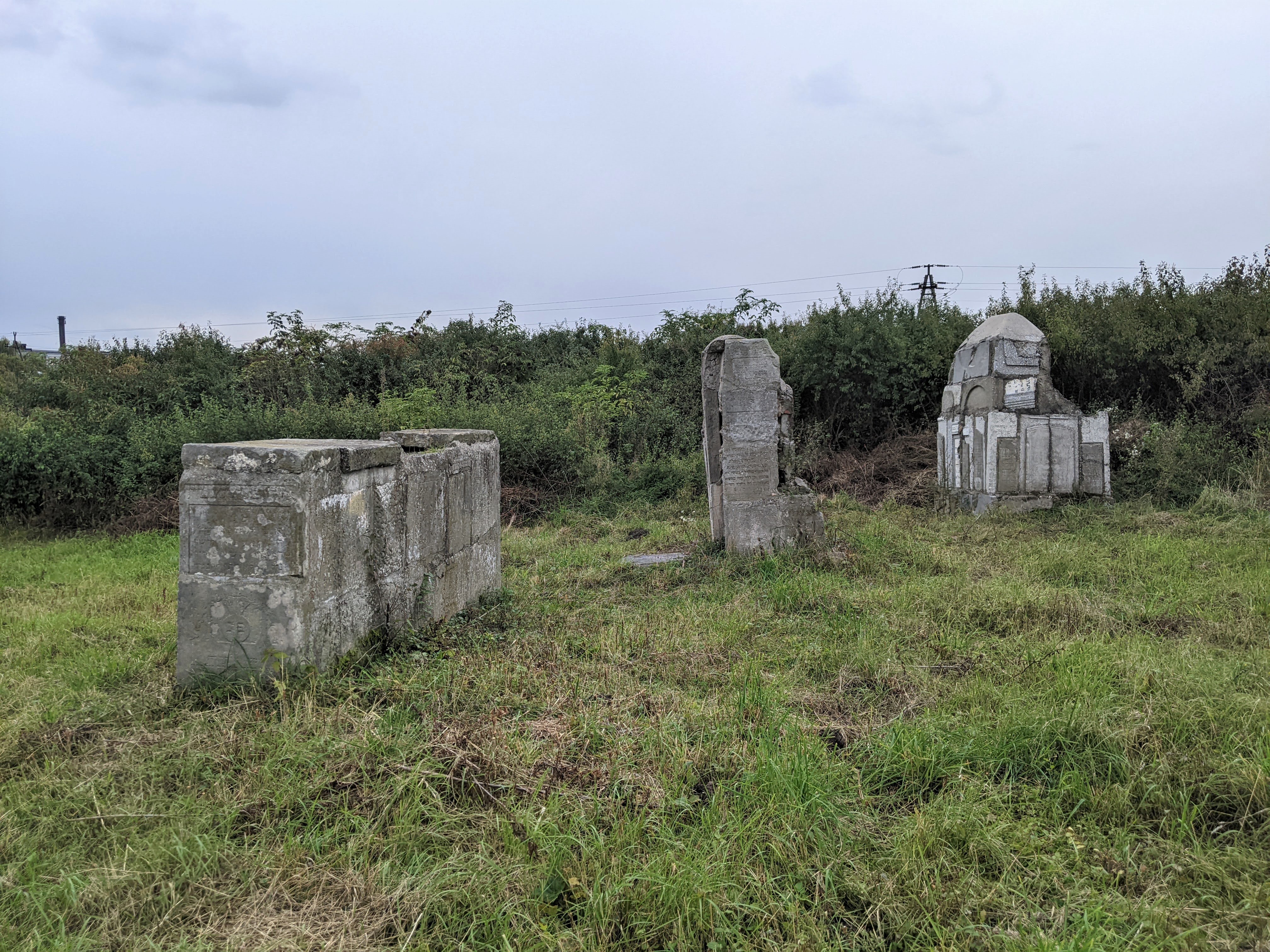
Agnieszka Olszewska, a local amateur historian, leads us through brush and brambles to the site of a collective grave (note the back of the rusted sign barely visible at top left). Could these boulders be the remains of a memorial stone?

How would you respond if a group of foreigners come into your town and started weed whacking a cemetery? My guess is most of us would just watch from a distance, curious and a bit suspicious.

By Wednesday, people started telling us stories they pulled out of the depths of their memory. Others claimed ignorance about the town’s Jewish history, but the more we engaged in conversation, the clearer it was they knew more than they had initially let on.

ADJCP member David Goren, whose ancestors came from Żychlin, accompanied me to ask some of the neighbors about the cemetery. We collected important testimony that will help us bring Jewish memory back in this community.

Żychlin descendant David Goren with our tireless Polish partner Bożena Gajewska. After a physically demanding day of weed whacking she went home and baked us raisin and date pastries

The Wujcikowskis live across the street from the cemetery. They had already shown us kindness, letting all the volunteers use their bathroom. David had noticed historical photos in their flower shop suggesting they had lived there a long time. In fact, the large property and house have been in the family since before the war. When Katarzyna (Kasia) didn’t know the answers to our questions, she escorted us to her parents Henryka (Henia) and Grzegorz Wujcikowski who came out of the farm building next to the flower shop. They greeted us warmly. Though they weren’t sure they could help us find old photographs of the cemetery, Grzegorz shared his family history with us. The property originally belonged to Grzegorz’s father’s uncle. Because it was one of the finest houses in town, some of the occupying Gestapo moved in and fenced the land to raise horses. Grzegorz’s aunt and uncle weren’t forced to leave, instead sharing the three-story house with the Germans. After the war, Grzegorz’s parents joined their aunt and uncle, who had no children of their own, and eventually became the owners of the property.

Grzegorz was born after the war. He knew Moshe Zyslander, a Holocaust survivor from Żychlin who emigrated to Israel. In 1989, Zyslander led the initiative to build the memorial monuments in the Jewish cemetery, as well as the surrounding gate and fence. When the Wujcikowskis learned about Zyslander’s plans, they returned the tombstone fragments that the Germans had taken from the cemetery to build a pig sty, the same farm building where Grzegorz and Henia had been working when we arrived. The stones removed from its walls make up the bulk of the 50 tombstone fragments embedded in concrete mounds in the cemetery. Whenever Zyslander returned to visit the cemetery, he would stop by the Wujcikowski’s for a visit.

The Wujcikowskis showed kindness to Jewish descendants in the past and continue to do so today.

Descendants Marysia, Liana, and David took our student volunteers out for ice cream. They were a great help, painting the gate and clearing brush. They didn’t seem to know a lot about the Jewish history of Żychlin but seemed interested in learning more

I’ve been very concerned about properly marking and memorializing the mass graves in the cemetery. Reports in the archive of the National Institute of Memory document the shooting of 200 people in 1942. Other sources indicate that when the ghetto was liquidated, the infirm were shot on the spot rather than being transported to the Chełmno death camp. For the site to be designated officially, it’s important to obtain testimony from witnesses. We were able to talk to two people who were not witnesses themselves but were told about the murders by a close relative who saw what happened.

We spoke with the neighbor next door to the cemetery the day before we started our work. She confirmed she knew we were coming; the city had informed her. She showed us where the city had dropped off a dumpster for the brush we cleared. A big goat was chained up outside the cemetery along the dirt drive leading from the road. “We put her there to eat the grass, so the drive is passable,” she explained.

Over the next two days, she and her son were in and out of their yard feeding their fowl, doing their farm work, and keeping a covert eye on us. As we cleaned up on our third day of work, David and I approached their fence to invite them to the memorial service we planned for the next afternoon. Mrs. Anna came over with her son Marcin and grandchildren Marceli and Lena. Anna has observed the comings and goings at the cemetery since she married over 40 years ago. Her husband, who grew up in the house, did so even longer, until his death in February.

Anna remembers how nice the cemetery looked when she first married. People used the space as a kind of commons; they walked their dogs or sunbathed, and her son played soccer with his friends. On holidays (the Catholic holidays like All Saint’s Day), the family would light a candle lantern at the monuments in remembrance of the dead.

As the cemetery became overgrown, people started going there to drink, play music, and get into other kinds of trouble. Anna’s husband would chase them out, threatening to call the police. She understands people sometimes want to get together and drink, but why destroy a cemetery? Why walk their dogs there? The last time she was at the Catholic cemetery where her husband is buried, people were walking their dog there, too. It isn’t right. She doesn’t understand why people would destroy monuments, either. Why? They should respect them. Although she sometimes contradicted herself, her overall orientation towards us and the cemetery was benevolent. It also suggests a growing recognition that the Jewish cemetery is a sacred space.

Then, Anna confided something that might help us get the mass grave demarcated: a personal account of the crime, albeit second-hand.

When her father was a young boy, about the age her 9-year-old grandson is now, he walked across the fields to see what was happening at the cemetery. He witnessed Jews being shot, their bodies falling into a trench. He was so frightened he peed in his pants and ran home to his mother.

Looking out across the field from what is probably the site of a mass grave in the cemetery. This view probably looked pretty much the same over 80 years ago when Anna’s father ran across the field after witnessing the murders

Henryk Olszewski is a local amateur historian whom I have known for ten years. He had a stroke two years ago and has been slowly recovering. He manages the website and Facebook page Żychlin Historia with his wife Agnieszka. He has an unconventional way of presenting information and sometimes his posts perpetuate stereotypes about Jews and Polish-Jewish relations, but he’s a dogged researcher.

Agnieszka visited us at the cemetery with photos she and Henryk took in 2019 of a rusty sign; though the white lettering has faded, enough remains to make out “Wspólny Grób zamordowanych w czasie okupacji przez Hitlerowców” (“Collective Grave of those murdered during the Nazi occupation”). She, David, and I walked around the back of the cemetery, and after a few false turns, we found an entrance to a clearing where the back of the sign was visible. We also found some large boulders. Could they be fragments of a commemorative stone? We asked a few people why there are places in and around the cemetery that are less overgrown or even barren of vegetation. One possibility could be that the lye spread over mass graves made the soil infertile.
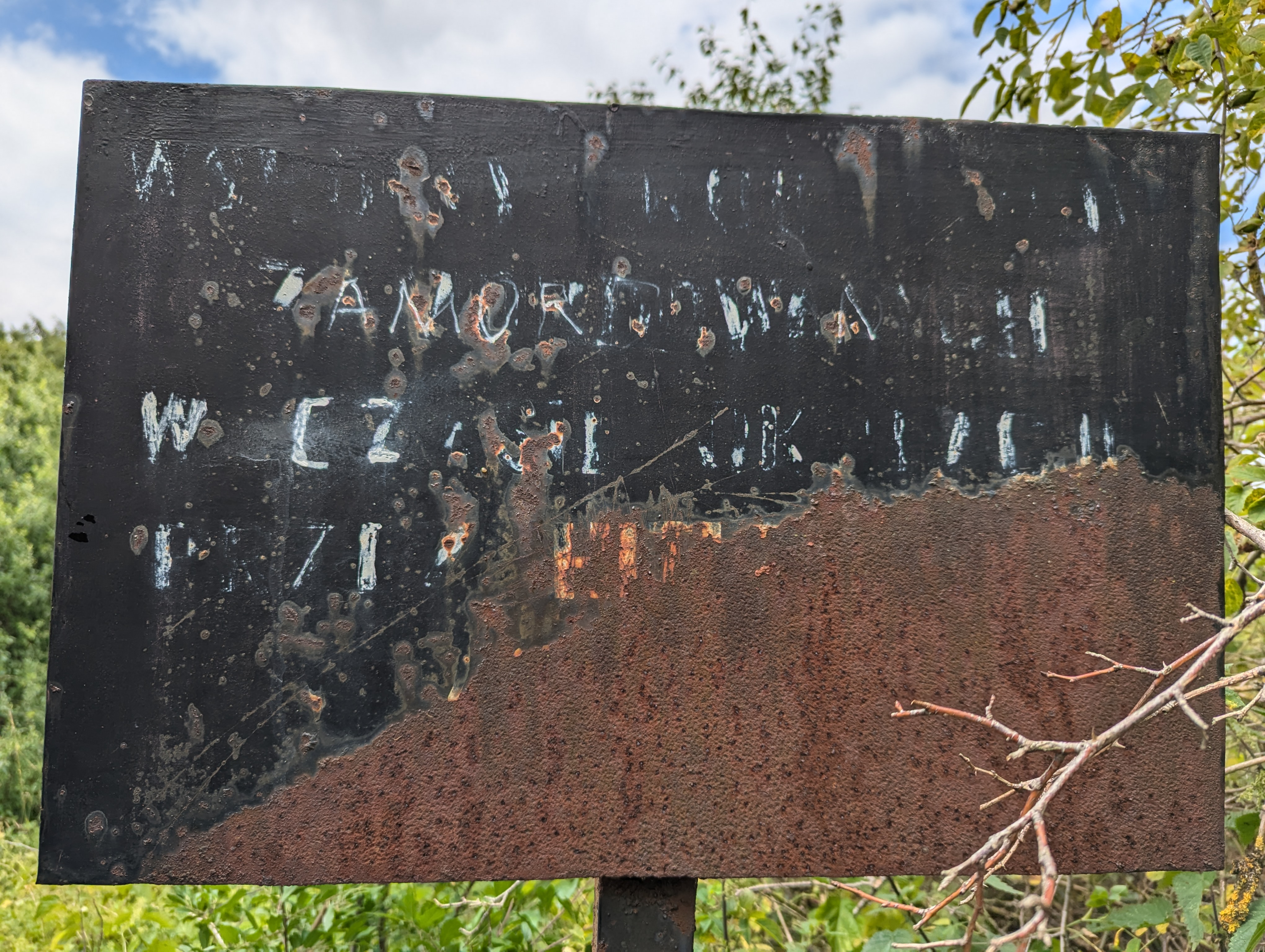
Not much is left of the lettering, but it appears to say “Wspólny Grób zamordowanych w czasie okupacji przez Hitlerowców” (“Collective Grave of those murdered during the Nazi occupation”). Photo credit: Agnieszka Olszewska

Thursday evening, Steven and I visited the Olszewskis at their home. While they treated us to pierogi, stuffed pancakes, and a plateful of tasty cakes, I asked Henryk to remind me the name of a man I met during my first visit to Żychlin. Of course he knew, and immediately picked up the phone to call Józef Kowalski so I could check on a story he told me. Józef confirmed that his grandfather, who was a young man during the occupation, was called out by the Gestapo one night and ordered to dig a ditch in the Jewish cemetery. His grandfather, his mother’s father, told him the story directly. Józef also confirmed the ditch was where the people shot in the cemetery were buried.

The dissonance between the social nature of our interactions and the horrific topics we discussed doesn’t escape me. And yet, these kinds of connections are what make possible the recovery of difficult memories. Our work goes beyond the restoration of the physical space of the cemetery, to something deeper. We’re also restoring the memory of the people who inhabited the city over 80 years ago, and the events that took them away forever.
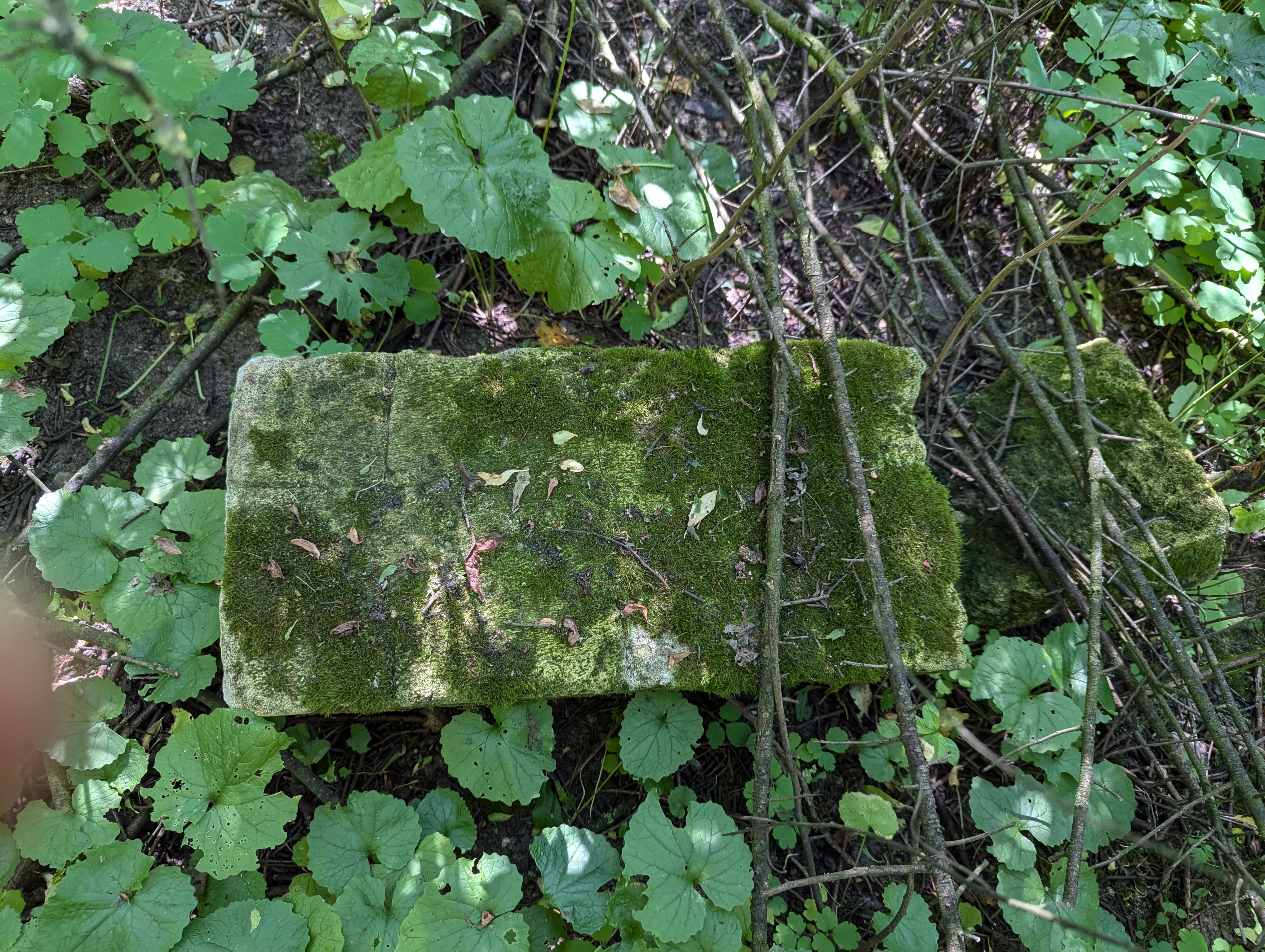
As we cleared underbrush, we found a few stones like these that appear to be fragments of tombstones

Day 2 at the Żychlin Cemetery

02 Tuesday Jul 2024

Posted by Marysia Galbraith in Association of Descendants of Jewish Central Poland, Cemeteries, Heritage work, Polish-Jewish Heritage, Żychlin

≈ 4 Comments

Tags

ADJCP, cemetery restoration, FODZ, Foundation for the Protection of Jewish Heritage, Friends of Kutno, Matzevah Foundation

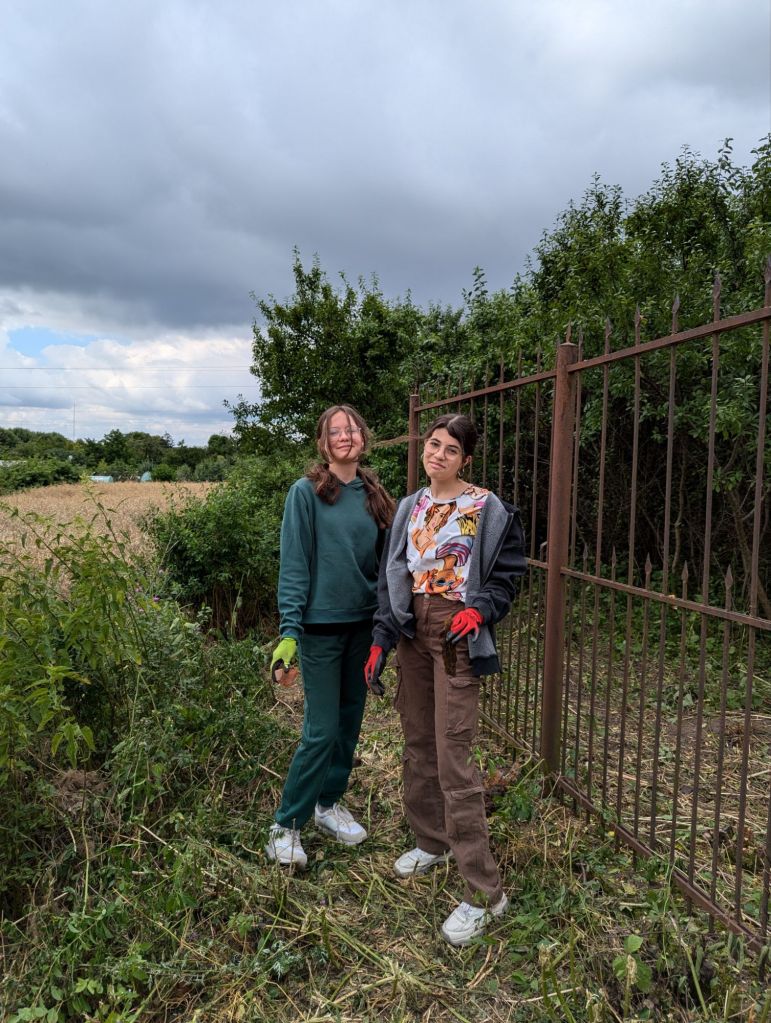
Students from the local school came to help us today.

Kasia, Wiktoria, and Oliwia brush rust off the gate in preparation for painting

Wiktoria and Weronika collect trash and debris.

These young ladies just finished 8th grade and are headed to high school in Kutno in September. They tell me they feel excited about the change, but also a little anxious.

We have been talking in English. They have all studied the language so it’s good practice for them.

Before they began their work, I also showed them around the cemetery and talked a little about Żychlin’s Jewish history. I’m not sure they knew that before World War II, half or more of the inhabitants of the city were Jewish.

Asked why they came to help today, they said, simply, they were asked. One added, I wasn’t doing anything else.

We hope we’re planting some seeds of interest and perhaps a sense of recognition that Jewish history is part of Żychlin history. Maybe in future they will continue to preserve the cemetery even when we descendants can’t be here.

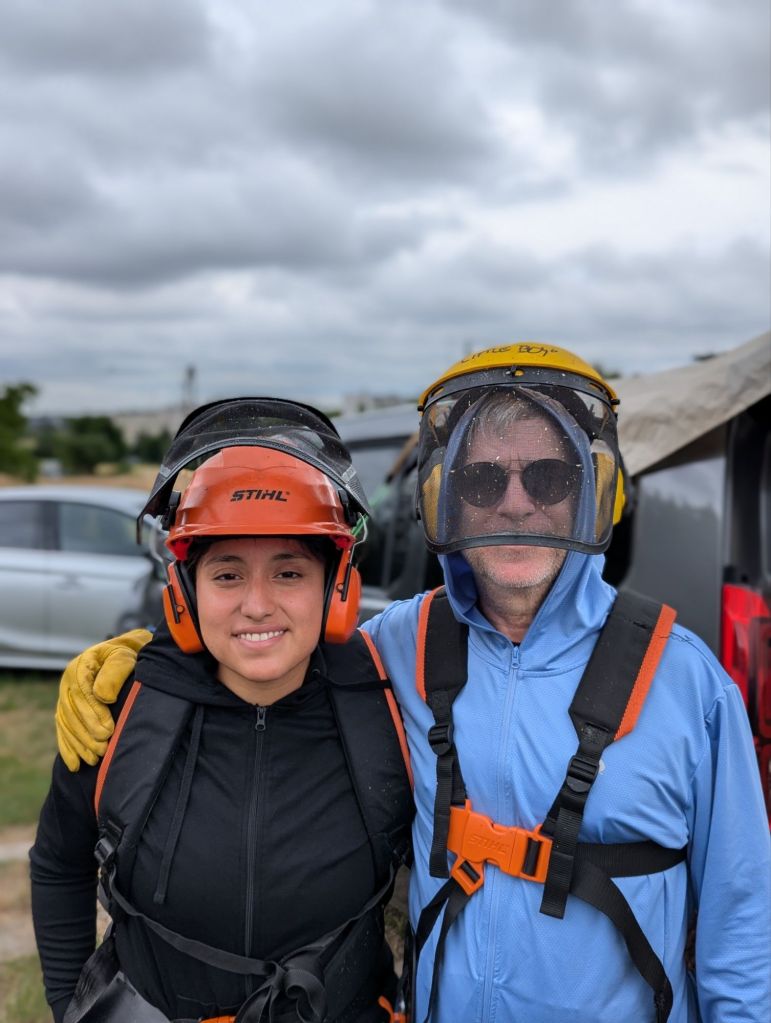
Also working hard today are David and Liana Goren. Liana has already mastered all the equipment. Steven calls her his apprentice.

Liana and David suited up to weed whack.

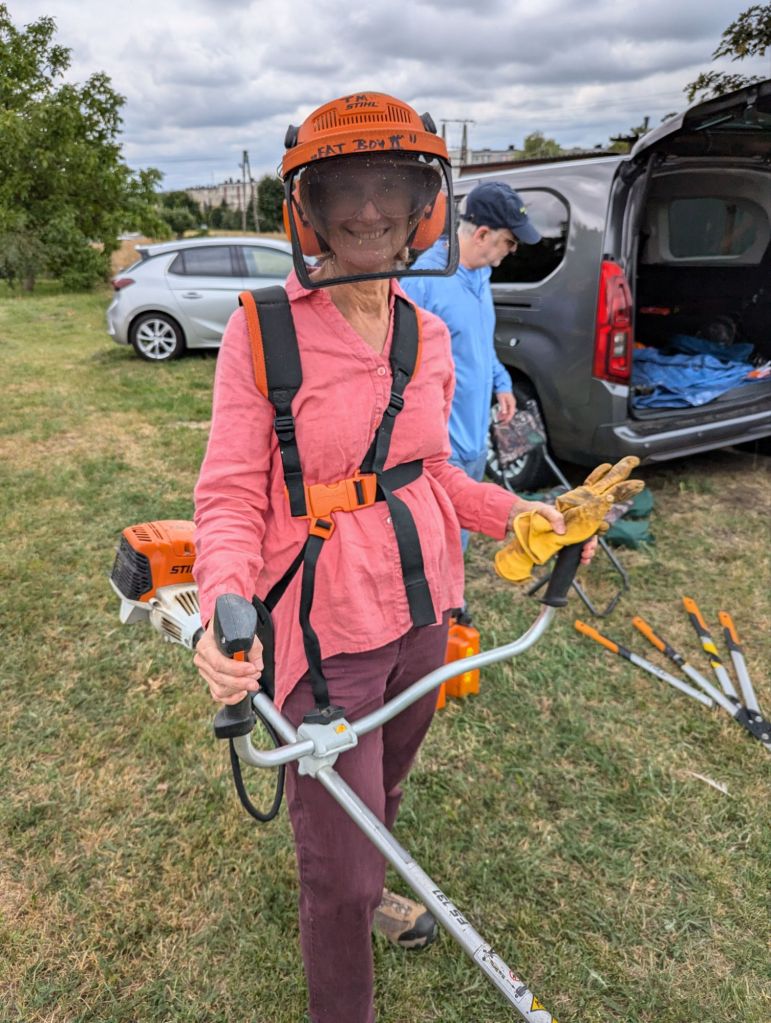
I’m far less capable than anyone else, but I’m stubborn. There’s a lot of ground to cover so even my awkward contributions help.

My latest fashion statement

Work at the Żychlin Cemetery Begins!

01 Monday Jul 2024

Posted by Marysia Galbraith in Association of Descendants of Jewish Central Poland, Cemeteries, Heritage work, Polish-Jewish Heritage, Żychlin

≈ Leave a comment

Tags

ADJCP, FODŻ, Foundation for the Protection of Jewish Heritage, Matzevah Foundation

Work at the Żychlin cemetery begins!

Żychlin Jewish Cemetery Restoration July 1-5

30 Thursday May 2024

Posted by Marysia Galbraith in Association of Descendants of Jewish Central Poland, Cemeteries, Heritage work, Żychlin

≈ 2 Comments

Tags

cemetery, jewish, Poland

The Association of Descendants of Jewish Central Poland (ADJCP) will undertake the restoration of the Zychlin Jewish cemetery starting this summer. Like many Jewish cemeteries in Poland, dense vegetation covers most of the space, monuments and fencing are in disrepair, and signage is needed. Please consider joining us from July 1-5.

ADJCP has teamed up with the Matzevah Foundation, a non-profit organization with a wealth of experience restoring Jewish cemeteries. Our local partners Mayor Grzegorz Ambroziak, Bożena Gajewska, and Anna Wrzesińska will coordinate local volunteers and provide other assistance.

Photo: Monument incorporating matzevot fragments in the Żychlin Jewish Cemetery

Monument incorporating matzevah fragments, Żychlin Cemetery

How can you help?

  • Join us in Żychlin from July 1-5. This year, we will assess the condition of cemetery, clear vegetation, and determine whether sections of the fence require repair.
  • Provide financial support for the project by sending a donation via the “donate” link at adjcp.org, and specifying the funds are for “Zychlin memorial projects.”
  • Put us on your calendar for summer 2025 or summer 2026 when we expect to continue our work!

Żychlin is located about 75 miles west of Warsaw and about 45 miles south of Włocławek. The town’s Jewish Community was established in the second half of the 18th century, and until World War II, more than half of the inhabitants were Jewish.

Questions? Contact Marysia Galbraith at: info@adjcp.org

ADJCP Memorial Tour at the Żychlin Cemetery, May 2023: Roberta Books introduces a short remembrance for Żychlin’s Jewish community. Photo credit: Bożena Gajewska

Daffodils in Żychlin

11 Thursday Apr 2024

Posted by Marysia Galbraith in Association of Descendants of Jewish Central Poland, Commemoration, Polish-Jewish relations, Żychlin

≈ 5 Comments

Tags

Anniversary of the Warsaw Ghetto Uprising, daffodils

Żychlin mayor Grzegorz Ambroziak sent me photos of daffodils blooming around the memorial to the city’s Jewish community. These flowers, planted by local school children, are a symbol of remembrance. Daffodils are also associated with the upcoming anniversary of the Warsaw Ghetto Uprising, which started on April 19, 1943.

These small markers of remembrance matter. They offer a time and place to contemplate what used to be, what was lost.

Żychlin Cemetery Update: Żychlin Cemetery Needs Help

06 Friday Jan 2023

Posted by Marysia Galbraith in Association of Descendants of Jewish Central Poland, Cemeteries, Heritage work, Polish-Jewish relations, Żychlin

≈ Leave a comment

Tags

blackthorn, cemetery restoration


On September 28, I returned to Żychlin so I could visit the Jewish cemetery. I was eager to see the area that had been cleared earlier in the year as part of the “In the Footsteps of Żychlin Jews” program spearheaded by Bożena Gajewska and funded by the Forum for Dialogue.

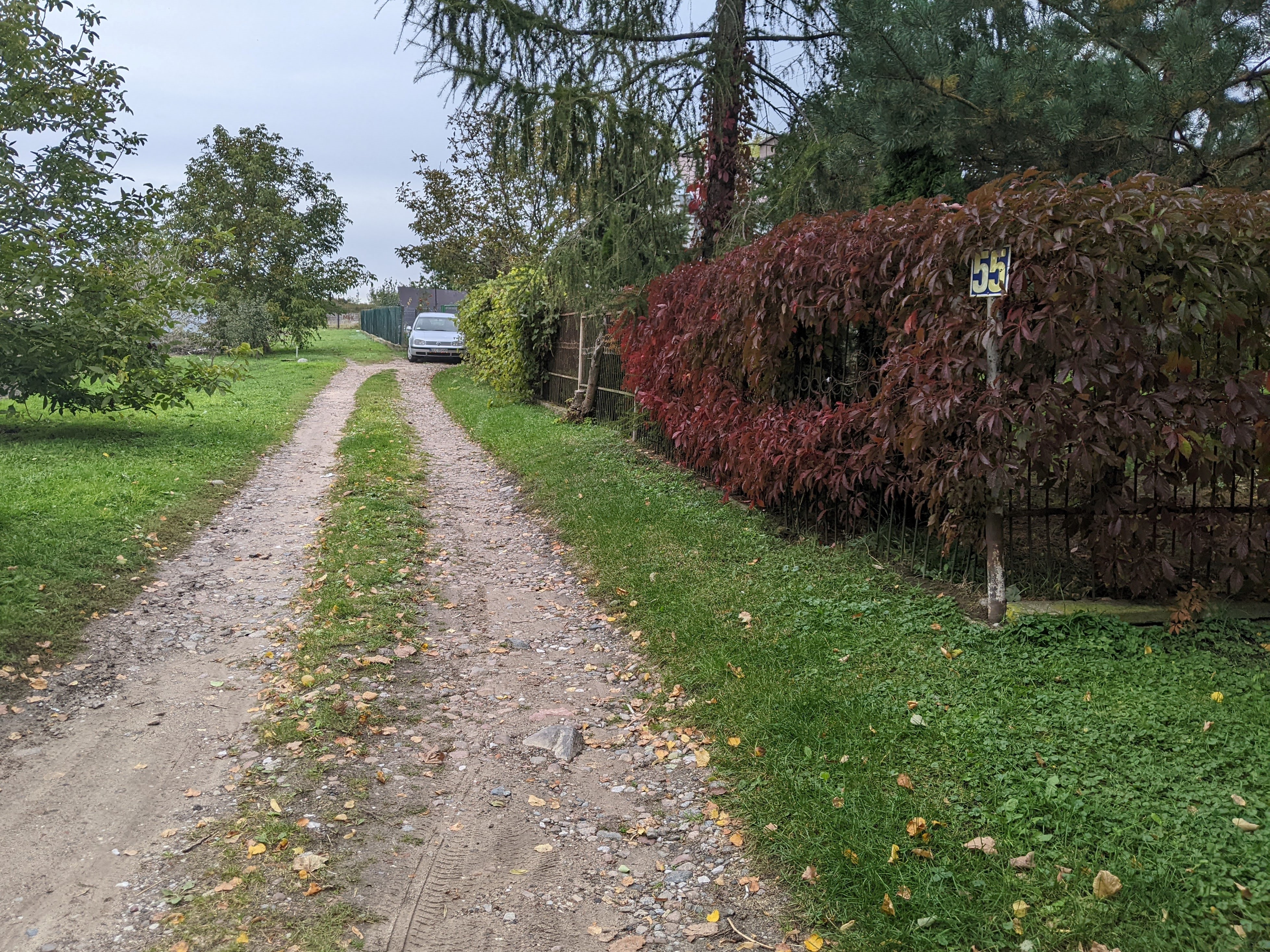
The first challenge was finding the cemetery. Even though I have been there several times and I had checked the location on Google Maps, I passed it the first time. I recognized the houses along the road from Google street view and guessed that the cemetery must be mismarked on the map. I backtracked to #55 Łukasińskiego Street and spied the cemetery gate at the end of a narrow gravel and grass-covered driveway. I parked on the shoulder of the road, careful not to block the driveway which leads to a farmhouse on the right-hand side. A plowed agricultural field is on the left side of the drive. The homeowners and their ducks and chickens watched me as I walked by their yard to the cemetery gate.

Access to Żychlin Jewish Cemetery, Łukasińskiego Street

The cemetery gate needs repainting, though it remains sold. A padlock hangs from the latch but the gate is unlocked. The area that was cleared around the monuments remains accessible. I took a closer look at the three irregular monuments made from matzevot fragments held together with concrete. Some of the tombstones have come loose and lie on the ground. Others appear to be missing. Red graffiti scars the front of one.

Memorial monuments constructed of matzevot, Żychlin Jewish cemetery

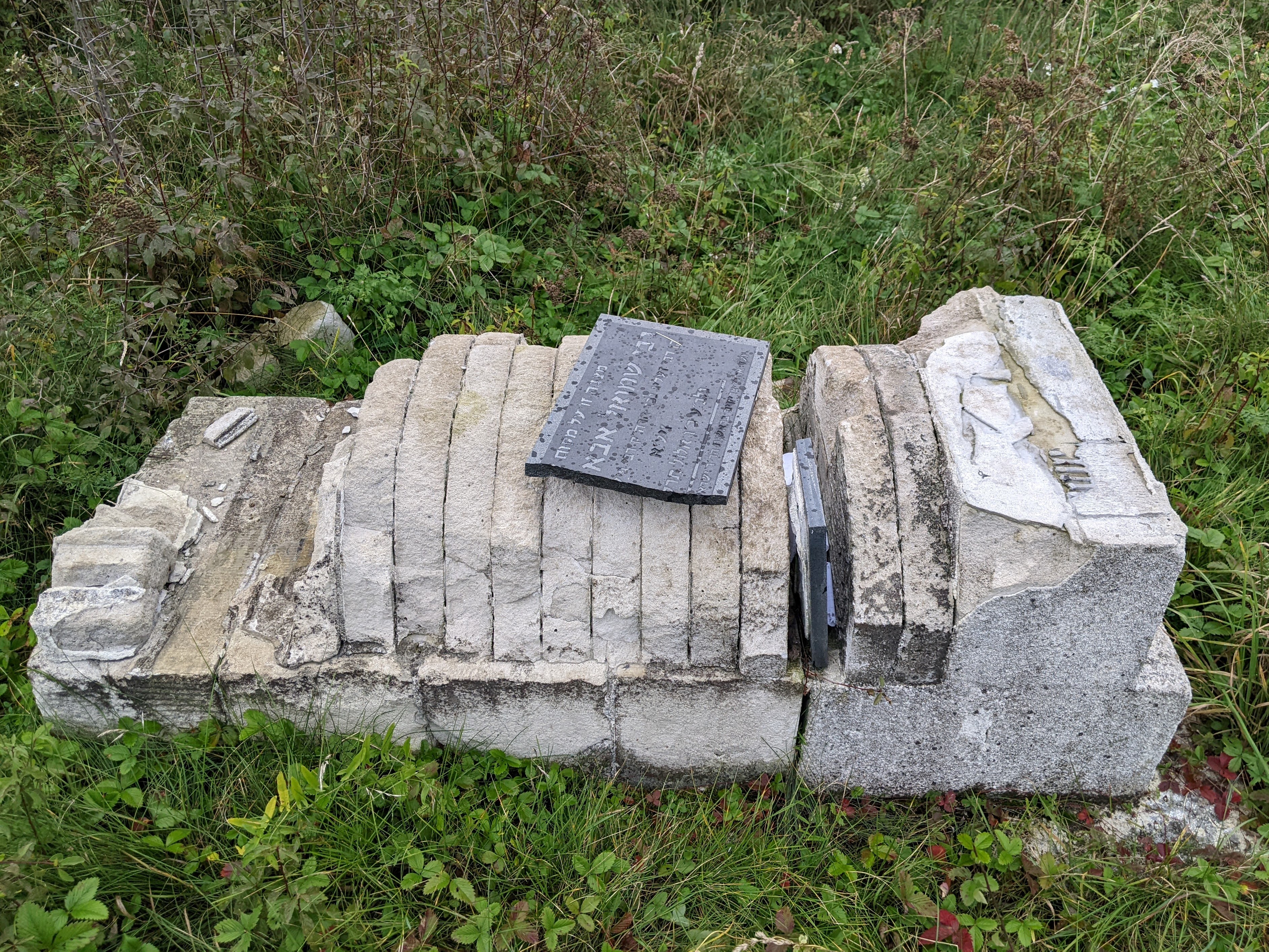
Rabbi Shmuel Abba‘s grave marker has fallen into disrepair. The curved stone over the site seems to have lost its top layer, and the vertical section of the marker has collapsed. The black stone with the inscription that used to be mounted on this vertical section has broken in half; part sits half-hidden in a groove and half lies flat on the broken surface of the monument. Notes left by visitors poke out of the cracks, and the remains of an Israeli candle sits on the ground near the grave. Photos show that this grave has deteriorated over the past few years.

Rabbi Shmuel Abba’s grave marker has deteriorated. It was still intact in 2019.
Rabbi Shmuel Abba’s grave as it looked in November 2014

The rest of the cemetery ground is overgrown with 9-foot blackthorn shrubs that make an impenetrable thicket. The sharp thorns on this plant pose a particular problem for cemetery maintenance. Bożena told me that it took a crew of four to clear a narrow pathway through the overgrowth to the memorial monument and a fourth concrete-and-matzevah obelisk. I had to watch my step to avoid the stumps of the blackthorn bushes that were cut six inches from the surface of the ground. I didn’t see signs that the bushes were growing back, but I have been warned that they will unless everything is trimmed back again before next spring.

Old candle lanterns sit below the monuments—a testament that someone remembers this place.

Memorial monument, Żychlin Jewish cemetery.

I inspected the fence from the outside of the cemetery, walking from the gate to the southwest corner. Only a small section of fence around the gate is constructed of solid iron spikes; the rest is made of rusty chain-link. The fence continues along the west side as far as I could see, which wasn’t far because of the small trees along the fence line. Stone curbs below the fence seem to mark the cemetery boundary.

Fence and stone curb mark the border of the Żychlin Jewish cemetery

The Żychlin Jewish cemetery needs help. Fortunately, the ADJCP has good allies in Bożena Gajewska, Żychlin mayor Grzegorz Ambroziak, regional organizations TMHŻ (Association of Żychlin History Enthusiasts) and TPŻK (Association of Friends of the Kutno Region), Steven Reece and the Matzevah Foundation, and Rabbi Yehoshua Ellis and the Jewish Community of Warsaw. Together, I’m hopeful we can make lasting improvements on the cemetery and maintain it as a testament to the Jewish community that called Żychlin home for centuries.

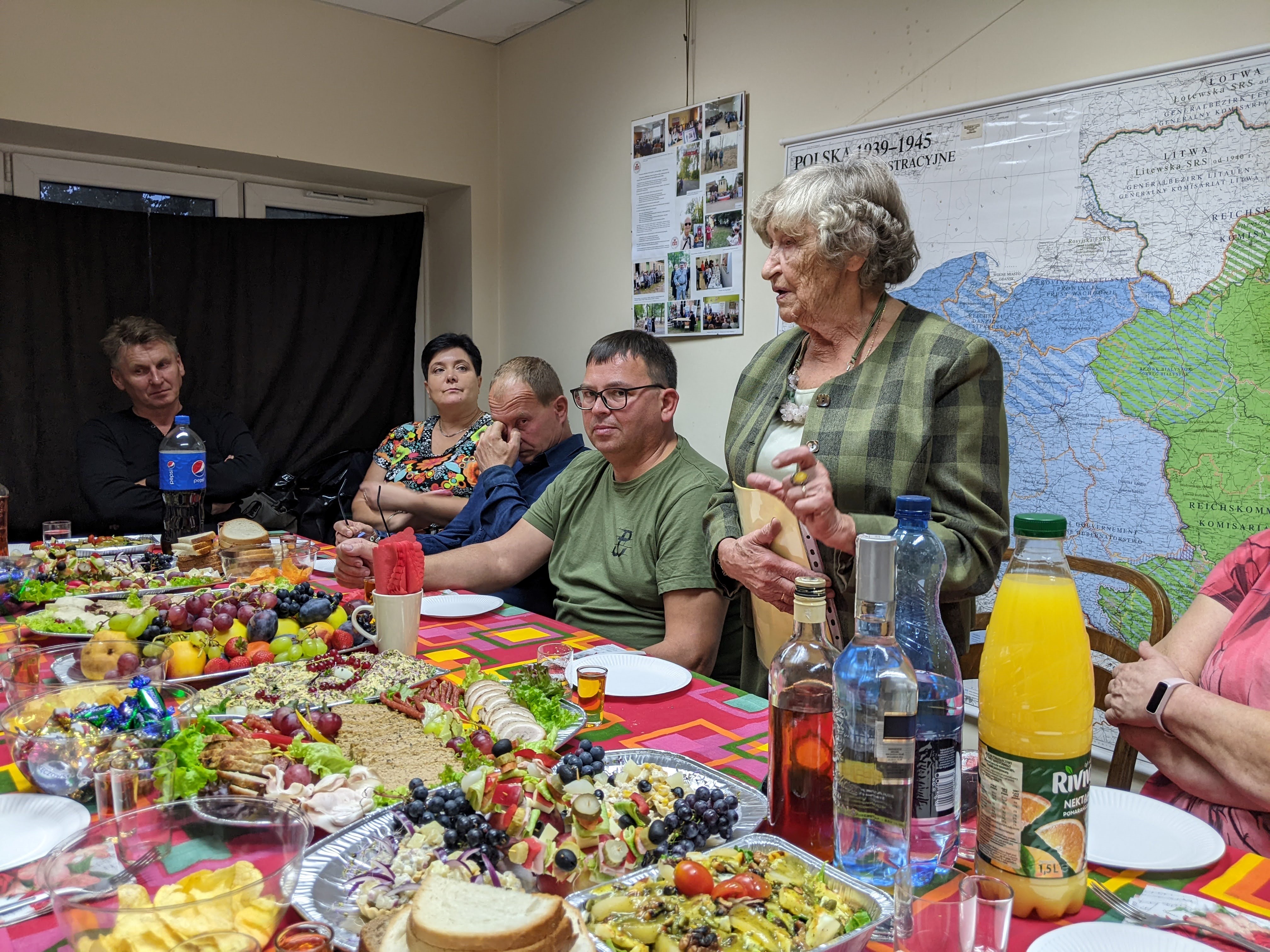
I ended the evening with the Association of Żychlin History Enthusiasts. My intention was to record some of the members’ recollections about wartime in Żychin. Serendipitously, my visit coincided with that of a guest of honor, Marianna Rybicka, who was a child during WWII; her memoir was published by the TMHŻ. She arrived from Płock with her daughter Iwona who brought a table full of food. Here, Marianna is telling her story:

Marianna Rybicka tells her story to the members of the Association of Żychlin History Enthusiasts (TMHŻ)

Can you help us restore the Żychlin Jewish Cemetery?

Since September, Bożena has done more research about cleaning up the cemetery. The biggest challenge is the the blackthorn that grows over most of the terrain. Jewish law restricts any disturbance of the ground which means the blackthorn can’t be dug out by the roots or treated with herbicide. A professional landscaping firm told Bożena that the charge for cutting it all down by hand will be 80,000-100,000 zloties ($19,000-$24,000). Without additional treatment, it will grow right back.

Steven Reece of the Matzevah Foundation has some experience with blackthorn and he is confident a dedicated group of volunteers can use loppers to remove it. He hopes to join us in May to inspect the cemetery and suggest a course of action. A lot depends on how much territory needs to be cleared and the size of the bushes that need to be cut.

Can you help us? What do you suggest for removing a thicket of thorny bushes? Would you like to join a clean-up project and help restore the Żychlin Jewish cemetery? Let me know!

Restoring Jewish Memory in Żychlin

12 Wednesday Oct 2022

Posted by Marysia Galbraith in Association of Descendants of Jewish Central Poland, Commemoration, Heritage work, Polish-Jewish Heritage, Polish-Jewish relations, Synagogues, Żychlin

≈ 2 Comments

Report #3 about Roberta Books and Marysia Galbraith’s trip to meet Polish partners in preparation for the ADJCP‘s memorial visit to central Poland. Reports include contributions by Roberta.

Our visit to Żychlin began with a meeting at Town Hall with 8th graders and their teachers from the local school. The children were shy—reluctant to speak in English or in Polish with us—but clearly we had their full attention as we shared our family connection to central Poland and explained why we were visiting. We used a question and answer format to gauge their knowledge about Jewish culture, history, and religion, and to share some basic knowledge with them.

8th grade students with Yosef, Roberta, and Marysia. Their teacher is on the right

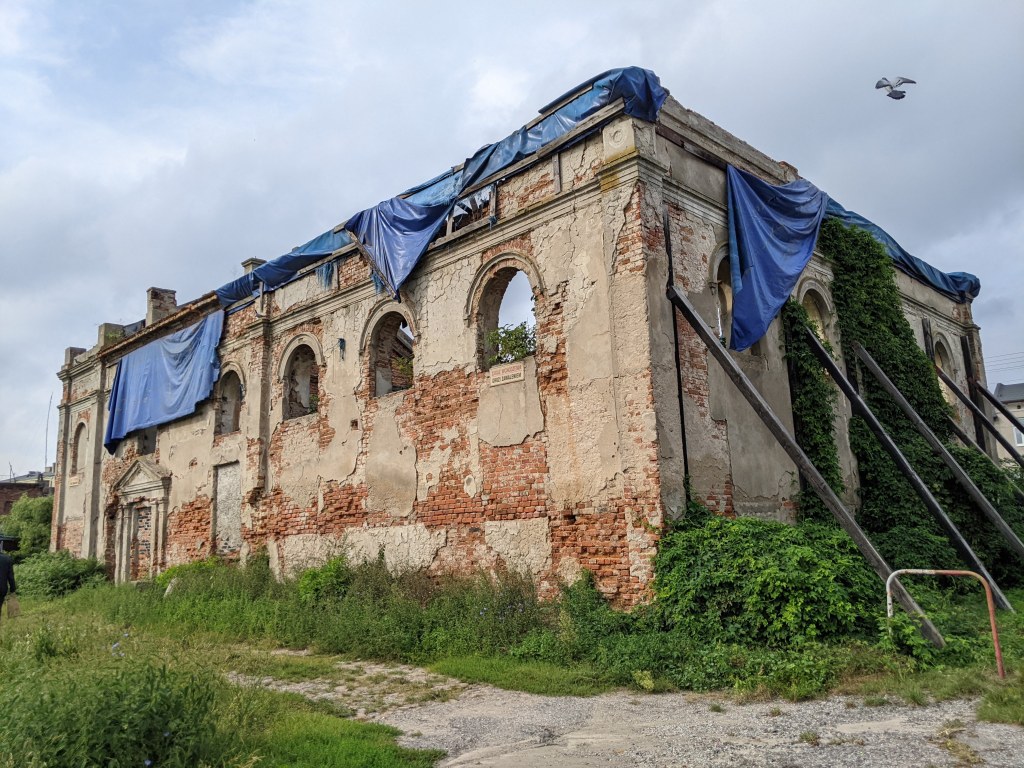
Because I heard Żychlin Mayor Grzegorz Ambroziak speak at the unveiling of the new monument commemorating Żychlin’s Jewish community, I had the sense he wants to preserve the memory of the town’s Jews. At our meeting, he confirmed this. He led the conversation with his concerns about the fate of the synagogue ruins, which are situated in an impoverished area just off the central town square. After the war, the city used the building as a warehouse, and they maintained it until the Jewish Community of Warsaw reclaimed the property. For years it stood empty as the city negotiated with the Jewish Community to obtain legal possession of the building. They envisioned turning it into a museum of regional history. The city was granted possession of the synagogue in 2007-8, exactly when the roof caved in. Since then, the decay of the building has accelerated due to the lack of a roof. Currently, wooden supports hold up the shorter walls of the building, but it looks like it could fall down at any moment.  The city would like to use the space for a museum.

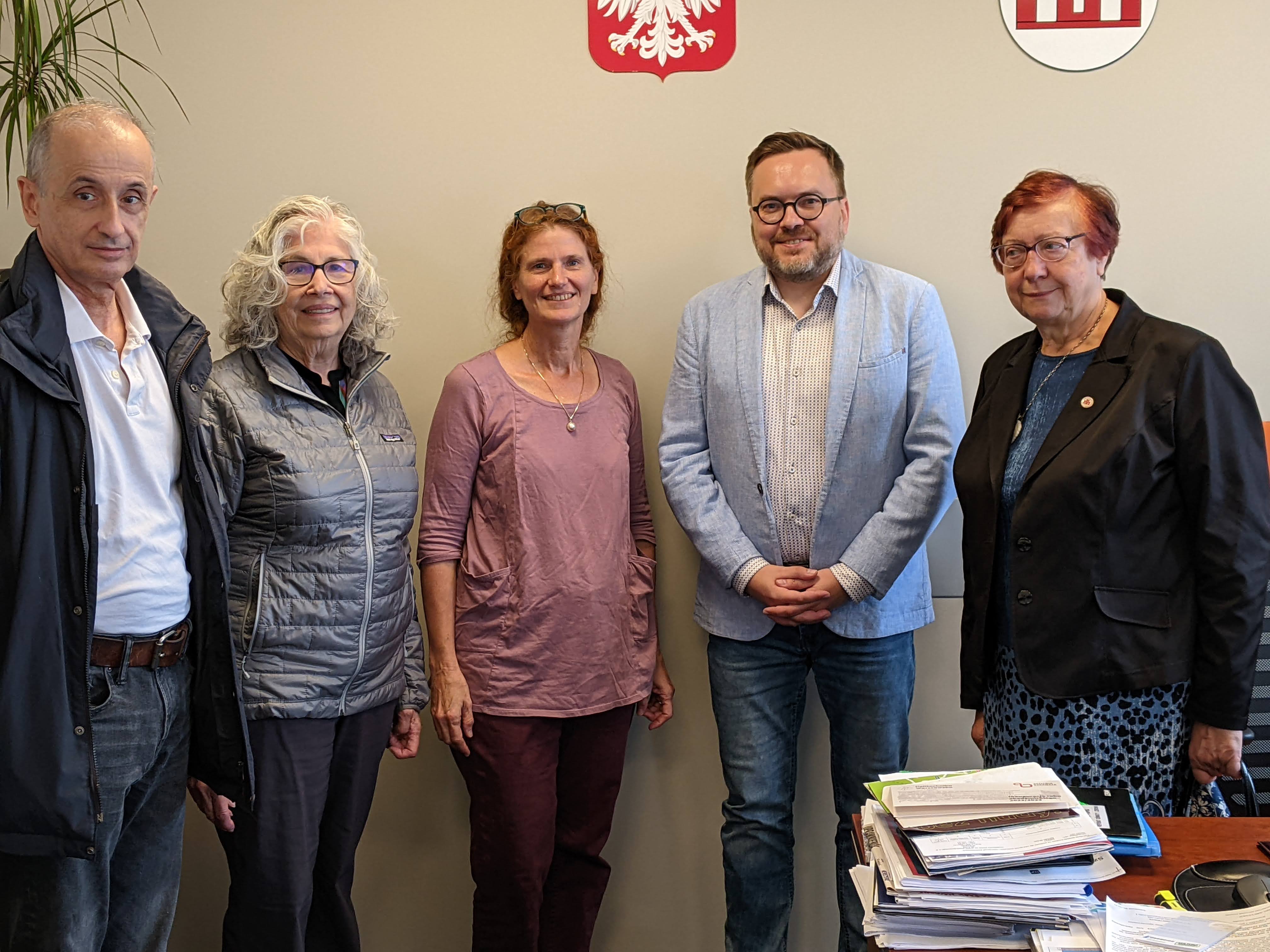
Meeting at Żychlin Town Hall: Yosef Kutner, Roberta Books, Marysia Galbraith, Mayor Grzegorz Ambroziak, President of the Association of Żychlin History Enthusiasts (TMHŻ) Anna Wrzesińska

Mayor Ambroziak invited the ADJCP to cosign a Letter of Intent attesting to our interest in rebuilding the synagogue. With this affirmation that interest in the synagogue extends beyond the immediate needs of Żychlin residents, he is confident the city can obtain funds from the Ministry of Culture and the EU for the renovation. All such funding requires cost-sharing by the municipality, and he is prepared to provide those matching funds from the city budget.

We also gained the mayor’s support for 3 other ADJCP projects in Żychlin: the plaque for righteous gentile Szułdrzyński, cemetery restoration, and help organizing our memorial trip.

  • The ADJCP will provide a plaque commemorating a righteous gentile from Zychlin named Stanisław Szułdrzynski; Bożena Gajewska will arrange its manufacture for us. The mayor agreed to find an appropriate place for the plaque, and to arrange for it to be officially unveiled during our memorial visit in May 2023. 
  • The mayor welcomes our efforts to clean up and restore the Jewish Cemetery.  The cemetery is managed by the Foundation for the Preservation of Jewish Heritage (FODŻ). The city does not take responsibility for regular maintenance. When they do cut the vegetation (as they did for the recent Forum for Dialogue project “In the Footsteps of Żychlin’s Jews”) they have to cut back thorny bushes (trzcina, black thorn). They said they are not allowed to dig the roots out or use pesticides, which means within a few months the bushes grow right back. Roberta has contacted Rabbi Schudrich for clarification of what maintenance practices are allowed and to confirm who owns the cemetery.
  • The Mayor will be pleased to greet ADJCP in May 2023. Anna Wrzesińska will walk around with them.

After the meeting, we stepped across the street to see the monument to Żychlin’s Jews, unveiled in June as part of the project “In the Footsteps of Zychlin Jews.” Bożena Gajewska of the Friends of the Kutno Region (TPŻK) ran the program with the help of Anna Wrzesińska and funding from the Forum for Dialogue. Mayor Ambroziak also contributed funds for the plaque; because of the length of the inscription, it exceeded the approved budget.

Memorial to Żychlin’s Jewish community

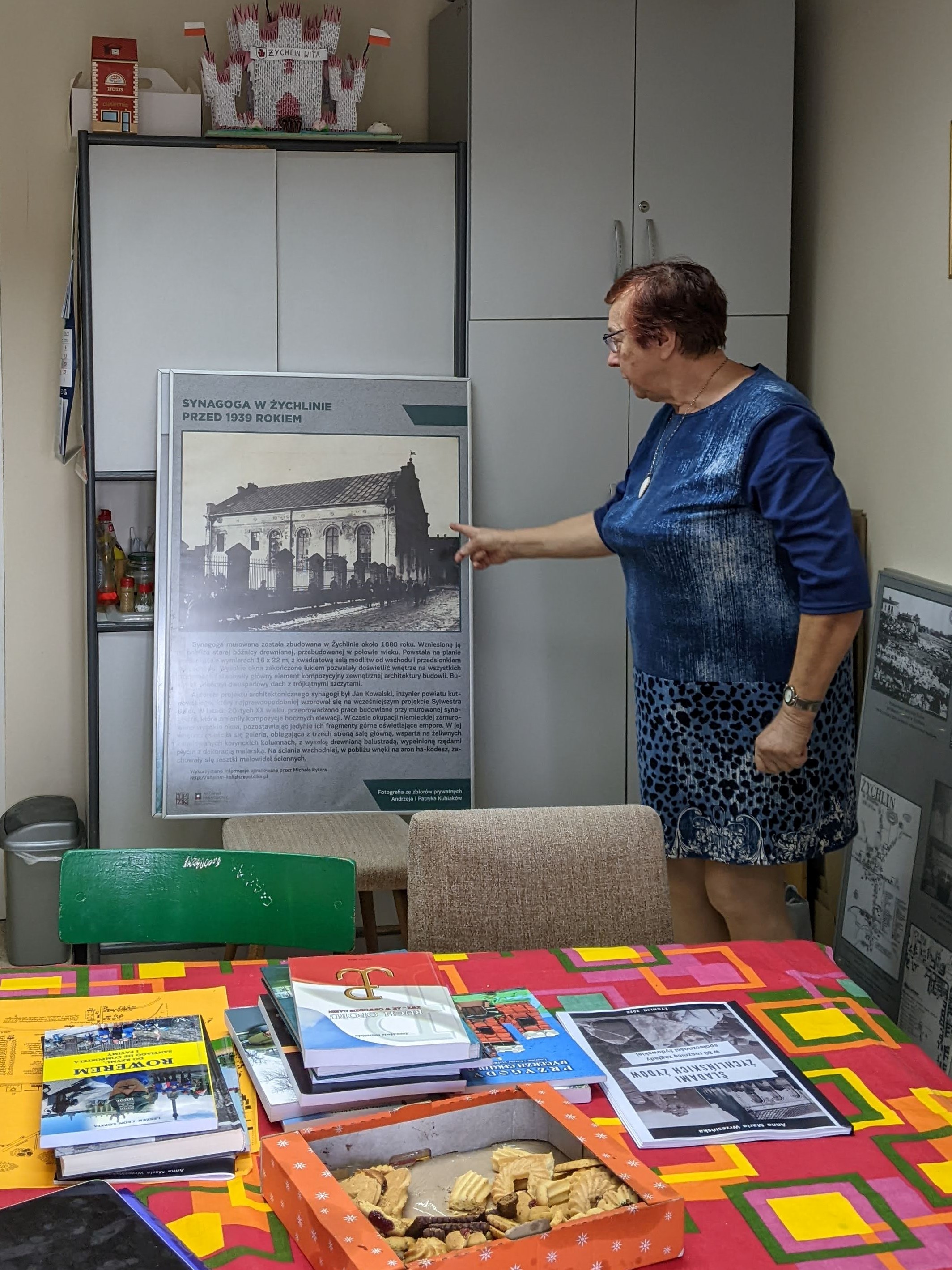
Anna Wrzesińksa took us to the office of the Association of Żychlin History Enthusiasts (Towarzyszenie Miłośników Histori Żychlinskiej, TMHŻ) where we met with members of the organization and learned about their recent projects. They showed us the display boards from an exhibition they put together about Żychlin’s Jewish Community. It was on display this spring during the Forum for Dialogue project “In the Footsteps of Żychlin’s Jews.” They also showed us the numerous publications they have released, including a photocopy of their latest work, still awaiting publication, about Żychlin’s Jewish history.

Jerzy Werwiński, 92-year-old member (born in 1931) shared his recollections of wartime, starting with the liquidation of the Jewish ghetto in 1942. He was just a boy; he hid in an attic across the street and watched from a window as the Jewish residents were rounded up and placed in horse-drawn farmer’s wagons and carted 2 km to the train station. From there, they were transported by train to the Chełmno Death Camp. Once Jerzy started talking he couldn’t stop. Visibly shaken, he described his own wartime experiences. Essentially, he spent the next three years in work camps and prison, until he was liberated by the advancing Soviet Army in January 1944. He recounted living in barracks, sleeping on hard wooden planks with no blankets even in the coldest winter nights. They had very little to eat; each morning a loaf of bread would be cut in six pieces for six people for the whole day. He was told he can eat it all at once but then go hungry the rest of the day or he could nibble on it throughout the day. At night, they got a cup of soup that was mostly water with just a few chunks of potato or other vegetables. The other TMHŻ members were born after the war, but their parents told them stories of deprivation and forced labor. Clearly, they have more to say about the hardships experienced during the war; I asked if I can return so they can tell me more and I can record their stories.

We finished our visit with a walk to the synagogue ruins. The remaining walls are in bad shape and look like they could collapse at any moment. This is a shame because even a few years ago when I first visited, the walls were reasonably sturdy. Some of the interior wall paintings could still be seen through the empty windows; these all appear to have been erased by the weather. The first step of any project will need to be to assess the condition of the remaining structure.

1939 Battle for Central Poland

07 Monday Dec 2020

Posted by Marysia Galbraith in Kutno, World War II, Włocławek, Żychlin

≈ 4 Comments

Tags

Military map, Muzeum Uzbojenia Poznan

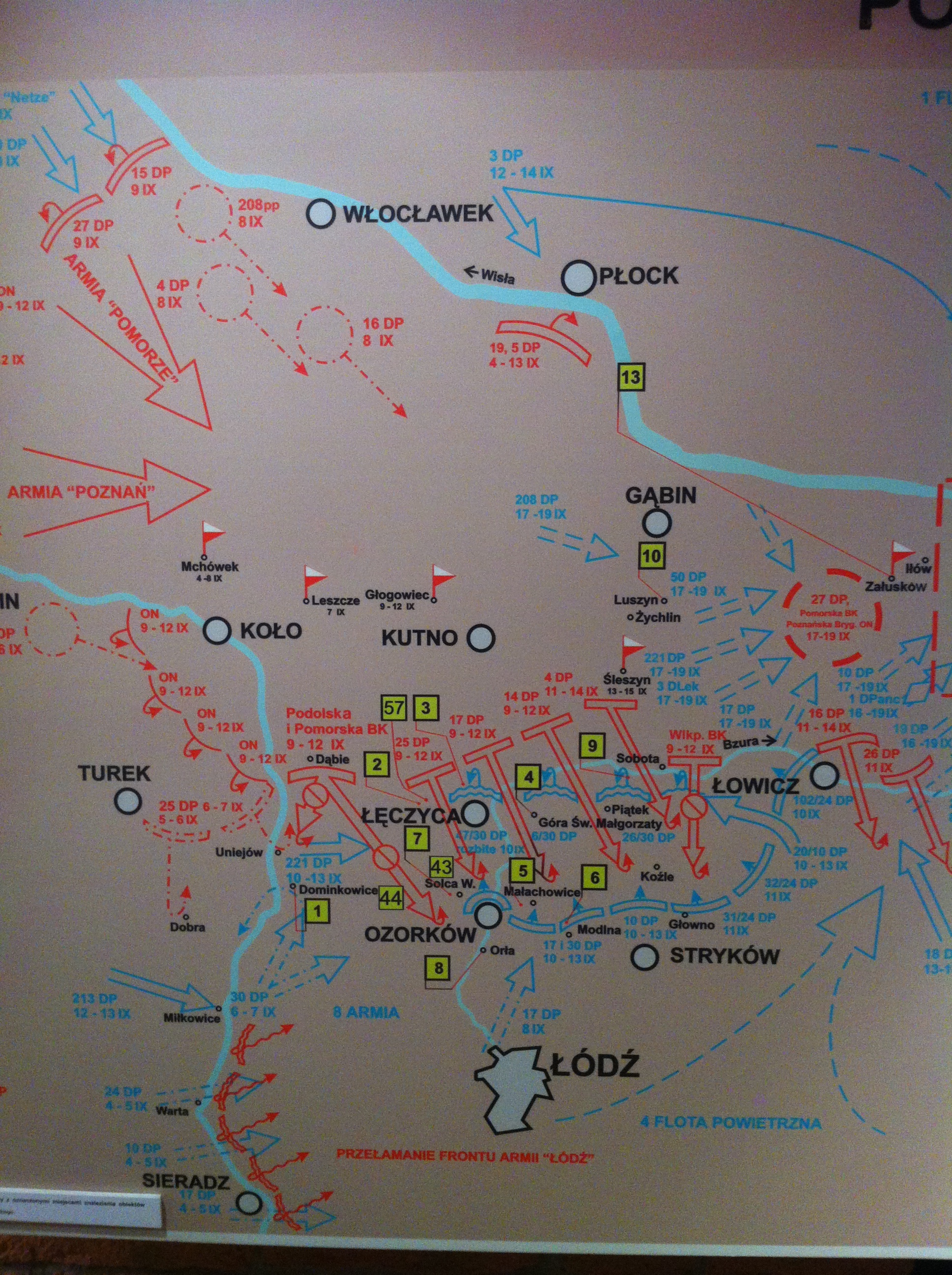
While going through photos, I came across this map from the Muzeum Uzbrojenia in Poznan showing the movement of the Polish army (shown in red) through central Poland when the Nazis invaded in September 1939 :

Red arrows show movements of Polish armed forces through central Poland in September 1939

It’s a little hard for me to read, but I believe Poland had a stronghold in the Kutno region and for a few days they held back the Nazis (shown in blue).

This region is exactly where my family came from. My great grandmother was born in Żychlin and eventually settled with her husband and children in Włocławek. They would have been long gone when the war started, but some of my grandmother’s siblings were still living in Włocławek. Here’s another layer of memory I need to integrate into my family story. How profoundly destabilizing it must have been for them to watch as the Polish forces fell and they became foreigners in their own country.

Trip to Jewish Central Poland in 2022

06 Wednesday May 2020

Posted by Marysia Galbraith in Brześć Kujawski, Heritage work, Kutno, Nazi Camps, Polish-Jewish Heritage, World War II, Włocławek, Żychlin

≈ 7 Comments

Tags

ADJCP, Association of Descendants of Jewish Central Poland, Memorial Trip 2022

It turns out I’m not the only one who dreams of doing Jewish heritage work in the land of my ancestors. The Association of Descendants of Jewish Central Poland has just gained nonprofit status and welcomes members.

It started at the initiative of Leon Zamosc, who reached out to others on JewishGen seeking information about ancestors from the region around Kutno and Włocławek. As the message from the founders explains:

The concept of a regional organization of descendants developed out of an initiative to visit the districts of Wloclawek, Gostynin, and Kutno in order to commemorate the 80th anniversary of the destruction of the region’s Jewish communities during the Shoah. About 60 JewishGen researchers responded to the initial invitation, including 16 who volunteered as consultants for the planning of the Spring 2022 trip. In those early exchanges, some participants proposed the creation of a more permanent organization that would allow us to develop other activities related to the cultural heritage of the region’s shtetls. After studying the options, a subcommittee of 9 participants suggested ideas for possible activities and recommended the establishment of the ADJCP – Association of Descendants of Jewish Central Poland.

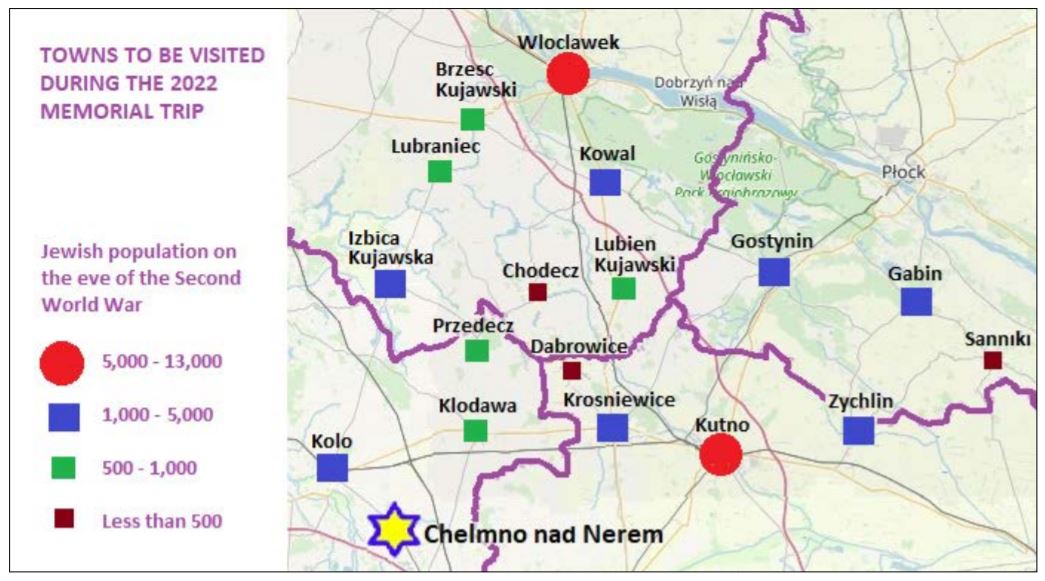
On the 2022 trip, we’ll participate in memorial activities at the Chełmno Death Camp. We will also learn about the history and culture of Jewish residents of the region, spending time in the larger cities of Włocławek, Kutno, and Gostynin. In additon, participants will have the opportunity to participate in small group excursions to the smaller cities and towns where their ancestors lived. We hope to contribute to a heritage project while we are there.

2022MemorialTripMap

Cousin Connections

20 Monday May 2019

Posted by Marysia Galbraith in Family, Genealogy, Jewish immigrants, Names, Pifko-Winawer Circle, Piwko, Walfisz, Winawer, Łódź, Żychlin

≈ Leave a comment

Tags

Akiwa Jakubowicz, Ancestry, Arline Jacoby, Borscht Belt, Catskills, Efraim/Philip Piwko, Jakubowicz, Mrs. Maisel, Nathan Jacoby, Tema Walfisz Piwko Jakubowicz

When I met Arline Jacoby in 2016, she was a spry and effervescent nonagenarian with vivid memories of the Pifko-Winawar Family Circle gatherings she attended throughout the early decades of her marriage. She knew that she was related to the Pifkos, but she couldn’t remember exactly how. She thought her husband Harry Jacoby was connected somehow to my great grandmother Hinda Piwko, whose maiden name was Walfisz. She also suggested her ancestors might be part of that family line as well, making her and her husband distant cousins.

DSC07132

Pifko-Winawer Family Circle, New Montefiore Cemetery, Organized 1938. Note the Jacoby name on right

No one else seemed to remember the exact family connections, so I just added this to the long list of mysteries to solve one day.

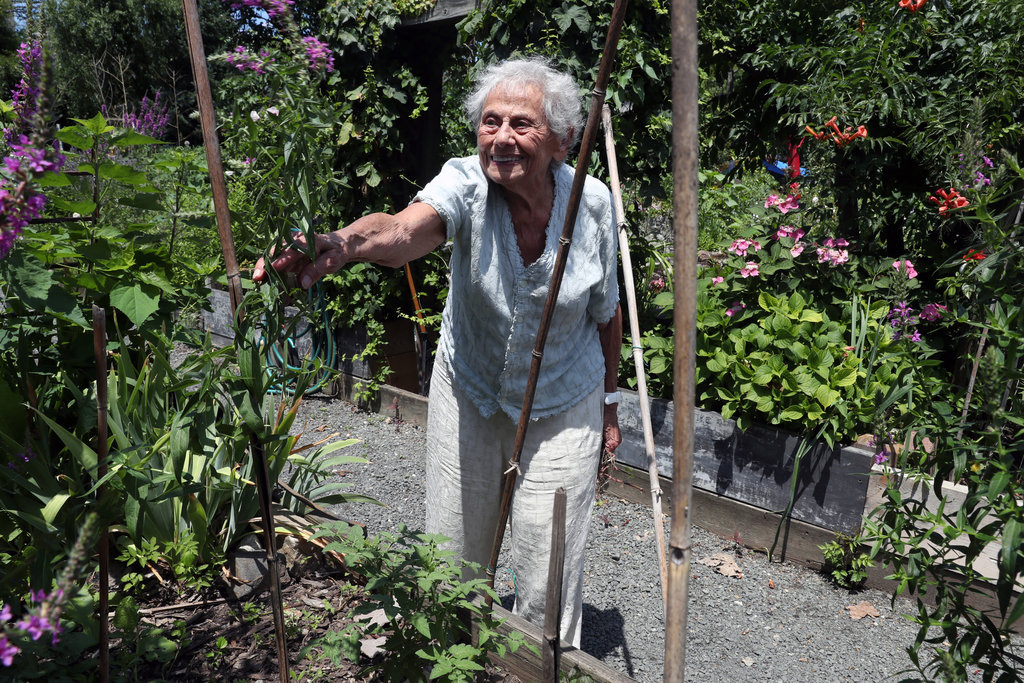
Periodically, I have come across interesting tidbits about Arline. She was featured in the “Sunday Routine” column of The New York Times (“How Arline Jacoby, Artist, Spends Her Sundays,” by Alexis Cheung, July 21, 2017). The article describes Arline’s daily life on Roosevelt Island. In one photo, dressed in a white blouse and loose off-white pants, she holds her cane in front of her as she talks with friends on a bus. In another, she smiles brightly as she reaches for a plant in her garden. And in a third photo, she’s swimming; “I’ll spend about an hour doing laps, and then I’ll go into the steam room,” she explains. In the final photograph, Arline looks up at a sketch in her installation at Octagon Gallery. Still a practicing artist, she says, “My studio is across the street from my house. I paint, I do printmaking, monoprints, paint in oils and watercolor.” Her vibrant spirit shines through the brief vignettes and quotes.

2017ArlineJacoby_SundayNYTimes

Arline in her garden. Photo credit: Michelle V. Agins/The New York Times

Another article from Tablet Magazine recounts the history of the Borscht Belt resort that the Jacoby family ran for many years. The “colony” was founded in 1941 by Arline’s father-in-law Nathan Jacoby, and later managed by Nathan’s sons Harry and Ben. The Catskills became a summer haven for New York Jews who left the heat of the city and set up house in resorts that organized all kinds of entertainment and outdoor activities. According to the article, some affluent middle-class families preferred the laid-back atmosphere of bungalow colonies like the Jacoby’s over the fancier hotel resorts nearby.

I learned from the article that Nathan Jacoby was born in Łódź, Poland in 1894, and came to America in 1921. He got into the bakery business “through a family connection.” Could that have been my grandmother’s brother Philip Pifko who had bakeries in Brooklyn at that time?

The Tablet article explained, “In the summer, he operated the bungalow colony as a second business, renting the units for the season. Jacoby wanted the colony to be a destination for Jews who had worked their way up into the middle class—light manufacturers and lawyers, many from the Midwood neighborhood in Brooklyn, with good businesses and good cars. The parking lot was filled with Cadillacs and Lincolns. These were families who loved parties and balls, and Jacoby was determined to entertain them, building a stage in his casino building for traveling comics, singers, magicians, and musicians, and for bungalow talent shows, too.” Arline’s daughter Annice said “What my grandfather created was not only a business. He created a sense of place. This was the good life.”

I was reminded of these family-oriented camps when Midge Maisel and her family spent much of Season Two at a similar resort. Arline remembers that comedians like Lenny Bruce performed there, another parallel with The Marvelous Mrs. Maisel, which features Lenny Bruce performing in the Catskills. By the time I was growing up in 1970s, the bungalow colonies declined in popularity. My friends went to sleepover camps for kids only.

Screen-Shot-2018-12-10-at-11.15.44-AM-1200x675

Midge Maisel in the Catskills. Screen shot from The Marvelous Mrs. Maisel.

The breakthrough in my search for a family connection came when I was contacted via Ancestry by Cherie, whose husband is a descendant of Akiva Jakubowicz, the second husband of my great grandmother’s sister Tema. That’s when a light turned on. Could it be that the Jakubowiczes changed their name to Jacoby when they came to the US? Could Arline’s husband Harry have been a grandson of Tema, the sister of my great grandmother Hinda (Walfisz) Piwko?

I already had Akiva (Kiwa) Jakubowicz and his two sons Elias and Nathan in my family tree. Cherie confirmed that her husband descends from Elias, Nathan’s younger brother (Nathan was born in 1896 and Elias was born in 1898), and that they changed their last name to Jacoby after settling in the US. Elias moved from Łódź to Berlin where he married Martha Brusendorf. She was a German protestant, but they raised their children in the Jewish faith. When the war broke out, they lived in hiding in Berlin with their younger daughter, while their older daughter escaped to England on the kindertransport. The family reunited after the war, and immigrated to the US. They were sponsored by Nathan, who had been in New York since 1921.

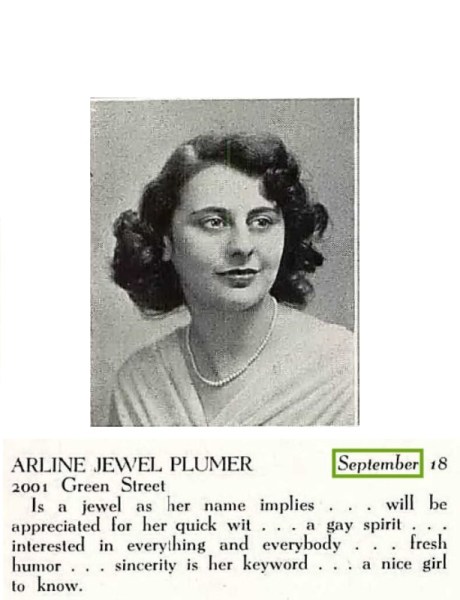
Armed with this information, I was able to locate documents about Nathan, Arline, and their sons Harry and Ben on Ancestry. Arline Plumer and Nathan Jacoby married in 1947 in Philadelphia, her hometown. I’m not sure, but this might be Arline’s high school yearbook photo from 1943, Girl’s High School, Philadelphia.

ArlinePlumer_HSyearbook1

Arline Plumer, class of 1943, Girls High School, Philadelphia. Is this my cousin?

If so, Arline’s parents were Isidor/Isadore and Anna/Annie Plumer, and she was the youngest of eight siblings. Her father is listed on his naturalization documents as coming from Barski, Russia, but in the 1920 census, he and Anna’s place of origin is listed as Russia (Pol.)  and their native language is Polish. All of their children were born in the US.

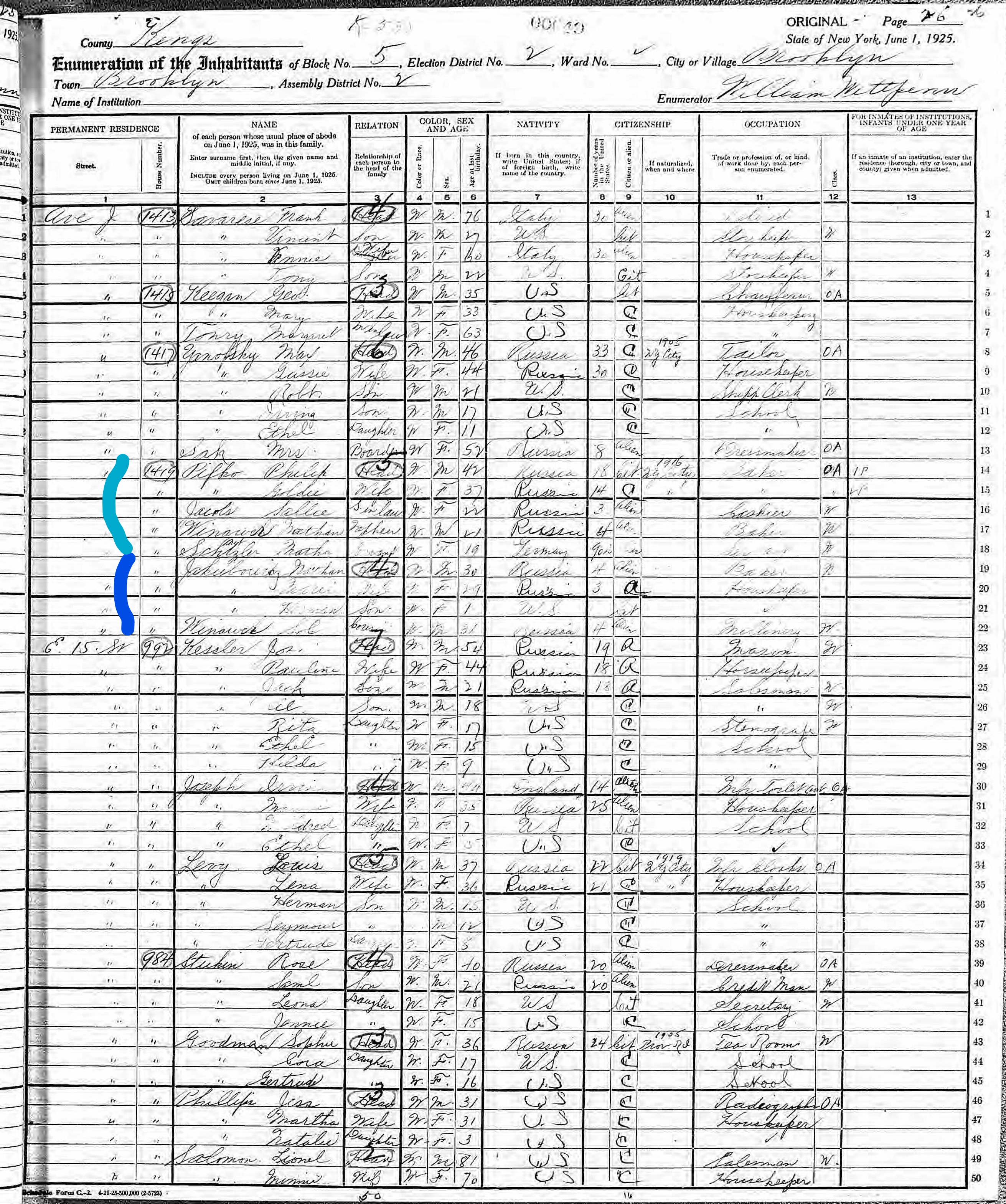
I found Nathan Jakubowicz in the 1925 New York State Census. He worked as a baker and lived with his wife Marie, one-year-old son Harry (listed as Herman), and a cousin Sol Winawer. I believe Sol is the son of my grandmother’s sister Liba, making him and Nathan first cousins once removed. This document also hints at an answer to the question whether Nathan worked in my great uncle’s bakery when he first came to the US. There, in the neighboring apartment, lived my grandmother’s brother Philip Pifko and his wife Goldie. So maybe Nathan is one of the many relatives Philip assisted when they first immigrated, offering them a job in his bakery and helping them find a place to live.

Inked1925NYCensus_NJacobySWinawer_crop_LI

1925 NY State Census. Nathan, Marie, and Herman Jakubowicz live with Sol Winawer. In the neighboring apartment, Philip and Goldie Pifko live with other relatives.

By the the 1930 Federal Census, Nathan had changed his last name to Jacoby.

Inked1930Census_NJacoby_LI

By the 1930 Federal Census, the family name had been changed to Jacoby.

All of this shows pretty convincingly how Arline’s husband Harry was related to the Pifko-Winawers. I’m still looking for comparable evidence that Arline is also a cousin. My guess is she descends from Łaja, the 3rd Walfisz daughter listed in the Żychlin Book of Residents together with my great grandmother Hinda and Harry’s grandmother Tema. I found one hint on Arline’s mother’s death certificate, which lists Anna Plumer’s parents as Morris and Leah Fox, originally from Poland. Elsewhere, I’ve seen Łaja and Leah used interchangeably, so I’ll keep digging.

The search continues. I’m glad to have figured out, at least in part, how Arline and I are cousins. At minimum, her husband and my mother were 2nd cousins. Perhaps she and my mother were 2nd cousins, as well.

DSC07428

Cousin Arline talks with Mama, January 2016


← Older posts
Newer posts →

Categories

  • Anthropology (37)
    • Archives (14)
    • Fieldwork (7)
    • Ground Penetrating Radar (GPR (4)
    • Research Methodology (8)
  • antisemitism (14)
  • Association of Descendants of Jewish Central Poland (32)
  • Catholicism (8)
  • Conference (1)
  • Discrimination (2)
  • Family (69)
    • Bereda (17)
    • Kolski (13)
    • Piwko (22)
    • Rotblit (3)
    • Walfisz (4)
    • Winawer (7)
  • Genealogy (11)
  • Heritage work (66)
    • Commemoration (23)
  • Identity (18)
  • Israel (6)
  • Jewish Culture (89)
    • Cemeteries (51)
    • Museum (7)
    • Synagogues (33)
  • Jewish immigrants (8)
  • Jewish Religion (1)
  • Memory (70)
  • Names (14)
  • Photographs (6)
  • Pifko-Winawer Circle (5)
  • Poland (125)
    • Baligród (1)
    • Bolimów (1)
    • Brześć Kujawski (5)
    • Buk (1)
    • Chodecz (1)
    • Dukla (2)
    • Dąbrowice (1)
    • Gdynia (1)
    • Gostynin (2)
    • Gąbin (1)
    • Izbica Kujawska (1)
    • Kazimierz (4)
    • Kowal (1)
    • Koło (1)
    • Krakow (7)
    • Krośniewice (1)
    • Kutno (6)
    • Kłodawa (1)
    • Lesko (8)
    • Leszno (1)
    • Lubień Kujawski (1)
    • Lubraniec (1)
    • Lutowiska (3)
    • Piła (3)
    • Podgórze (2)
    • Poznan (11)
    • Przemyśl (2)
    • Pzedecz (1)
    • Radom (1)
    • Radymno (1)
    • Sanok (1)
    • Skierniewice (5)
    • Sobota (2)
    • Tarnów (2)
    • Warsaw (22)
    • Wielkopolska (1)
    • Wronki (7)
    • Włocławek (20)
    • Zasław (2)
    • Łódź (1)
    • Żychlin (30)
  • Polish Culture (10)
  • Polish-Jewish Heritage (60)
  • Polish-Jewish relations (60)
  • Post-World War II (24)
  • Pre-World War II (22)
  • Reclaimed Property (1)
  • stereotypes (3)
  • Survival (9)
  • Trauma (3)
  • Uncategorized (5)
  • Victims and perpetrators (4)
  • World War II (45)
    • Jewish Ghetto (12)
    • Nazi Camps (5)
    • Polish Underground Army (3)
  • Yiddish (5)

Enter your email address to follow this blog and receive notifications of new posts by email. Your email address will not be shared.

Archives

  • October 2025 (1)
  • July 2025 (8)
  • June 2025 (1)
  • April 2025 (1)
  • August 2024 (3)
  • July 2024 (3)
  • May 2024 (2)
  • April 2024 (1)
  • May 2023 (2)
  • January 2023 (2)
  • December 2022 (7)
  • November 2022 (2)
  • October 2022 (5)
  • September 2022 (1)
  • January 2022 (1)
  • August 2021 (1)
  • December 2020 (2)
  • July 2020 (1)
  • May 2020 (3)
  • April 2020 (1)
  • March 2020 (1)
  • January 2020 (2)
  • May 2019 (1)
  • February 2019 (1)
  • November 2018 (1)
  • September 2018 (1)
  • August 2018 (3)
  • July 2018 (1)
  • June 2018 (1)
  • May 2018 (1)
  • April 2018 (2)
  • March 2018 (2)
  • February 2018 (2)
  • January 2018 (2)
  • December 2017 (2)
  • November 2017 (2)
  • October 2017 (1)
  • September 2017 (3)
  • August 2017 (3)
  • June 2017 (2)
  • May 2017 (3)
  • April 2017 (1)
  • March 2017 (2)
  • February 2017 (1)
  • January 2017 (2)
  • December 2016 (2)
  • November 2016 (4)
  • October 2016 (1)
  • September 2016 (6)
  • August 2016 (2)
  • July 2016 (1)
  • May 2016 (4)
  • April 2016 (2)
  • March 2016 (3)
  • February 2016 (4)
  • January 2016 (3)
  • December 2015 (3)
  • November 2015 (5)
  • October 2015 (5)
  • September 2015 (3)
  • August 2015 (4)
  • July 2015 (3)
  • June 2015 (3)
  • May 2015 (4)
  • April 2015 (9)
  • March 2015 (3)
  • February 2015 (2)
  • January 2015 (5)
  • December 2014 (4)
  • November 2014 (9)
  • October 2014 (2)
  • September 2014 (1)

Copyright Notice

All original text and images are copyright © Marysia Galbraith. Please contact the author before quoting.

Blog at WordPress.com.

  • Subscribe Subscribed
    • Uncovering Jewish Heritage
    • Join 145 other subscribers
    • Already have a WordPress.com account? Log in now.
    • Uncovering Jewish Heritage
    • Subscribe Subscribed
    • Sign up
    • Log in
    • Report this content
    • View site in Reader
    • Manage subscriptions
    • Collapse this bar
 

Loading Comments...