• About
  • The Photo that Started it All

Uncovering Jewish Heritage

Uncovering Jewish Heritage

Category Archives: Family

Posts about my family.

Nunia/Hanna/Anna/Maria

20 Tuesday Jan 2015

Posted by Marysia Galbraith in Family, Names, Piwko

≈ 9 Comments

Tags

Hanna Cytryn, Hanna Piwko, Maria Weglinska

Hanna Piwko

Hanna Piwko

I don’t know why, but I’ve been thinking about Auntie Nunia today. She was my babcia’s older sister, the only one of her siblings I knew growing up. Nunia was an extraordinary woman, though in a different way than my grandmother. Whereas my grandmother was beautiful, charming, and (to borrow a word from my mom) vivacious, Nunia was a powerhouse of energy, straightforward, and yet at the same time nurturing. From the age of ten or twelve, she was my role model for how I wanted to live my life. It seemed she could do anything, and she was never idle. She knitted our bathmats. My mom would bring her our clothes in need of repair and she would fix them all. She even darned our socks. For years, I wore a robe she made out of a patchwork of hideous fabrics. It had an orangy-yellow lining and trim, and I can’t remember now if the rest was made of scraps of loud upholstery designs or maybe just flower-power prints. I wore that robe for years, and had a hard time giving it up even after I realized I was allergic to it. Instead, I tolerated the runny nose and sneezes.

Auntie Nunia gave my younger brother Chris and me new blankets when I was about five. I think it was to replace the baby blanket that I was having a hard time letting go. Or maybe I just associate it with my blankie’s disappearance because I got it at about the same time. I still have this “big girl” blanket even though the blue calico has split and frayed. Maybe in homage to Nunia’s patchwork robe, I have been patching the blanket with scraps of old fabric and clothing for years. I don’t think I’ll ever catch up with all the new holes that keep forming. I guess sentiment about people and the stuff I associate with them has mattered to me for a long time.

I don’t know much about Nunia’s (or anyone’s) life in Poland. She was several years older than my grandmother, born in 1886 according to Aunt Pat’s records, or in 1889 according to her US naturalization and social security records. I remember Mama mentioning that Nunia and Babcia took a few years off their ages when they emigrated. Nunia’s exact name is also complicated. In the US, her legal name was Maria Weglinska, but her birth name was probably Hanna. I’ve also heard her called Anna, and more recently by our Israeli cousins Hanale. I onced asked my mama what her real name is—even though we called her Nunia (or maybe Niunia), I knew her legal name was Maria and I had also heard her called Anna. I remember being told that she was actually Anna Maria. In retrospect, knowing what I know now, I was probably told something to the effect that she was both Anna and Maria, and I turned it into Anna Maria in my own mind. The origin of Nunia (Niunia) is easier to explain. It is a nickname and expression of affection, sort of like calling someone “sweetie.” Niunia can also be a diminutive of Anna.

So names are not fixed elements attached to people. Nunia’s last name is only slightly less ambiguous. Her maiden name was Piwko, like my grandmother. Her married name was Cytryn after her husband Stanisław Cytryn. At least that would have been the Polish spelling. “Cytryn” means “lemon.” Last year, from looking at the registration cards of Jews who survived World War II at ŻIH (Żydowski Instytut Historyczny, Jewish Historical Institute) in Warsaw, I learned that Nunia was already using the name Maria Weglińska in Poland. It’s listed there, with a note that her means of surviving the war was “Aryan papers.”

Another ambiguity involves the nature of Nunia and her husband’s profession. I have been told she was “something like a pharmacist,” and they had a shop in Warsaw. Somewhere, I’ve seen it listed in Polish as “drogeria” which can be a drugstore, though today it is more commonly a store that sells shampoos, lotions, and cosmetics. A pharmacy is more commonly called “apteka.” Nunia’s husband died in 1927, so from then she ran the business herself.

When Babcia ran away from home, she went to live with Nunia in Warsaw. Maybe that is when their close bond solidified, despite the eight-year difference in their age. By some accounts Babcia left because she wanted to avoid marrying anyone her father chose for her. By others, she wanted to go to university. I imagine, too, that she wanted to be in the capitol city where more was happening. I also suspect it was around the time the youngest sister (and the person my mother was named after) Maria Renata committed suicide at age 17, so around 1913.

I don’t know what they did during World War I, but during World War II Nunia was in the Underground Army. She ran a printing press in the basement of her store. Mom also told a story about being forced to leave Warsaw after the Warsaw Uprising. She walked south with many other civilians and insurgents who were being led to a camp. When I asked how she escaped, she said she and Auntie Nunia just walked away. As she described it, there were so many people and lax security so they were able to just separate themselves and hide in a village. Why was she with her aunt? Where were my grandmother and grandfather? I don’t remember these details. Maybe I didn’t think to ask these questions.

I’ve found a couple of interesting documents for Maria Weglinska on Ancestry.com. The first shows her on the passenger list of the ship “Ile de France” that left LeHavre, France on April 27, 1951 and arrived in New York City on May 3rd. Under “nationality,” “Polish” is crossed out and she is listed as “stateless.” The other is a US naturalization record dated July 17, 1956 and listing an address in Roslyn Harbor, the same town my grandmother and mother would have been living in at the time. I don’t know what she did between the end of the war and the time she came to the US.

Auntie Nunia/Maria Weglinska

Auntie Nunia/Maria Weglinska

By the time I knew Nunia/Hanna/Anna/Maria, she was living in Norwalk, Connecticut on the second floor of an old house. We visited often, all six of us piling into the car for the 1½ hour trip. We parked on the street. The house was above street level, and a retaining wall of round stones separated the raised lawn from the sidewalk. Inside, a narrow, dark wood staircase led up to Nunia’s place. She always kept hard candies in a covered crystal candy bowl. There and at her daughter Teresa’s were the only places I ever ate Polish food. My mom never cooked it; she said she didn’t like it. Nunia, however, was an amazing cook. I remember the mushroom barley soup and gołąbki (stuffed cabbage) particularly. She also made the most incredible apple strudel with a lattice top. My brothers and cousins all talk about it. It seems we all remember that apple strudel. The memory has faded, but I think the apples were chopped and maybe precooked a bit, like they are in Polish szarlotka. I also picture large granules of sugar sprinkled on top, but I’m not sure about that anymore. Even though we ate ourselves silly while at her apartment, Nunia always packed sandwiches and fruit in paper bags for us to eat on the 1½ hour drive home. Somehow, I always ended up eating something right around the halfway mark on the Throgs Neck Bridge. Often, I fell asleep leaning against my oldest brother Ron’s shoulder.

Once, when I was very young, may be just five or six, I went to stay a few days with Auntie Nunia. I got homesick and started crying so my dad had to drive back and pick me up earlier than planned. And once, when I was maybe eight, Nunia came to our house to take care of us while my mom went to the hospital for an operation. We loved having her there, but she was much stricter than mom. One day, she told me to sweep the living room. I refused, saying Mom never makes me do things like that. So she sent me to my room, saying I should stay there until I decide to sweep. It didn’t take me long to come out and sweep. She didn’t say anything more to me about it.

Both my parents loved Auntie Nunia. My mom said that Nunia was there for her when her own mother abandoned her. This happened at least twice in her life. The first time she was only two or maybe four, and she and her brother George were left with Nunia when Babcia went off with Zygmunt Bereda. Mama remembers being frightened by a swing in the hallway of the apartment. The second time was when Mama was a mother of four young children, and Babcia moved to Puerto Rico. Auntie Nunia stepped in and acted like a mother/grandmother to us. Babcia and my dad didn’t much like each other, but he loved Auntie Nunia. He said she reminded him of his late grandmother, to whom he was very attached.

Nunia showing off her figure at her great-granddaughter Ricky's wedding. From the left, Teresa (Nunia's daughter), Babcia, Nunia, and my cousin Alexandra.

Nunia showing off her figure at her great-granddaughter Ricky’s wedding. From the left, Teresa (Nunia’s daughter), Babcia, Nunia, and my cousin Alexandra. July 1979, when Nunia was about 93.

Nunia lived alone in that apartment in Norwalk until her early 90s. She would walk every day. She remained slim, explaining that she always leaves something on her plate. Around the time I started high school, Teresa persuaded her to move with her to Florida, but she never liked it there. She died in 1984 shortly before her 98th birthday.

Zygmunt Bereda’s death notice

12 Monday Jan 2015

Posted by Marysia Galbraith in Bereda, Family, Post-World War II

≈ 1 Comment

Tags

Zygmunt Bereda

Though not specifically related to Jewish heritage (since he was Catholic), here is the death notice of Zygmunt Bereda, my grandmother’s second husband and the stepfather with whom my mother grew up. I found a reference to it online, and then tracked down the issue of the newspaper at the library of Adam Mickiewicz University.

Zygmunt Bereda death notice, Życie Warszawy 14 October, 1945

Zygmunt Bereda death notice, Życie Warszawy 14 October, 1945

The text reads:

Zygmunt Bereda

Son of Szymon and Maria (maiden name Fijałkowska)

Industrialist, citizen of the capitol city of Warsaw, member of the main board of the Yacht Club of Poland, president of the Polish Association of Confectioners, president of the board of the firm L. Lourse

After brief suffering died on 10 October 1945 at the age of 58 years.

His wife, daughter, and two absent sons inform family and friends that the funeral service will be at the Powązki chapel on Monday the 15th at 11 in the morning, after which the body will be put to rest in the family grave.

I can only imagine what it must have been like to survive the war only to die months later like that. According to his death certificate, he died of a heart attack.

My grandmother would have been 51.  Their home and businesses were destroyed, and shortly thereafter, the postwar government nationalized what little of value remained.

I’ve been told that even then my mom did not want to leave Poland. She was emotionally fragile after all that had happened in the war, and also she did not want to desert her fatherland. As it became obvious that Poland would not be free, and that prewar elite and Home Army soldiers would be persecuted in the communist system, she finally relented. She and my grandmother joined my uncles in England at the end of 1946.

Maria Bereda(y) Galbraith, scars and all

07 Sunday Dec 2014

Posted by Marysia Galbraith in Family

≈ Leave a comment

Tags

Maria Bereda(y) Galbraith, scars

My friend Justyna wrote, “It just occurred to me: would you trust me enough to show me a picture of your mom? I’ve heard and read so much about her that now I just wonder what she looked like during the war and before and after. It just came to me (the desire to see her) strongly today.” She’s right, of course. I write this blog with a picture of my mom in my head so it makes sense to post some photos of her.

Mama in Poland

Mama in Poland

I only have one photo of Mama from Poland. It’s a tiny headshot, perhaps for some form of identification? I would guess she’s somewhere around 20, so it was taken sometime during World War II. I found it among the papers my brother kept when he cleaned out the house in preparation for the renovation. I submitted this photo, along with my mom’s verification papers confirming her service in the Polish Underground, to the Warsaw Rising Museum. It’s posted in their virtual archive of partisan’s biographies:

http://www.1944.pl/historia/powstancze-biogramy/Maria_Bereda__Fijalkowska

Though washed out and unfocused, the photo shows my mom’s remarkable eyes—deep set and sad—and her thick, wavy hair. As a kid, I loved the way her soft curls felt, and wished my thin stringy hair was more like hers. Luckily, as an adult, my hair became wavy, though never as soft. What strikes me about this photo today is how much my brother Wiley resembled her when he was around the same age.

Mama on the roof of Whittier Hall

Mama on the roof of Whittier Hall

This next photo is one of several taken in the 1950s on the roof of Whittier Hall, the dorm my mother lived in when she was a graduate student at Teacher’s College, Columbia University. My mom showed me these when I was child. She was very proud of her figure, and liked these photos because they were taken from far enough away that her scars didn’t show. These are the kinds of things my mom told me.

Mom says she arrived in the US with a bandage on her nose. I don’t know if she had 22 surgeries like my brother remembers, but there were many of them, first to reconstruct damage sustained in the war, and then to fix up botched surgeries. Surgeons took skin grafts from her forehead so the skin on her new nose would match her face. This is why she always kept her bangs long and blunt down to her eyebrows—to cover the scars left on her forehead. Even after the surgeries stopped, she continued to wear a bandage because she was afraid of what people would think of her scars. She proudly explained how artfully she crafted a small bandage that just covered the bridge of her nose. My dad never saw her without it before they married. When she finally dared show her face without the bandage, Dad told her he was relieved; he thought her scars would be far worse. You would think it would be a powerful message to my mom that maybe she didn’t need to be so self-conscious, that maybe her scars weren’t as bad as she pictured them in her own mind. Even years later, she seemed to wonder at the fact Dad married her with a bandage on her nose. I think it’s a tribute to his character.

But it’s also a tribute to something that was very special about her. While at Whittier Hall, she never lacked for dates. Her friends were even jealous that she, a woman with a bandage on her nose (this is my mom speaking), would get more attention than they did from handsome men. One was Hale, Dad’s roommate whom she only dated once. She said he looked “like a Greek god,” but there was no chemistry between them. Dad, by contrast, was also good looking but in a more normal way, and very shy. When he started coming by Whittier Hall, Mom’s dorm-mates were envious that she was going on dates with a man who drove a jaguar.

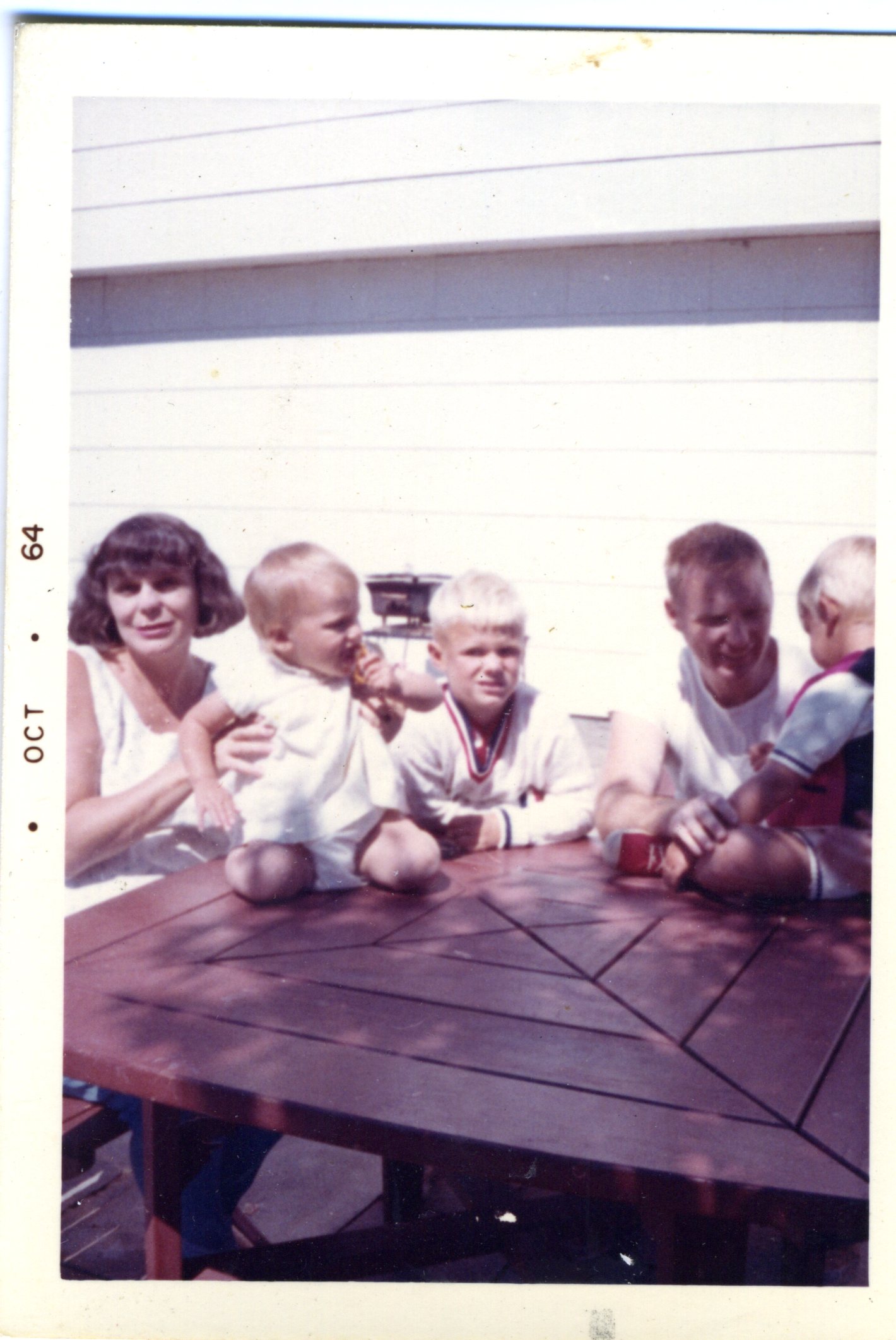
Galbraiths1964

The Galbraiths on the patio behind the house, summer 1964.

Mom and Dad had a volatile relationship. Neither was very happy and they fought a lot. In this photo from the summer of 1964, Mama is pregnant with Chris. She is holding me, with Ron beside us and Wilan by Dad. I was about one year old, Wy was two and a half, and Ron was six. After the four kids left the house, my parents rediscovered common interests and actually got along much better. I would like to have posted a photo of them together later in life, but I don’t have a digital copy with me.

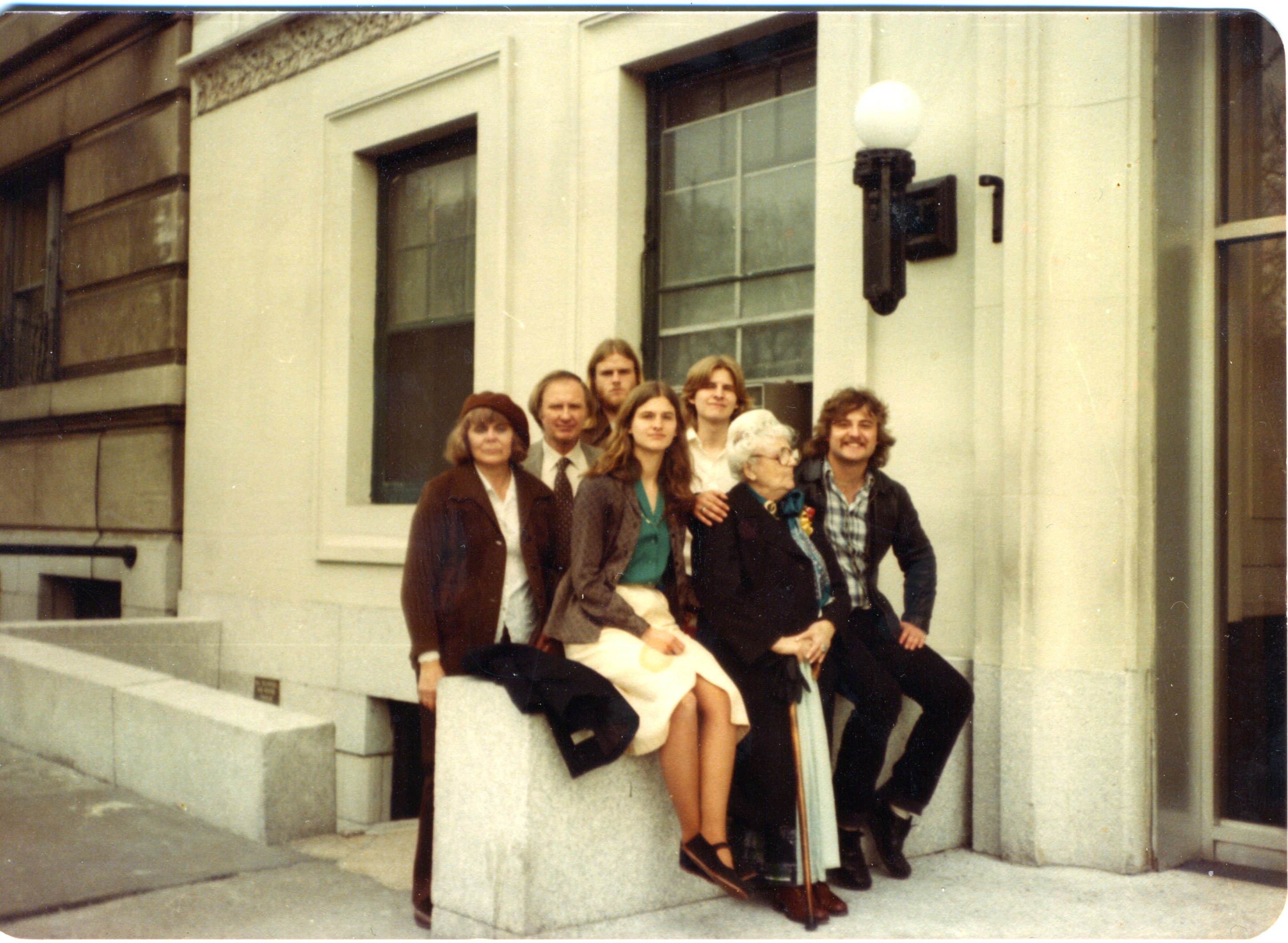
The Galbraiths with Babcia outside Babcia's apartment on Riverside Drive sometime in the early 1980s, Mama in her beret.

The Galbraiths with Babcia outside Babcia’s apartment on Riverside Drive sometime in the early 1980s, Mama in her beret.

Mom struggled with her waves. She would wear a scarf like a headband after washing her hair so that her bangs would dry straight. She put on a beret when she went out to hold her bangs in place against the wind. I became her mirror. It was my job to make sure her bangs were in place at all times. She’s beyond caring now, but I still do it automatically. Her hair is thinner now, brilliant white, but still soft and wavy. I love to stroke it, and I always adjust her bangs.

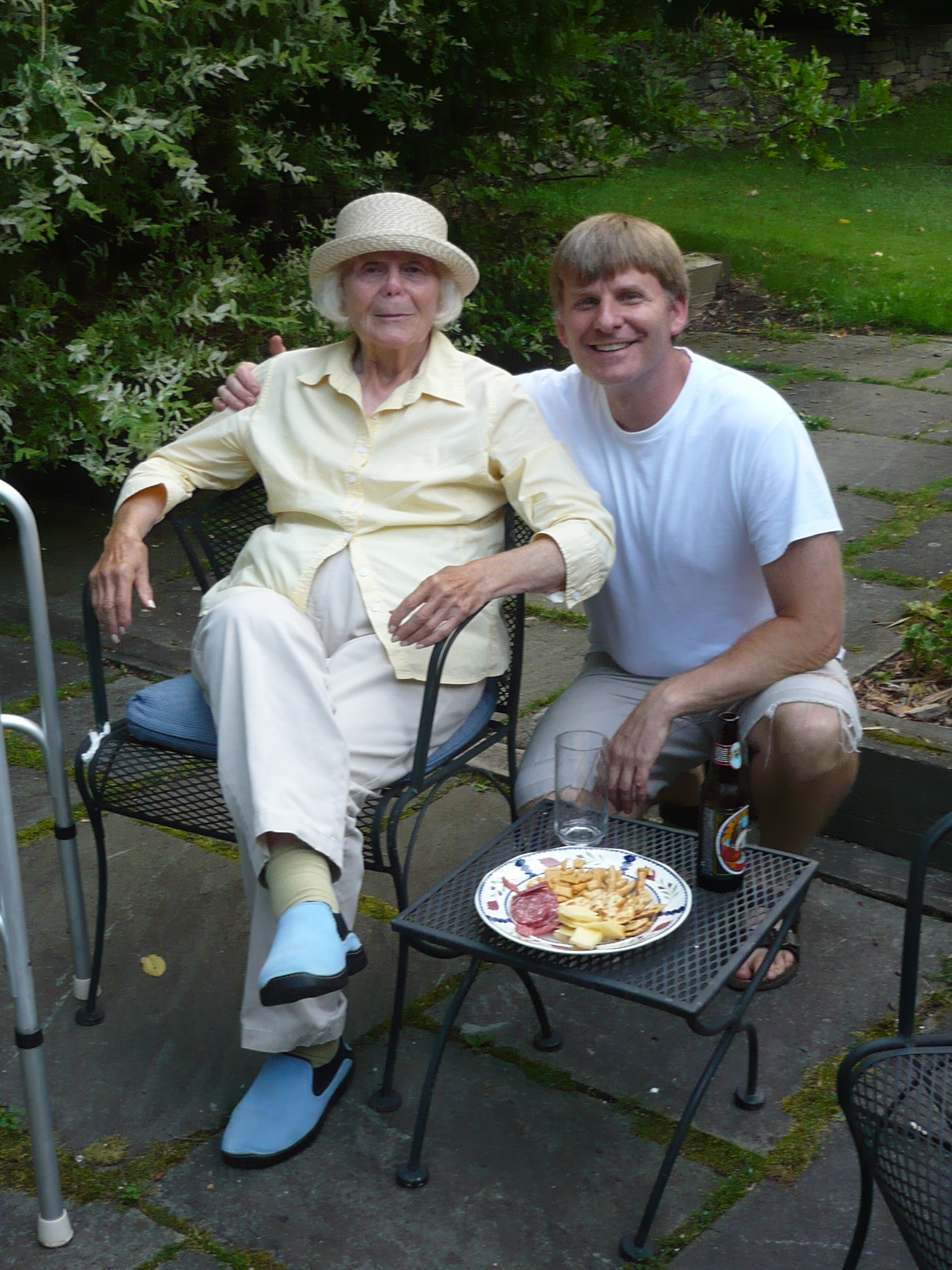
In more recently years, Mama switched from berets to brimmed hats. Here we are at Friendlies in 2007. She loves ice cream, especially chocolate.

In more recently years, Mama switched from berets to brimmed hats. Here we are at Friendly’s in 2007. She loves ice cream, especially chocolate.

Mama and Chris on the patio, 2008. Mama was already sick but still able to communicate with us.

Mama and Chris on the patio, 2008. Mama was already sick but still able to communicate with us.

We’re not in Poland anymore

26 Wednesday Nov 2014

Posted by Marysia Galbraith in Family

≈ Leave a comment

Some of the cousins had a reunion in New York last weekend. My genealogical work (along with that of other cousins and relatives) was instrumental in getting everyone in touch in the first place. All totaled, about seventeen people gathered in Manhattan, including descendants of five of my great-grandparents’ children. Until a couple of years ago, I didn’t know most of them existed.

OddBirdz Tziporela.jpg.

My cousin Pini, grandson of my grandmother’s sister Rachel, organized the gathering. He and his wife Pnina came from Israel because their son Omri was appearing in a comedy show in the Village, Odd Birdz: http://youtu.be/GULKr2ST1BE

Missing this reunion really brings home to me that my family is not in Poland anymore. We were uprooted, and in many ways the connection was severed from this place. We’re some of the lucky ones because we have re-rooted and thrived in the US, Israel, Switzerland, and (I’m told) Argentina. But I have to go to those places if I want to meet my cousins. They are not here.

I have to admit to feeling a bit defeated by this. All I am finding in Poland is fragments of Jewish lives, of my ancestors’ stories. I’m bombarded by experiences of loss, hatred, and evil.

20141117PiwkoReunion 20141118KrysiaPiniEldadFortunately, my family has done a lot to help me feel included. My brother Chris skyped me. He held up his phone and scanned the room so I could see everyone sitting in a circle, and hear several conversations going on at once. That’s just like the family gatherings I remember with the aunts and uncles I knew. I got to say “hi” to Pini, Joan (granddaughter of my grandmother’s oldest sister Liba), and Krysia (daughter of my mother’s brother George and the person who embarked on this genealogical adventure together with me three years ago). Since then, I’ve talked with/written with each of them to get their impressions of the meeting. They’ve sent me photos. Another cousin, Eldad, has promised to organize another reunion the next time I’m in New York.

Attachment to place has fascinated me, I think in part because of my mother’s longing for Poland, but also because of my own sense of dis-placement on Long Island where I grew up. Although my home was there, I never really felt “at home.” I moved away as soon as I could, when I went to college, and I never moved back. Each of my brothers returned home at some point (and Chris has even stayed), but I haven’t. I’ve found places that feel more like home elsewhere—in Alabama and in Krakow. But what is lacking in these other places is family.

Growing up, I knew my first cousins, aunts and uncles. We had big family reunions in Connecticut at Auntie Nunia’s (the one sibling of my grandmother I knew) and her daughter Teresa’s. Later, my mom spent more time with her cousins Stanley and Pauline, the children of my grandmother’s sister Sarah, so I got to know them, too. I knew my grandmother had other siblings, but we were never told much about them. I wasn’t told about the family plot in a cemetery just fifteen miles from where I grew up, or that other cousins live throughout the New York metropolitan area. In effect, I was cut off from a significant part of my family, and even more significantly, cut off from their culture, religion, and history.

Learning about my family’s heritage is complicated because I’m delving into things my mother invested a tremendous amount of energy into hiding. I think it took me so long to ask these questions about the past out of loyalty and respect for her. But I don’t believe it helped her to keep things secret. Quite the opposite. By denying or hiding her Jewish heritage, she never could come to terms with the trauma she experienced. And she alienated herself from the support system that might have helped her come to terms with it.

For me, recognizing and embracing all the branches of my family helps to root me, if not in a particular place, at least within a particular history. I’m proud to be part of this large extended family. It feels like a tremendous gift. That we survived, that we thrived. I don’t take for granted how fortunate we are for that. For so many families, there is no one left, just the scattered fragments of lives lost.

Mom grew up at Dębinki

23 Sunday Nov 2014

Posted by Marysia Galbraith in Bereda, Family

≈ Leave a comment

The time my mother recalls as the happiest part of her childhood was from ages six through twelve, when she lived on an estate outside of Warsaw called Dębinki. Originally built in the 18th century, it was named after the many oak trees in the park surrounding it (dębi means “oaks” in Polish). It was a big house with several annex buildings including the kitchen and stables. There were three lakes on the property, and agricultural fields her father (actually, her stepfather) rented out to farmers from the nearby village.

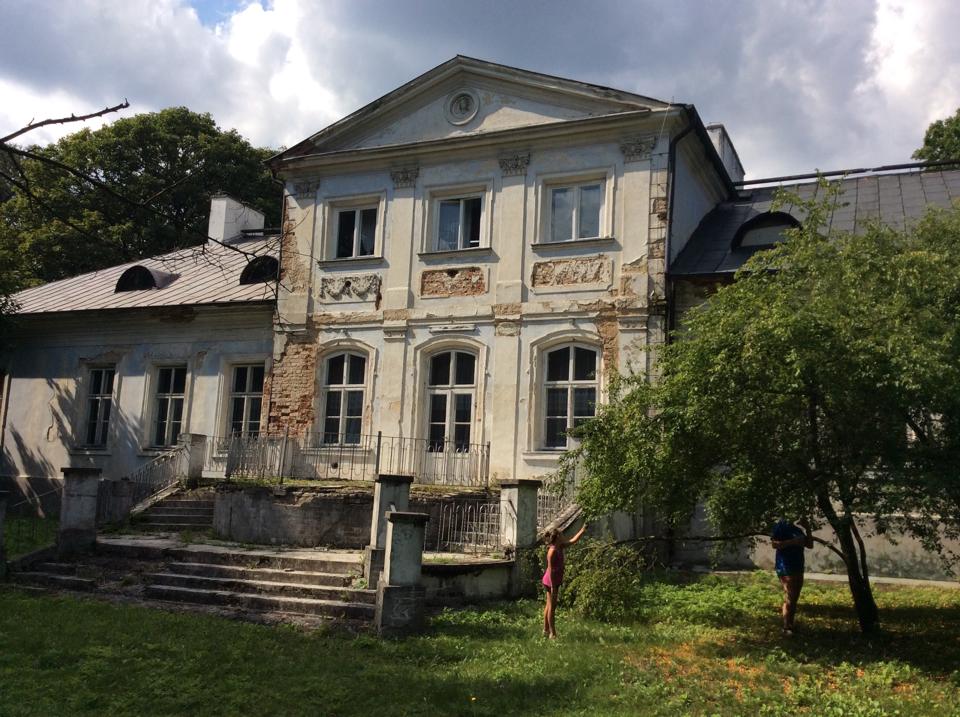
The front of Dębinki

Dębinki

My mother had a lot of freedom to explore the neighboring countryside; sometimes she would hide from her German governess, who would call for her, “Marysien, Marysien,” but she would stay quiet in the tall grass. Other times, she would kick off her shoes and stockings and climb a tree, also refusing to heed her caretaker’s pleas to come down. She didn’t like this governess, who would try and get her to eat by demanding in imperfect Polish that she “swallow” (połknij). She and her brothers didn’t go to school. Rather a tutor gave them their lessons at home.

One time, Mom was picking strawberries in one of her father’s fields when a farmer came out and told her he had leased the land and the strawberries were his. My mom hadn’t known, but was so embarrassed she picked a whole basket of beans from their garden and gave them to the farmer. Another time, while still very young, she was caught in the storeroom eating fresh butter directly out of the pot.

As a child, mom loved to ride horses, and had a pony called “Daisy.” There were three ponies—Drips, Drops, and Daisy; Drips and Drops belonged to each of her brothers. I asked her why the ponies had English names. She just shrugged and answered that’s what they named them. After coming to the US, my mom rarely had the opportunity to ride horses, though one day I came home from school (or maybe from a friend’s house) and our neighbor Mrs. Scimeme (or was it Mrs. Quinlavin?) told me with astonishment that she had seen my mom riding down our suburban street on a horse. If I remember correctly (and my memory of this is very fuzzy, almost as if I dreamed it), she was riding bareback, too. I don’t remember whose horse it was, why its owner came to our house, or why my mother decided to ride it. I do remember that Mrs. Scimeme (or Mrs Quinlavin, though I’m pretty sure it was Mrs. Scimeme) was amazed by how well my mother could ride, even after so many years.

These memories existed out of time, so I did not know until much later when or why my mother and her family left Dębinki. My uncle, for his own reasons, kept alive the idea that somewhere in Poland the family estate still exists, that it was nationalized by the postwar communist government, and that we might someday reclaim ownership.

I learned the truth only after visiting Dębinki in 1992, while I was more than a year into my dissertation fieldwork. Mom had never wanted to return to Poland; she said her country no longer existed. But after the fall of state socialism, and because I was living there, she, my father, and my younger brother came for a visit. It was Mom’s first time back in over 45 years. I’ll say more about our time in Warsaw and Krakow later, but for now, let me describe our trip to Tłuszcz.

Tłuszcz is an inauspicious name for a town—it means “Fat,” and in 1992 it lived up to its name. It was about an hour out of Warsaw by commuter train. The train itself was old and grimy with uncomfortable vinyl seats. We got out in the town center; the place seemed deserted, with grey buildings and abandoned factories. We found a cab to take us to Dębinki, which was several kilometers out of town, past more abandoned factories and then through agricultural fields. The mansion was in the midst of renovation; the plaster exterior was chipped and faded. The building had been a home for wayward boys, and then it became an orphanage, and the large upstairs rooms had been divided with cheap partitions. Nevertheless, the grand fireplace in the entranceway remained, along with a black marble plaque inscribed in Latin with a tribute to the original owner who lived there in the 18th century.

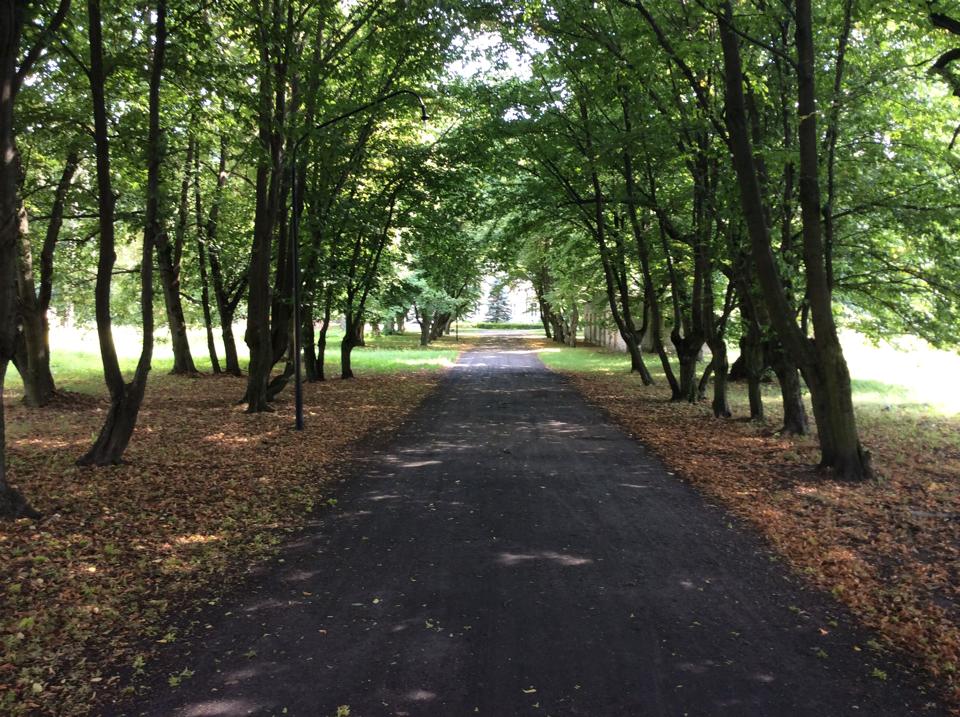
This trip was very sad for my Mom, perhaps the worst part of her whole trip to Poland. Here she felt most strongly that (just as she had always told me) the country she grew up in and loved no longer existed. She had trouble reconciling this broken down building with her romantic memories of childhood. She pointed to the depressions in the ground where the lakes used to be, and said the trees lining the long drive to the house seemed smaller.

When I explained that my mother grew up in the house, the caretaker who showed us around looked confused and said that, according to the historical records he has seen, the house belonged to a different family. Later, my mother explained what had happened. As she described it, her father (actually, stepfather) had a gentleman’s agreement to buy the estate from the owner, a nobleman who had come on hard times. Papa, as my mother called him, had lost his own estate in his divorce settlement, and dreamed of replacing it. However, after several years, he had a falling out with the nobleman and because nothing had been written down, he lost possession of Dębinki.

My brother Chris remembers this better than I do, but during our visit the workers at the orphanage, long term residents of the adjoining village, treated mom with deference. Mom found their regard annoying. She was humble and didn’t like being treated as special. But what we were witnessing was the continuation of the class system that wasn’t even stamped out by Communism. Mom had the manners and refined speech of a lady, and the kitchen workers and custodial staff fell into their roles as servants of the great house.

I still noticed a little of this deference when I went back a few months ago with my brothers. The orphanage staff, and later the people hanging around the village store, were very happy to talk to descendants of former residents of the estate. The older men at the store said they recalled their parents talking about the Beredas. The orphanage staff told me how the former estate workers tried to guard the house against looting during the war. For a while it was used by the Polish Underground Army, and then briefly by the Nazis. The roof sustained some damage from bombs. After the war, the property was nationalized and it was fixed up and converted into a state institution. It became an orphanage in 1991 (the year before I first visited).

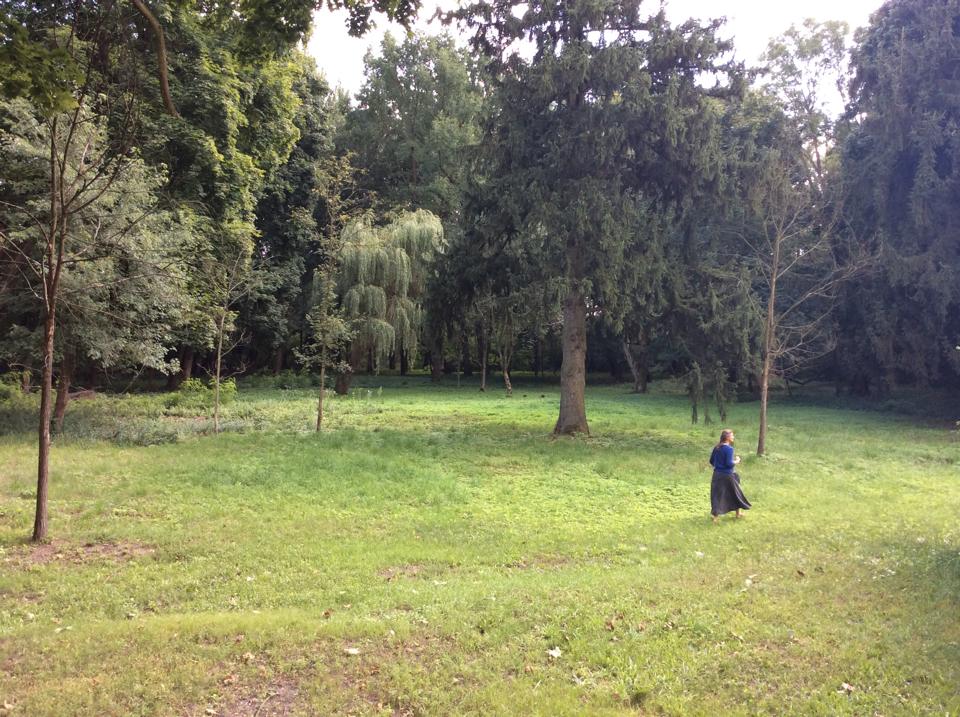
I remarked how the building was being renovated when we visited twenty years ago. We were invited to look around. The front facade and the ground floor rooms were all restored to a hint of their earlier grandeur, though they ran out of funds before they could get to the back facade. The floors were restored, though the intricate parquet my mom remembered was at some point before our visit in 1992 replaced by simpler wooden floorboards. Rooms are painted in a range of colors, with ornate crown molding along the high ceilings. One is the dining hall, another a game room. Outside, marshy depressions indicate where the lakes used to be. By one, down a treelined lane from the house, is a madonna statue (or was it a saint? I lost my field notes and my photos when my hard drive died…) There are many large trees on the property, including those along the drives and lanes.

According to the history of the place in a pamphlet given to me by one of the orphanage workers, King August II gave the land to Jan Renard near the end of the 17th century for faithful service. Renard sold it to the Dybowskis who remained in possession until 1841. During this time, the Polish poet Cyprian Norwid spent time there with his mother and her stepfather. The property passed through several owners before being sold to Helena Osowska in the 1920s, who lived there during World War II.

If that is the case, who was the nobleman my step-grandfather got the property from? Why is there no record of the Beredas living there? For everything I uncover, it seems more mysteries are also revealed.

My brother’s thoughts during his first trip to Poland

22 Saturday Nov 2014

Posted by Marysia Galbraith in Bereda, Family, World War II

≈ 2 Comments

My brother Wiley wrote some other moving posts about our Mom’s experiences in Poland.

About Warsaw: “Growing up my Mom shared chilling accounts of her experience during WWII as a courier in the Polish Underground Army and a medic during the Polish uprising. The German response was to level Warsaw destroying / leveling over 85% of the city. My mom survived, not without physical injuries and she required over 22 plastic surgeries to piece her scull and face back together. She was forever changed by the war. She was always concerned about how her face looked. I never noticed anything wrong, she was just my mom. In retrospect she suffered from what today is called PTSD and I am convinced passed the trauma of war on to her four kids. Visiting Warsaw, seeing the images of the leveled city and walking through the Old City (that was rebuilt and recreated after the war), makes these memories and stories become very much more real.”

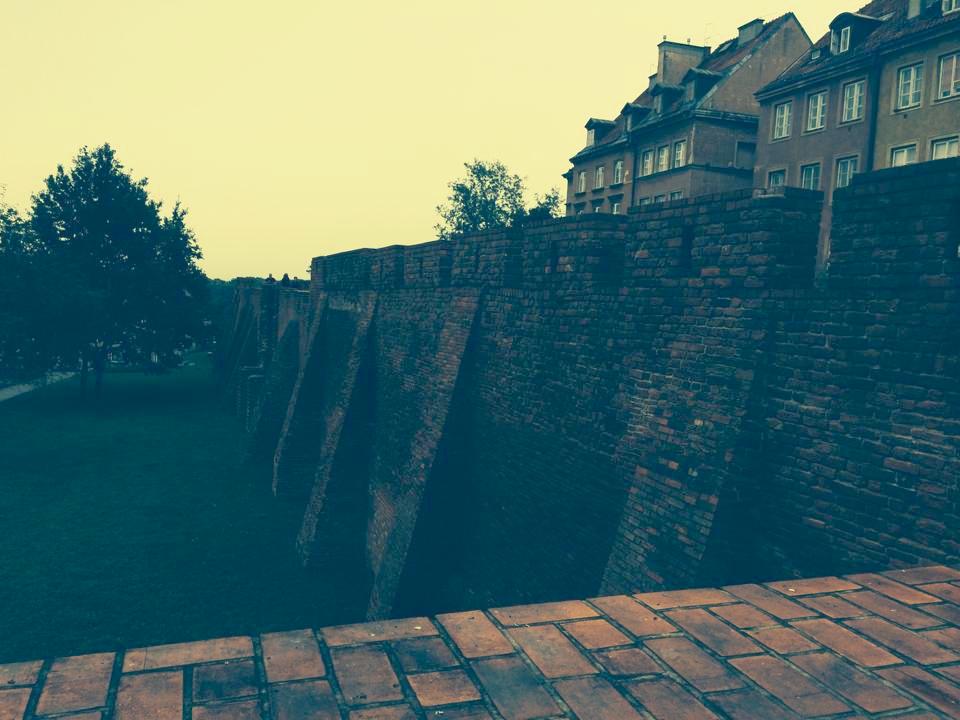
A fragment of the old wall surrounding Warsaw's Old City. All of it has been reconstructed.

A fragment of the old wall surrounding Warsaw’s Old City. All of it has been reconstructed.

About Dębinki, the estate Mom lived on as a child. It’s about an hour outside of Warsaw, near a town with the regrettable name Tłuszcz (Fat):

“Mom spoke to me about her Pony, yes like the Seinfeld episode, but mostly about the wonderful gardens, meadows and trees of her childhood. Visiting this estate located in a small town about an hour by train outside of Warsaw was a very emotional experience. The town is Tluszcz, and the estate is Debinki, please don’t ask me to say these words.

“The house was taken by the German’s during the war and did sustain some bomb damage. Never returned to its original state, it is currently used as an orphanage.

“Mom lived here from the age of six to 12 and than moved with her family to a villa in Warsaw along the Vistula river.

The villa was destroyed by German bombs during the war and today the land is a park and roadway.”

The drive from the road to Dębinki

The drive from the road to Dębinki

The front of Dębinki

The front of Dębinki

The back of Dębinki

The back of Dębinki

20140822Debinki5

That’s me walking in the back lawn, as we imagined our Mama would have as a child.

Conversion

21 Tuesday Oct 2014

Posted by Marysia Galbraith in Family, Jewish Culture, Poland

≈ Leave a comment

What was it like for a Jew to become a Christian in Poland in the early 1920s? For my grandmother, it meant a total break with her family, her past, and her heritage.

Her own father sat shiva, the seven-day mourning period following a death in the family. In other words, by converting she became dead to him. I can only approximate the date; My mom remembers being left with Auntie Nunia at a very young age. She says she was two (which would make it 1924 or 5) but I wonder if she could have been a bit older since it would be highly unusual to have vivid memories so young. Uncle Sig was born in 1927 so it probably happened before then.

BTMQ1OcQra4VP1wzh9ZjvgzgwLboLrS_jJ0lt4fN87g

Hiel Majer Piwko, c. 1908

There was another part of the story. I’ve known this for a while so it’s possible my mom told it to me at some point. When Babcia’s father became ill, she visited him on his deathbed, kissed his feet, and begged him to forgive her. He refused to acknowledge her despite her pleas. This would have been in 1929, so just a few years after her conversion. Babcia did, however, reconcile with her mother, who lived a few more years until 1933. Mostly, mom resisted talking about this history. Only once, she expressed bitterness to me that because of her mother’s actions, she never knew her grandparents. This suggests to me that contact between my branch and other branches of the family remained strained and infrequent, with the notable exception of Auntie Nunia.

Thinking more broadly, Aleksander Hertz (Żydzi w Kulturze Polskiej, 1961) sheds some light on the meaning and experience of conversion for Polish Jews. He describes pre-20th century Poland as a caste society, meaning there was a closed system of social groupings comprised principally of landed gentry, peasants, and Jews. Each caste had clearly defined boundaries reinforced by myriad external (dress, customs, economic roles, language) and internal (culture, religion, sensibilities, morality) factors. Further, caste is closed from both the inside and the outside (p. 125). The only way out of the Jewish caste was through christening and conversion.

During the Interwar Period in Poland, Jews faced blocks against full equality within Polish society. In many ways, regardless of how well they spoke Polish, how much wealth they accumulated, or how much education they had, they remained categorically different (and lower in the social hierarchy) than Catholic Poles. Those who assimilated were still viewed as members of their caste (92), and those who sought to integrate the most (via conversion) were often viewed with the greatest distrust (125).

About the psychological experience of conversion, Hertz writes “The change of religion in every specific case [excepting those for whom it was a purely pragmatic decision] marked a strong shock of massive proportions for a Jew” (130). There was a great deal of pride within the Jewish community; Jews felt they were the “chosen nation” and in many ways superior to the “goys” around them (132-3). Conversion meant a radical break with a whole system of life and the associated social environment (środowisko); “The neophyte was someone who didn’t only abandon their caste, but also denied its ideals, everything that was part of its soul and reason to exist. He was a defector and a traitor” (131). Within the Jewish community, converts were thus viewed harshly.

Conversion was never common, but it became more so in the 19th century. For wealthy Jews in particular, it became a means of shifting class and becoming part of gentry culture (178). They had little in common with orthodox Jews, and often identified more with the values and practices of the elite (Poles in central Poland, Germans in western Poland) (148-50, 155). Mixed marriages also became more common during this period. However, exit from caste actually became harder as anti-Semitism grew in response to the increasing similarity between Jews and non-Jews via mass education, adoption of Polish (or German) language, and modern styles of dress. While some assimilated without rejecting their Jewishness, breaking out of the boundaries of caste often also entailed changing names and erasing all traces of Jewish heritage (153, 167). Essentially, the culture that was adopted was not only Polish, but also noble culture (156). The reassertion of caste during the Interwar period was “particularly painfully and dramatically felt by assimilated Jews” (174). Some became overzealous in their perfection of the Polish language and customs, their commitment to the cult of Polish literature and art, and their fanatical nationalism. They became “more Polish than the Poles” (175). Nevertheless, the “shadow of caste” fell on them, and they were never sure if their performance of Polishness, no matter how perfect, would be recognized as good enough (176-7).

My family fits this pattern described by Hertz to such a degree it is painful to me. My mom used to mock my grandmother for being “More Catholic than the Pope,” but she herself adopted a fierce Polish patriotism and worked as hard as anyone in the family to deny their Jewish roots. They tried to integrate completely with gentry society, and in most ways they succeeded. For instance, even after forty-five years of communism, Poles treated my mom with deference; those from humble backgrounds in particular responded to her refined manner of speaking by enacting persistent class/caste relationships. But this life performance came at a cost, and probably contributed to my mom’s hyper self-consciousness and battle with insecurity.

Why we grew up Christian

18 Saturday Oct 2014

Posted by Marysia Galbraith in Catholicism, Family, Jewish Culture

≈ 4 Comments

What really happened is hard to reconstruct. I’ve asked my brothers, my cousins, my aunts, and each tells the story a little differently. Still, the general outline remains the same. I will call Babcia Halina because that’s the name she used in the US (I’ll discuss the fluidity of names in another post). Halina was a rebel. One of the youngest in her family, she resisted the constraints imposed on her by her conservative father. She even ran away and moved in with an older sister in Warsaw. My cousin Krysia remembers that the main reason Halina left was because her father would not let her go to college. In Warsaw, she attended university. Still, Halina’s parents persuaded her to marry an older man who was a friend of the family. It was an arranged marriage, not a love match, and the two turned out to have very different characters. I think she found him stodgy and conservative.

Halina was already the mother of two small children when she met Zygmunt on a train. Well, one cousin heard she was on a tram not a train. But everyone else says it was a train; some say she was on her way to her country estate, or to visit relatives, or maybe to visit friends. But anyway, they met. It was an instant attraction, and by the end of the journey, Zygmunt told her, “I see you weeping on my grave.” That’s what Chris remembers he said, and I like it better than my version.

Zygmunt Bereda was a wealthy businessman, a wheeler-dealer, a man of big passions, and a Catholic. He became part of Halina’s social circle. Maybe he turned out to be a neighbor of the friend she went to visit; maybe he was a business partner of her husband (again, different people explain it differently). They ended up divorcing their spouses and running off together (though perhaps this happened in the opposite order). Halina became a Catholic. Uncle George and my mom were baptized. They took steps to bury their Jewish heritage. They all took the name Bereda and had false papers made that changed Halina’s maiden name from Piwko to Barylska, and Mama’s birthplace from Warsaw to Wilno (Vilnius). Zygmunt and Halina’s son, Uncle Sig, was born in 1927. They hid the truth well, leaving my generation to find out by accident.

Babcia’s conversion was not just pragmatic. She embraced Catholicism with her heart and soul. She performed a kind of mystical faith. She believed in blessings and visions. She kept the cross and the Madonna on her walls. I get the sense she had retreated from Judaism long before her love affair provided an opportunity and a reason to become Christian.

Of course there were many other reasons she might have preferred to be Catholic in Interwar Poland. Anti-Semitism made it a bad time to be a Jew. And then, during the Nazi occupation, being Jewish would have been a death sentence. But those are subjects for another post.

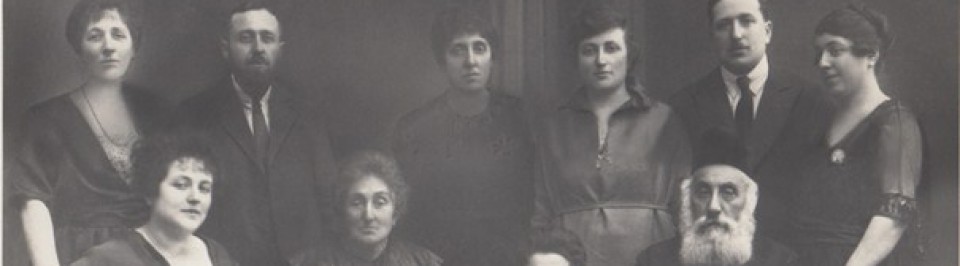
The photo that started it all

21 Sunday Sep 2014

Posted by Marysia Galbraith in Family, Piwko

≈ 4 Comments

I’m not sure why, but in 2011 I started writing down memories about my mother’s life. It just flowed out of me. Maybe it’s because my mom was fading and I wanted to make sure there was a record of her life. Maybe, too, it’s because she was past caring that her secrets might be told. For sure, it was part of my own need to know where I came from. As an anthropologist, I’ve been studying other people’s identity and attachment to community, but I’ve never felt very grounded in any place or people myself.

From documenting what I knew, I realized how fragmented my stories were. I wasn’t even sure what my grandmother’s maiden name had been; I had no idea who my biological grandfather was.

I was just back from a trip to Poland. Only a few boxes of old papers were left from a massive clean up and renovation of the house. And then I saw this photo:

JechielHindaAndChildren

It was in my grandmother’s papers in an envelope she had labeled in big letters, “Do not open.” I recognized my grandmother right away–the beautiful, bold, coquettish woman on the bottom left. She gripped her mother’s hand, wore an elegant short dress and high heels. By contrast, her father’s bushy white beard, cap, and long jacket left no doubt about the family secret. They were Jewish.

Of course I’ve known that ever since my cousin announced it one Christmas, but this photo made it real for me. I looked into those faces and wanted–felt compelled–to know more.

Newer posts →

Categories

  • Anthropology (37)
    • Archives (14)
    • Fieldwork (7)
    • Ground Penetrating Radar (GPR (4)
    • Research Methodology (8)
  • antisemitism (14)
  • Association of Descendants of Jewish Central Poland (32)
  • Catholicism (8)
  • Conference (1)
  • Discrimination (2)
  • Family (69)
    • Bereda (17)
    • Kolski (13)
    • Piwko (22)
    • Rotblit (3)
    • Walfisz (4)
    • Winawer (7)
  • Genealogy (11)
  • Heritage work (66)
    • Commemoration (23)
  • Identity (18)
  • Israel (6)
  • Jewish Culture (89)
    • Cemeteries (51)
    • Museum (7)
    • Synagogues (33)
  • Jewish immigrants (8)
  • Jewish Religion (1)
  • Memory (70)
  • Names (14)
  • Photographs (6)
  • Pifko-Winawer Circle (5)
  • Poland (125)
    • Baligród (1)
    • Bolimów (1)
    • Brześć Kujawski (5)
    • Buk (1)
    • Chodecz (1)
    • Dukla (2)
    • Dąbrowice (1)
    • Gdynia (1)
    • Gostynin (2)
    • Gąbin (1)
    • Izbica Kujawska (1)
    • Kazimierz (4)
    • Kowal (1)
    • Koło (1)
    • Krakow (7)
    • Krośniewice (1)
    • Kutno (6)
    • Kłodawa (1)
    • Lesko (8)
    • Leszno (1)
    • Lubień Kujawski (1)
    • Lubraniec (1)
    • Lutowiska (3)
    • Piła (3)
    • Podgórze (2)
    • Poznan (11)
    • Przemyśl (2)
    • Pzedecz (1)
    • Radom (1)
    • Radymno (1)
    • Sanok (1)
    • Skierniewice (5)
    • Sobota (2)
    • Tarnów (2)
    • Warsaw (22)
    • Wielkopolska (1)
    • Wronki (7)
    • Włocławek (20)
    • Zasław (2)
    • Łódź (1)
    • Żychlin (30)
  • Polish Culture (10)
  • Polish-Jewish Heritage (60)
  • Polish-Jewish relations (60)
  • Post-World War II (24)
  • Pre-World War II (22)
  • Reclaimed Property (1)
  • stereotypes (3)
  • Survival (9)
  • Trauma (3)
  • Uncategorized (5)
  • Victims and perpetrators (4)
  • World War II (45)
    • Jewish Ghetto (12)
    • Nazi Camps (5)
    • Polish Underground Army (3)
  • Yiddish (5)

Enter your email address to follow this blog and receive notifications of new posts by email. Your email address will not be shared.

Archives

  • October 2025 (1)
  • July 2025 (8)
  • June 2025 (1)
  • April 2025 (1)
  • August 2024 (3)
  • July 2024 (3)
  • May 2024 (2)
  • April 2024 (1)
  • May 2023 (2)
  • January 2023 (2)
  • December 2022 (7)
  • November 2022 (2)
  • October 2022 (5)
  • September 2022 (1)
  • January 2022 (1)
  • August 2021 (1)
  • December 2020 (2)
  • July 2020 (1)
  • May 2020 (3)
  • April 2020 (1)
  • March 2020 (1)
  • January 2020 (2)
  • May 2019 (1)
  • February 2019 (1)
  • November 2018 (1)
  • September 2018 (1)
  • August 2018 (3)
  • July 2018 (1)
  • June 2018 (1)
  • May 2018 (1)
  • April 2018 (2)
  • March 2018 (2)
  • February 2018 (2)
  • January 2018 (2)
  • December 2017 (2)
  • November 2017 (2)
  • October 2017 (1)
  • September 2017 (3)
  • August 2017 (3)
  • June 2017 (2)
  • May 2017 (3)
  • April 2017 (1)
  • March 2017 (2)
  • February 2017 (1)
  • January 2017 (2)
  • December 2016 (2)
  • November 2016 (4)
  • October 2016 (1)
  • September 2016 (6)
  • August 2016 (2)
  • July 2016 (1)
  • May 2016 (4)
  • April 2016 (2)
  • March 2016 (3)
  • February 2016 (4)
  • January 2016 (3)
  • December 2015 (3)
  • November 2015 (5)
  • October 2015 (5)
  • September 2015 (3)
  • August 2015 (4)
  • July 2015 (3)
  • June 2015 (3)
  • May 2015 (4)
  • April 2015 (9)
  • March 2015 (3)
  • February 2015 (2)
  • January 2015 (5)
  • December 2014 (4)
  • November 2014 (9)
  • October 2014 (2)
  • September 2014 (1)

Copyright Notice

All original text and images are copyright © Marysia Galbraith. Please contact the author before quoting.

Blog at WordPress.com.

  • Subscribe Subscribed
    • Uncovering Jewish Heritage
    • Join 147 other subscribers
    • Already have a WordPress.com account? Log in now.
    • Uncovering Jewish Heritage
    • Subscribe Subscribed
    • Sign up
    • Log in
    • Report this content
    • View site in Reader
    • Manage subscriptions
    • Collapse this bar
 

Loading Comments...