• About
  • The Photo that Started it All

Uncovering Jewish Heritage

Uncovering Jewish Heritage

Category Archives: Family

Posts about my family.

Capturing the Spirit of the Monuments

23 Thursday Oct 2025

Posted by Marysia Galbraith in Cemeteries, Family, Heritage work, Memory, Żychlin

≈ Leave a comment

My cousin Annice captured the spirit of the memorial monuments in the Żychlin Jewish cemetery during our summer clean-up and research.

Depicted in watercolor and ink are two of the monuments constructed out of concrete and matzevah fragments, designed and engineered by descendant Moshe Zyslander shortly after Poland regained her autonomy from communism and Soviet influence. Annice captures the poignant contrast between the stark grey monuments and the wild green weeds surrounding them.

Her text reads, “Honoring and never forget the Jews of Zychlin the day before the liquidation of the ghetto March 2, 1942 at the cemetery buried in a mass grave at the Jewish cemetery Desecrated headstones returned and assembled by generation holding their memory Nature returing life L’chaim July 2025 For Marysia her […dom] and vision Annice Jacoby descendant”

Żychlin Cemetery Project 2025: Volunteers Arrive in Warsaw

12 Saturday Jul 2025

Posted by Marysia Galbraith in Association of Descendants of Jewish Central Poland, Jewish Culture, Jewish Ghetto, Polish-Jewish Heritage, Polish-Jewish relations, Pre-World War II, Synagogues, Walfisz, Warsaw, World War II

≈ 7 Comments

Tags

Matzevah Foundation, University of Alabama, Żychlin Cemetery Project 2025

Nothing like spending the whole day on your feet the day after an overnight plane trip. But our group is intrepid.

Dinner on Friday night

The day began with a walking tour “The Unremovable Traces of the Warsaw Ghetto” led by Dr. Szymon Pietrzykowski of the Jewish Historical Institute. We started in the JHI in the lobby where the stone floor retains the burn stains caused by the fire bombs that destroyed the Great Synagogue in 1943 after the Warsaw Ghetto Uprising

Great Synagogue in Warsaw. Photo source: Wikipedia
Burn marks dating from the destruction of the neighboring Great Synagogue in 1943.

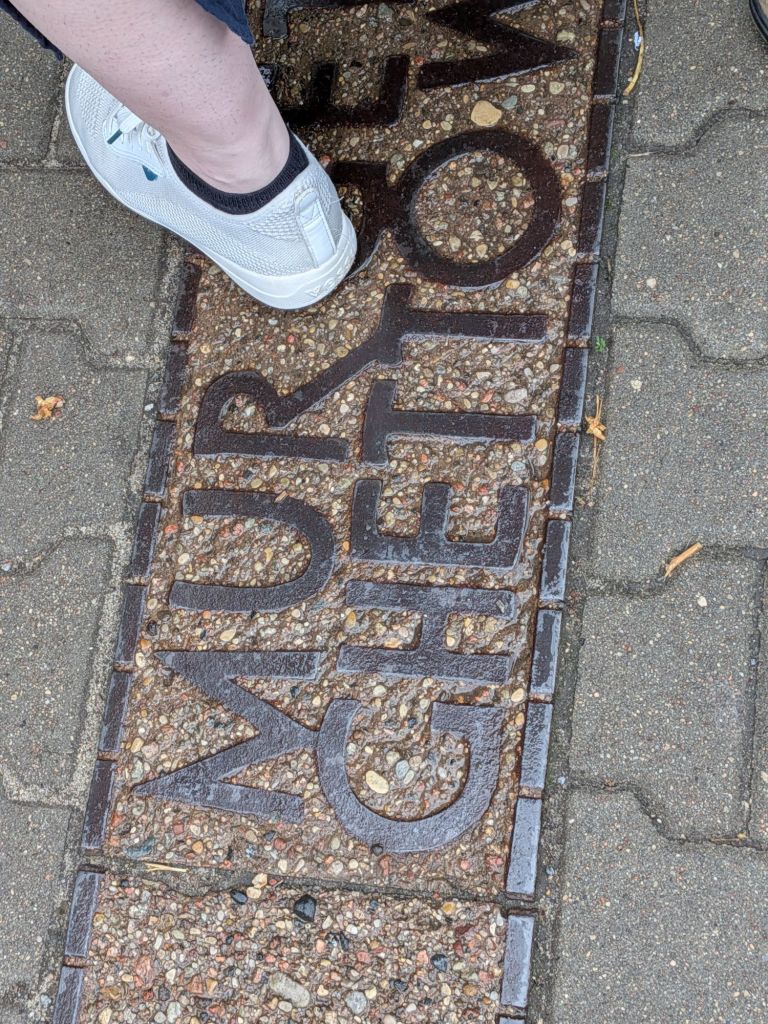
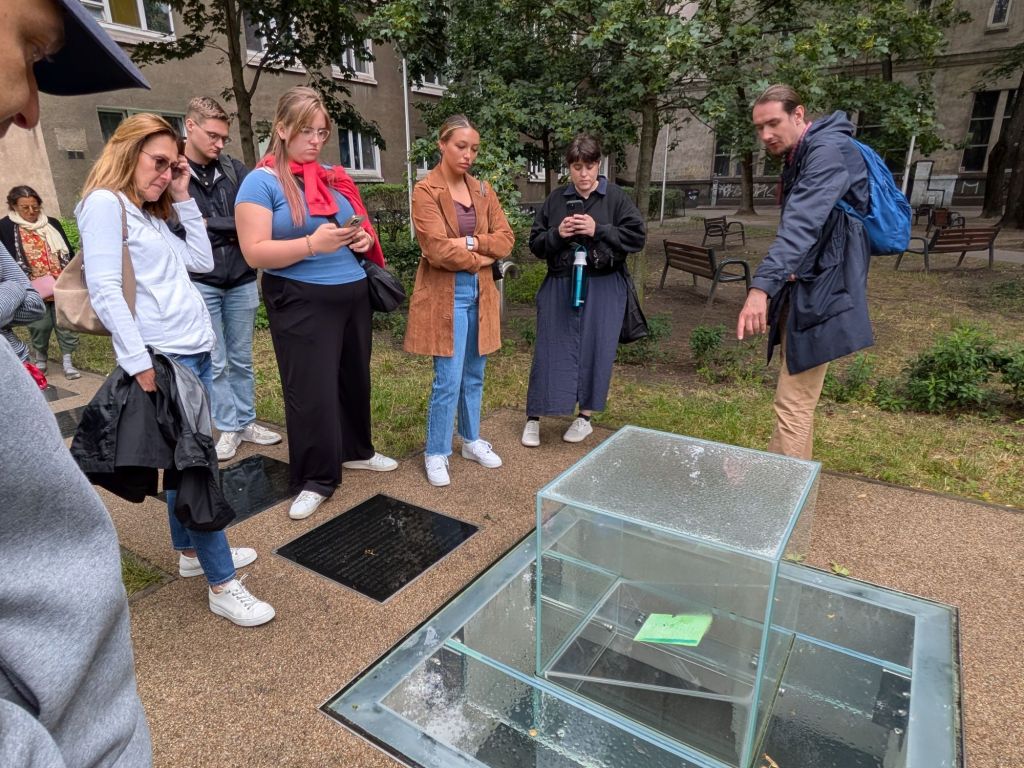
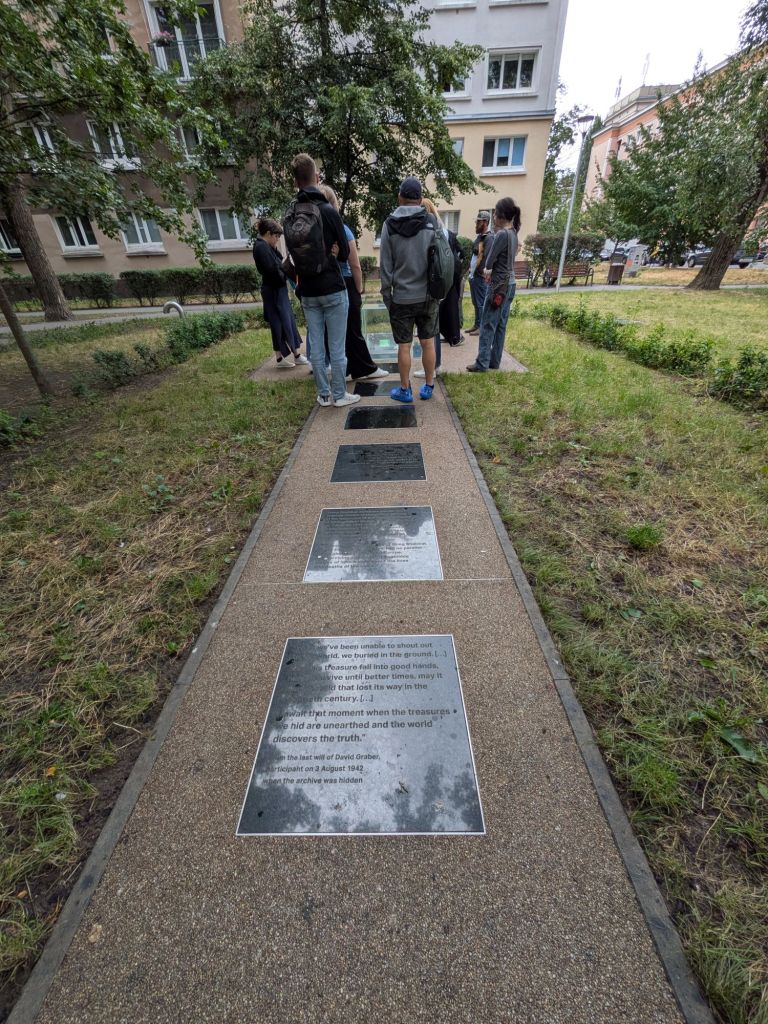
We visited places where the former location of the ghetto walls are marked by metal plaques in the sidewalk, buildings reconstructed after the war, sites where important Jewish institutions were destroyed and never rebuilt, and places significant to the Jewish Ghetto Uprising and the archive of Jewish life in the ghetto collected by historian Emanuel Ringelblum.

Jewish Historical Institute on Tłomacka Street
The building that replaced the Great Synagogue. Note the arched feature evocative of synagogue windows.
Location of the ghetto wall
Traditional courtyard, one of the few showing what prewar Warsaw was like
Monument where part of the Ringelblum archive was found in milk cans under the rubble on Nowolipie Street

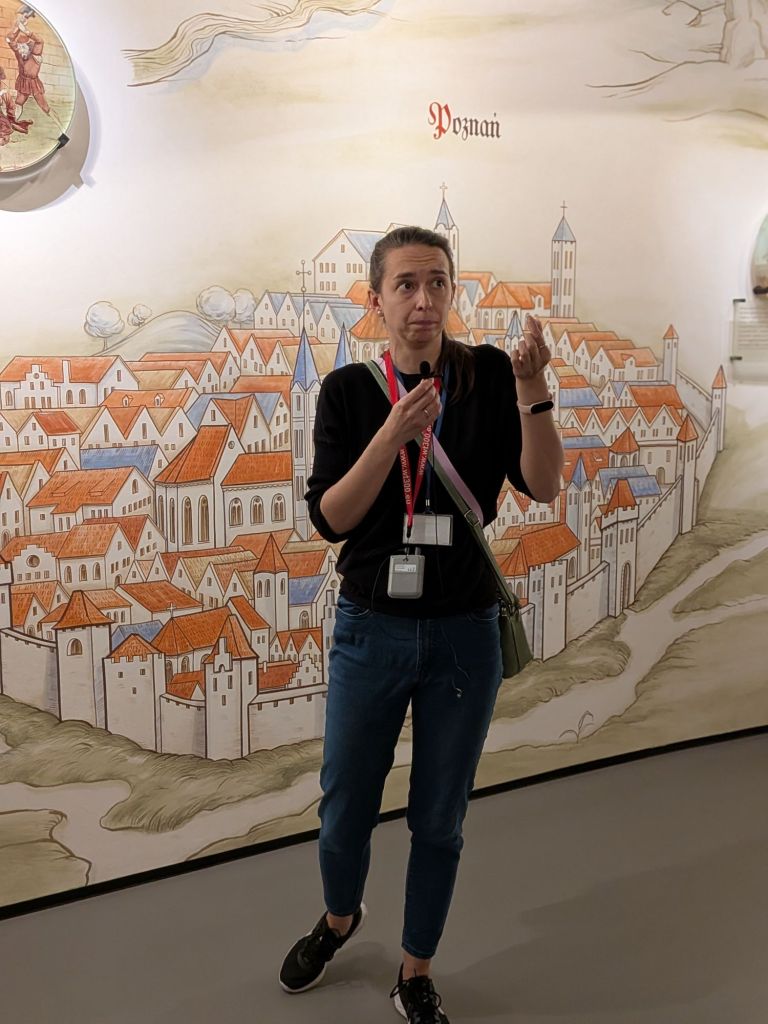
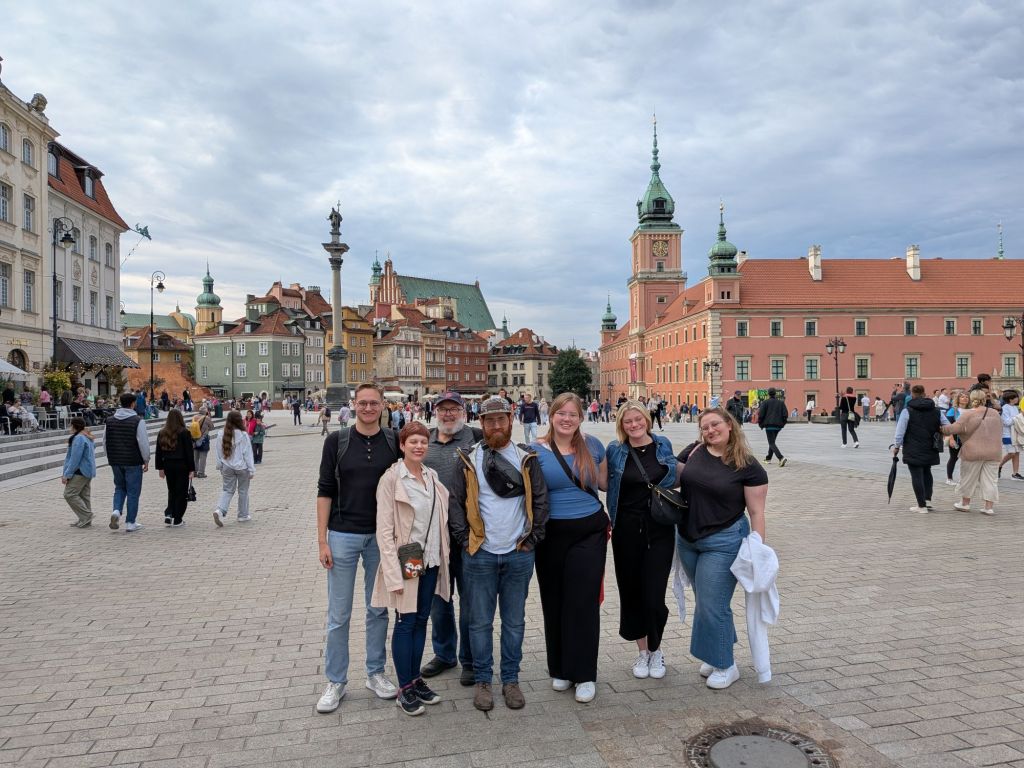
Our tour continued at the POLIN Museum of the History of Polish Jews, led by our guide Martina.

Our group at POLIN in the reproduction of a wooden painted synagogue
Model of the Great Synagogue

After six hours of walking, we were ready to sit down. Paula, whose ancestor Tema Walfisz Jakubowicz grew up in Żychlin, treated us to a well-deserved meal. Many in our group got to try pierogi for the first time!

In the Garden of Memory: A Family Memoir by Joanna Olczak-Ronikier

08 Wednesday May 2024

Posted by Marysia Galbraith in antisemitism, Family, Identity, Polish-Jewish relations, Pre-World War II, Warsaw, World War II

≈ 2 Comments

Tags

assimilation, In the Garden of Memory, Joanna Olczak-Ronikier

I have been calling my project a family memoir since the beginning, well before I read In the Garden of Memory (the English translation was published by Weidenfield and Nicolson in 2004). My family’s story overlaps with author Joanna Olczak-Ronikier’s in other ways, too. The social world of Warsaw was intimate enough that it seems likely our families knew about each other even if they weren’t directly acquainted. Joanna’s relatives, the Horwitzs and the Mortkowiczes, were central figures in the social circles my Babcia also frequented, those occupied by writers, artists, publishers, and professionals. Both families have Jewish origins, and each assimilated, though to varying degrees.

Joanna, her mother Hanna Olczak, and her grandmother Janina Mortkowicz didn’t deny their Jewish origins in the way my mother and grandmother did. Still, they frequented many of the same places around Warsaw. When Janina, then Horwitz, was a child, her “consolation prize” for check-ups at the dentist were a visit to Lourse Café on Krakowskie Przedmieście for chocolate (15). This was in the 1880s, so decades before my grandfather Zygmunt Bereda gained an interest in the business. During the 1930s, Joanna’s cousins attended the same high schools as my mother and uncle. Girls attended the Klementyna Hoffmanowa High School, while boys went to the Stefan Batory High School.

The book also gives me some insight into marriage customs during my Babcia’s generation. “According to Jewish tradition, finding suitable husbands for one’s daughters was a basic parental duty,” Olczak-Ronikier writes. “Marriage was too serious a matter to be contracted for love. After all, it concerned two people’s future, and that of their offspring. The older generation took charge of bringing the couples together, involving family, friends and a professional matchmaker” (32). Things were changing rapidly in the late 19th century, though, and just like I have observed among Babcia’s siblings, older children were more bound by tradition while younger children were more inclined to choose their own pathway. In Olczak-Ronikier’s family, the younger children were drawn to socialism and communism.

By the next generation, Joanna’s mother Hanna was the first and only family member to marry a non-Jeweven and to change her religion. Olczak-Ronikier says, it “did not provoke any particular reaction among her relatives” (184). She was not excluded from the family because of it, unlike my grandmother Halina, whose father sat shiva and treated her as dead after her marriage to a Catholic. Olczak-Ronikier’s family was far more secular than Babcia’s, though. Perhaps in part this is because the Piwkos lived in provincial cities where the pull of religious tradition was stronger. My grandmother was drawn to Warsaw for the opportunities it offered for her to remake her life.

Another parallel I see between our family stories is in the internalized antisemitism Joanna experienced. As a child in the 1930s, she didn’t want to be Jewish, especially when she became the object of the anti-Jewish taunts of other children. She explains, “Among Jews who had decided to assimilate, a huge role was played by ambitions relating to the level of Polonization they had achieved. When the parents, through their looks, language and religious customs, were a reminder of the environment that the children had made such an effort to get out of, family love and loyalty were severely put to the test. Nowadays it is hard to imagine how painful this process of tearing oneself away from one’s roots must have been” (71).

Maks Horwitz, her great uncle, put it this way: “They were ashamed of their origin. Understandably, they never denied it among those who knew about it. But even here, in deed, word and gesture they tried to prove and convince others that they felt themselves to be completely and utterly Polish and that they were entirely rid of their Jewishness” (111).

Members of both families survived the war by adopting Aryan identities. Babcia was able to live more in the open than Olczak-Ronikier’s family because she had been distanced from her Jewish origins since the 1920s, and also because her Catholic husband was well enough positioned to bribe the Nazi authorities to look the other way. As in my family, the women of Joanna’s family took a few years off their age on their false documents (92). During the Warsaw Uprising, when the area they lived in was overrun by the Germans, Olczak-Ronikier’s family escaped via the underground sewers, as did my mother. With the destruction of the capital, both families took the same path out of the city, traveling with a crowd of refugees south to Krakow, where they remained until the end of the German occupation. (268)

Joanna’s cousin Ryś Bychowski was born the same year as my mother. He attended Stefan Batory High School, just like my Uncle George who was just a couple of years older. It seems likely they knew each other, and its possible they could have been friends. Their lives might have overlapped during the war, as well. Ryś escaped to safety in the US with his parents in 1941, only to volunteer for the Polish Airforce, which operated out of Britain. My uncle was a paratrooper, while Ryś became a navigator. Ryś joined as a Polish patriot, unwilling to remain in safety when his people were subject to Nazi oppression. For him, the fact that he was Jewish only added to his resolve. He wanted to liberate Poland and the Jewish people. While in Britain, he confronted the horror of the mass annihilation of the Jews, made even more unbearable when his friends and comrades exhibited indifference, or in some instances satisfaction, that the Jews were killed.  Olczak-Ronikier explains, “His Polish-Jewish identity had always seemed something quite natural to him, yet in view of this and similar episodes he came to the conclusion that he had to make a choice” (295). He decided he could never live in Poland again, even though he remained committed to the fight against Nazism.

A photo from my grandmother’s papers taken in Warsaw right after the war. From the left: Mirka (Rachel’s daughter), Rachel (Babcia’s sister), Czesław Mochorowski, and Nelly. The boy who is standing is Bogdan, Rachel’s grandson, the son of Samek and Nelly. I don’t know who the man on the right or the boy at the very bottom are.

The evolution of Ryszard’s view of Poles helps me understand the deep anger and resentment so many Jews feel toward Poland. It’s something I have recognized before, and wondered why they direct their fury more strongly toward Poles than to Germans. In a letter to his father in 1943, Ryś Bychowski explained in clear and emotionally resonant terms; “I do not want to be a second-class citizen ever again […] Above all I’m afraid of knowing the whole truth about the reaction of Polish society to the extermination of the Jews. I cannot live with or talk to, I am not able to work with people who found it possible to ignore their destruction, occupy their homes and denounce or blackmail the survivors” (296). This was an intimate betrayal, not by a sworn enemy but by comrades and neighbors. It was exclusion from the group he felt himself to be a part of. No wonder it cut so deeply.

Brześć Kujawski Focuses on Its History

08 Thursday Dec 2022

Posted by Marysia Galbraith in Association of Descendants of Jewish Central Poland, Brześć Kujawski, Cemeteries, Heritage work, Museum, Piwko, Polish-Jewish Heritage, Polish-Jewish relations, Synagogues

≈ 2 Comments

Tags

Brześć Center of Culture and History: Wahadło

Report #12 about Roberta Books and Marysia Galbraith’s trip to meet Polish partners in preparation for the ADJCP‘s memorial visit to central Poland.

Brześć Kujawski, September 14

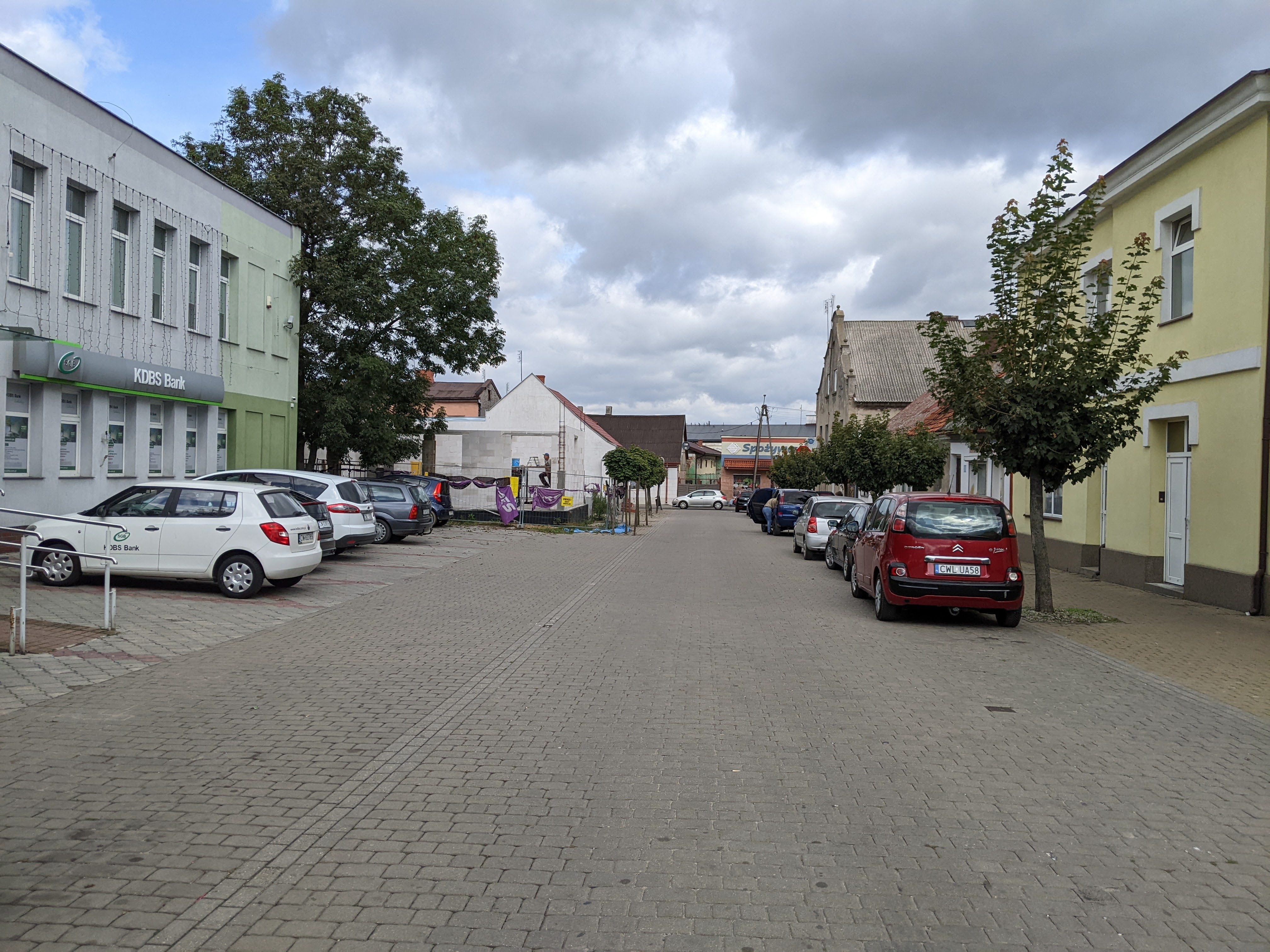
Our visit to Brześć Kujawski illustrates the importance of local institutions and people committed to the restoration of Jewish memory. My first visit to this town in 2015 left me profoundly unsettled. All I could find of the prewar Jewish cemetery was an unkempt field scarred by a crumbling pool. No sign anywhere acknowledged the vibrant prewar Jewish community, which numbered between 630 and 990 people in the first decades of the 20th century. I felt the absence personally because my grandmother was part of that overlooked community.

Hence my surprise when in 2020, Anna Szczepaniak, who works at the Brześć Center of Culture and History: Wahadło, sent an enthusiastic response to my blog post about the ADJCP plans to organize a memorial trip for descendants. Anna said she welcomes the ADJCP to Brześć Kujawski and over the course of the following year, she and the vice-director of the center, Sylwia Czerwińska-Modrzejewska shared their plans for a memorial plaque at the site of the former ghetto as well as cultural programs about Poland’s Jewish community. They wanted to coordinate events to occur during our memorial trip. Sadly, COVID delayed our visit, but the Center of Culture and History, with the support of Mayor Tomasz Chymkowski, has gone ahead with substantive efforts to restore Jewish memory in their town.

As you enter Brześć Kujawski, a 12-kilometer drive from Włocławek, the brand new Center building looms up on the right side of the road. Roberta and I were greeted by Anna, who quickly made clear that they had prepared for our visit. She gave us a thick folder filled with copies of historical documents they have collected: photos, maps, and sketches of the town; artist Maya Gordon’s plans for a memorial monument in the Jewish cemetery; and archival records about the cemetery and official Jewish Community matters.

They told us about Mikołaj Grynberg, a Polish photographer and child of Holocaust survivors, who has published two photo albums and various books and articles, including stories of children of survivors. Grynberg was scheduled to come to Brześć Kujawski on October 15 to show his new film “Dowód Tożsamości” (“Identity Card”; can also mean “Proof of Identity”). According to a post on the Facebook page “Szlakiem Żydów w Brześćiu Kujawskim” (“Trail of the Jews from Brzesc Kujawski” ) the film explores:

how the memory of the Holocaust evolves and what role it plays in the minds of today’s twenty-year-olds. The interviews show a wide panorama of attitudes and experiences – the interviewees come from both large cities and the Polish provinces. The film is an attempt to show the specificity of being a Polish Jew, often incomprehensible to people outside of this circle.

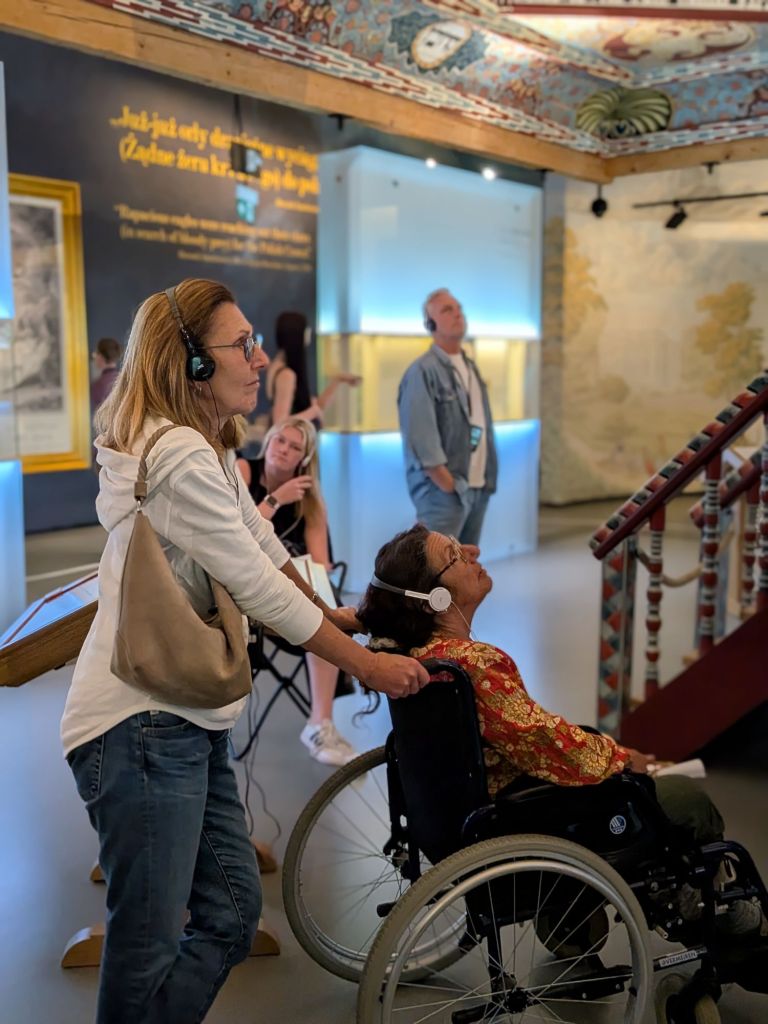
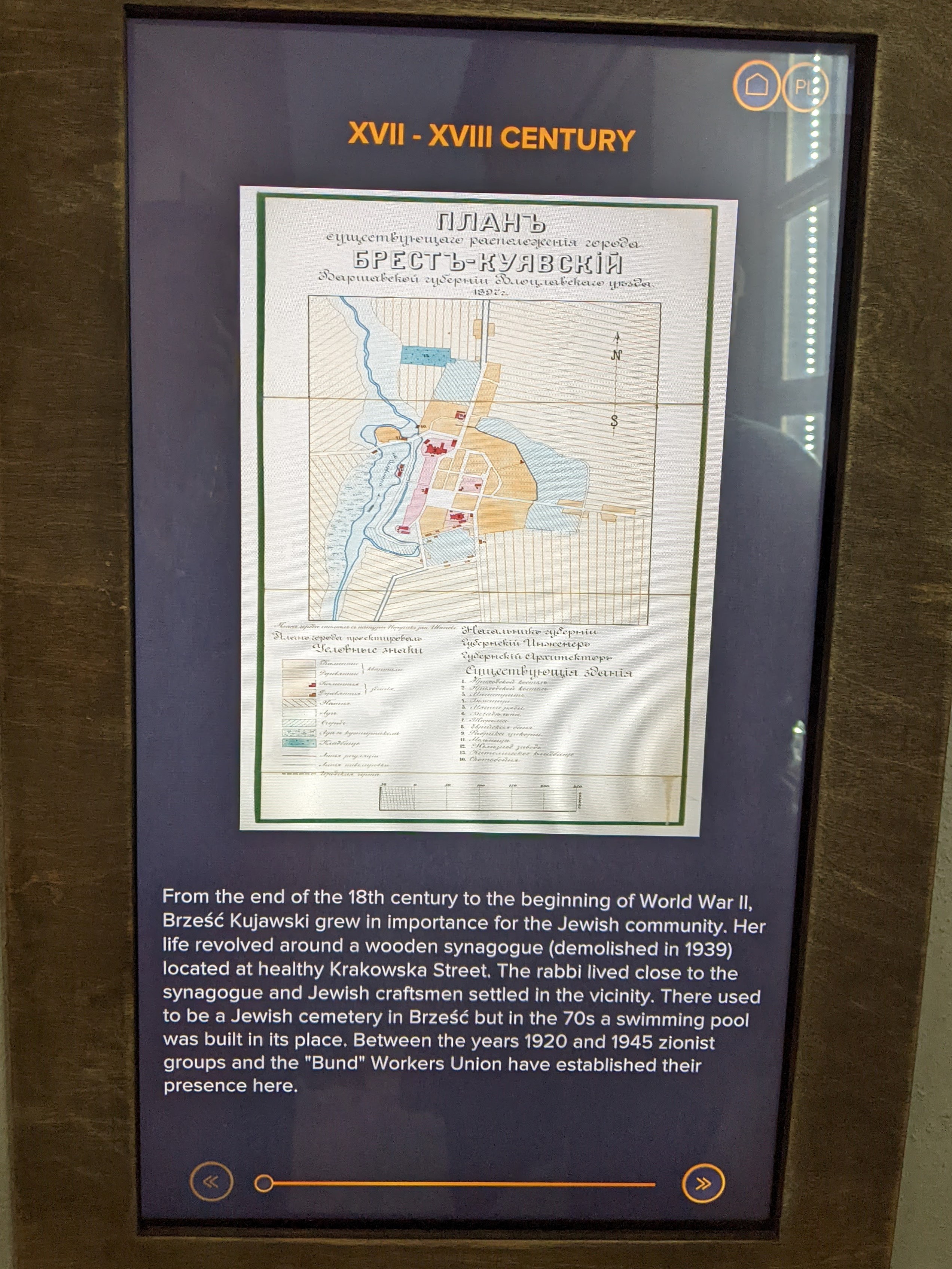
We toured the new multimedia exhibition, located on two stories of the Center, which focuses on the history of Breść Kujawski from prehistoric times through the contemporary period. Reminiscent of the Polin Museum in Warsaw, it emphasizes active engagement with historical information rather than artifacts, although it includes some impressive prehistoric pottery and other items. The exhibition integrates the history of the Jewish community. For instance, one room reproduces a town street during the period between the world wars, complete with reproductions of signs for businesses, some which had Jewish proprietors.  

Display outlining Brześć Kujawski’s Jewish history, and Jewish traces in the model town street

We drove with Center Director Agata Kubajka and Anna to the Jewish cemetery at the outskirts of town. Anna couldn’t get the key to open the locked gate so we stepped over the fallen chain-link fence and walked through the knee-high grass to the edge of the empty, blue-painted pool.

Swimming pool in the Brześć Kujawski Jewish cemetery

Last year, the swimming pool was closed and they are seeking funding to transform it into a memorial monument. Recognizing that some people might protest the loss of the pool, they found a location for a new one; the old pool was built in the 1970s so it needed to be replaced anyway. The town wants to transform the space into a park with pathways and benches. Maya Gordon’s design for the memorial would put a circular medallion at the bottom of the former pool depicting a tree with broken branches, meant to represent mourning and destroyed lives, as well as echoing the broken tree motif commonly found on matzevot. In her imagining, water will naturally fill the basin and cover the medallion, representing spiritual cleansing and rebirth. The pool basin will become a part of the memorial and avoid the further disruption that would result from removing it. Maya Gordon lives and works in Amsterdam, Tel Aviv, and Warsaw. She was born in Poland but moved to Israel around age ten. She studied art in Jerusalem and in The Netherlands.

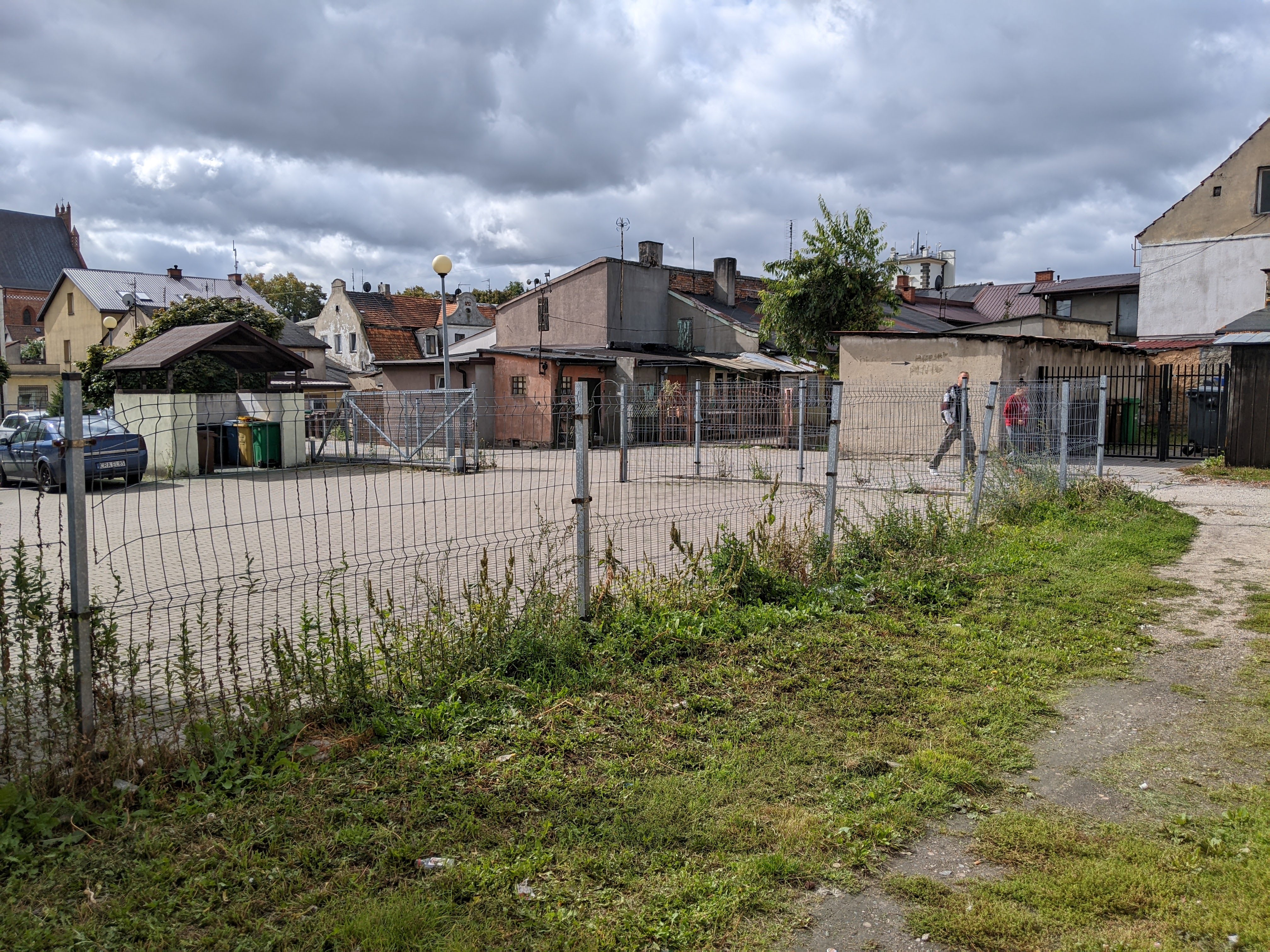
We drove back into town to see the former site of the synagogue (now an empty lot) and the square where Jews were gathered for deportation to the death camp at Chełmno nad Nerem. They have plans to place historical markers in each of these places.

Site of former synagogue
Square where Jews were gathered for deportation to the death camp

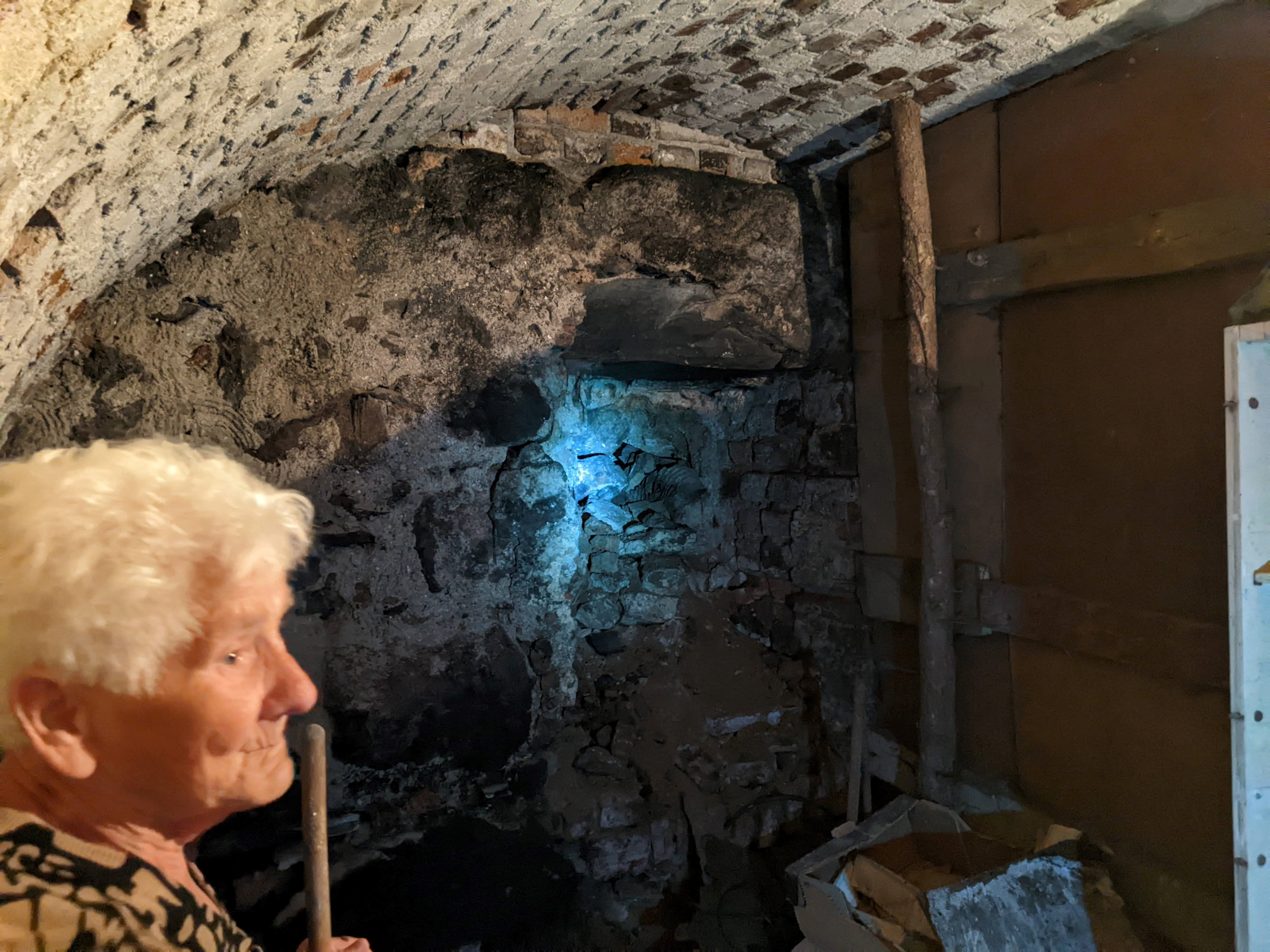
Down the street from the synagogue site, Anna, popped into a doorway to ask an elderly resident if she could show us the basement of the building where they believe there was a ritual bath. The woman grabbed her flashlight and led us down a rickety wooden staircase into a basement with vaulted ceilings made of brick and stone. There was some debate about how the space could have been configured and what the source of the water might have been. Even if it wasn’t the ritual bath, the basement clearly dates back to the 19th century (I would guess even older). It probably saw many uses during its existence.

Basement that might have been the location of the mikvah

We returned to the Center of Culture and History, to the restaurant on the ground floor, where we joined Mayor Tomasz Chymkowski, his assistant Karolina Filipiak, Director of the Center Agata Kubajka, and Vice-director Sylwia Czerwińska-Modrzejewska for lunch.

After an amazing lunch of pierogis and other regional cuisine. From left, Mayor Tomasz Chymkowski, Center Vice-director Sylwia Czerwińska-Modrzejewska, Roberta Books, Marysia Galbraith, Center Director Agata Kubajka, and Mayor’s Assistant Karolina Filipiak

We had a spirited, wide-ranging discussion over our meal. Sylwia made sure we tried some regional specialties, including kluski (homemade noodles) with farmer’s cheese and bacon. Mayor Chymkowski explained why Brześć Kujawski is in better economic shape than many neighboring towns. They built an industrial park before other places got the idea. Manufacturers of items such as clothing, auto parts, and bicycles provide jobs for town residents and commuters. Chymkowski said the town has the financial means to invest in preserving the town’s history. This includes renovating the town center and marking historical places, including those associated with Jewish residents. He described the plans for the Jewish cemetery, and explained the pool had been built by communists. He said there was no regional place of remembrance. That is the function he wants the renovated cemetery to serve.   

Allies in Włocławek

02 Friday Dec 2022

Posted by Marysia Galbraith in Association of Descendants of Jewish Central Poland, Cemeteries, Heritage work, Jewish Ghetto, Kolski, Museum, Polish-Jewish Heritage, Polish-Jewish relations, Włocławek

≈ 6 Comments

Tags

ADJCP Memorial Trip in May 2023, Faiance

Report #10 about Roberta Books and Marysia Galbraith’s trip to meet Polish partners in preparation for the ADJCP‘s memorial visit to central Poland.

Włocławek, September 12-16 and September 28

With a population of 107,000, Włocławek is the largest town in this part of central Poland, followed by Kutno which has 42,700 residents.

Włocławek will be the home base for the ADJCP memorial trip in May 2023. Roberta and I spent several days there to plan the trip and I returned a couple of weeks later to follow up on a few things. We reserved a block of rooms for the memorial trip in the Pałac Bursztynowy, a three-star hotel built to look like an old manor house, with an elaborate formal garden all around it. Roberta and I sampled the menu at the hotel restaurant. They have a good assortment of soups, salads, appetizers, and main courses, all tastefully prepared. The white asparagus soup with smoked salmon was particularly tasty. We also made arrangements with a bus company that will provide transportation during the memorial trip.

Roberta with a bowl of white asparagus soup at the restaurant in the Pałac Bursztynowy

In Włocławek, we met with partners who agreed to help organize activities for us. Included among our partners are schoolteachers Anita Kaniewska-Kwiatkowska who teaches history at the Automotive High School, Robert Feter who teaches computer science at the same school, and Monika Lamka-Czerwińska who teaches at a school for children with disabilities. They have led several award-winning programs in which their students learned about and did research about the city’s Jewish community. See for example Włocławek Zapomniana Ulica, a Facebook page that was developed as part of one of these projects. Another outcome of this project is a sign posted on Piwna Street with a QR code linking to a recorded message outlining the wartime history of the Jewish population in this place.

Włocławek Forgotten Street: Scan the QR code to hear the history of the street

On the morning of September 13, Roberta and I met students at the Automotive High School. We were escorted to the library, a room the size of a large classroom. Extra chairs filled all the space between the round tables. A reporter from the local paper came and took photos. Two students shot video for a class in television production with the plan to create a short program about our visit.

Students filed in one class at a time. In attendance were students studying psychology/pedagogy, computer science, and technical studies. This school also has classes for students with physical and mental disabilities.

Before we began, I spoke briefly with the first group that arrived, girls studying psychology and pedagogy. Their teacher Anita Kaniewska explained they will work with her on a project about Jewish history and culture and they will participate in our memorial trip. The room filled up. Over 80 students attended. We delivered our presentation in English and I’m surprised how well it went. A good number of the students understood, and those who didn’t know much English seemed attentive nevertheless.

Roberta and I took turns explaining our family connection to central Poland. Then we asked them what they knew about Jewish culture and religion, mostly as a way to fill in some details and point out similarities and differences to Polish culture and Christian faith. Finally, we invited them to ask us questions, which we answered. Their questions included:

  • What emotions do you experience when telling us your story?
  • Do you have any relatives in Poland today?
  • Did you know there is going to be a statue for Jewish people in Brześć Kujawski? There was a public pool but they closed it, because people found out it was a graveyard for Jewish people.

Afterwards, one of the teachers said she was very pleased with the students’ level of engagement. Even one of their students who has autism asked a question. Five girls from Anita’s class thanked us and told us how moved they were by our stories and our presence. They asked if they could give us a hug. It was very sweet.

Photos from our visit were posted on the school website.

We had to hurry to our appointment with the mayor. Anita accompanied us. Marek Wojtkowski, whose official title is President of Wloclawek, expressed support for the ADJCP and efforts to memorialize the city’s Jewish history. He agreed to meet memorial trip participants and to welcome us to Włocławek.

Together with Anita, we proposed two projects: a Jewish history trail with signs and QR codes outlining events that occurred in particular places around the city; and a portable exhibition on retractable panels that can be moved and set up easily. President Wojtowski supports both these ideas. He agreed to help obtain permission to mount the historical trail signs on buildings.

President Wojtkowski noted his background as an historian, and said it is important that this history return, especially for young people.  

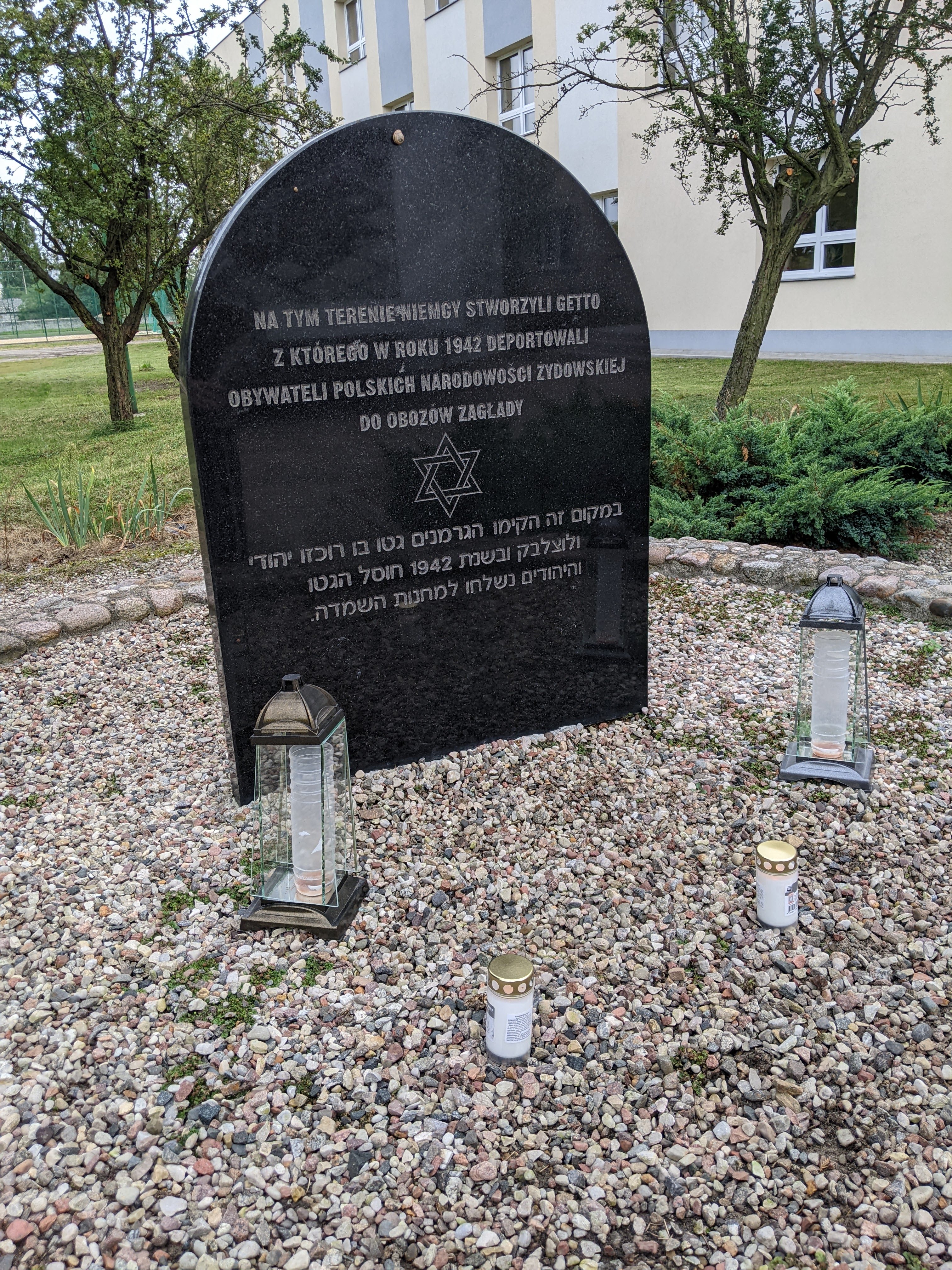
Few traces remain of Włocławek’s Jewish community, which before the war numbered 20,000 people (20% of the city’s population). The two synagogues were burned down during the first days of the Nazi invasion on Rosh Hashana 1939. The cemetery was cleared of tombstones, and during the communist period a school was built on the site. In 2000, a group of descendants in collaboration with the city erected a memorial in front of the school in the shape of a matzevah. The text says in Polish and Hebrew “At this site Germans created a ghetto from which in 1942 they deported Polish citizens of Jewish origin to death camps.” Roberta and I lit candles for my relatives and all the others buried at this site.

Memorial to Włocławek’s Jewish Community at the site of the Jewish cemetery and the wartime ghetto

Meeting with Mirka Stojak, September 28

When I returned to Włocławek on September 28, I met with Mirka Stojak, who for over 20 years has been meeting with and assisting Jewish descendants who have visited Włocławek. Mirka has documented the lives of Włocławek’s Jews in historical texts, prose, poetry, and on her webpage Żydzi Włocławek. Each year, she gives presentations at schools where she tells the stories of the city’s Jewish residents and reads her original poetry and stories. She has also worked with students on theatrical and musical productions on related themes. Longin Graczyk of the Ari Ari Foundation has worked with Anita and Mirka on other projects. Most recently, Mirka led a “Sentimental Walk” around historic Włocławek in which she told the stories of Jewish residents who used to live at various addresses. The Ari Ari Foundation and the local government where among the sponsors of the event. The ADJCP is listed as well!?!

Poster for the “Sentimental Walk”

Mirka will join Anita and Longin on the organizing committee for our memorial trip. She is also happy to prepare a presentation or to lead a walk for our visit, though she does not speak English so it will need to be translated.

Since retiring last year, Mirka has devoted even more time to writing. I bought her latest book Pamięci Włocłaswkich Żydów (In Memory of Włocławek Jews), a combination of history, stories, poems, and the memoir of Jakub Bukowski, who turns out to have been a neighbor of my cousins. Bukowski mentions Mirka Kolska, my mother’s first cousin, was one of classmates.

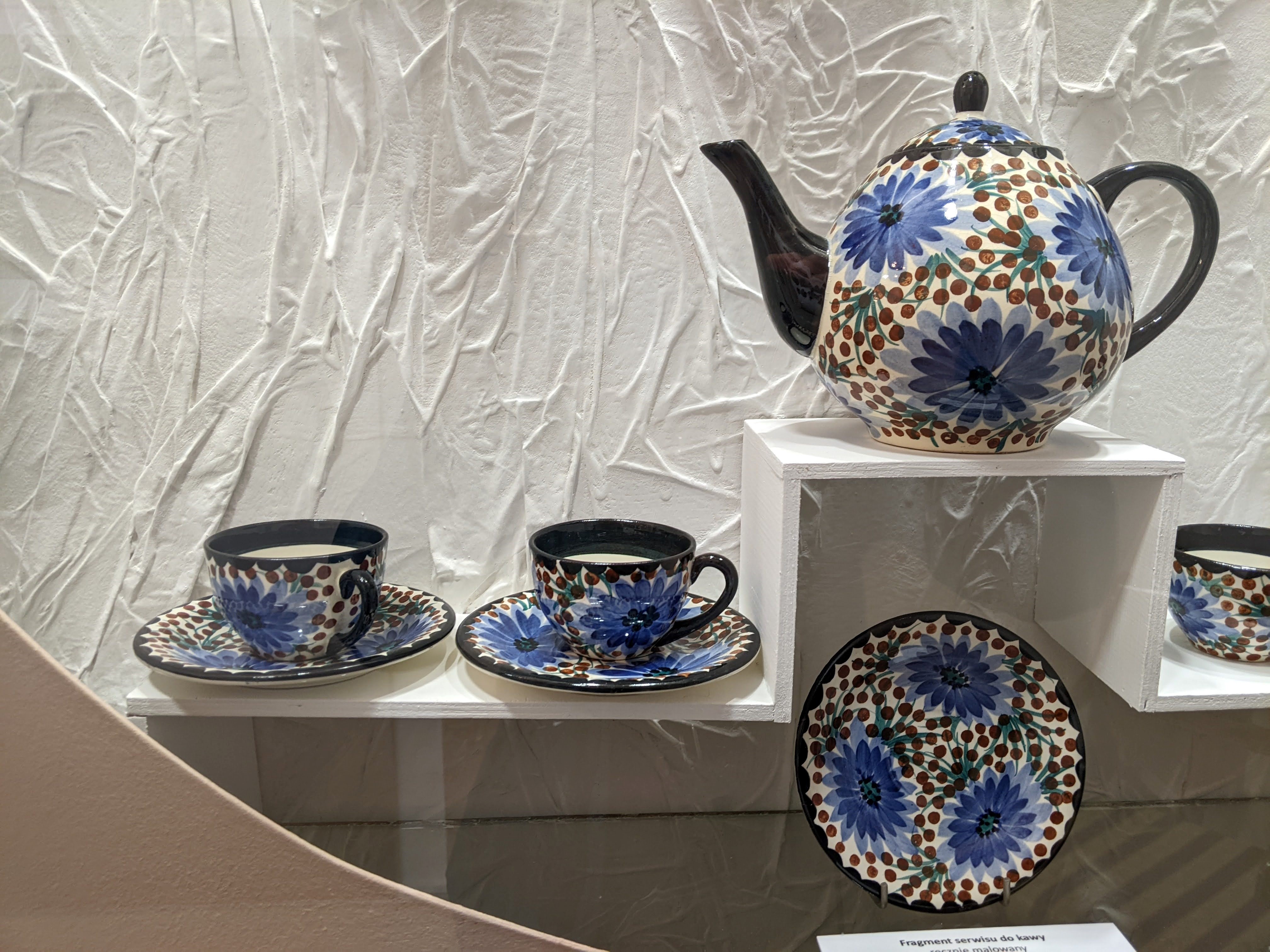
I visited the city museum to see the extraordinary exhibition of faience pottery. This industry was started and dominated by Jewish industrialists. Many of the woman who painted the floral designs were Polish. During the war, the industry was taken over by the Germans and then passed into Polish hands after the war. During communism, the factories became the property of the national government. The last factories closed right around the time communism fell. They were unable to reorganize within the emerging capitalist economy.

I hope we include the exhibition in our memorial trip.

Part of the faience exhibit in the city museum

Marry Someone We Know

11 Wednesday Aug 2021

Posted by Marysia Galbraith in Anthropology, Family, Genealogy, Kolski, Names, Pifko-Winawer Circle, Piwko, Walfisz, Winawer

≈ 7 Comments

Tags

cousin marriage, endogamy

My Mom was always looking for wives for my brothers. She favored people we knew—the O’Leesky girls next door or my best friend Kara. These were girls who were in and out of our house all the time and Mama came to love and trust them. All it took was noticing one of her sons was also friends with one of these girls and that was it. “June and Ronnie should get married,” she would say, noticing how they walked hand in hand at age ten. Then, she wanted Wilan to marry June’s younger sister Kim. Once Kara became a fixture in our house, Mama talked longingly about keeping her close and the best way to do so seemed to be marrying her off to one of her sons. First, she hoped Kara would marry Ronnie. Later, she hoped Kara would marry Chris. After all, they got along so well. Only now, years later, I realize Mama never tried to match me with any of the boys in the neighborhood. She never felt sure about me pairing off with anyone, though she began to warm up to my first love—around the time we broke up—and she developed a fondness for my husband. Eventually.

Ron and June hold hands circa 1969. In front, my brothers Wiley and Chris, me, cousin Andrew, and June's sister Kim
Ron and June hold hands circa 1969. In front, my brothers Wiley and Chris, me, cousin Andrew, and June’s sister Kim.

Mama was slow to make room for people in her inner circle, but once she did, she wanted to keep them close for life.

This may well be a holdover from the Jewish family she was distanced from by her mother’s conversion. After all, that family is made up of a crisscross web of Piwko, Walfisz, Kolski, and Winawer ancestors. Her grandfather’s brother married her grandmother’s sister (Hil Majer Piwko married Hinda Walfisz, while Jankel Wolf Piwko married Tema Walfisz). My grandmother’s brother Abraham Jon married Bertha Kolska (the female version of the surname), while her sister Regina married Pinchas Kolski. I don’t know how Bertha and Pinchas were related, but it’s likely they were since they both came from the same town, Kłodawa. When Regina died, another sister, Rachel, married Regina’s widow.

The practice of marrying within these linked families continued even among descendants who moved to Switzerland, Israel, and the United States. A generation later, Pinchas and Rachel’s son Abrash married Jankel Wolf and Tema’s granddaughter Poili. So Abrash and Poili were second cousins twice over—their Walfisz grandmothers were sisters and their Piwko grandfathers were brothers.

Other overlapping relations tie the family web together even more tightly. Two of my grandmother’s other sisters married cousins—Liba married Jacob Winawer and Sarah married Saul Winawer. Sarah and Saul’s son married Sally, whose older sister was married to Sarah’s brother Philip.

It takes a 3-D chart to keep track of it all.

For the longest time, I couldn’t figure out how another cousin, Arline Jacoby, was related to me. Eventually, I figured out the connection goes back to both sisters of my great grandmother Hinda Walfisz. Arline’s grandmother was Łaja/Leah Walfisz. Arline’s husband Harry was the grandson of Tema Walfisz, or more likely, Tema was his step-grandmother.  After Tema’s first husband Jankel Wolf Piwko died, she remarried Akiva Jakubowicz, who was also a widow and the father of two sons including Harry’s father. It took me a while to piece this all together because in the US, the family name was shortened to Jacoby.

Clearly, the family pattern was to marry within the group—what anthropologists call endogamy. Endogamy was very common among Ashkenazi Jews; they very rarely married non-Jews, and if they did it usually meant that the offspring were not raised Jewish. That’s why it is more common to find traces of Jewish DNA among non-Jewish Slavs than it is to find Slavic DNA within Ashkenazi Jewish populations. I wonder, though. How common was it to seek spouses among families that were already related to via other marriage ties? And what were the reasons for it? Was it akin to my mother’s desire to strengthen emotional links with people she already felt an intimate attachment to? Or was it more related to the pragmatics of religious and business connections?

Memory Map Exhibition includes Skierniewice, the Piwkos’ Hometown

08 Friday May 2020

Posted by Marysia Galbraith in Cemeteries, Heritage work, Jewish Culture, Memory, Museum, Piwko, Post-World War II, Skierniewice, Synagogues, Yiddish

≈ 23 Comments

Tags

Cousins in Poland, Grodzka Gate-NN Theatre Center, map

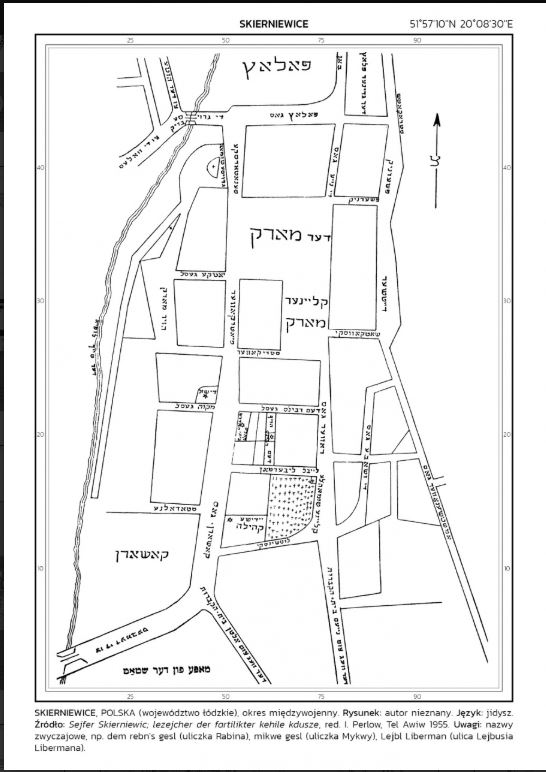
The Atlas of Memory Maps exhibit features maps drafted by non-experts in an effort to preserve the memory of their hometowns, which had been destroyed or radically transformed during and after World War II. Most were published in Yizkor books, memorial books compiled by Jewish survivors. The exhibition is mostly in Polish, but includes some English-language information. The maps contain notations in Yiddish or Hebrew. This virtual exhibition by Grodzka Gate-NN Theatre Center includes maps from Poland, Belarus, Ukraine, Lithuania, Moldavia and Slovakia.

I found a map of Skierniewice among over 150 included in the exhibition. My grandfather Hil Majer Piwko was born in there in 1854, as were his siblings Jankel Wolf (1857), Urysz (c. 1861), Dawid (1862, d. 1865), Nusen Dawid (1866), Chawa (c. 1871), and Fajga (c. 1878). It’s where Hil Majer brought his bride Hinda Walfisz in 1873, and where they started their own family. It’s also where his parents were buried (Cywia Rajch in 1862 and Chaim Josef in 1912), and probably his stepmothers, too.

Here is the map from the exhibition:

SkierniewiceMapInterwar_onlineexhibit

Map of prewar Skierniewice drawn from memory by an unknown author

Comparing it with a contemporary map, it’s hard to figure out exactly how they match up. Maybe someone who can read Yiddish can help me by translating the words on the map. Please leave me a comment if you do! I think the rivers on each map are the same, and the space marked with crosses in the bottom center of the prewar map may be the green space marked “Church of St. Stanislaus” in the bottom right of the contemporary map.

SkierniewiceMap2020

Map of contemporary Skierniewice. The site of the synagogue is marked with a black dot surrounded by a grey circle. Source: Google Maps

I’ve been to Skierniewice twice, with my cousin Krysia in 2013 and with my cousin Bob in 2018. Little remains of the town’s Jewish heritage.

Skierniewice Rynek in 2013
Krysia and me in Skierniewice, the birthplace of our great grandfather. April 2013

img_20180810_131720710_hdr

With cousin Bob, the former synagogue in the background–it’s now an electrical supply store

The synagogue, though the exterior is well maintained, now houses an electrical supply store. On the road running parallel to the river, a few tombstones have survived in the old Jewish cemetery, but they are in what is currently the backyard of a private residence. I wonder if this cemetery was included on the prewar map? The newer Jewish cemetery contains  many more surviving tombstones as well as commemorative markers outlining the history of the town’s Jewish population. It is located beyond the bottom edges of these maps, off a dirt road a short ride south of town.


Located in Lublin, Grodzka Gate-NN Theatre is one of the oldest and most active Jewish heritage organizations in Poland. About its origins, Tomasz Pietrasiewicz writes:

The changes brought about by the fall of communism in Poland in 1989 initiated the process of regaining Memory by the Polish society, and Lublin was among many Polish cities which had to face their forgotten past.

When we began our activities at the Grodzka Gate [which historically separated the Jewish and Catholic districts of the city] in the early 1990s, we knew nothing about the history of Jews in Lublin. We were not aware that the enormous empty space on one side of the Gate conceals the Memory of the Jewish Quarter. We did not realize that the Gate leads to the non-existent town, the Jewish Atlantis.There is a huge parking area, lawns and new roads where there used to be houses, synagogues and streets. A large part of this area, including the foundations of the former Jewish houses, was buried under a concrete cover, and the memory of those who lived here was hidden as well. You cannot  understand Lublin’s history without these empty spaces near the Gate. For the NN Theatre, they have become a natural setting for artistic actions, Mysteries of Memory, which uncover the memory of the past while mourning the victims of the Holocaust. (from “History of Grodzka Gate-NN Theatre“).

More information about the exhibition and Grodzka Gate-NN Theatre can be found at the following websites:

Jewish Heritage Europe

Grodzka Gate-NN Theatre Center


Our Story in MyHeritage Blog

04 Monday May 2020

Posted by Marysia Galbraith in Bereda, Family, Genealogy, Identity, Israel, Kolski, Photographs, Polish-Jewish relations, Post-World War II, Pre-World War II, Warsaw, World War II, Włocławek

≈ 4 Comments

Tags

Colorized photos, MyHeritage

Now, the English-language MyHeritage blog has a story about us: Hidden Photo Reveals a Secret Past and Reunites a Family, written by Talya Ladell.

The article also contains cool colorized photos. You can compare the black and white originals with the color copies by dragging the cursor over the image.

helena-Colorized

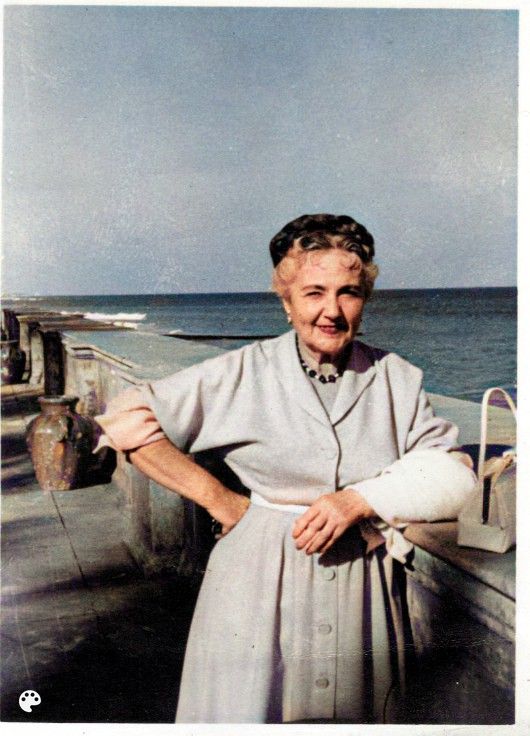
Babcia Halina in Florida during the 1950s. Colorized photo

Cousins Reunited by a Photo and a Family Tree

23 Thursday Apr 2020

Posted by Marysia Galbraith in Bereda, Family, Genealogy, Israel, Kolski, Photographs, Polish-Jewish relations, Post-World War II, Pre-World War II, Survival, Trauma, Warsaw, World War II, Włocławek

≈ 4 Comments

Tags

Cousins reunite, Finding family, MyHeritage

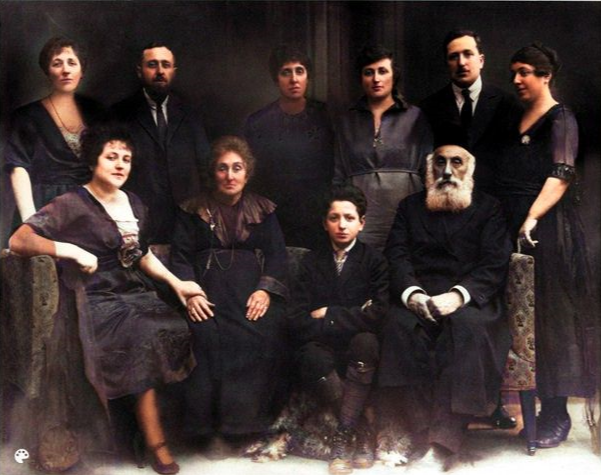
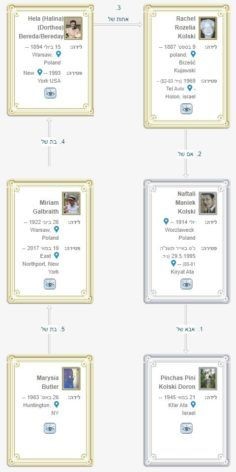
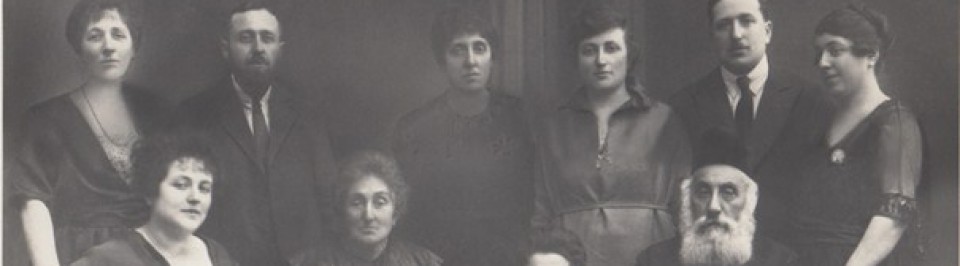
I met my cousin Pini Doron in 2013 when I found his family tree online and wrote to ask if we might be related. He asked for proof, so I sent him the photo in the header of this blog, which he recognized from his own copy. He wrote back “welcome to the family” and ever since I have felt embraced by my extended family in Israel, with Pini at the heart of it. The photo, which includes both of our grandmothers, confirmed that we are cousins.

Last week, we were contacted by Nitay Elboym, who writes for the MyHeritage Hebrew-language blog. He decided to write about our family in commemoration of Holocaust Remembrance Day. It’s a story of connections and separations that span a century.

You can find it in Hebrew at the Internet news service YNet:

אחרי 70 שנות נתק: גילה בארה”ב בני משפחה שנעלמו לאחר השואה

and in the MyHeritage blog:

בזכות תמונה ואילן יוחסין: בן לניצולת שואה גילה בני משפחה שנעלמו

I’ve attached the text in English. I used Google Translate and then edited it. This is the article that appeared in the MyHeritage blog. The YNet version only has minor differences.
1916BabiasFamily_color

Colorized photo of the family from about 1916. Marysia’s grandmother is sitting on the left and Pini’s grandmother is standing on the right

Thanks to a photo and a family tree: a Holocaust survivor son has found family members who disappeared

 By Nitay Elboym

April 21, 2020

74-year-old Pini Doron of Hod Hasharon is a longtime MyHeritage user who built a family tree for many years dating back to 1800. Pini thought he had already finished his search, when he received a message with an old family picture. This time, he realized immediately, it was an extraordinary discovery.

“I get a lot of inquiries from people who think they’re related to me,” Pini says. “I am usually skeptical of my relation to them, so I politely ask everyone to explain how we are connected. In this case too, when I received the message, I responded that I would love to know what our family relationship is,” he recalls.

“Actually, at that time, I was pretty much at the beginning of my family history research,” recalls Marysia Galbraith, a professor of anthropology at the University of Alabama, USA. “I was looking for bits of information wherever possible. But when I saw Pini’s family tree on MyHeritage, I knew it was about me, I just didn’t know how. In short, I had no idea how to prove to him how I was related to his family tree, so I just sent the only picture I had. Besides my grandmother, I didn’t know who the people were. Then he answered me ‘Welcome to family.’ His reply almost made me cry. ”

Operation Rescue

The Piwko family lived in the town of Wloclawek, Poland. At the outbreak of World War II, Pini’s grandparents – Pinchas Kolski and his wife Rachel (nee Piwko) – and their two children, Mirka and Samek, were left there while Pini’s father was saved because he and his two brothers were sent to Israel before the war to work the family lands in Kfar Ata. “Because their city of residence was close to Warsaw, they were transferred to the Warsaw ghetto right at the beginning of the war, around 1940,” Pini says. “In the ghetto, Samek was murdered, and my grandfather died of illness. So my grandmother and her daughter Mirka were left alone, looking for a way to survive.”

1941RachelMirkaKolskiAtPinchasGraveInGhetto

Mirka and Rachel Kolski at Pinchas Kolski’s grave in the Warsaw Ghetto

Meanwhile, Rachel’s sister, Halina, lived in relative safety outside the Warsaw ghetto, because after divorcing her first Jewish husband, she remarried a Christian man named Zygmunt Bereda. “Rachel and Halina’s father were not ready to hear about this relationship. So, when she married a Christian, he sat shiva on her,” said Pini. “Her sisters tried from time to time to keep in touch, but because of their father, the connection got weaker.” Halina and Rachel’s father, who passed away around 1930, could not have imagined that it was precisely the person who, because of his religious identity, he rejected, would save not only his daughters, but also his other descendants.

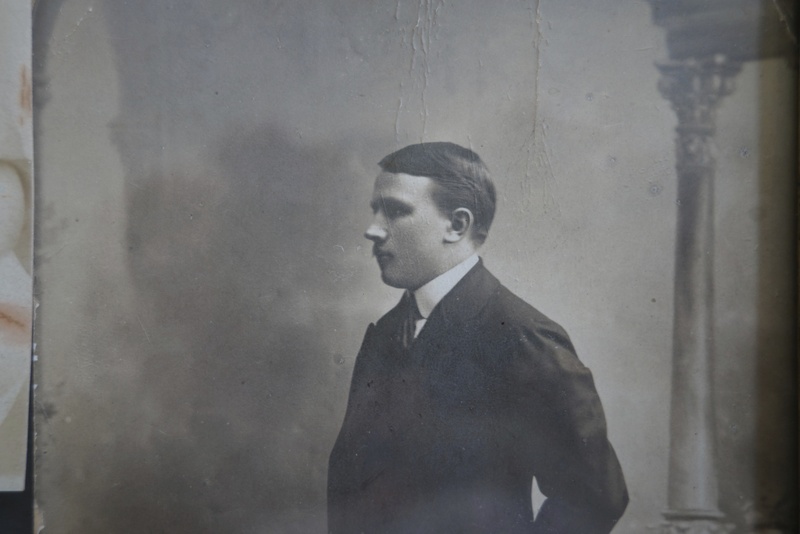
When Halina told Zygmunt that her sister was in the ghetto alone with her daughter, he decided to come to their aid despite the risk involved. “Zygmunt was a very successful businessman with a lot of property. In addition, he probably had many connections, which opened doors to him that were closed to others,” explains Marysia. “He used these connections to forge documents for Rachel and her sister, which allowed them to escape the ghetto.”

BabciaPuertoRico

Halina Bereda, Marysia’s grandmother. She and her Christian husband saved the family
ZBeredayoung

Zygmunt Bereda. A Polish Christian who saved the family of his Jewish wife

But the matter did not end here. Zygmunt and Halina protected the two after they left the ghetto and hid them in buildings they owned throughout the war. At the same time, they were able to forge additional documents that allowed them to leave Poland to Switzerland, and from there, in 1949, the two immigrated to Israel.

“Years of disconnection ended thanks to a surviving photo and family tree on the MyHeritage website. Ever since we started chatting, I have found that Marysia isn’t only a wonderful person, she is also a thoughtful researcher,” says Pini. “She has set up a blog where she writes personally and collects her interesting findings. Everything she does is well organized, backed up by documents, and she knows how to find almost everything. She even studied Polish, which probably helps her a lot in genealogical research.”

The wheel turns over

At the end of the war, Warsaw was devastated by the bombings. The many businesses and houses that Zygmunt owned were also destroyed. He and Halina lost their property and had no place to live. The rescuers now needed help, and the one who came to their aid was the former wife of Samek, Rachel’s son who died in the Holocaust. After the war Halina and her daughter Maria, Marysia’s mother, immigrated to the United States and settled there.

“The truth was kept from us,” says Marysia, who has grown up as a Christian all her life. “For years, family members have been whispering about being Jewish, but never really getting into it. I have spent a long time trying to figure out why my mother and grandmother hid their Jewish heritage and why they were not in contact with Rachel. I think the trauma of the Holocaust left a deep scar on my grandmother. She thought, “If they don’t know, then it won’t hurt them.” That’s probably why they didn’t keep in touch with Rachel and her descendants in Israel.”

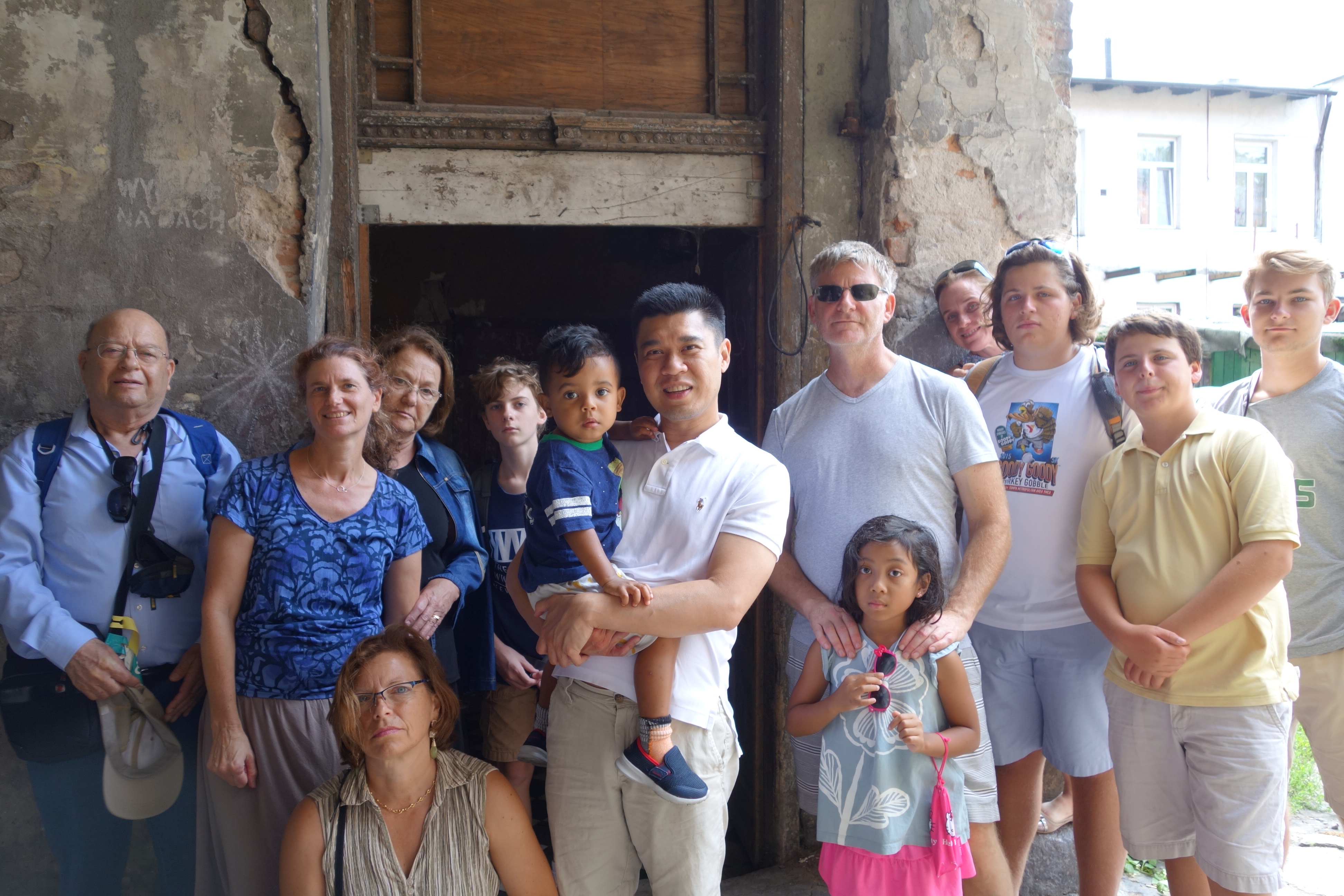
Since the family tree has linked Pini to Marysia the two speak regularly, and they have also met in Israel and in Poland with other family members. “When we went to the graves of our families, the sight was unusual. On one side of the cemetery wall are Jews with a rabbi, and on the other side are Christians with a priest,” Pini recalls. “But what is important? In the end, we are human beings and destiny connected us together.”
DSC00438

During the roots journey to Poland. Pini stands to the left and beside him Marysia
PinisTree

Pini’s Tree showing the family connection between Pini and Marysia

The image that led to the discovery – now in color

To revive the old image that made the exciting discovery, the company’s investigators used the MyHeritage In Color ™ auto-coloring tool and sent the result to Pini and Marysia. “It’s wonderful,” says Marysia. “I’m going to share the colorized picture with my family, including my 90-year-old aunt who will be especially happy.”

1916BabiasFamily_color

Colorized photo of the family from about 1916
Inheritance

02 Monday Mar 2020

Posted by Marysia Galbraith in Family, Identity, Memory

≈ Leave a comment

Tags

biological inheritance, Dani Shapiro, genealogical heritage, Genetic testing, Inheritance: A Memoir, reproductive technology, semen donors, unthought known

Inheritance: A Memoir of Genealogy, Paternity, and Love takes a deep dive into the meaning of family and identity, and how our genealogical heritage shapes who we are. The way we are raised clearly matters, but so does biological inheritance. Shapiro knew and cherished the Jewish culture of the family she grew up with. She only learned about her non-Jewish genetic paternity when, at the age of 50, she took a DNA test.

inheritance

Dani Shapiro’s book reminds me how powerful language can be. She focuses less on what happens than how it affects her, giving voice to her inner thoughts and feelings. It’s a good reminder for me, as a social scientist preoccupied with documentation of social worlds. Sometimes it’s better to provide fewer details, taking the time to plumb their deeper meanings.

As much as she embraced and was embraced by her family, Shapiro writes about the feeling of not quite fitting in. She would gaze at her father’s face and not see herself reflected in his dark hair, eyes, and complexion. Only when she met her blue-eyed, pink-cheeked biological father did she have that moment of recognition. Although she was raised in a household where her Jewish credentials were never in question, her physical appearance made her feel pressured to prove her Jewishness—by reciting Hebrew prayers, by referencing her kosher upbringing.

This isn’t to say that all Jews need to look a certain way. That’s not Shapiro’s point, and it’s not mine. But I do understand the urge to find yourself in the features of your parents.

Through it all, Shapiro never questioned the story of her heritage that was told to her, even when her mother let slip that her parents struggled to conceive and so they sought help for fertility issues. Even when her half-sister told her it was common practice at the time of her conception to mix the sperm of the husband with that of a sperm donor to increase the chances of pregnancy. Even when a poet stared at her and concluded, “You’re not Jewish.” She never doubted her origins, even when she looked in the mirror and saw her own blond hair, blue eyes, and pink and white skin.

What resonates the most strongly with my own experiences is that failure to know, even when you kind of do know. Shapiro’s mother knew how her daughter was conceived. She must have had some idea that her daughter’s biological paternity might be in question, but she nevertheless provided doctors with her husband’s family medical history and worried Dani might have inherited health issues from them. Similar things happened in my family. In fact, I did this kind of thing myself, when for instance I did not even consider my Jewish heritage while researching all the genetic diseases I should watch for while pregnant with my son. I had learned that my grandmother’s family was Jewish when I was in my 20s, but it didn’t really enter my consciousness as an expectant mother in my 30s. That’s how strong my identification was with my mom’s adopted Polish Catholic heritage.

Shapiro refers to the psychoanalytic concept of “unthought known,” experiences that are indescribable in words but that nevertheless influence thoughts and behavior later in life. The concept refers to awareness derived from early, preverbal childhood experiences, so it’s not an exact match to what I’m describing. But certain aspects apply. Even though I “knew” the secret of my mom’s family origin, I chose not to include it in my self-identity. I excluded it from the way I thought about myself, and also how I presented myself to others. I’m sure my mom did the same. She identified as a Catholic Pole and refused her Jewish heritage. She felt offended if anyone ever alluded to it. For her, and I guess for me too, who we were supposed to be was more real than who we actually were, who we actually came from.

Except that growing up, I felt something was hidden. Here my experiences come closer to the psychoanalytic meaning of unthought known. I felt the silences in my family history, and the feeling of displacement they produced. Shapiro’s story is a little different, because she fully embraced the Jewish heritage of her family, confident in her deep roots in that community. So for her, learning that her biological father was not Jewish led to a sense of loss and of disconnection. For me, by contrast, learning about my Jewish family has filled the empty spaces in my own family story. I know who I came from, which helps me know who I am. I’ve been embraced by my complex, heterogeneous extended family.

← Older posts

Categories

  • Anthropology (37)
    • Archives (14)
    • Fieldwork (7)
    • Ground Penetrating Radar (GPR (4)
    • Research Methodology (8)
  • antisemitism (14)
  • Association of Descendants of Jewish Central Poland (32)
  • Catholicism (8)
  • Conference (1)
  • Discrimination (2)
  • Family (69)
    • Bereda (17)
    • Kolski (13)
    • Piwko (22)
    • Rotblit (3)
    • Walfisz (4)
    • Winawer (7)
  • Genealogy (11)
  • Heritage work (66)
    • Commemoration (23)
  • Identity (18)
  • Israel (6)
  • Jewish Culture (89)
    • Cemeteries (51)
    • Museum (7)
    • Synagogues (33)
  • Jewish immigrants (8)
  • Jewish Religion (1)
  • Memory (70)
  • Names (14)
  • Photographs (6)
  • Pifko-Winawer Circle (5)
  • Poland (125)
    • Baligród (1)
    • Bolimów (1)
    • Brześć Kujawski (5)
    • Buk (1)
    • Chodecz (1)
    • Dukla (2)
    • Dąbrowice (1)
    • Gdynia (1)
    • Gostynin (2)
    • Gąbin (1)
    • Izbica Kujawska (1)
    • Kazimierz (4)
    • Kowal (1)
    • Koło (1)
    • Krakow (7)
    • Krośniewice (1)
    • Kutno (6)
    • Kłodawa (1)
    • Lesko (8)
    • Leszno (1)
    • Lubień Kujawski (1)
    • Lubraniec (1)
    • Lutowiska (3)
    • Piła (3)
    • Podgórze (2)
    • Poznan (11)
    • Przemyśl (2)
    • Pzedecz (1)
    • Radom (1)
    • Radymno (1)
    • Sanok (1)
    • Skierniewice (5)
    • Sobota (2)
    • Tarnów (2)
    • Warsaw (22)
    • Wielkopolska (1)
    • Wronki (7)
    • Włocławek (20)
    • Zasław (2)
    • Łódź (1)
    • Żychlin (30)
  • Polish Culture (10)
  • Polish-Jewish Heritage (60)
  • Polish-Jewish relations (60)
  • Post-World War II (24)
  • Pre-World War II (22)
  • Reclaimed Property (1)
  • stereotypes (3)
  • Survival (9)
  • Trauma (3)
  • Uncategorized (5)
  • Victims and perpetrators (4)
  • World War II (45)
    • Jewish Ghetto (12)
    • Nazi Camps (5)
    • Polish Underground Army (3)
  • Yiddish (5)

Enter your email address to follow this blog and receive notifications of new posts by email. Your email address will not be shared.

Archives

  • October 2025 (1)
  • July 2025 (8)
  • June 2025 (1)
  • April 2025 (1)
  • August 2024 (3)
  • July 2024 (3)
  • May 2024 (2)
  • April 2024 (1)
  • May 2023 (2)
  • January 2023 (2)
  • December 2022 (7)
  • November 2022 (2)
  • October 2022 (5)
  • September 2022 (1)
  • January 2022 (1)
  • August 2021 (1)
  • December 2020 (2)
  • July 2020 (1)
  • May 2020 (3)
  • April 2020 (1)
  • March 2020 (1)
  • January 2020 (2)
  • May 2019 (1)
  • February 2019 (1)
  • November 2018 (1)
  • September 2018 (1)
  • August 2018 (3)
  • July 2018 (1)
  • June 2018 (1)
  • May 2018 (1)
  • April 2018 (2)
  • March 2018 (2)
  • February 2018 (2)
  • January 2018 (2)
  • December 2017 (2)
  • November 2017 (2)
  • October 2017 (1)
  • September 2017 (3)
  • August 2017 (3)
  • June 2017 (2)
  • May 2017 (3)
  • April 2017 (1)
  • March 2017 (2)
  • February 2017 (1)
  • January 2017 (2)
  • December 2016 (2)
  • November 2016 (4)
  • October 2016 (1)
  • September 2016 (6)
  • August 2016 (2)
  • July 2016 (1)
  • May 2016 (4)
  • April 2016 (2)
  • March 2016 (3)
  • February 2016 (4)
  • January 2016 (3)
  • December 2015 (3)
  • November 2015 (5)
  • October 2015 (5)
  • September 2015 (3)
  • August 2015 (4)
  • July 2015 (3)
  • June 2015 (3)
  • May 2015 (4)
  • April 2015 (9)
  • March 2015 (3)
  • February 2015 (2)
  • January 2015 (5)
  • December 2014 (4)
  • November 2014 (9)
  • October 2014 (2)
  • September 2014 (1)

Copyright Notice

All original text and images are copyright © Marysia Galbraith. Please contact the author before quoting.

Blog at WordPress.com.

  • Subscribe Subscribed
    • Uncovering Jewish Heritage
    • Join 145 other subscribers
    • Already have a WordPress.com account? Log in now.
    • Uncovering Jewish Heritage
    • Subscribe Subscribed
    • Sign up
    • Log in
    • Report this content
    • View site in Reader
    • Manage subscriptions
    • Collapse this bar
 

Loading Comments...