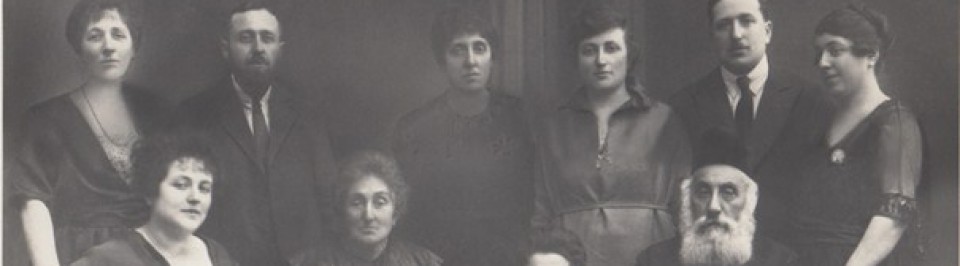
Report #2 about Roberta Books and Marysia Galbraith’s trip to meet Polish partners in preparation for the ADJCP‘s memorial visit to central Poland. Reports include contributions by Roberta.
September 8-12, ADJCP Members Roberta Books and Marysia Galbraith, Jewish Kutno Member Yosef Kutner
Our visit to Kutno was organized by our tireless partner Bożena Gajewska, until recently the director of the Friends of Kutno (Towarzystwo Przyjaciół Żiemi Kutnowski, TPŻK) and the coordinator of multiple projects related to Jewish memory.
We started the day in the Kutno Jewish Cemetery.

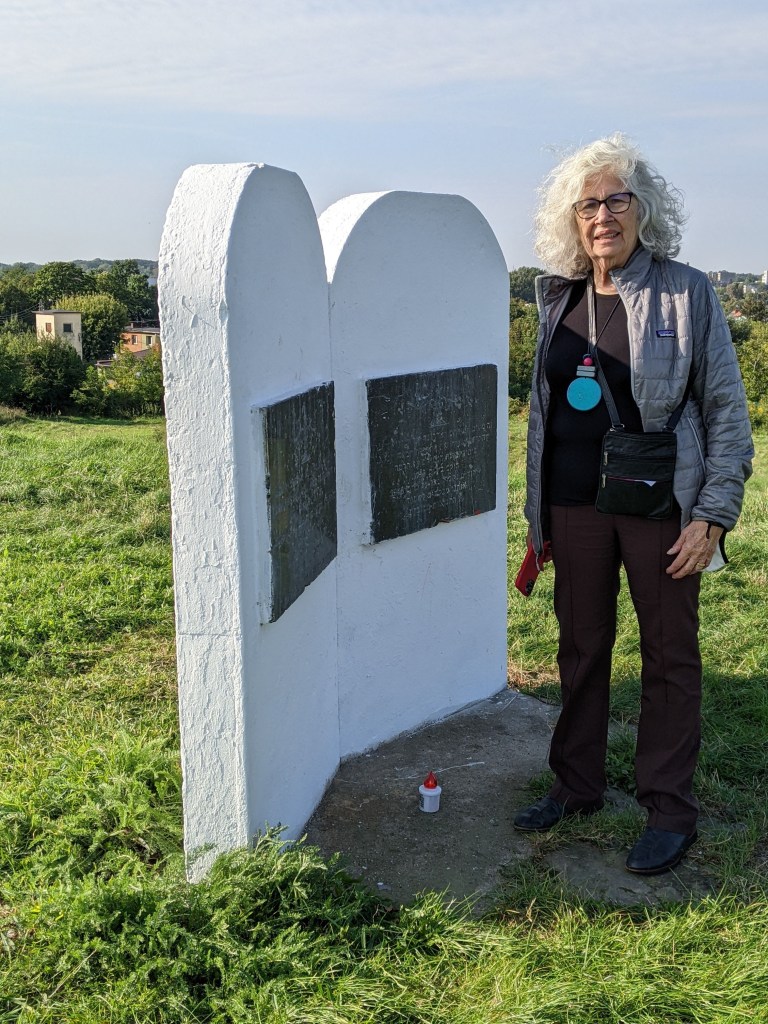
The cemetery is the largest one in our area, covering 3 hectares. Yosef’s mission was to inspect the boundaries to see the condition of the fence. We found some fragments of the prewar brick fence. There are several access points to the cemetery, making it a place where Kutno residents cut through on their way to school or home, or where they walk their dogs or children play. Despite signs posted by the TPŻK explaining this is a cemetery and should be respected, piles of trash in remote corners of the cemetery suggest it is used as a place to drink and socialize. We located a sunken area where a tree grows, the likely sight of the Ohel of Rabbi Israel Joshua Trunk (1821-93), and larger sunken area hidden by overgrowth that might be the site of a wartime mass grave.


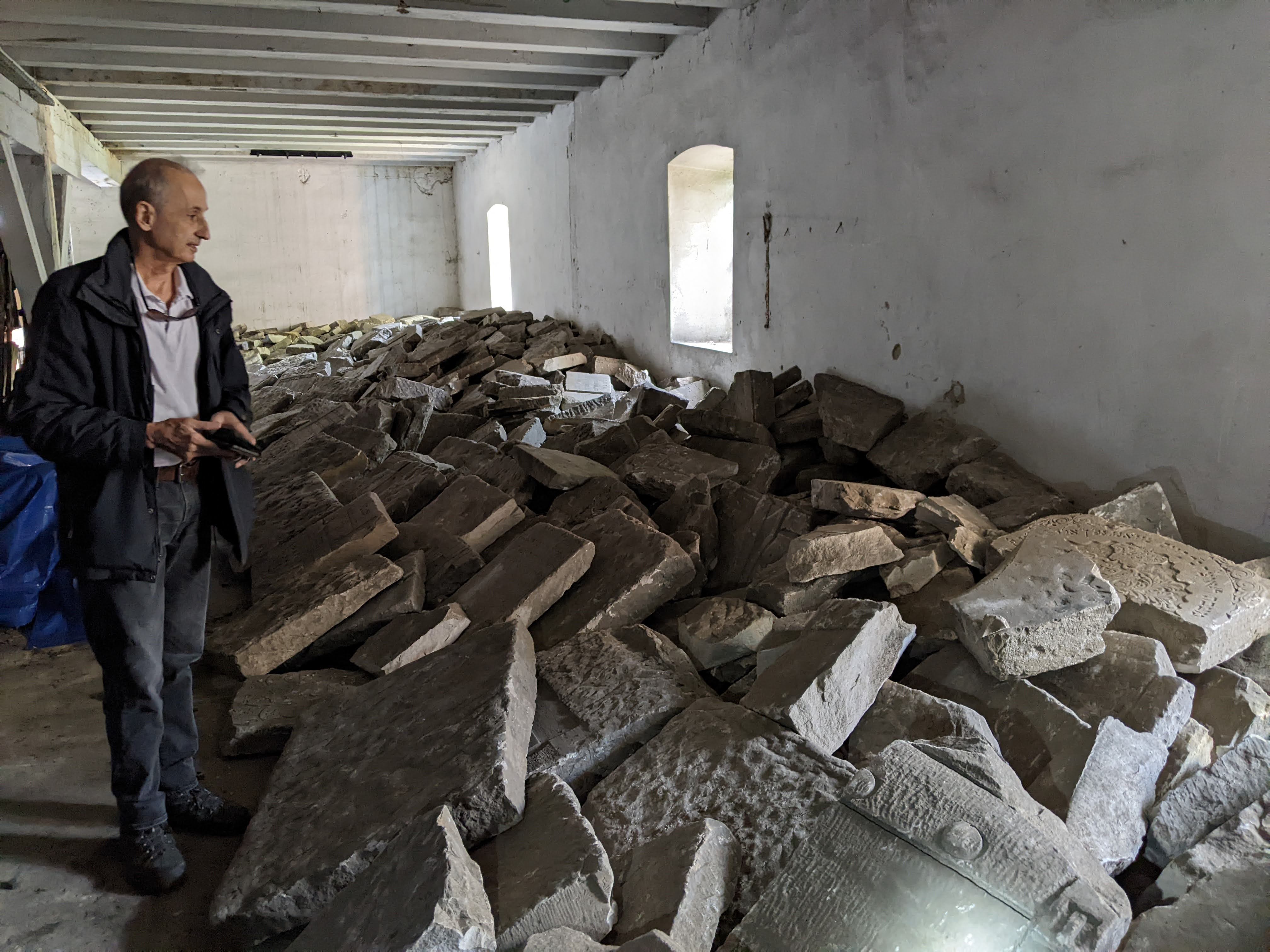
Next, we met the Kutno Regional Museum Director Grzegorz Skrzynecki and others at a defunct brewery warehouse where the museum stores hundreds of matzevot fragments recovered from the places they were used in road and construction projects (a common practice during and after the German occupation). The volume of stones is astounding, though still just a fraction of the matzevot plundered from the cemetery. You can see many of them with English translations of the decipherable texts in Yosef Kutner’s book Broken Memories: Remains from the Jewish Cemetery in Kutno. Yosef compiled the book from photographs, so this is the first time he saw the actual stones. Piled as they were, most of their identifying numbers are not visible. Nevertheless, there on the surface, Yosef found the top of his great grandfather’s tombstone. Mr. Skrzynecki explained that more fragments were found during a recent road project. They didn’t make it into the book, but I’m sure Yosef will find a way to share that information once he has it.
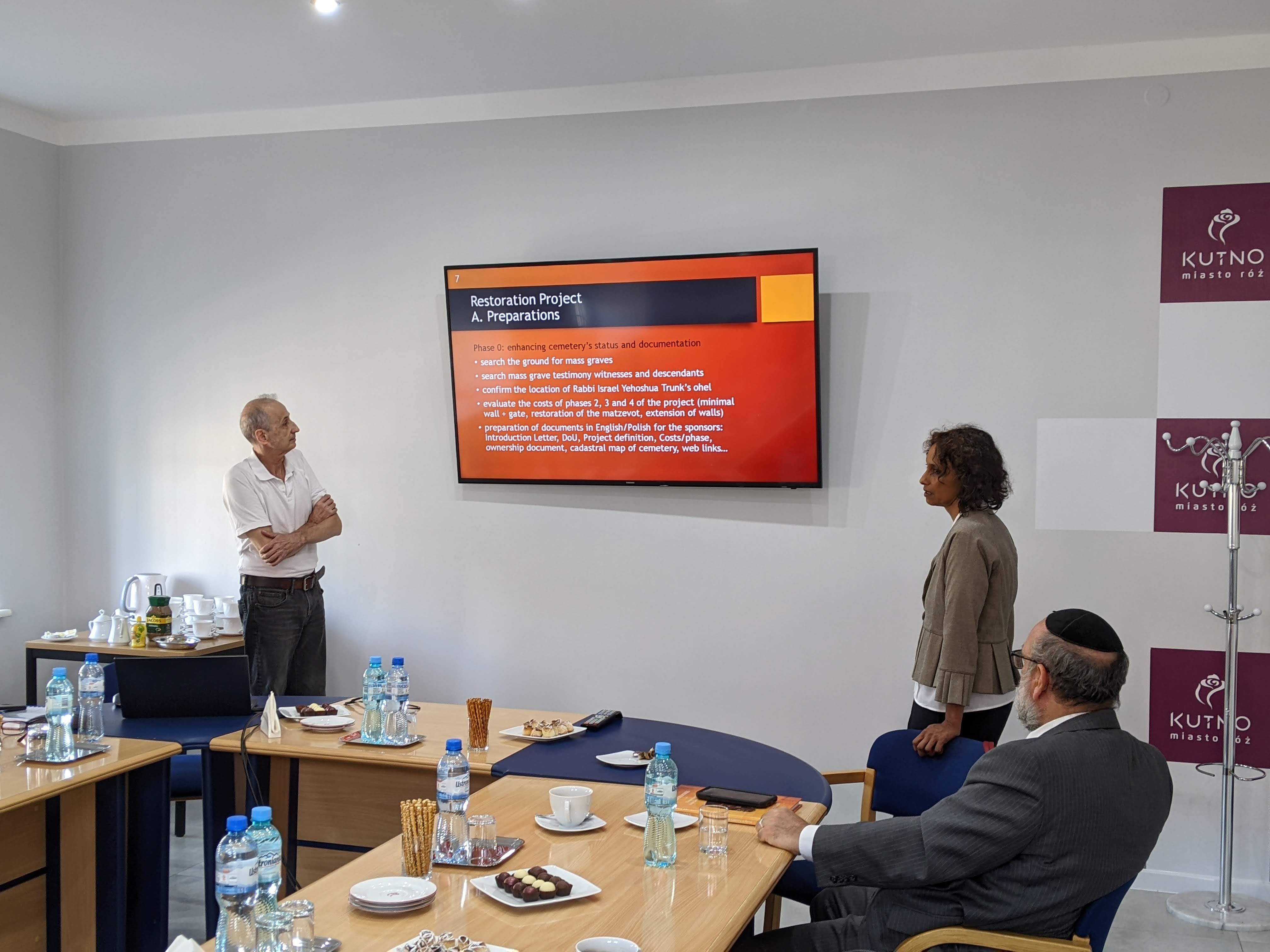
Meeting to discuss cemetery protection and maintenance
The meeting to discuss the future of the Kutno Jewish Cemetery followed. It was attended by key figures from the Jewish Community of Poland (Chief Rabbi Michael Schudrich), from the town of Kutno (Deputy Mayor Zbigniew Wdowiak, town attorney Agnieszka Wojkowska-Pawlak, museum director Grzegorz Skrzynecki, museum public relations and marketing Katarzyna Erwińska, library head Magdalena Konczarek, and Michael Adamski, head of the Department of Culture, Promotion, and Development), from the Association of Friends of the Kutno Region–TPŻK (Bożena Gajewska), and from international Jewish heritage groups (Yosef from Jewish Kutno and Roberta and me from ADJCP).
This description is based on Roberta Books’ memo: The city deputy president opened the meeting with a presentation of the many actions the Town of Kutno has undertaken in support of remembrance of the Jewish history of Kutno, including the biennial Asch Festival.
Josef Kutner followed with a slide presentation about the Jewish cemetery of Kutno, and his proposal for protection of the property. His proposal includes fencing the entire property with a brick wall that resembles the wall around the Christian cemetery, confirming the location of two mass graves mentioned in the Yizkor book and commemorating the mass graves with an appropriate marker, and limiting access to the site in order to prevent partygoers and others from disrespecting the site. Kutner also advocated creating a memorial with the preserved matsevot and marking the site of Rabbi Trunk’s Ohel.
The town attorney then discussed the ownership of the site. Important records for verifying with legal clarity that the Jewish Community of Kutno owned the site, in particular the Land Registry Book, are missing and unlikely to be located. Despite 20 years of effort, the town has been caught between legal requirements and administrative rulings that have called into question their legal right to maintain the site. Although no interested party questions that the site belonged to the Jewish Community of Kutno, legally this remains a murky area.
Rabbi Schudrich responded that he has dealt with similar problems in Poland on a number of occasions and he is confident that he can sort this out satisfactorily. He told the parties that they should begin planning while the legal issues were being sorted.
Schudrich and the deputy president talked about the change in mentality that they expect will come about when the plans began to come to fruition. When Jewish cemeteries are protected, local residents begin to take pride in them and matsevot have a way of coming out of hiding and returning to the cemetery.
The deputy president voiced his full support for the cemetery renovation, including covering the costs of a new wall. He noted that he, too, had drawn up preliminary plans for fencing the cemetery. They differ from Kutner’s proposal in two key ways. His design would be constructed of metal with brick pillars, not brick like the historical wall or the wall surrounding the Christian cemetery. Also, it would have multiple access points rather than the single access point in the Kutner proposal. The deputy president wants current residents to remain able to walk across the site; he pointed out that its location in the middle of the city would complicate closing it off. He wants the site to be respected as an integral part of the town. He noted that Rabbi Schudrich was consulted throughout the development of the plan, and he supported this idea.
I want to emphasize the good will everyone projected toward each other as well as the resolve to push through the twenty-year roadblock that has stalled the project to secure the cemetery. Since the meeting, Yosef Kutner has continued to share materials about the likely location of the mass grave and to push for his vision for the cemetery restoration.
Additional meetings
After lunch, we visited the city library, where director Magdalena Konczarek showed us a short film they produced about Sholem Asch, his work, and the biennial Kutno Sholem Asch Festival. The library sponsors the festival, which has been held every other year since 1993. They also have an extensive collection of materials related to the Jewish history of Kutno and of Asch. They have published several academic volumes based on papers delivered at the conference that occurs in conjunction with the festival, as well as Polish translations of Asch’s work. For the memorial trip in May, Magdalena and library historian/regional specialist Andrzej Olewnik will mount an exhibition featuring their collection.
We continued to the offices of the TPŻK where we met Bożena Gajewska (until recently the organization president) and the vice-president Grażyna Baranowska (former librarian and organizer of the Sholem Asch Festival). Bożena reaffirmed her commitment to continue working on projects associated with Jewish Kutno, and Grażyna affirmed the continued support of the TPŻK.
The next day, we viewed an exhibition in the Kutno Community Center about the Eizyk brothers who bred and grew roses before and after the war. From this successful business, the city adopted the moniker “City of Roses.” The exhibition was part of the annual Rose Festival that attracts thousands of visitors to Kutno.

On September 12, we visited students at the Jan Kasprowicz High School (Liceum II). Roberta and I agree that such outreach to young people was one of the most important (if not the most important) part of our visit. We were welcomed by school director (principal) Artur Ciurlej, teacher Anna Ambrosiak, and a room full of students eager to hear from us. They showed us a short video about their recent activities related to Jewish memory (including dancing lessons!), and then Roberta and I each told our personal family story, explained our ancestors lived nearby, and talked briefly about our desire to restore Jewish memory. The meeting took place in English, but the students clearly understood us; they asked thoughtful questions and shared some of their own experiences with us. We spoke for more than a class period, even after the bells rang. Some students promised to meet us again in May, although they will have graduated by then.
Final note: Clearly, we have strong partners in the Kutno city government and with the TPŻK. They all expressed the desire to work with us and seem to have a sincere interest in preserving and promoting the Jewish heritage of the city. They are eager to participate in the memorial trip in May.

 Uncovering Jewish Heritage