• About
  • The Photo that Started it All

Uncovering Jewish Heritage

Uncovering Jewish Heritage

Tag Archives: University of Alabama

Żychlin Cemetery Project: Sun and Hail

13 Sunday Jul 2025

Posted by Marysia Galbraith in Association of Descendants of Jewish Central Poland, Commemoration, Jewish Culture, Jewish Ghetto, Museum, Polish-Jewish Heritage, Post-World War II, Warsaw, World War II

≈ Leave a comment

Tags

Jewish Ghetto Uprising, Jewish Historical Institute, Matzevah Foundation, University of Alabama

Day two began with beautiful sunshine. The first for days, we were told.

We met our guide Tomasz where we left off yesterday, outside the POLIN Museum.

The Heroes

The Monument to the Ghetto Heroes was dedicated in 1948, 5 years after the ghetto uprising. The relief sculpture features a heroic central figure that Szymon compared to a socialist realist superhero. Most of the figures around him are young, as were most of the ghetto uprising fighters. Behind the central hero floats a woman with her breast exposed holding a baby, perhaps symbolic of Matka Polka–the  idealized Polish mother, though perhaps also reminiscent of Madonna and the Christ child. The image emphasizes the heroism of the ghetto fighters. This is the best known side of the monument.

The relief on the back paints a different portrait of suffering and oppression. A line of robed figures tread heavily with down-turned faces. On this side, the central figure looks like a rabbi; he’s older with a flowing beard, holding a Torah scroll in his hand. The helmets and bayonets of Nazi soldiers hover above the line of hunched figures. Szymon pointed out the glittering black stone along the front of the platform, intended for a Nazi monument that never was built, and repurposed by survivors as a symbolic act of defiance.

The oppressed

We continued along the trail of the ghetto heroes, recognized on a series of metal cubes, then stopped at 18 Miła Street, where a dirt mound and monument mark the location of a bunker where ghetto heroes and civilians chose suicide rather than death at the hands of the occupiers.

These weren’t the only Jewish leaders who committed suicide. Judenrat leader Adam Czerniaków took his own life when he realized he couldn’t stop the final removals of ghetto residents to the death camps. Szmul Zygielbojm, a Jewish representative in the Polish government in exile, died by suicide after he learned the details of the murder of the Jewish people back in Poland. I wonder what my students think of this. It seems that for many Americans, suicide is an individual choice, not one motivated by a sense of collective grief or defiance. We aren’t facing down genocide, either…

We continued on to Umschlagplatz, where captives were gathered for transport to the camps.
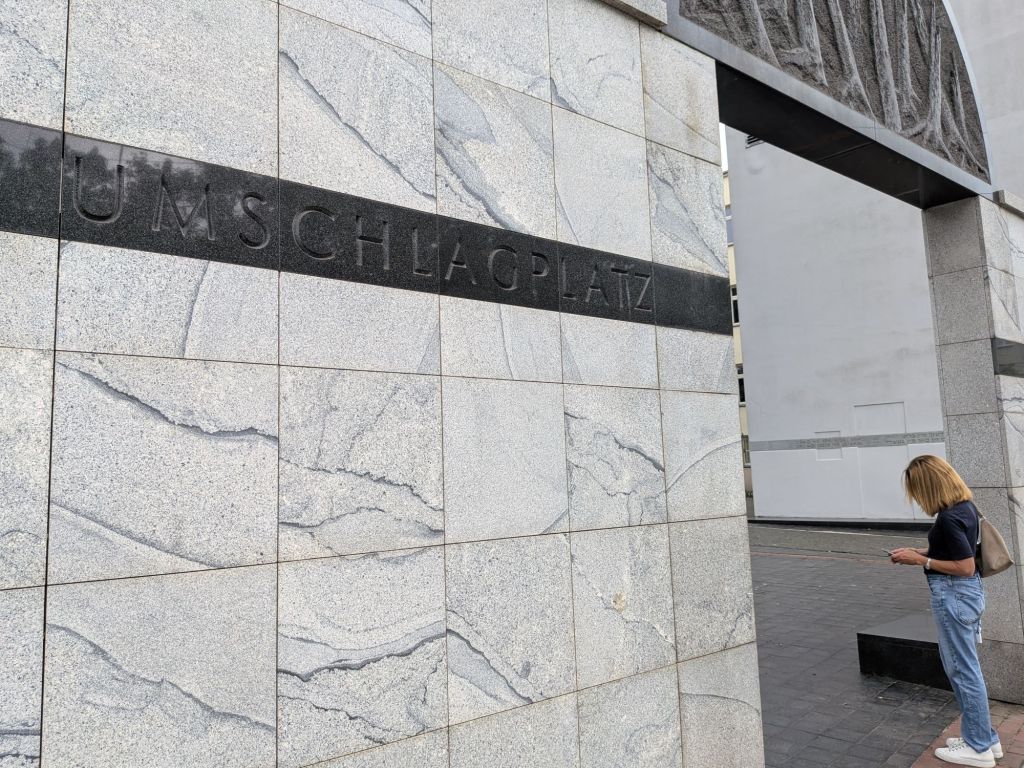
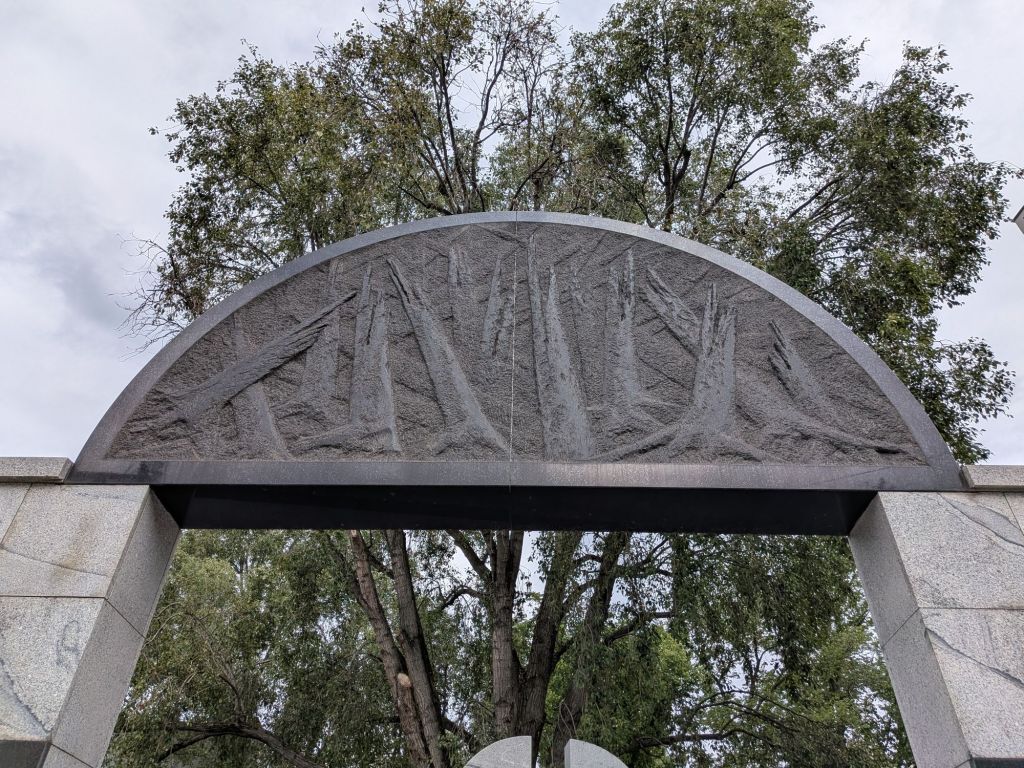
The broken trees on a tombstone-like feature symbolizes untimely death
The tree behind the break in the wall symbolizes life

The walls inside are inscribed with the first names of victims. I took a photo of Jakub in memory of my grandfather Jakub Rotblit and my grandmother’s brother Jakub Piwko, both of whom died in 1942, likely victims of the Holocaust
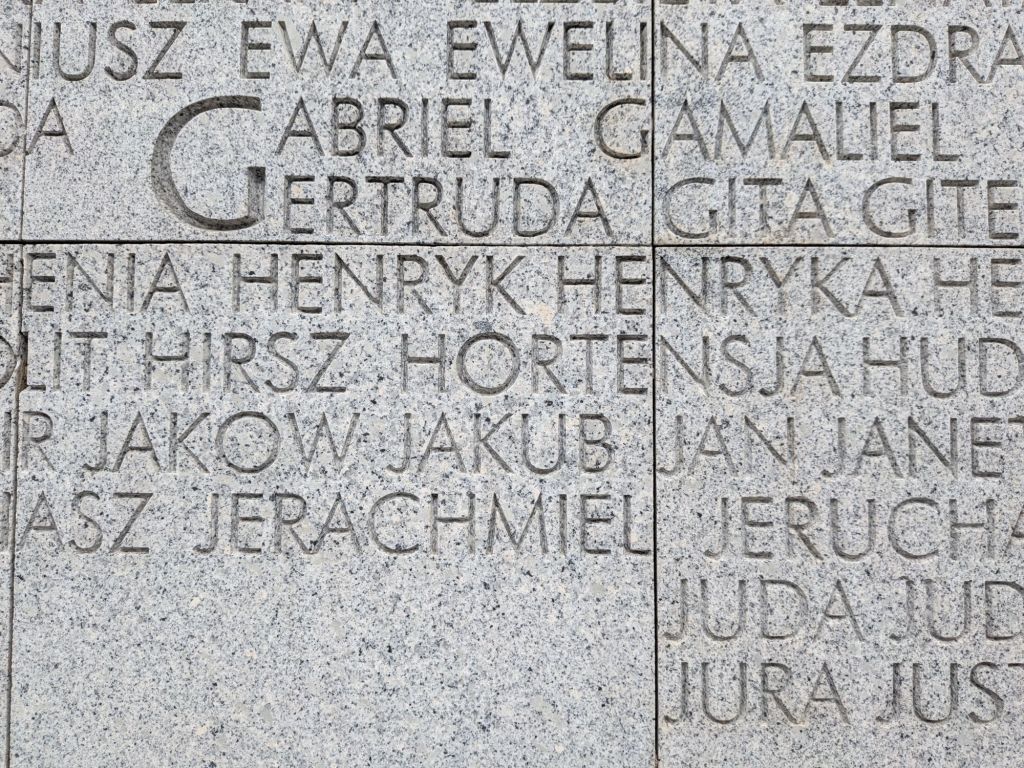
Jakub among the names of victims

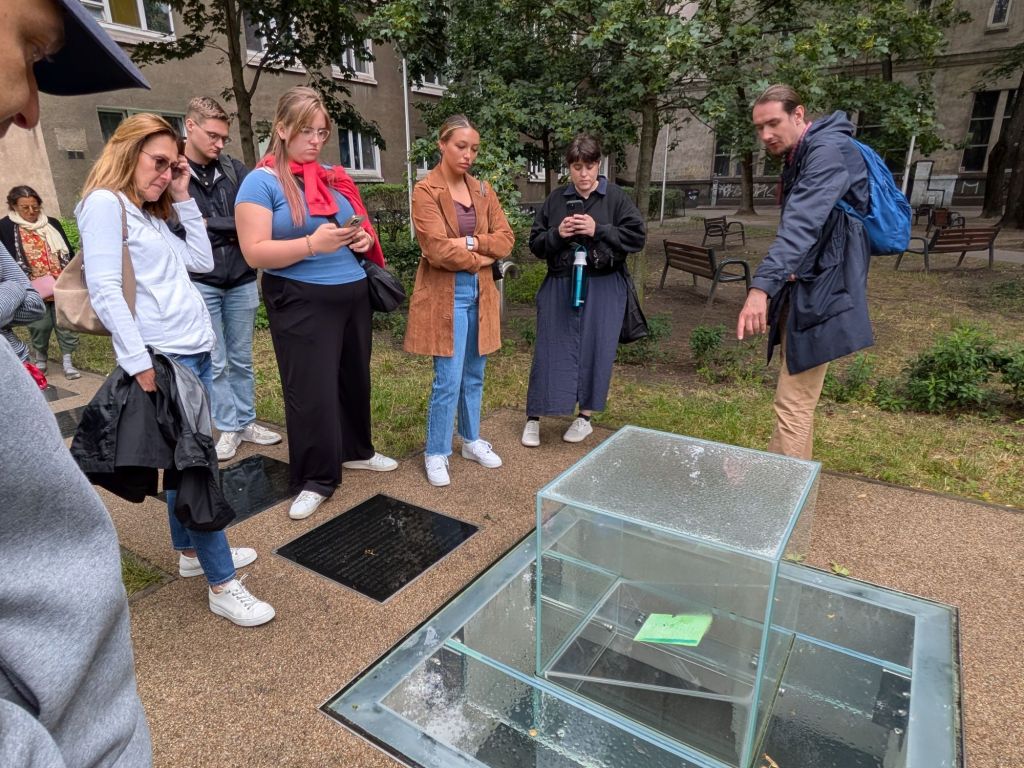
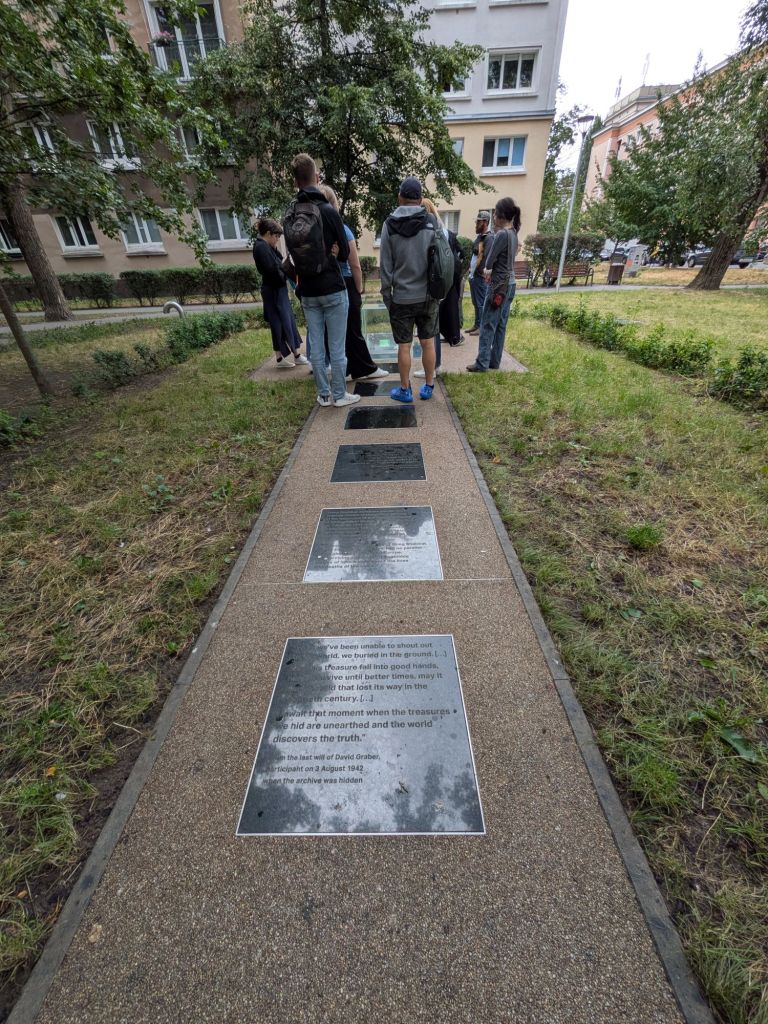
We finished our tour at the Jewish Historical Institute, where many of the victims’ personal words are displayed along with one of the milk cans where Ringelblum hid the archive documenting life in the ghetto. Some of the saved documents are on display, including poetry, personal accounts, and official reports. One listing the number of victims in different towns says there were 3500 in Żychlin and 6500 in Kutno.

As we departed, thunder rumbled, the sky opened up and rain turned to hail.

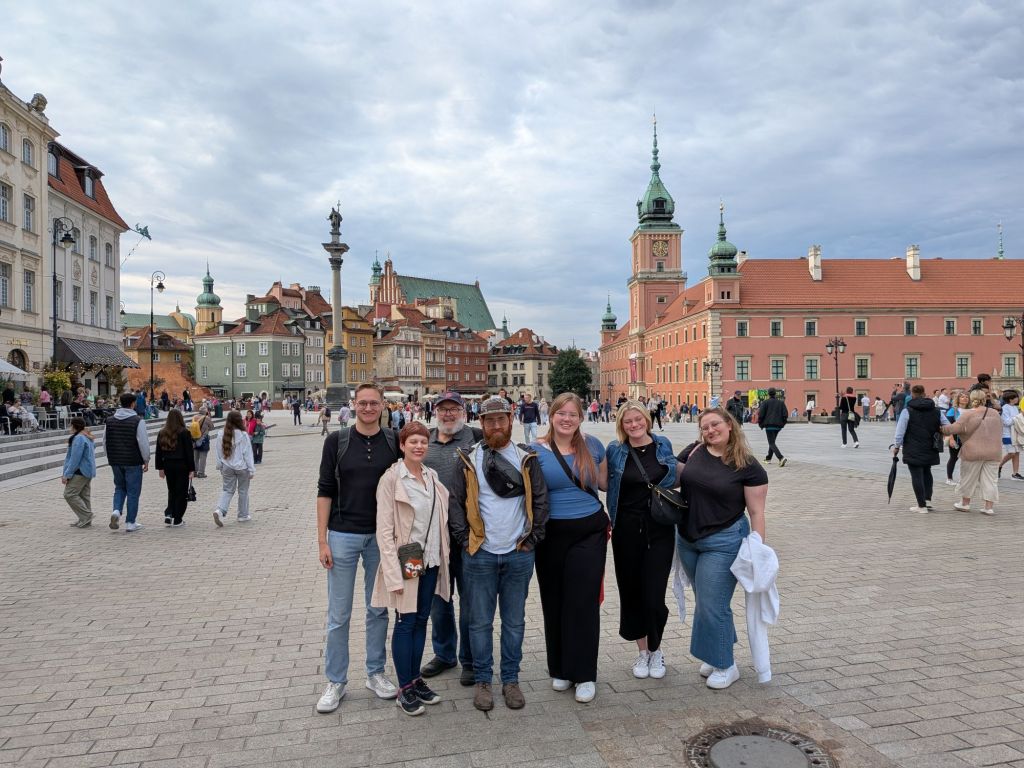
Some of the students with our guide right before the hail came down.

“Is the weather always like this here?” a student asked. “No,” I replied. “That was really unusual.”

Żychlin Cemetery Project 2025: Volunteers Arrive in Warsaw

12 Saturday Jul 2025

Posted by Marysia Galbraith in Association of Descendants of Jewish Central Poland, Jewish Culture, Jewish Ghetto, Polish-Jewish Heritage, Polish-Jewish relations, Pre-World War II, Synagogues, Walfisz, Warsaw, World War II

≈ 7 Comments

Tags

Matzevah Foundation, University of Alabama, Żychlin Cemetery Project 2025

Nothing like spending the whole day on your feet the day after an overnight plane trip. But our group is intrepid.

Dinner on Friday night

The day began with a walking tour “The Unremovable Traces of the Warsaw Ghetto” led by Dr. Szymon Pietrzykowski of the Jewish Historical Institute. We started in the JHI in the lobby where the stone floor retains the burn stains caused by the fire bombs that destroyed the Great Synagogue in 1943 after the Warsaw Ghetto Uprising

Great Synagogue in Warsaw. Photo source: Wikipedia
Burn marks dating from the destruction of the neighboring Great Synagogue in 1943.

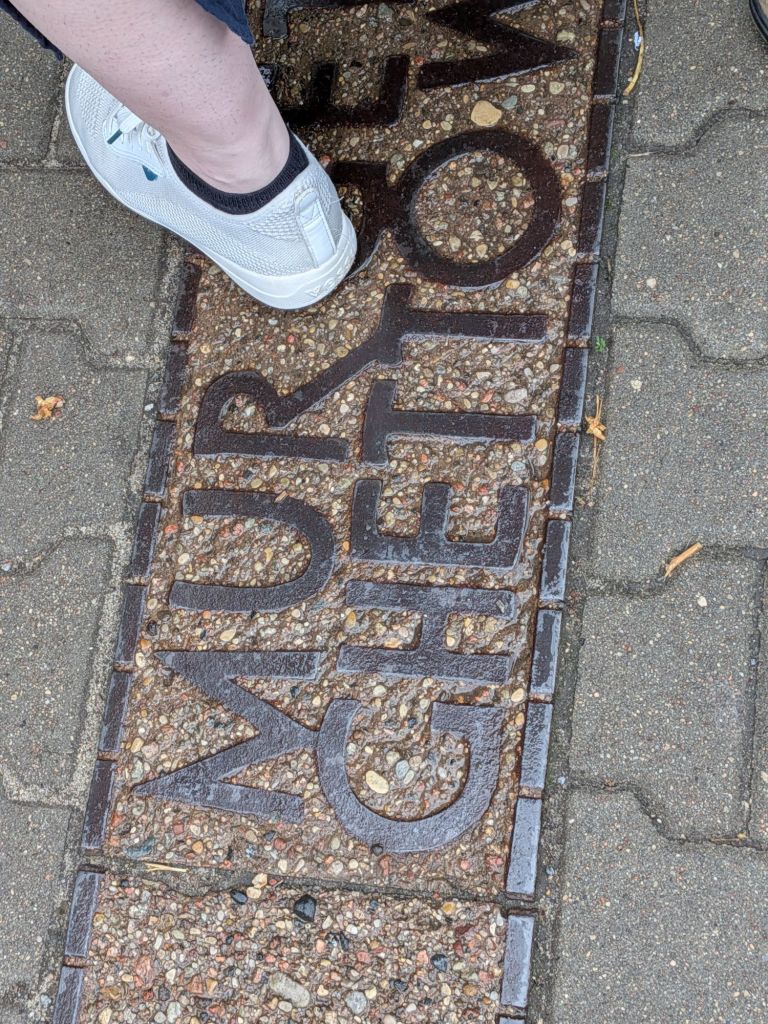
We visited places where the former location of the ghetto walls are marked by metal plaques in the sidewalk, buildings reconstructed after the war, sites where important Jewish institutions were destroyed and never rebuilt, and places significant to the Jewish Ghetto Uprising and the archive of Jewish life in the ghetto collected by historian Emanuel Ringelblum.

Jewish Historical Institute on Tłomacka Street
The building that replaced the Great Synagogue. Note the arched feature evocative of synagogue windows.
Location of the ghetto wall
Traditional courtyard, one of the few showing what prewar Warsaw was like
Monument where part of the Ringelblum archive was found in milk cans under the rubble on Nowolipie Street

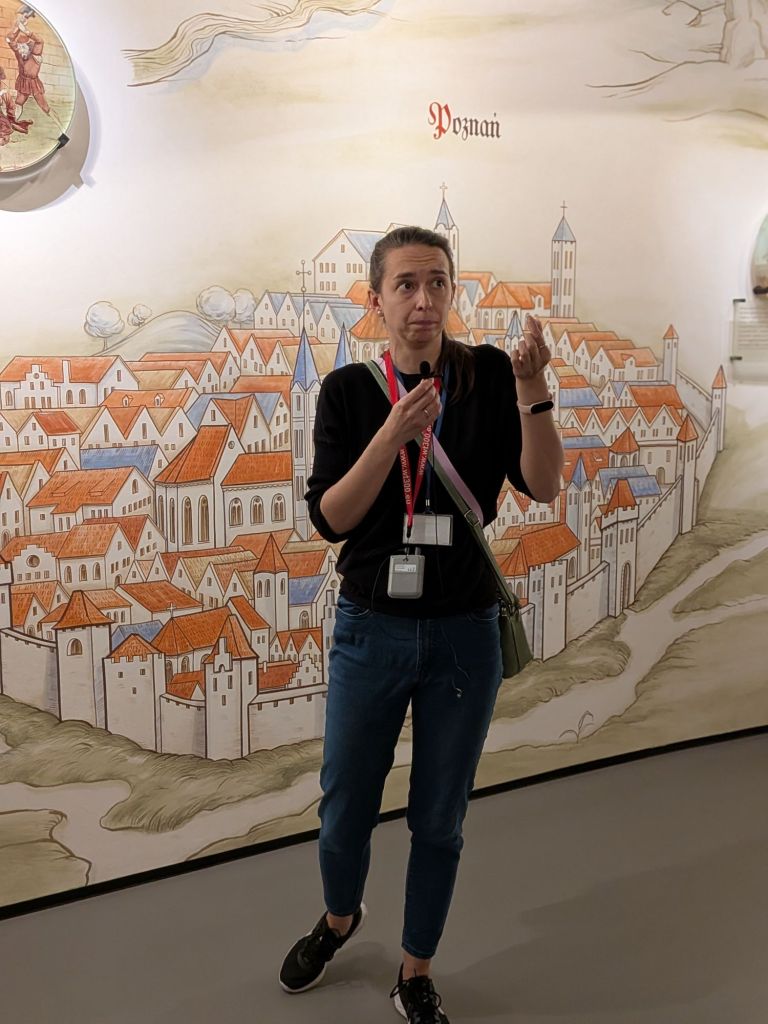
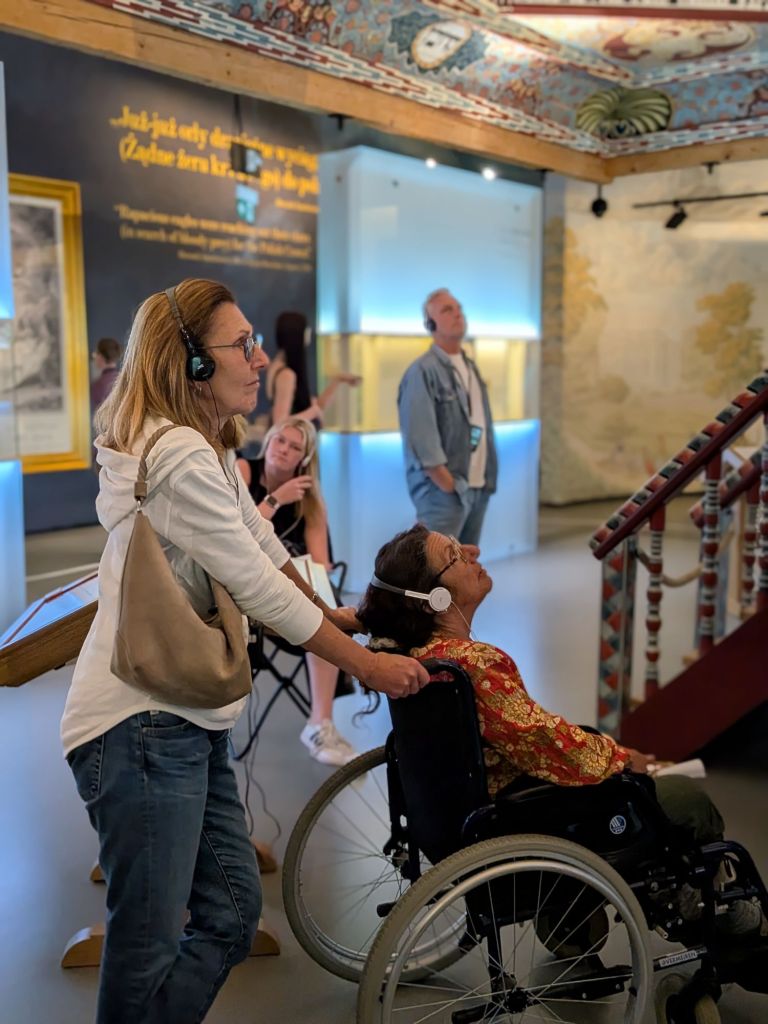
Our tour continued at the POLIN Museum of the History of Polish Jews, led by our guide Martina.

Our group at POLIN in the reproduction of a wooden painted synagogue
Model of the Great Synagogue

After six hours of walking, we were ready to sit down. Paula, whose ancestor Tema Walfisz Jakubowicz grew up in Żychlin, treated us to a well-deserved meal. Many in our group got to try pierogi for the first time!

Memory in Fragments: the talk at UA

31 Thursday Dec 2015

Posted by Marysia Galbraith in Brześć Kujawski, Buk, Cemeteries, Family, Heritage work, Israel, Jewish Culture, Lutowiska, Memory, Poland, Polish Culture, Polish-Jewish Heritage, Polish-Jewish relations, Post-World War II, Poznan, Pre-World War II, Research Methodology, Skierniewice, Synagogues, World War II, Wronki, Włocławek

≈ 2 Comments

Tags

Fulbright Program, Postmemory, University of Alabama

The lecture I gave at UA September 3, 2015 about my research during my Fulbright Fellowship is now available on vimeo. I’ve never seen myself lecture before. It’s a little unsettling. Still, here it is, flaws and all (for instance I know that Poland entered the European Union in 2004, even though I misspoke here).

I talk a little about the Fulbright Program–the kinds of grants available and some tips for applying.

It’s also a good introduction to my ideas about reassembling Jewish life: the strands that I’m following, what has been lost, what can be recovered, and how memory projects at sites throughout Poland intertwine with my own search for my family history. I hear echoes of some of the scholars I’ve read–Iwona Irwin Zarecka and Marianne Hirsch, as well as my sometime collaborator Malgosia Wosińska. There is no way to bring back what has been lost, but fragments of the past can be reassembled to form a new kind of life that allows for connection with what used to be and what yet might be.

Categories

  • Anthropology (37)
    • Archives (14)
    • Fieldwork (7)
    • Ground Penetrating Radar (GPR (4)
    • Research Methodology (8)
  • antisemitism (14)
  • Association of Descendants of Jewish Central Poland (32)
  • Catholicism (8)
  • Conference (1)
  • Discrimination (2)
  • Family (69)
    • Bereda (17)
    • Kolski (13)
    • Piwko (22)
    • Rotblit (3)
    • Walfisz (4)
    • Winawer (7)
  • Genealogy (11)
  • Heritage work (66)
    • Commemoration (23)
  • Identity (18)
  • Israel (6)
  • Jewish Culture (89)
    • Cemeteries (51)
    • Museum (7)
    • Synagogues (33)
  • Jewish immigrants (8)
  • Jewish Religion (1)
  • Memory (70)
  • Names (14)
  • Photographs (6)
  • Pifko-Winawer Circle (5)
  • Poland (125)
    • Baligród (1)
    • Bolimów (1)
    • Brześć Kujawski (5)
    • Buk (1)
    • Chodecz (1)
    • Dukla (2)
    • Dąbrowice (1)
    • Gdynia (1)
    • Gostynin (2)
    • Gąbin (1)
    • Izbica Kujawska (1)
    • Kazimierz (4)
    • Kowal (1)
    • Koło (1)
    • Krakow (7)
    • Krośniewice (1)
    • Kutno (6)
    • Kłodawa (1)
    • Lesko (8)
    • Leszno (1)
    • Lubień Kujawski (1)
    • Lubraniec (1)
    • Lutowiska (3)
    • Piła (3)
    • Podgórze (2)
    • Poznan (11)
    • Przemyśl (2)
    • Pzedecz (1)
    • Radom (1)
    • Radymno (1)
    • Sanok (1)
    • Skierniewice (5)
    • Sobota (2)
    • Tarnów (2)
    • Warsaw (22)
    • Wielkopolska (1)
    • Wronki (7)
    • Włocławek (20)
    • Zasław (2)
    • Łódź (1)
    • Żychlin (30)
  • Polish Culture (10)
  • Polish-Jewish Heritage (60)
  • Polish-Jewish relations (60)
  • Post-World War II (24)
  • Pre-World War II (22)
  • Reclaimed Property (1)
  • stereotypes (3)
  • Survival (9)
  • Trauma (3)
  • Uncategorized (5)
  • Victims and perpetrators (4)
  • World War II (45)
    • Jewish Ghetto (12)
    • Nazi Camps (5)
    • Polish Underground Army (3)
  • Yiddish (5)

Enter your email address to follow this blog and receive notifications of new posts by email. Your email address will not be shared.

Archives

  • October 2025 (1)
  • July 2025 (8)
  • June 2025 (1)
  • April 2025 (1)
  • August 2024 (3)
  • July 2024 (3)
  • May 2024 (2)
  • April 2024 (1)
  • May 2023 (2)
  • January 2023 (2)
  • December 2022 (7)
  • November 2022 (2)
  • October 2022 (5)
  • September 2022 (1)
  • January 2022 (1)
  • August 2021 (1)
  • December 2020 (2)
  • July 2020 (1)
  • May 2020 (3)
  • April 2020 (1)
  • March 2020 (1)
  • January 2020 (2)
  • May 2019 (1)
  • February 2019 (1)
  • November 2018 (1)
  • September 2018 (1)
  • August 2018 (3)
  • July 2018 (1)
  • June 2018 (1)
  • May 2018 (1)
  • April 2018 (2)
  • March 2018 (2)
  • February 2018 (2)
  • January 2018 (2)
  • December 2017 (2)
  • November 2017 (2)
  • October 2017 (1)
  • September 2017 (3)
  • August 2017 (3)
  • June 2017 (2)
  • May 2017 (3)
  • April 2017 (1)
  • March 2017 (2)
  • February 2017 (1)
  • January 2017 (2)
  • December 2016 (2)
  • November 2016 (4)
  • October 2016 (1)
  • September 2016 (6)
  • August 2016 (2)
  • July 2016 (1)
  • May 2016 (4)
  • April 2016 (2)
  • March 2016 (3)
  • February 2016 (4)
  • January 2016 (3)
  • December 2015 (3)
  • November 2015 (5)
  • October 2015 (5)
  • September 2015 (3)
  • August 2015 (4)
  • July 2015 (3)
  • June 2015 (3)
  • May 2015 (4)
  • April 2015 (9)
  • March 2015 (3)
  • February 2015 (2)
  • January 2015 (5)
  • December 2014 (4)
  • November 2014 (9)
  • October 2014 (2)
  • September 2014 (1)

Copyright Notice

All original text and images are copyright © Marysia Galbraith. Please contact the author before quoting.

Blog at WordPress.com.

  • Subscribe Subscribed
    • Uncovering Jewish Heritage
    • Join 145 other subscribers
    • Already have a WordPress.com account? Log in now.
    • Uncovering Jewish Heritage
    • Subscribe Subscribed
    • Sign up
    • Log in
    • Report this content
    • View site in Reader
    • Manage subscriptions
    • Collapse this bar
 

Loading Comments...