• About
  • The Photo that Started it All

Uncovering Jewish Heritage

Uncovering Jewish Heritage

Tag Archives: Latvia

Vilnius and Riga: Jews in the Baltic States

26 Saturday Jul 2025

Posted by Marysia Galbraith in Commemoration, Jewish Culture, Jewish Ghetto, Memory, Post-World War II, Pre-World War II, Synagogues, World War II, Yiddish

≈ 4 Comments

Tags

Latvia, Lithuania, memorial art, Memory keepers, Riga, Vilnius

I wasn’t looking for Jewish history in Vilnius but it found me. The synagogue, still functioning as a house of prayer for the few thousand remaining Lithuanian Jews, is a half block from my hotel.
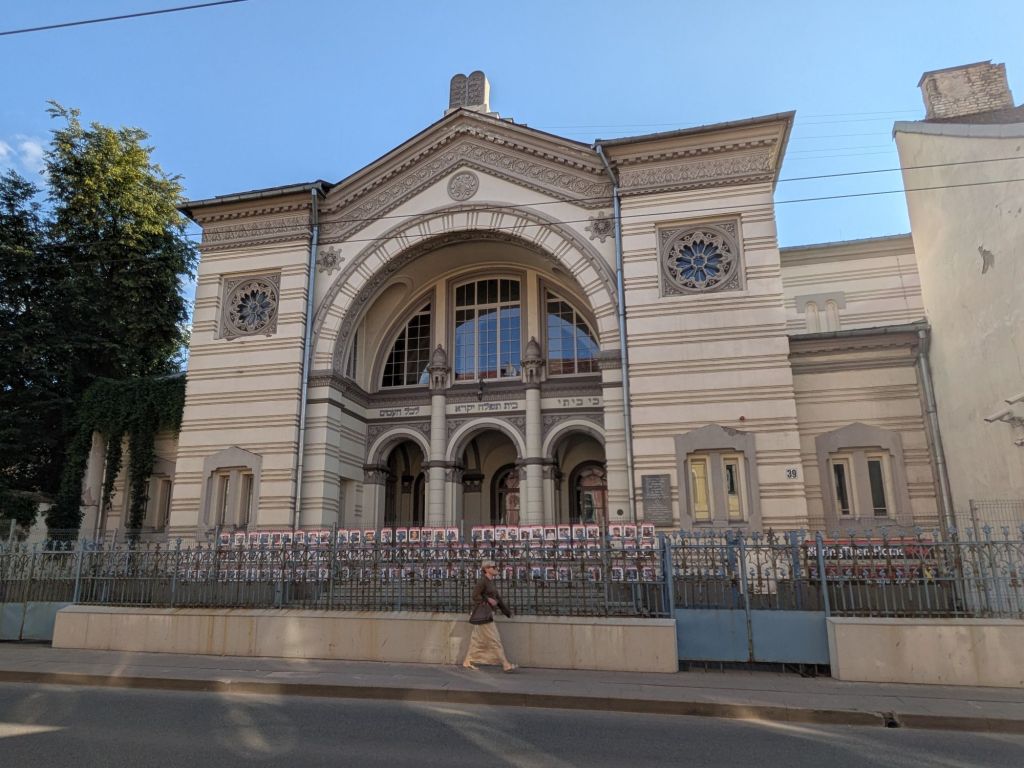
The Choral Synagogue in Vilnius. “Bring Them Home” along with photos of the hostages sits right behind the metal fence

I signed up for a Vilnius with Locals walking tour of Jewish Vilnius, the so-called Jerusalem of Lithuania. We spent 3 hours exploring the Jewish quarter. In some sections, Soviet-era concrete buildings took the place of the prewar structures blown to rubble when the WW II ghetto was dismantled.

It’s hard to picture the prewar buildings that once filled this area

Other areas escaped destruction and retain their prewar appearance. As we meandered through narrow cobblestone lanes, Kristina our tour guide explained how much of the city’s Jewish story was silenced during the Soviet occupation, the period from 1940 to 1990 when the country was a republic within the Soviet Union. During that time, nobody talked about the Jews who had made up 45% of the city’s inhabitants before the war.
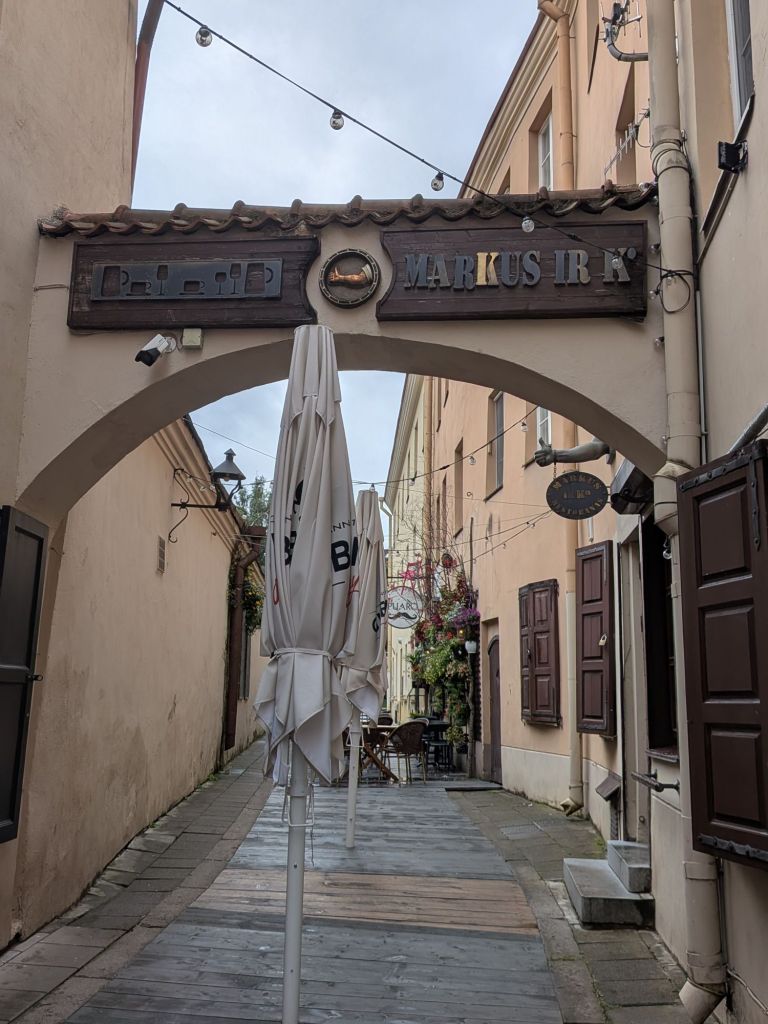
An iconic street in the Jewish district
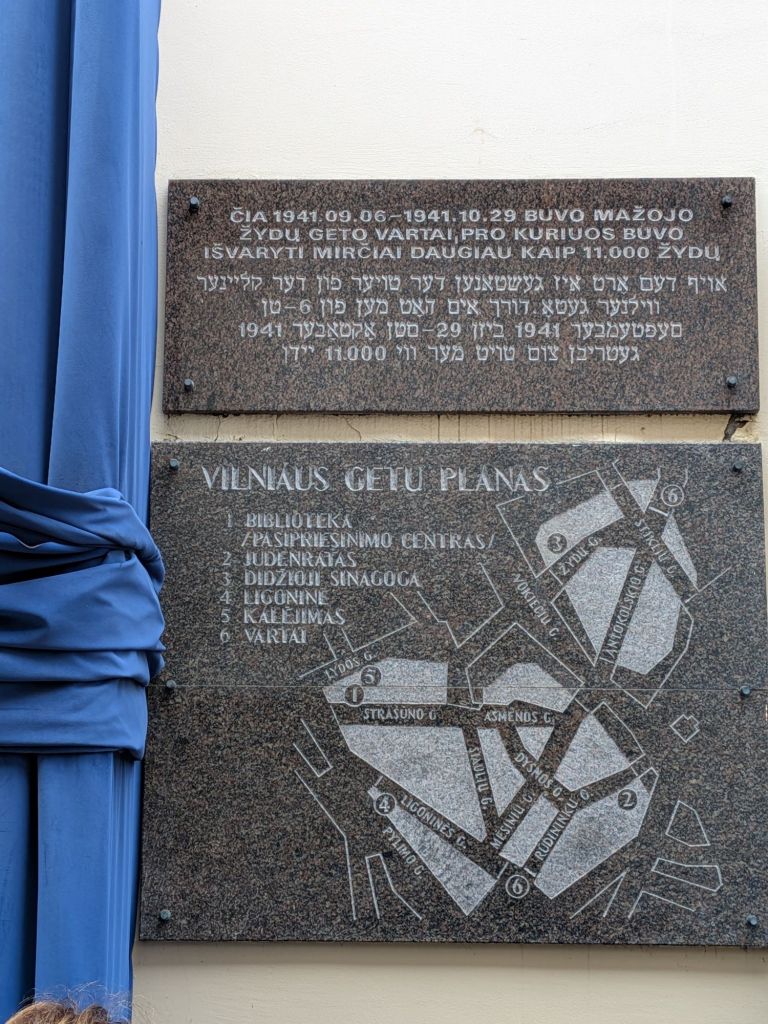
Map of the WW II ghetto
Jewish library scheduled for renovation

Kristina explained that this lost history only began to be rediscovered after Lithuania regained independence in 1990. Since then, scholars have been translating and writing about thousands of pages of documents that survived in hiding for 50 years. Many were collected by a group of people called the Paper Brigade who made it their mission to preserve all the documents in the YIVO Archive, a massive repository of Yiddish resources. Much of the archive found safety in New York. Today, the archive is split between Vilnius and New York.

As more has been learned about The Jews of Vilnius, artwork, memorials, and institutions have made the story public. The Walls That Remember project stencils images from archival photos onto the walls of the former Jewish Quarter.

Kristina tells us about The Walls that Remember

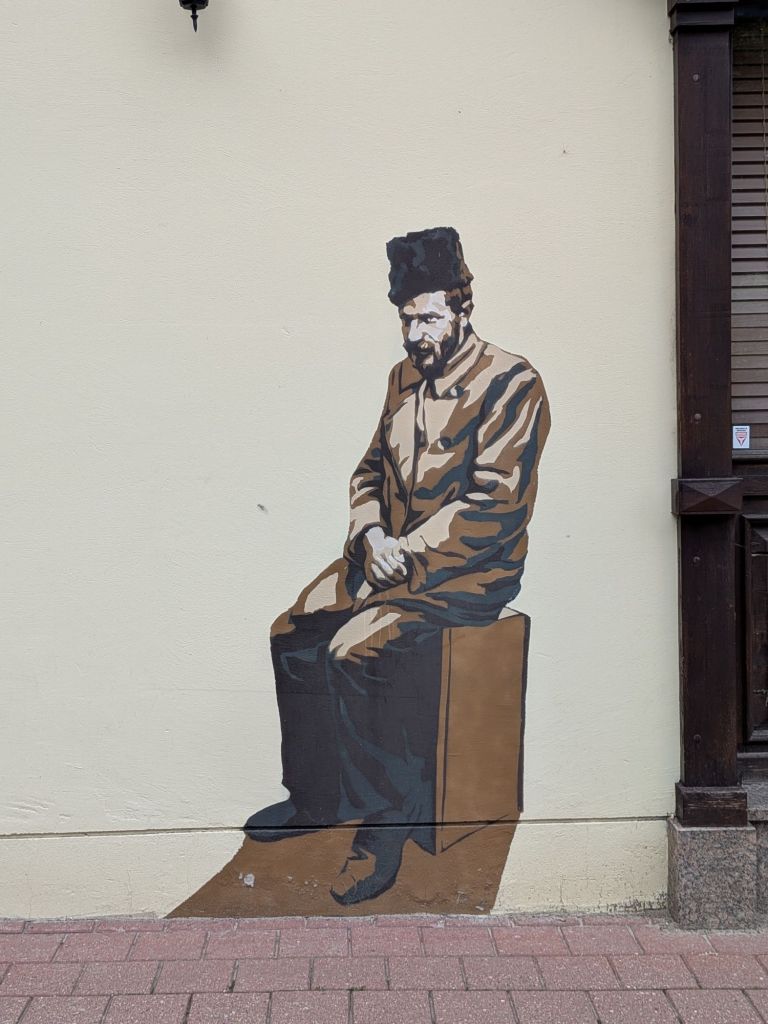
Remembered with a statue are: Zemach Shabad, a doctor known for his kindness who cared for the poor; Rabbi Elijah Ben Solomon (1720 – 1797), also called the Gaon of Vilnius; and singer Leonard Cohen, who had roots in Lithuania.
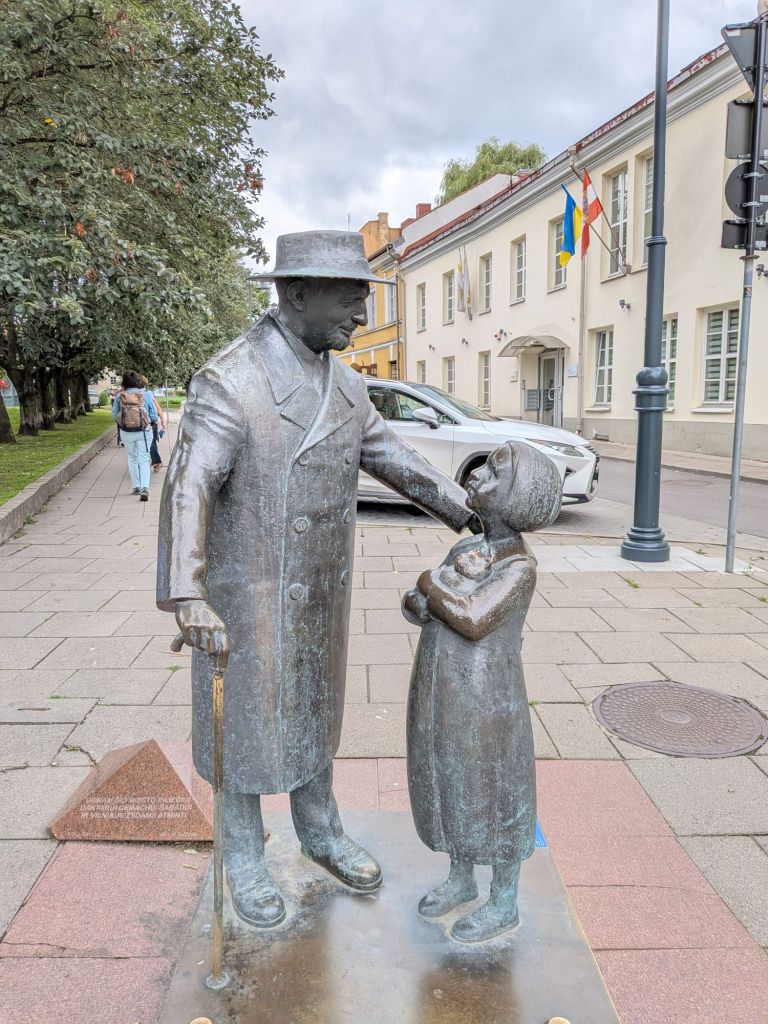
Zemach Shabad
The Gaon
Leonard Cohen

Jews first came to Vilnius as merchants before the 14th century. They were granted privileges by the Lithuanian rulers by the late 14th century. In Vilnius, they settled in the Jewish Quarter; other ethnic groups like Germans each settled in their own quarter of the city. By the time Lithuania was absorbed into the Russian Empire at the end of the 18th century, these ethnic enclaves were less rigid, and Jews could be found throughout the city along with other ethnic and religious inhabitants.

Vilnius was an important center for the growth of Yiddish language and culture, which explains why it was one of the places the Yiddish Scientific Institute (YIVO) was founded in 1925.

After a brief period of national autonomy from 1922 to 1940, Lithuania, like the other Baltic States, became a battleground between Stalinist USSR and Nazi Germany. When Hitler’s forces invaded in 1941, as many as 95% of the Jewish inhabitants were murdered.

Under Communism, the Choral Synagogue continued to operate, though it functioned more as a cultural organization than a religious one (at least officially). Since 1990, the Jewish community remains active at the synagogue. The interior can be viewed for just 2€. Whereas before the war, this was more of a reform synagogue, the current congregation is conservative. Women attend services on the upstairs balcony or behind a curtain on the ground floor.

Choral Synagogue

While on the tour, another participant and I struck up a conversation. Suzanne just completed a two-week tour of Jewish Poland with others of Jewish descent seeking to reconnect with the homeland of their ancestors. It was more than a historical trip, fusing spirituality and rituals within their encounters with Jewish spaces. For instance, at the grave of one participant’s ancestor, they did their own version of feldmestn, a ritual practiced by women; they measured the grave with wax, from which they made a candle.

I bonded with Suzanne over the importance of reconnecting with your Jewish origins, and also because of our shared appreciation for the individuals working in Poland to preserve Jewish memory. She called them memory keepers, a name that perfectly captures the role they play. I will use the term in my future writing about these memory keepers.

In Riga, the capitol of neighboring Latvia, Jewish markers continued to find me. On the building next to my hotel is a memorial marker for someone who saved Jews during the German occupation, and around the corner stands the synagogue. Also, during a walking tour of the city, I met Dimitri and his son Shiloh, reconnecting with their Jewish Latvian roots.
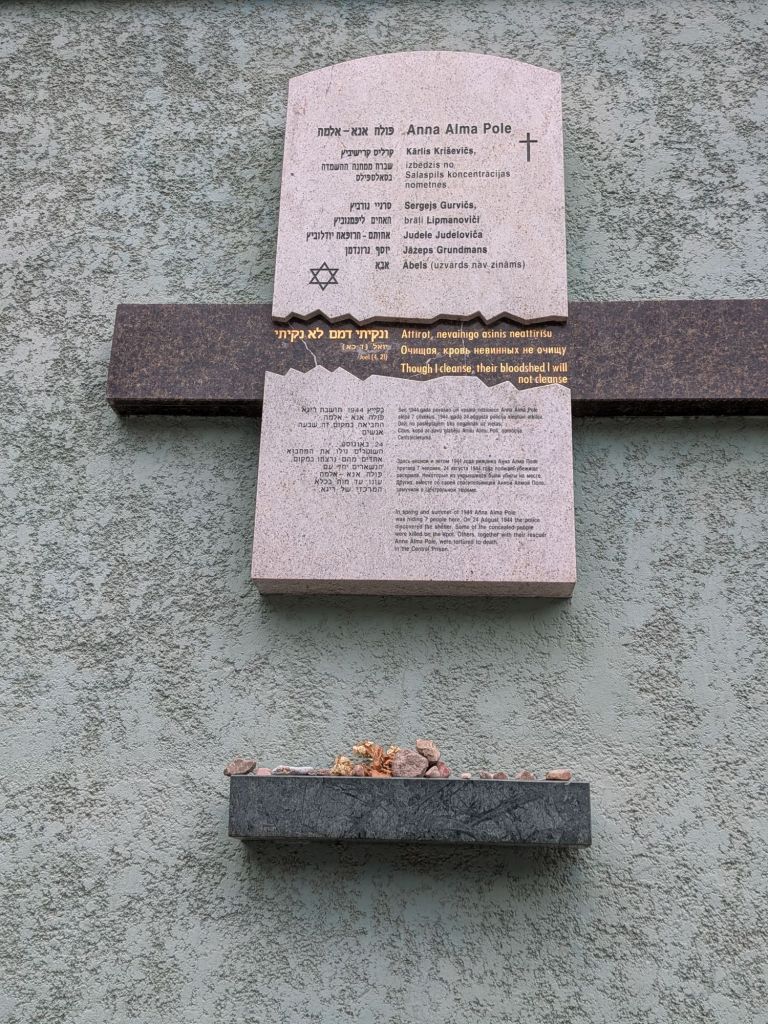
Recognition for a righteous gentile
Riga Synagogue

Categories

  • Anthropology (37)
    • Archives (14)
    • Fieldwork (7)
    • Ground Penetrating Radar (GPR (4)
    • Research Methodology (8)
  • antisemitism (14)
  • Association of Descendants of Jewish Central Poland (32)
  • Catholicism (8)
  • Conference (1)
  • Discrimination (2)
  • Family (69)
    • Bereda (17)
    • Kolski (13)
    • Piwko (22)
    • Rotblit (3)
    • Walfisz (4)
    • Winawer (7)
  • Genealogy (11)
  • Heritage work (66)
    • Commemoration (23)
  • Identity (18)
  • Israel (6)
  • Jewish Culture (89)
    • Cemeteries (51)
    • Museum (7)
    • Synagogues (33)
  • Jewish immigrants (8)
  • Jewish Religion (1)
  • Memory (70)
  • Names (14)
  • Photographs (6)
  • Pifko-Winawer Circle (5)
  • Poland (125)
    • Baligród (1)
    • Bolimów (1)
    • Brześć Kujawski (5)
    • Buk (1)
    • Chodecz (1)
    • Dukla (2)
    • Dąbrowice (1)
    • Gdynia (1)
    • Gostynin (2)
    • Gąbin (1)
    • Izbica Kujawska (1)
    • Kazimierz (4)
    • Kowal (1)
    • Koło (1)
    • Krakow (7)
    • Krośniewice (1)
    • Kutno (6)
    • Kłodawa (1)
    • Lesko (8)
    • Leszno (1)
    • Lubień Kujawski (1)
    • Lubraniec (1)
    • Lutowiska (3)
    • Piła (3)
    • Podgórze (2)
    • Poznan (11)
    • Przemyśl (2)
    • Pzedecz (1)
    • Radom (1)
    • Radymno (1)
    • Sanok (1)
    • Skierniewice (5)
    • Sobota (2)
    • Tarnów (2)
    • Warsaw (22)
    • Wielkopolska (1)
    • Wronki (7)
    • Włocławek (20)
    • Zasław (2)
    • Łódź (1)
    • Żychlin (30)
  • Polish Culture (10)
  • Polish-Jewish Heritage (60)
  • Polish-Jewish relations (60)
  • Post-World War II (24)
  • Pre-World War II (22)
  • Reclaimed Property (1)
  • stereotypes (3)
  • Survival (9)
  • Trauma (3)
  • Uncategorized (5)
  • Victims and perpetrators (4)
  • World War II (45)
    • Jewish Ghetto (12)
    • Nazi Camps (5)
    • Polish Underground Army (3)
  • Yiddish (5)

Enter your email address to follow this blog and receive notifications of new posts by email. Your email address will not be shared.

Archives

  • October 2025 (1)
  • July 2025 (8)
  • June 2025 (1)
  • April 2025 (1)
  • August 2024 (3)
  • July 2024 (3)
  • May 2024 (2)
  • April 2024 (1)
  • May 2023 (2)
  • January 2023 (2)
  • December 2022 (7)
  • November 2022 (2)
  • October 2022 (5)
  • September 2022 (1)
  • January 2022 (1)
  • August 2021 (1)
  • December 2020 (2)
  • July 2020 (1)
  • May 2020 (3)
  • April 2020 (1)
  • March 2020 (1)
  • January 2020 (2)
  • May 2019 (1)
  • February 2019 (1)
  • November 2018 (1)
  • September 2018 (1)
  • August 2018 (3)
  • July 2018 (1)
  • June 2018 (1)
  • May 2018 (1)
  • April 2018 (2)
  • March 2018 (2)
  • February 2018 (2)
  • January 2018 (2)
  • December 2017 (2)
  • November 2017 (2)
  • October 2017 (1)
  • September 2017 (3)
  • August 2017 (3)
  • June 2017 (2)
  • May 2017 (3)
  • April 2017 (1)
  • March 2017 (2)
  • February 2017 (1)
  • January 2017 (2)
  • December 2016 (2)
  • November 2016 (4)
  • October 2016 (1)
  • September 2016 (6)
  • August 2016 (2)
  • July 2016 (1)
  • May 2016 (4)
  • April 2016 (2)
  • March 2016 (3)
  • February 2016 (4)
  • January 2016 (3)
  • December 2015 (3)
  • November 2015 (5)
  • October 2015 (5)
  • September 2015 (3)
  • August 2015 (4)
  • July 2015 (3)
  • June 2015 (3)
  • May 2015 (4)
  • April 2015 (9)
  • March 2015 (3)
  • February 2015 (2)
  • January 2015 (5)
  • December 2014 (4)
  • November 2014 (9)
  • October 2014 (2)
  • September 2014 (1)

Copyright Notice

All original text and images are copyright © Marysia Galbraith. Please contact the author before quoting.

Blog at WordPress.com.

  • Subscribe Subscribed
    • Uncovering Jewish Heritage
    • Join 145 other subscribers
    • Already have a WordPress.com account? Log in now.
    • Uncovering Jewish Heritage
    • Subscribe Subscribed
    • Sign up
    • Log in
    • Report this content
    • View site in Reader
    • Manage subscriptions
    • Collapse this bar
 

Loading Comments...