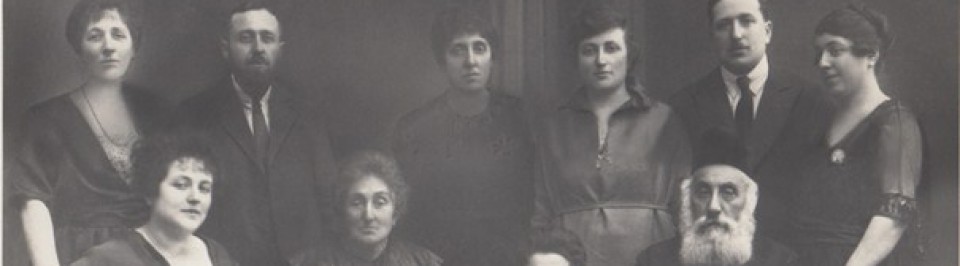
How do we learn difficult history? What is the most effective way of gaining factual and emotional understanding of what happened?
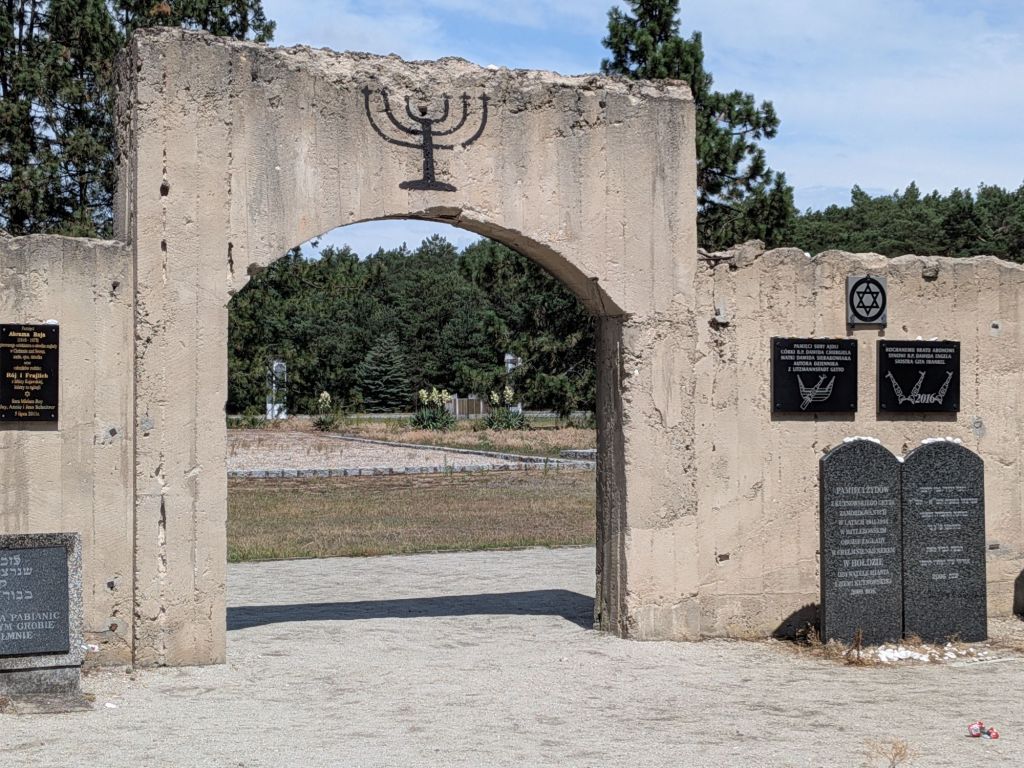
One thing participants are learning is how important it is to consider multiple factors and viewpoints, to resist the urge to tell a simple moralistic story that avoids ambiguity and nuance.
Another is the importance of learning through individuals’ personal stories. These are what make the events of the Holocaust real to the students. By learning the stories of those who survived and those who died, they come to understand the human cost of the dehumanization at the core of the Shoah, and the suffering and resilience of the victims.
A third lesson comes from simply being in the spaces where history happened. The Żychlin Cemetery is one such place. The Chełmno Death Camp is another.
For our tour of Chełmno, we had no guide, each of us instead weaving our own path through the museum exhibit and the remains of the camp buildings. Though less known than Auschwitz, what happened at Chełmno needs to be remembered. There, techniques for mass murder were tested to tragic effect. More than 200,000 Jews, 4000 Roma, and many Poles were gassed in makeshift gas chambers, and then their ashes were buried in the forest five kilometers away.
Most prisoners came via train from towns like Żychlin and Kutno, as well as the city of Łódż, bypassing the tiny town of Chełmno and disembarking at a mansion next to the church. Arrivals were reassured by the fancy façade, the invitation to write postcards to their loved ones describing how nice the place was, and the promise they could relax after cleaning up after their long journey. They were instructed to list their valuables on a form so that they could be returned to them after they washed. They were led into rooms to remove their clothes, then led down a corridor to the back of a waiting truck they were told was a shower. But instead of water, the truck’s exhaust filled the space. With the door locked behind them, they had nowhere to go and no way of saving themselves.
Initially, workers were instructed to bury the dead, but quickly the leadership realized they needed to cremate the bodies, so crematoria were added in the forest and human ashes were spread over clearings.
After viewing the museum exhibitions, we drove on to the ash fields in the forest. Everyone moved through the space in the way that felt most appropriate for themselves–some solo, most in pairs.
Our group got to the memorial wall, solemn as they contemplated this killing space, only to be met by a glimpse of home–a couple from Mobile, Alabama on their own historical tour of Poland. Meeting them helped lighten the mood, a reminder about the living and our own familiar places.


Back in the Żychlin Cemetery, the graduate students and other volunteers were busy. Half of the back depression is cleared.

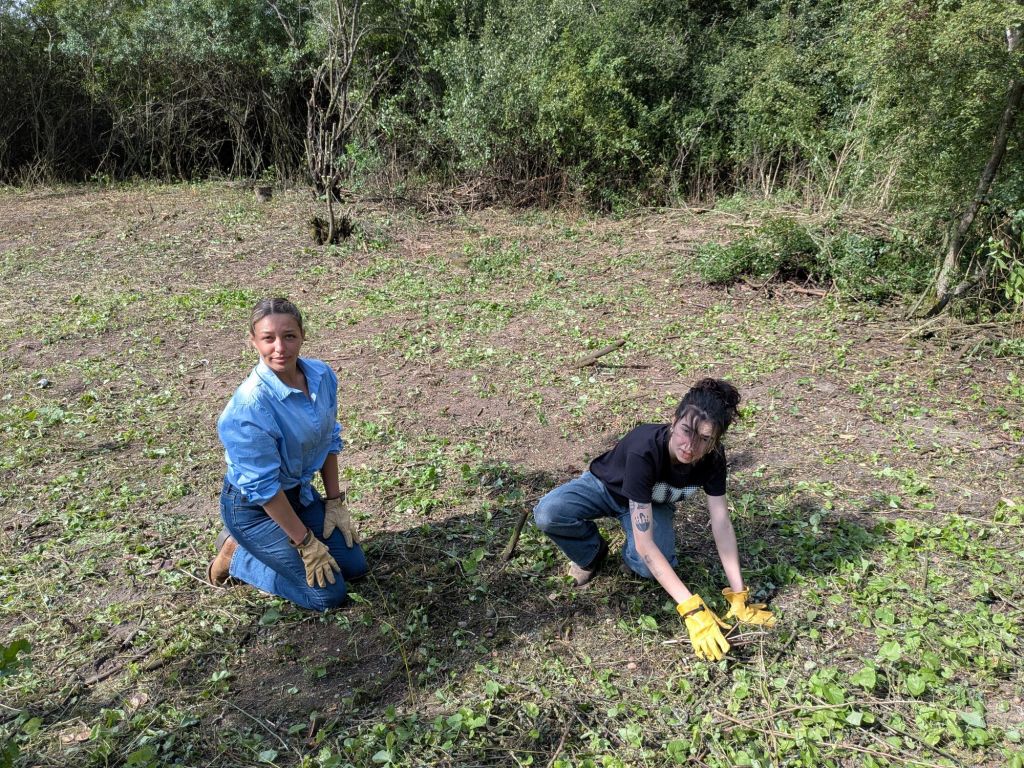
When we joined them, archaeology graduate student Michele Hoferitza helped us think about artifacts and making sense of their significance. She set up a task for us to remove all the small sticks still covering the surface of the ground so that the rocks and other objects on top of the ground would be more visible. Tomorrow, we’ll map what we see in 1 meter square grids. Maybe it will provide some indication of what happened at this site–how the space was used, what caused the depression, and whether we have located the mass grave.
 Uncovering Jewish Heritage